
Carbohydrate Digestion and Absorption Gregg Kobak MD Christine
Carbohydrate Digestion and Absorption Gregg Kobak, MD Christine Waasdorp Hurtado, MD, MSCS, FAAP University of Colorado School of Medicine Children’s Hospital Colorado Expert Reviewers: Jeremiah Levine, MD Richard Grand, MD

NASPGHAN Physiology Education Series Editors: Christine Waasdorp Hurtado, MD, MSCS, FAAP Christine. Waasdorp@childrenscolorado. org Daniel Kamin, MD Daniel. Kamin@childrens. harvard. edu
Overview • Carbohydrates are composed of carbon and water • Composition = Cn(H 2 O)n. • Carbohydrates are the major exogenous source of glucose • 40 -60% of calories in the diet • Higher in protein scarce diet • Provide 4 calories per gram • No single carbohydrate is essential
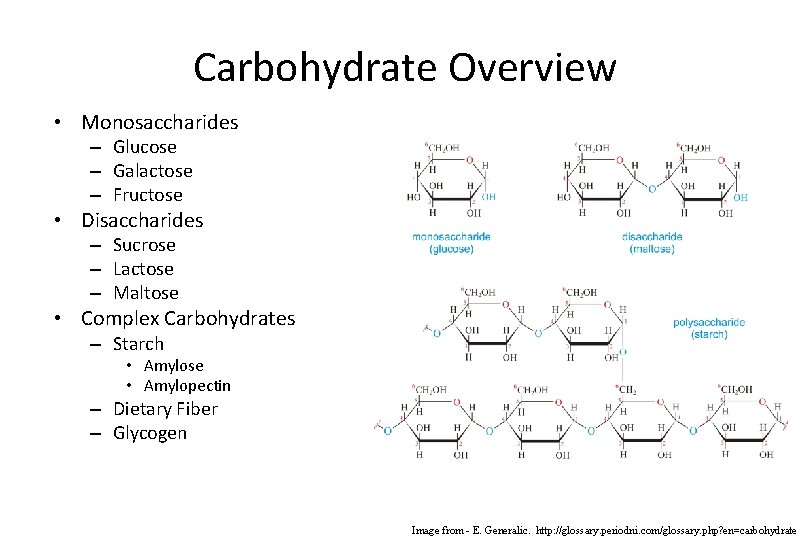
Carbohydrate Overview • Monosaccharides – Glucose – Galactose – Fructose • Disaccharides – Sucrose – Lactose – Maltose • Complex Carbohydrates – Starch • Amylose • Amylopectin – Dietary Fiber – Glycogen Image from - E. Generalic. http: //glossary. periodni. com/glossary. php? en=carbohydrate
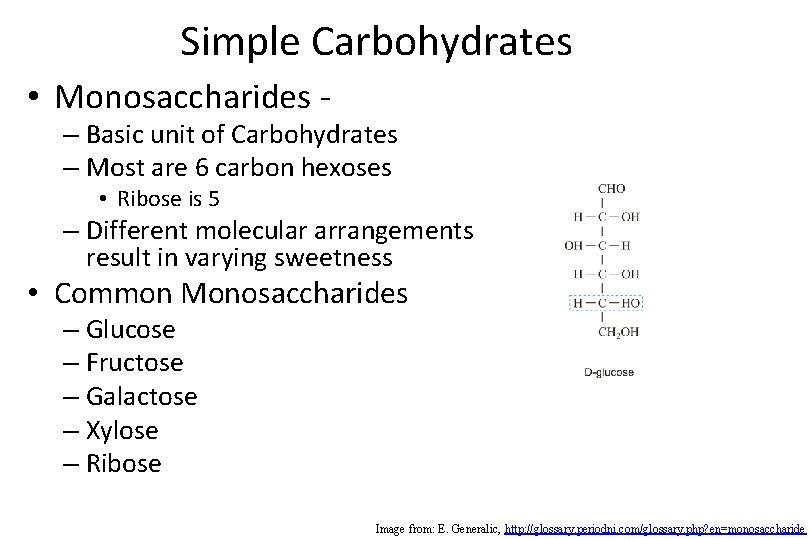
Simple Carbohydrates • Monosaccharides - – Basic unit of Carbohydrates – Most are 6 carbon hexoses • Ribose is 5 – Different molecular arrangements result in varying sweetness • Common Monosaccharides – Glucose – Fructose – Galactose – Xylose – Ribose Image from: E. Generalic, http: //glossary. periodni. com/glossary. php? en=monosaccharide
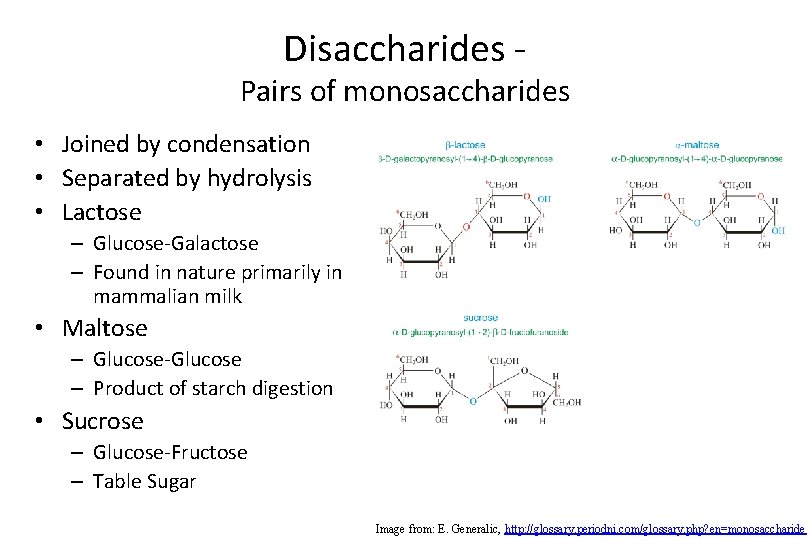
Disaccharides - Pairs of monosaccharides • Joined by condensation • Separated by hydrolysis • Lactose – Glucose-Galactose – Found in nature primarily in mammalian milk • Maltose – Glucose-Glucose – Product of starch digestion • Sucrose – Glucose-Fructose – Table Sugar Image from: E. Generalic, http: //glossary. periodni. com/glossary. php? en=monosaccharide
Complex carbohydrates • Polysaccharides – Starch – Dietary fiber – Glycogen
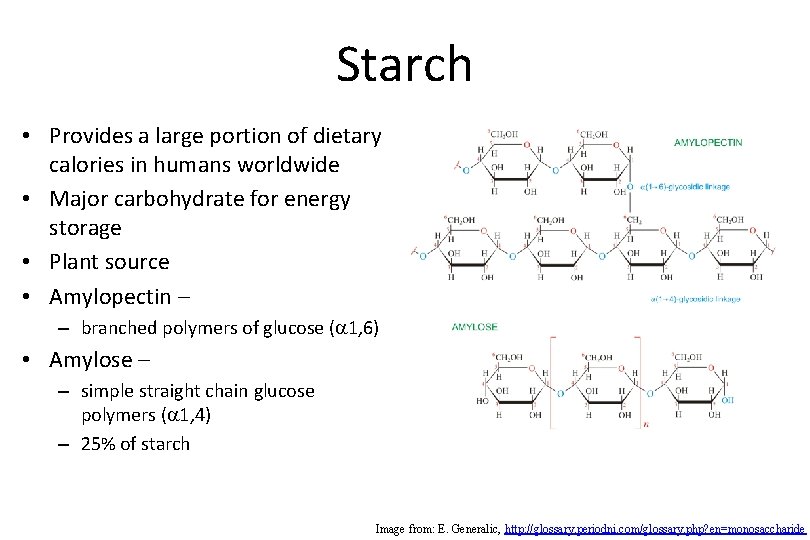
Starch • Provides a large portion of dietary calories in humans worldwide • Major carbohydrate for energy storage • Plant source • Amylopectin – – branched polymers of glucose (a 1, 6) • Amylose – – simple straight chain glucose polymers (a 1, 4) – 25% of starch Image from: E. Generalic, http: //glossary. periodni. com/glossary. php? en=monosaccharide
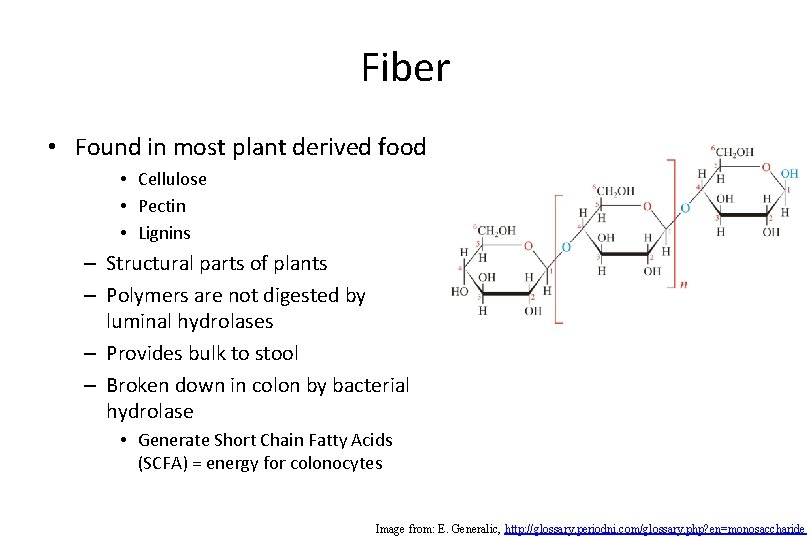
Fiber • Found in most plant derived food • Cellulose • Pectin • Lignins – Structural parts of plants – Polymers are not digested by luminal hydrolases – Provides bulk to stool – Broken down in colon by bacterial hydrolase • Generate Short Chain Fatty Acids (SCFA) = energy for colonocytes Image from: E. Generalic, http: //glossary. periodni. com/glossary. php? en=monosaccharide
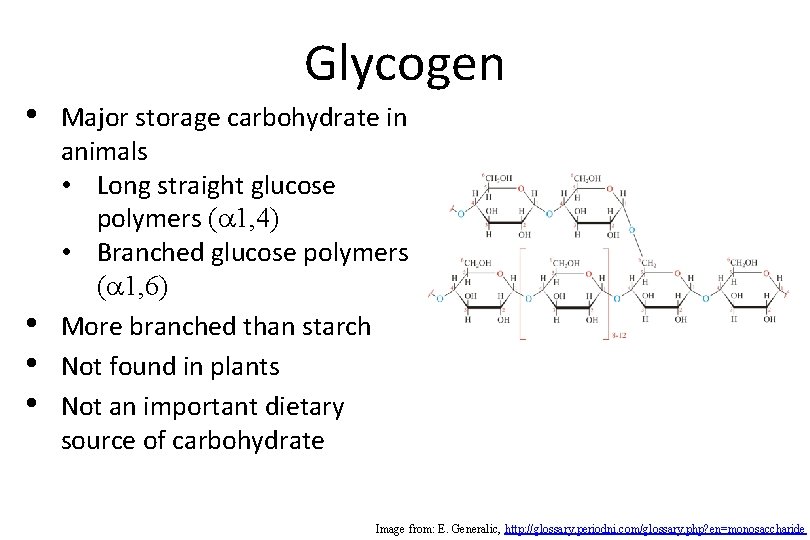
• • Glycogen Major storage carbohydrate in animals • Long straight glucose polymers (a 1, 4) • Branched glucose polymers (a 1, 6) More branched than starch Not found in plants Not an important dietary source of carbohydrate Image from: E. Generalic, http: //glossary. periodni. com/glossary. php? en=monosaccharide
Carbohydrate Overview • Carbohydrates are hydrophilic • Series of reactions are required to digest – Polymers are too large for transport – Specific hydrolases for digestion – Most are broken down to monomers for absorption • Fiber is not broken down to monomer – Specific receptors for absorption
Digestion of Carbohydrates • Monosaccharides – • Do not require hydrolysis before absorption Di- and poly-saccharides – – Must be hydrolyzed prior to absorption Most hydrolyzed to monosaccharides Monosaccharides can be absorbed at brush border!
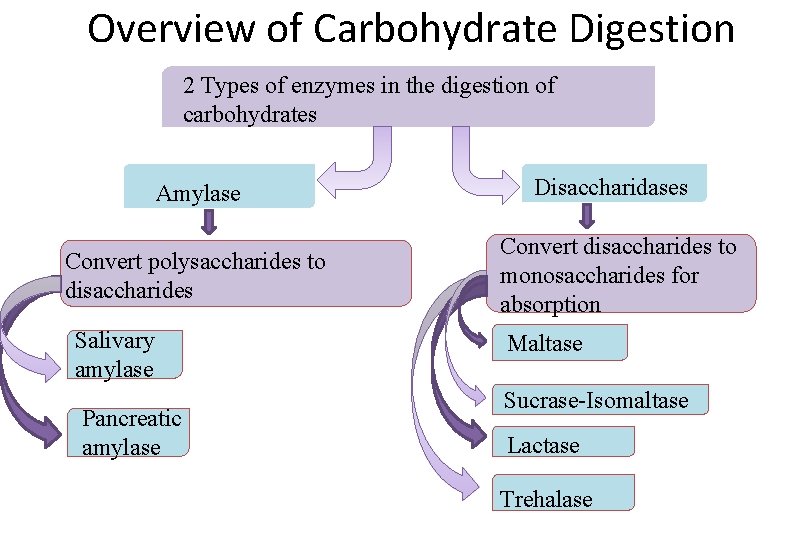
Overview of Carbohydrate Digestion 2 Types of enzymes in the digestion of carbohydrates Amylase Convert polysaccharides to disaccharides Salivary amylase Pancreatic amylase Disaccharidases Convert disaccharides to monosaccharides for absorption Maltase Sucrase-Isomaltase Lactase Trehalase
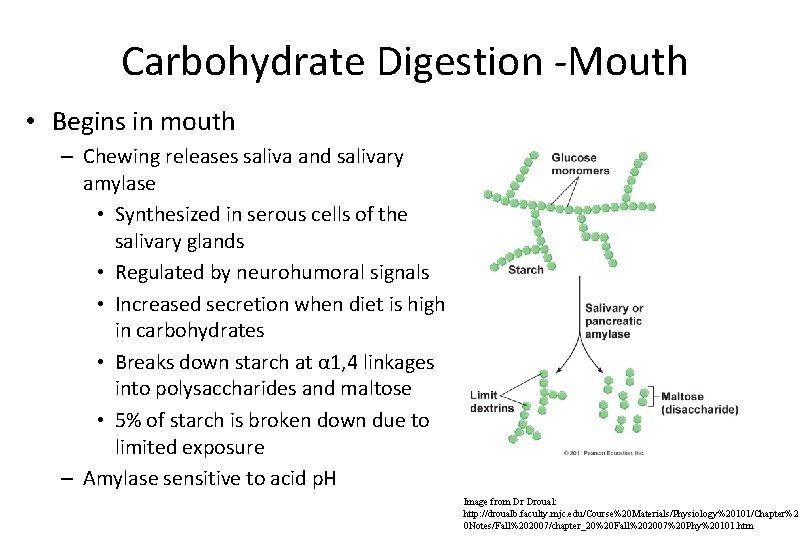
Carbohydrate Digestion -Mouth • Begins in mouth – Chewing releases saliva and salivary amylase • Synthesized in serous cells of the salivary glands • Regulated by neurohumoral signals • Increased secretion when diet is high in carbohydrates • Breaks down starch at α 1, 4 linkages into polysaccharides and maltose • 5% of starch is broken down due to limited exposure – Amylase sensitive to acid p. H Image from Dr Droual: http: //droualb. faculty. mjc. edu/Course%20 Materials/Physiology%20101/Chapter%2 0 Notes/Fall%202007/chapter_20%20 Fall%202007%20 Phy%20101. htm
Carbohydrate Digestion -Mouth • Clinical correlation – Salivary amylase has increased importance in a few clinical scenarios • Infants – Low levels of pancreatic enzymes in the first year • Pancreatic insufficiency – i. e. – Cystic Fibrosis – Breast milk contains amylase • Increased role in neonates and premature infants with low pancreatic amylase production
Carbohydrate Digestion -Stomach • Minimal carbohydrate digestion occurs in the stomach. • No enzymes available to break down starch. • Digestion by salivary amylase continues only until food mixed with acidic stomach secretions. – Low p. H inhibits amylase activity • Gastric HCl hydrolyzes small amount of sucrose to fructose and glucose
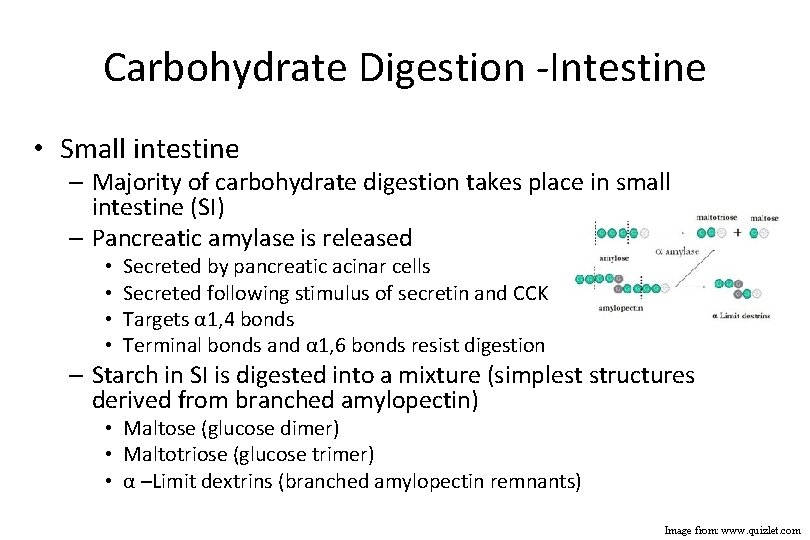
Carbohydrate Digestion -Intestine • Small intestine – Majority of carbohydrate digestion takes place in small intestine (SI) – Pancreatic amylase is released • • Secreted by pancreatic acinar cells Secreted following stimulus of secretin and CCK Targets α 1, 4 bonds Terminal bonds and α 1, 6 bonds resist digestion – Starch in SI is digested into a mixture (simplest structures derived from branched amylopectin) • Maltose (glucose dimer) • Maltotriose (glucose trimer) • α –Limit dextrins (branched amylopectin remnants) Image from: www. quizlet. com
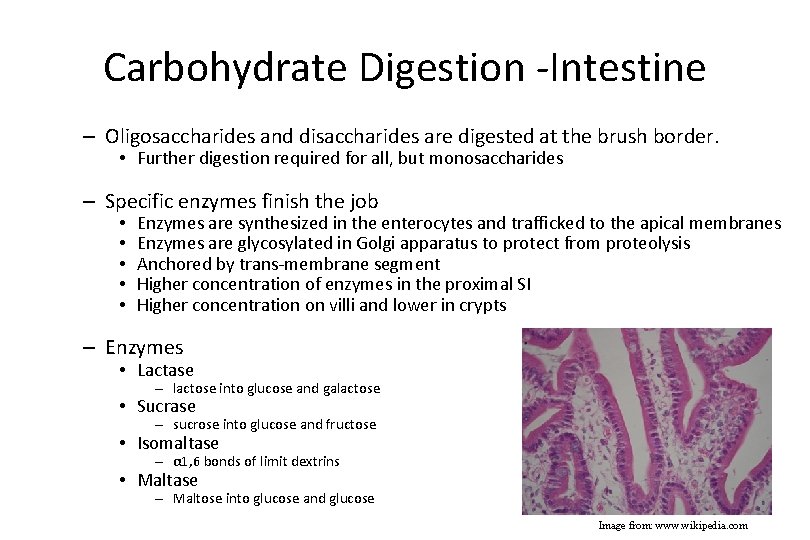
Carbohydrate Digestion -Intestine – Oligosaccharides and disaccharides are digested at the brush border. • Further digestion required for all, but monosaccharides – Specific enzymes finish the job • • • Enzymes are synthesized in the enterocytes and trafficked to the apical membranes Enzymes are glycosylated in Golgi apparatus to protect from proteolysis Anchored by trans-membrane segment Higher concentration of enzymes in the proximal SI Higher concentration on villi and lower in crypts – Enzymes • Lactase – lactose into glucose and galactose • Sucrase – sucrose into glucose and fructose • Isomaltase – α 1, 6 bonds of limit dextrins • Maltase – Maltose into glucose and glucose Image from: www. wikipedia. com
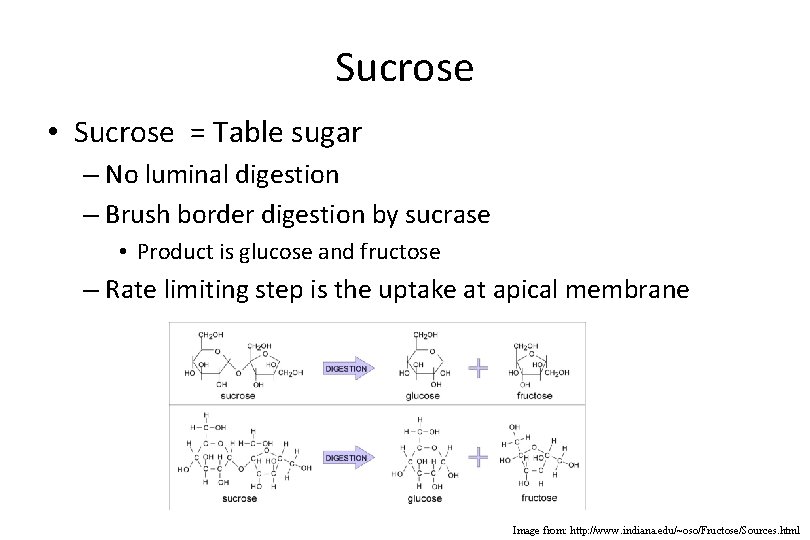
Sucrose • Sucrose = Table sugar – No luminal digestion – Brush border digestion by sucrase • Product is glucose and fructose – Rate limiting step is the uptake at apical membrane Image from: http: //www. indiana. edu/~oso/Fructose/Sources. html
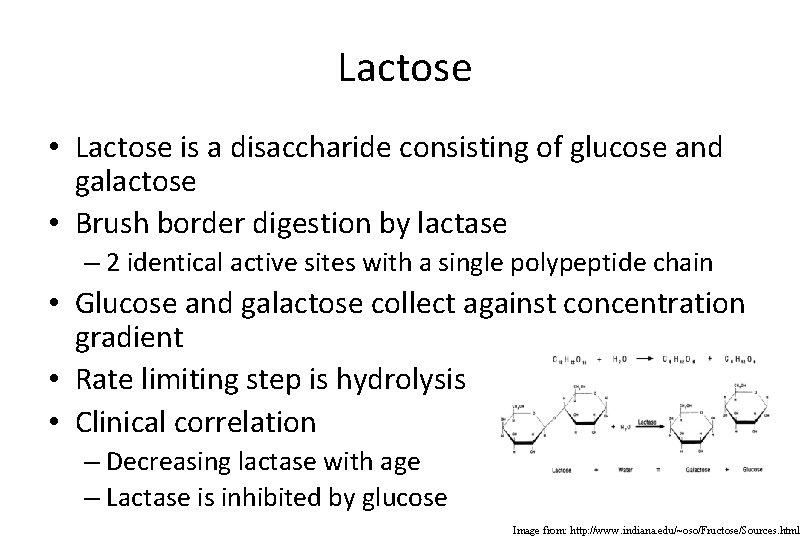
Lactose • Lactose is a disaccharide consisting of glucose and galactose • Brush border digestion by lactase – 2 identical active sites with a single polypeptide chain • Glucose and galactose collect against concentration gradient • Rate limiting step is hydrolysis • Clinical correlation – Decreasing lactase with age – Lactase is inhibited by glucose Image from: http: //www. indiana. edu/~oso/Fructose/Sources. html
Maltose • Breakdown product of starch • Maltose is a disaccharide consisting of glucose and glucose • Brush border digestion by maltase
Digestion in Large Intestine • Non-digestible carbohydrates – 10% starches, cellulose and hemicellulose from fruit and vegetables, some lactose and fructose, and monosaccharides lactulose, sorbitol and sucrulose • Limited mainly to anaerobic fermentation by colonic bacteria • Short-chain fatty acids produced by microbial digestion of fiber and undigested carbohydrates – Propionate – Butyrate – Acetate – Lactate • Methane and hydrogen also produced = flatus
Carbohydrate Absorption • Glucose is absorbed in the mouth in small quantities • No significant absorption occurs in stomach • Majority of sugars are absorbed in small intestine at apical membrane and transferred out at basolateral membrane to portal circulation. • Carrier mediated due to size of molecules – active transport down Na+ gradient • glucose and galactose – facilitated diffusion • fructose • Passive transport in small amounts
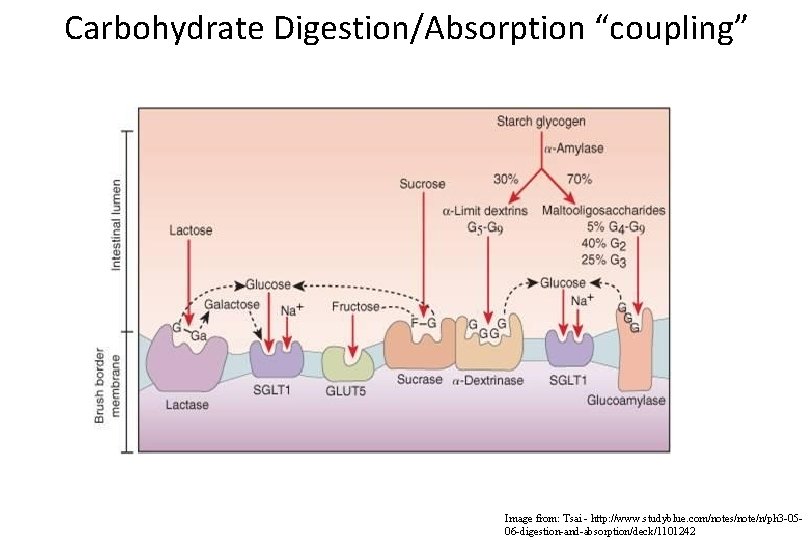
Carbohydrate Digestion/Absorption “coupling” Image from: Tsai - http: //www. studyblue. com/notes/note/n/ph 3 -0506 -digestion-and-absorption/deck/1101242
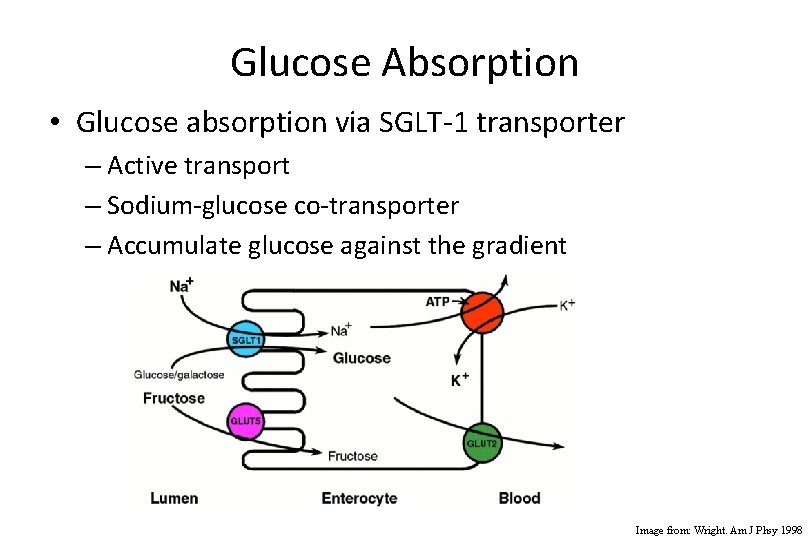
Glucose Absorption • Glucose absorption via SGLT-1 transporter – Active transport – Sodium-glucose co-transporter – Accumulate glucose against the gradient Image from: Wright. Am J Phsy 1998
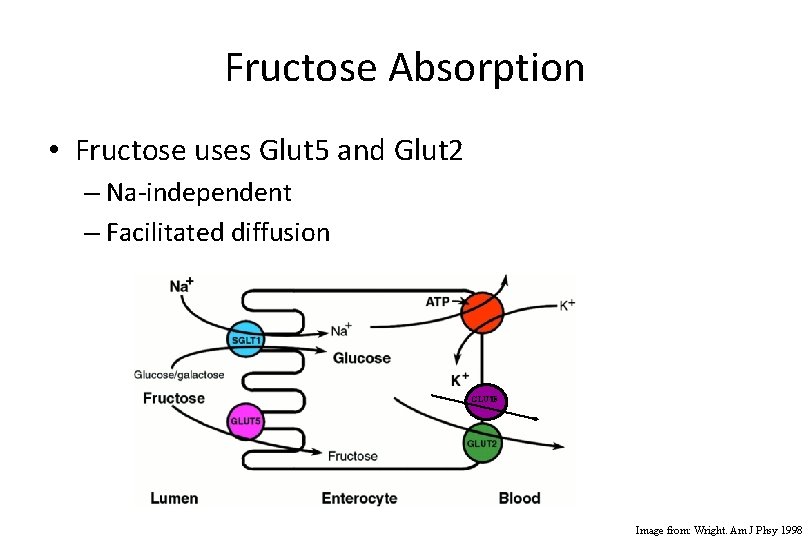
Fructose Absorption • Fructose uses Glut 5 and Glut 2 – Na-independent – Facilitated diffusion GLUT 5 Image from: Wright. Am J Phsy 1998
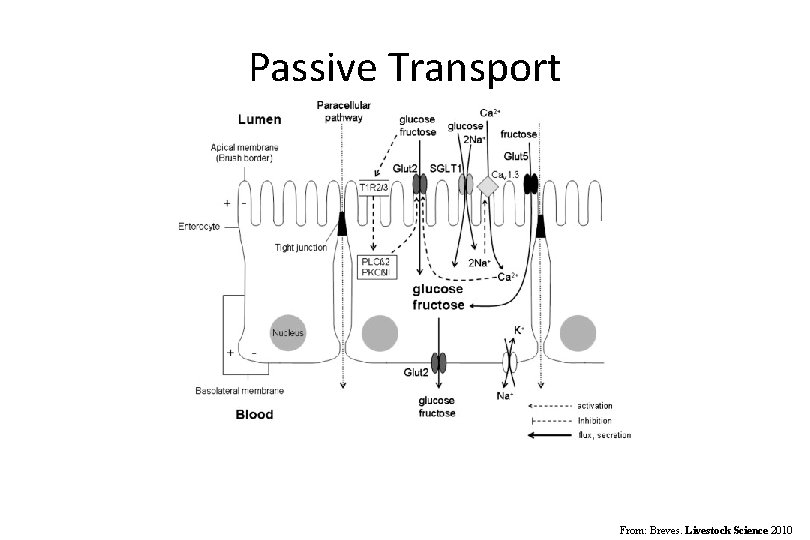
Passive Transport From: Breves. Livestock Science 2010
Regulation of Carbohydrate Absorption • All enzymes and transporters are present at birth • Lactase activity is hard wired – Lactase persistence • Lactase remains at infantile levels – Lactase non-persistence • Lactase decreases starting at 3 -5 years of age • Varies with race and ethnicity • Sucrase-isomaltase (SI) and maltase-glucoamylase levels are inducible – Transcriptional regulation mechanism
Control of enzyme secretion • Sucrase-isomaltase (SI) – 5’ flanking region of the SI gene has several DNA regulatory regions that control the initiation of gene transcription. – Transcriptional proteins • hepatocyte nuclear factor (HNF-1), GATA-type zinc finger transcription factors, and caudal-related homeodomain proteins (Cdx). – Hormonal influences have also been proposed and are currently being studied further. • Lactase – Cdx, HNF-1 and GATA 5, along with other transcription factors all interact with the proximal promoter region and result in transcription initiation. – Possible repressor region exists that down regulates lactase expression. Lactase persistent people failed to bind at this repressor region due to single nucleotide polymorphisms (SNP).
Clinical Correlations • Glucose-Galactose Malabsorption – Mutation of SGLT-1 • Defective transporter – Severe diarrhea at birth • Osmotic diarrhea due to glucose and galactose malabsorption – FTT and malnutrition – Very rare – Treatment is fructose containing formula
Congenital Sucrase-Isomaltase Deficiency • Congenital Sucrase-Isomaltase Deficiency – Homozygous or heterozygous mutation in the SI gene • Autosomal recessive – 1 in 5, 000 North Americans, 10% Eskimos – Maldigestion of sucrose and maltose – Presentation – osmotic diarrhea, abdominal pain and FTT – Treatment – • Sucrose and starch free diet. • Slowly introduce starch when sucrose free • Sucraid supplementation
Clinical Correlations • Small Bowel Bacterial Overgrowth – Increased bacteria Increased fermentation – Bacterial fermentation prevents small bowel absorption – Breath test - malabsorption results in increased breath H+
Clinical Correlations • Pancreatic Insufficiency – Cystic fibrosis, pancreatitis, obstruction (tumor) • Mechanisms – Decreased enzyme volume • <10% baseline before symptoms – Failure to alkalinize fluid in small intestine • Enzymes are inactivated in acidic environment = malabsorption
Clinical Correlations • Celiac disease – Decreased absorptive capacity secondary to decreased villus length – Decreased enzymes due to decreased brush border surface area – Decreased number of transporters – Malabsorption and diarrhea
Summary • Carbohydrates are the major exogenous source of glucose • Three main types – Monosaccharides, disaccharides, and complex carbohydrates • Digestion requires a series of steps – Salivary and pancreatic amylase – Brush border enzymes • Non-digested carbohydrates are digested in the colon creating SCFA
Review Questions: A 9 y. o Asian boy is brought to your office by his mother. They report that he has had worsening diarrhea for the past 6 months following a viral acute gastroenteritis. What is the most likely reason for his diarrhea? Celiac disease Lactose Non-persistence Pancreatic Insufficiency Infection What enzymes involved in carbohydrate digestion are induced by increasing dietary intake? A. Lactase B. Sucrase-isomaltase C. Maltase-glucoamylase D. Amylase

Questions? • Please send any questions or comments to Christine. waasdorp@childrenscolorado. org and Daniel. Kamin@childrens. harvard. edu
- Slides: 37