
Carbohydrate Binding Proteins BCH 8130 Gerardo AlvarezManilla Carbohydrates
Carbohydrate Binding Proteins BCH 8130 Gerardo Alvarez-Manilla
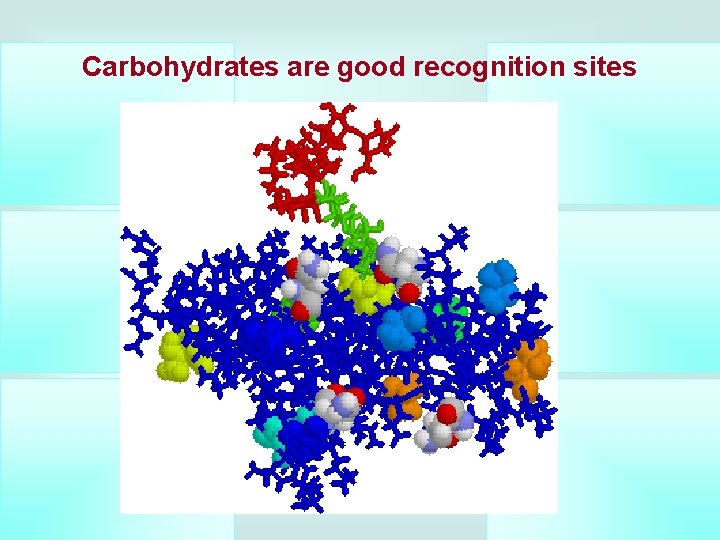
Carbohydrates are good recognition sites
Carbohydrate Binding proteins Ø Enzymes v. Glycosidases, glycosyltransferases Ø Antibodies v. Blood groups ØLectins
LECTINS Ø Carbohydrate binding proteins that are not antibodies or enzymes Ø Bind with high specificity v. Latin: lectus, meaning to gather or select v Relatively high dissociation constants (ca 100 M) v Carbohydrate recognition domains are small Ø Most lectins are multivalent
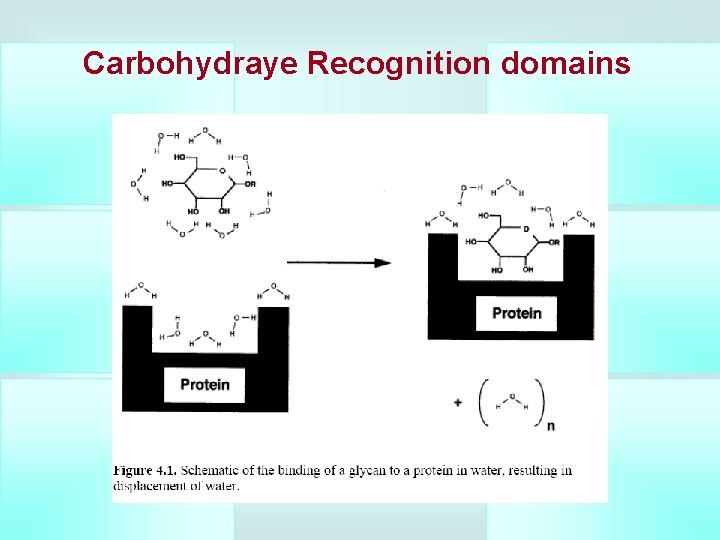
Carbohydraye Recognition domains
Lectins are present in all organisms Ø Virus----- Influenza Ø Bacteria ----- binding to hosts during pathogenesis Ø Vegetable v Many have been purified and characterized v Physiological function is unknown Ø Animal v Several proteins with a wide variety of functions
Vegetable Lectins Ø Leguminosae v Con. A (Concanavalin A from Jack bean) v Phaseolus Vulgaris (PHA-L and PHE) v Soy bean agglutinin Ø Graminae v Wheat germ agglutinin Ø Solanaceae v Tomato lectin v Potato lectin

Structure of Vegetable lectins Ø Compact -barrel, no alpha helices v. Antiparalell beta-sheets Ø Many require metals (leguminosae) v. Ca and Mn v. Metals do not participate directly in the binding but are required

Structure of Con. A

Structure of PHA-L
Functions of Plant lectins Ø Little is known Ø In legume seeds can comprise up to 30% of the total protein Ø They are expressed in other parts of the plant v. Nodulation factor in roots
Functions of Plant lectins (cont) Ø May function as defense against pathogens Ø Some lectins posses other activities besides carbohydrate binding v. RCAII (Ricin) RNA-N-glycosidase v. DBA has an adenine binding site in addition to CRD
Uses of Plant lectins Ø Agglutination of cells and blood typing Ø Cell separation and analysis Ø Bacterial typing Ø Identification and selection of mutated cells with altered glycosylation Ø Toxic conjugates for tumor cell killing Ø Cytochemical characterization/staining of cells and tissues
Uses of Plant lectins (cont) Ø Mitogenesis of cells Ø Mapping neuronal pathways Ø Purification of glycoconjugates Ø Assays of glycosyltransferases and glycosidases Ø Defining glycosylation status of target glycoconjugates
Animal Lectins Ø Very heterogenous group v. Many physiological functions v. Little sequence homology Ø However most of the are multivalent Ø Current classification is based on amino acid sequence homology and evolutionary relatedness
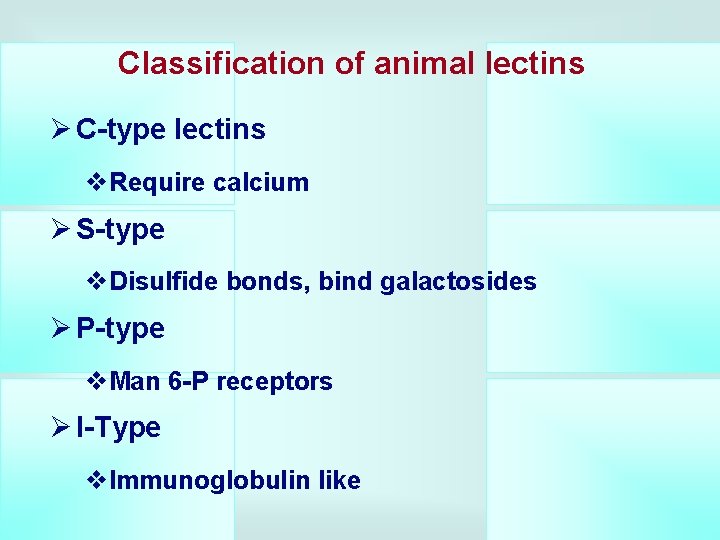
Classification of animal lectins Ø C-type lectins v. Require calcium Ø S-type v. Disulfide bonds, bind galactosides Ø P-type v. Man 6 -P receptors Ø I-Type v. Immunoglobulin like
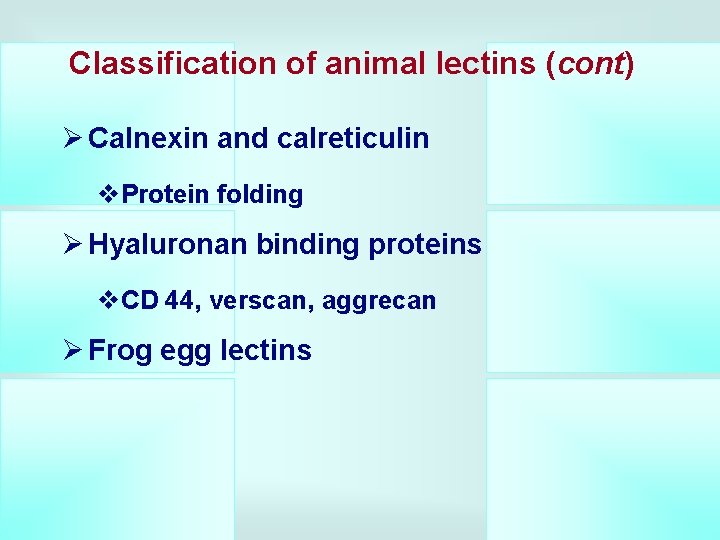
Classification of animal lectins (cont) Ø Calnexin and calreticulin v. Protein folding Ø Hyaluronan binding proteins v. CD 44, verscan, aggrecan Ø Frog egg lectins
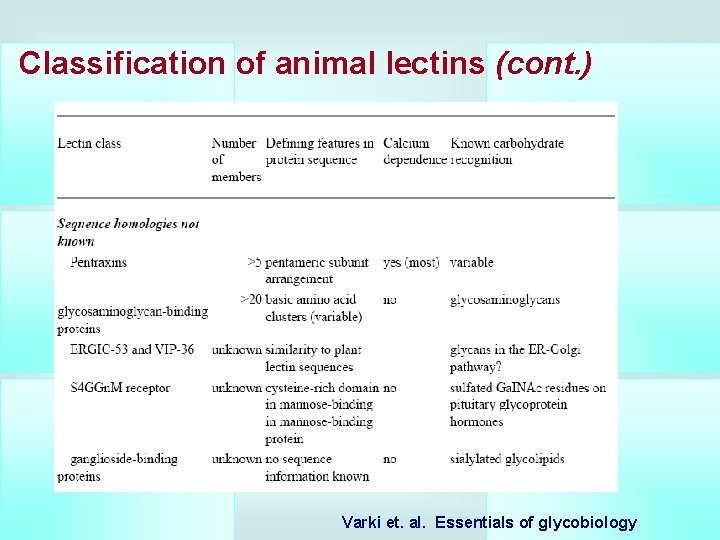
Classification of animal lectins (cont. ) Varki et. al. Essentials of glycobiology
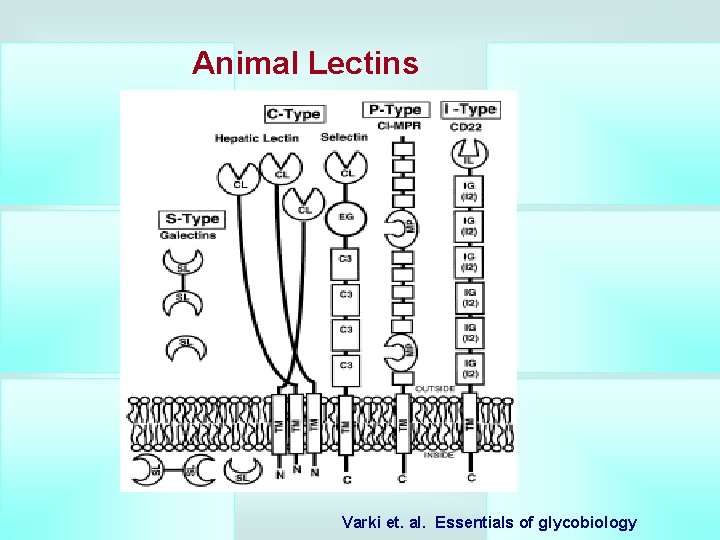
Animal Lectins Varki et. al. Essentials of glycobiology
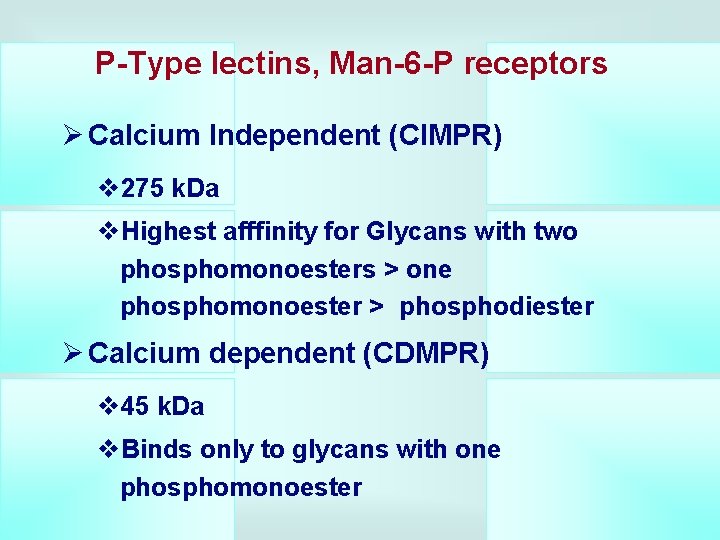
P-Type lectins, Man-6 -P receptors Ø Calcium Independent (CIMPR) v 275 k. Da v. Highest afffinity for Glycans with two phosphomonoesters > one phosphomonoester > phosphodiester Ø Calcium dependent (CDMPR) v 45 k. Da v. Binds only to glycans with one phosphomonoester
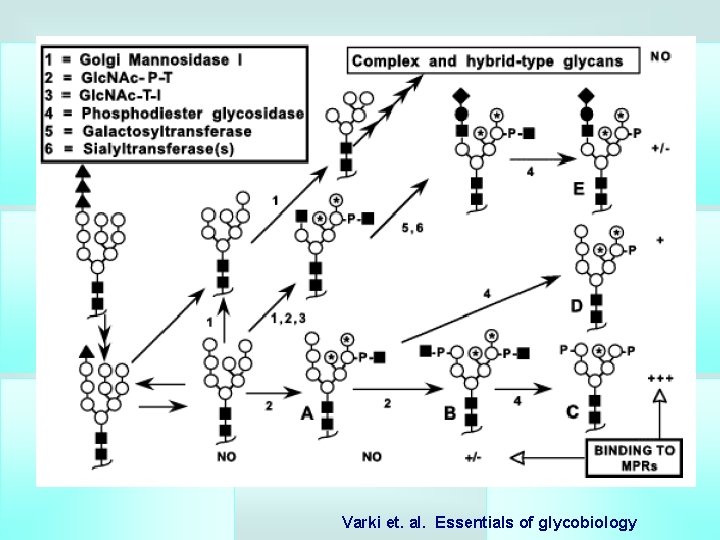
Varki et. al. Essentials of glycobiology
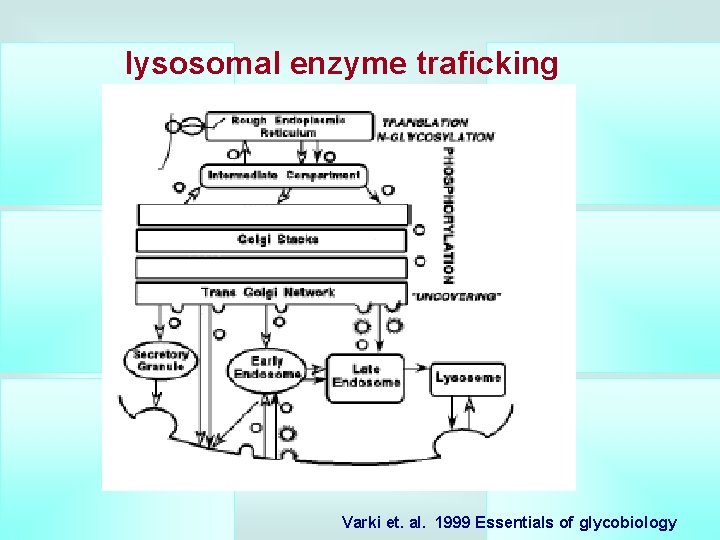
lysosomal enzyme traficking Varki et. al. 1999 Essentials of glycobiology
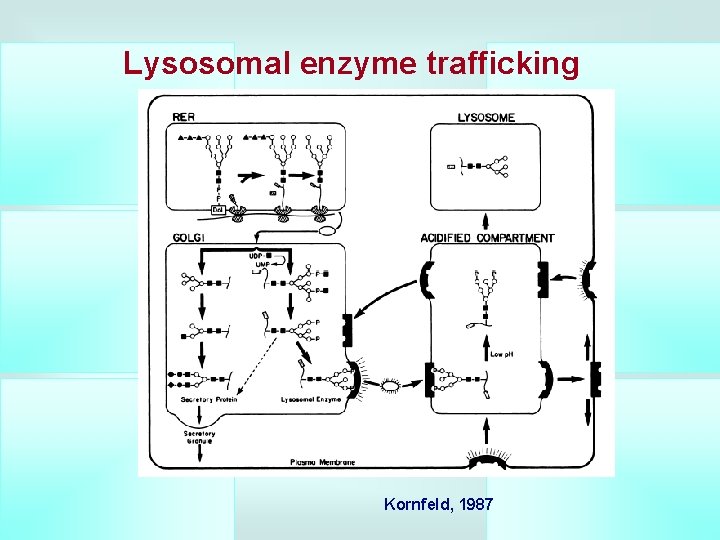
Lysosomal enzyme trafficking Kornfeld, 1987
Lysosomal enzyme deficiencies Ø I Cell disease Ø Pseudo-Hurler polydistrophy v. AKA Mucolipidosis II and IIIC v. Deficiency in Glc. NAc-1 -Phosphotransferase
C-Type lectins Ø Characteristic CRD is structurally preserved Ø Calcium is involved directly in glycan recognition and stabilization of CRD
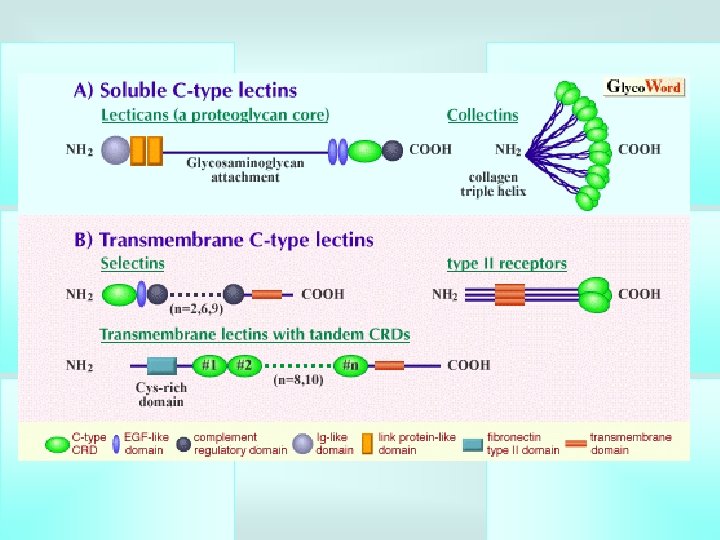
Types of C-type lectins, soluble Ø Lecticans (versican, aggregan, neurocan) v Proteoglycans v organizers of the brain extracellular matrix forming complexes with tenascin and other glycoproteins Ø Collectins v Host defense v Mannose binding proteins, Conglutinnin, etc
C-type lectins, membrane bound Ø Selectins v Neutrophil and leukocyte trafficking Ø Type II membrane receptors v Asialoglycoprotein receptor Ø Type I transmembrane protein with tandem extracellular CRDs. v Molecular uptake into the cells v surface mannose receptors on macrophages v DEC-205, (cell surface molecule of dendritic cells)
Selectins Ø molecules that facilitate the recirculation of lymphoid cells from the intravascular compartment to the secondary lymphoid organs Ø Type I membrane proteins with sequence and structural homology
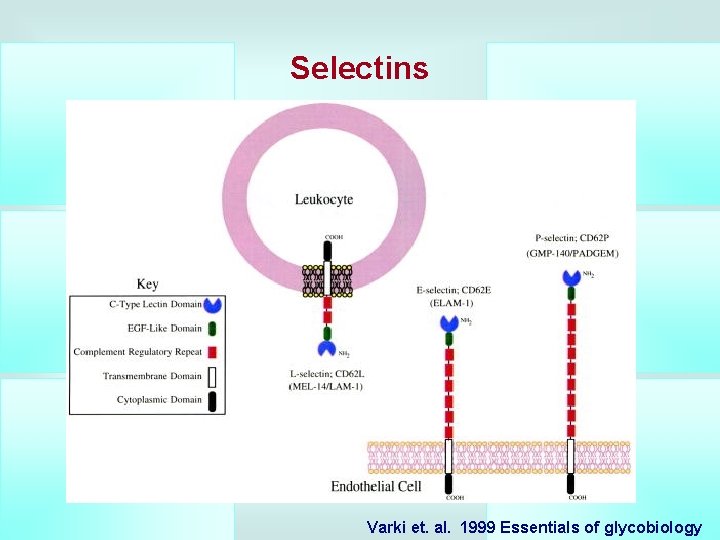
Selectins Varki et. al. 1999 Essentials of glycobiology
L-Selectin Ø CD 62 L Ø Discovered as the antigen recognized by MEL 14 v Inhibited vitro adhesion of lymphocytes to HEVs and in vivo homing of lymphocytes to peripheral lymph nodes. Ø L-selectin also has a role in adhesion of neutrophils, eosinophils, and monocytes to nonlymphoid vascular endothelium v Leukocyte-endothelial cell and Leukocyte-Leukocyte interactions have been reported
L-selectin (cont) Ø Molecular mechanisms are not yet understood completely v. Some of the described receptors are Gly. CAM-1, CD 34, Sgp 200 and MAd. CAM-1 v. Heparan sulfate GAGS are involved v. Sialylated sulfated and fucosylated Olinked structures are recognized Ø L-Selectin can also bind to PSGL-1
E-Selectin Ø CD 62 E Ø Endothelial Leukocyte Adhesion Molecule I (ELAM-1) Ø Induced in Endothelial cells via cytokine stimulation Ø Ligand are ESL-1 v N-linked glycans with sialyl-lewis-X v Can also bind PSGL in vitro
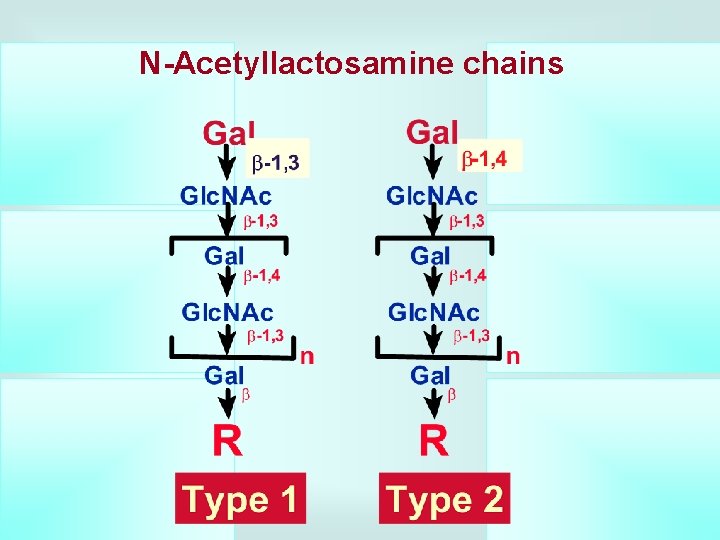
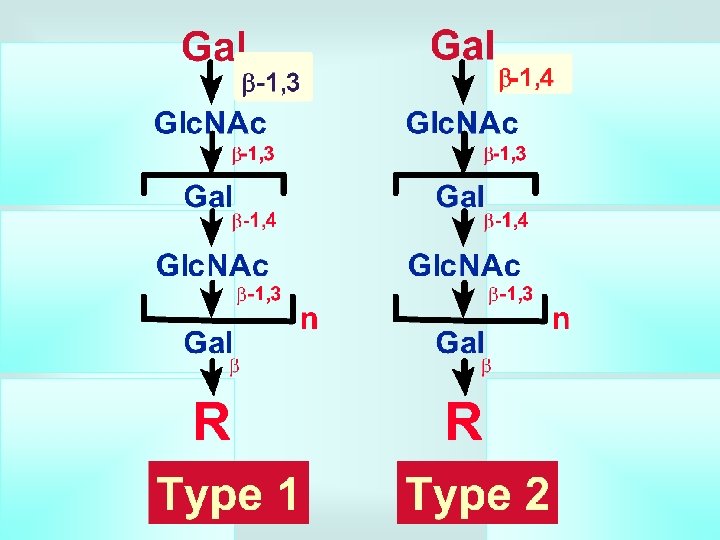
N-Acetyllactosamine chains
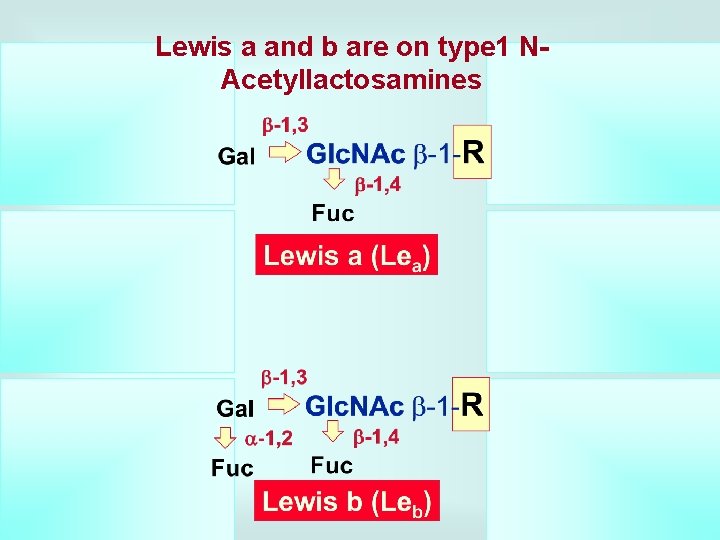
Lewis a and b are on type 1 NAcetyllactosamines
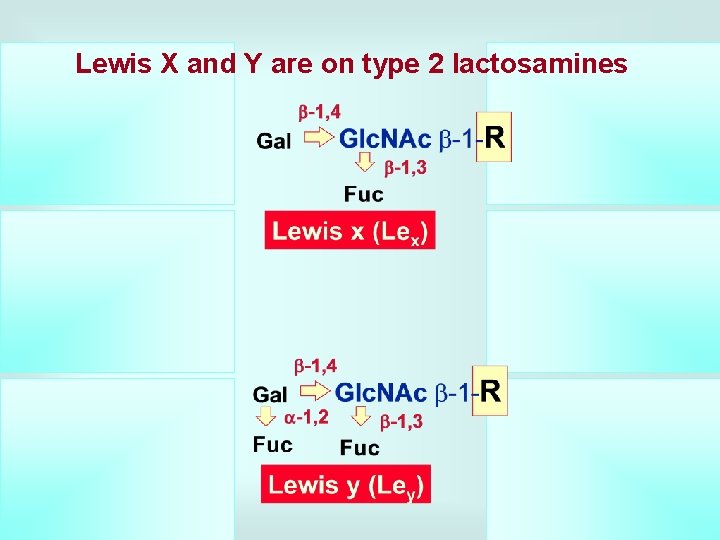
Lewis X and Y are on type 2 lactosamines
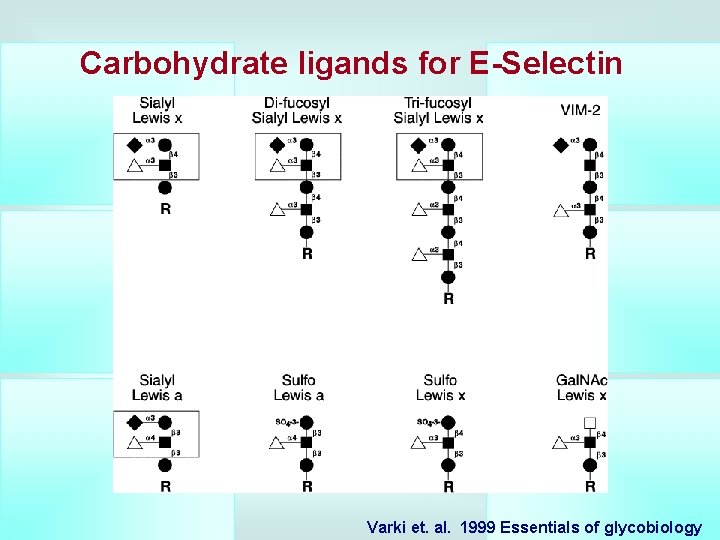
Carbohydrate ligands for E-Selectin Varki et. al. 1999 Essentials of glycobiology
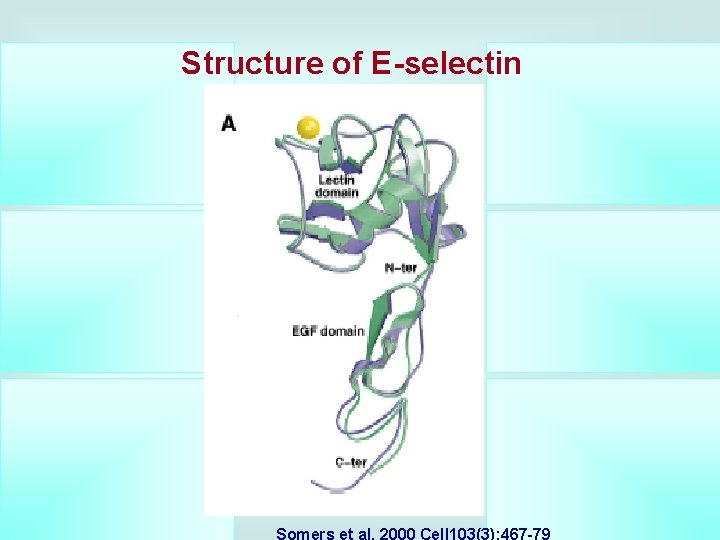
Structure of E-selectin Somers et al. 2000 Cell 103(3): 467 -79
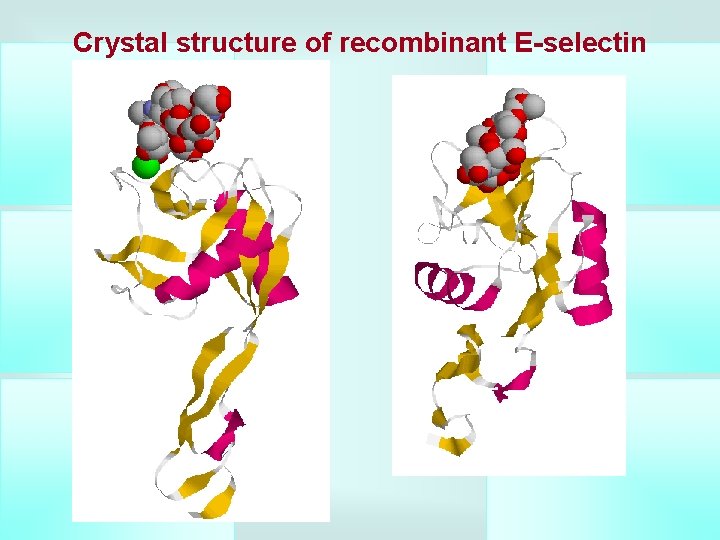
Crystal structure of recombinant E-selectin
P-Selectin Ø 140 k. Da protein vexpressed in cortical granules in platelets v. Stored in Weibel-Palade bodies in Endothelial cells Ø Expressed in the surface upon stimulation with cytokines Ø Principal ligand is PSGL-1 v. Sialyl-Lewis-X and tyrosine sulfation
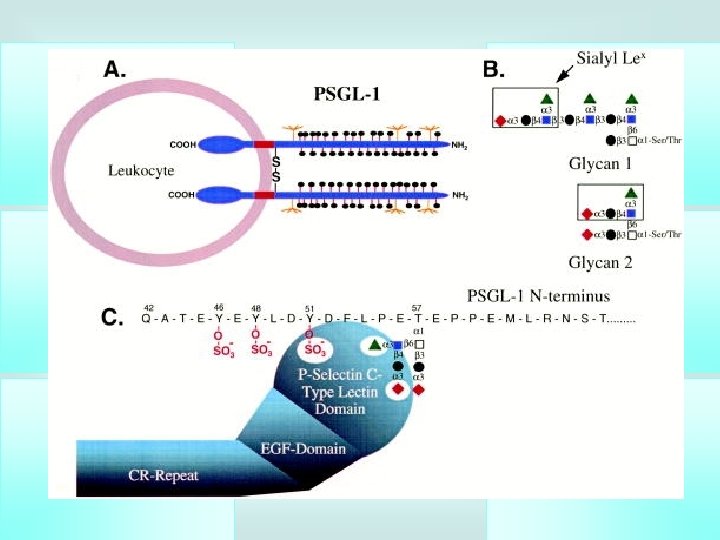
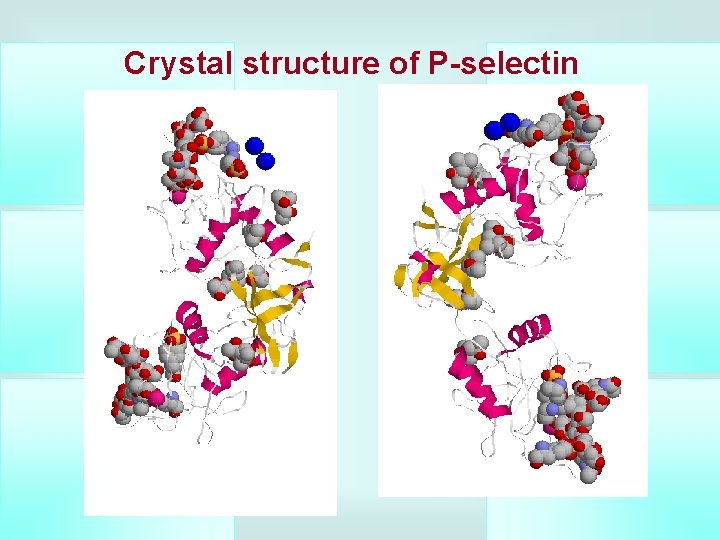
Crystal structure of P-selectin
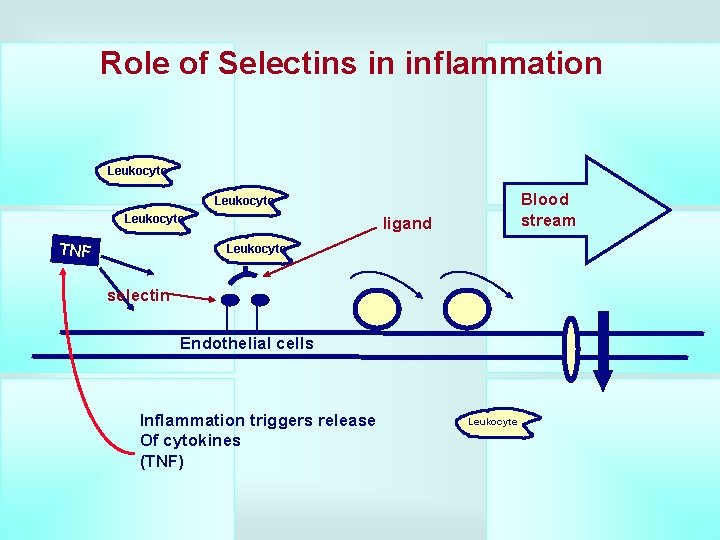
Role of Selectins in inflammation Leukocyte Blood stream Leukocyte TNF ligand Leukocyte selectin Endothelial cells Inflammation triggers release Of cytokines (TNF) Leukocyte
Galectins Ø Galactose binding proteins Ø Share substantial homology in their CRD Ø All are soluble v. Expressed as cytoplasmic proteins v. Translocated through membrane to extracellular space via unknown mechanism
Carbohydrate ligands Ø B-linked Galactose v. Lactose v. N-Acetyllactosamine v. Poly-N-Acetyllactosamine
Galectins (cont) Ø Do not require cations for binding Ø require reducing conditions to maintain activity in the absence of ligands Ø -sheet barrel “jelly roll” structure Ø Wide distyribution among the animal kingdom
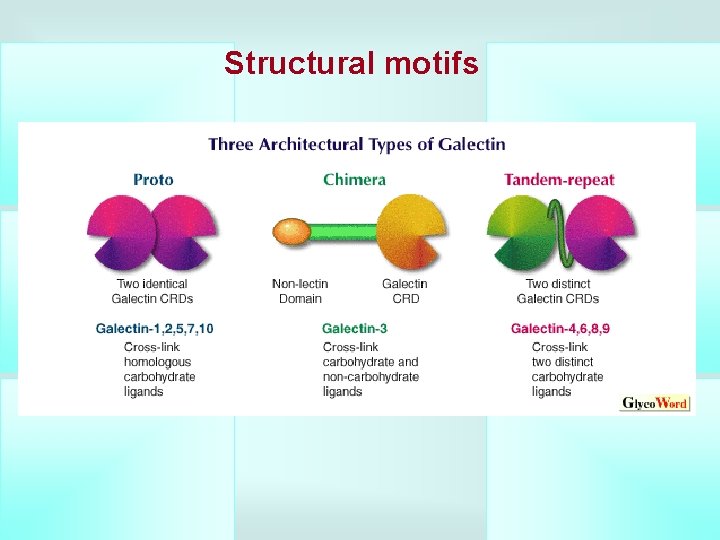
Structural motifs
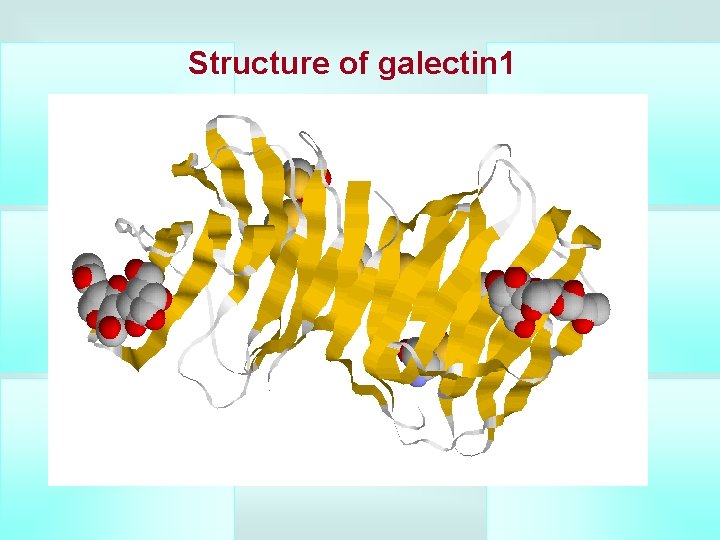
Structure of galectin 1
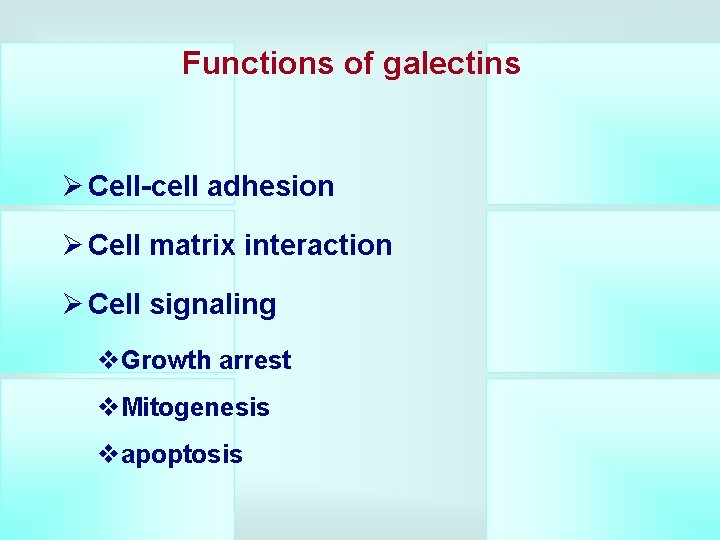
Functions of galectins Ø Cell-cell adhesion Ø Cell matrix interaction Ø Cell signaling v. Growth arrest v. Mitogenesis vapoptosis
Functions of Galectins Ø RNA transport and splicing Ø Cytoskeletal organization
- Slides: 51