
Captive Breeding and Record Keeping Principles of Record
Captive Breeding and Record Keeping Principles of Record Keeping

“Zoos and aquariums are guardians of captive wildlife populations; animal records databases are tools that assist animal management staff and population biologists in providing the best possible care for these animals and their respective populations. Accurate and unambiguous data permit informed decisions for conservation and management of the species and specimens in our care. ” Standards for Data Entry and Maintenance of North American Zoo and Aquarium Animal Records Databases; Lincoln Park Zoo; 1998
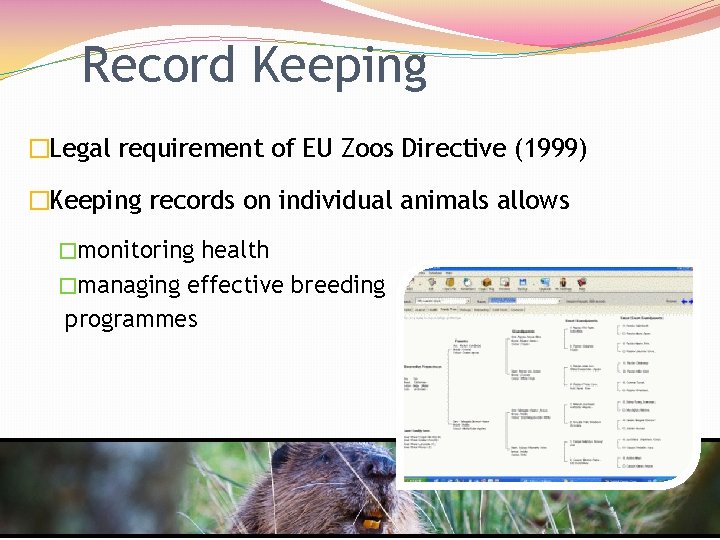
Record Keeping �Legal requirement of EU Zoos Directive (1999) �Keeping records on individual animals allows �monitoring health �managing effective breeding programmes
SSSMZP (2004) requires: �Identification and scientific name �Origin (captive born, parents etc. ) �Dates in and out of collection and to whom �Date of birth/hatching �Sex �Distinctive marks �Clinical data (including treatments) �Behavioural and life history data �Date of death and post‐mortems �Details of escapes �Food and diets
Best Practices in Record Keeping (2013) �Most institutions have found that the integrity of the animal records is maintained best when a single person is identified as responsible for the animal records. �Multiple staff can contribute to and enter data into a record, but one person should oversee the quality and completeness of the animal record. �Animal records should represent as complete and as accurate a history of the individuals and groups in the institution’s collection.
Avoid �Data Omission �Sometimes the information is recorded, sometimes it is not. This may be due to incomplete training of the data entry person �Data Entry Errors �The person entering the data misunderstood the information, made an entry mistake such as transposing numbers or letters or was inconsistent with how the data was entered �Entry of Incorrect Data �Making assumptions (example: the silverback gorilla must be the sire of this offspring) �Recording “known” information for “unknown” data (example: as the giraffe was in the 1948 inventory but it wasn’t in the 1949 inventory, it must have died in 1948)
Types of Institutional Records �Look through “institutional records” folder on Moodle �Decide what records show �Decide how records are useful �Assess whether they are up‐to‐date/complete �Suggest improvements or additions
Types of Institutional Records �Diet sheets �Feeding records �Daily checks �Census data �Environmental stats �Identification cards �Husbandry guidelines �Notice boards �Risk assessments �Animal bookings �Weights and measures �Daily records �Vaccination cards �Vet visits
Organisational Records �Shared between animal collections �Most, but not all organisations use ISIS software. �Historically this consisted of separate software packages, requiring uploading of data to ISIS and cross‐referencing of information o ARKS, Animal Record Keeping System o SPARKS, Single Population Animal Record Keeping System o Med. ARKS, Medical Animal Record Keeping System o Increasingly ZIMS, Zoological Information Management System has taken over these roles in a live, integrated database
Paper Records • Easier to read and reach • for • • More user‐friendly • Require a lower skill • level • • Handwriting can be recognised • Limited Time consuming to search and file Take up physical space At risk of flood and fire damage Difficult to locate if mis‐filed • Not very flexible
Electronic Records �Easy to access and ideas search �Easy to copy and back �Not always stable up �Can be easy to delete �Not location specific �Require up‐to‐date �Flexible knowledge �Can be analysed �Required skilled repeatedly systems manager �Allow faster �Software needs processing of research updating
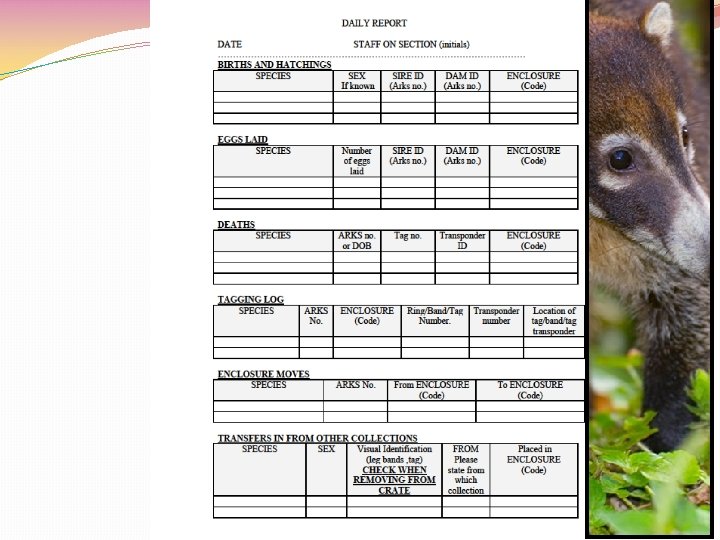
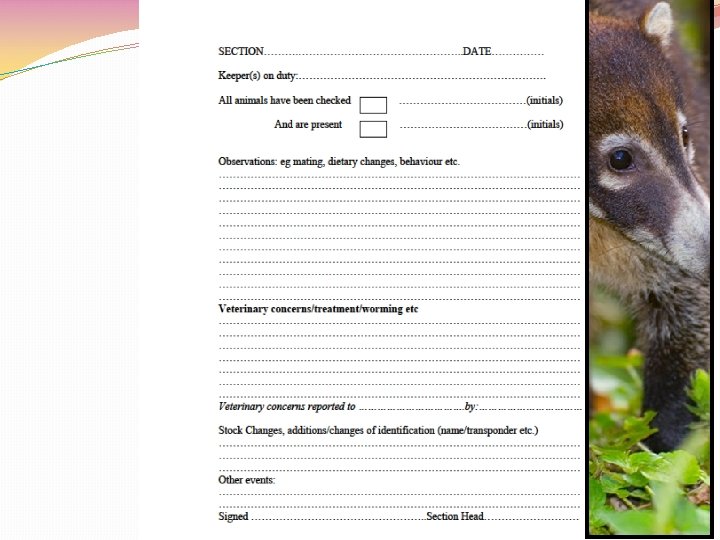
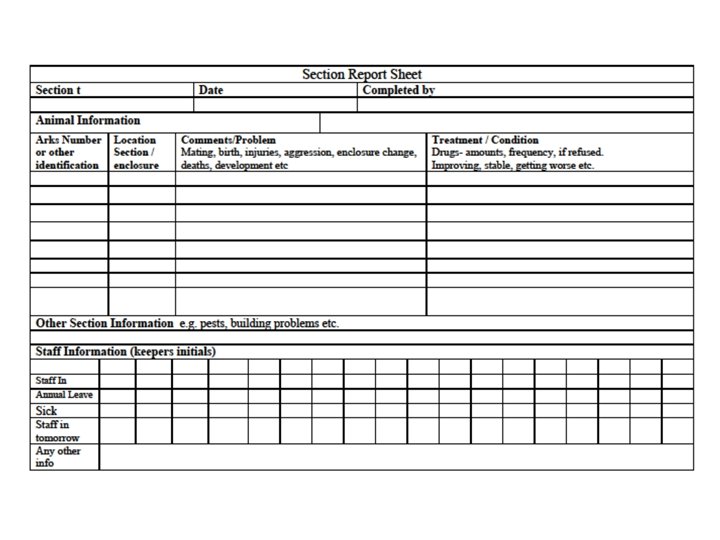
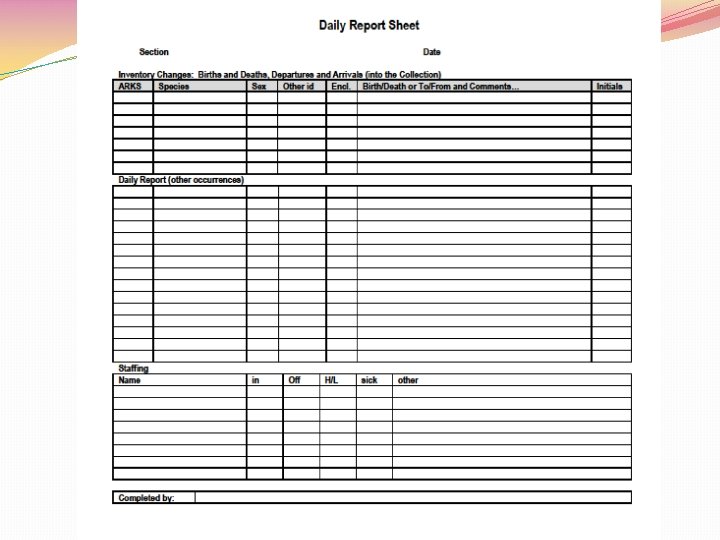
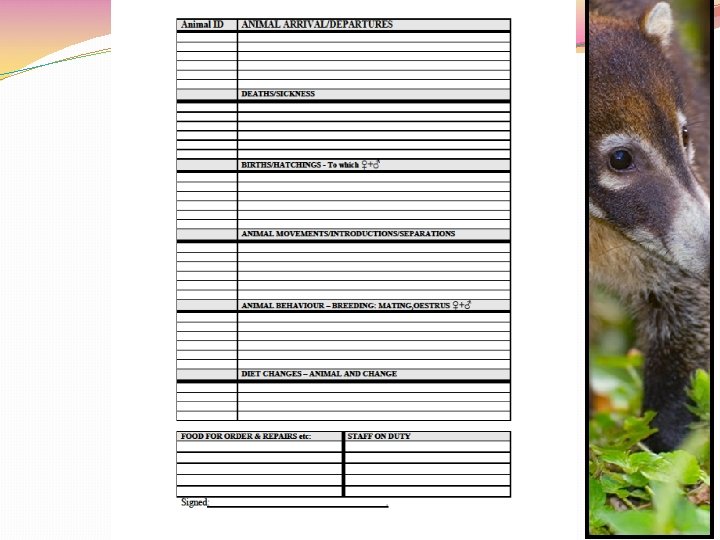
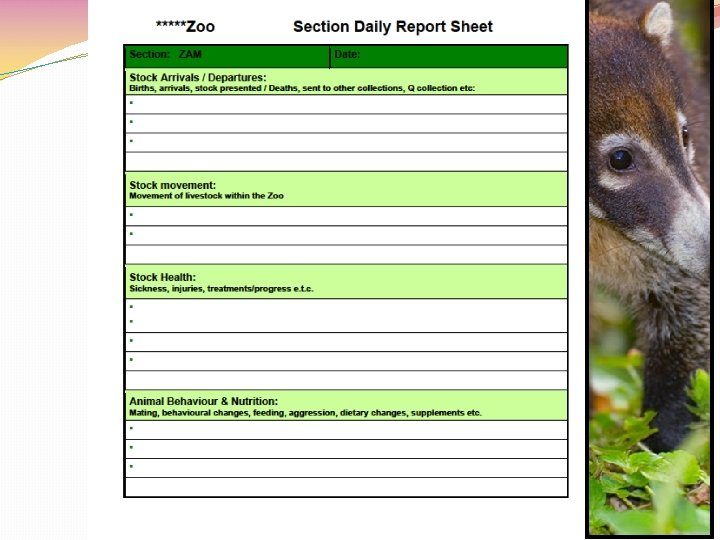
Daily Reports �These are filled in by keepers, in paper or electronic form �The record keeper uses the information to update animal collection records �Daily records need to include all the information required to complete records in ARKS or ZIMS �They should also ensure management is aware of any incidents or changes in the animal collection �BIAZA offers several alternative forms
Conclusions �Record keeping is requirement through a range of zoo legislation. �What are these? �…
References �Leus, K. , Traylor‐Holzer, K. , & Lacy, R. C. (2011). Genetic and demographic population management in zoos and aquariums: recent developments, future challenges and opportunities for scientific research. International Zoo Yearbook, 45(1), 213‐ 225. �Rees, P. A. (2005). Will the EC Zoos Directive increase the conservation value of zoo research? . Oryx, 39(02), 128‐ 131. �Watters, J. V. , Margulis, S. W. , & Atsalis, S. (2009). Behavioral monitoring in zoos and aquariums: a tool for guiding husbandry and directing research. Zoo Biology, 28(1), 35‐ 48.
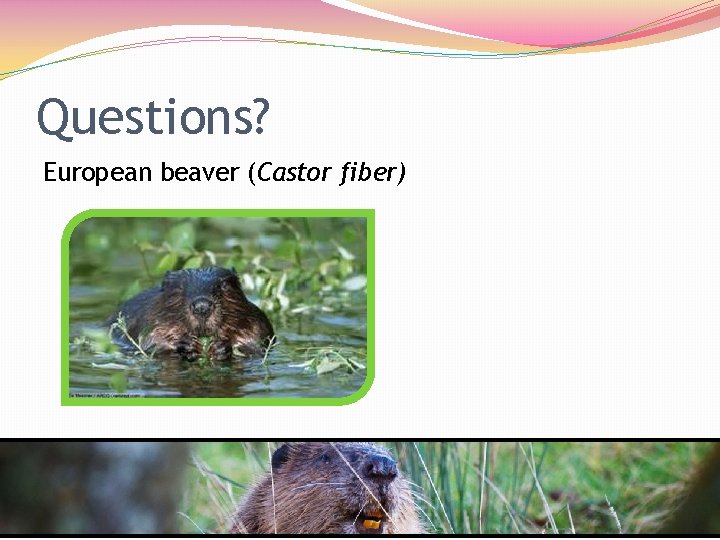
Questions? European beaver (Castor fiber)
- Slides: 21