
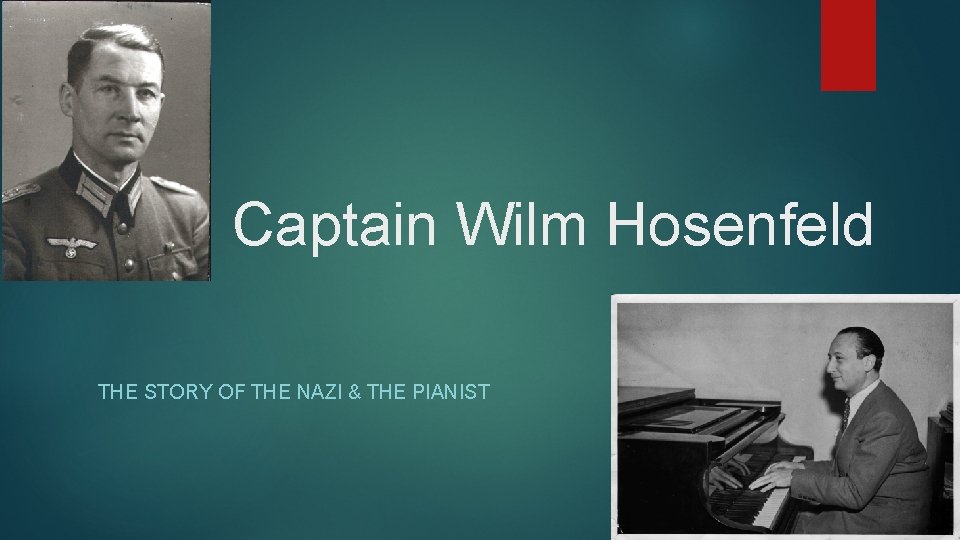
Captain Wilm Hosenfeld THE STORY OF THE NAZI
- Slides: 20
Captain Wilm Hosenfeld THE STORY OF THE NAZI & THE PIANIST
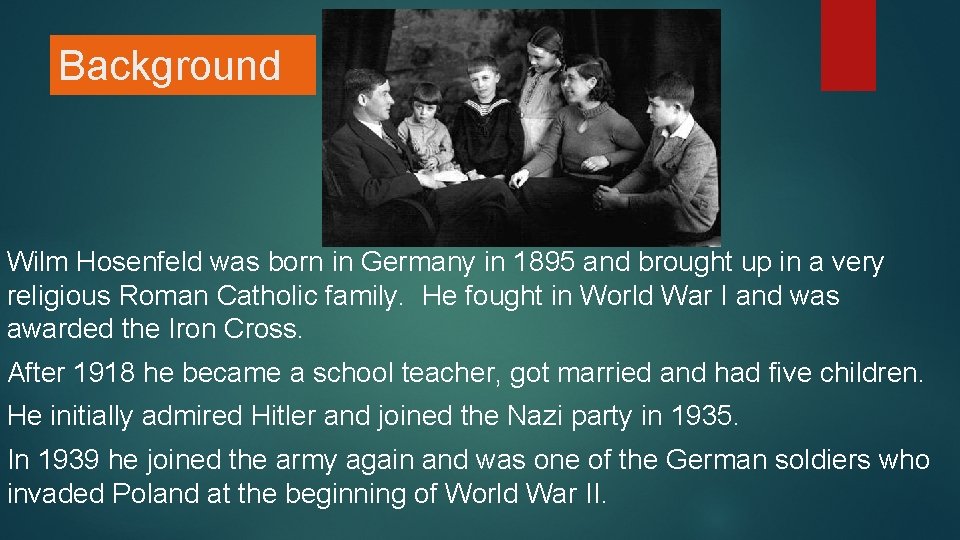
Background Wilm Hosenfeld was born in Germany in 1895 and brought up in a very religious Roman Catholic family. He fought in World War I and was awarded the Iron Cross. After 1918 he became a school teacher, got married and had five children. He initially admired Hitler and joined the Nazi party in 1935. In 1939 he joined the army again and was one of the German soldiers who invaded Poland at the beginning of World War II.
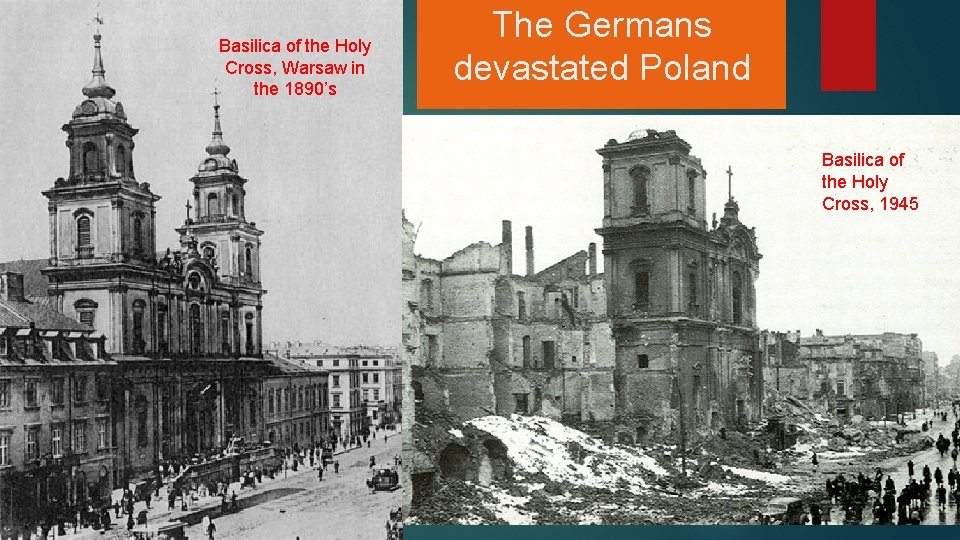
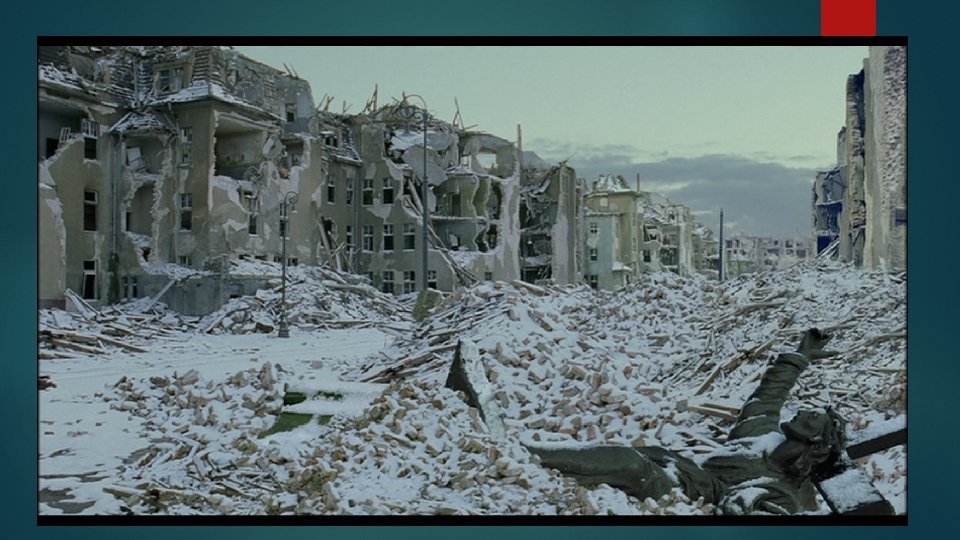
Basilica of the Holy Cross, Warsaw in the 1890’s The Germans devastated Poland Basilica of the Holy Cross, 1945
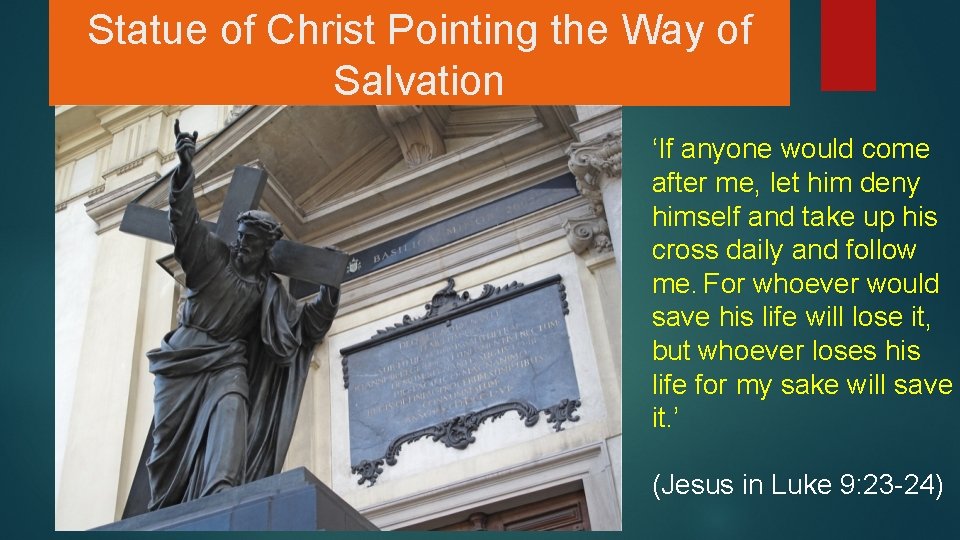
Statue of Christ Pointing the Way of Salvation ‘If anyone would come after me, let him deny himself and take up his cross daily and follow me. For whoever would save his life will lose it, but whoever loses his life for my sake will save it. ’ (Jesus in Luke 9: 23 -24)
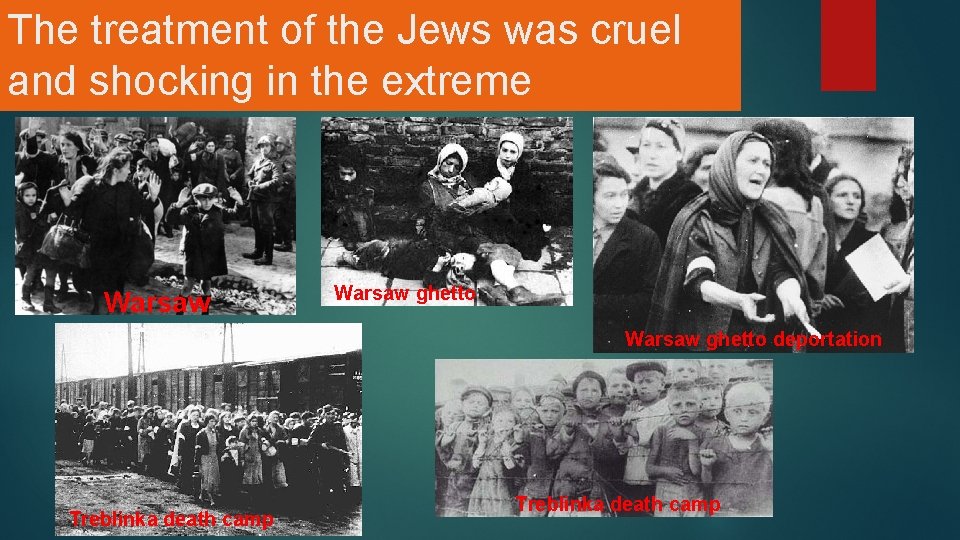
The treatment of the Jews was cruel and shocking in the extreme Warsaw ghetto deportation Treblinka death camp
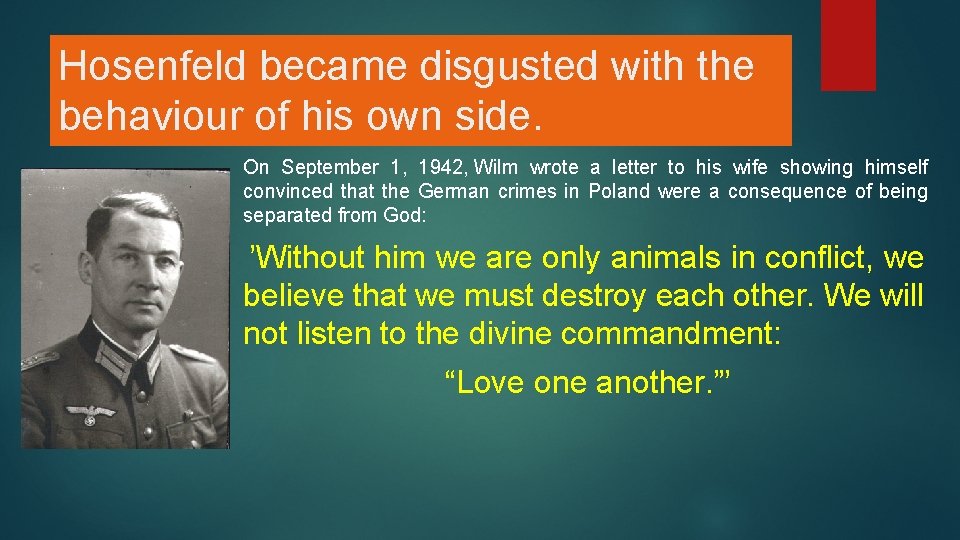
Hosenfeld became disgusted with the behaviour of his own side. On September 1, 1942, Wilm wrote a letter to his wife showing himself convinced that the German crimes in Poland were a consequence of being separated from God: ’Without him we are only animals in conflict, we believe that we must destroy each other. We will not listen to the divine commandment: “Love one another. ”’
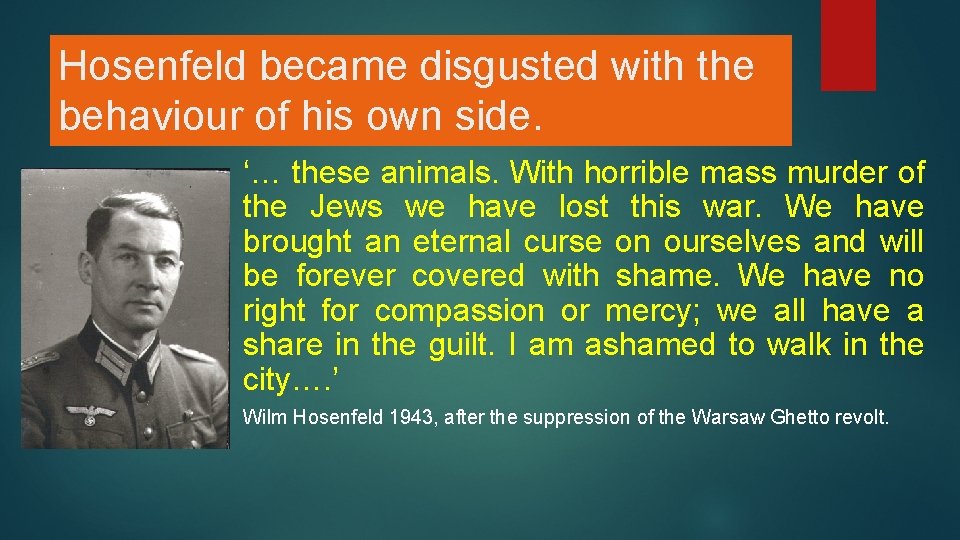
Hosenfeld became disgusted with the behaviour of his own side. ‘… these animals. With horrible mass murder of the Jews we have lost this war. We have brought an eternal curse on ourselves and will be forever covered with shame. We have no right for compassion or mercy; we all have a share in the guilt. I am ashamed to walk in the city…. ’ Wilm Hosenfeld 1943, after the suppression of the Warsaw Ghetto revolt.
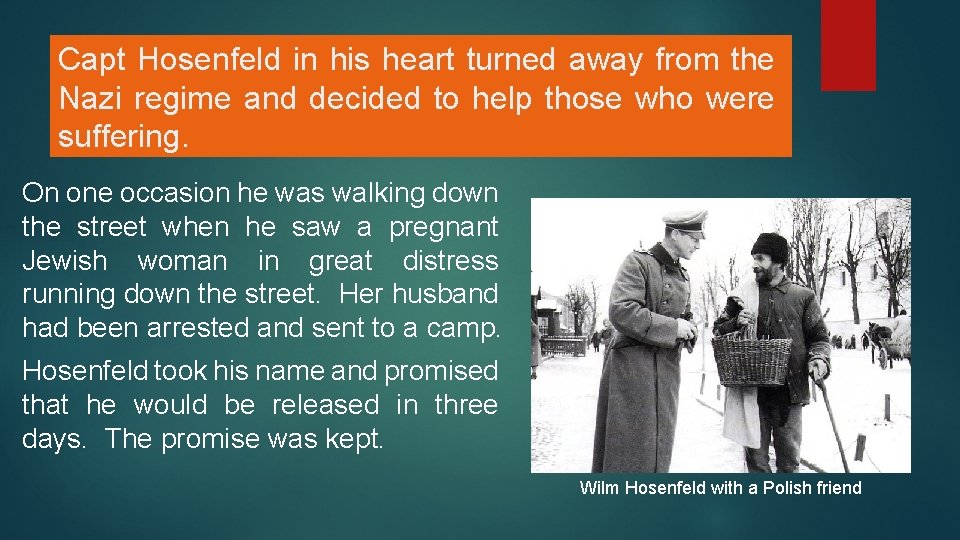
Capt Hosenfeld in his heart turned away from the Nazi regime and decided to help those who were suffering. On one occasion he was walking down the street when he saw a pregnant Jewish woman in great distress running down the street. Her husband had been arrested and sent to a camp. Hosenfeld took his name and promised that he would be released in three days. The promise was kept. Wilm Hosenfeld with a Polish friend
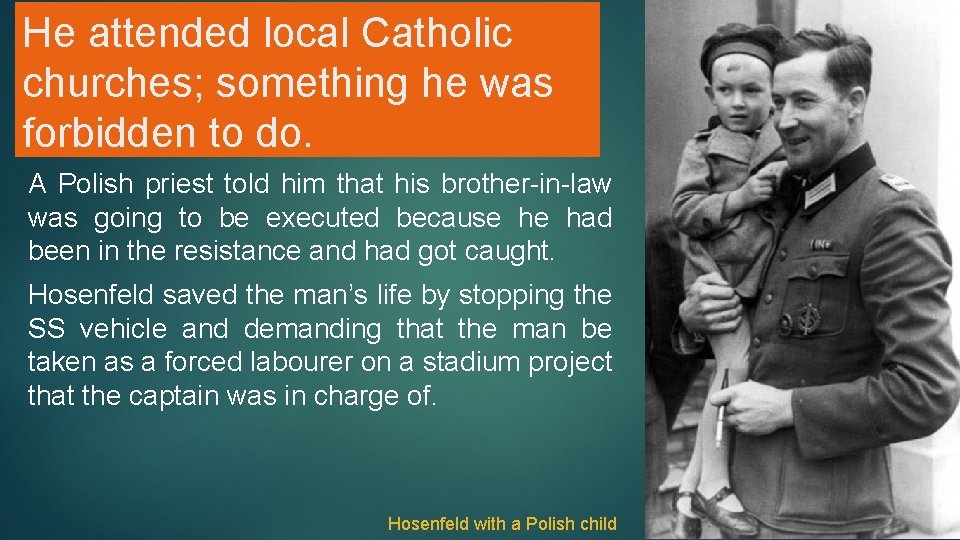
He attended local Catholic churches; something he was forbidden to do. A Polish priest told him that his brother-in-law was going to be executed because he had been in the resistance and had got caught. Hosenfeld saved the man’s life by stopping the SS vehicle and demanding that the man be taken as a forced labourer on a stadium project that the captain was in charge of. Hosenfeld with a Polish child
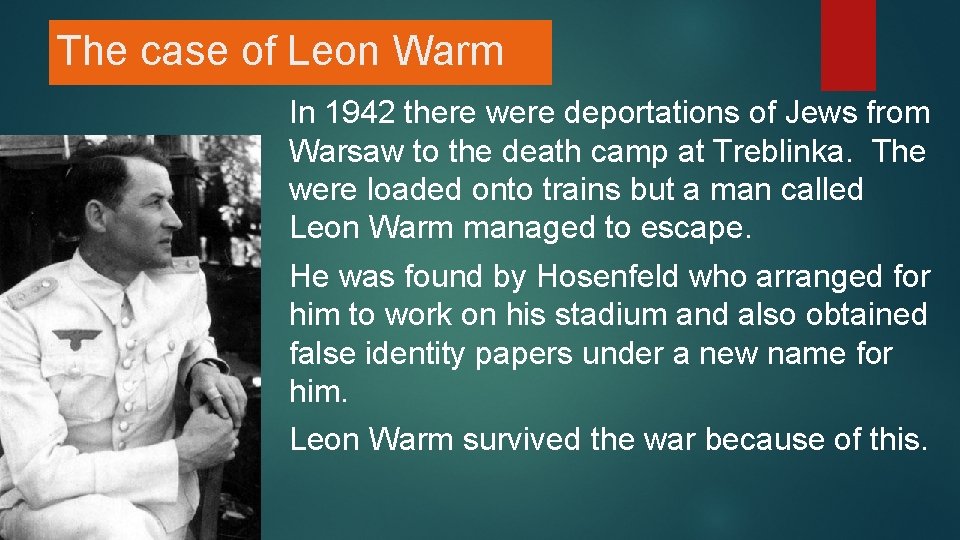
The case of Leon Warm In 1942 there were deportations of Jews from Warsaw to the death camp at Treblinka. The were loaded onto trains but a man called Leon Warm managed to escape. He was found by Hosenfeld who arranged for him to work on his stadium and also obtained false identity papers under a new name for him. Leon Warm survived the war because of this.
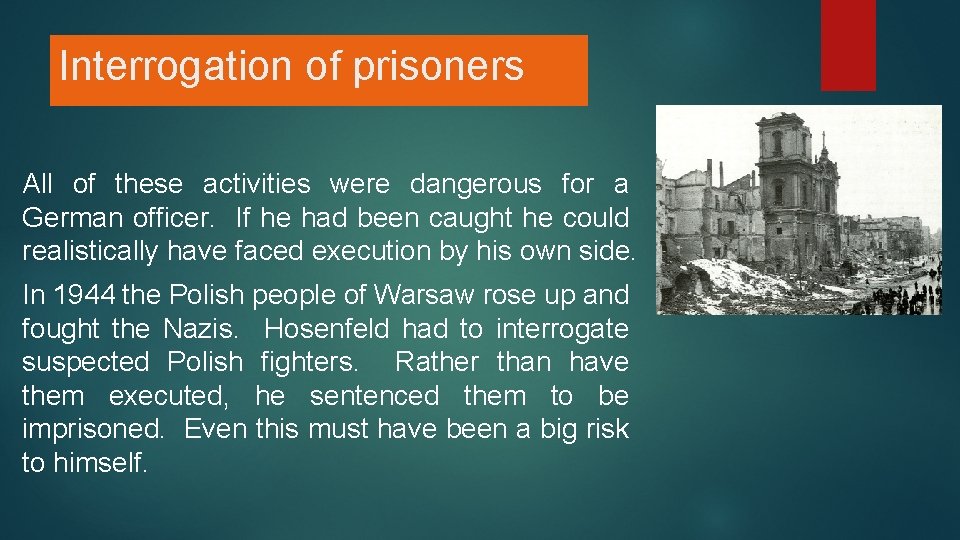
Interrogation of prisoners All of these activities were dangerous for a German officer. If he had been caught he could realistically have faced execution by his own side. In 1944 the Polish people of Warsaw rose up and fought the Nazis. Hosenfeld had to interrogate suspected Polish fighters. Rather than have them executed, he sentenced them to be imprisoned. Even this must have been a big risk to himself.
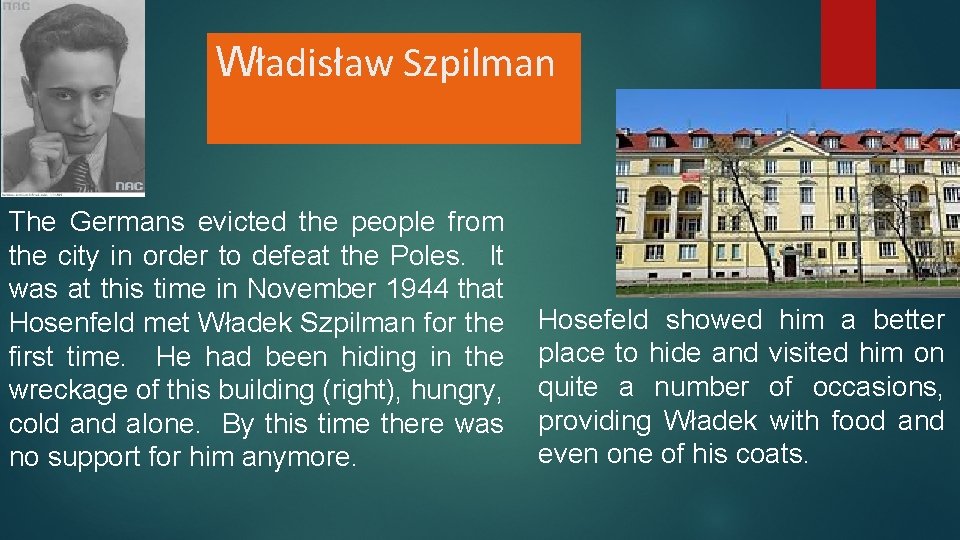
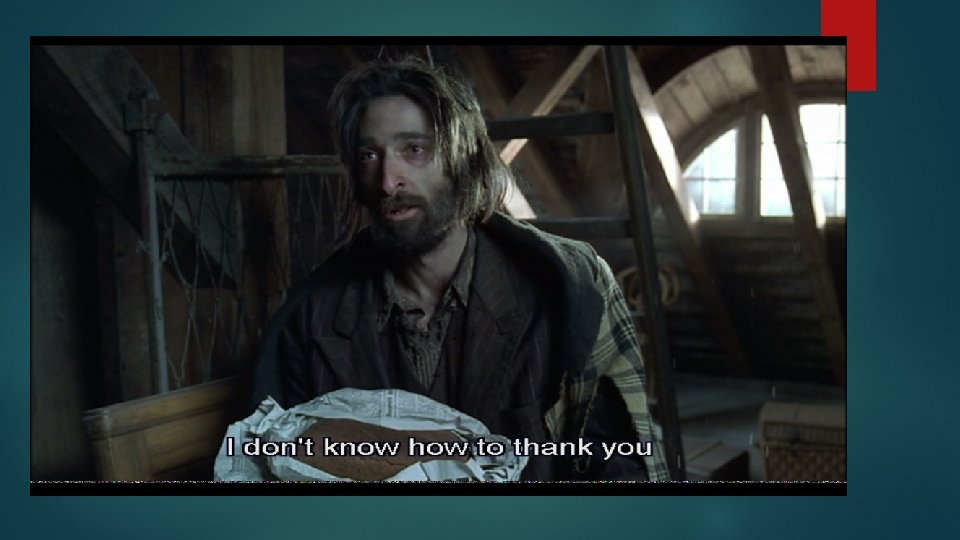
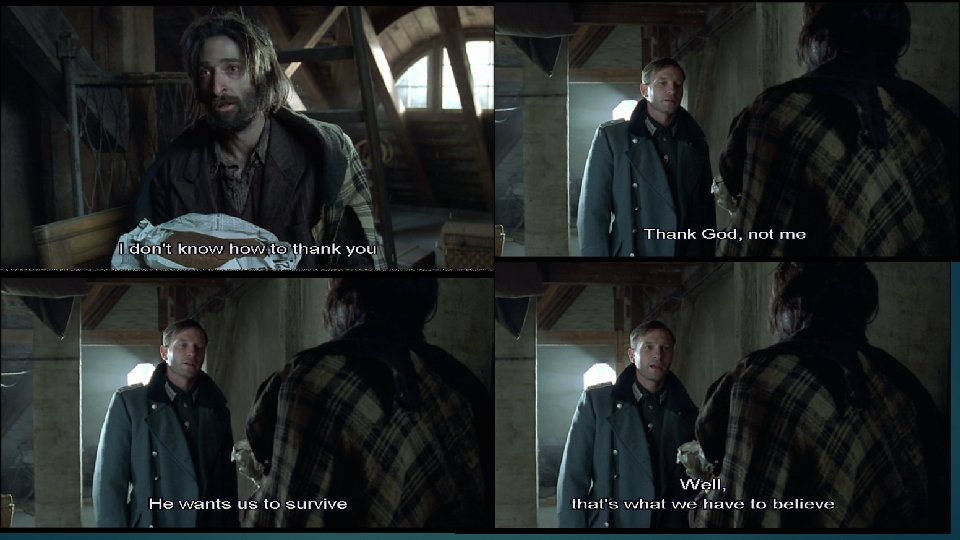
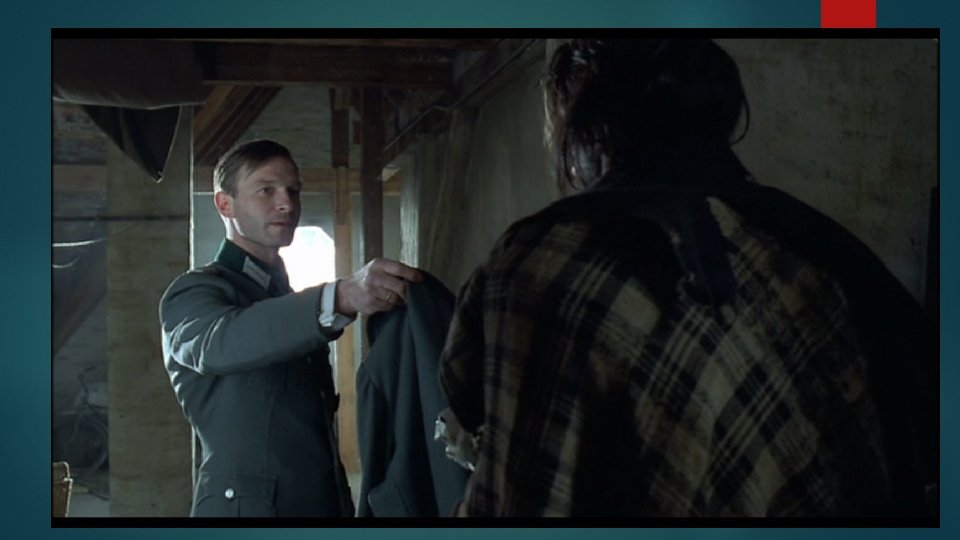
Władisław Szpilman The Germans evicted the people from the city in order to defeat the Poles. It was at this time in November 1944 that Hosenfeld met Władek Szpilman for the first time. He had been hiding in the wreckage of this building (right), hungry, cold and alone. By this time there was no support for him anymore. Hosefeld showed him a better place to hide and visited him on quite a number of occasions, providing Władek with food and even one of his coats.
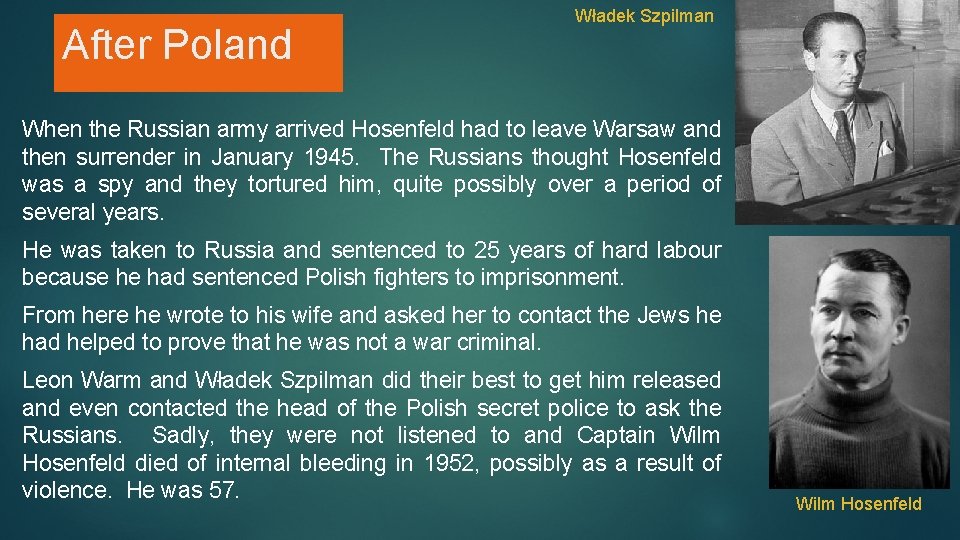
After Poland Władek Szpilman When the Russian army arrived Hosenfeld had to leave Warsaw and then surrender in January 1945. The Russians thought Hosenfeld was a spy and they tortured him, quite possibly over a period of several years. He was taken to Russia and sentenced to 25 years of hard labour because he had sentenced Polish fighters to imprisonment. From here he wrote to his wife and asked her to contact the Jews he had helped to prove that he was not a war criminal. Leon Warm and Władek Szpilman did their best to get him released and even contacted the head of the Polish secret police to ask the Russians. Sadly, they were not listened to and Captain Wilm Hosenfeld died of internal bleeding in 1952, possibly as a result of violence. He was 57. Wilm Hosenfeld
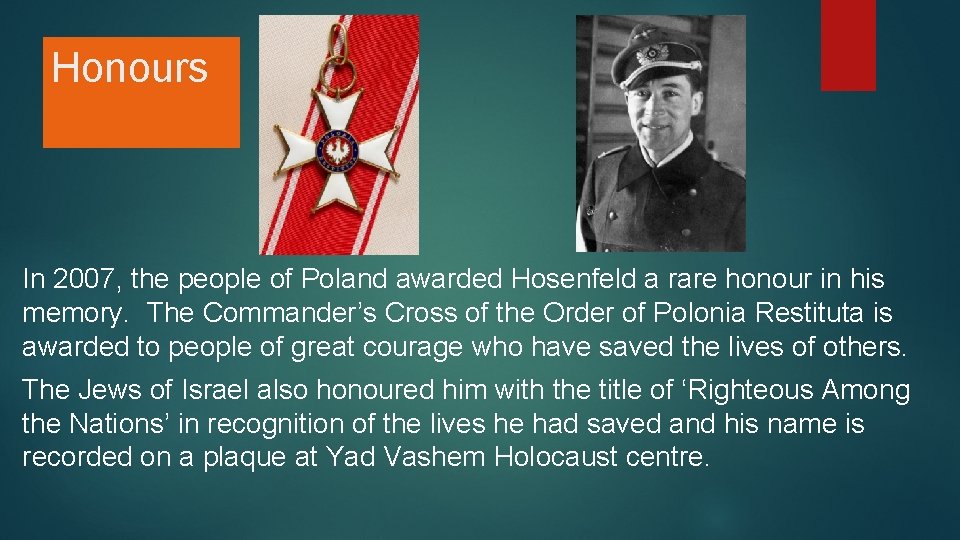
Honours In 2007, the people of Poland awarded Hosenfeld a rare honour in his memory. The Commander’s Cross of the Order of Polonia Restituta is awarded to people of great courage who have saved the lives of others. The Jews of Israel also honoured him with the title of ‘Righteous Among the Nations’ in recognition of the lives he had saved and his name is recorded on a plaque at Yad Vashem Holocaust centre.
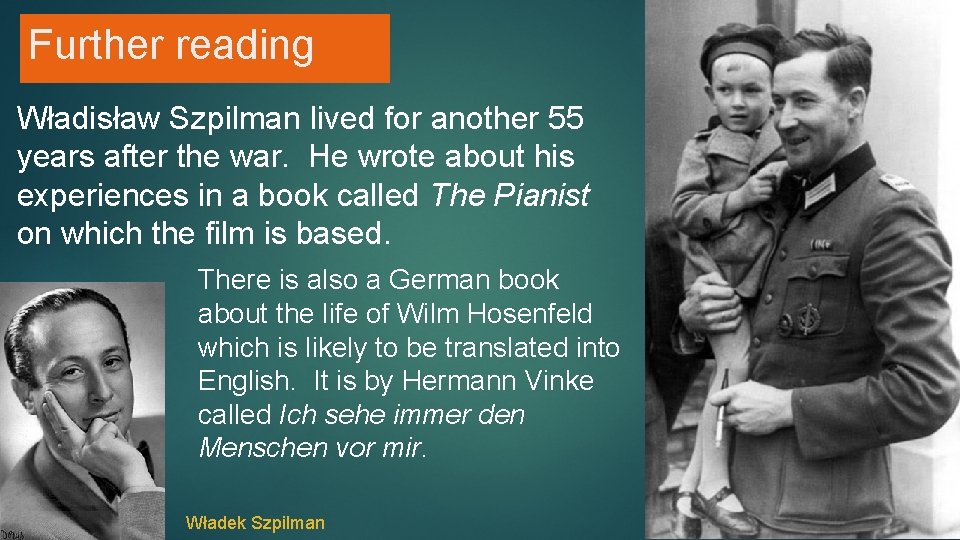
Further reading Władisław Szpilman lived for another 55 years after the war. He wrote about his experiences in a book called The Pianist on which the film is based. There is also a German book about the life of Wilm Hosenfeld which is likely to be translated into English. It is by Hermann Vinke called Ich sehe immer den Menschen vor mir. Władek Szpilman