
Capsule network 2018412 Outline Capsules l Dynamic Routing






- Slides: 27
Capsule network 張堂正 2018/4/12
Outline Capsules l Dynamic Routing Between Capsules l Matrix Capsules With EM Routing l Experiment l Discussion l
Dynamic Routing Between Capsules Geoffrey E. Hinton
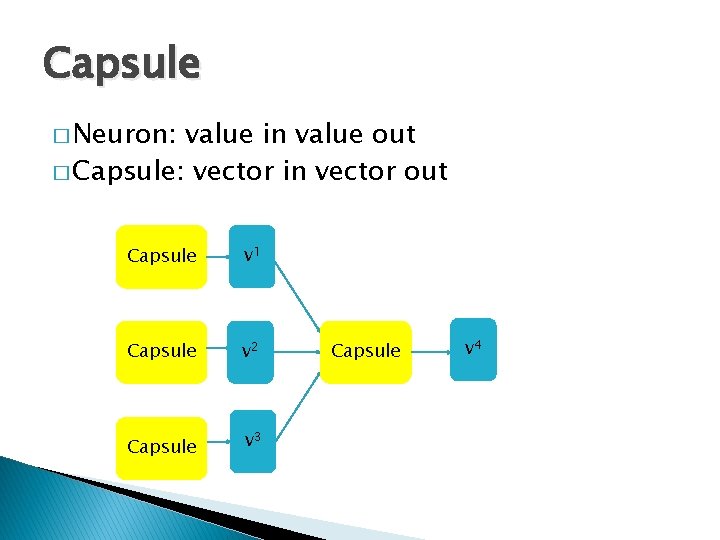
Capsule � Neuron: value in value out � Capsule: vector in vector out Capsule v 1 Capsule v 2 Capsule v 3 Capsule v 4
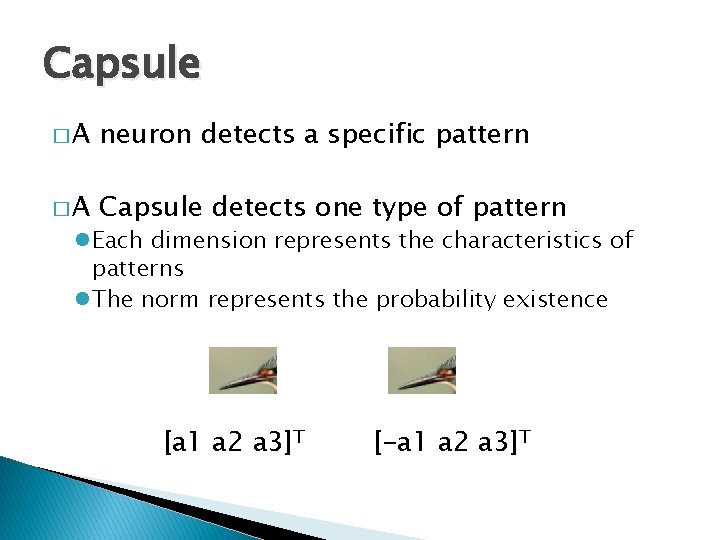
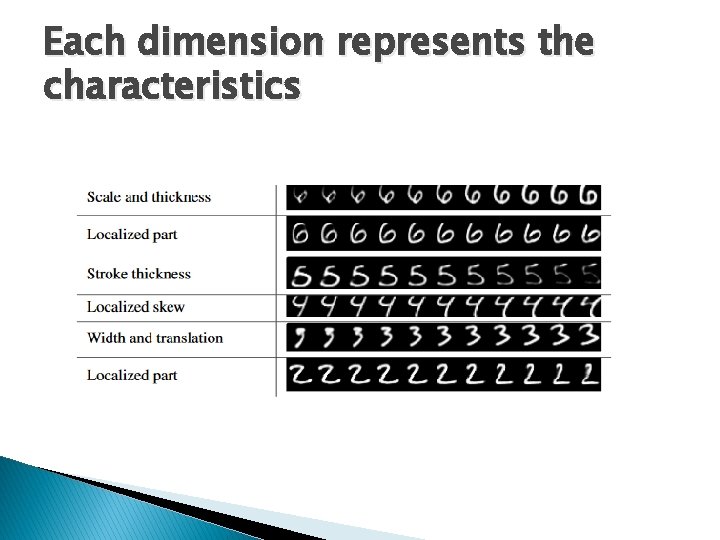
Capsule �A neuron detects a specific pattern �A Capsule detects one type of pattern l. Each dimension represents the characteristics of patterns l. The norm represents the probability existence [a 1 a 2 a 3]T [-a 1 a 2 a 3]T
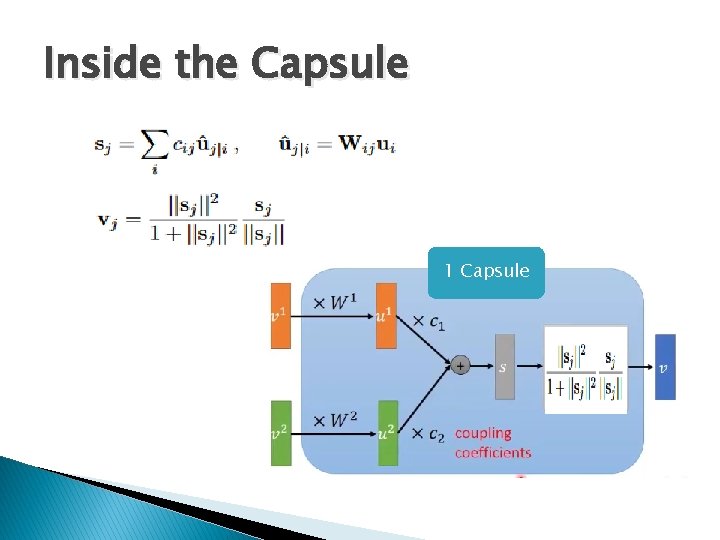
Inside the Capsule 1 Capsule
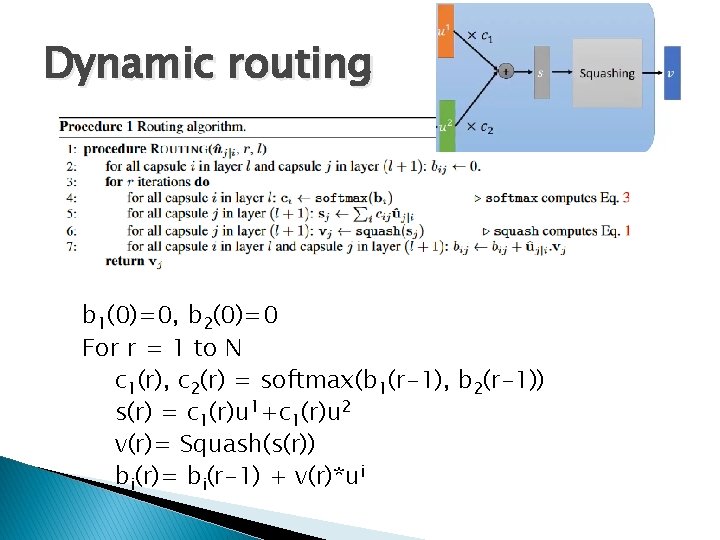
Dynamic routing b 1(0)=0, b 2(0)=0 For r = 1 to N c 1(r), c 2(r) = softmax(b 1(r-1), b 2(r-1)) s(r) = c 1(r)u 1+c 1(r)u 2 v(r)= Squash(s(r)) bi(r)= bi(r-1) + v(r)*ui
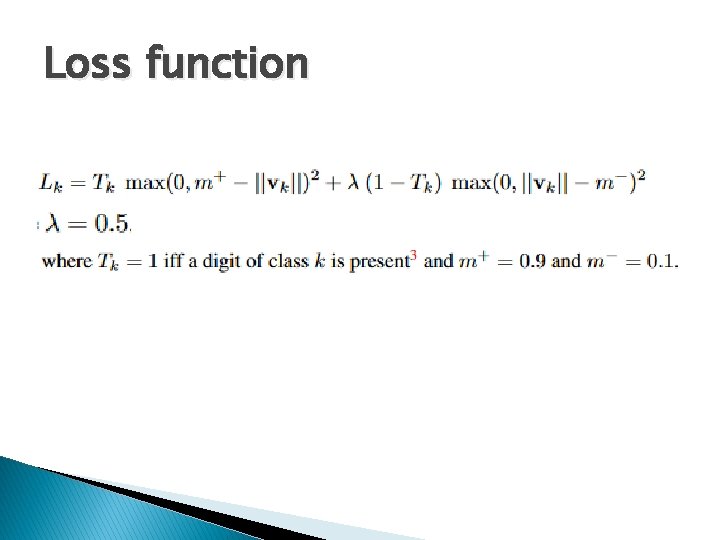
Loss function
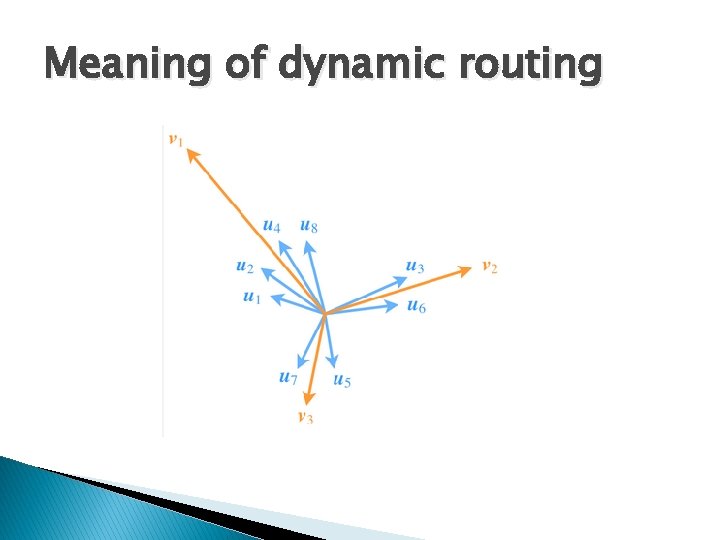
Meaning of dynamic routing
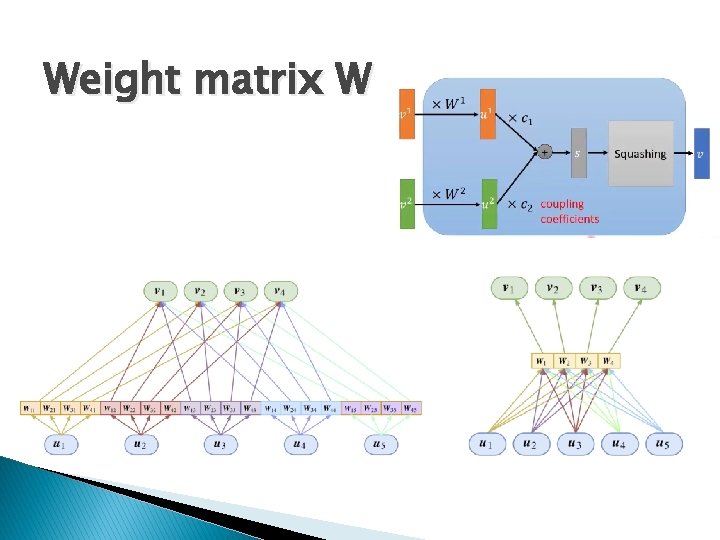
Weight matrix W
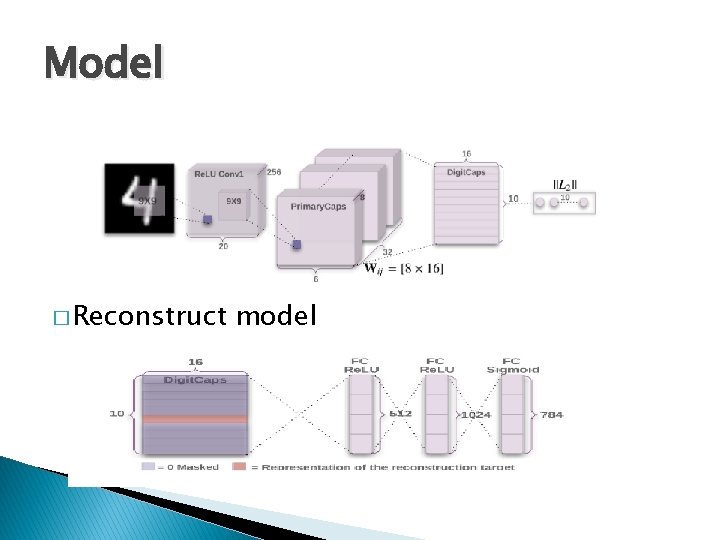
Model � Reconstruct model
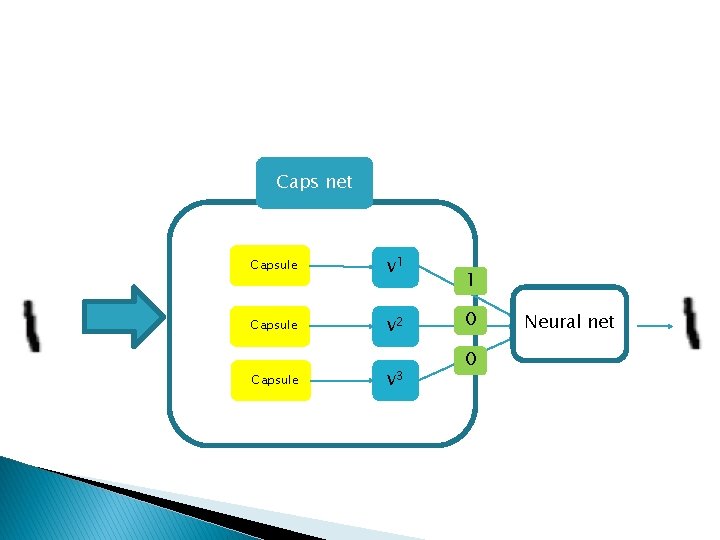
Caps net Capsule v 1 Capsule v 2 Capsule v 3 1 0 0 Neural net
Matrix Capsules With EM Routing Geoffrey E. Hinton Geoffrey Hinton, Sara Sabour, Nicholas Frosst
Difference between two method � Vector � EM → Matrix for routing-by-agreement
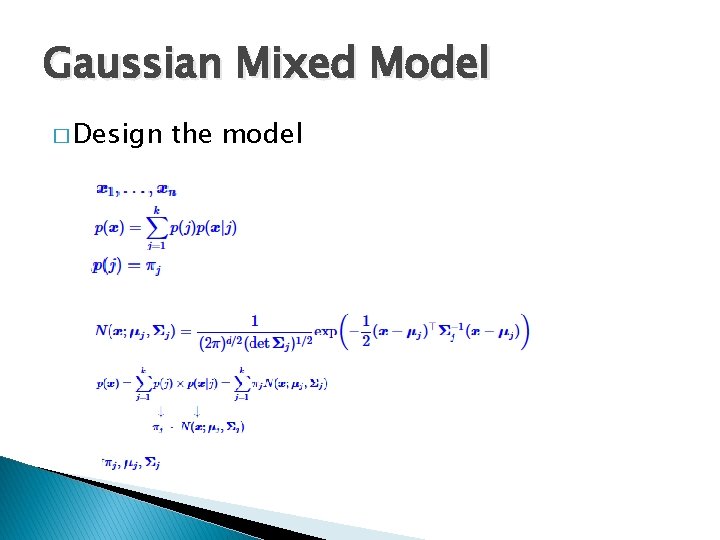
Gaussian Mixed Model � Design the model
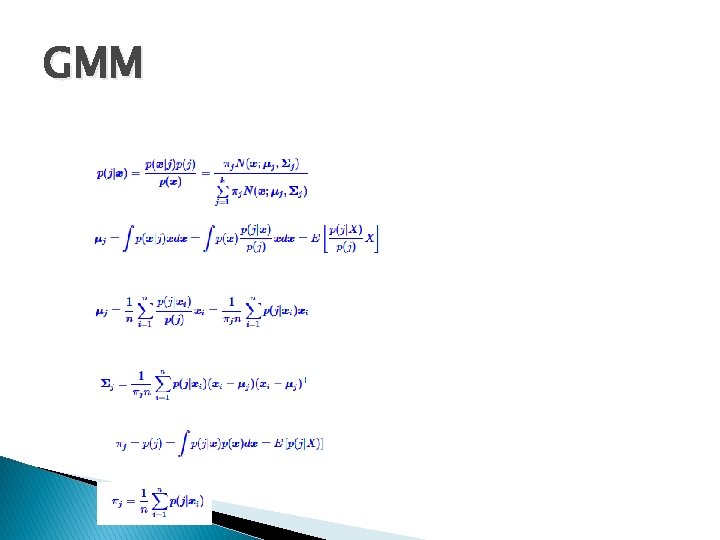
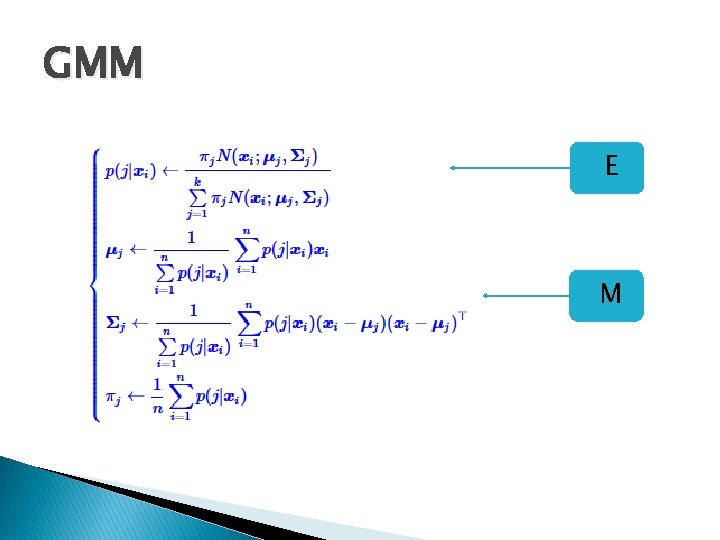
GMM
GMM E M
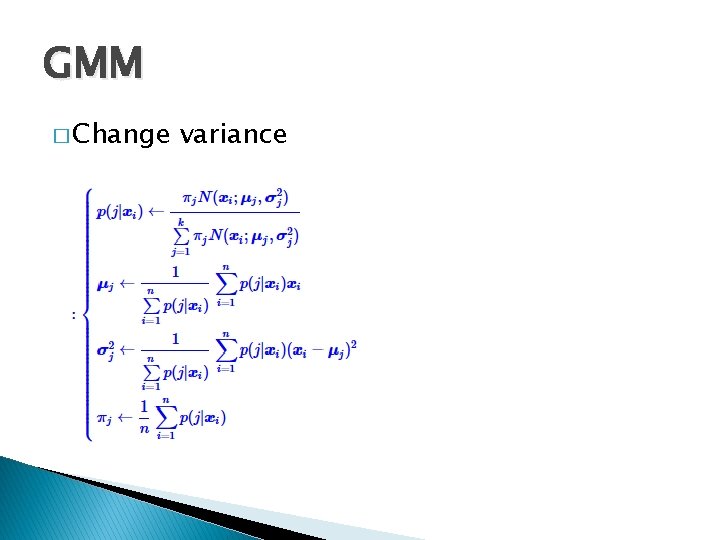
GMM � Change variance
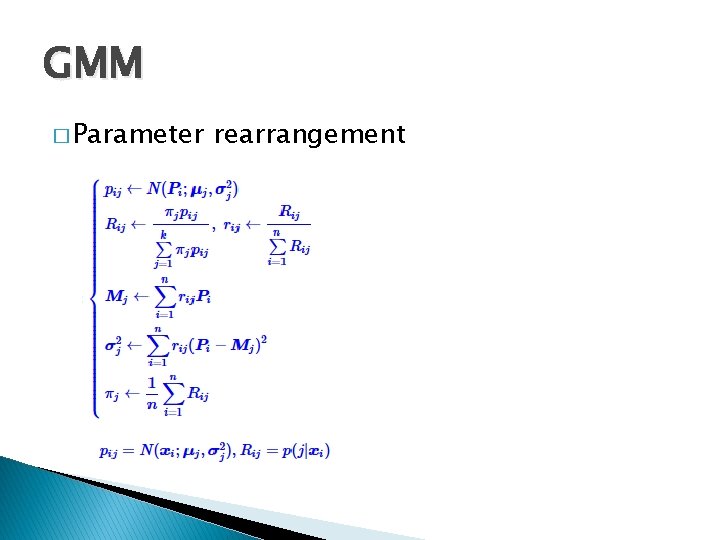
GMM � Parameter rearrangement
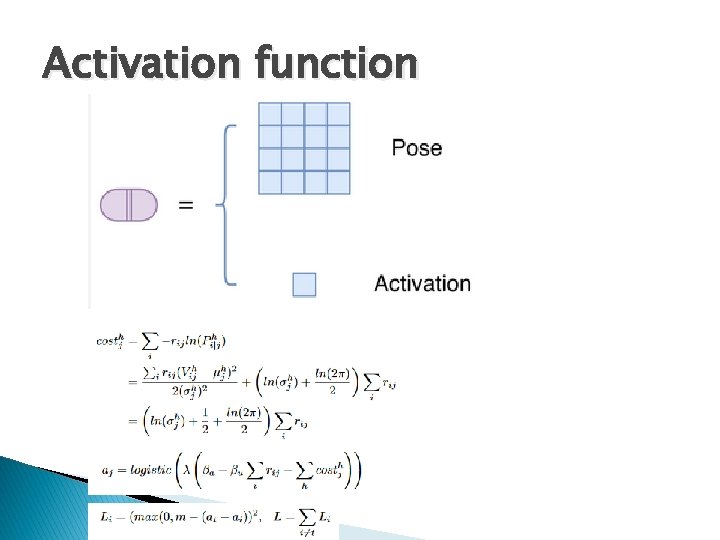
Activation function
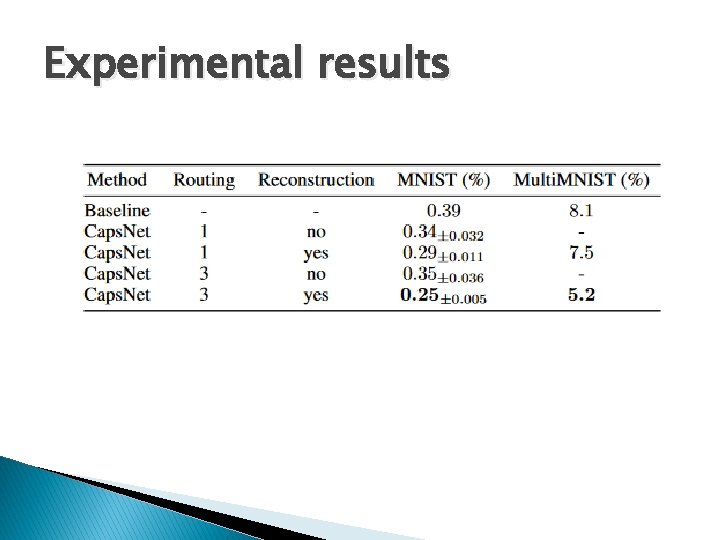
Experimental results
Each dimension represents the characteristics
Robustness to affine transform � MNIST digit with random small affine transformation � Caps. Net achieved 79% accuracy on the affnist test set. A traditional convolutional model with a similar number of parameters only achieved 66% on the affnist test set.
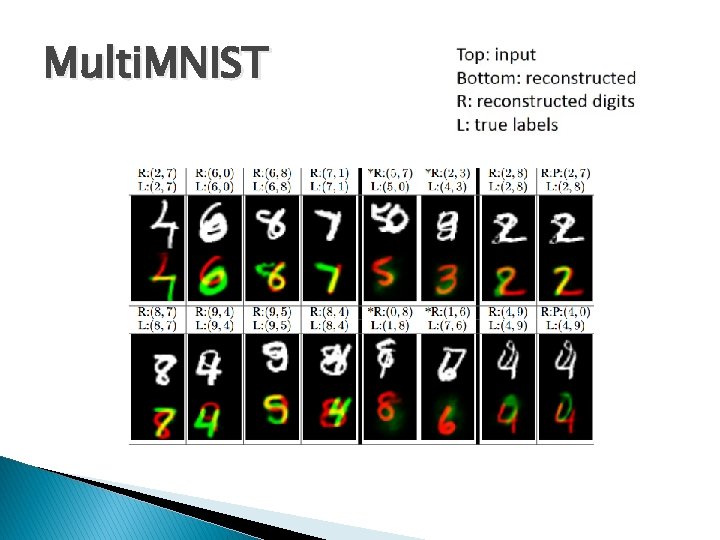
Multi. MNIST
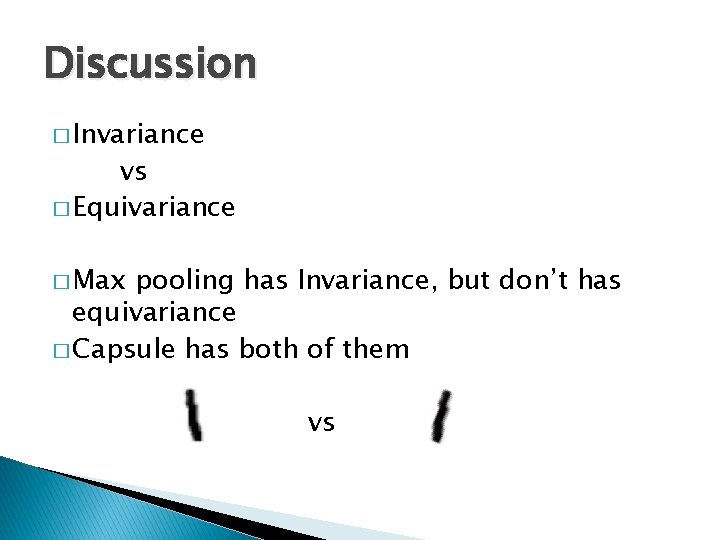
Discussion � Invariance vs � Equivariance � Max pooling has Invariance, but don’t has equivariance � Capsule has both of them vs
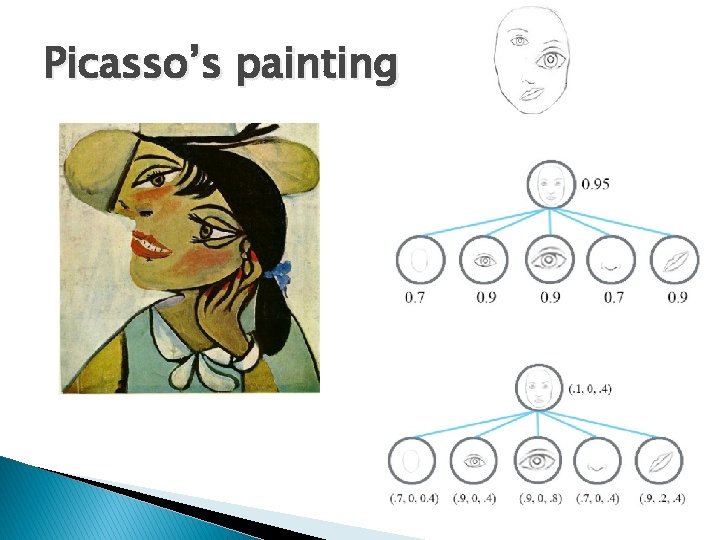
Picasso’s painting
End