
Capsid Nucleic Acid Envelope Receptors Protein Shell DNA
- Slides: 37
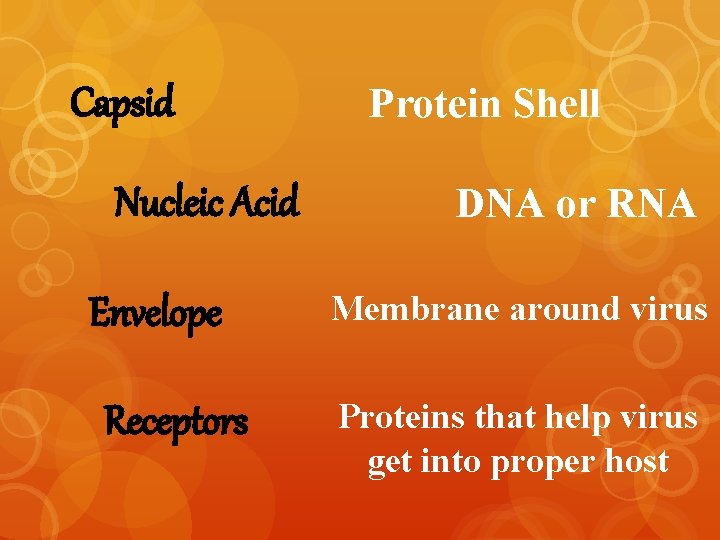
Capsid Nucleic Acid Envelope Receptors Protein Shell DNA or RNA Membrane around virus Proteins that help virus get into proper host
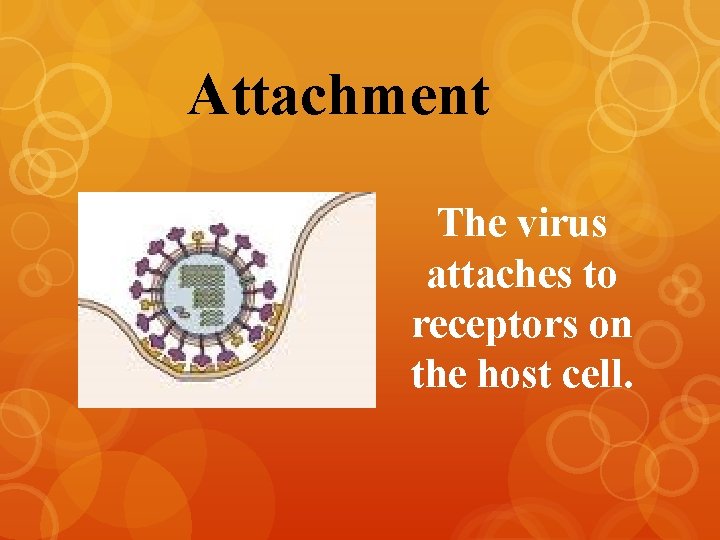
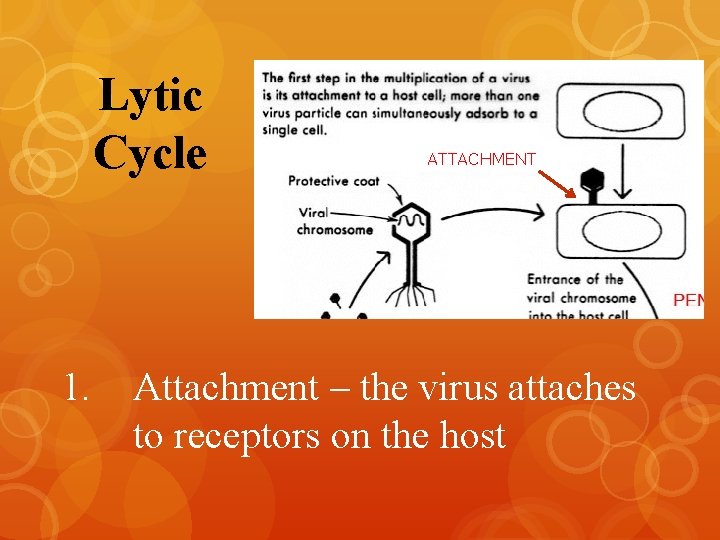
Attachment The virus attaches to receptors on the host cell.
Entry into the Cell The virus is able to get into the cell in one of three ways.
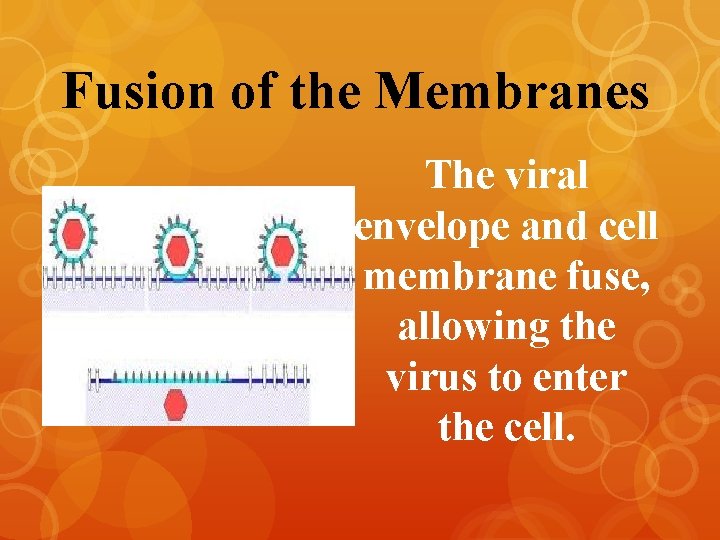
Fusion of the Membranes The viral envelope and cell membrane fuse, allowing the virus to enter the cell.
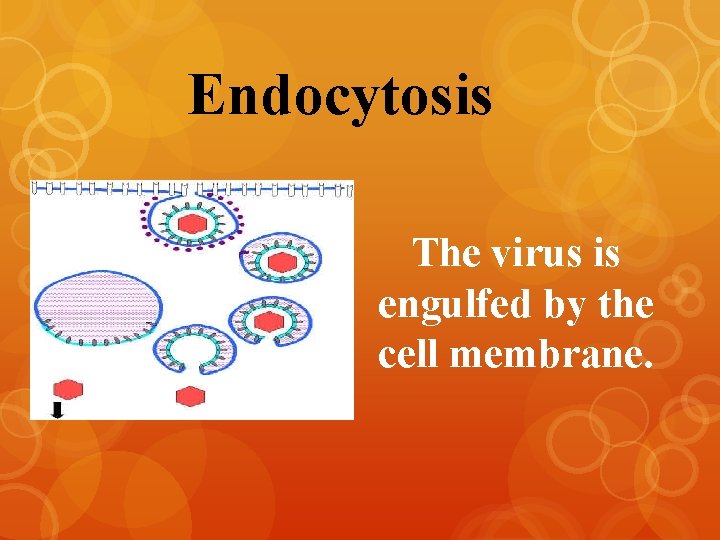
Endocytosis The virus is engulfed by the cell membrane.
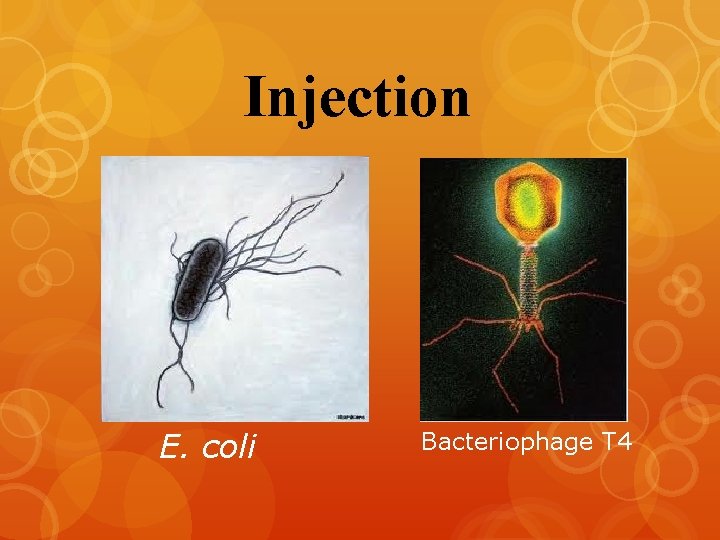
Injection E. coli Bacteriophage T 4
What happens once the genetic material is inside the cell? One of two different processes may occur: 1. The virus takes over the cell and begins to replicate right away, killing the host cell in the process. 2. The virus doesn’t take over or kill the host cell right away, but does begin to replicate.
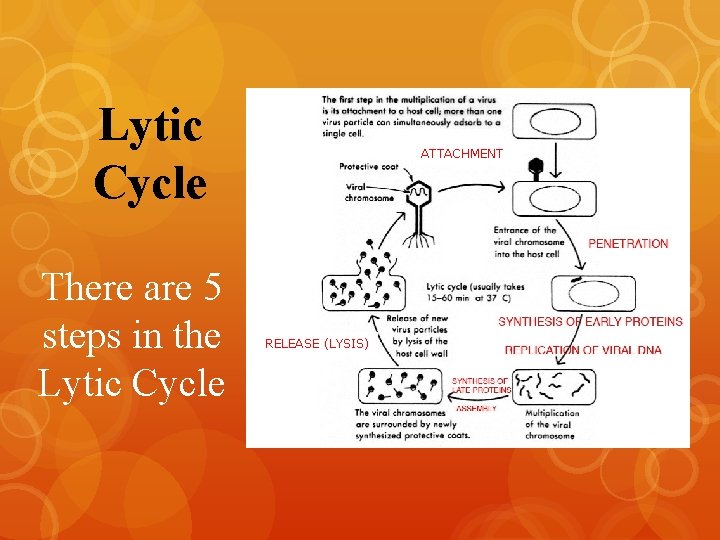
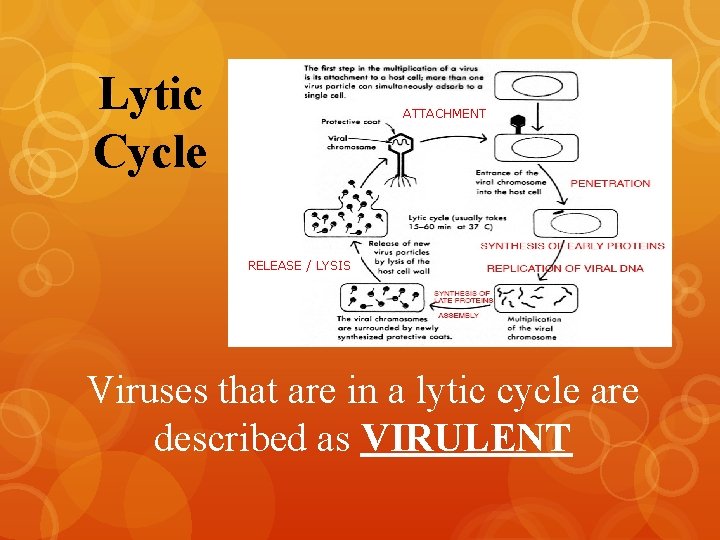
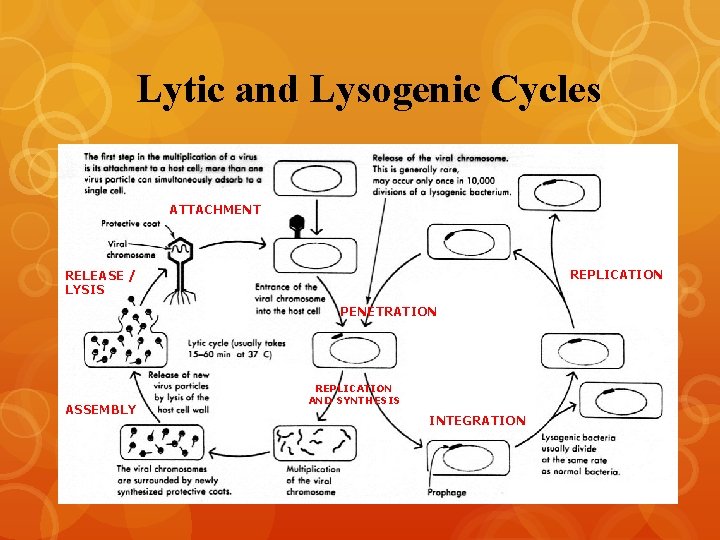
Lytic Cycle There are 5 steps in the Lytic Cycle ATTACHMENT RELEASE (LYSIS)
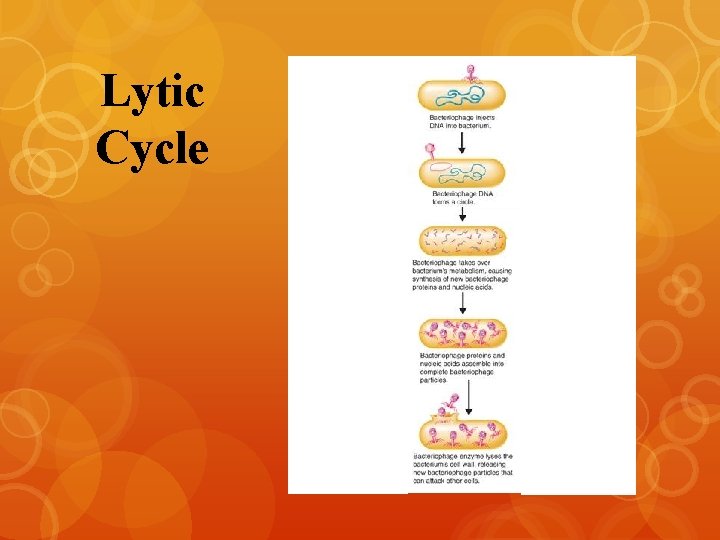
Lytic Cycle 1. ATTACHMENT Attachment – the virus attaches to receptors on the host
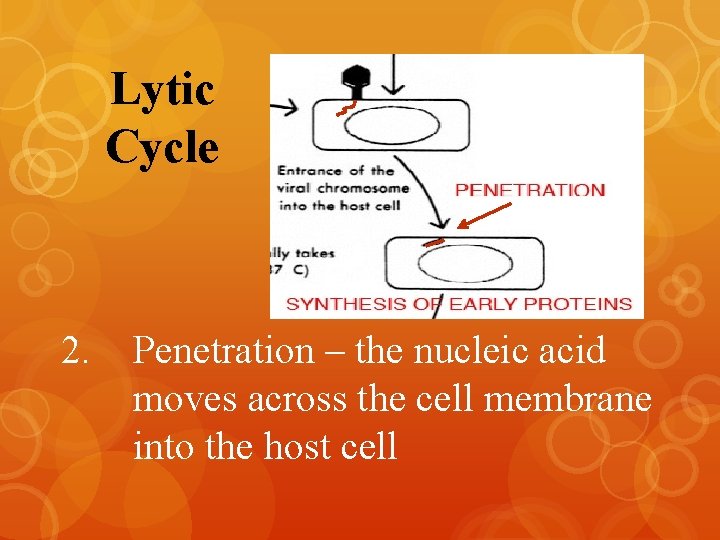
Lytic Cycle 2. Penetration – the nucleic acid moves across the cell membrane into the host cell
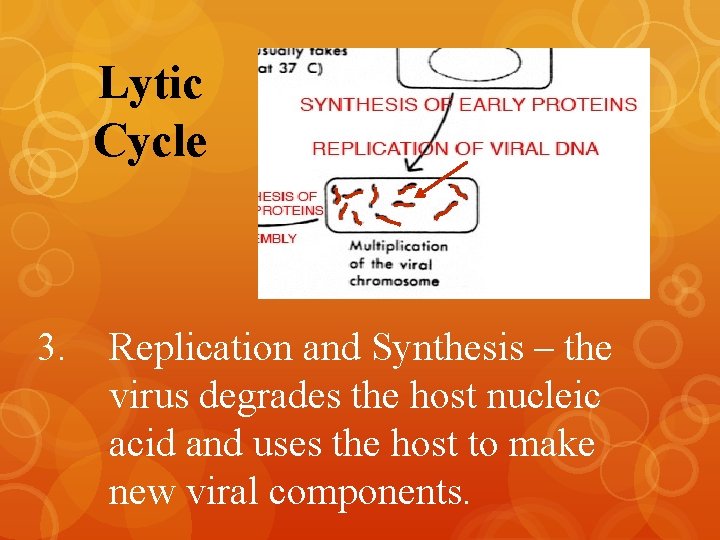
Lytic Cycle 3. Replication and Synthesis – the virus degrades the host nucleic acid and uses the host to make new viral components.
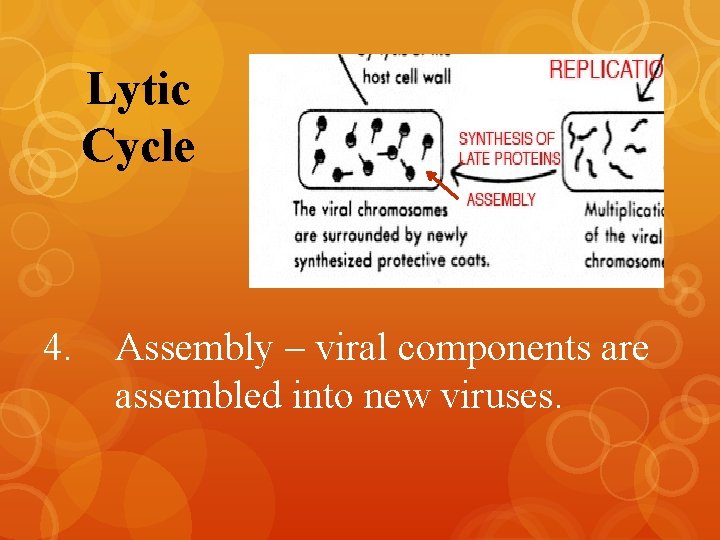
Lytic Cycle 4. Assembly – viral components are assembled into new viruses.
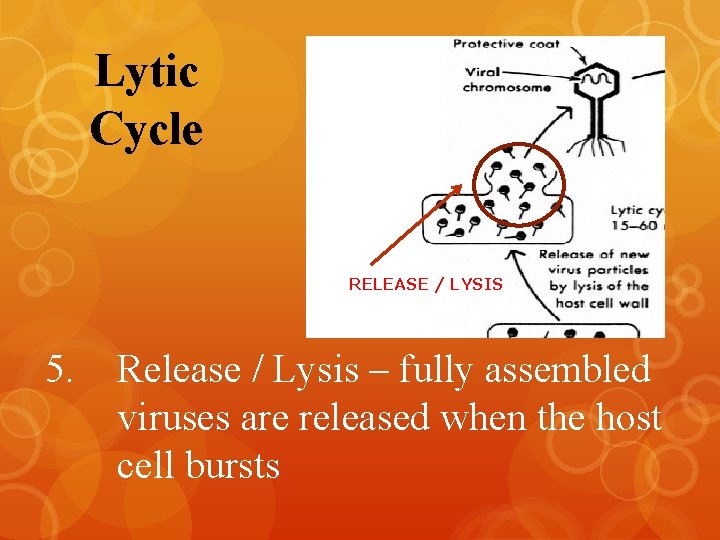
Lytic Cycle RELEASE / LYSIS 5. Release / Lysis – fully assembled viruses are released when the host cell bursts
Lytic Cycle ATTACHMENT RELEASE / LYSIS Viruses that are in a lytic cycle are described as VIRULENT
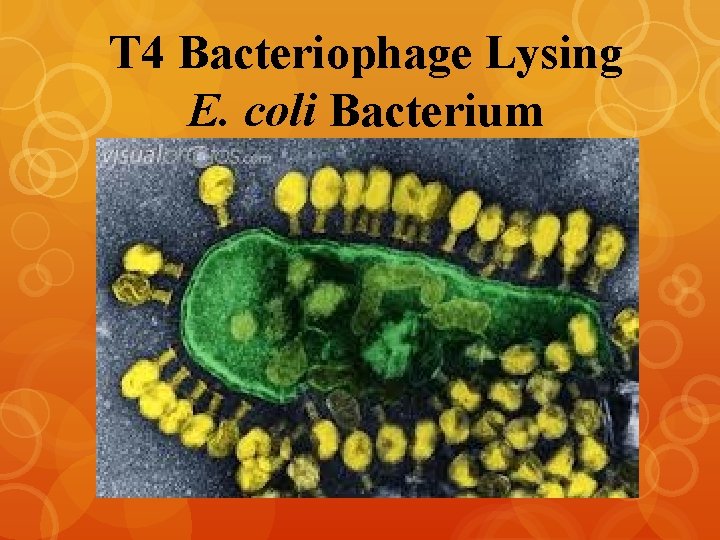
T 4 Bacteriophage Lysing E. coli Bacterium
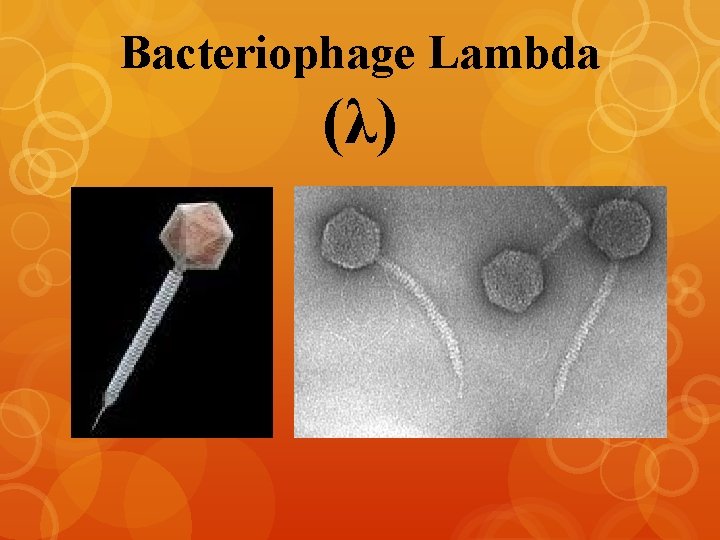
Bacteriophage Lambda (λ)
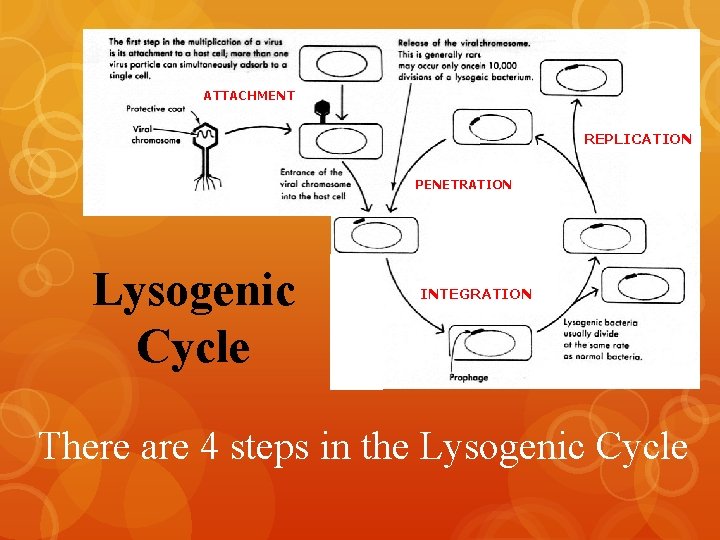
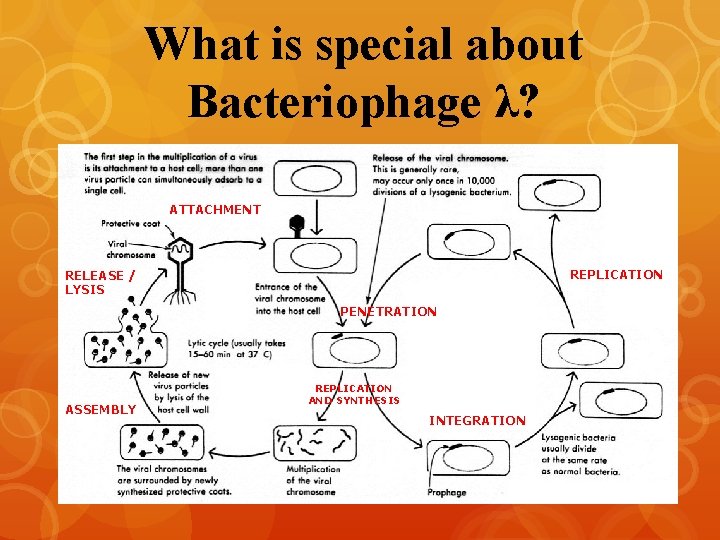
ATTACHMENT REPLICATION NNNNNNNNNN NNNNN Lysogenic Cycle PENETRATION nnn nnn nnn nndd dd INTEGRATION There are 4 steps in the Lysogenic Cycle
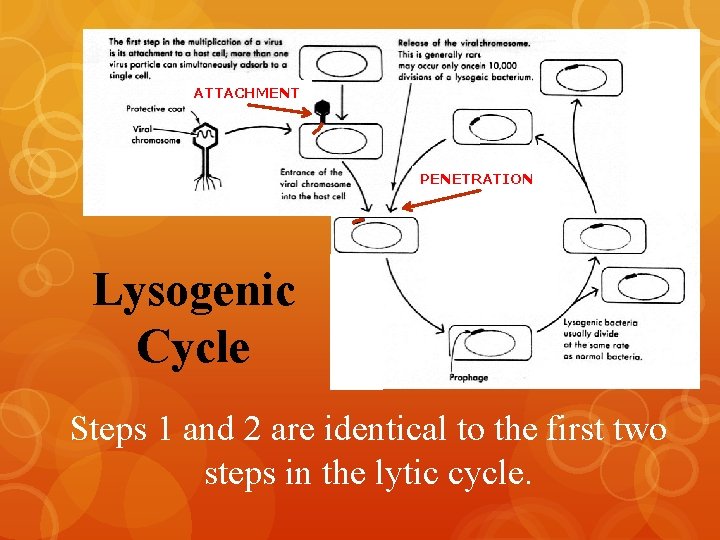
ATTACHMENT NNNNNNNNNN NNNNN Lysogenic Cycle PENETRATION nnn nnn nnn nndd dd Steps 1 and 2 are identical to the first two steps in the lytic cycle.
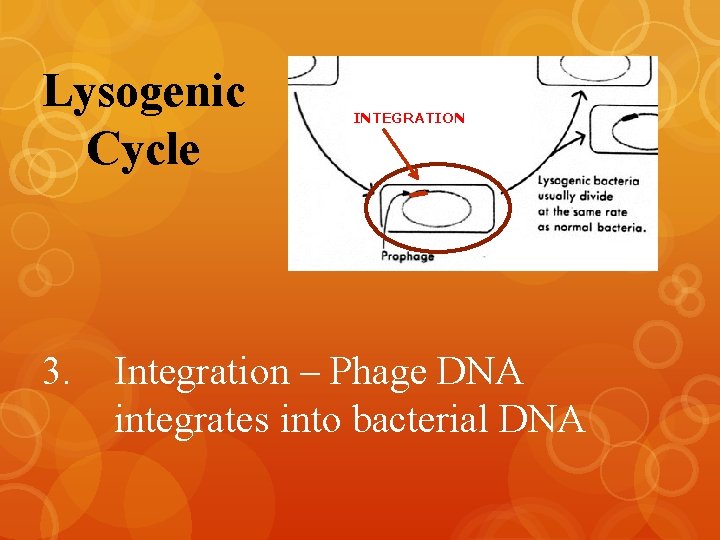
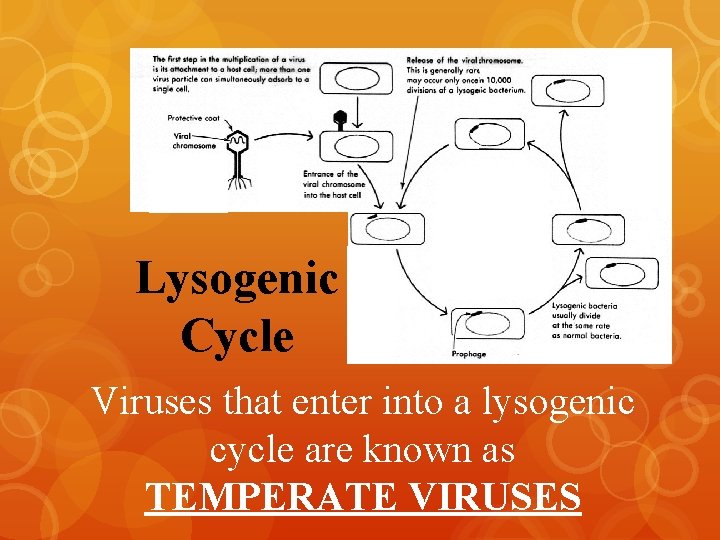
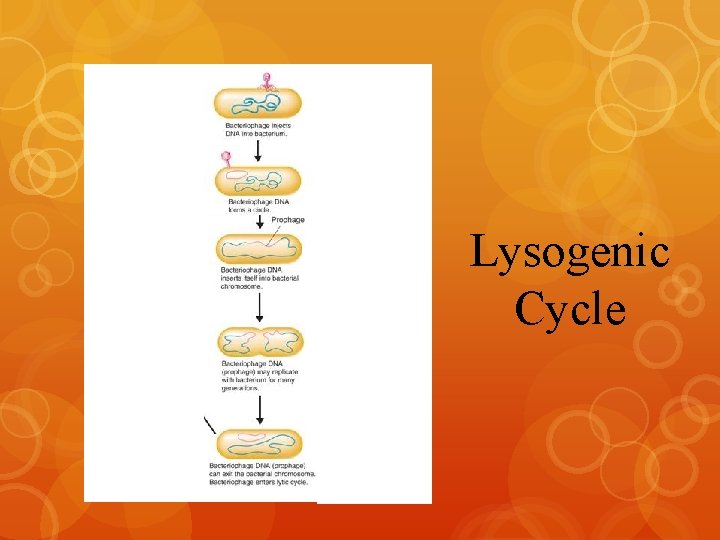
Lysogenic Cycle 3. INTEGRATION Integration – Phage DNA integrates into bacterial DNA
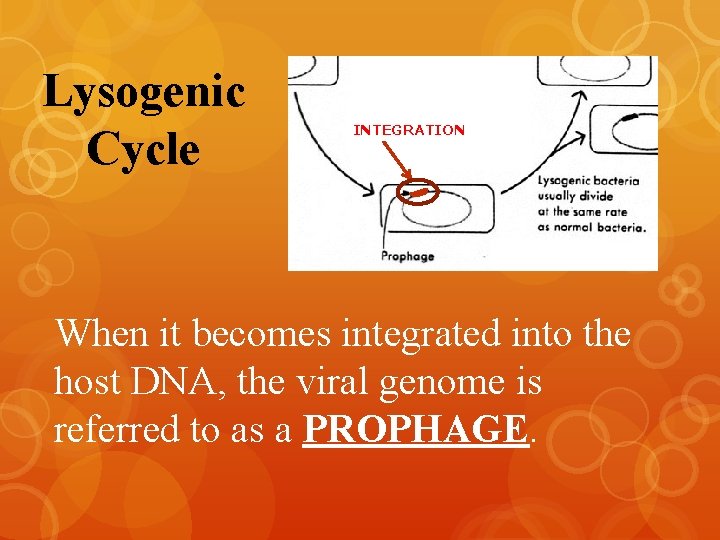
Lysogenic Cycle INTEGRATION When it becomes integrated into the host DNA, the viral genome is referred to as a PROPHAGE.
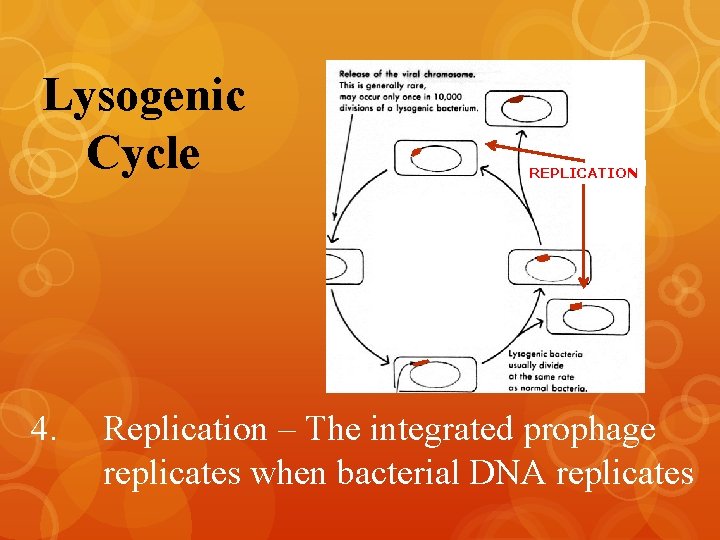
Lysogenic Cycle 4. REPLICATION Replication – The integrated prophage replicates when bacterial DNA replicates
NNNNNNNN Lysogenic Cycle nnn nnn nnn nnd Viruses that enter into a lysogenic cycle are known as TEMPERATE VIRUSES
What is special about Bacteriophage λ? ATTACHMENT REPLICATION RELEASE / LYSIS PENETRATION ASSEMBLY REPLICATION AND SYNTHESIS INTEGRATION
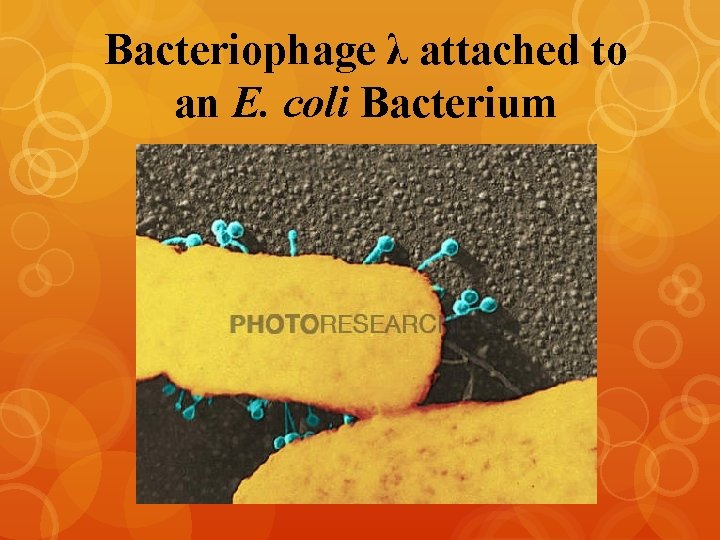
Bacteriophage λ attached to an E. coli Bacterium
Replication of Viral Nucleic Acids DNA Viruses – replication of viral DNA is similar to the process that the host cell uses to replicates its own DNA
Replication of Viral Nucleic Acids Most RNA Viruses – replication of viral RNA is dependent upon an enzyme that is encoded on the viral genome RNA
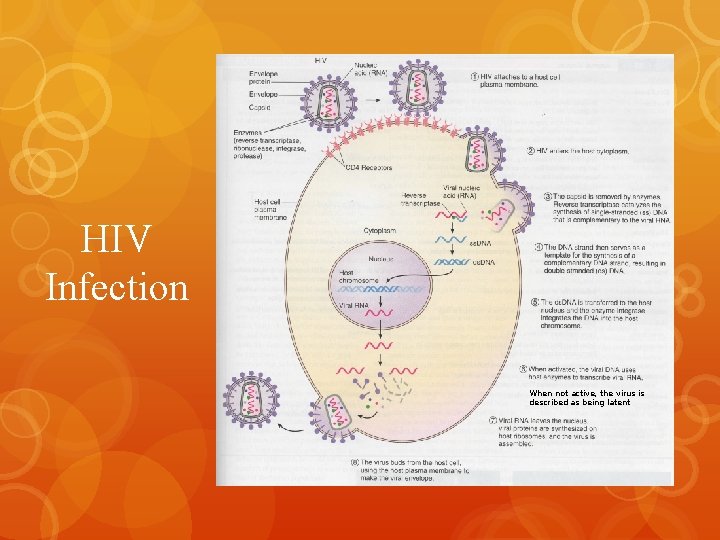
Replication of Viral Nucleic Acids Retroviruses – RNA viruses that convert their RNA into DNA using an enzyme that is included with the viral genome RNA DNA
Replication of Viral Nucleic Acids Retroviruses – This DNA is inserted into the host genome, where it can be transcribed back into viral RNA during normal cellular activity.
Replication of Viral Nucleic Acids Retroviruses – Once the DNA is integrated into the host genome, some retroviruses may become LATENT, where they remain inactive for long periods of time.
Replication of Viral Nucleic Acids Human Immunodeficiency Virus (HIV), the virus that causes AIDS, is an example of a retrovirus that can become latent.
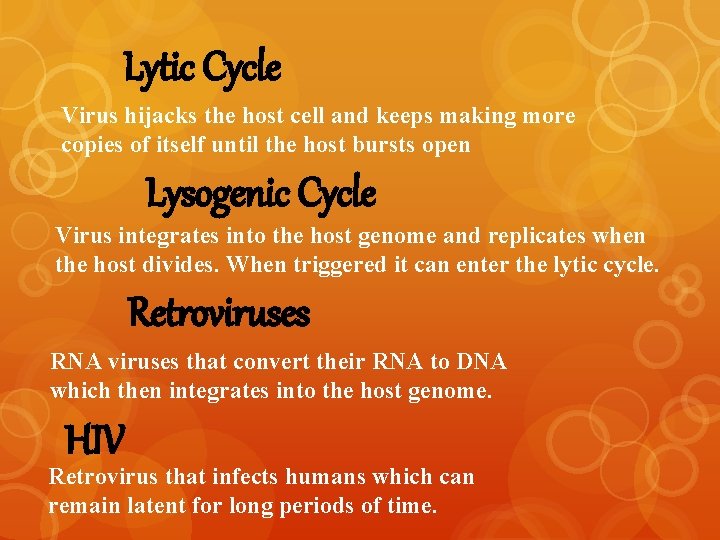
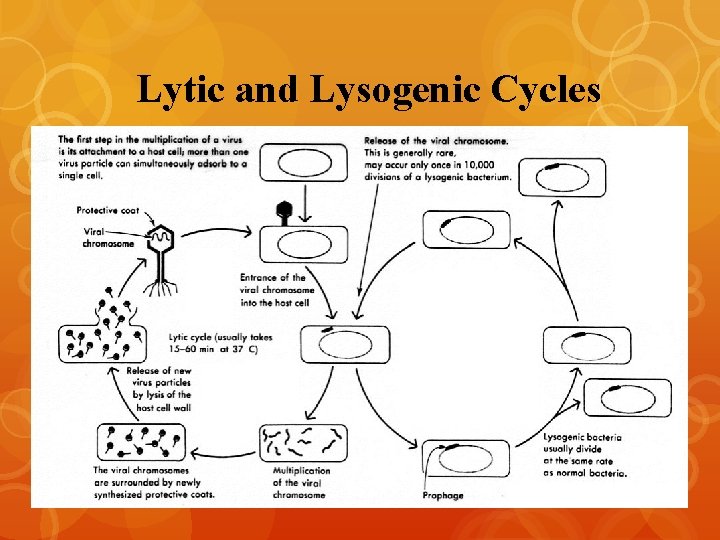
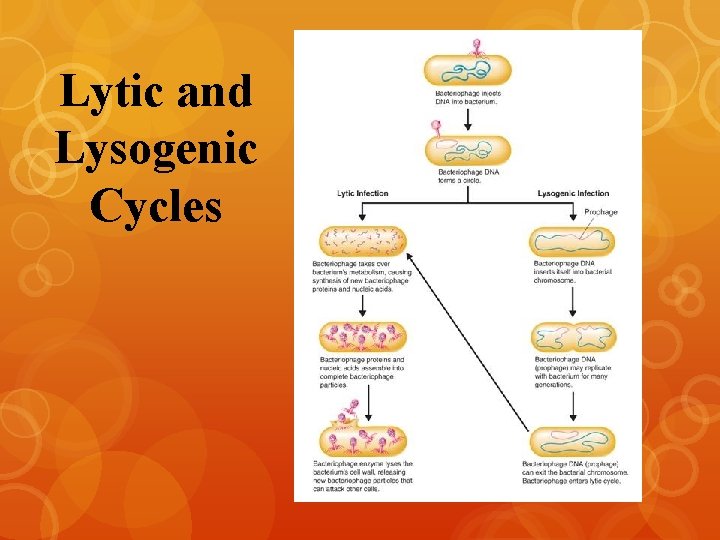
Lytic Cycle Virus hijacks the host cell and keeps making more copies of itself until the host bursts open Lysogenic Cycle Virus integrates into the host genome and replicates when the host divides. When triggered it can enter the lytic cycle. Retroviruses RNA viruses that convert their RNA to DNA which then integrates into the host genome. HIV Retrovirus that infects humans which can remain latent for long periods of time.
HIV Infection When not active, the virus is described as being latent
Lytic and Lysogenic Cycles
Lytic and Lysogenic Cycles ATTACHMENT REPLICATION RELEASE / LYSIS PENETRATION ASSEMBLY REPLICATION AND SYNTHESIS INTEGRATION
Lytic Cycle dddddddd dddddddd dddddddd dddddddd dddddddd dddddddd
dddddddd dddddddd dddddddd dddddddd dddddddd dddd Lysogenic Cycle
Lytic and Lysogenic Cycles