
CAPS Research Benchmarking Presentation to the Arizona State
CAPS Research Benchmarking Presentation to the Arizona State Capitol Chapter of NIGP “…IT’S ALL ABOUT PRIORITIES” August 10, 2010
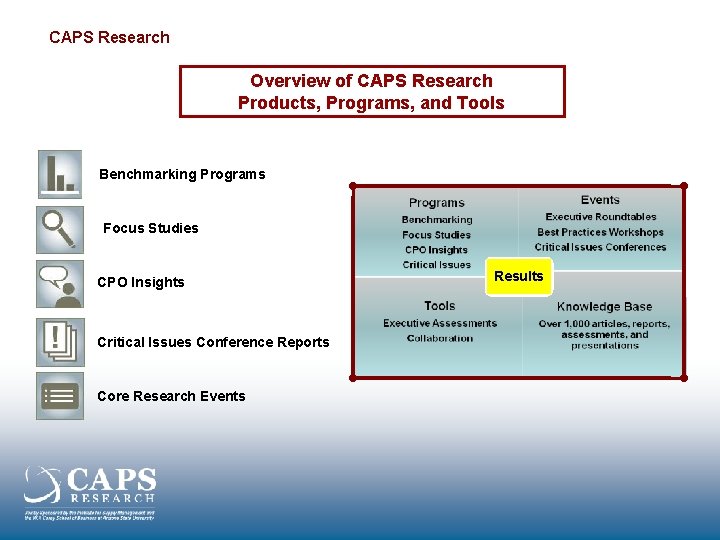
CAPS Research Overview of CAPS Research Products, Programs, and Tools Benchmarking Programs Focus Studies CPO Insights Critical Issues Conference Reports Core Research Events Results
CAPS Research Priorities… Are the following topics on your radar? • • • Assessing Supplier Financial Strength. Environmental Sustainability. Talent Management. Accelerating Innovation within the Supply Chain. Market Baskets of Goods – Price Comparisons. Internal Customer Satisfaction Measurements. Cost Savings (Reduction and Avoidance). Spend Management. Pcard Spend Management.
CAPS Research New Research Results from CAPS Research Supplier Environmental Sustainability Evaluation CAPS Research collaborated with the Electric Utility Industry Sustainable Supply Chain Alliance to measure sustainable environmental performance throughout their community of suppliers. The survey questions were designed to be consistent with Environmental Protection Administration (EPA) Green Supplier Network standards; the Global Reporting Initiative (GRI) Environmental Performance Indicators; and guidance provided in the Carbon Disclosure Project (CDP). The following are the impact areas evaluated: • Policy and Environmental Management • Greenhouse Gas (GHG) Emissions • Energy Consumption and Conservation • Water Use • Waste and Materials Management • Innovation and Leadership
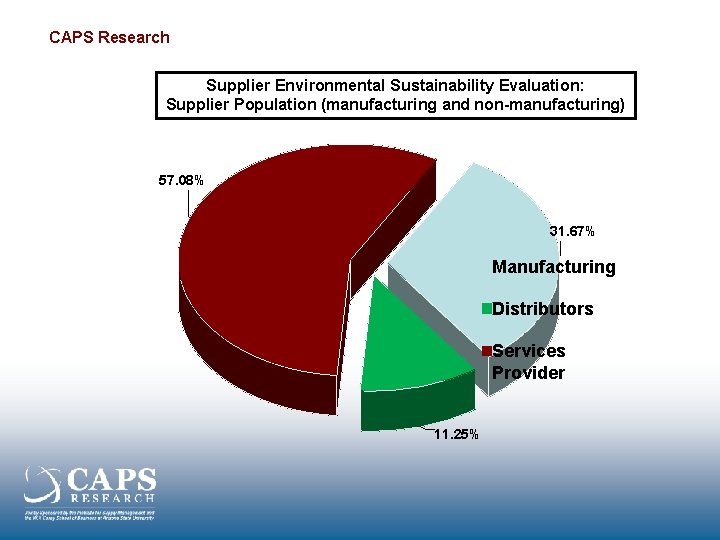
CAPS Research Supplier Environmental Sustainability Evaluation: Supplier Population (manufacturing and non-manufacturing) 57. 08% 31. 67% Manufacturing Distributors Services Provider 11. 25%
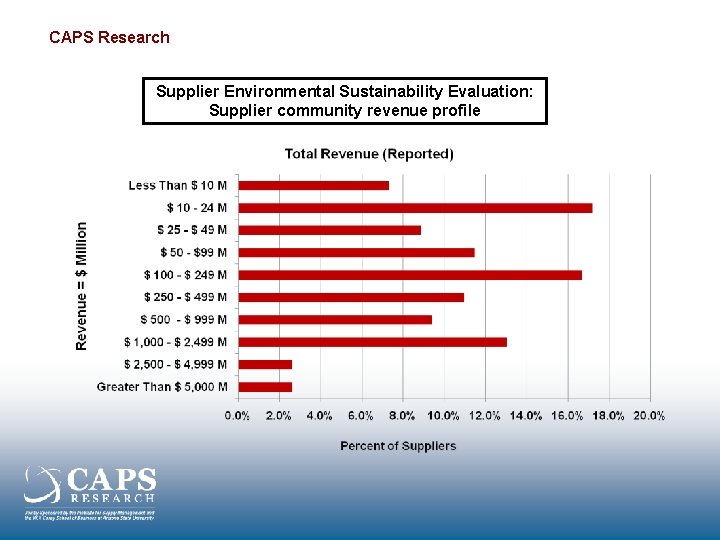
CAPS Research Supplier Environmental Sustainability Evaluation: Supplier community revenue profile
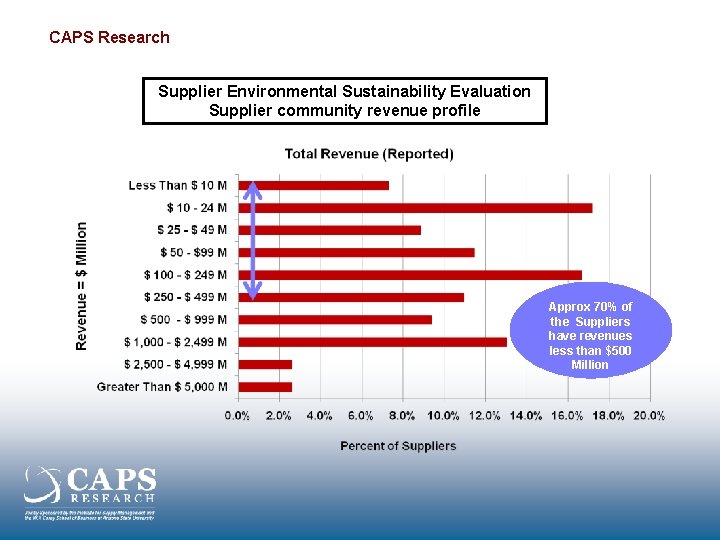
CAPS Research Supplier Environmental Sustainability Evaluation Supplier community revenue profile Approx 70% of the Suppliers have revenues less than $500 Million
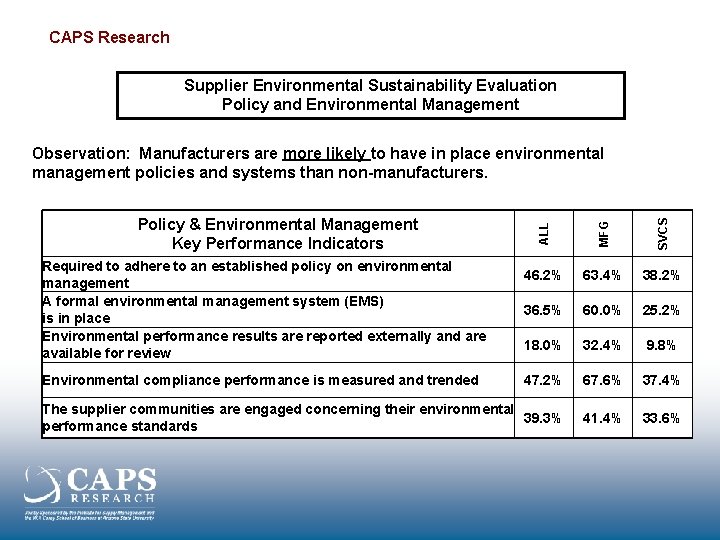
CAPS Research Supplier Environmental Sustainability Evaluation Policy and Environmental Management Observation: Manufacturers are more likely to have in place environmental management policies and systems than non-manufacturers. ALL MFG SVCS Policy & Environmental Management Key Performance Indicators 46. 2% 63. 4% 38. 2% 36. 5% 60. 0% 25. 2% 18. 0% 32. 4% 9. 8% 47. 2% 67. 6% 37. 4% The supplier communities are engaged concerning their environmental 39. 3% performance standards 41. 4% 33. 6% Required to adhere to an established policy on environmental management A formal environmental management system (EMS) is in place Environmental performance results are reported externally and are available for review Environmental compliance performance is measured and trended

CAPS Research Supplier Environmental Sustainability Evaluation Greenhouse Gas (GHG) Emissions ALL MFG SVCS Observation: Manufacturers are more likely to have robust programs to verify and audit GHG emissions than are non-manufacturers. GHG inventories have been verified or audited by a third party 30. 4% 42. 4% 23. 3% Voluntary commitments to reduce GHG emissions have been established 69. 8% 69. 7% 70. 0% GHG emissions reduction programs are in place 42. 0% 57. 6% 23. 3% GHG emissions reports are regularly provided to senior management and/or board members 53. 6% 69. 7% 36. 7% GHG emissions are publically reported 39. 1% 54. 5% 23. 3% Greenhouse Gas (GHG) Emissions Key Performance Indicators
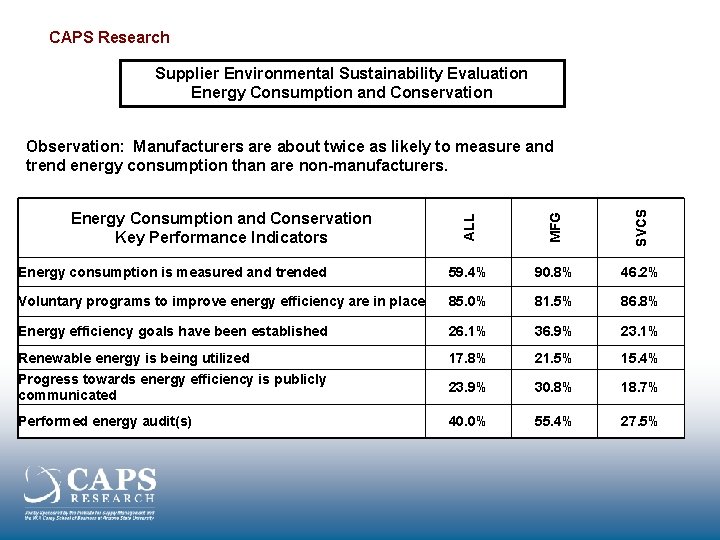
CAPS Research Supplier Environmental Sustainability Evaluation Energy Consumption and Conservation ALL MFG SVCS Observation: Manufacturers are about twice as likely to measure and trend energy consumption than are non-manufacturers. Energy consumption is measured and trended 59. 4% 90. 8% 46. 2% Voluntary programs to improve energy efficiency are in place 85. 0% 81. 5% 86. 8% Energy efficiency goals have been established 26. 1% 36. 9% 23. 1% Renewable energy is being utilized 17. 8% 21. 5% 15. 4% Progress towards energy efficiency is publicly communicated 23. 9% 30. 8% 18. 7% Performed energy audit(s) 40. 0% 55. 4% 27. 5% Energy Consumption and Conservation Key Performance Indicators
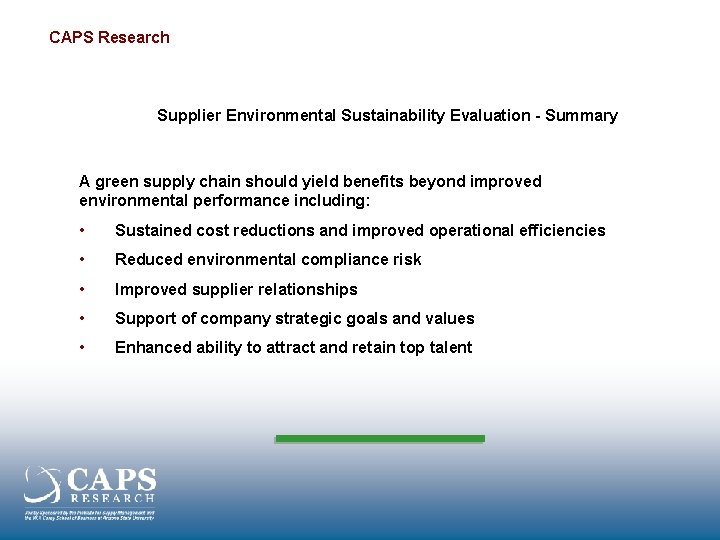
CAPS Research Supplier Environmental Sustainability Evaluation - Summary A green supply chain should yield benefits beyond improved environmental performance including: • Sustained cost reductions and improved operational efficiencies • Reduced environmental compliance risk • Improved supplier relationships • Support of company strategic goals and values • Enhanced ability to attract and retain top talent
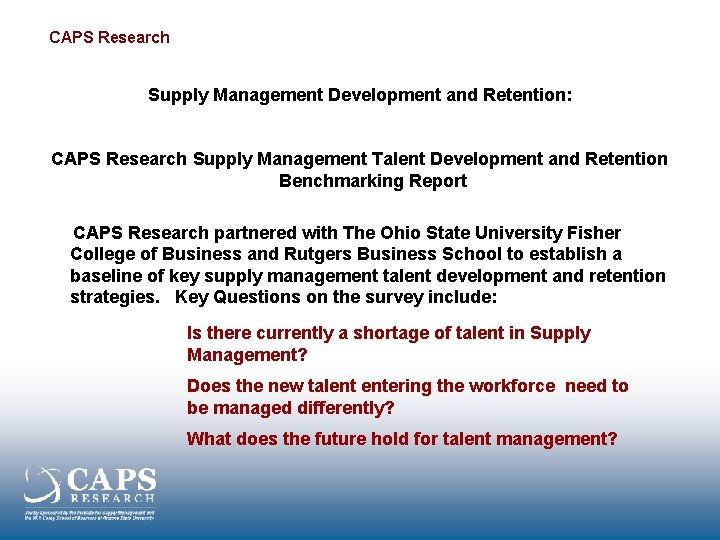
CAPS Research Supply Management Development and Retention: CAPS Research Supply Management Talent Development and Retention Benchmarking Report CAPS Research partnered with The Ohio State University Fisher College of Business and Rutgers Business School to establish a baseline of key supply management talent development and retention strategies. Key Questions on the survey include: Is there currently a shortage of talent in Supply Management? Does the new talent entering the workforce need to be managed differently? What does the future hold for talent management?

CAPS Research Percent Supply Management Development and Retention: Time Frame of Responses (U. S. Unemployment Rate) June, 2009 9. 5% July, 2008 5. 8%
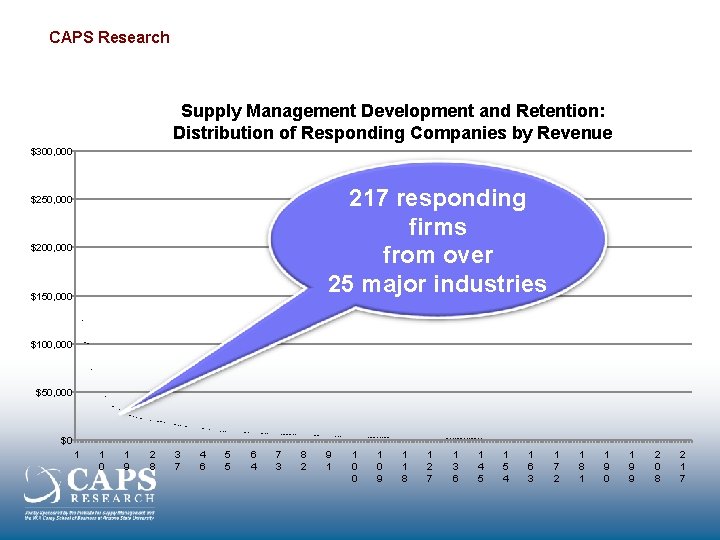
CAPS Research Supply Management Development and Retention: Distribution of Responding Companies by Revenue $300, 000 217 responding firms from over 25 major industries $250, 000 $200, 000 $150, 000 $100, 000 $50, 000 $0 1 1 0 1 9 2 8 3 7 4 6 5 5 6 4 7 3 8 2 9 1 1 0 0 1 0 9 1 1 8 1 2 7 1 3 6 1 4 5 1 5 4 1 6 3 1 7 2 1 8 1 1 9 0 1 9 9 2 0 8 2 1 7
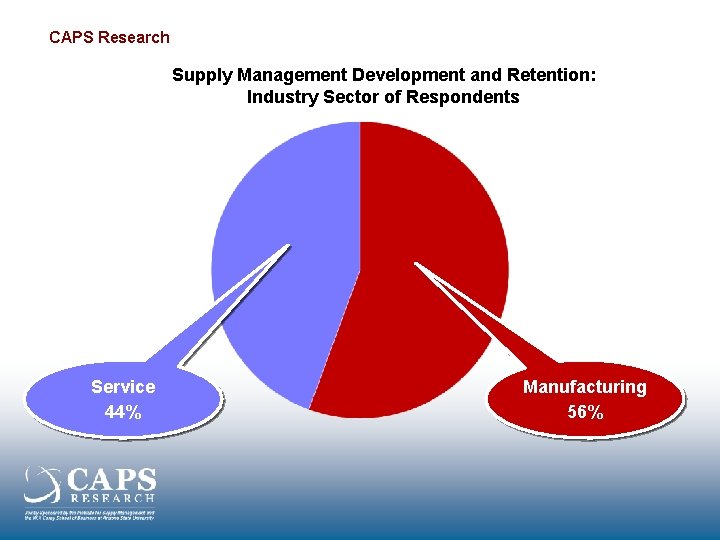
CAPS Research Supply Management Development and Retention: Industry Sector of Respondents Service 44% Manufacturing 56%
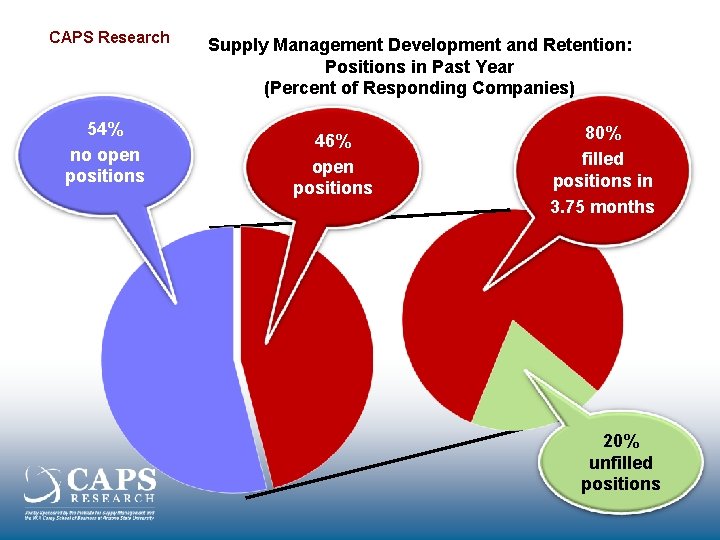
CAPS Research 54% no open positions Supply Management Development and Retention: Positions in Past Year (Percent of Responding Companies) 46% open positions 80% filled positions in 3. 75 months 20% unfilled positions
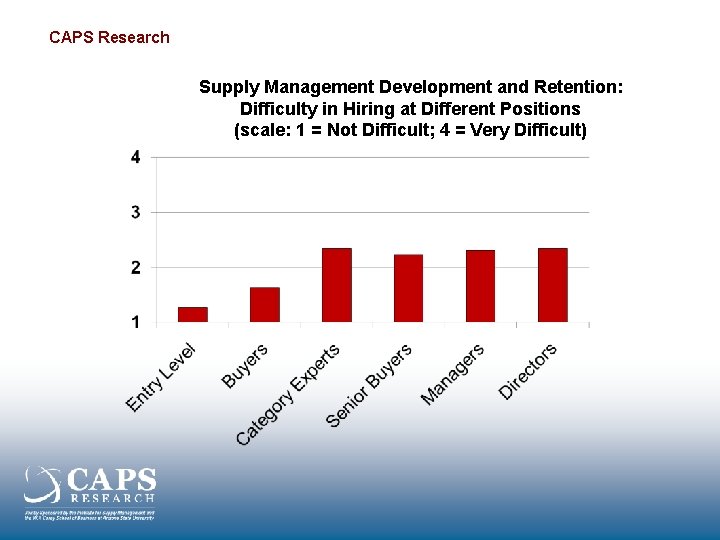
CAPS Research Supply Management Development and Retention: Difficulty in Hiring at Different Positions (scale: 1 = Not Difficult; 4 = Very Difficult)
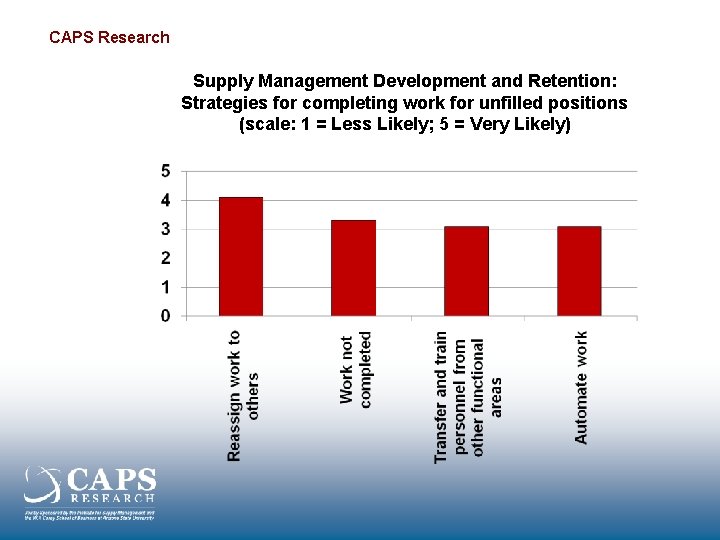
CAPS Research Supply Management Development and Retention: Strategies for completing work for unfilled positions (scale: 1 = Less Likely; 5 = Very Likely)
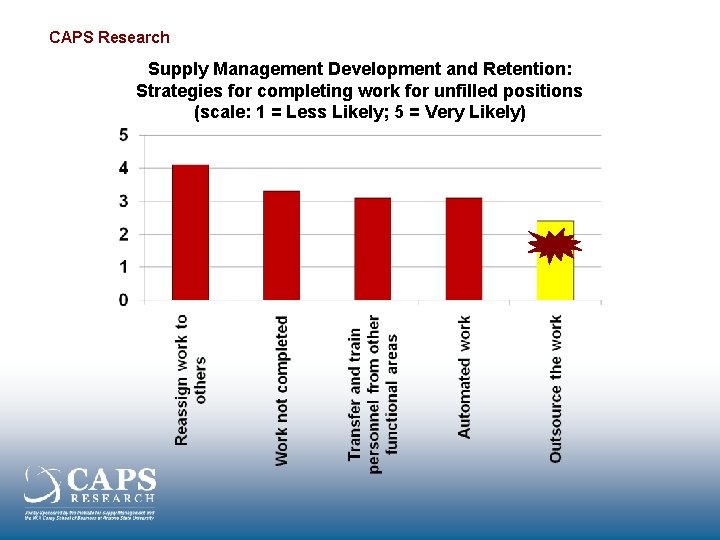
CAPS Research Supply Management Development and Retention: Strategies for completing work for unfilled positions (scale: 1 = Less Likely; 5 = Very Likely)
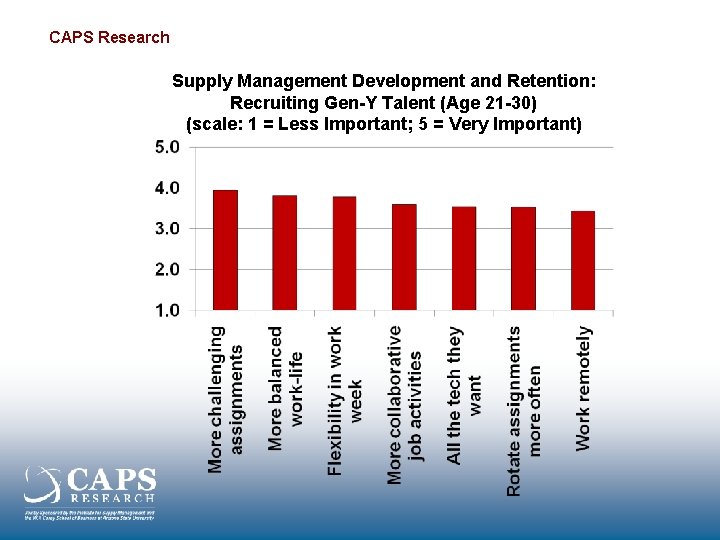
CAPS Research Supply Management Development and Retention: Recruiting Gen-Y Talent (Age 21 -30) (scale: 1 = Less Important; 5 = Very Important)
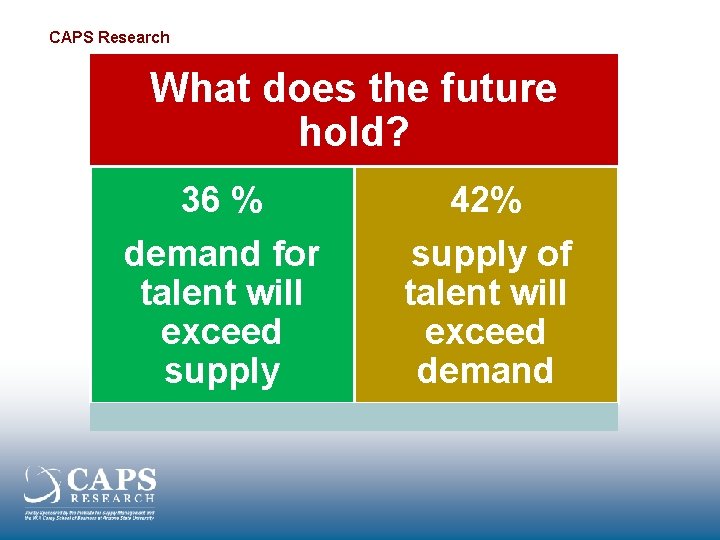
CAPS Research What does the future hold? 36 % 42% demand for talent will exceed supply of talent will exceed demand
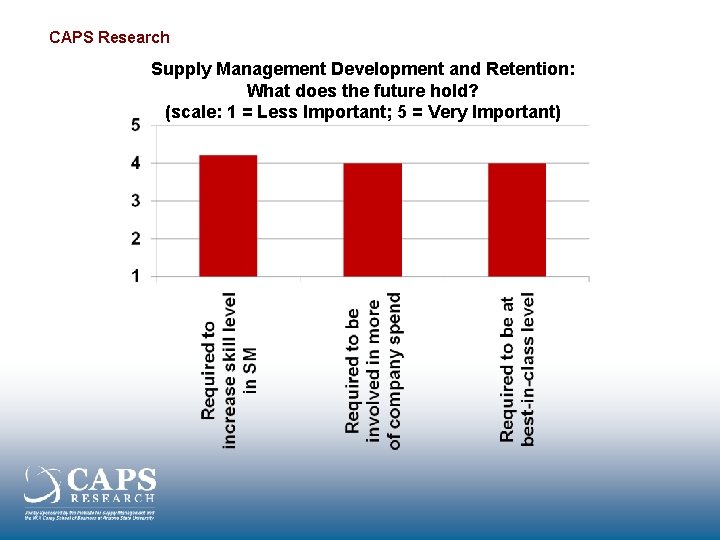
CAPS Research Supply Management Development and Retention: What does the future hold? (scale: 1 = Less Important; 5 = Very Important)
CAPS Research Do the results differ by Size of Industry of firm
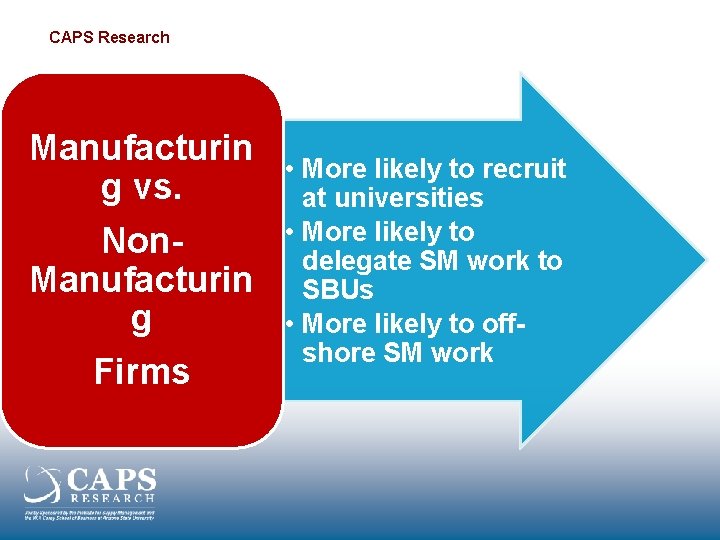
CAPS Research Manufacturin g vs. Non. Manufacturin g Firms • More likely to recruit at universities • More likely to delegate SM work to SBUs • More likely to offshore SM work
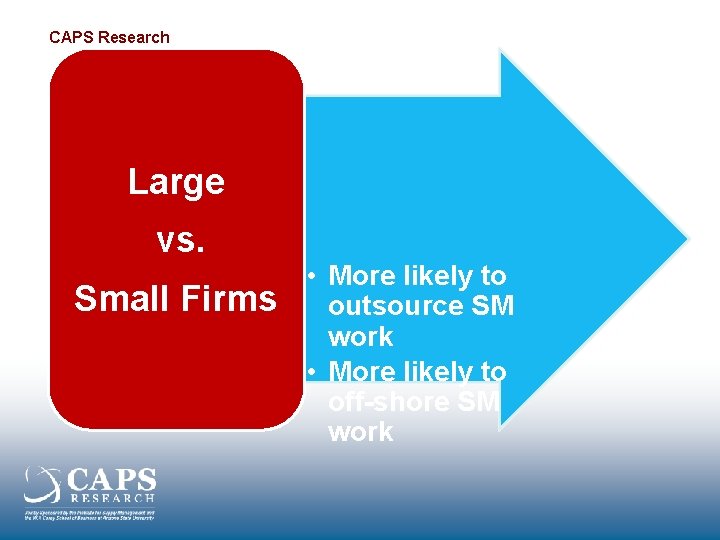
CAPS Research Large vs. Small Firms • More likely to outsource SM work • More likely to off-shore SM work
CAPS Research QUESTIONS D. STEVEN WADE DIRECTOR OF BENCHMARKING PROGRAMS CAPS RESEARCH SWADE@CAPSRESEARCH. ORG VOICE: 1. 800. 888. 6276 EXT 3060 MAIN: 1. 480. 752. 2277
- Slides: 26