
Capoeira Songbook CAPOEIRA 4 REFUGEES USING SPORT MUSIC
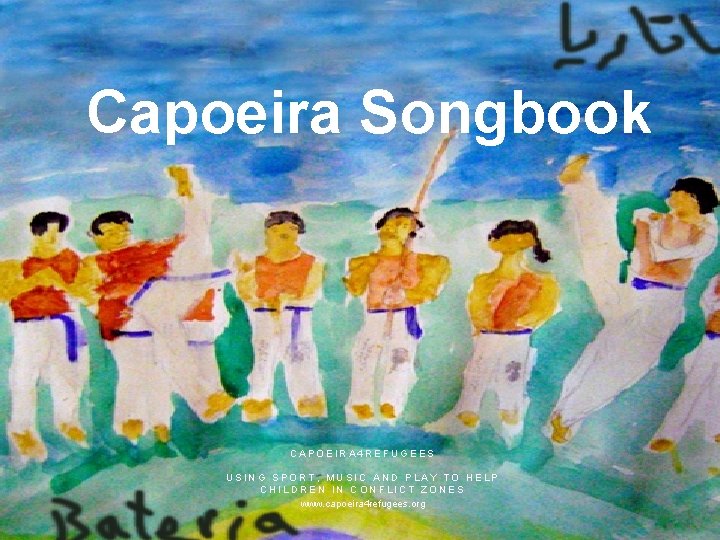
Capoeira Songbook CAPOEIRA 4 REFUGEES USING SPORT, MUSIC AND PLAY TO HELP CHILDREN IN CONFLICT ZONES www. capoeira 4 refugees. org
At Capoeira 4 Refugees, we believe it is crucial that our participants have an understanding of the songs they are taught, sing and hear. We have taken the initiative to translate each song into Arabic so lyrics can be discussed, analysed and understood. Some songs include narratives so that participants can understand why songs are sung and learn more about the history of each song. This Song book is a collection of popular capoeira songs, translated to English and Arabic. We hope it is inspiring, educational and enlightening. Capoeira has a very rich and holistic history lived by the African slaves brought to Brazil. It is important that Capoeiristas today honour and respect the struggle and journey of these people as they fought for their freedom and used the art of capoeira as a means of expressing their emotions and story. In capoeira, music is vital in not only being a major aspect to the game of capoeira, but in restoring the axe that was given from the early capoeiristas and metres, as they developed an art that is practiced my many today. The songs that are sung tell a story, taking us back to a time much different yet similar to our present time today. Every song tells of an experience, a moment, or emotion that can be felt and discovered by those singing, and those feeling the axe in the roda. For those who understand Portuguese, the songs can be touching and empowering as they expose a tale of a Capoerista; yet even for those with little or no understanding of the language, can feel the emotions behind each song and 'toca' of the berimbau. Capoeira 4 Refugees
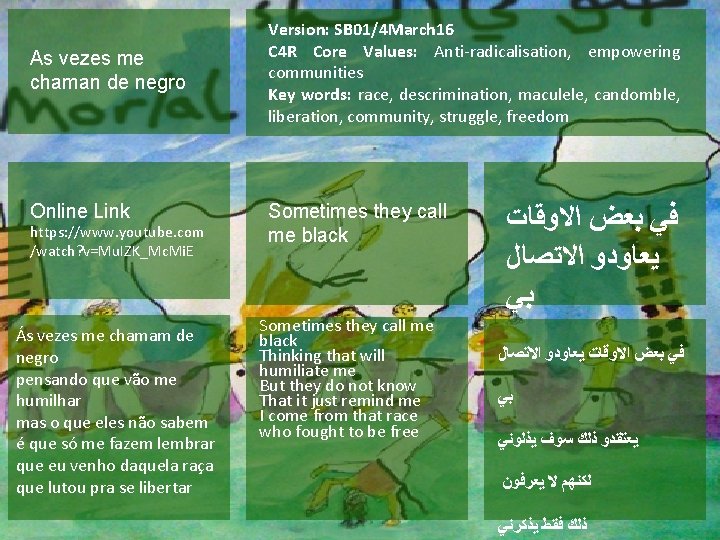
As vezes me chaman de negro Online Link https: //www. youtube. com /watch? v=Mu. IZK_Mc. Mi. E Ás vezes me chamam de negro pensando que vão me humilhar mas o que eles não sabem é que só me fazem lembrar que eu venho daquela raça que lutou pra se libertar Version: SB 01/4 March 16 C 4 R Core Values: Anti-radicalisation, empowering communities Key words: race, descrimination, maculele, candomble, liberation, community, struggle, freedom Sometimes they call me black Thinking that will humiliate me But they do not know That it just remind me I come from that race who fought to be free ﺍﻻﻭﻗﺎﺕ ﺑﻌﺾ ﻓﻲ ﺍﻻﺗﺼﺎﻝ ﻳﻌﺎﻭﺩﻭ ﺑﻲ ﺍﻻﺗﺼﺎﻝ ﻳﻌﺎﻭﺩﻭ ﺍﻻﻭﻗﺎﺕ ﺑﻌﺾ ﻓﻲ ﺑﻲ ﻳﺬﻟﻮﻧﻲ ﺳﻮﻑ ﺫﻟﻚ ﻳﻌﺘﻘﺪﻭ ﻳﻌﺮﻓﻮﻥ ﻻ ﻟﻜﻨﻬﻢ ﻳﺬﻛﺮﻧﻲ ﻓﻘﻂ ﺫﻟﻚ
que eu venho daquela raça que lutou pra se libertar que criou o maculelê que acredita no candomblé que tem o sorriso no rosto a ginga no corpo e o samba no pé que fez surgir uma danca uma luta que pode matar capoeira arma poderosa luta de libertação brancos e negros na roda se abraçam como irmãos camarada o que é meu É meu irmão do coracão é meu irmão I come from that race who fought to be free That created the maculelê Who believes in Candomblé That has the smile on his face The swing in the body and the samba in the foot That gave rise to a dance A struggle that can kill Capoeira powerful weapon Liberation struggle Black and white on the wheel Embrace as brothers What is my buddy It's my brother My brother's heart Is my brother ﺍﻟﺴﺒﺎﻕ ﻫﺬﺍ ﺍﻟﻰ ﺍﻧﺘﻤﻲ ﺍﻧﺎ ﺣﺮﺍ ﻟﻴﻜﻮﻥ ﺣﺎﺭﺏ ﺍﻟﺬﻱ ﺍﻟﻤﻜﻮﻟﻴﻠﻲ ﺧﻠﻖ ﺍﻟﺬﻱ ﺑﺎﻟﻤﻜﻮﻟﻴﻠﻲ ﻳﺆﻤﻦ ﺍﻟﺬﻱ ﻭﺟﻬﻪ ﻋﻠﻰ ﺍﺑﺘﺴﺎﻣﺔ ﻳﻤﻠﻚ ﺍﻟﺬﻱ ﺑﺎﻟﺠﺴﻢ ﺍﻟﻤﺮﺟﺤﺔ ﺑﺎﻟﻘﺪﻡ ﺍﻟﺴﺎﻣﺒﺎ ﻭ ﻭﺟﻬﻪ ﻋﻠﻰ ﺍﺑﺘﺴﺎﻣﺔ ﻳﻤﻜﻞ ﺍﻟﺬﻱ ﺑﺎﻟﺠﺴﻢ ﺍﻟﻤﺮﺟﺤﺔ ﺑﺎﻟﻘﺪﻡ ﺍﻟﺴﺎﻣﺒﺎ ﻭ ﻟﻠﺮﻗﺺ ﺍﺭﺗﻔﺎﻉ ﺍﻋﻄﻰ ﺍﻟﺬﻱ ﺗﻘﺘﻞ ﻣﻤﻜﻦ ﺍﻟﺬﻱ ﺍﻟﻤﻌﺎﻩ ﻗﻮﻱ ﺳﻼﺡ ﺍﻟﻜﺎﺑﻮﻳﺮﺍ ﻣﻌﺎﻧﻰ ﺗﺤﺮﻳﺮ ﺍﻟﻌﺠﻠﺔ ﻋﻠﻰ ﺍﺑﻴﺾ ﻭ ﺍﺳﻮﺩ ﻛﺎﻻﺧﻮﺓ ﺗﻌﺎﻧﻖ ﺻﺪﻳﻘﻲ ﻫﻮ ﺍﻟﺬﻱ ﺍﺧﻲ ﻫﻮ ﺍﺧﻲ ﻗﻠﺐ ﺍﺧﻲ ﻫﻮ

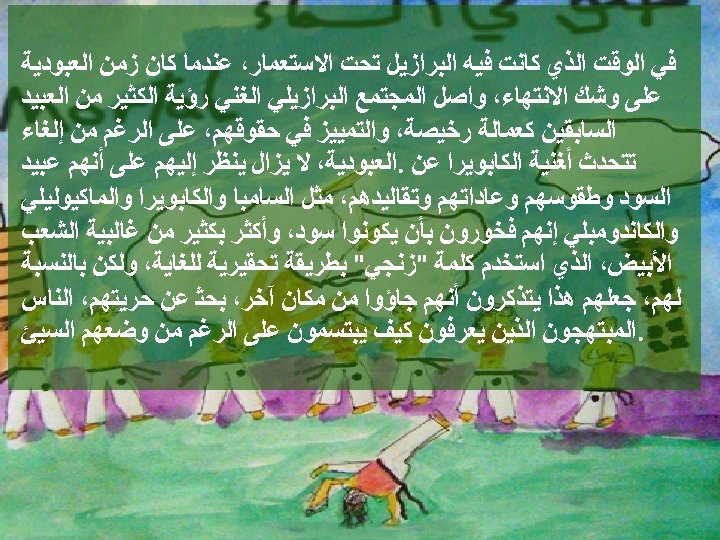
In the time of colonized Brazil, when slavery was about to end, the rich Brazilian society continued seeing the former slaves as cheap labor. Their rights were ignored, and despite the fact that slavery was abolished, they were still seen as slaves. This Capoeira song talks about black people and their rich history and culture, including traditions like samba, maculele, Capoeira, Candoble, etc. The song shows us that they are proud of their heritage, and while some used the word "negro" in a very derogatory way, for them it was worn with pride. Rather than it being an insult it made them feel empowered to remember that they come from another place, fought for their freedom with pride and dignity. The song discusses that because of it’s history, Capoeira was thought of as something only for the lower classes in Brazil. However, today capoeira is celebrated and practiced by every part of society, rich and poor, black and white. What historical and cultural traditions do students have that makes them feel empowered and connected to their identities? What forms of discrimination do students face in their everyday lives? And how can they overcome these prejudices in constructive, non-violent wa ys?
Achievements Palestine Syrian Refugees Jordan
Questions? We will update the Songbook monthly


- Slides: 10