
CAPNOGRAPHYThe New Standard of Care CAPNOGRAPHY Why use
- Slides: 46
CAPNOGRAPHYThe New Standard of Care
CAPNOGRAPHY Why use it?
Capnography & Pulse Oximetry § CO 2: üRelects ventilation üDetects apnea and hypoventilation immediately üShould be used with pulse oximetry § O 2 Saturation: üReflects oxygenation ü 30 to 60 second lag in detecting apnea or hypoventilation üShould be used with capnography
Indications for Use End-Tidal CO 2 Monitoring § Validation of proper endotracheal tube placement § Detection and Monitoring of Respiratory depression § Hypoventilation § Obstructive sleep apnea § Procedural sedation § Adjustment of parameter settings in mechanically ventilated patients
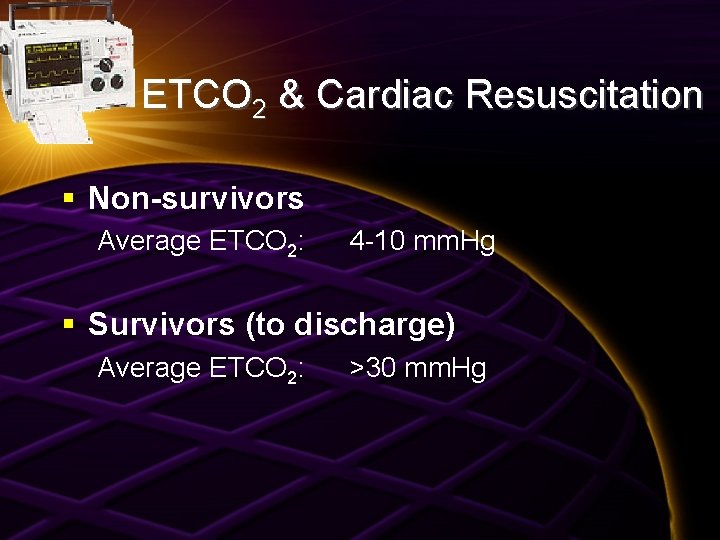
ETCO 2 & Cardiac Resuscitation § Non-survivors Average ETCO 2: 4 -10 mm. Hg § Survivors (to discharge) Average ETCO 2: >30 mm. Hg
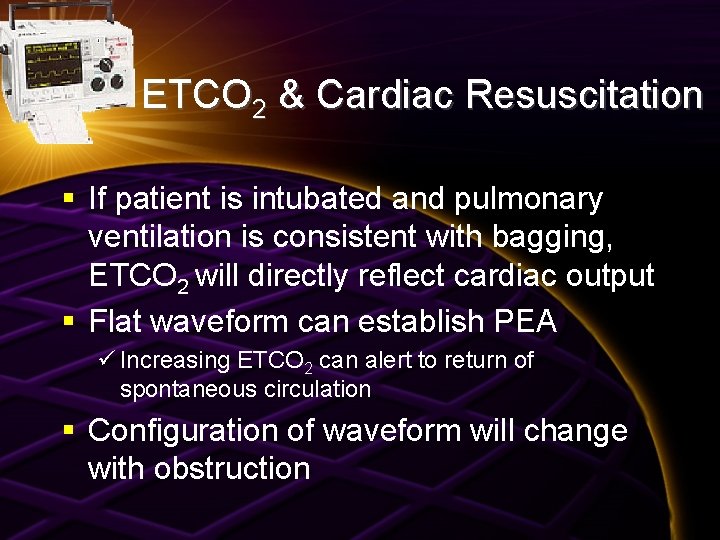
ETCO 2 & Cardiac Resuscitation § If patient is intubated and pulmonary ventilation is consistent with bagging, ETCO 2 will directly reflect cardiac output § Flat waveform can establish PEA ü Increasing ETCO 2 can alert to return of spontaneous circulation § Configuration of waveform will change with obstruction
Capnography What are we measuring?
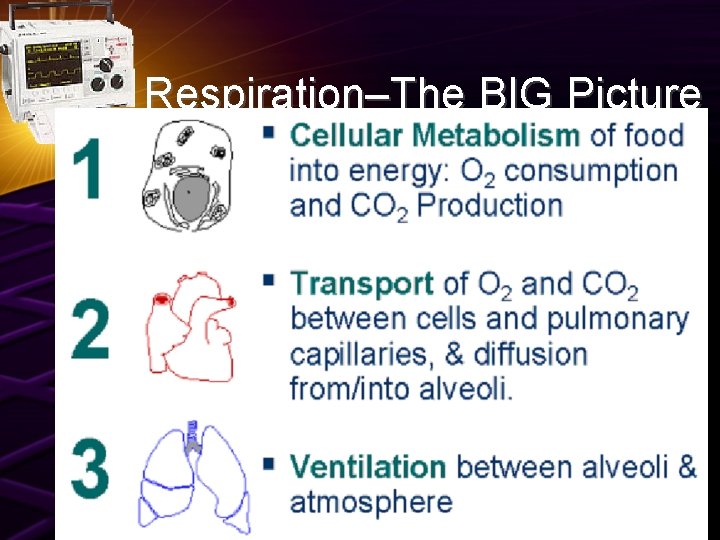
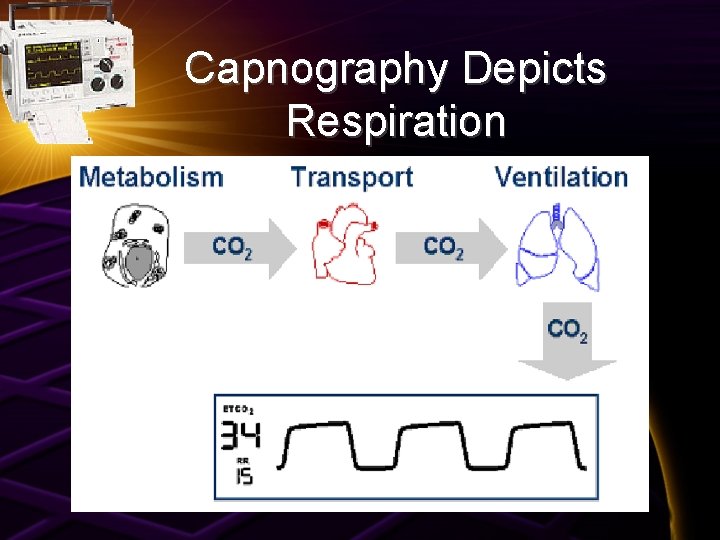
Respiration–The BIG Picture
Capnography Depicts Respiration
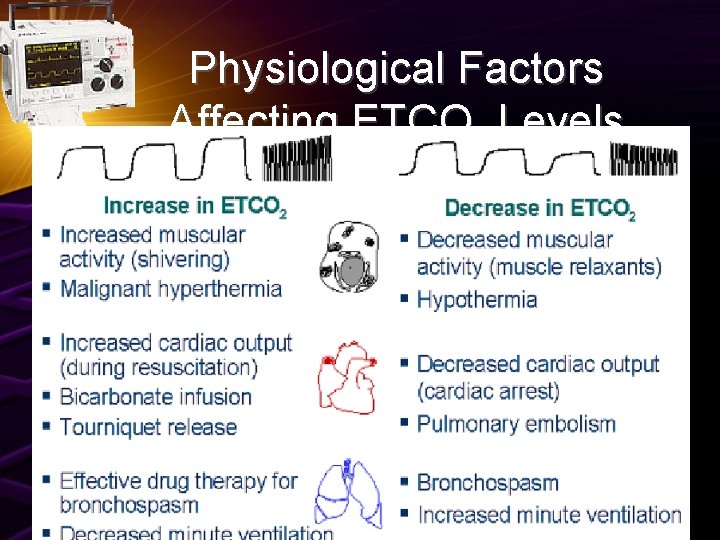
Physiological Factors Affecting ETCO 2 Levels
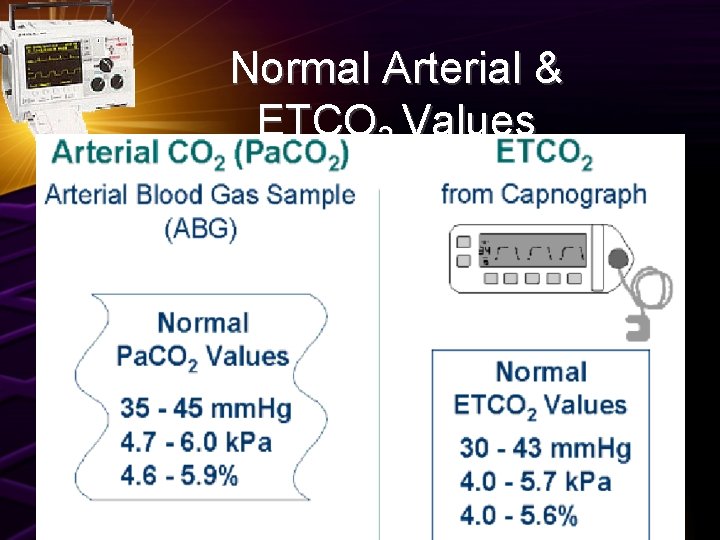
Normal Arterial & ETCO 2 Values
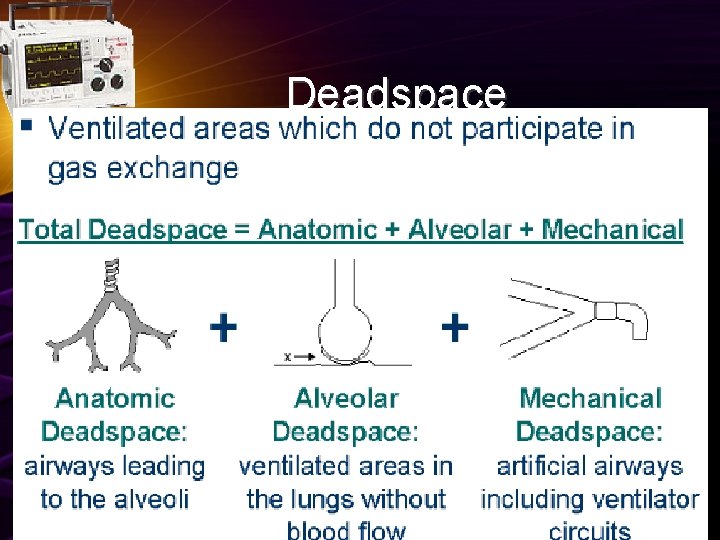
Deadspace
CAPNOGRAPHY Theory of Operation
Infrared Absorption § A beam of infrared light energy is passed through a gas sample containing CO 2 § CO 2 molecules absorb specific wavelengths of infrared light energy. § Light emerging from sample is analyzed. § A ration of the CO 2 affected wavelengths to the non-affected wavelengths is re[ported as ETCO 2
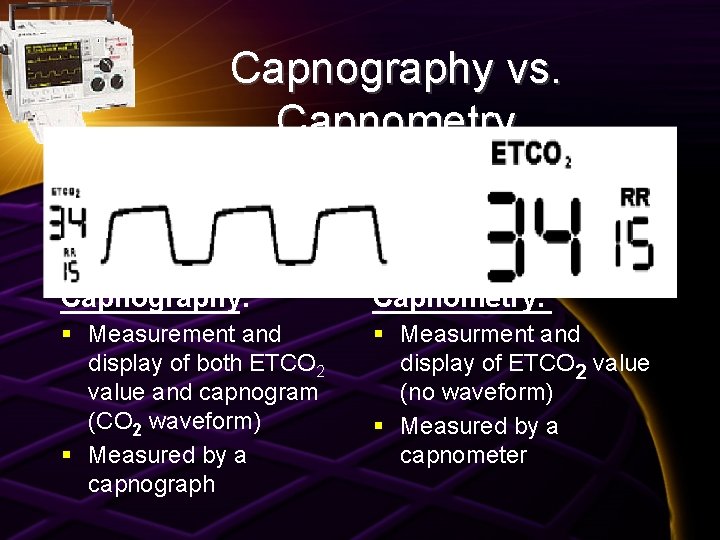
Capnography vs. Capnometry Capnography: Capnometry: § Measurement and display of both ETCO 2 value and capnogram (CO 2 waveform) § Measured by a capnograph § Measurment and display of ETCO 2 value (no waveform) § Measured by a capnometer
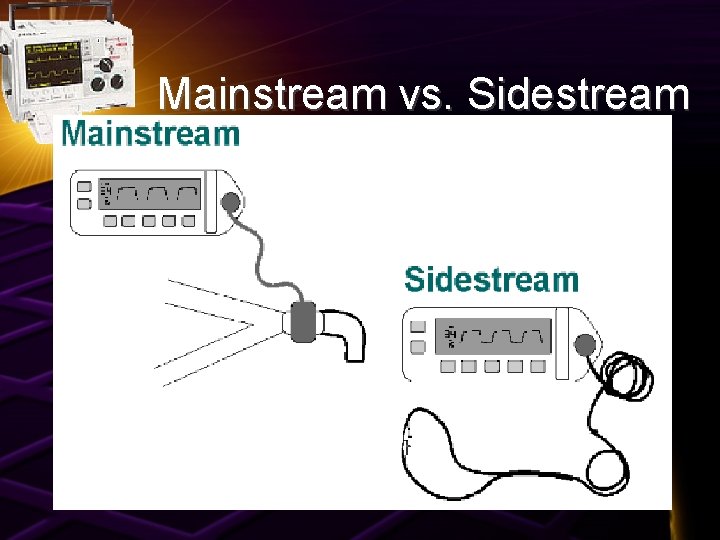
Mainstream vs. Sidestream
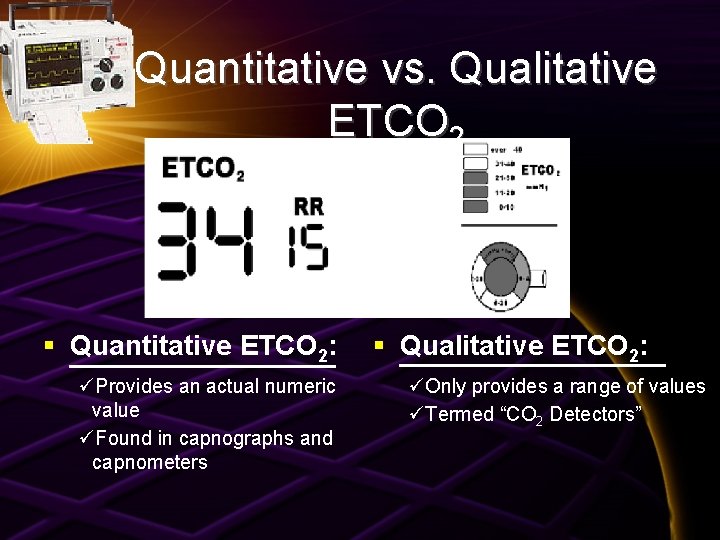
Quantitative vs. Qualitative ETCO 2 § Quantitative ETCO 2: üProvides an actual numeric value üFound in capnographs and capnometers § Qualitative ETCO 2: üOnly provides a range of values üTermed “CO 2 Detectors”
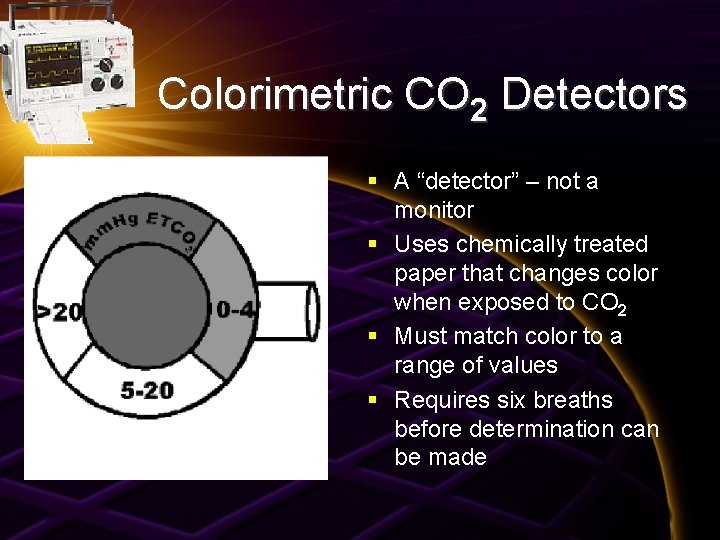
Colorimetric CO 2 Detectors § A “detector” – not a monitor § Uses chemically treated paper that changes color when exposed to CO 2 § Must match color to a range of values § Requires six breaths before determination can be made
CAPNOGRAPHY The Capnogram
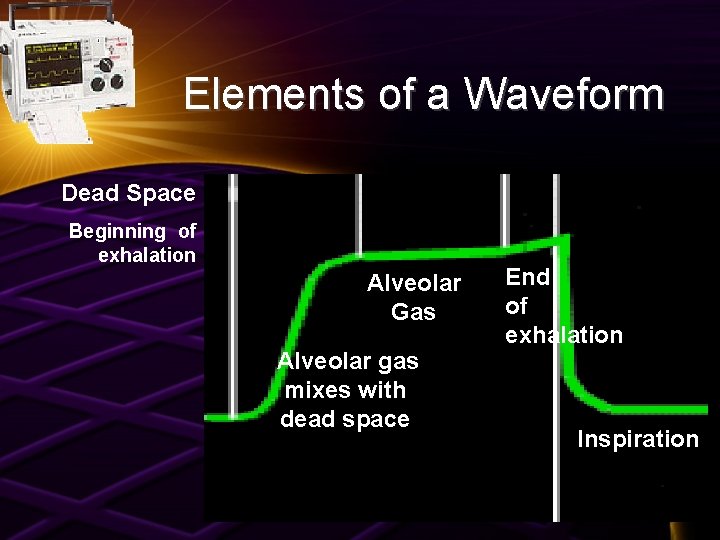
Elements of a Waveform Dead Space Beginning of exhalation Alveolar Gas Alveolar gas mixes with dead space End of exhalation Inspiration
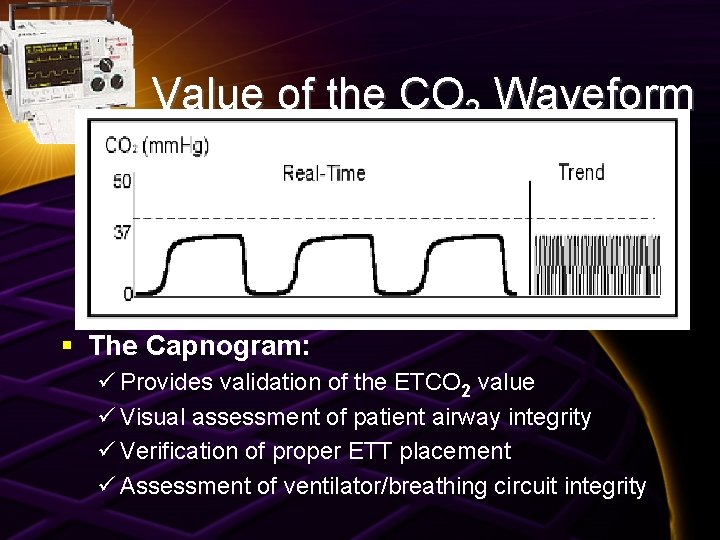
Value of the CO 2 Waveform § The Capnogram: ü Provides validation of the ETCO 2 value ü Visual assessment of patient airway integrity ü Verification of proper ETT placement ü Assessment of ventilator/breathing circuit integrity
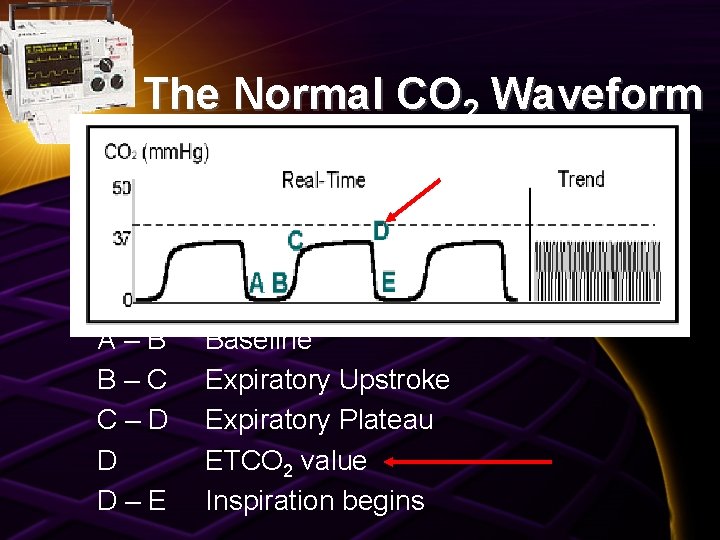
The Normal CO 2 Waveform A–B B–C C–D D D–E Baseline Expiratory Upstroke Expiratory Plateau ETCO 2 value Inspiration begins
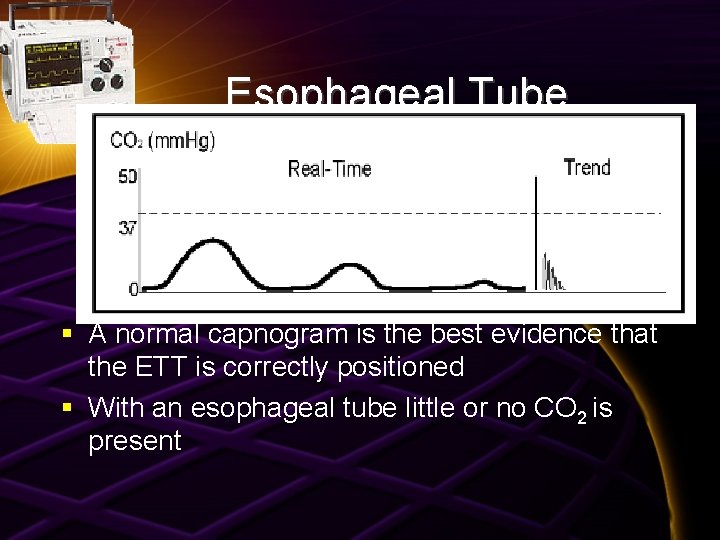
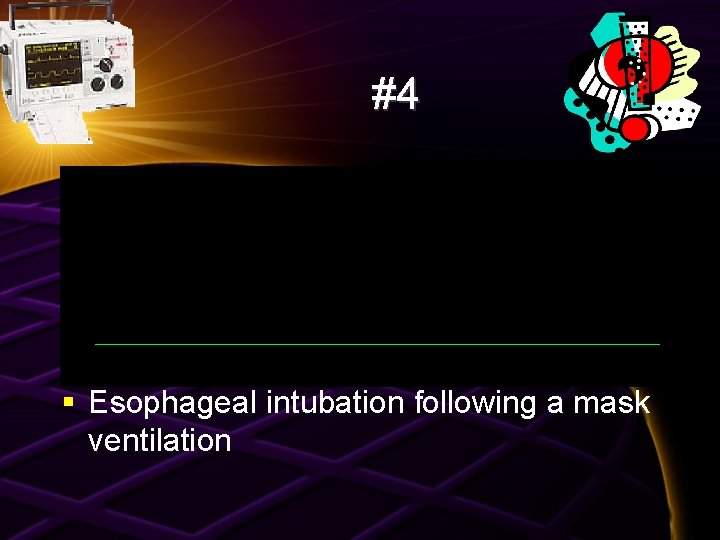
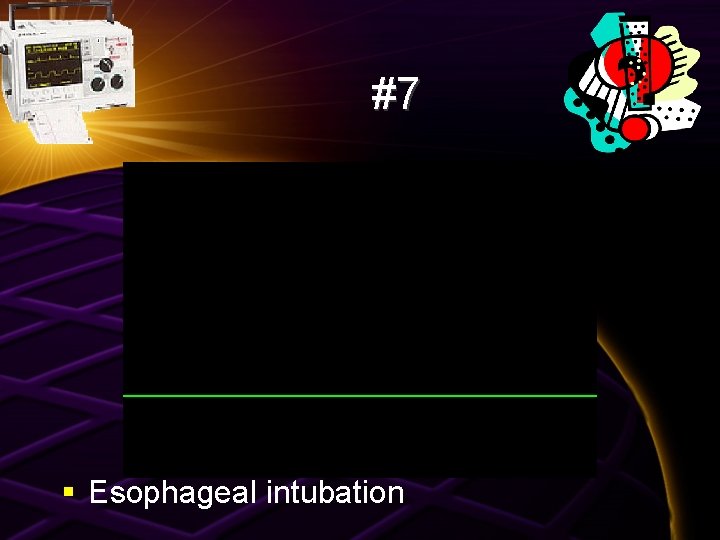
Esophageal Tube § A normal capnogram is the best evidence that the ETT is correctly positioned § With an esophageal tube little or no CO 2 is present
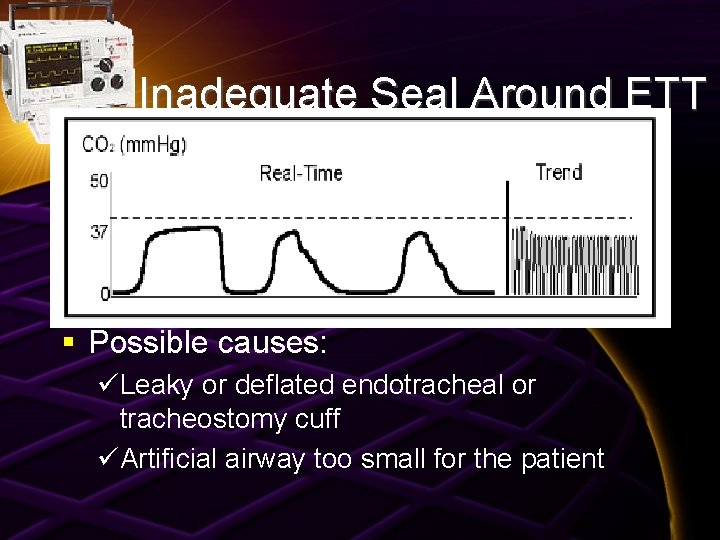
Inadequate Seal Around ETT § Possible causes: üLeaky or deflated endotracheal or tracheostomy cuff üArtificial airway too small for the patient
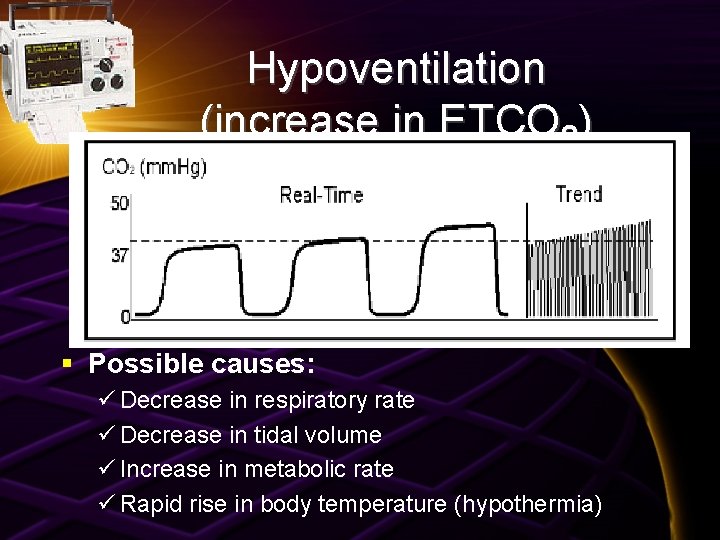
Hypoventilation (increase in ETCO 2) § Possible causes: ü Decrease in respiratory rate ü Decrease in tidal volume ü Increase in metabolic rate ü Rapid rise in body temperature (hypothermia)
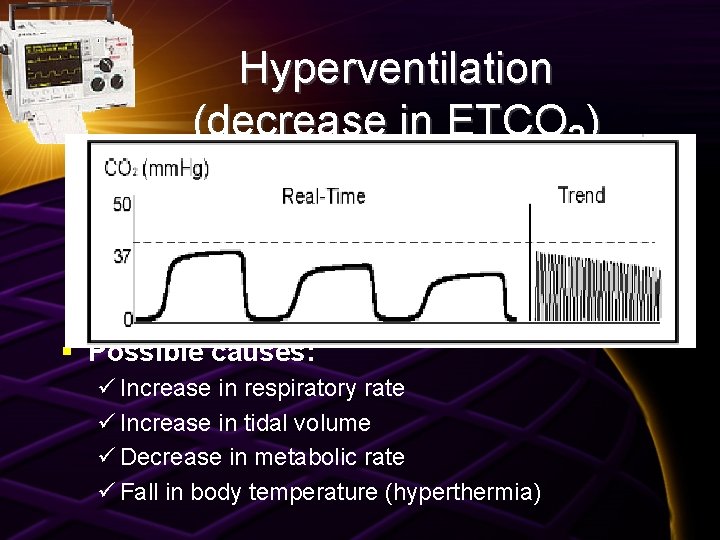
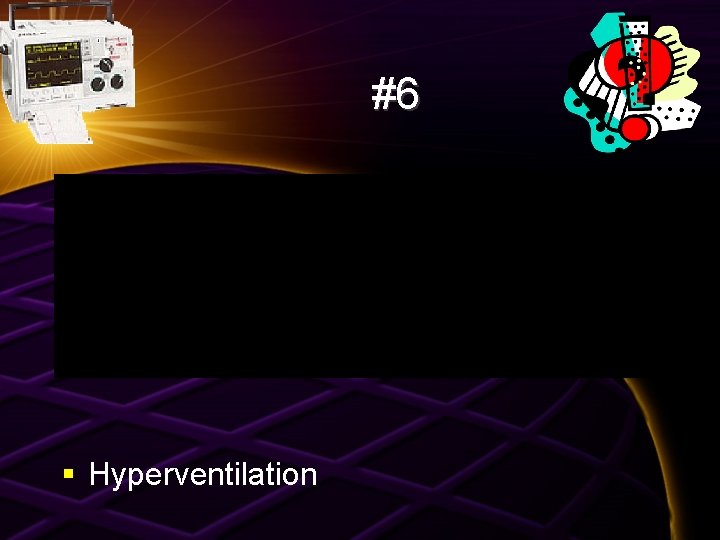
Hyperventilation (decrease in ETCO 2) § Possible causes: ü Increase in respiratory rate ü Increase in tidal volume ü Decrease in metabolic rate ü Fall in body temperature (hyperthermia)
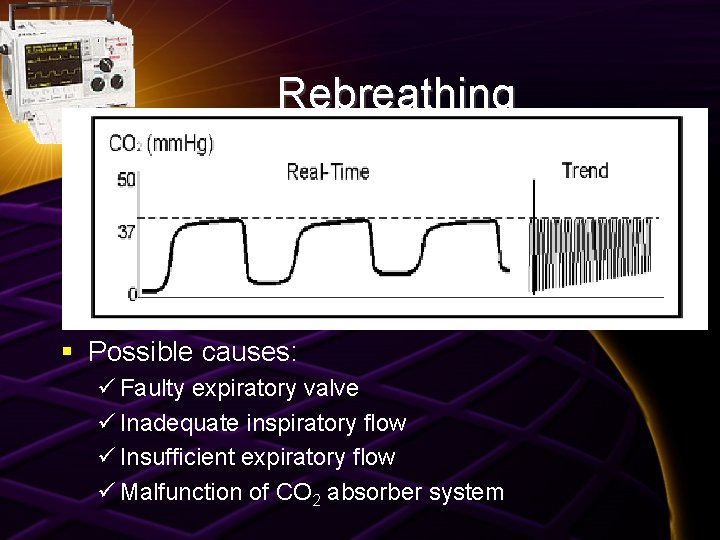
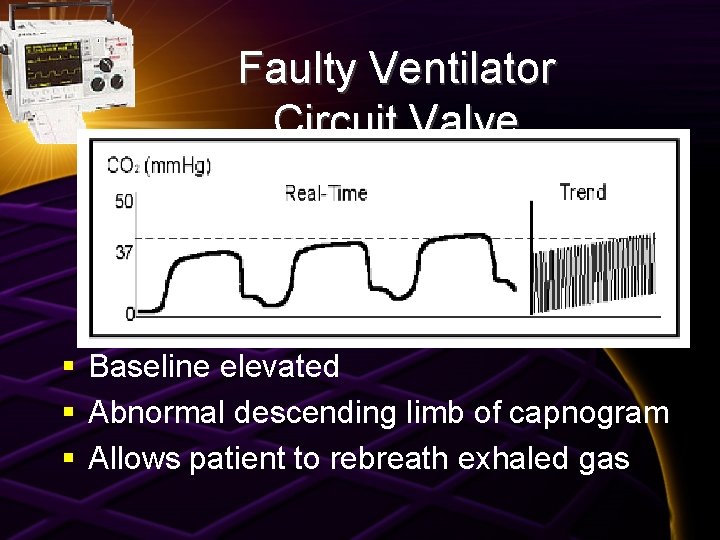
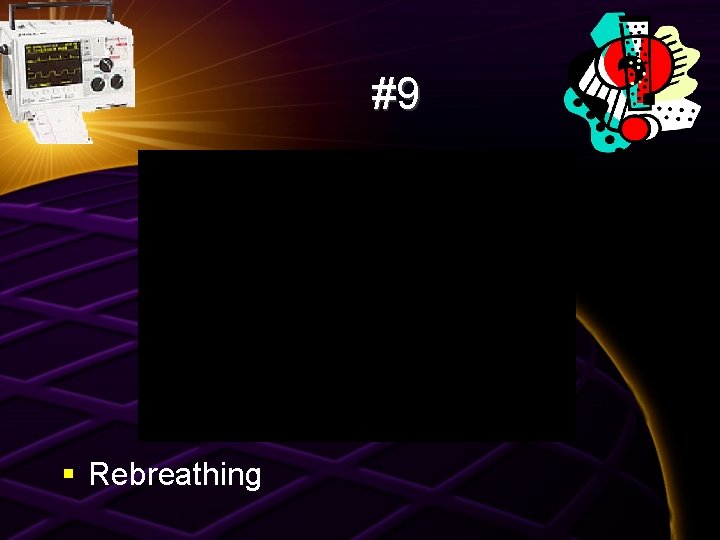
Rebreathing § Possible causes: ü Faulty expiratory valve ü Inadequate inspiratory flow ü Insufficient expiratory flow ü Malfunction of CO 2 absorber system
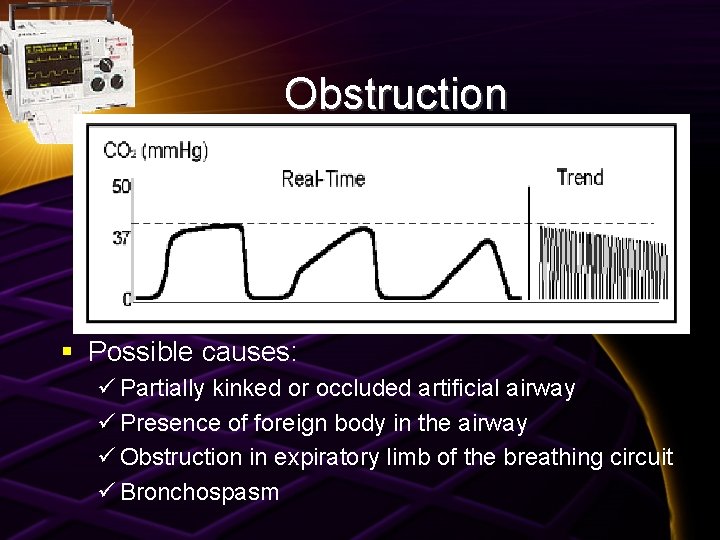
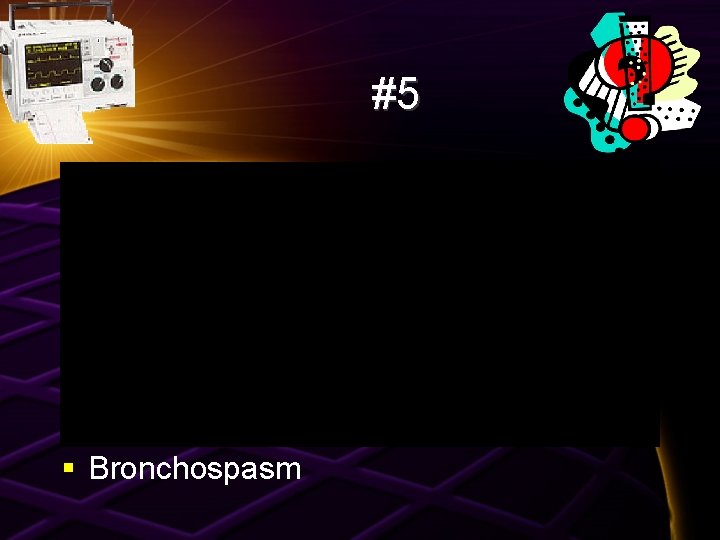
Obstruction § Possible causes: ü Partially kinked or occluded artificial airway ü Presence of foreign body in the airway ü Obstruction in expiratory limb of the breathing circuit ü Bronchospasm
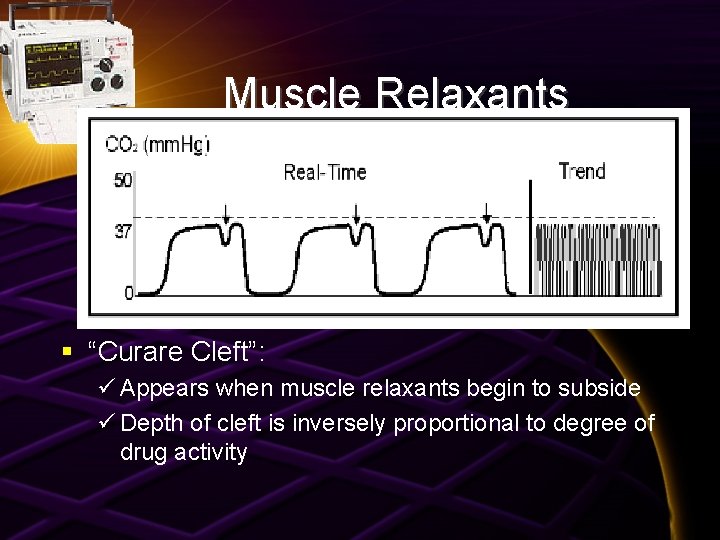
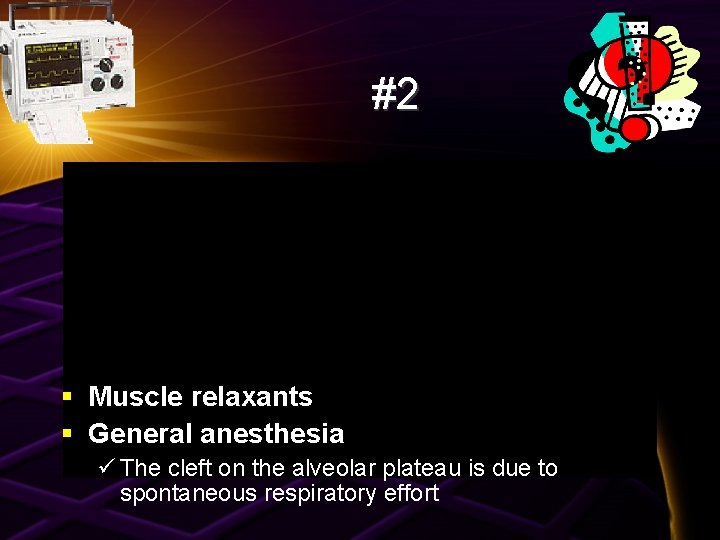
Muscle Relaxants § “Curare Cleft”: ü Appears when muscle relaxants begin to subside ü Depth of cleft is inversely proportional to degree of drug activity
Faulty Ventilator Circuit Valve § Baseline elevated § Abnormal descending limb of capnogram § Allows patient to rebreath exhaled gas
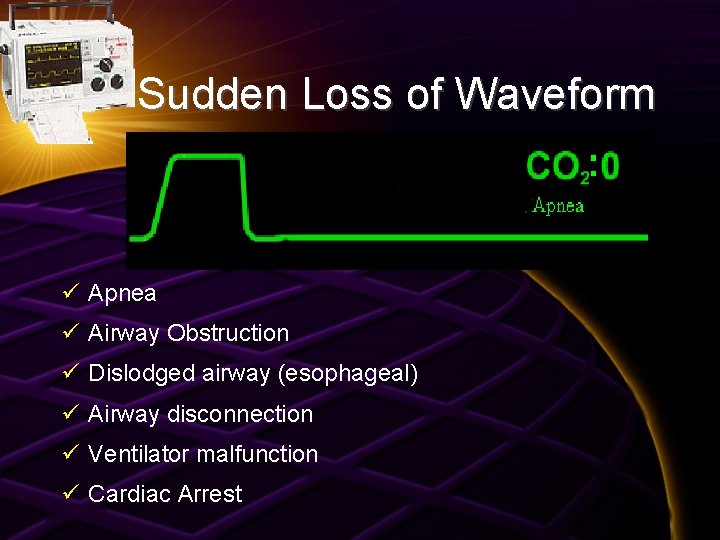
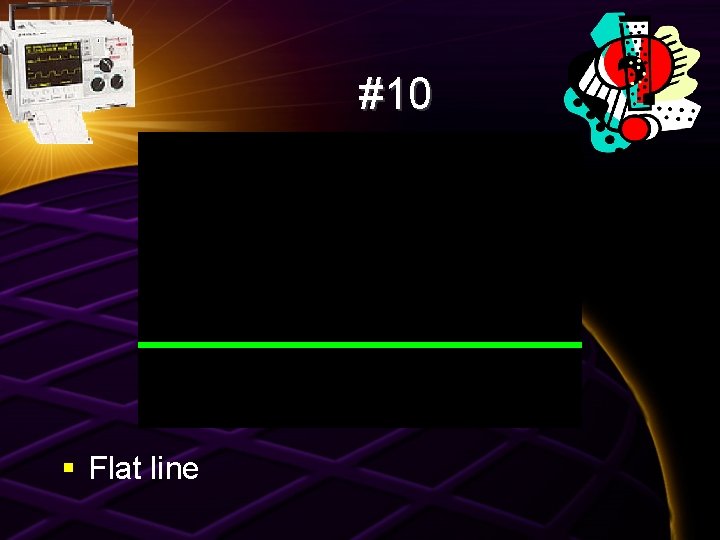
Sudden Loss of Waveform ü Apnea ü Airway Obstruction ü Dislodged airway (esophageal) ü Airway disconnection ü Ventilator malfunction ü Cardiac Arrest
QUIZ TIME
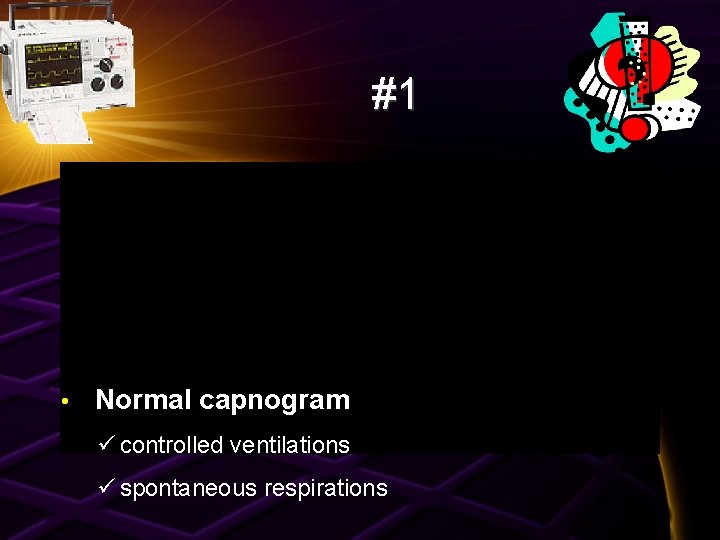
#1 • Normal capnogram ü controlled ventilations ü spontaneous respirations
#2 § Muscle relaxants § General anesthesia ü The cleft on the alveolar plateau is due to spontaneous respiratory effort
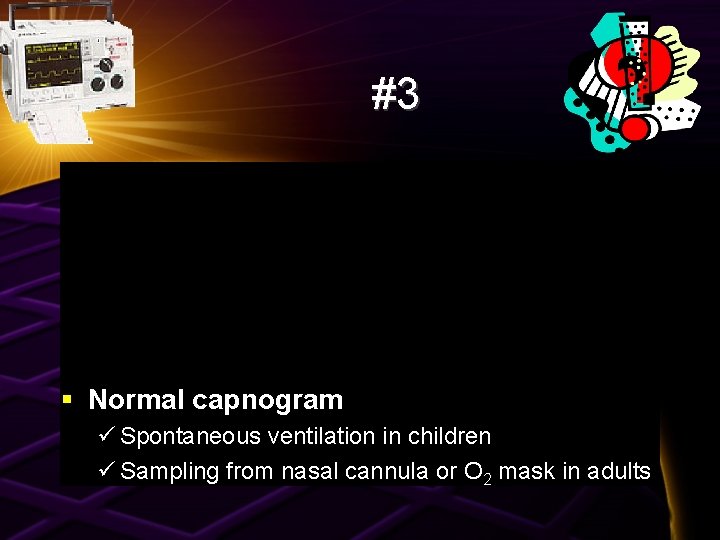
#3 § Normal capnogram ü Spontaneous ventilation in children ü Sampling from nasal cannula or O 2 mask in adults
#4 § Esophageal intubation following a mask ventilation
#5 § Bronchospasm
#6 § Hyperventilation
#7 § Esophageal intubation
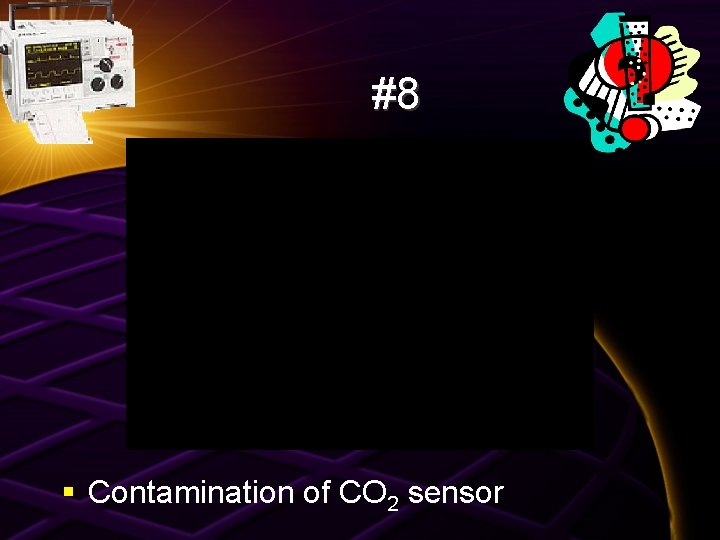
#8 § Contamination of CO 2 sensor
#9 § Rebreathing
#10 § Flat line
Waveform: Regular Shape, Plateau Below Normal • Indicates CO 2 deficiency ü Hyperventilation ü Decreased pulmonary perfusion ü Hypothermia ü Decreased metabolism • Interventions ü Adjust ventilation rate ü Evaluate for adequate sedation ü Evaluate anxiety ü Conserve body heat
Waveform: Regular Shape, Plateau Above Normal • Indicates increase in ETCO 2 ü Hypoventilation ü Respiratory depressant drugs ü Increased metabolism ü Fever, pain, shivering • Interventions ü Adjust ventilation rate ü Decrease respiratory depressant drug dosages ü Assess pain management ü Conserve body heat
Questions
References § Capnography, Bhavani Shankar Kodali, MD § Capnography in ‘Out of Hospital’ Settings, Venkatesh Srinivasa, MD, Bhavani Shankar Kodali, MD § Capnography, Novametrix Systems, Inc. § Clinical Physiology of Capnography, Oridion Emergency Medical Services § Evolutions/Revolutions: Respiratory Monitoring, RN/MCPHU Home Study Program CE Center § End-Tidal Carbon Dioxide, M-Series, Zoll Medical Corporation