
Capitalizing on Context Effective Integration of CTE and










- Slides: 46
Capitalizing on Context: Effective Integration of CTE and Academics Travis Park, Assoc Prof, Cornell University Donna Pearson, Assoc Prof, University of Louisville NACTEI National Conference Portland, OR May 16, 2012
NRCCTE Partners
Four Main Activities Research (Scientifically-based) Dissemination Technical Assistance Professional Development www. nrccte. org
Three Foci Engagement – Completing high school, completing programs Achievement – technical and academic Transition – to continued formal learning without the need for remediation; and to the workplace
Curriculum Integration Research Math-in-CTE: complete Technical Assistance moving to 8 th year Literacy-in-CTE: complete TA-PD moving to 3 rd year Science-in-CTE: Study concluded; data analysis underway
Math-in-CTE
Math Study Questions Does enhancing the CTE curriculum with math increase math skills of CTE students? Can we infuse enough math into CTE curricula to meaningfully enhance the academic skills of CTE participants (Perkins III Core Indicator) . . . Without reducing technical skill development What works?
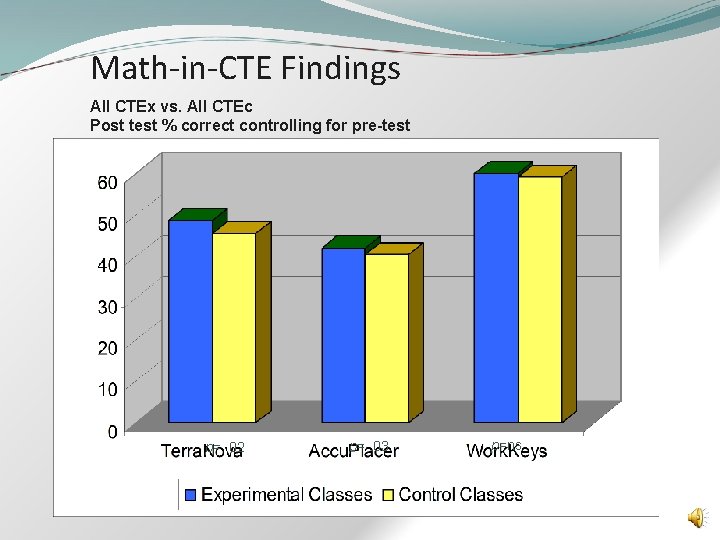
Math-in-CTE Findings All CTEx vs. All CTEc Post test % correct controlling for pre-test p=. 02 p=. 03 p=ns
Science-in-CTE Some Preliminary Findings
The Science-in-CTE Study An adaptation of the Math-in-CTE model A study to test the possibility that enhancing the embedded science in CTE coursework will build skills in this critical academic area. Science-in-CTE
The Research Design
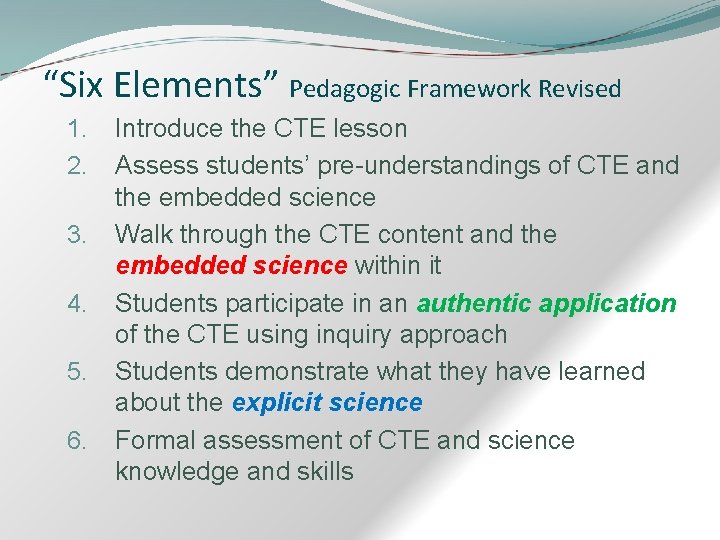
The Science-in-CTE Experimental Treatment: Professional Development—one semester § Dec PD (2 days) – Mapping and lesson creation § Jan PD (2 days) – Lesson creation; scope and sequence § Early Spring PD (2 days) – Lesson critique § Ongoing support; pre- and post teaching reports Pedagogic framework The 6 Elements adapted for development of science enhanced CTE lessons Science-in-CTE
“Six Elements” Pedagogic Framework Revised 1. 2. 3. 4. 5. 6. Introduce the CTE lesson Assess students’ pre-understandings of CTE and the embedded science Walk through the CTE content and the embedded science within it Students participate in an authentic application of the CTE using inquiry approach Students demonstrate what they have learned about the explicit science Formal assessment of CTE and science knowledge and skills
Summary of Preliminary Analysis Preliminary HLM analyses did not reveal a statistically significant effect of the treatment. However, analyses of both quantitative and qualitative data are ongoing…
Continuing Analyses Test sensitivity: Did the test measure what students actually learned? Less than 50% match; Item analysis is underway Fidelity: To what extent did teachers implement? Teaching reports Video teaching tapes Focus groups Artifacts Teacher experience: What were challenges, benefits, successes?
Literacy-in-CTE
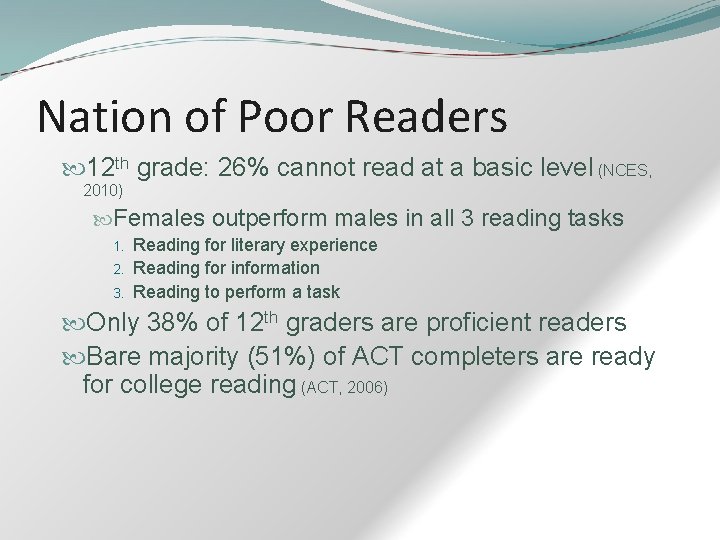
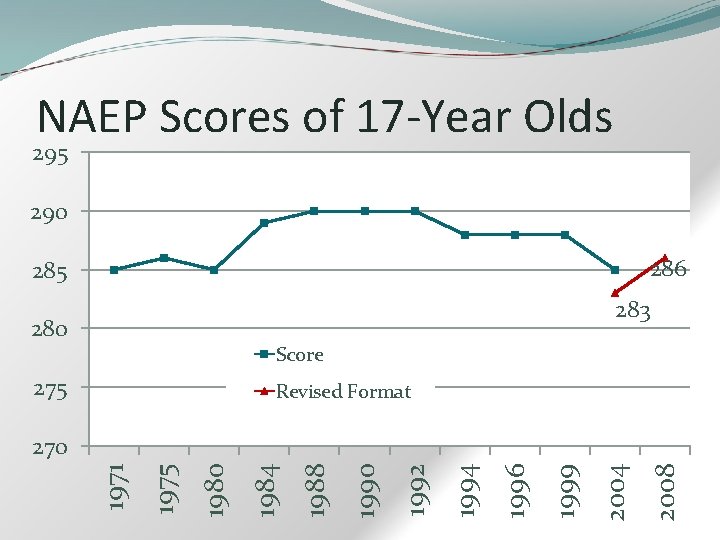
Nation of Poor Readers 12 th grade: 26% cannot read at a basic level (NCES, 2010) Females outperform males in all 3 reading tasks Reading for literary experience 2. Reading for information 3. Reading to perform a task Only 38% of 12 th graders are 1. proficient readers Bare majority (51%) of ACT completers are ready for college reading (ACT, 2006)
NAEP Scores of 17 -Year Olds 295 290 286 285 283 280 Score 275 Revised Format 2008 2004 1999 1996 1994 1992 1990 1988 1984 1980 1975 1971 270
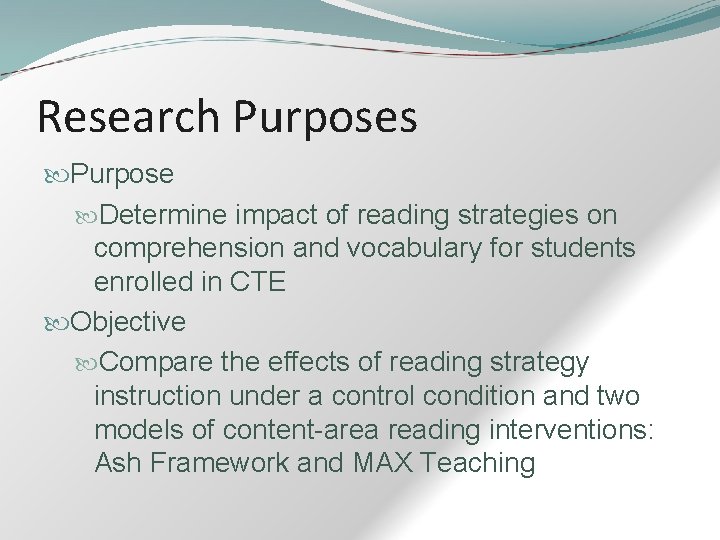
Research Purposes Purpose Determine impact of reading strategies on comprehension and vocabulary for students enrolled in CTE Objective Compare the effects of reading strategy instruction under a control condition and two models of content-area reading interventions: Ash Framework and MAX Teaching
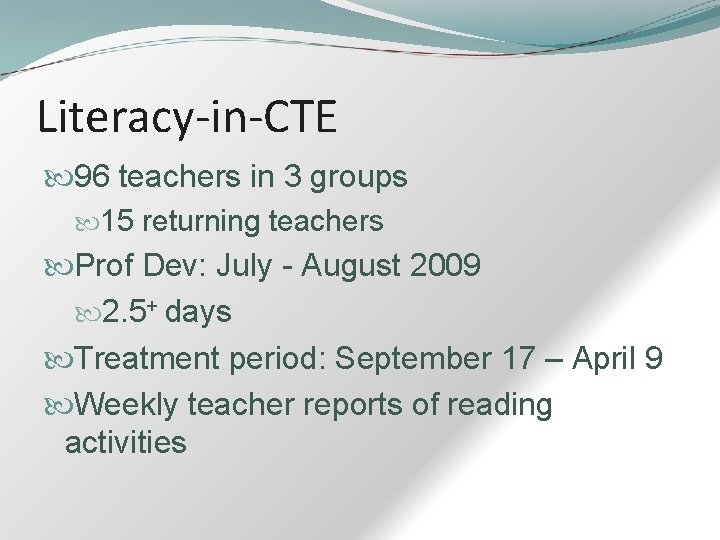
Literacy-in-CTE 96 teachers in 3 groups 15 returning teachers Prof Dev: July - August 2009 2. 5+ days Treatment period: September 17 – April 9 Weekly teacher reports of reading activities
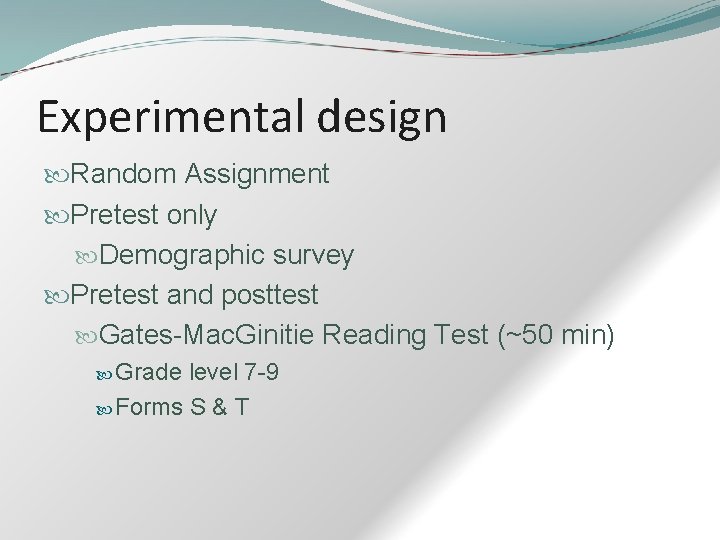
Experimental design Random Assignment Pretest only Demographic survey Pretest and posttest Gates-Mac. Ginitie Reading Test (~50 min) Grade level 7 -9 Forms S & T
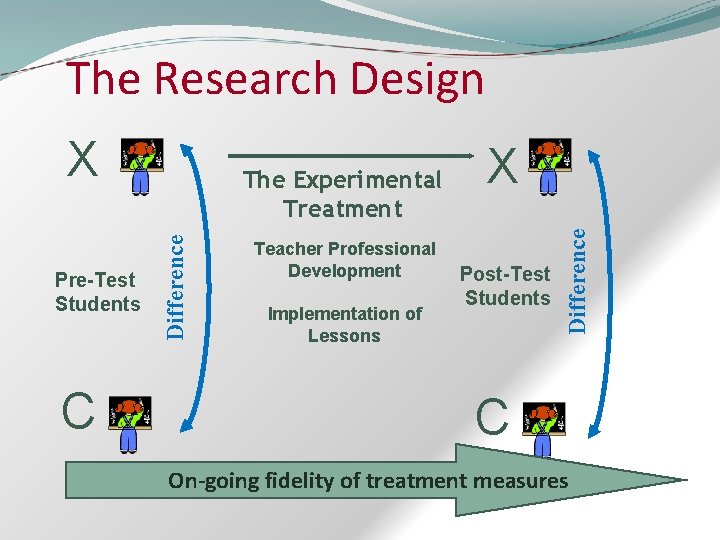
The Research Design C Difference Pre-Test Students The Experimental Treatment Teacher Professional Development Implementation of Lessons X Post-Test Students Difference X C On-going fidelity of treatment measures
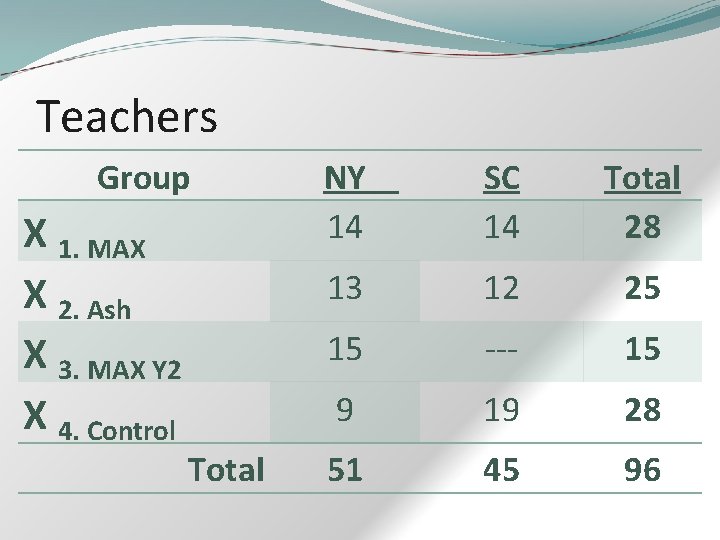
Teachers Group X 1. MAX X 2. Ash X 3. MAX Y 2 X 4. Control Total NY 14 SC 14 Total 28 13 12 25 15 --- 15 9 19 28 51 45 96
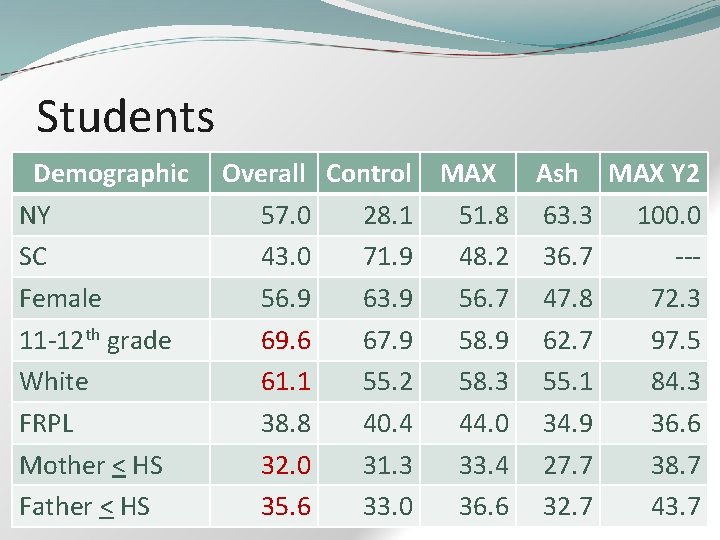
Students Demographic NY SC Female 11 -12 th grade White FRPL Mother < HS Father < HS Overall Control MAX Ash MAX Y 2 57. 0 28. 1 51. 8 63. 3 100. 0 43. 0 71. 9 48. 2 36. 7 --56. 9 63. 9 56. 7 47. 8 72. 3 69. 6 67. 9 58. 9 62. 7 97. 5 61. 1 55. 2 58. 3 55. 1 84. 3 38. 8 40. 4 44. 0 34. 9 36. 6 32. 0 31. 3 33. 4 27. 7 38. 7 35. 6 33. 0 36. 6 32. 7 43. 7
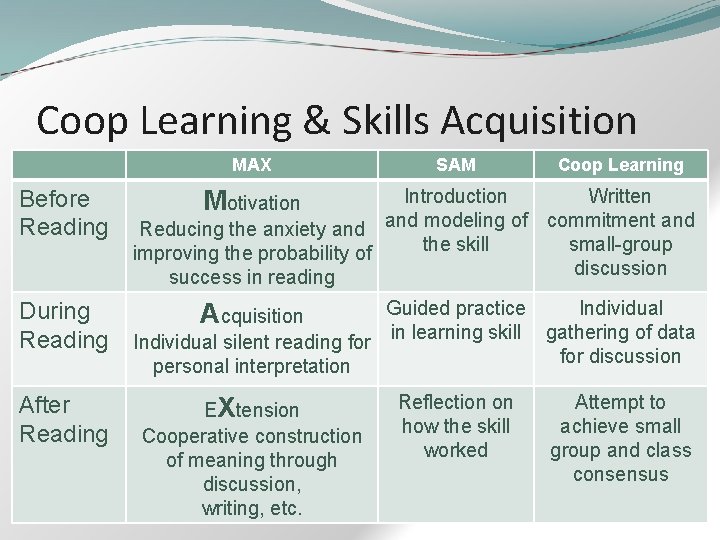
Coop Learning & Skills Acquisition MAX SAM Coop Learning Before Reading Introduction Written Reducing the anxiety and modeling of commitment and the skill small-group improving the probability of discussion success in reading During Reading Guided practice Individual silent reading for in learning skill gathering of data for discussion personal interpretation After Reading Motivation Acquisition EXtension Cooperative construction of meaning through discussion, writing, etc. Reflection on how the skill worked Attempt to achieve small group and class consensus
6 Essential Elements for Adolescent Literacy Instruction (Ash) 1. ) Guided Reading of Text 2. ) Direct Instruction 3. ) Peer-Led Discussion of Text 4. ) Word Study 5. ) Purposeful Oral Reading and Text Production 6. ) Inquiry Learning
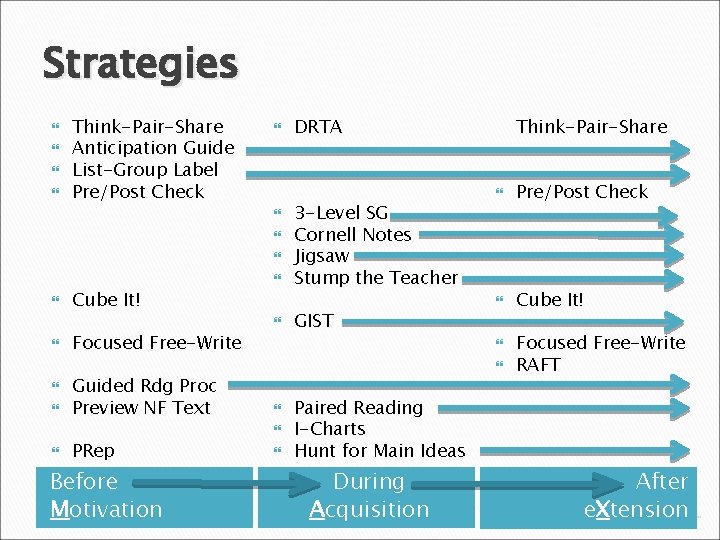
Strategies Think-Pair-Share Anticipation Guide List-Group Label Pre/Post Check Cube It! Focused Free-Write Guided Rdg Proc Preview NF Text PRep Before Motivation DRTA 3 -Level SG Cornell Notes Jigsaw Stump the Teacher GIST Think-Pair-Share Pre/Post Check Cube It! Focused Free-Write RAFT Paired Reading I-Charts Hunt for Main Ideas During Acquisition After e. Xtension
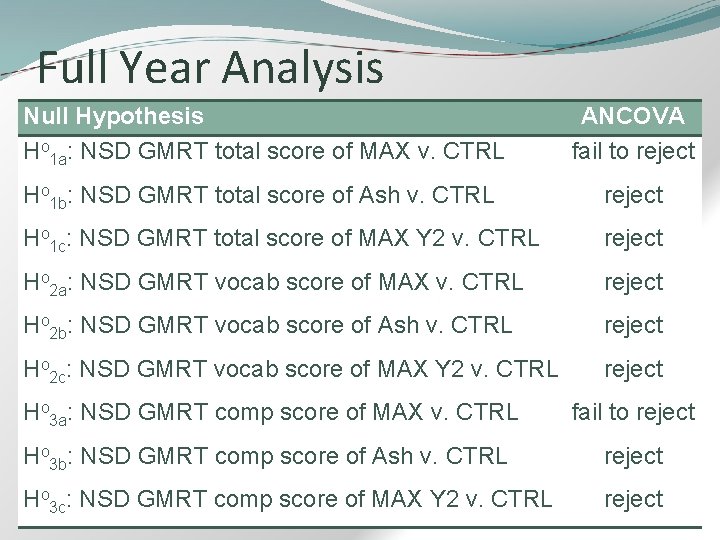
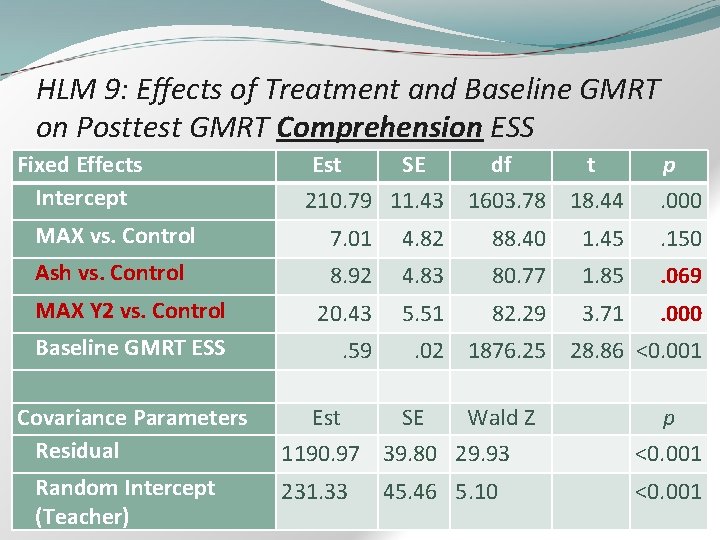
Full Year Analysis Null Hypothesis Ho 1 a: NSD GMRT total score of MAX v. CTRL ANCOVA fail to reject Ho 1 b: NSD GMRT total score of Ash v. CTRL reject Ho 1 c: NSD GMRT total score of MAX Y 2 v. CTRL reject Ho 2 a: NSD GMRT vocab score of MAX v. CTRL reject Ho 2 b: NSD GMRT vocab score of Ash v. CTRL reject Ho 2 c: NSD GMRT vocab score of MAX Y 2 v. CTRL reject Ho 3 a: NSD GMRT comp score of MAX v. CTRL fail to reject Ho 3 b: NSD GMRT comp score of Ash v. CTRL reject Ho 3 c: NSD GMRT comp score of MAX Y 2 v. CTRL reject
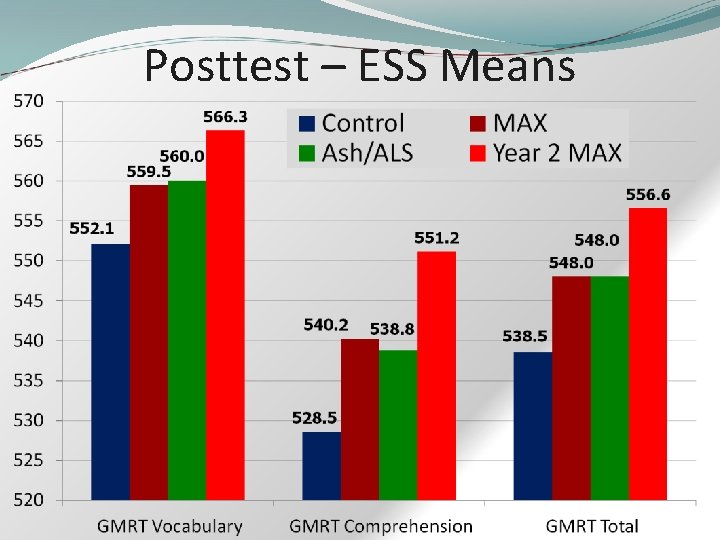
Posttest – ESS Means
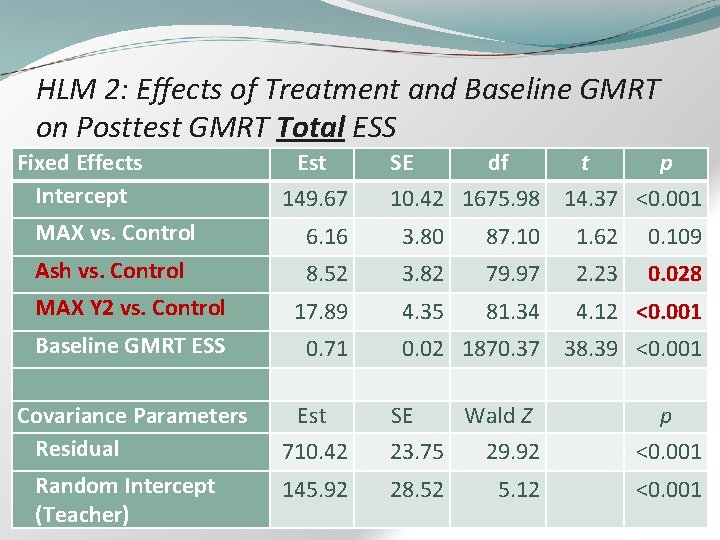
HLM 2: Effects of Treatment and Baseline GMRT on Posttest GMRT Total ESS Fixed Effects Intercept Est 149. 67 SE df t p 10. 42 1675. 98 14. 37 <0. 001 MAX vs. Control 6. 16 3. 80 87. 10 1. 62 0. 109 Ash vs. Control 8. 52 3. 82 79. 97 2. 23 0. 028 MAX Y 2 vs. Control 17. 89 4. 35 81. 34 4. 12 <0. 001 Baseline GMRT ESS 0. 71 0. 02 1870. 37 38. 39 <0. 001 Covariance Parameters Residual Est 710. 42 SE Wald Z 23. 75 29. 92 p <0. 001 Random Intercept (Teacher) 145. 92 28. 52 <0. 001 5. 12
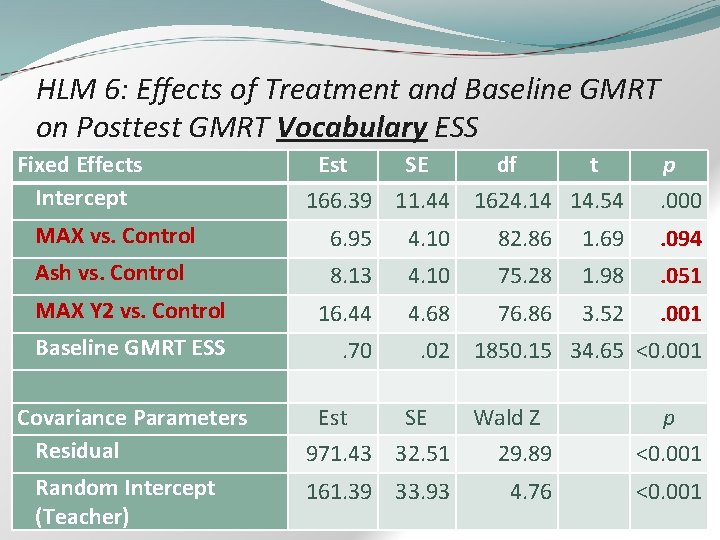
HLM 6: Effects of Treatment and Baseline GMRT on Posttest GMRT Vocabulary ESS Fixed Effects Intercept Est SE df t 166. 39 11. 44 1624. 14 14. 54 p. 000 MAX vs. Control 6. 95 4. 10 82. 86 1. 69 . 094 Ash vs. Control 8. 13 4. 10 75. 28 1. 98 . 051 MAX Y 2 vs. Control 16. 44 4. 68 76. 86 3. 52 . 001 Baseline GMRT ESS . 70 Covariance Parameters Residual Random Intercept (Teacher) . 02 1850. 15 34. 65 <0. 001 Est SE Wald Z 971. 43 32. 51 29. 89 p <0. 001 161. 39 33. 93 <0. 001 4. 76
HLM 9: Effects of Treatment and Baseline GMRT on Posttest GMRT Comprehension ESS Fixed Effects Intercept Est SE df t 210. 79 11. 43 1603. 78 18. 44 p. 000 MAX vs. Control 7. 01 4. 82 88. 40 1. 45 . 150 Ash vs. Control 8. 92 4. 83 80. 77 1. 85 . 069 MAX Y 2 vs. Control 20. 43 5. 51 82. 29 3. 71 . 000 Baseline GMRT ESS . 59 Covariance Parameters Residual Random Intercept (Teacher) . 02 1876. 25 28. 86 <0. 001 Est SE Wald Z 1190. 97 39. 80 29. 93 p <0. 001 231. 33 <0. 001 45. 46 5. 10
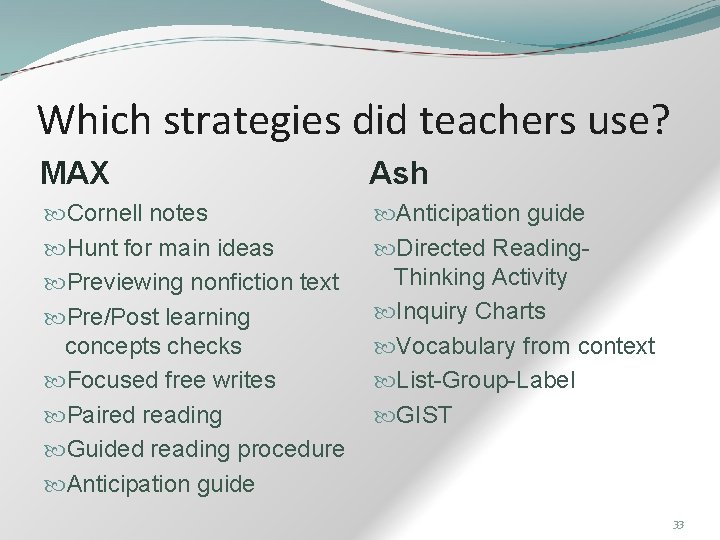
Which strategies did teachers use? MAX Ash Cornell notes Hunt for main ideas Previewing nonfiction text Pre/Post learning concepts checks Focused free writes Paired reading Guided reading procedure Anticipation guide Directed Reading. Thinking Activity Inquiry Charts Vocabulary from context List-Group-Label GIST 33
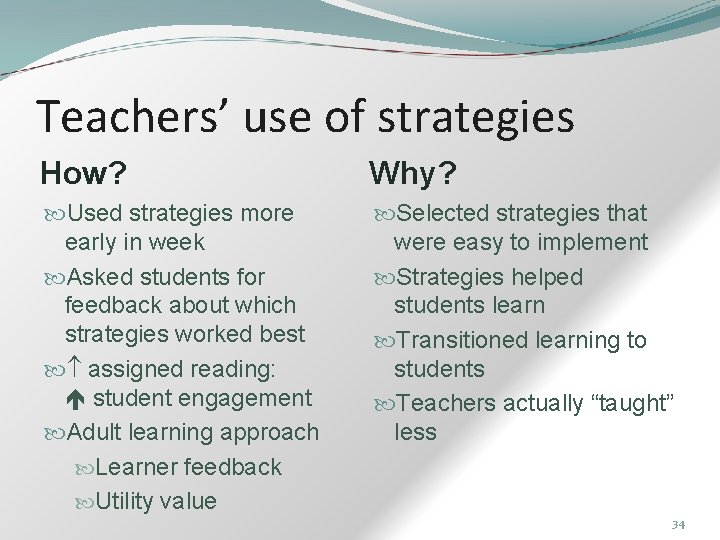
Teachers’ use of strategies How? Why? Used strategies more early in week Asked students for feedback about which strategies worked best assigned reading: student engagement Adult learning approach Learner feedback Utility value Selected strategies that were easy to implement Strategies helped students learn Transitioned learning to students Teachers actually “taught” less 34
ELA Common Core Reading Writing Speaking and Listening Language Media and Technology
ELA Common Core “Staircase” of increasing complexity Diverse array of reading Write logical arguments based upon claims, reasoning, evidence Research is emphasized Students gain, evaluate, present complex info, ideas, evidence Prepare students for real life, college, careers
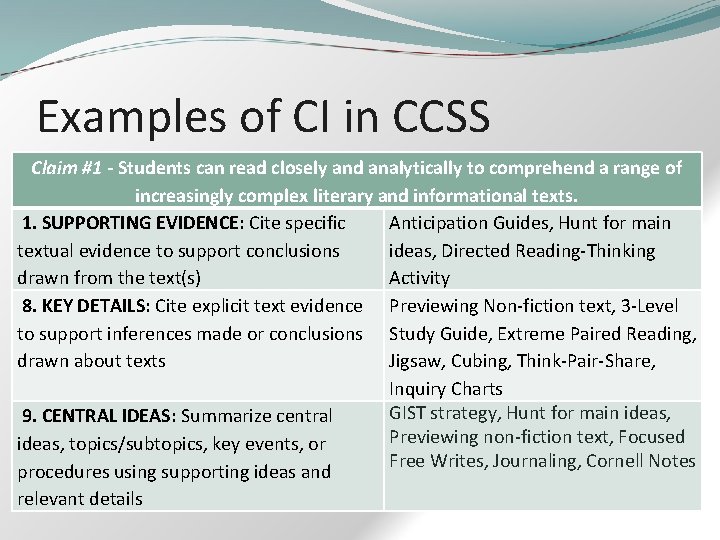
Examples of CI in CCSS Claim #1 - Students can read closely and analytically to comprehend a range of increasingly complex literary and informational texts. 1. SUPPORTING EVIDENCE: Cite specific Anticipation Guides, Hunt for main textual evidence to support conclusions ideas, Directed Reading-Thinking drawn from the text(s) Activity 8. KEY DETAILS: Cite explicit text evidence Previewing Non-fiction text, 3 -Level to support inferences made or conclusions Study Guide, Extreme Paired Reading, drawn about texts Jigsaw, Cubing, Think-Pair-Share, Inquiry Charts GIST strategy, Hunt for main ideas, 9. CENTRAL IDEAS: Summarize central Previewing non-fiction text, Focused ideas, topics/subtopics, key events, or Free Writes, Journaling, Cornell Notes procedures using supporting ideas and relevant details
What Makes Integration Work? Common Findings Among the NRCCTE Studies…
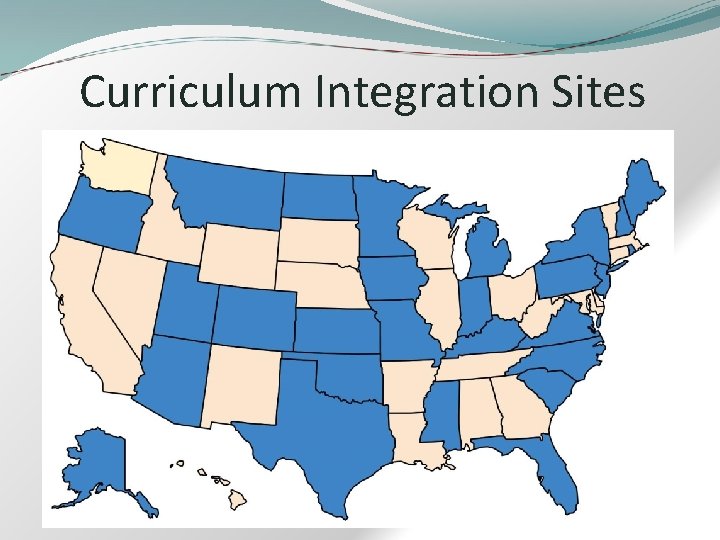
Curriculum Integration Sites
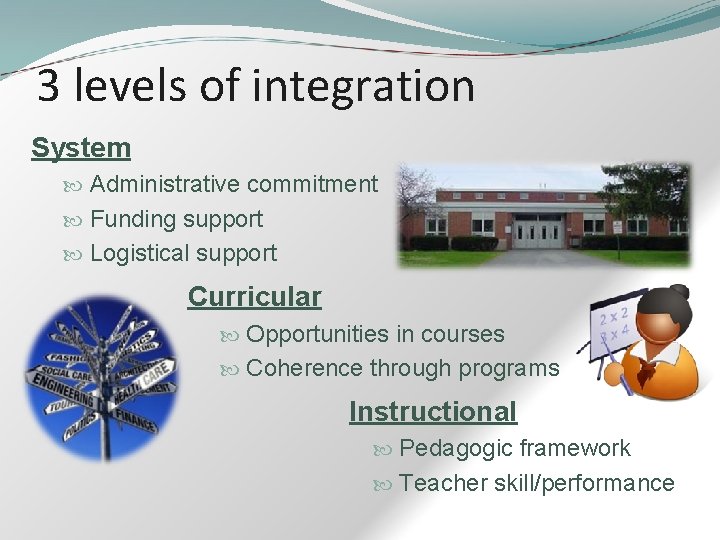
3 levels of integration System Administrative commitment Funding support Logistical support Curricular Opportunities in courses Coherence through programs Instructional Pedagogic framework Teacher skill/performance
Core Principles Foster and Sustain a Community of Practice Approach academics as essential workplace skills Begin with the CTE curricula, not with academics Maximize the academics in CTE Support CTE teachers as “teachers of academics-in -CTE”; not as academic teachers
Process and Pedagogy a process and a pedagogy through which to enhance and teach the embedded academics within existing CTE curricula
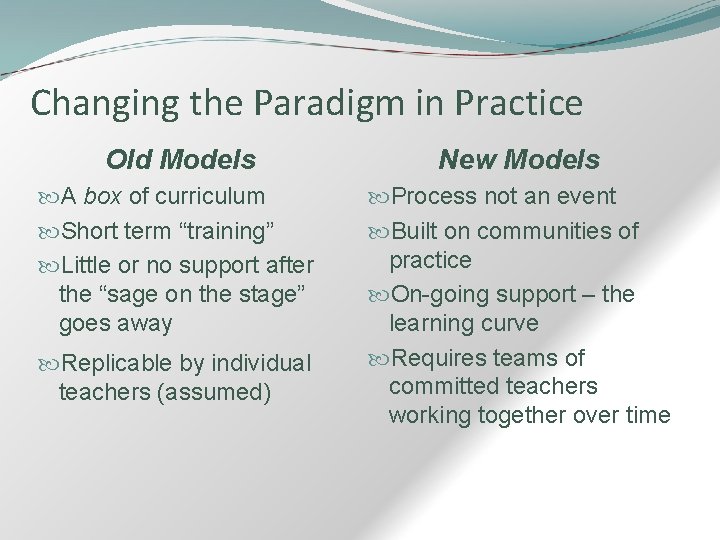
Changing the Paradigm in Practice Old Models New Models A box of curriculum Short term “training” Little or no support after the “sage on the stage” goes away Process not an event Built on communities of practice On-going support – the learning curve Requires teams of committed teachers working together over time Replicable by individual teachers (assumed)
CI Professional Development 10 days (60+ hours) Summer = 5 days Fall = 2 days Winter = 2 days Spring = 1 day < 40 teachers Variety of CTE areas, but clusters of 5+ teachers/area Bi-monthly accountability
Thank you!!! The work reported herein was supported under the National Research Center for Career and Technical Education, PR/Award No. VO 51 A 070003 administered by the Office of Vocational and Adult Education, U. S. Department of Education. However, the contents do not necessarily represent the positions or policies of the Office of Vocational and Adult Education or the U. S. Department of Education, and you should not assume endorsement by the Federal Government.
For more information Donna Pearson, Ph. D, Associate Professor University of Louisville donna. pearson@louisville. edu Travis Park, Ph. D, Associate Professor Cornell University tdp 9@cornell. edu NRCCTE Website www. nrccte. org