
Capitalism versus Socialism The economic system known as

- Slides: 25
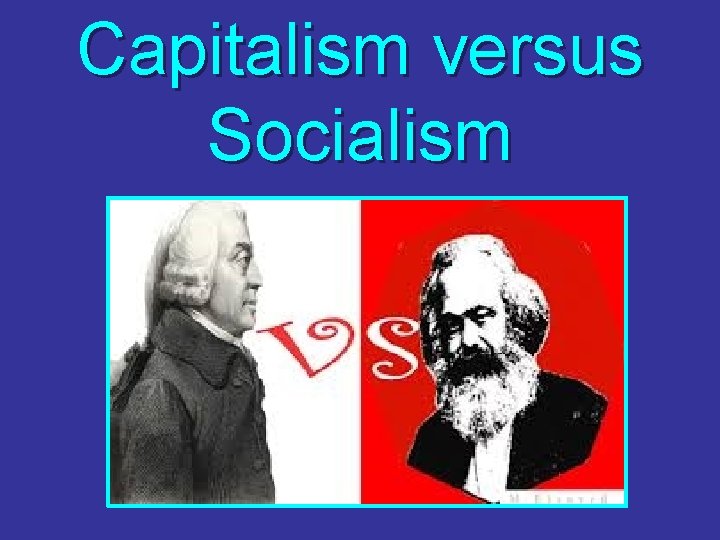
Capitalism versus Socialism
• The economic system known as capitalism developed gradually over centuries, originating during the late Middle Ages. • During the 19 th century societal changes due to industrialization led some people believe that capitalism caused certain problems, such as the abuse of workers. • These critics of capitalism responded by developing a new economic system called socialism
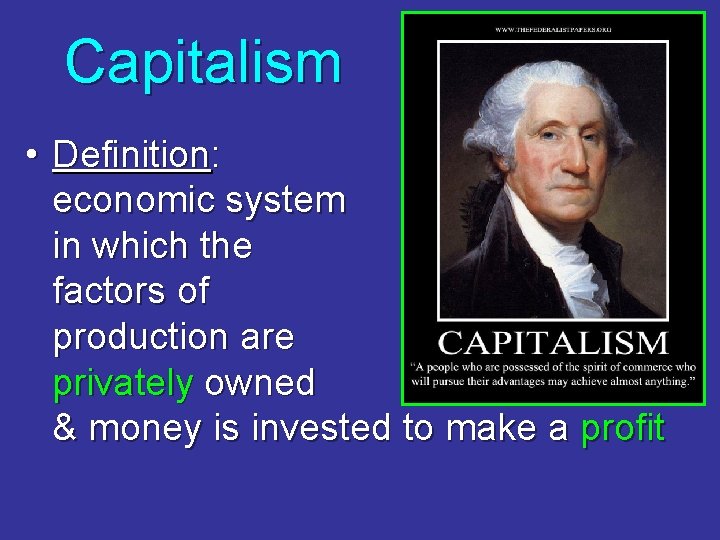
Capitalism • Definition: economic system in which the factors of production are privately owned & money is invested to make a profit
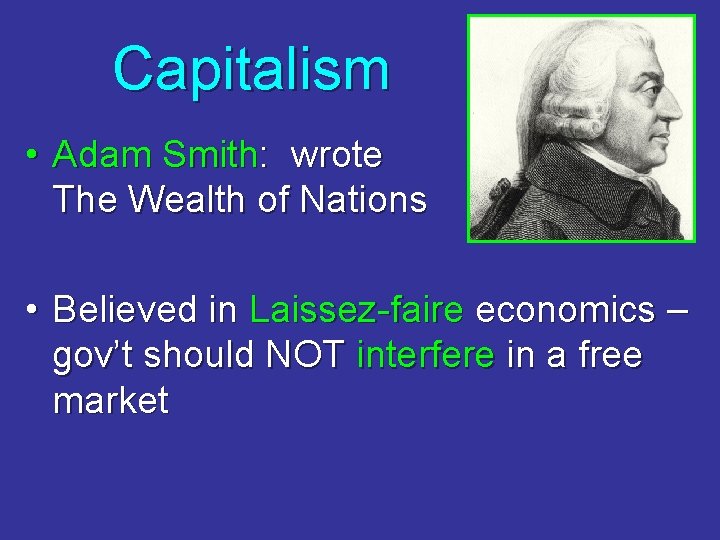
Capitalism • Adam Smith: wrote The Wealth of Nations • Believed in Laissez-faire economics – gov’t should NOT interfere in a free market
Capitalism • 3 Natural Laws of Economics: 1. Law of Self-Interest: People work for their own good 2. Law of Competition: Competition forces people to make a better product 3. Law of Supply & Demand: Enough goods would be produced at the lowest possible price to meet demand
Socialism • Definition: economic system in which the factors of production are owned by the public and operate for the welfare of all
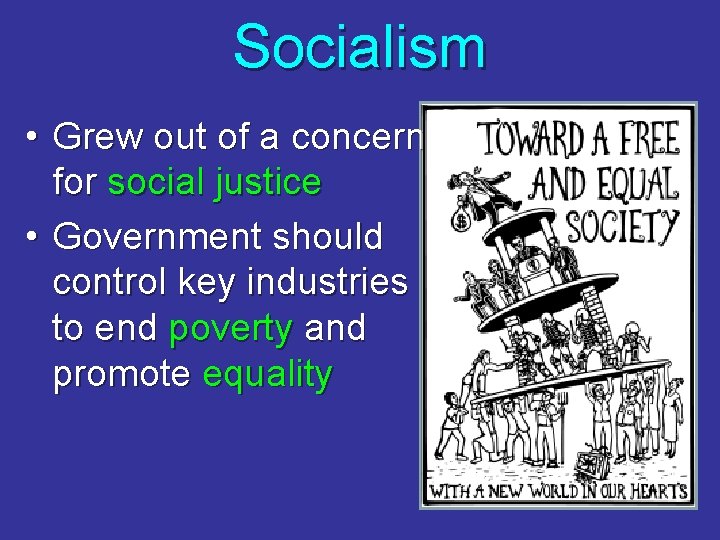
Socialism • Grew out of a concern for social justice • Government should control key industries to end poverty and promote equality
Capitalism Socialism • Individuals & businesses own property & means of production (private) • The community or state owns property & the means of production (public)
Capitalism Socialism • Progress results when individuals follow their own self-interest • Progress results when a community of producers cooperate for the good of all
Capitalism Socialism • Businesses follow their own self-interest by competing for consumer’s money • Socialists believe that capitalism takes advantage of the worker
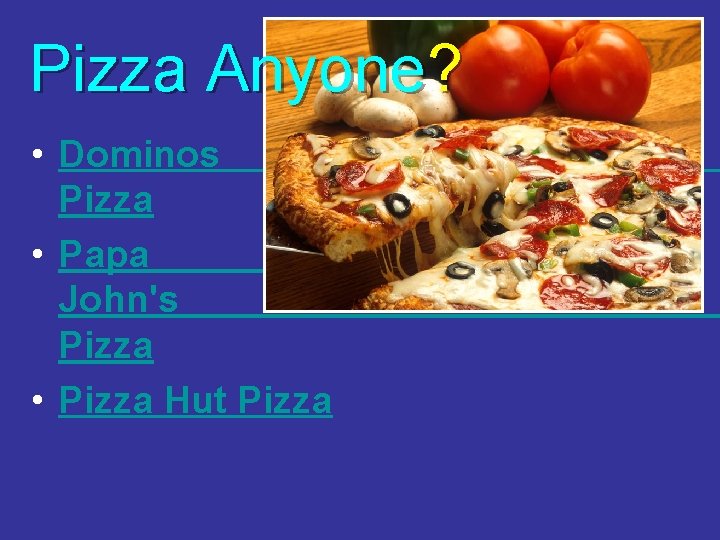
Pizza Anyone? • Dominos Pizza • Papa John's Pizza • Pizza Hut Pizza
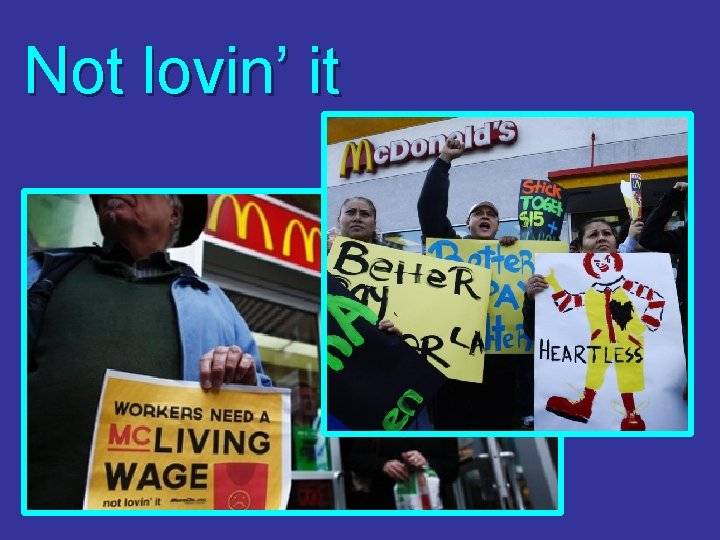
Not lovin’ it
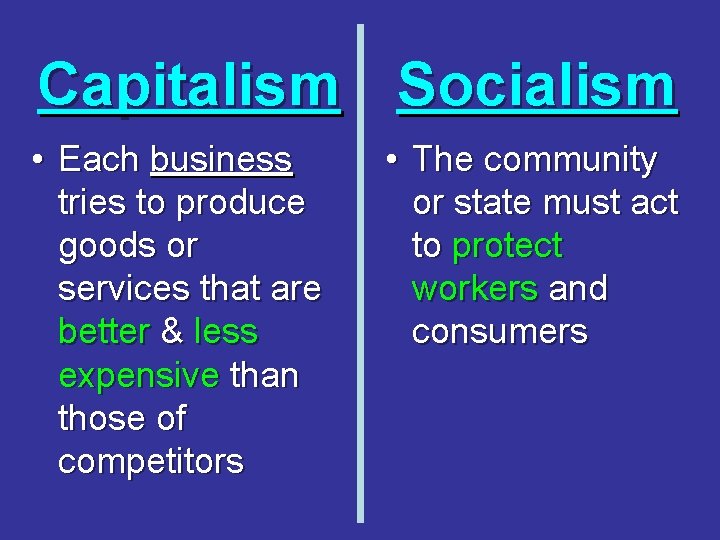
Capitalism Socialism • Each business tries to produce goods or services that are better & less expensive than those of competitors • The community or state must act to protect workers and consumers
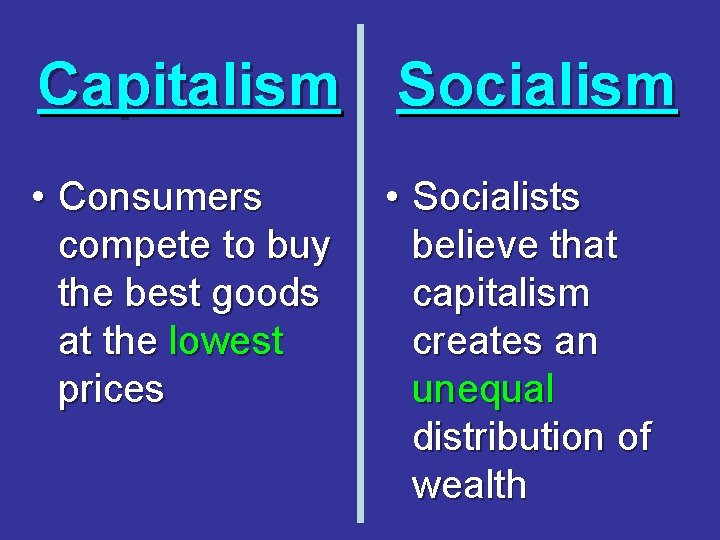
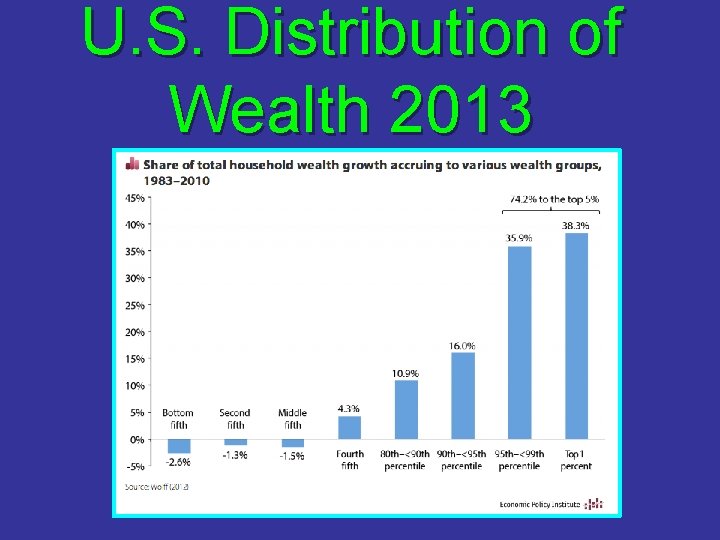
Capitalism Socialism • Consumers compete to buy the best goods at the lowest prices • Socialists believe that capitalism creates an unequal distribution of wealth
The Ultimate Price? • The Ultimate Price?
U. S. Distribution of Wealth 2013
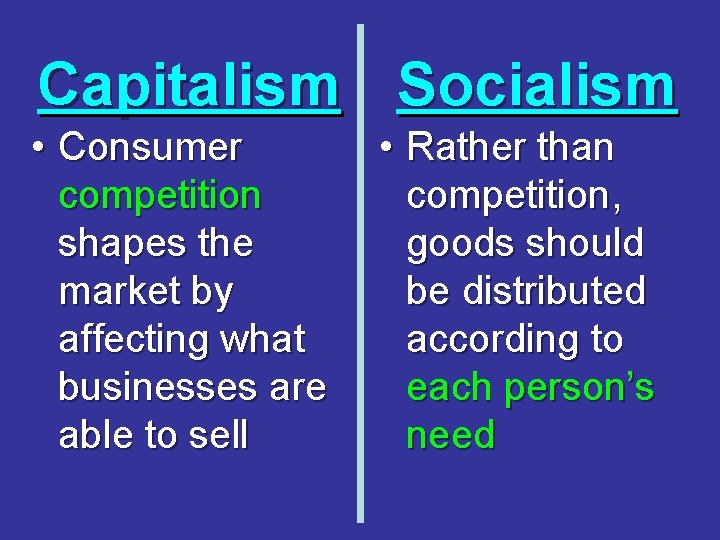
Capitalism Socialism • Consumer competition shapes the market by affecting what businesses are able to sell • Rather than competition, goods should be distributed according to each person’s need
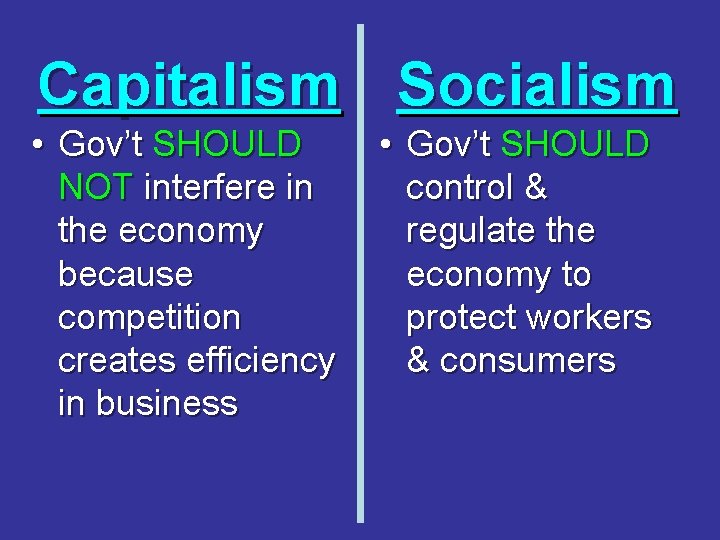
Capitalism Socialism • Gov’t SHOULD NOT interfere in the economy because competition creates efficiency in business • Gov’t SHOULD control & regulate the economy to protect workers & consumers
Marxism – Radical Socialism • According to Karl Marx the economy is a major force for change • Change generally occurs through class struggle • The “HAVES” v. the “HAVE-NOTS”
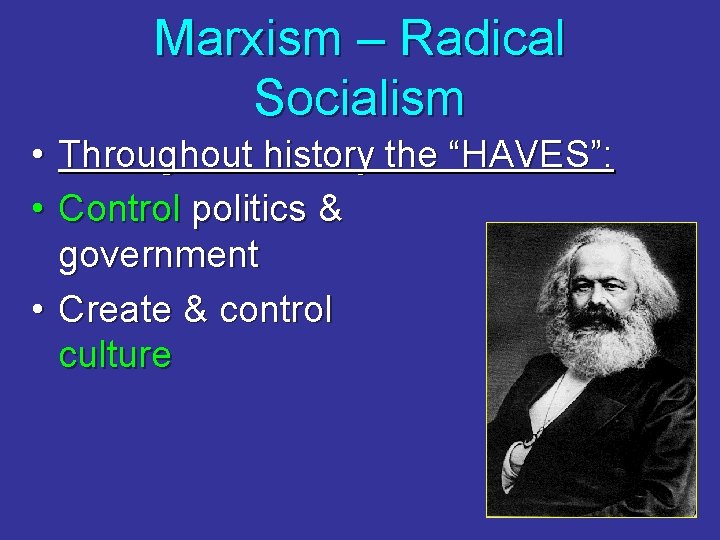
Marxism – Radical Socialism • Throughout history the “HAVES”: • Control politics & government • Create & control culture
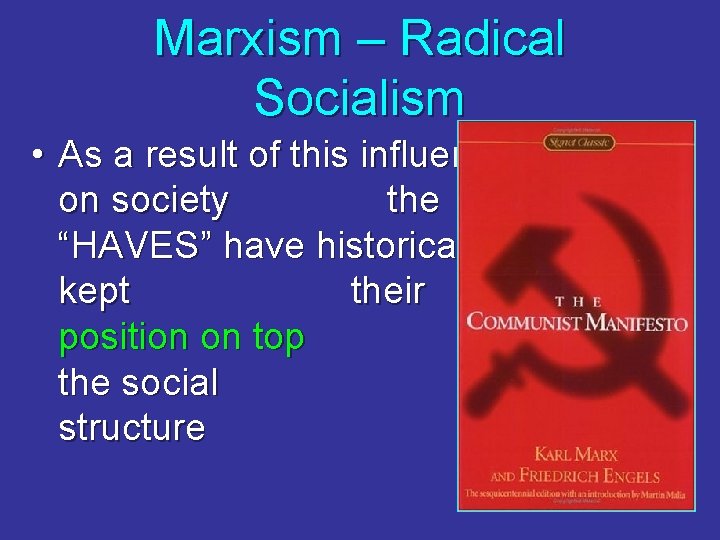
Marxism – Radical Socialism • As a result of this influence on society the “HAVES” have historically kept their position on top of the social structure
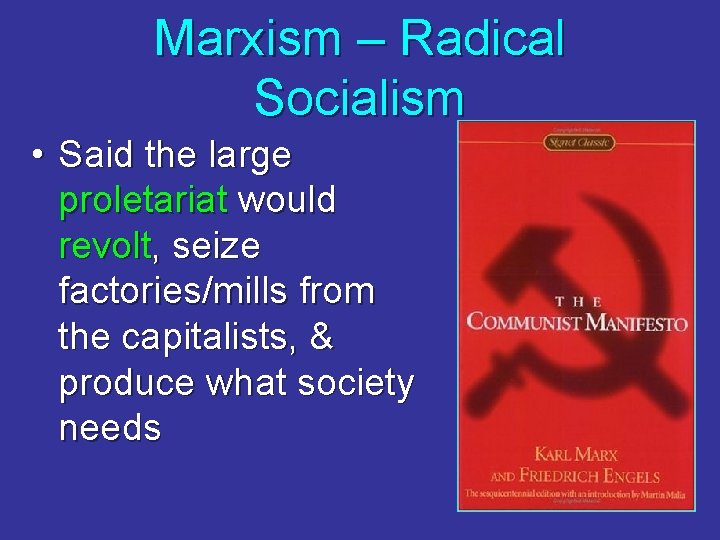
Marxism – Radical Socialism • Said the large proletariat would revolt, seize factories/mills from the capitalists, & produce what society needs
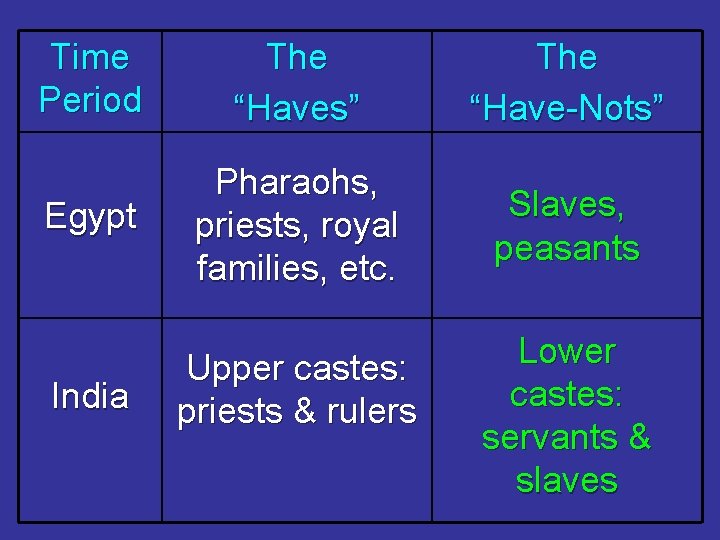
Time Period The “Haves” The “Have-Nots” Egypt Pharaohs, priests, royal families, etc. Slaves, peasants India Upper castes: priests & rulers Lower castes: servants & slaves
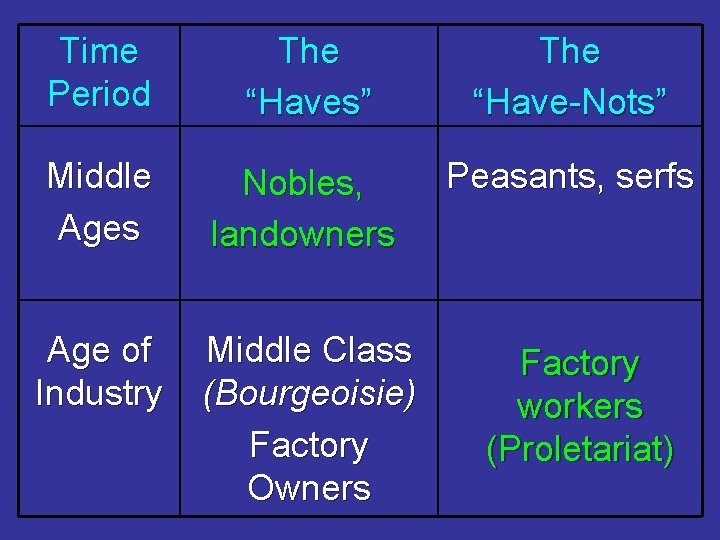
Time Period The “Haves” The “Have-Nots” Middle Ages Nobles, landowners Peasants, serfs Age of Industry Middle Class (Bourgeoisie) Factory Owners Factory workers (Proletariat)
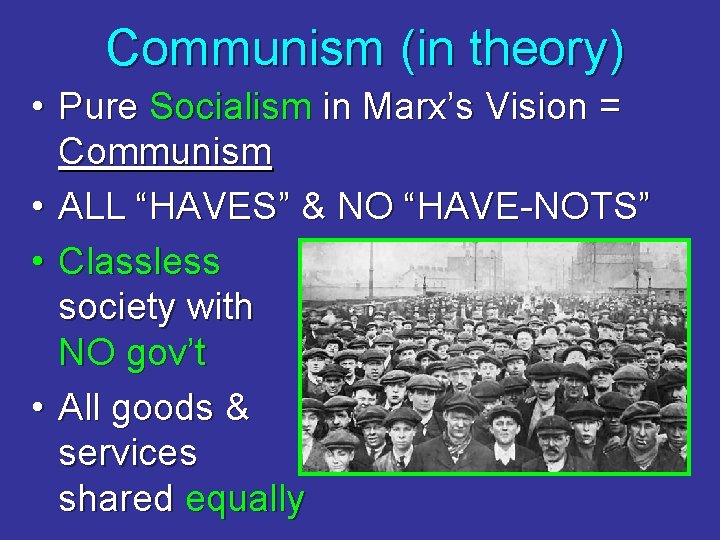
Communism (in theory) • Pure Socialism in Marx’s Vision = Communism • ALL “HAVES” & NO “HAVE-NOTS” • Classless society with NO gov’t • All goods & services shared equally