
Capitalism Socialism Communism Mixed The 4 Big Socioeconomic
Capitalism Socialism Communism Mixed The 4 Big Socioeconomic Systems aka the 4 “isms”
Essential Questions: • What are the major differences between the 3 socio-economic systems? • Why is it difficult for these socioeconomic systems to exist simultaneously? • How can we identify one socioeconomic system from another? Via rhetoric? Via reality? • How does each system answer each basic economic question?
What is a socioeconomic system? • A very broad term referring to how an economic system interplays with a social system. • The use of economics and other academic fields to study society. • Some questions a socio-economist might ask: – (micro-scale) What are the latent and manifest functions of a firm laying off workers? – (macro-scale) How has unemployment affected the amount of radical fundamentalist groups in the U. S. ?
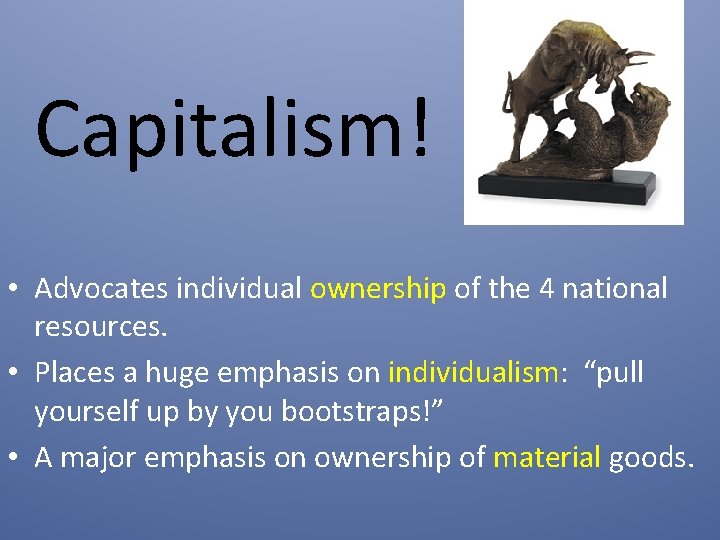
Capitalism! • Advocates individual ownership of the 4 national resources. • Places a huge emphasis on individualism: “pull yourself up by you bootstraps!” • A major emphasis on ownership of material goods.
Capitalism: defined • An economic system where land, labor, and capital are owned, managed and traded by private individuals or corporations, in their pursuit of profit. • Investments, distribution, income, production, pricing and supply of goods, commodities and services are primarily determined by private decision in a market economy largely free of government intervention.
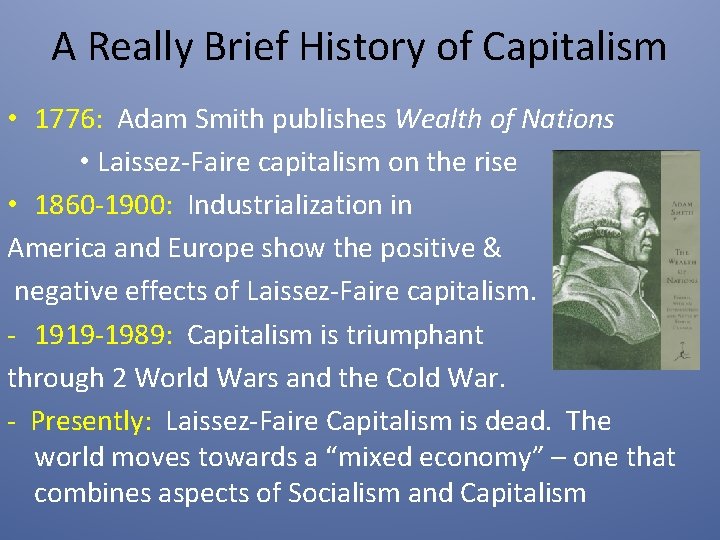
A Really Brief History of Capitalism • 1776: Adam Smith publishes Wealth of Nations • Laissez-Faire capitalism on the rise • 1860 -1900: Industrialization in America and Europe show the positive & negative effects of Laissez-Faire capitalism. - 1919 -1989: Capitalism is triumphant through 2 World Wars and the Cold War. - Presently: Laissez-Faire Capitalism is dead. The world moves towards a “mixed economy” – one that combines aspects of Socialism and Capitalism
The Philosophy of Capitalism in a Nutshell “The general industry of the society never can exceed what the capital of the society can employ… Every individual is continually exerting himself to find out the most advantageous employment for whatever capital he can command. It is his own advantage, indeed, and not that of the society, which he has in view. ” - Adam Smith, Wealth of Nations (book 4, ch 2)
Troubles of Capitalism: • “Pure” capitalism has NO government intervention. – Laissez-Faire! (Literally, “Let them be”) • Is this the way our economy operates now? What are some possible outcomes of an economy without any government intervention? “We have deluded ourselves into believing the myth that capitalism grew and prospered out of the Protestant ethic of hard work and sacrifices. Capitalism was built on the exploitation of black slaves and continues to thrive on the exploitation of the poor” – Dr. Martin Luther King Jr.
Capitalism Q’s: • What is so appealing about capitalism? What are the benefits of capitalism? - What are some things Laissez-Faire capitalism provides and does not provide? - When will citizens need assistance from an entity not motivated by profit? - Think about Capitalism’s relationship with the status quo.
Socialism defined: • An economic system in which all industry is owned by a central government. The central government is comprised of labor unions. Wealth, goods, and services are equally distributed to all citizens. • Government = ‘One Big Union’ aka ‘The Industrial Army’. - “Command economy”
A Really Brief History of Socialism • 1830’s: Western European philosophers initiate cooperative movements – communities set on sharing and caring. • 1840’s: America sees the rise of utopian communities. Mmm… Oneida Colony! • 1880’s & 1912: Socialist political parties in America come close to winning federal elections. - 1917: Russian Revolution institutes Socialism. - Presently: Socialist governments in Bolivia, Venezuela, Cuba, N. Korea.
The Philosophy of Socialism in a Nutshell “Dr. Leete, who was walking ahead, overhearing something of our talk, turned to say that the difference between the age of individualism and that of concert was well characterized by the fact that, in the nineteenth century, when it rained, the people of Boston put up three hundred thousand umbrellas over as many heads, and in the twentieth century they put up one umbrella over all the heads. As we walked on, Edith said, "The private umbrella is father's favorite figure to illustrate the old way when everybody lived for himself and his family. There is a nineteenth century painting at the Art Gallery representing a crowd of people in the rain, each one holding his umbrella over himself and his wife, and giving his neighbors the drippings, which he claims must have been meant by the artist as a satire on his times. ” Edward Bellamy, Looking Backward, ch 14 Collective ownership over individual ownership!
The Philosophy of Socialism… • “I am convinced that if we are to get on right side of the world revolution, we as a nation must undergo a radical revolution of values. We must rapidly begin the shift from a “thing-oriented” society to a “person -oriented” society. When machines and computers, profit motives and property rights are considered more important than people, the giant triplets of racism, materialism, and militarism are incapable of being conquered. ” – Dr. Martin Luther King Jr.
Costs and Benefits of Socialism • Fear of government controlling everything. Is one big monopoly a good thing? • Why should every citizen get a ‘free ride’? • Incredibly difficult to imagine with our perception of modern life. • Other arguments?
Socialism Q’s • What do you feel the benefits of socialism are? • What do you feel the costs of socialism are? • Why would implementing socialism in the U. S. be such a difficult task? • What do you think is the dominant conception of socialism in the United States today? Is this an accurate portrayal?
Communism defined A socioeconomic structure promoting the establishment of an egalitarian, classless, and stateless society based on common ownership and control of the 4 national resources.
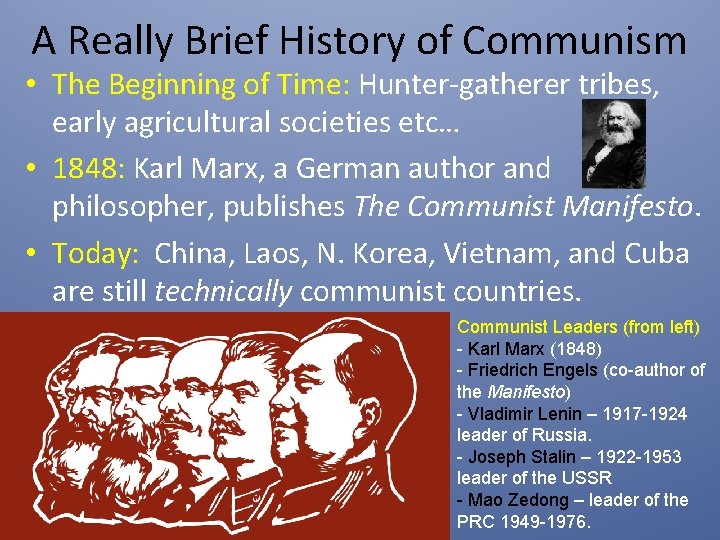
A Really Brief History of Communism • The Beginning of Time: Hunter-gatherer tribes, early agricultural societies etc… • 1848: Karl Marx, a German author and philosopher, publishes The Communist Manifesto. • Today: China, Laos, N. Korea, Vietnam, and Cuba are still technically communist countries. Communist Leaders (from left) - Karl Marx (1848) - Friedrich Engels (co-author of the Manifesto) - Vladimir Lenin – 1917 -1924 leader of Russia. - Joseph Stalin – 1922 -1953 leader of the USSR - Mao Zedong – leader of the PRC 1949 -1976.
The Philosophy of Communism in a Nutshell • "In communist society, where nobody has one exclusive sphere of activity but each can become accomplished in any branch he wishes, society regulates the general production and thus makes it possible for me to do one thing today and another tomorrow, to hunt in the morning, fish in the afternoon, rear cattle in the evening, criticize after dinner, just as I have a mind, without ever becoming hunter, fisherman, herdsman or critic. ” • Karl Marx, The German Ideology (1845) You do what you want when you want!
Troubles With Communism • Since 1848, there has never been a “pure” form of communism as outlined by The Communist Manifesto. • Is there a lack of incentive to be a productive laborer? • The Cold War left communism to die slowly. • Just imagine living with no money, no sole occupation, & no government… sounds sweet at first, no?
Communism Q’s • What’s so (un)appealing about communism? • Imagine living within a “pure” communist society. How do you see society, the economy, and politics working? • Question: Now imagine yourself in the same place ten years down the line. Ten years is quite a long time. Are things still the same? How? Why or why not are they the same or different?
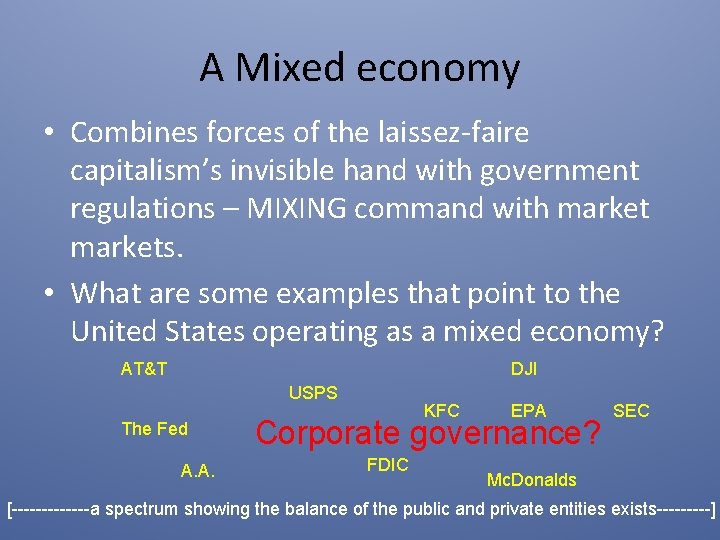
A Mixed economy • Combines forces of the laissez-faire capitalism’s invisible hand with government regulations – MIXING command with markets. • What are some examples that point to the United States operating as a mixed economy? AT&T DJI USPS The Fed A. A. KFC EPA Corporate governance? FDIC SEC Mc. Donalds [-------a spectrum showing the balance of the public and private entities exists-----]
Spectrums [-------------------------------] …do a fabulous job showcasing: BALANCE LEVELS PREPONDERANCE IMBALANCE!
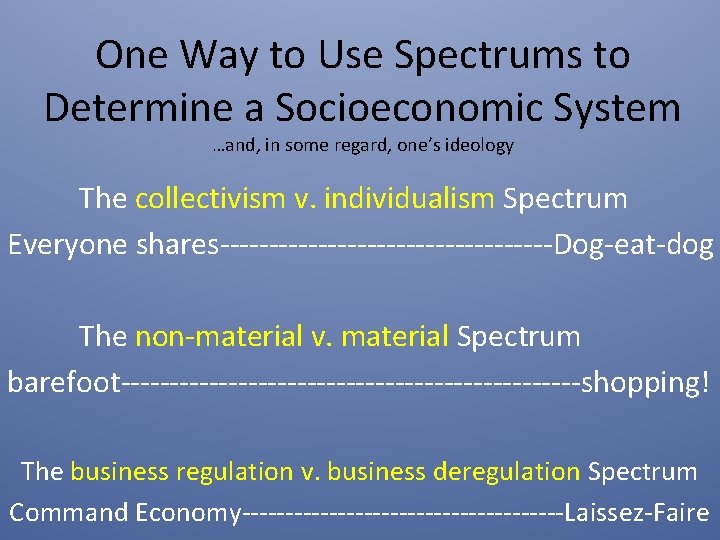
One Way to Use Spectrums to Determine a Socioeconomic System …and, in some regard, one’s ideology The collectivism v. individualism Spectrum Everyone shares-----------------Dog-eat-dog The non-material v. material Spectrum barefoot------------------------shopping! The business regulation v. business deregulation Spectrum Command Economy-------------------Laissez-Faire
Now follow a collection of symbols representing various socioeconomic systems
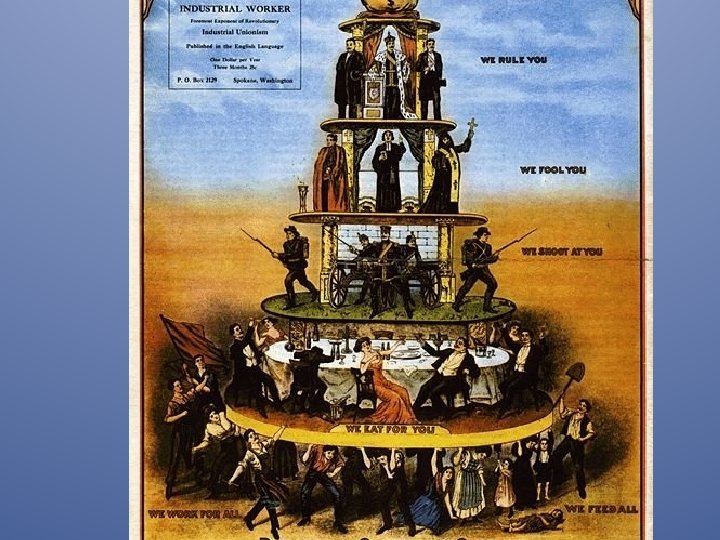
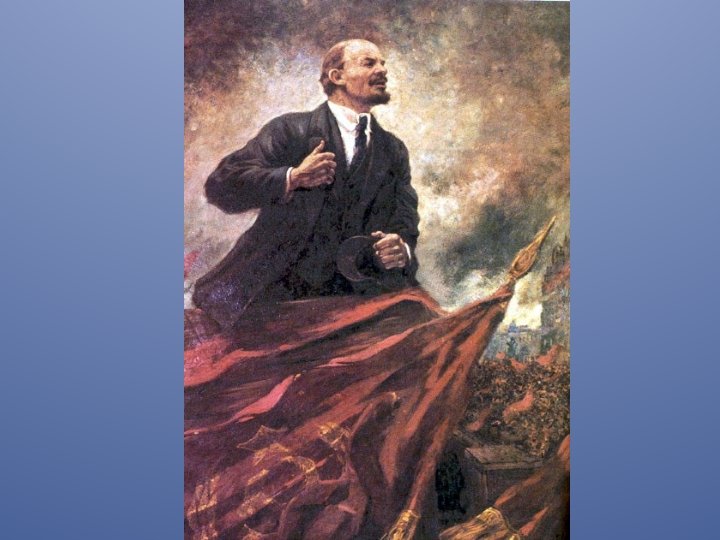
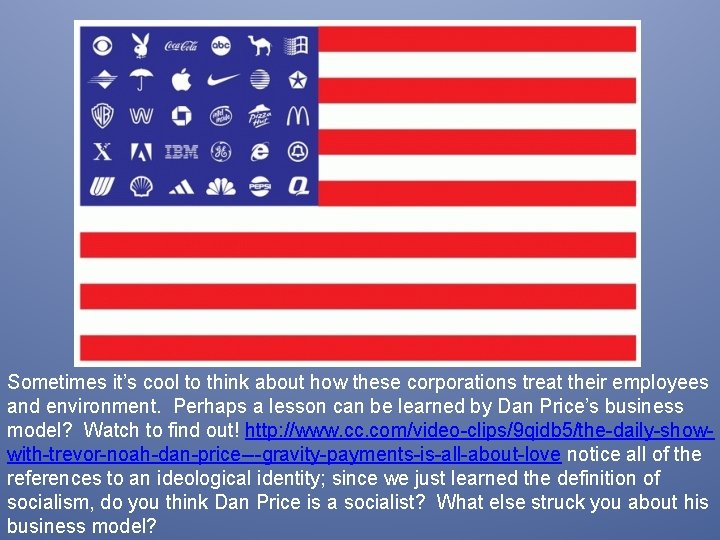
Sometimes it’s cool to think about how these corporations treat their employees and environment. Perhaps a lesson can be learned by Dan Price’s business model? Watch to find out! http: //www. cc. com/video-clips/9 qidb 5/the-daily-showwith-trevor-noah-dan-price---gravity-payments-is-all-about-love notice all of the references to an ideological identity; since we just learned the definition of socialism, do you think Dan Price is a socialist? What else struck you about his business model?
- Slides: 29