
Capital Adequacy Test 1 Quantum of assets test






![Solvency requirement Stressed losses amount ► HBR x min [62% x SEUs-0. 22, 13%]](https://slidetodoc.com/presentation_image_h2/8b5e9c7a93ed2b156abde17cf2ad0f06/image-22.jpg "Solvency requirement Stressed losses amount ► HBR x min [62% x SEUs-0. 22, 13%]")


- Slides: 25
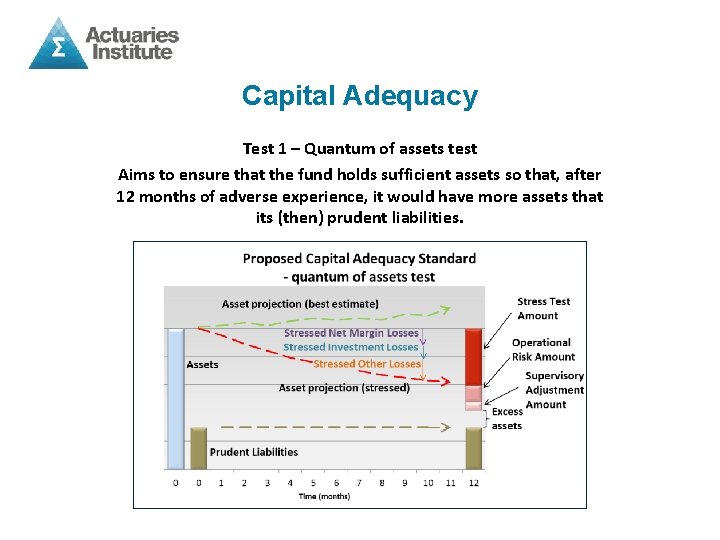
Capital Adequacy Test 1 – Quantum of assets test Aims to ensure that the fund holds sufficient assets so that, after 12 months of adverse experience, it would have more assets that its (then) prudent liabilities.
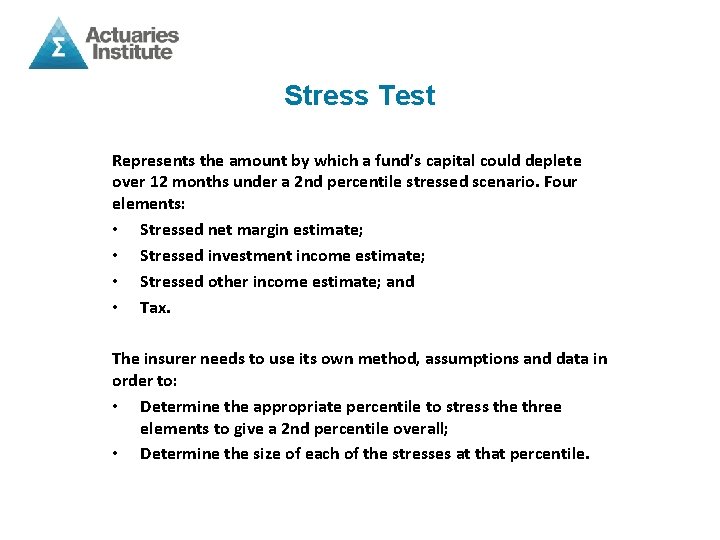
Stress Test Represents the amount by which a fund’s capital could deplete over 12 months under a 2 nd percentile stressed scenario. Four elements: • Stressed net margin estimate; • Stressed investment income estimate; • Stressed other income estimate; and • Tax. The insurer needs to use its own method, assumptions and data in order to: • Determine the appropriate percentile to stress the three elements to give a 2 nd percentile overall; • Determine the size of each of the stresses at that percentile.
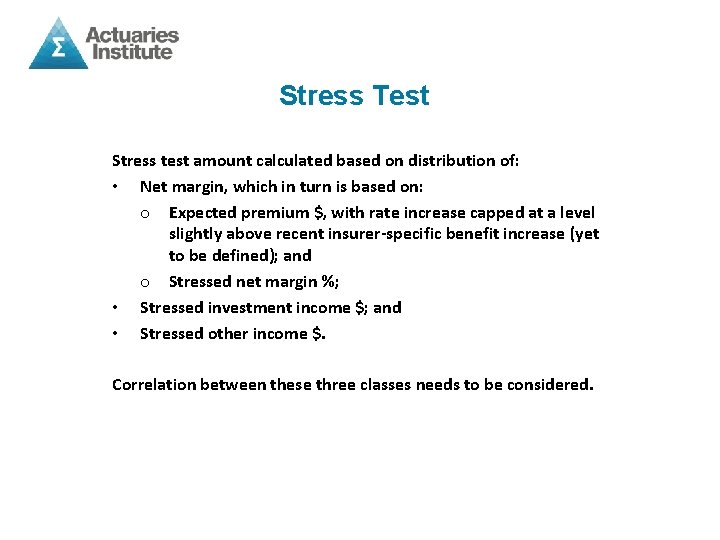
Stress Test Stress test amount calculated based on distribution of: • Net margin, which in turn is based on: o Expected premium $, with rate increase capped at a level slightly above recent insurer-specific benefit increase (yet to be defined); and o Stressed net margin %; • Stressed investment income $; and • Stressed other income $. Correlation between these three classes needs to be considered.
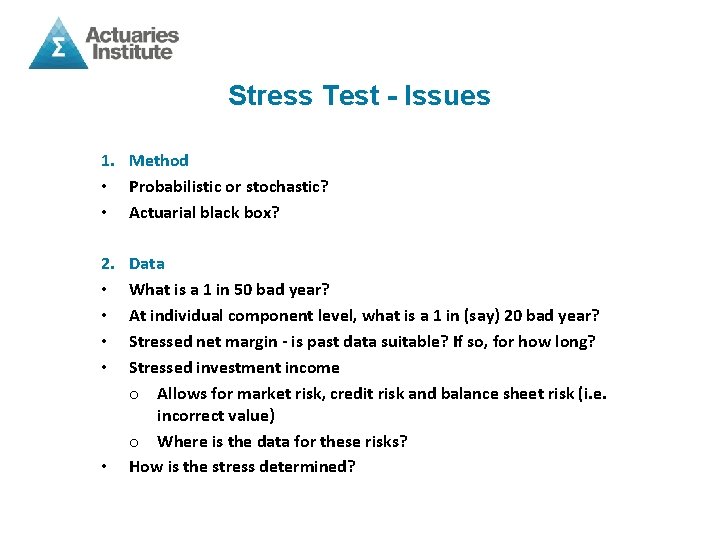
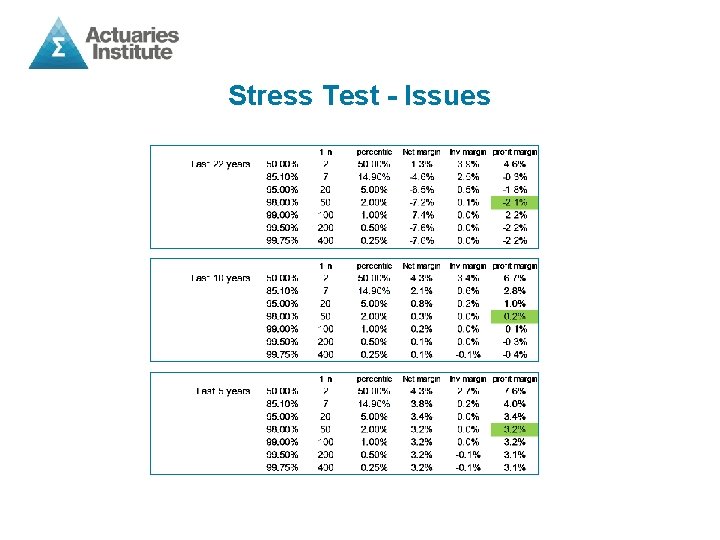
Stress Test - Issues 1. Method • Probabilistic or stochastic? • Actuarial black box? 2. • • • Data What is a 1 in 50 bad year? At individual component level, what is a 1 in (say) 20 bad year? Stressed net margin - is past data suitable? If so, for how long? Stressed investment income o Allows for market risk, credit risk and balance sheet risk (i. e. incorrect value) o Where is the data for these risks? How is the stress determined?
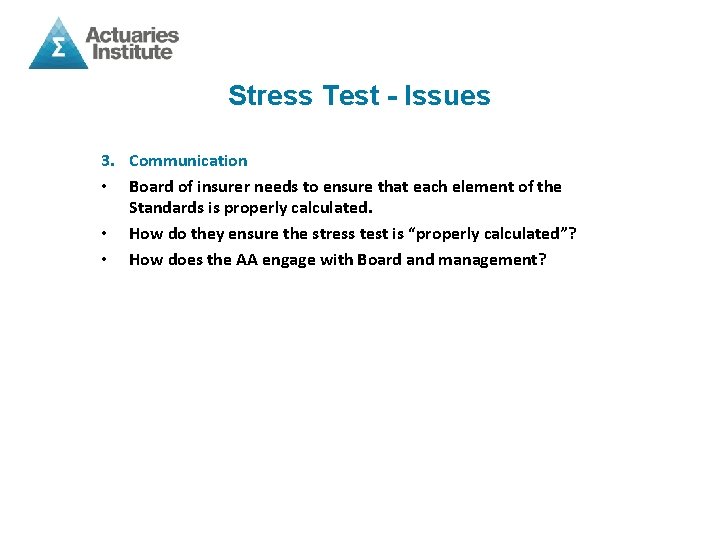
Stress Test - Issues 3. Communication • Board of insurer needs to ensure that each element of the Standards is properly calculated. • How do they ensure the stress test is “properly calculated”? • How does the AA engage with Board and management?
19 9 FY 1 19 9 FY 2 19 9 FY 3 19 9 FY 4 19 9 FY 5 19 9 FY 6 19 9 FY 7 19 9 FY 8 19 9 FY 9 20 0 FY 0 20 0 FY 1 20 0 FY 2 20 0 FY 3 20 0 FY 4 20 0 FY 5 20 0 FY 6 20 0 FY 7 20 0 FY 8 20 0 FY 9 20 1 FY 0 20 1 FY 1 20 12 FY 19 90 FY Stress Test - Issues PHI Industry performance as % premium 15, 0% 10, 0% 5, 0% 0, 0% -5, 0% -10, 0% Net margin Inv margin profit margin
Stress Test - Issues
Insights – 2 July 2013 – PHI Capital Standards Part 2: Other Capital Adequacy Items, & Capital Management Policy
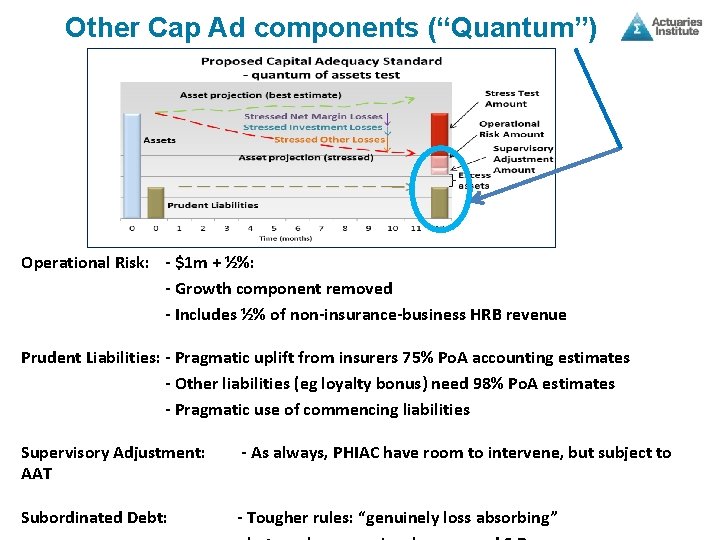
Other Cap Ad components (“Quantum”) Operational Risk: - $1 m + ½%: - Growth component removed - Includes ½% of non-insurance-business HRB revenue Prudent Liabilities: - Pragmatic uplift from insurers 75% Po. A accounting estimates - Other liabilities (eg loyalty bonus) need 98% Po. A estimates - Pragmatic use of commencing liabilities Supervisory Adjustment: AAT - As always, PHIAC have room to intervene, but subject to Subordinated Debt: - Tougher rules: “genuinely loss absorbing”
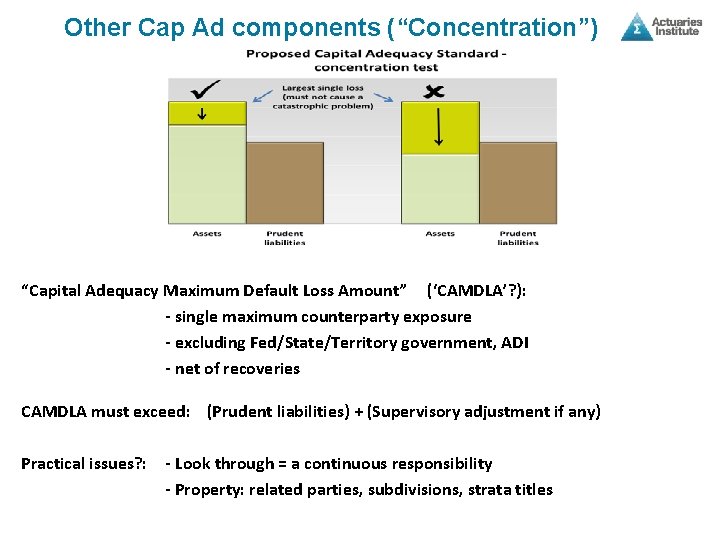
Other Cap Ad components (“Concentration”) “Capital Adequacy Maximum Default Loss Amount” (‘CAMDLA’? ): - single maximum counterparty exposure - excluding Fed/State/Territory government, ADI - net of recoveries CAMDLA must exceed: (Prudent liabilities) + (Supervisory adjustment if any) Practical issues? : - Look through = a continuous responsibility - Property: related parties, subdivisions, strata titles
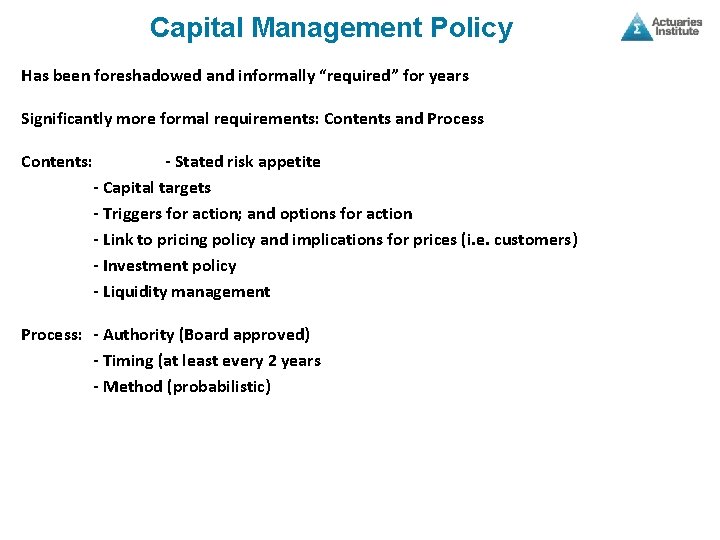
Capital Management Policy Has been foreshadowed and informally “required” for years Significantly more formal requirements: Contents and Process Contents: - Stated risk appetite - Capital targets - Triggers for action; and options for action - Link to pricing policy and implications for prices (i. e. customers) - Investment policy - Liquidity management Process: - Authority (Board approved) - Timing (at least every 2 years - Method (probabilistic)
Issues? Cap Ad Quantum: • Pragmatic Prudent liabilities for Cap Ad – are the value factors too simplistic? Does the pragmatism act unfairly in some circumstances? • Operational risk on non-health-insurance HRB – does this matter? • Are the subordinated debt rules too tough? Cap Ad Concentration: • Look through = a continuous responsibility; will this limit reasonable actions? • Strata title and similar – insurer’s obligation to self-assess whether parties are related Cap Ad Overall: does Cap Ad produce too low or too high a requirement? Capital Management Policy: • Significantly more responsibility on the Board – Cap Ad seems lower, so CMP will drive capital from first principles? • What are the headline risks that capital must protect against? • • • Failure to meet policyholder promises? – previously this has been negligible Failure to meet regulatory obligations? Failure to meet shareholder goals? • Are “probabilistic” methods sufficient alone? Are additional analyses necessary? • Greater sophistication required from most insurer’s plans
Insights – 2 July 2013 – PHI Capital Standards Part 3: Solvency requirements
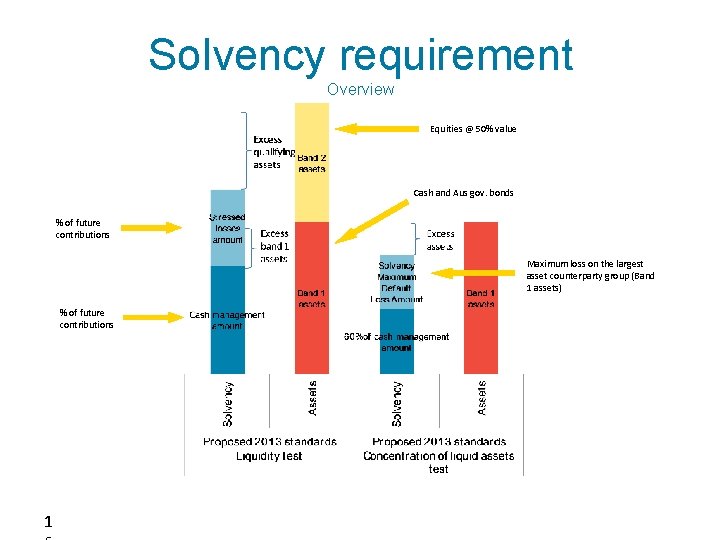
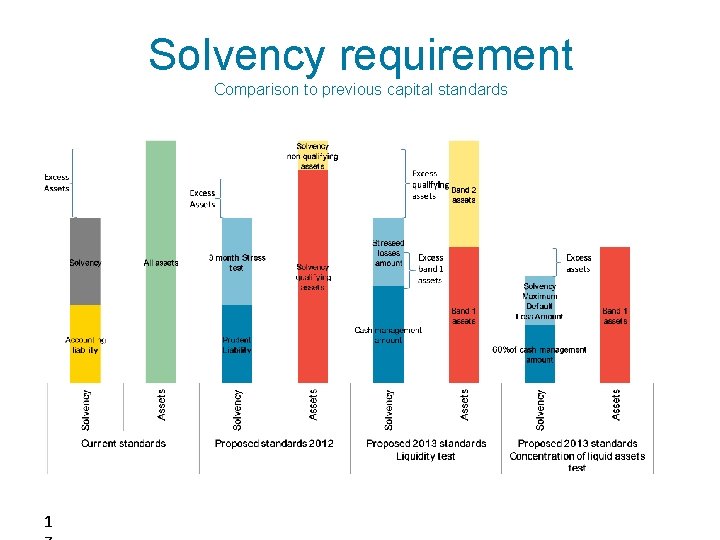
Solvency requirement Overview Equities @ 50% value Cash and Aus gov. bonds % of future contributions Maximum loss on the largest asset counterparty group (Band 1 assets) % of future contributions 1
Solvency requirement Comparison to previous capital standards 1
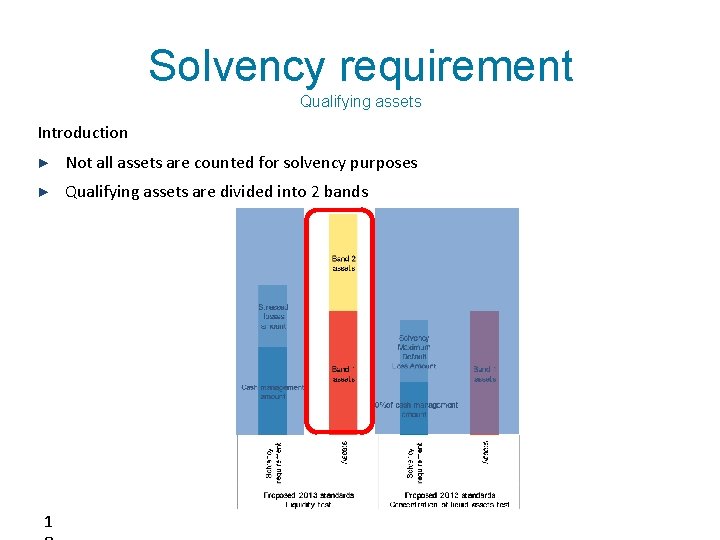
Solvency requirement Qualifying assets Introduction ► Not all assets are counted for solvency purposes ► Qualifying assets are divided into 2 bands 1
Solvency requirement Qualifying assets Band 1 Band 2 ► 100% of the value counted ► 50% of the value counted ► Definition: “highest liquidity and are expected to remain so over any reasonably foreseeable future stressed circumstances” ► Securities listed on the ASX or a principal foreign exchange ► Board must be satisfied that these assets can be readily converted to cash under highly stressed market scenarios ► Prescribed asset types • Cash and cash equivalents (AASB definitions) • Assets with Australian government counterparty (excluding risk equalisation receivable) No allowance for other assets not in the prescribed list, even if it satisfies the definition. Eg highly liquid foreign government bonds 1 No guidance on a reasonable methodology in which the Board should adopt its opinion
Solvency requirement Qualifying assets • AASB 107 Para 7 • Cash equivalents are held for the purpose of meeting shortterm cash commitments rather than for investment or other purposes. For an investment to qualify as a cash equivalent it must be readily convertible to a known amount of cash and be subject to an insignificant risk of changes in value. Therefore, an investment normally qualifies as a cash equivalent only when it has a short maturity of, say, three months or less from the date of acquisition. Equity investments are excluded from cash equivalents unless they are, in substance, cash equivalents, for example in the case of preferred shares acquired within a short period of their maturity and with a specified redemption date.
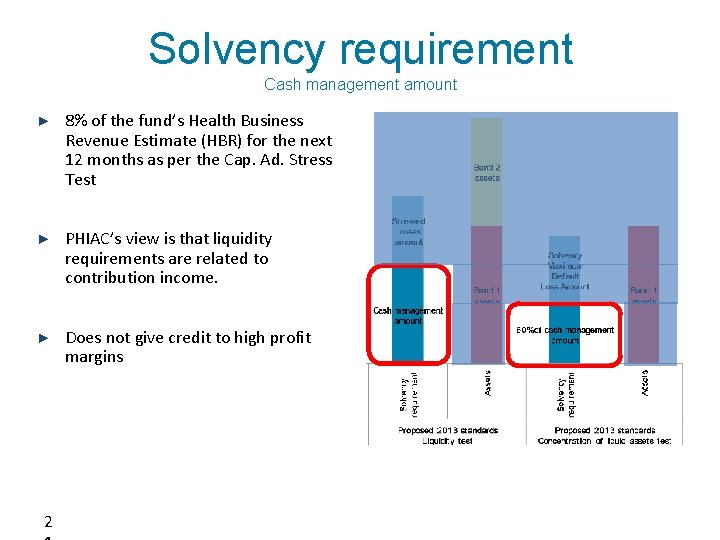
Solvency requirement Cash management amount ► 8% of the fund’s Health Business Revenue Estimate (HBR) for the next 12 months as per the Cap. Ad. Stress Test ► PHIAC’s view is that liquidity requirements are related to contribution income. ► Does not give credit to high profit margins 2
Solvency requirement Stressed losses amount ► HBR x min [62% x SEUs-0. 22, 13%] ► Health Business Revenue Estimate (HBR) 2
Solvency requirement Solvency Maximum Default Loss Amount and Solvency Supervisory Adjustment amount Solvency Maximum Default Loss Amount ► Same as the Cap. Ad. Equivalent but only applied to Band 1 assets Solvency Supervisory Adjustment amount ► As per Cap. Ad – if PHIAC believes any of the other Solvency components are inadequate ► Not shown in the graph 2
Solvency requirement Solvency Maximum Default Loss Amount and Solvency Supervisory Adjustment amount • Stressed losses amount – revenue basis • Term deposit treatment – Liquidity, breakability, duration to maturity, AASB definitions clarity • Cash management amount – revenue basis versus claims + expenses