
Capillary Tissue fluid exchange I Exchange of Gases
- Slides: 12
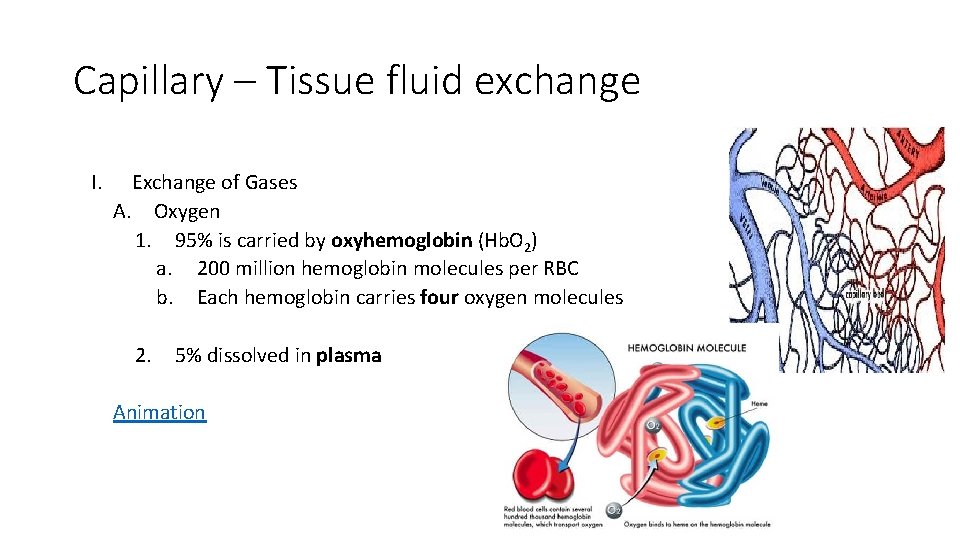
Capillary – Tissue fluid exchange I. Exchange of Gases A. Oxygen 1. 95% is carried by oxyhemoglobin (Hb. O 2) a. 200 million hemoglobin molecules per RBC b. Each hemoglobin carries four oxygen molecules 2. 5% dissolved in plasma Animation
B. Carbon dioxide (CO 2) 1. 9% dissolved in plasma 2. 27% picks up CO 2 to form carbaminohemoglobin (Hb. CO 2) 3. 64% of CO 2 is transported as bicarbonate ion (HCO 3 -) a. It is formed after CO 2 combines with water, forming carbonic acid which then dissociates b. Note the following reaction: CO 2 + H 2 O H 2 CO 3 H+ + HCO 3 c. The enzyme carbonic anhydrase speeds up this reaction d. The H+ released by reaction changes the blood p. H e. To prevent this H+ is picked up by the globin portion of hemoglobin (to become HHb) so that p. H is maintained
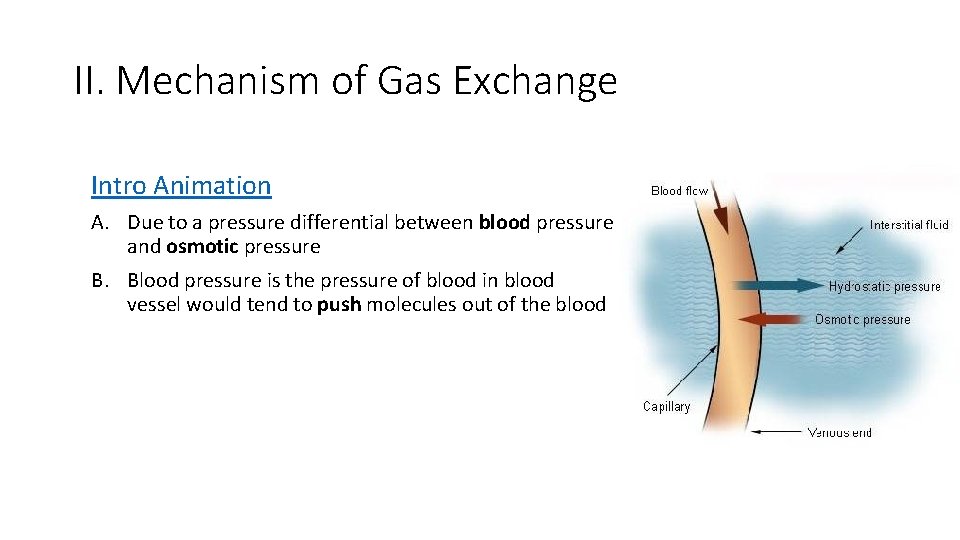
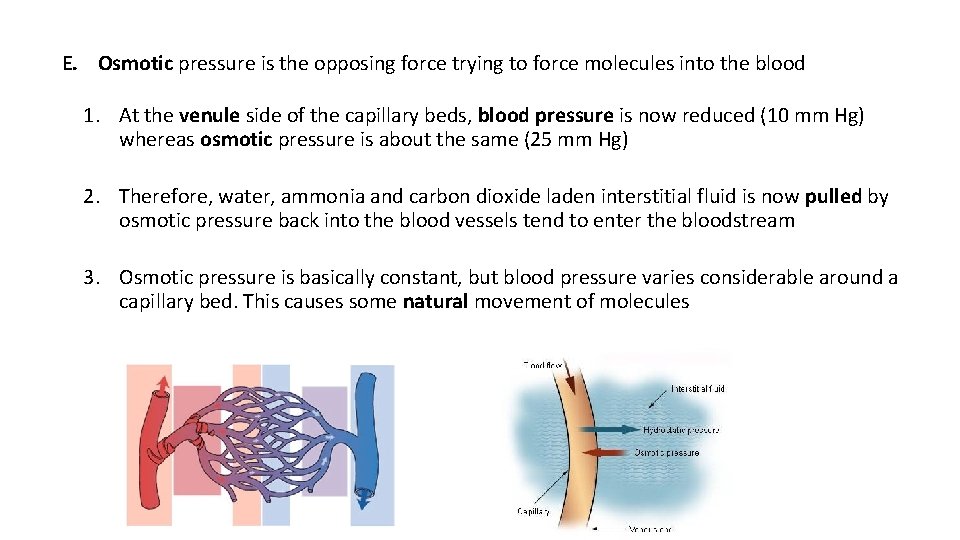
II. Mechanism of Gas Exchange Intro Animation A. Due to a pressure differential between blood pressure and osmotic pressure B. Blood pressure is the pressure of blood in blood vessel would tend to push molecules out of the blood
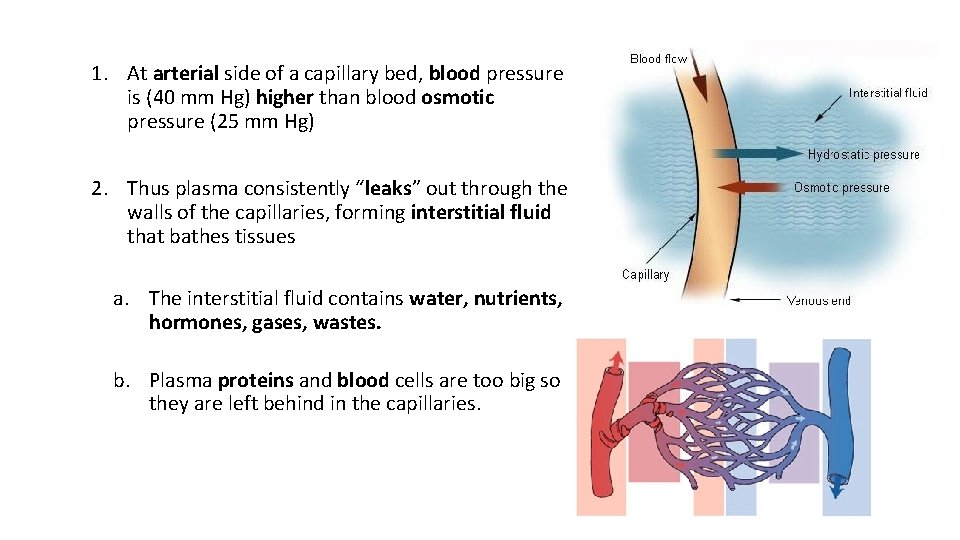
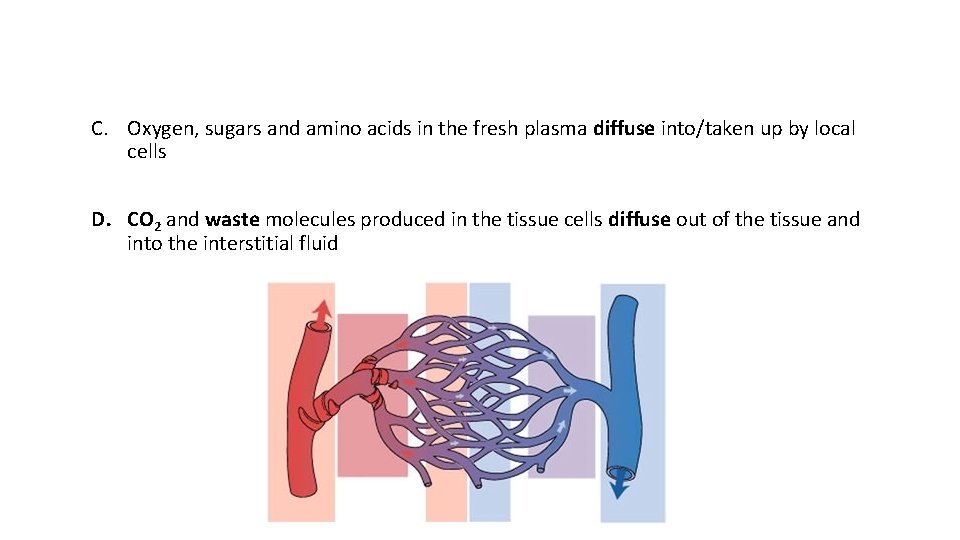
1. At arterial side of a capillary bed, blood pressure is (40 mm Hg) higher than blood osmotic pressure (25 mm Hg) 2. Thus plasma consistently “leaks” out through the walls of the capillaries, forming interstitial fluid that bathes tissues a. The interstitial fluid contains water, nutrients, hormones, gases, wastes. b. Plasma proteins and blood cells are too big so they are left behind in the capillaries.
C. Oxygen, sugars and amino acids in the fresh plasma diffuse into/taken up by local cells D. CO 2 and waste molecules produced in the tissue cells diffuse out of the tissue and into the interstitial fluid
E. Osmotic pressure is the opposing force trying to force molecules into the blood 1. At the venule side of the capillary beds, blood pressure is now reduced (10 mm Hg) whereas osmotic pressure is about the same (25 mm Hg) 2. Therefore, water, ammonia and carbon dioxide laden interstitial fluid is now pulled by osmotic pressure back into the blood vessels tend to enter the bloodstream 3. Osmotic pressure is basically constant, but blood pressure varies considerable around a capillary bed. This causes some natural movement of molecules
Transport fluids I. Body Fluids A. Human beings are approximately 70% water by body weight B. C. Most of the water is within cells A smaller amount of water is found within: 1. Tissue fluid (surrounds cells) 2. Lymph vessels 3. Blood vessels
II. Blood A. Blood is a liquid connective tissue B. Average person has about 5 to 6 liters of blood C. Blood is required by the body to maintain homeostasis D. Blood functions in 1. Transport of gases, waste, and nutrients 2. Clotting to seal injuries 3. Infection fighting
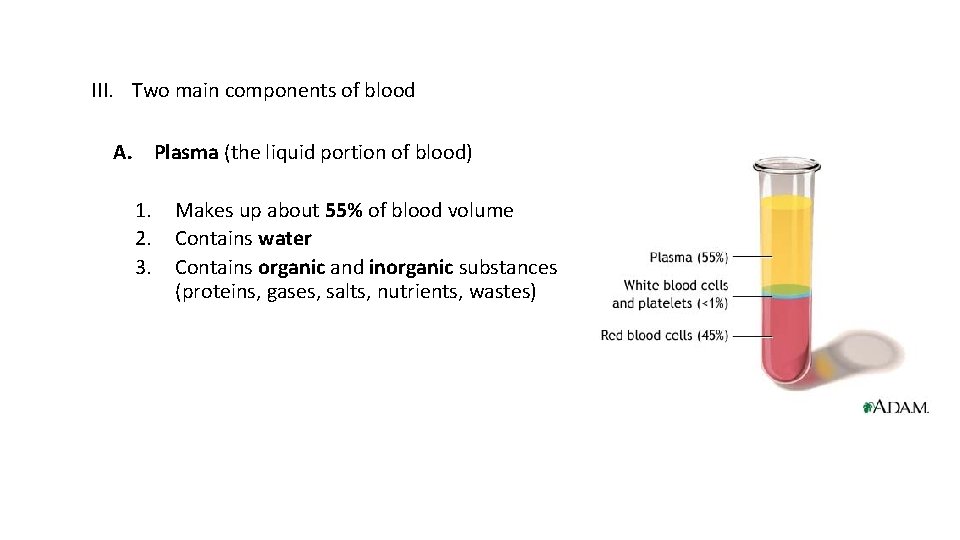
III. Two main components of blood A. Plasma (the liquid portion of blood) 1. 2. 3. Makes up about 55% of blood volume Contains water Contains organic and inorganic substances (proteins, gases, salts, nutrients, wastes)
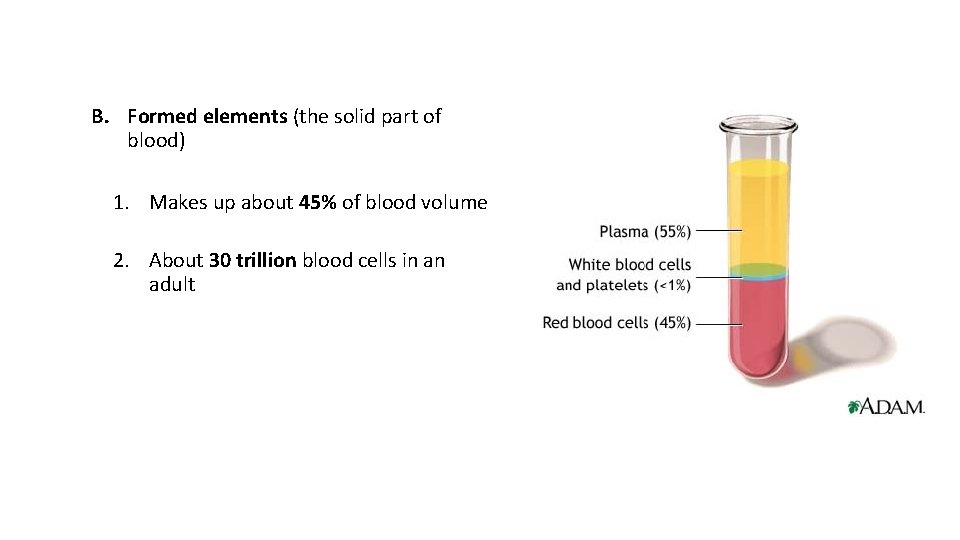
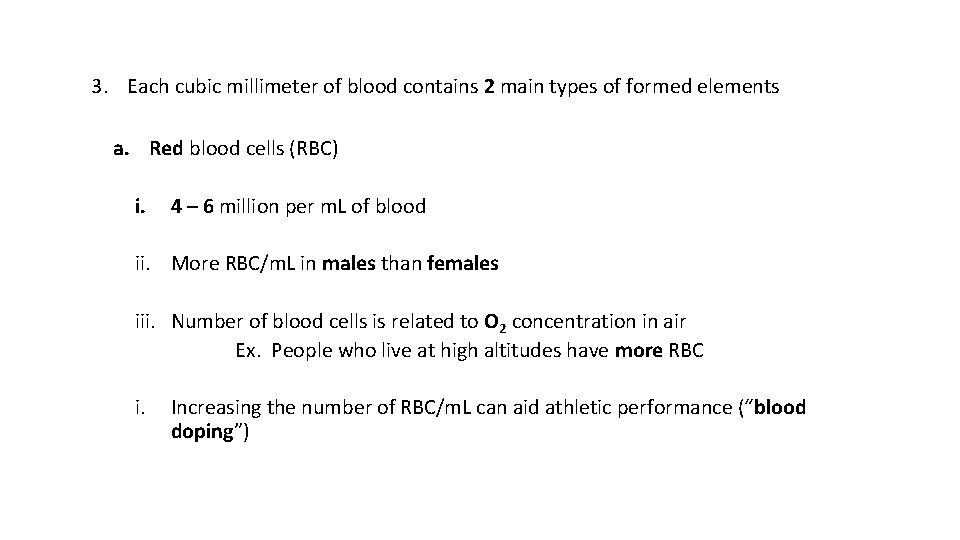
B. Formed elements (the solid part of blood) 1. Makes up about 45% of blood volume 2. About 30 trillion blood cells in an adult
3. Each cubic millimeter of blood contains 2 main types of formed elements a. Red blood cells (RBC) i. 4 – 6 million per m. L of blood ii. More RBC/m. L in males than females iii. Number of blood cells is related to O 2 concentration in air Ex. People who live at high altitudes have more RBC i. Increasing the number of RBC/m. L can aid athletic performance (“blood doping”)
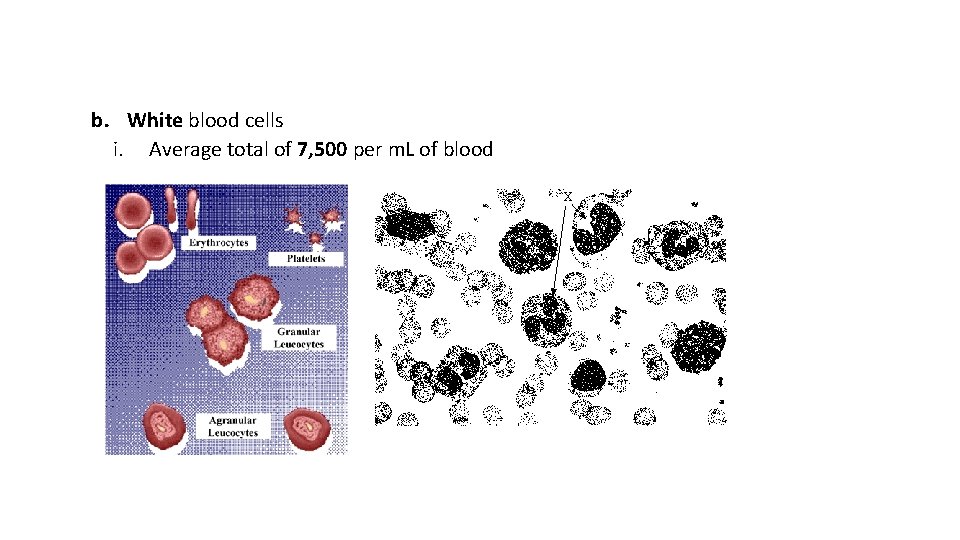
b. White blood cells i. Average total of 7, 500 per m. L of blood