
CAPILLARY FLUID EXCHANGE CAPILLARIES Nearly every tissue of



- Slides: 17
CAPILLARY FLUID EXCHANGE
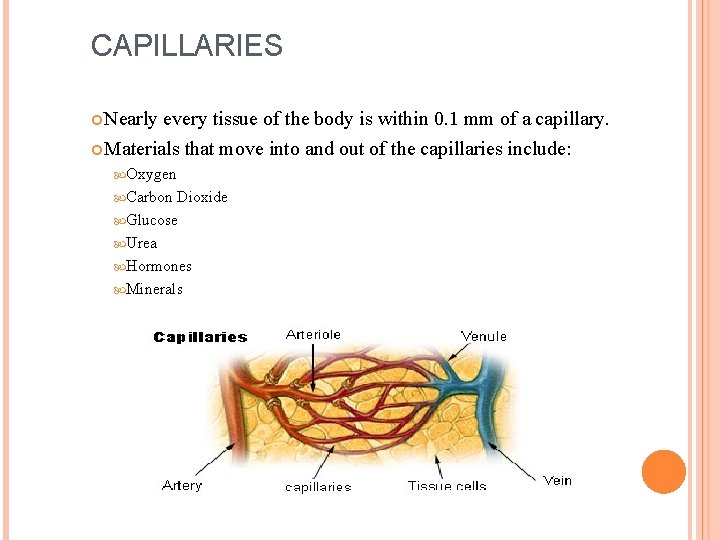
CAPILLARIES Nearly every tissue of the body is within 0. 1 mm of a capillary. Materials that move into and out of the capillaries include: Oxygen Carbon Dioxide Glucose Urea Hormones Minerals
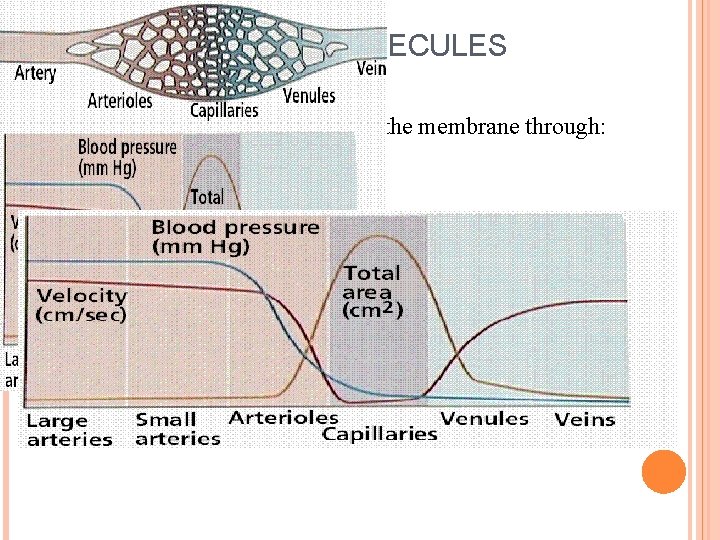
MOVEMENT OF MOLECULES Molecules can move across the membrane through: Diffusion Filtration / Absorption
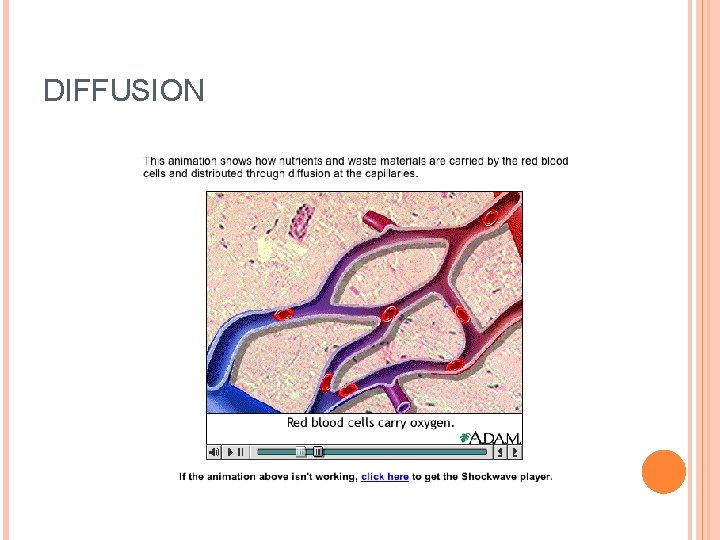
DIFFUSION
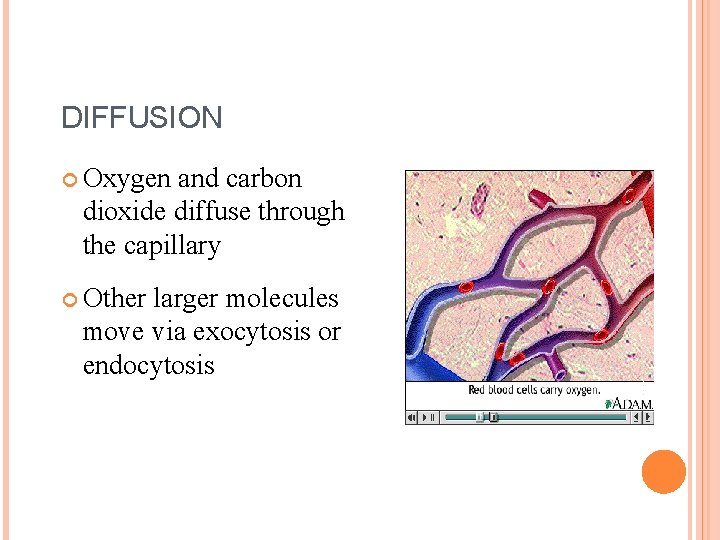
DIFFUSION Oxygen and carbon dioxide diffuse through the capillary Other larger molecules move via exocytosis or endocytosis
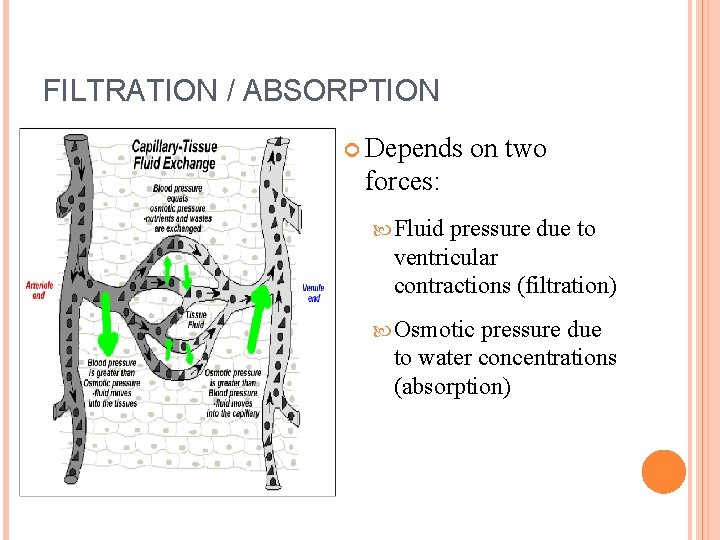
FILTRATION / ABSORPTION Depends on two forces: Fluid pressure due to ventricular contractions (filtration) Osmotic pressure due to water concentrations (absorption)
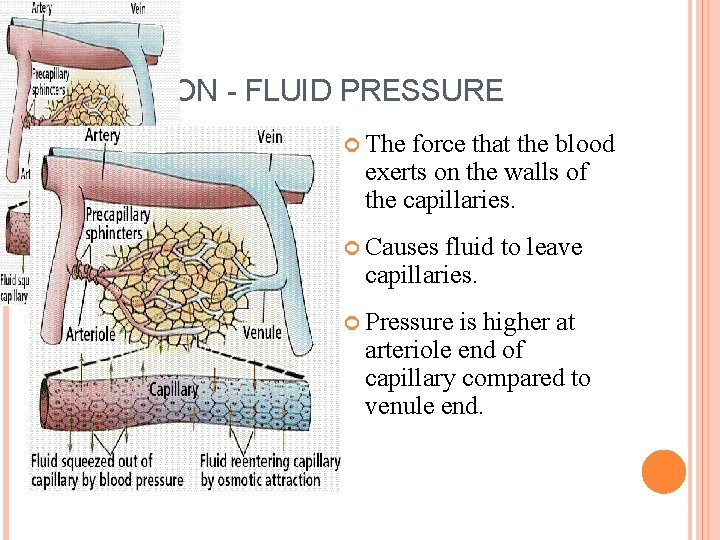
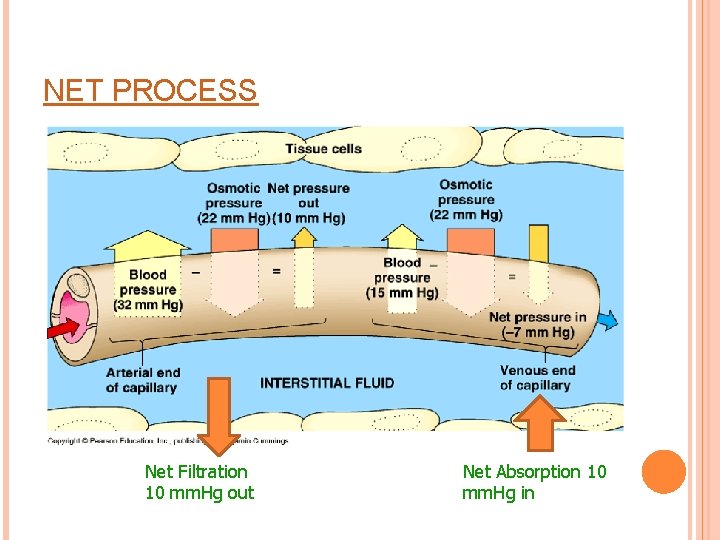
FILTRATION - FLUID PRESSURE The force that the blood exerts on the walls of the capillaries. Causes fluid to leave capillaries. Pressure is higher at arteriole end of capillary compared to venule end.
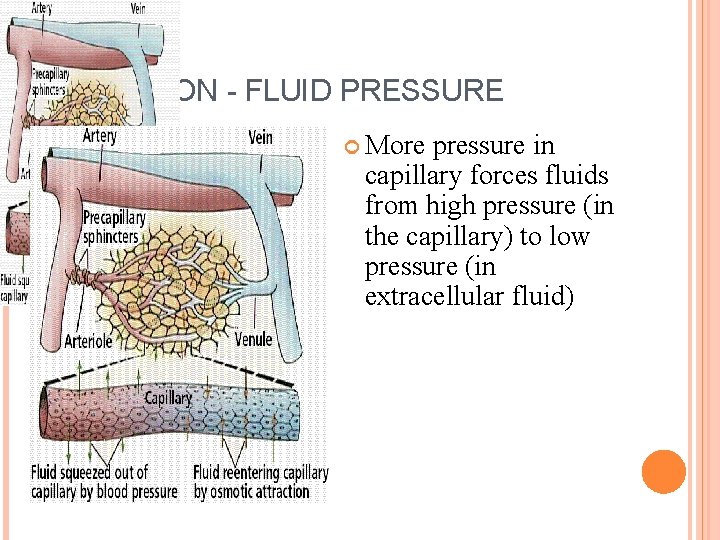
FILTRATION - FLUID PRESSURE More pressure in capillary forces fluids from high pressure (in the capillary) to low pressure (in extracellular fluid)
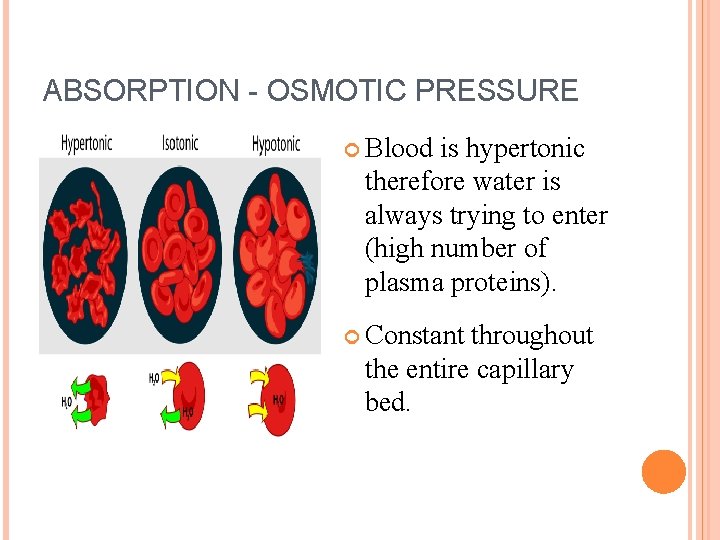
ABSORPTION - OSMOTIC PRESSURE Blood is hypertonic therefore water is always trying to enter (high number of plasma proteins). Constant throughout the entire capillary bed.
NET PROCESS Net Filtration 10 mm. Hg out Net Absorption 10 mm. Hg in
NET PROCESS
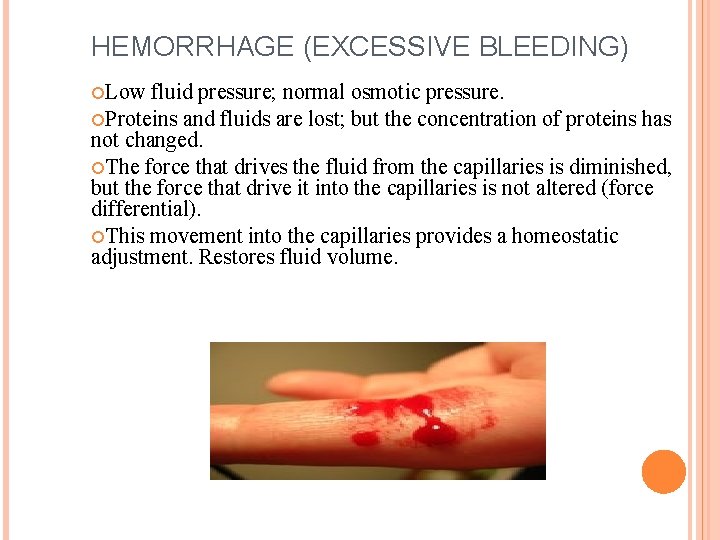
HEMORRHAGE (EXCESSIVE BLEEDING) Low fluid pressure; normal osmotic pressure. Proteins and fluids are lost; but the concentration of proteins has not changed. The force that drives the fluid from the capillaries is diminished, but the force that drive it into the capillaries is not altered (force differential). This movement into the capillaries provides a homeostatic adjustment. Restores fluid volume.
STARVATION Normal fluid pressure; low osmotic pressure. Swelling or edema. Plasma proteins are used as a last source of energy. Decreases capillary absorption (lower osmotic pressure). More water enters the tissues than is pulled back= swelling. Same with inflammation
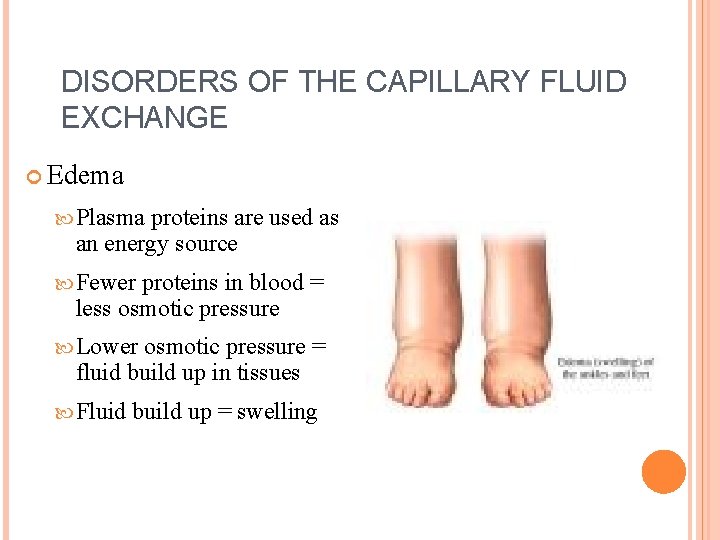
DISORDERS OF THE CAPILLARY FLUID EXCHANGE Edema Plasma proteins are used as an energy source Fewer proteins in blood = less osmotic pressure Lower osmotic pressure = fluid build up in tissues Fluid build up = swelling
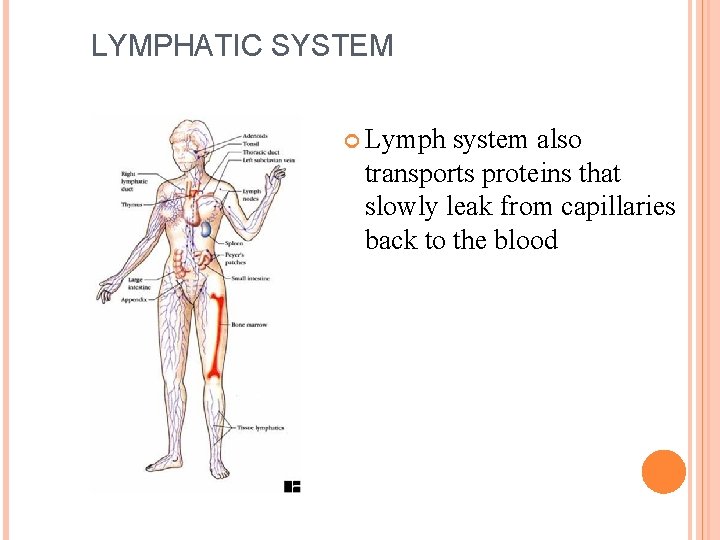
LYMPHATIC SYSTEM Lymph system also transports proteins that slowly leak from capillaries back to the blood
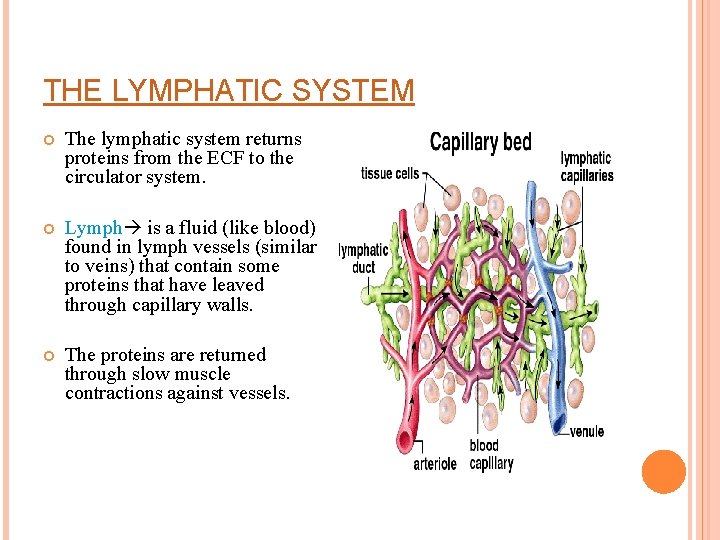
THE LYMPHATIC SYSTEM The lymphatic system returns proteins from the ECF to the circulator system. Lymph is a fluid (like blood) found in lymph vessels (similar to veins) that contain some proteins that have leaved through capillary walls. The proteins are returned through slow muscle contractions against vessels.