
Capillary Circulation Edema Formation Dr Eman El Eter
- Slides: 15
Capillary Circulation & Edema Formation Dr. Eman El Eter
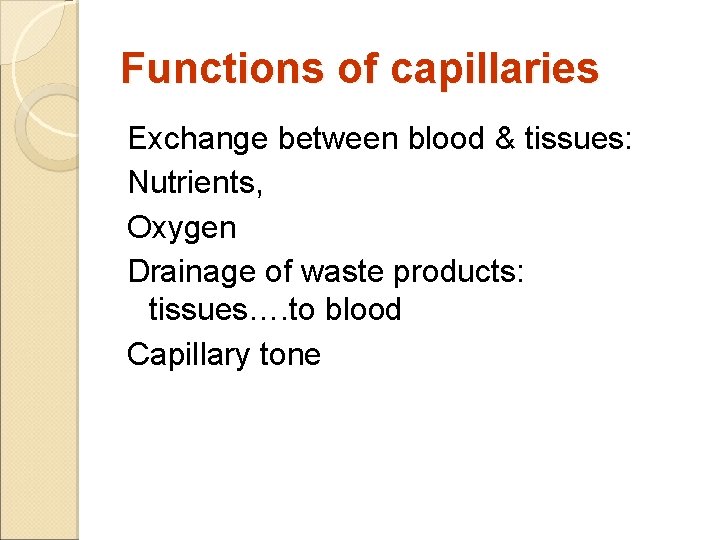
Functions of capillaries Exchange between blood & tissues: Nutrients, Oxygen Drainage of waste products: tissues…. to blood Capillary tone
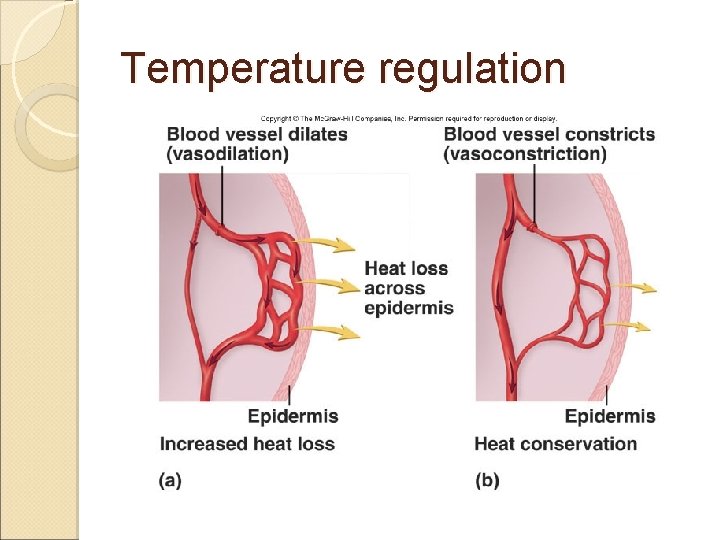
Temperature regulation
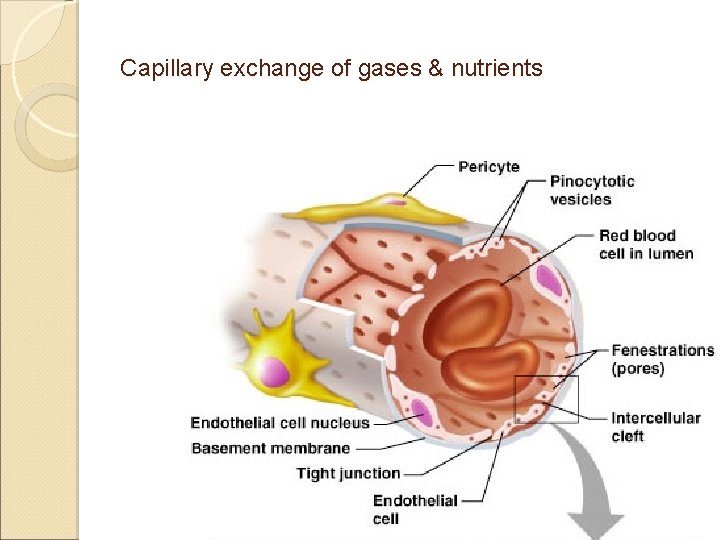
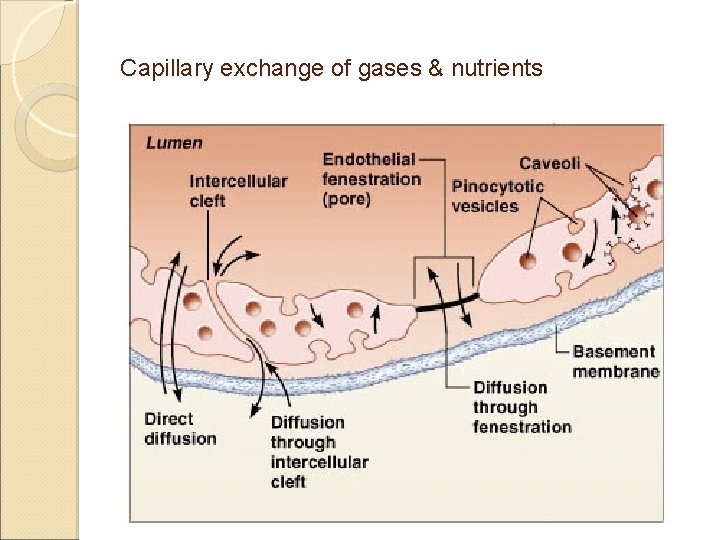
Capillary exchange of gases & nutrients
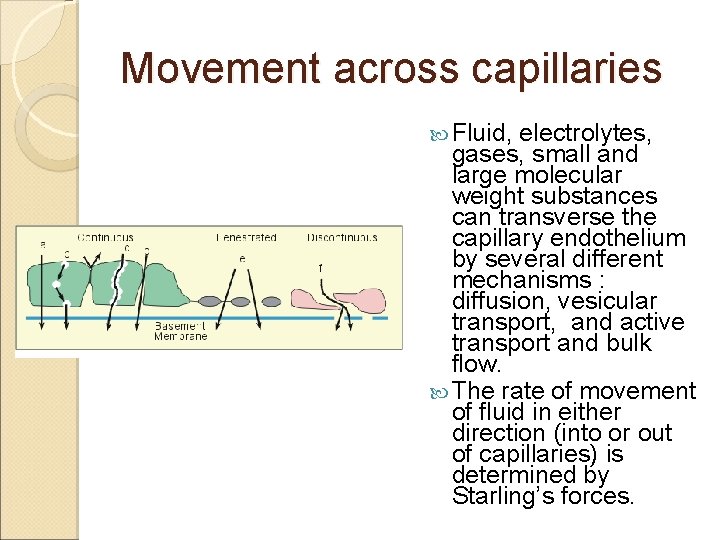
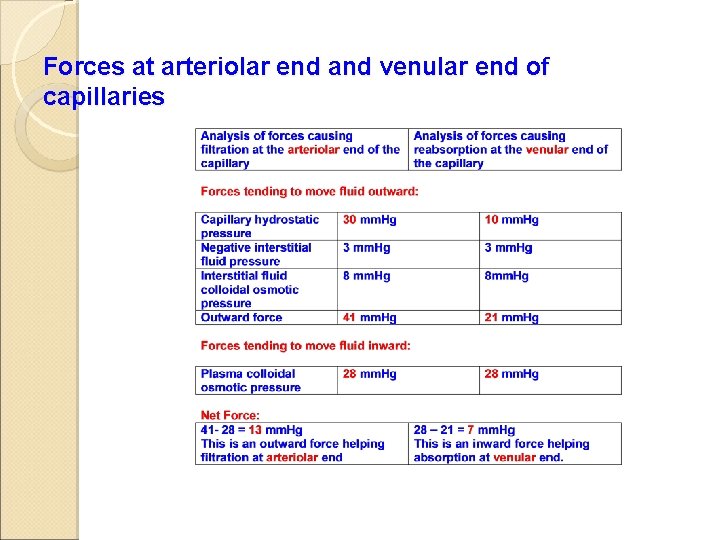
Movement across capillaries Fluid, electrolytes, gases, small and large molecular weight substances can transverse the capillary endothelium by several different mechanisms : diffusion, vesicular transport, and active transport and bulk flow. The rate of movement of fluid in either direction (into or out of capillaries) is determined by Starling’s forces.
Capillary exchange of gases & nutrients
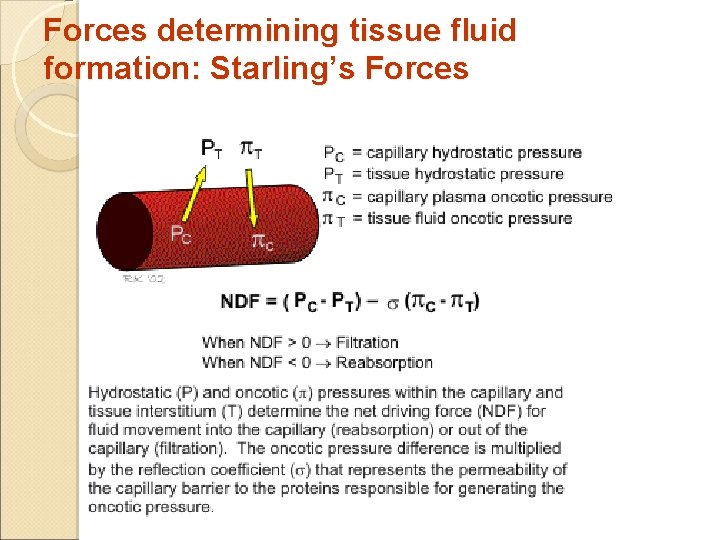
Forces determining tissue fluid formation: Starling’s Forces
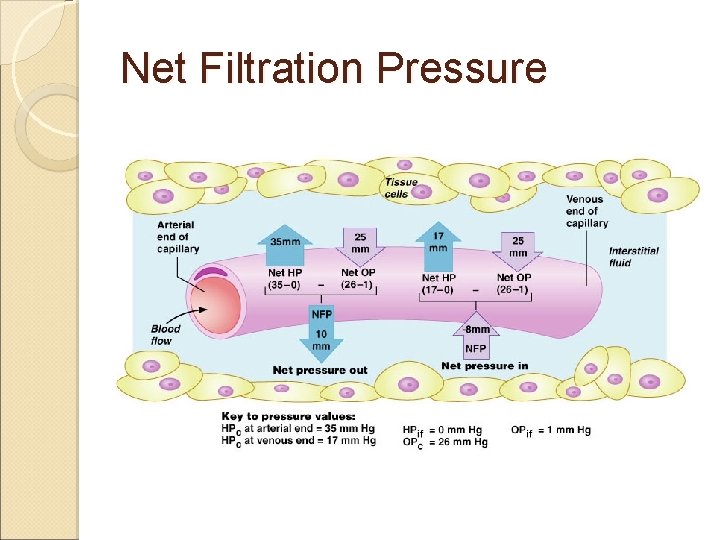
Net Filtration Pressure
Forces at arteriolar end and venular end of capillaries
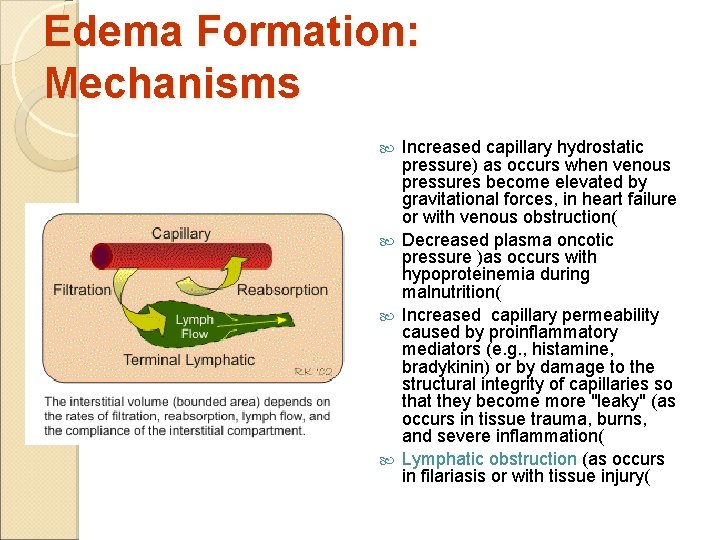
Edema Formation: Mechanisms Increased capillary hydrostatic pressure) as occurs when venous pressures become elevated by gravitational forces, in heart failure or with venous obstruction( Decreased plasma oncotic pressure )as occurs with hypoproteinemia during malnutrition( Increased capillary permeability caused by proinflammatory mediators (e. g. , histamine, bradykinin) or by damage to the structural integrity of capillaries so that they become more "leaky" (as occurs in tissue trauma, burns, and severe inflammation( Lymphatic obstruction (as occurs in filariasis or with tissue injury(
Causes of Edema: Edema means accumulation of fluid in the ECF space Causes: A. Increased capillary pressure: 1. Excess retention of salt and water by kidney: a. Renal failure b. Excess aldosterone. c. Heart failure.
Causes of edema, continued, … 2. Increased venous pressure: a. Heart failure b. Venous obstruction. e. g. thrombus, pregnancy, tumor, etc. . c. Failure of venous pump e. g. varicose veins. 3. Decreased arteriolar resistance: a. Vasodilator drugs. b. Excess body heat.
Causes of edema, continued, … B. Low plasma proteins: 1. Loss of proteins in urine. 2. Loss from the skin (burns) 3. Failure to produce: a. Liver diseases b. Malnutrition.
Causes of edema, continued, … C. Increased capillary permeability: 1. Release of histamine in allergy. 2. Toxins. 3. Infections 4. Vit C deficiency 5. Burns
Causes of edema, continued, … D. Lymphatic obstruction: 1. Cancer 2. Filaria 3. congenital