
Cape Towns Integrated Public Transport Network Plan PROGRESS
Cape Town’s Integrated Public Transport Network Plan: PROGRESS, LESSONS, AND INNOVATION IN THE IMPLEMENTATION OF IPTN IN CAPE TOWN Southern African Transport Conference: 11 July 2019
CONTENTS • BACKGROUND / PROGRESS • CHALLENGES, LESSONS LEARNED & EMERGING THINKING • CONCLUDING THOUGHTS 2
BACKGROUND / PROGRESS 3
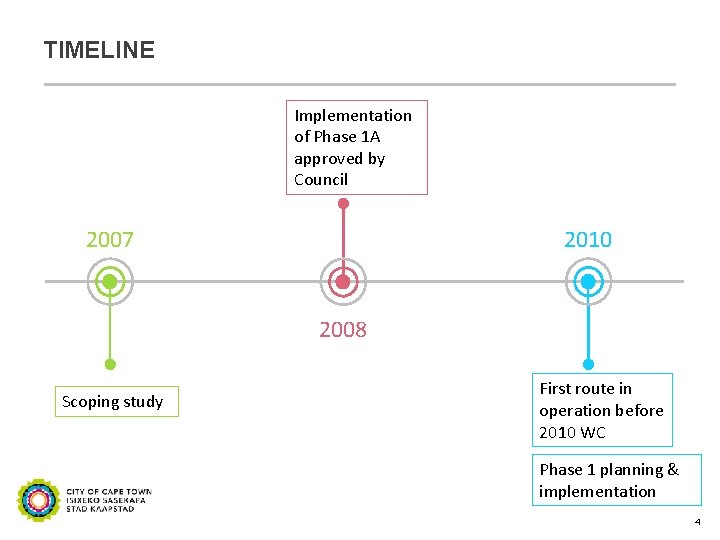
TIMELINE Implementation of Phase 1 A approved by Council 2010 2007 2008 Scoping study First route in operation before 2010 WC Phase 1 planning & implementation 4
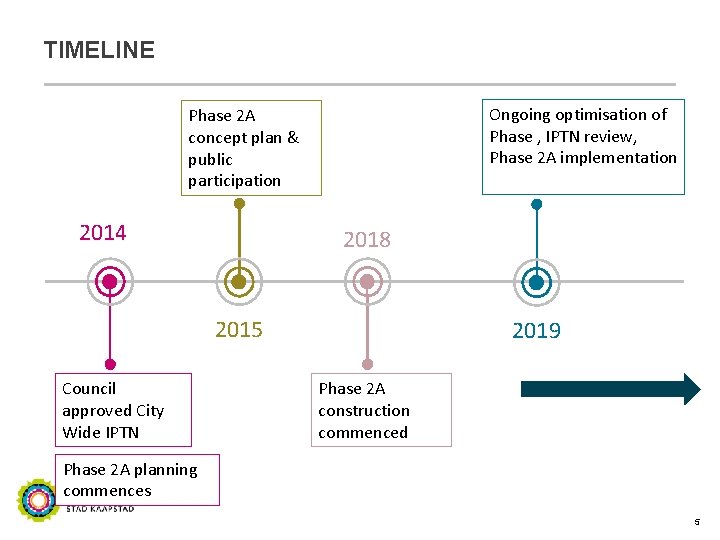
TIMELINE Ongoing optimisation of Phase , IPTN review, Phase 2 A implementation Phase 2 A concept plan & public participation 2014 2018 2015 Council approved City Wide IPTN 2019 Phase 2 A construction commenced Phase 2 A planning commences 5
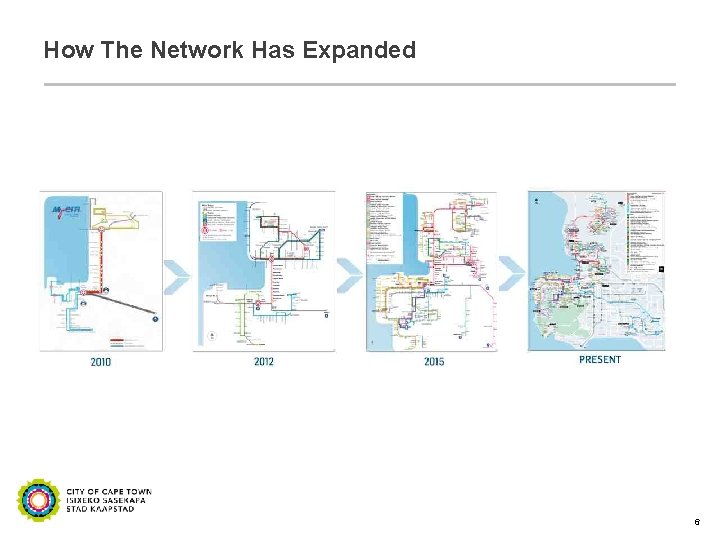
How The Network Has Expanded 6
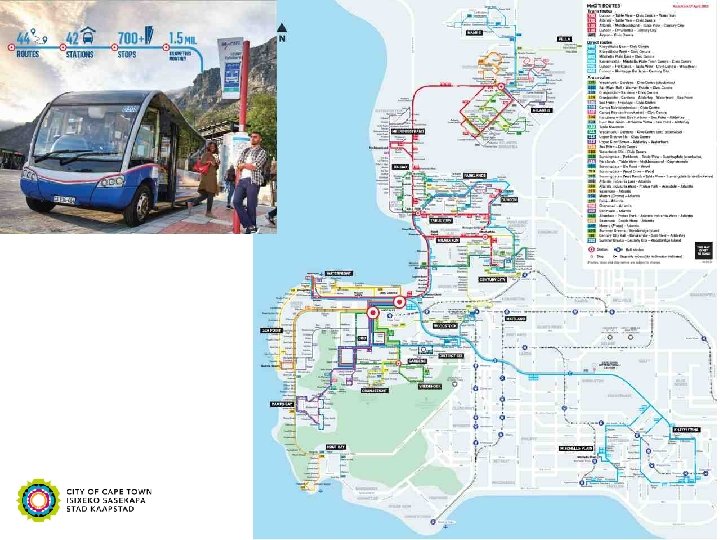
7
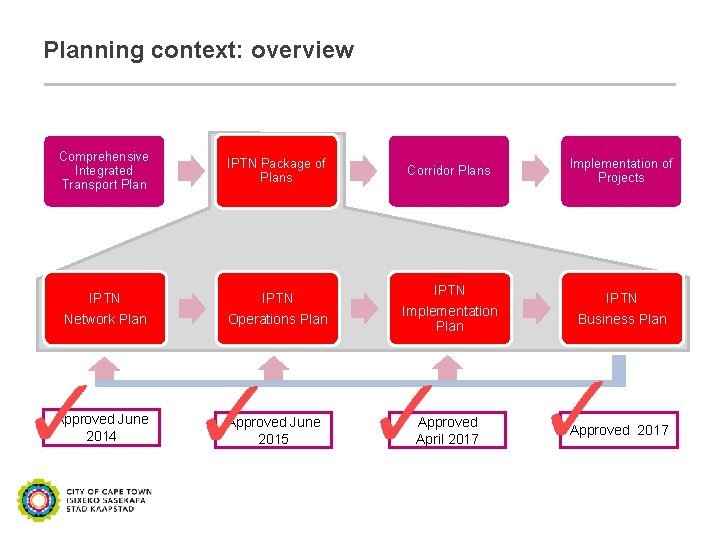
Planning context: overview Comprehensive Integrated Transport Plan IPTN Package of Plans IPTN Network Plan Operations Plan Implementation Plan Business Plan Approved June 2014 Approved June 2015 Approved April 2017 Approved 2017 Corridor Plans IPTN Implementation of Projects IPTN
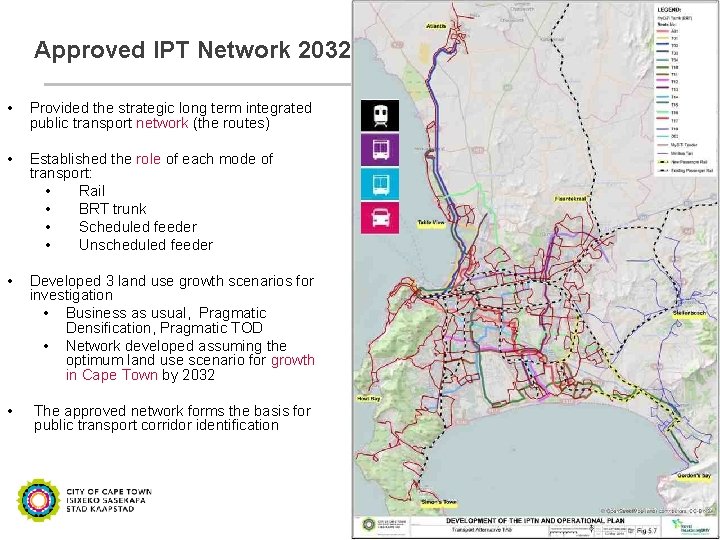
Approved IPT Network 2032 • Provided the strategic long term integrated public transport network (the routes) • Established the role of each mode of transport: • Rail • BRT trunk • Scheduled feeder • Unscheduled feeder • Developed 3 land use growth scenarios for investigation • Business as usual, Pragmatic Densification, Pragmatic TOD • Network developed assuming the optimum land use scenario for growth in Cape Town by 2032 • The approved network forms the basis for public transport corridor identification
CHALLENGES, LESSONS LEARNT & EMERGING THINKING 10
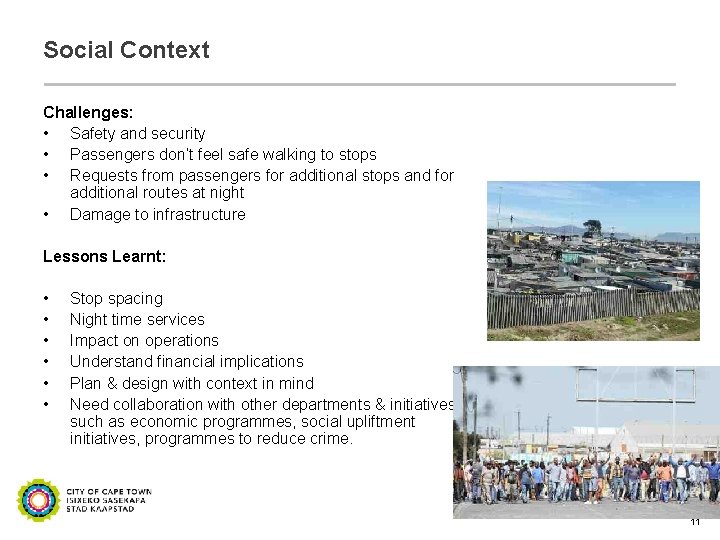
Social Context Challenges: • Safety and security • Passengers don’t feel safe walking to stops • Requests from passengers for additional stops and for additional routes at night • Damage to infrastructure Lessons Learnt: • • • Stop spacing Night time services Impact on operations Understand financial implications Plan & design with context in mind Need collaboration with other departments & initiatives, such as economic programmes, social upliftment initiatives, programmes to reduce crime. 11
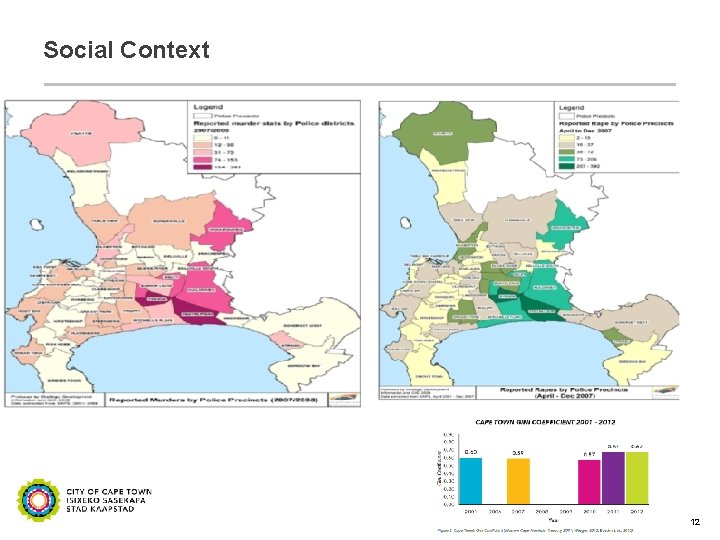
Social Context 12
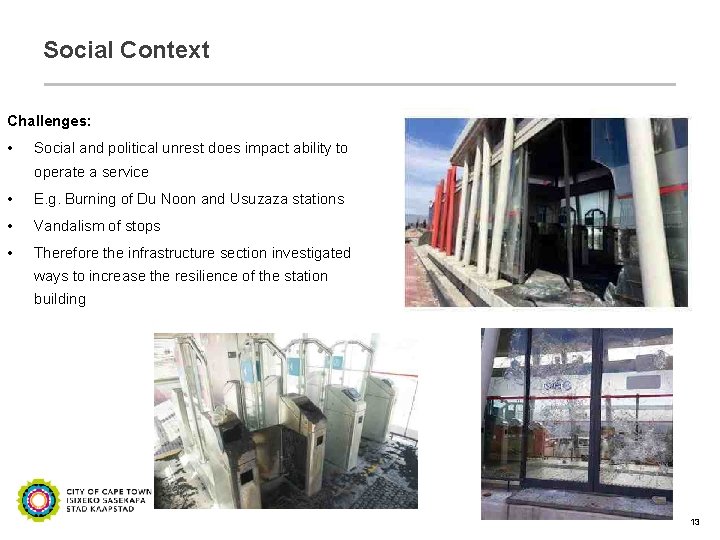
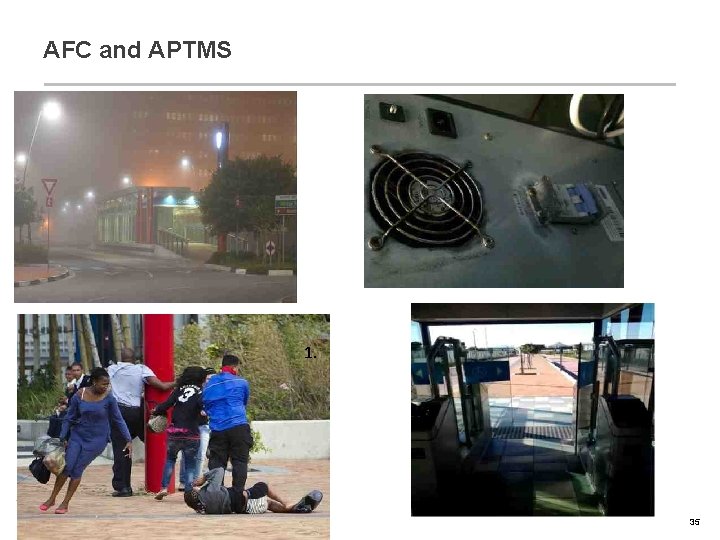
Social Context Challenges: • Social and political unrest does impact ability to operate a service • E. g. Burning of Du Noon and Usuzaza stations • Vandalism of stops • Therefore the infrastructure section investigated ways to increase the resilience of the station building 13
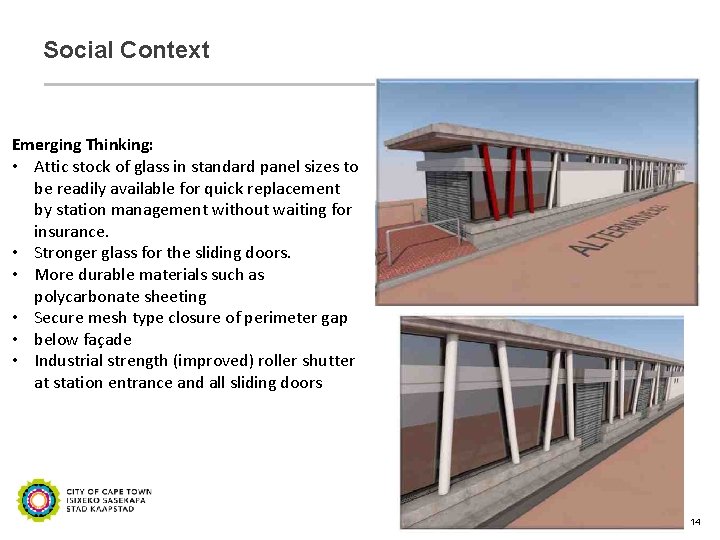
Social Context Emerging Thinking: • Attic stock of glass in standard panel sizes to be readily available for quick replacement by station management without waiting for insurance. • Stronger glass for the sliding doors. • More durable materials such as polycarbonate sheeting • Secure mesh type closure of perimeter gap • below façade • Industrial strength (improved) roller shutter at station entrance and all sliding doors 14
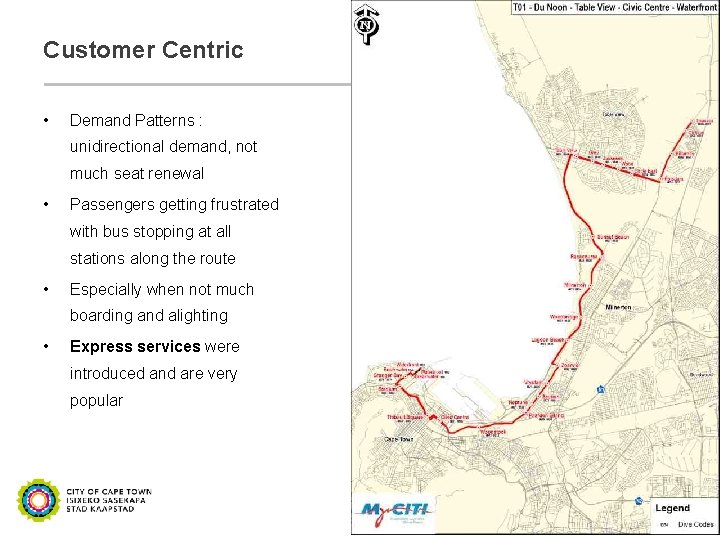
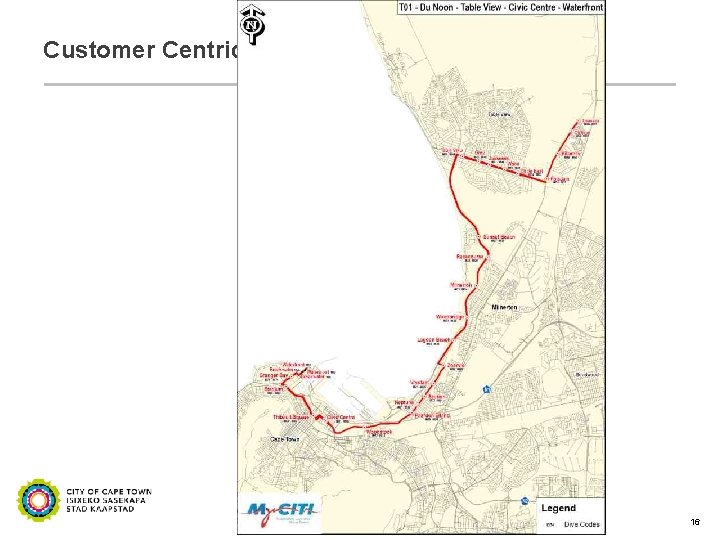
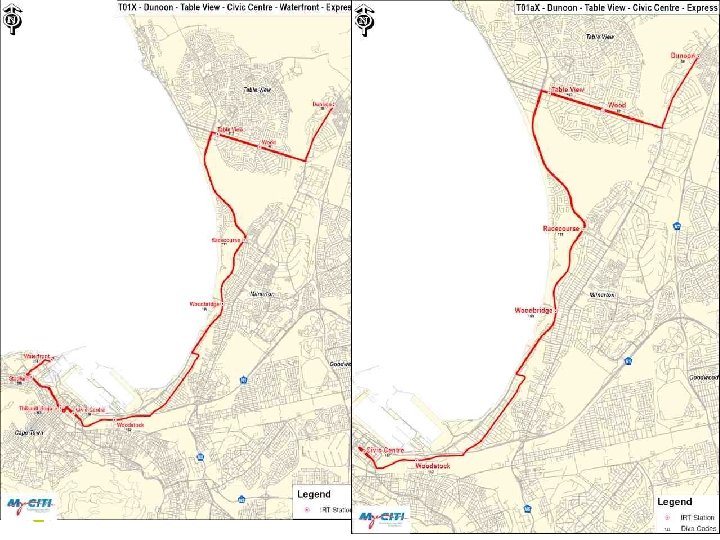
Customer Centric • Demand Patterns : unidirectional demand, not much seat renewal • Passengers getting frustrated with bus stopping at all stations along the route • Especially when not much boarding and alighting • Express services were introduced and are very popular 15
Customer Centric 16
17
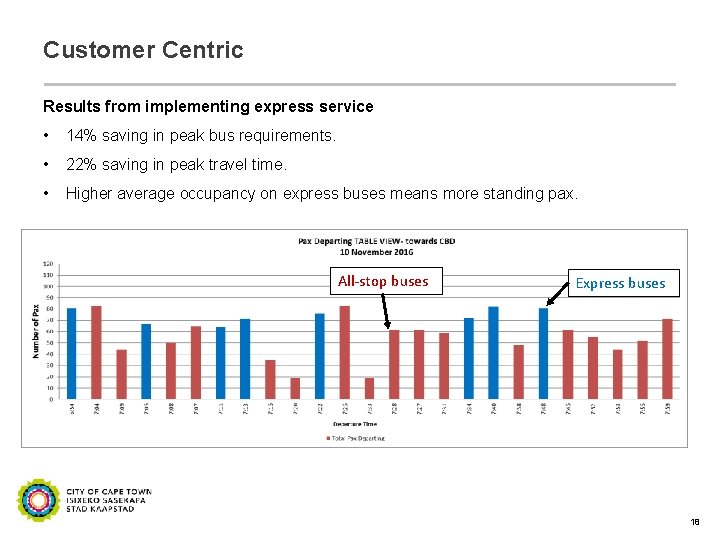
Customer Centric Results from implementing express service • 14% saving in peak bus requirements. • 22% saving in peak travel time. • Higher average occupancy on express buses means more standing pax. All-stop buses Express buses 18
Direct Routes • Passengers don’t want to make transfers • In order for transfers to be less onerous both trunk services should be frequent or trunk and feeder schedules should be well synced • Cost constraints put pressure on the system, and where frequencies are reduced, and where feeder schedules are not reliable due to mixed traffic operations, transfers become a burden for the user. • Feeder routes have low revenue /cost ratios 19
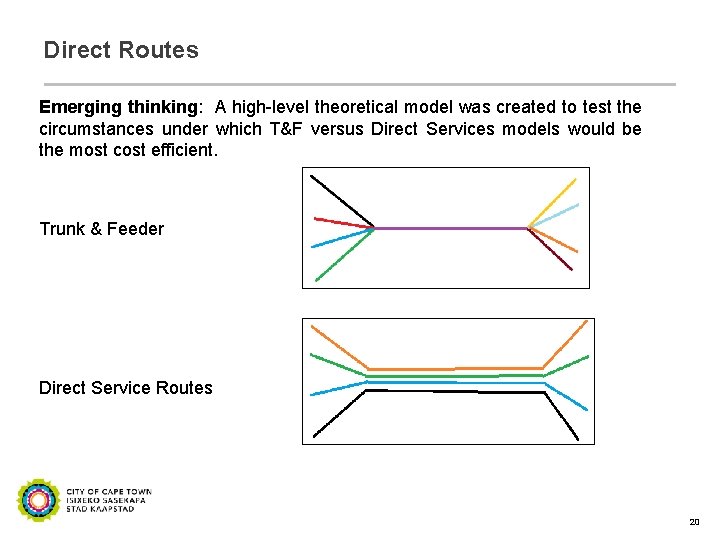
Direct Routes Emerging thinking: A high-level theoretical model was created to test the circumstances under which T&F versus Direct Services models would be the most cost efficient. Trunk & Feeder Direct Service Routes 20
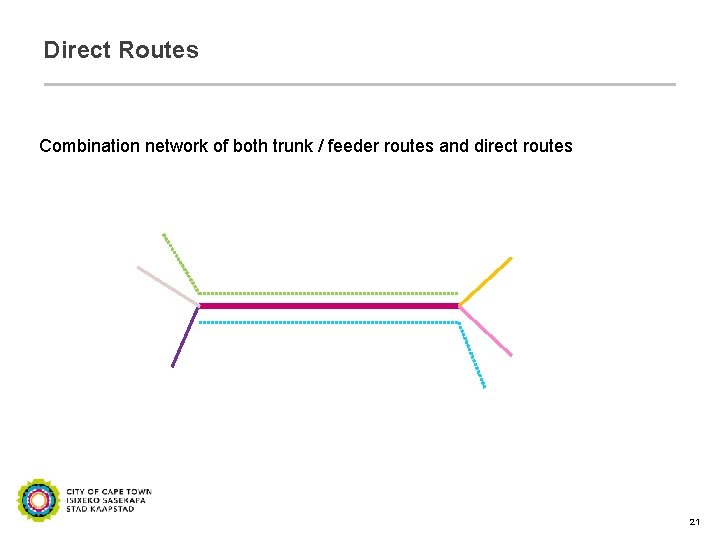
Direct Routes Combination network of both trunk / feeder routes and direct routes 21
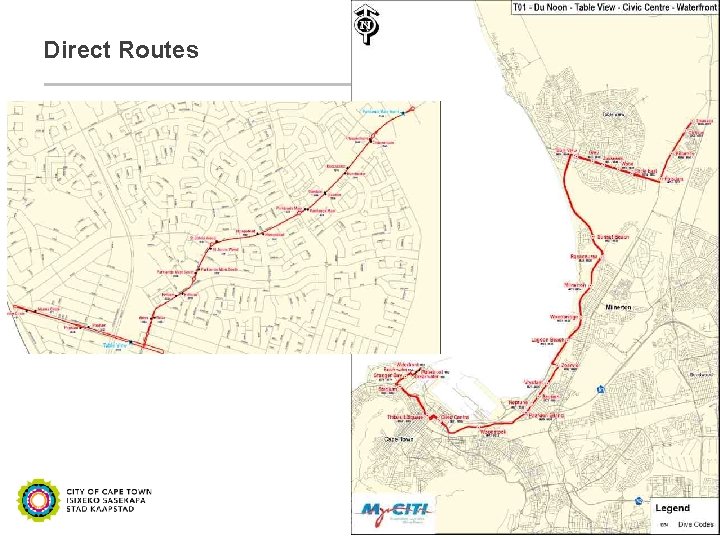
Direct Routes 22
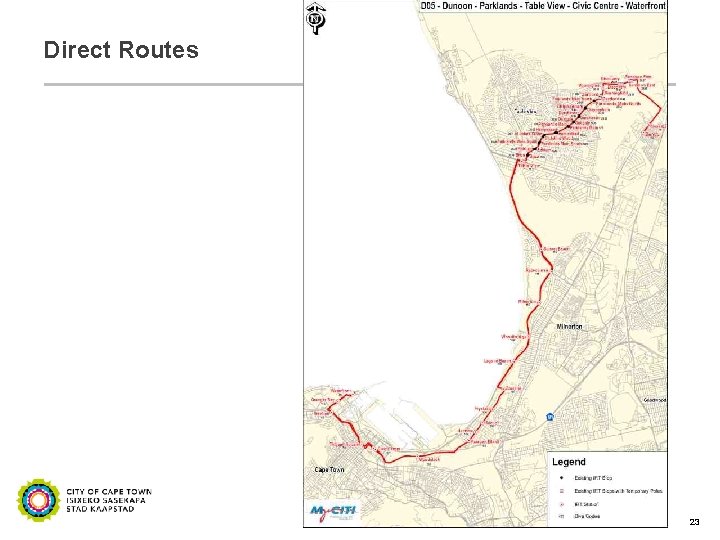
Direct Routes 23
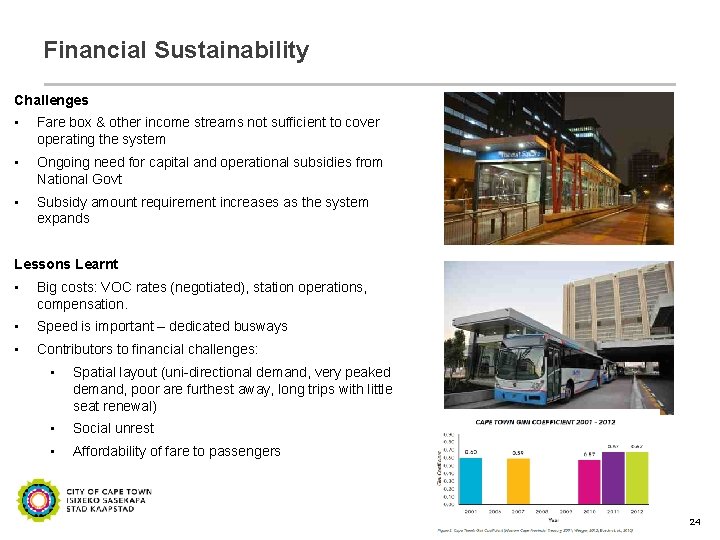
Financial Sustainability Challenges • Fare box & other income streams not sufficient to cover operating the system • Ongoing need for capital and operational subsidies from National Govt • Subsidy amount requirement increases as the system expands Lessons Learnt • Big costs: VOC rates (negotiated), station operations, compensation. • Speed is important – dedicated busways • Contributors to financial challenges: • Spatial layout (uni-directional demand, very peaked demand, poor are furthest away, long trips with little seat renewal) • Social unrest • Affordability of fare to passengers 24
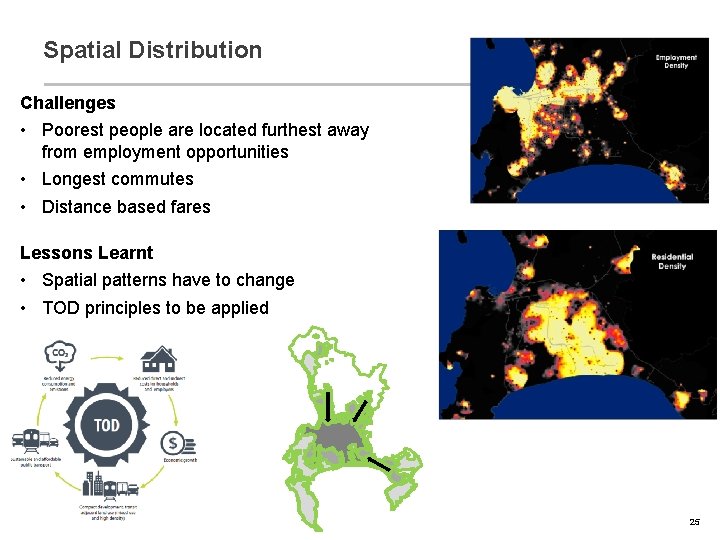
Spatial Distribution Challenges • Poorest people are located furthest away from employment opportunities • Longest commutes • Distance based fares Lessons Learnt • Spatial patterns have to change • TOD principles to be applied 25
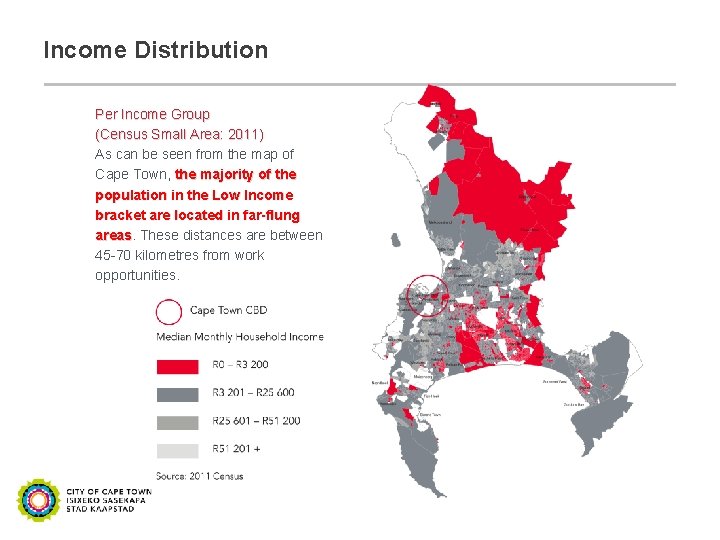
Income Distribution Per Income Group (Census Small Area: 2011) As can be seen from the map of Cape Town, the majority of the population in the Low Income bracket are located in far-flung areas These distances are between 45 -70 kilometres from work opportunities.
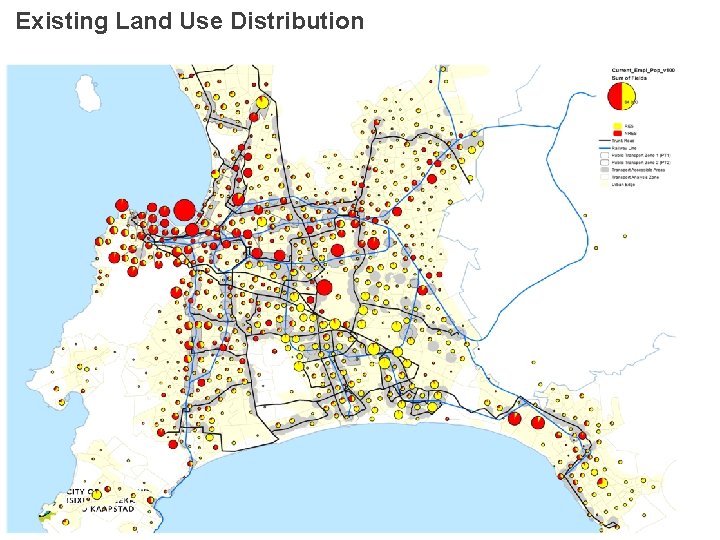
Existing Land Use Distribution
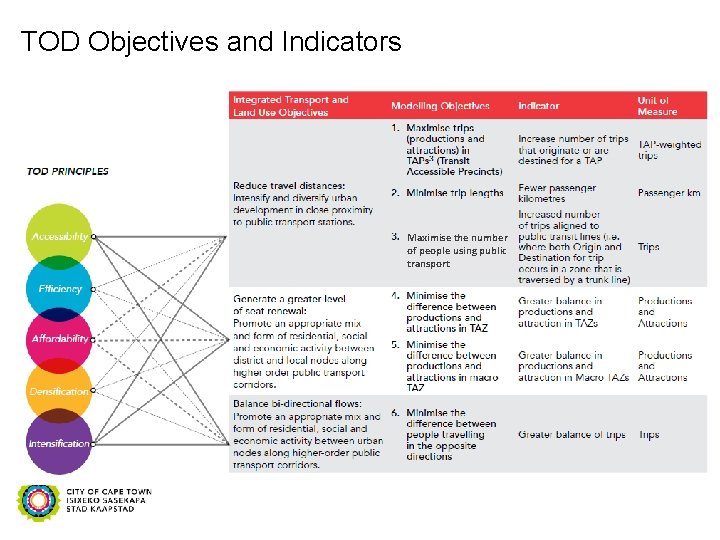
TOD Objectives and Indicators Maximise the number of people using public transport
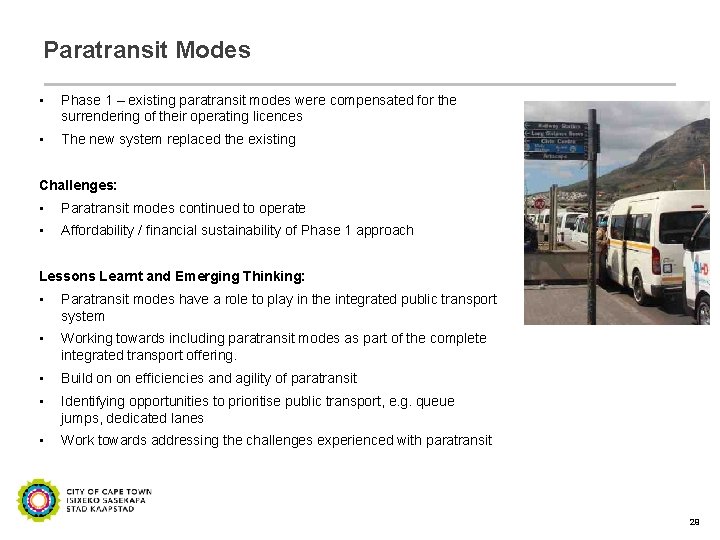
Paratransit Modes • Phase 1 – existing paratransit modes were compensated for the surrendering of their operating licences • The new system replaced the existing Challenges: • Paratransit modes continued to operate • Affordability / financial sustainability of Phase 1 approach Lessons Learnt and Emerging Thinking: • Paratransit modes have a role to play in the integrated public transport system • Working towards including paratransit modes as part of the complete integrated transport offering. • Build on on efficiencies and agility of paratransit • Identifying opportunities to prioritise public transport, e. g. queue jumps, dedicated lanes • Work towards addressing the challenges experienced with paratransit 29
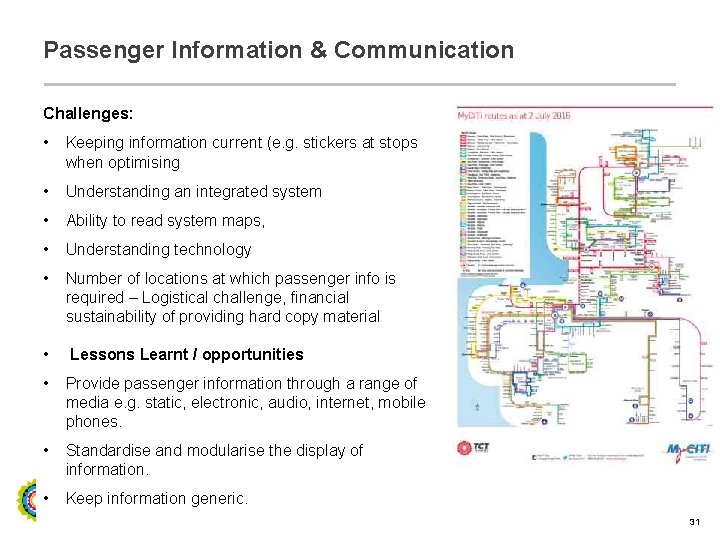
Passenger Information & Communication Challenges: • Keeping information current (e. g. stickers at stops when optimising • Understanding an integrated system • Ability to read system maps, • Understanding technology • Number of locations at which passenger info is required – Logistical challenge, financial sustainability of providing hard copy material • Lessons Learnt / opportunities • Provide passenger information through a range of media e. g. static, electronic, audio, internet, mobile phones. • Standardise and modularise the display of information. • Keep information generic. 31
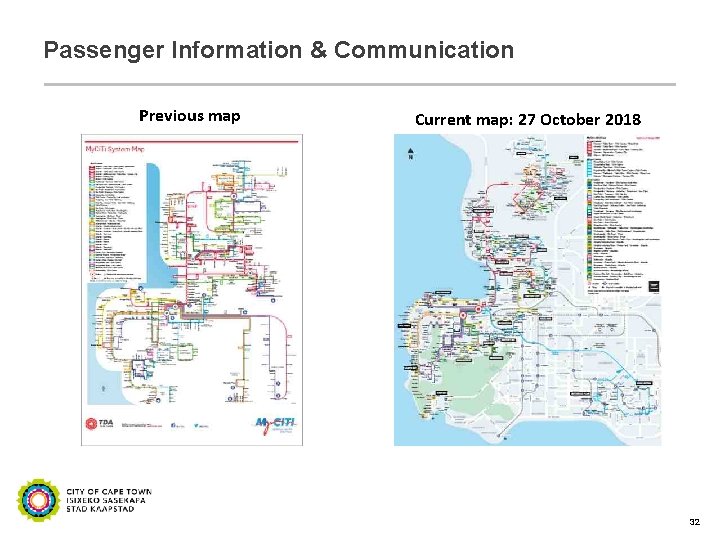
Passenger Information & Communication Previous map Current map: 27 October 2018 32
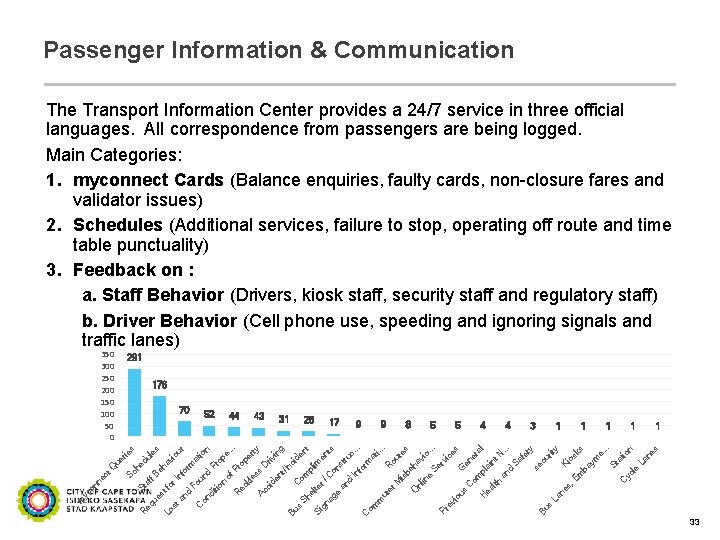
Passenger Information & Communication The Transport Information Center provides a 24/7 service in three official languages. All correspondence from passengers are being logged. Main Categories: 1. myconnect Cards (Balance enquiries, faulty cards, non-closure fares and validator issues) 2. Schedules (Additional services, failure to stop, operating off route and time table punctuality) 3. Feedback on : a. Staff Behavior (Drivers, kiosk staff, security staff and regulatory staff) b. Driver Behavior (Cell phone use, speeding and ignoring signals and traffic lanes) 350 300 250 200 150 100 50 0 291 176 44 43 31 28 17 9 9 8 5 5 4 4 3 1 1 1 le s eh a fo v r. I io st ur nf an o d rm Fo at C un io on n d di P tio ro pe n of. . . P R ro ec pe kl rty es s Ac D ci riv de in nt g /In Bu ci de C s om Sh nt p el lim te Si r/ en gn C ts ag o ns e an tru d c. In. . fo rm C om at i. . m. ut R er o ut M es is be ha O nl vi in o. e. . Se rv Pr ic ev es io us G e C om ner al pl H ai ea nt lth N an. . . d Sa fe ty se Bu cu s rit La y ne K s, io sk Em s ba ym e. . . St at C io yc n le La ne s 52 du st Lo eq ue St af f. B he Sc R m yc on ne ct Q ue r ie s 70 33
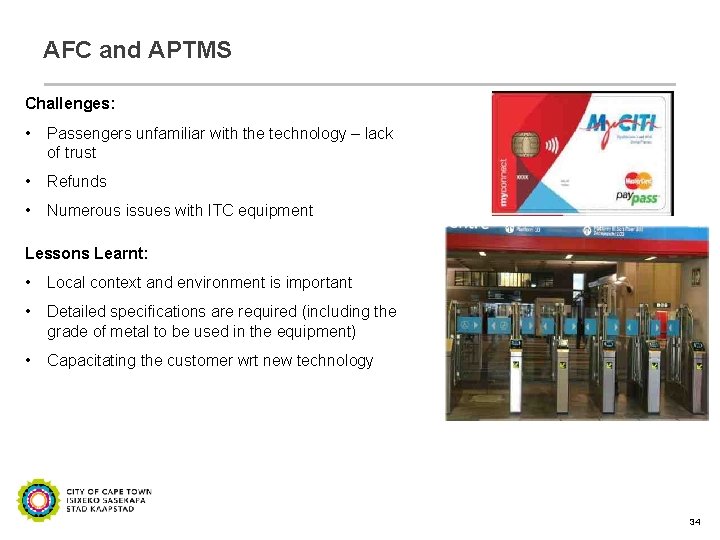
AFC and APTMS Challenges: • Passengers unfamiliar with the technology – lack of trust • Refunds • Numerous issues with ITC equipment Lessons Learnt: • Local context and environment is important • Detailed specifications are required (including the grade of metal to be used in the equipment) • Capacitating the customer wrt new technology 34
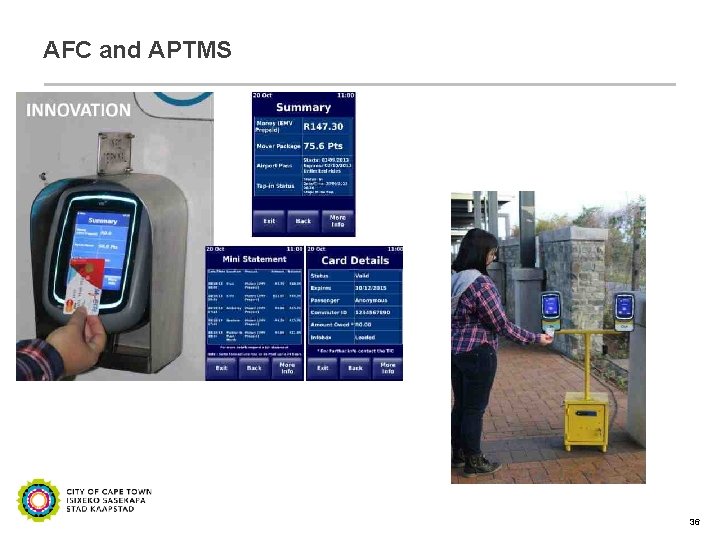
AFC and APTMS 1. 35
AFC and APTMS 36
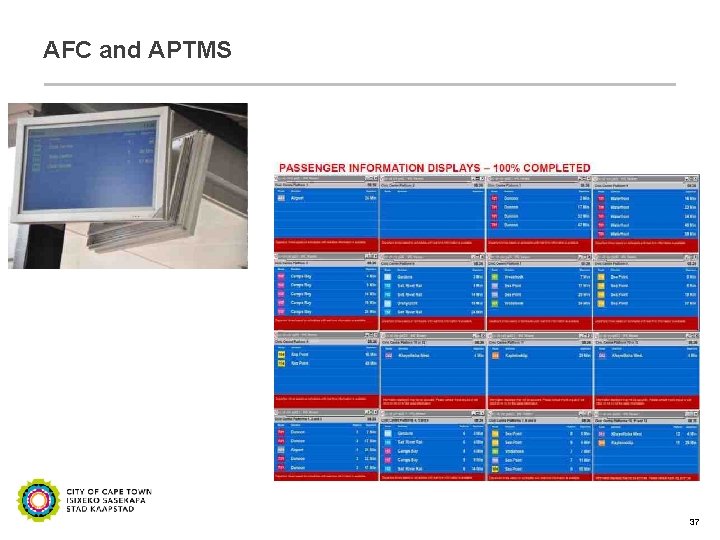
AFC and APTMS 37
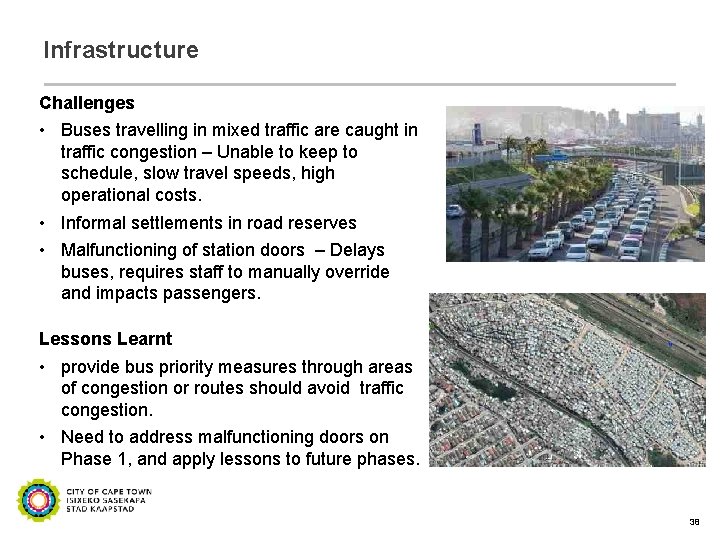
Infrastructure Challenges • Buses travelling in mixed traffic are caught in traffic congestion – Unable to keep to schedule, slow travel speeds, high operational costs. • Informal settlements in road reserves • Malfunctioning of station doors – Delays buses, requires staff to manually override and impacts passengers. Lessons Learnt • provide bus priority measures through areas of congestion or routes should avoid traffic congestion. • Need to address malfunctioning doors on Phase 1, and apply lessons to future phases. 38
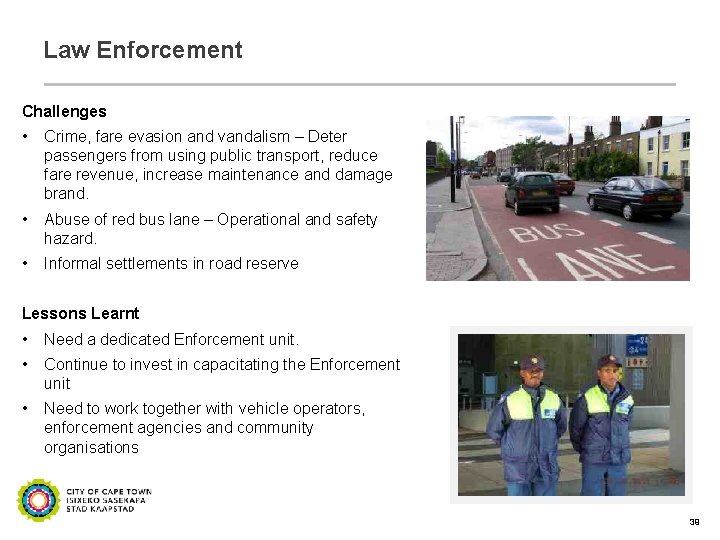
Law Enforcement Challenges • Crime, fare evasion and vandalism – Deter passengers from using public transport, reduce fare revenue, increase maintenance and damage brand. • Abuse of red bus lane – Operational and safety hazard. • Informal settlements in road reserve Lessons Learnt • Need a dedicated Enforcement unit. • Continue to invest in capacitating the Enforcement unit • Need to work together with vehicle operators, enforcement agencies and community organisations 39

Concluding Thoughts 40
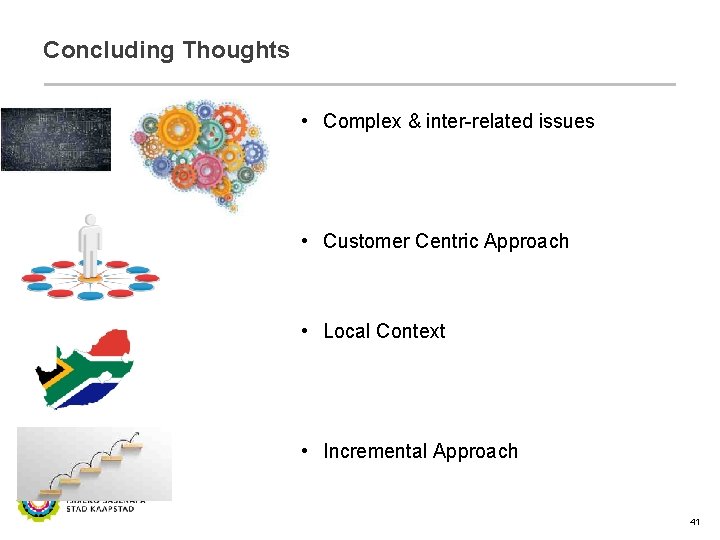
Concluding Thoughts • Complex & inter-related issues • Customer Centric Approach • Local Context • Incremental Approach 41
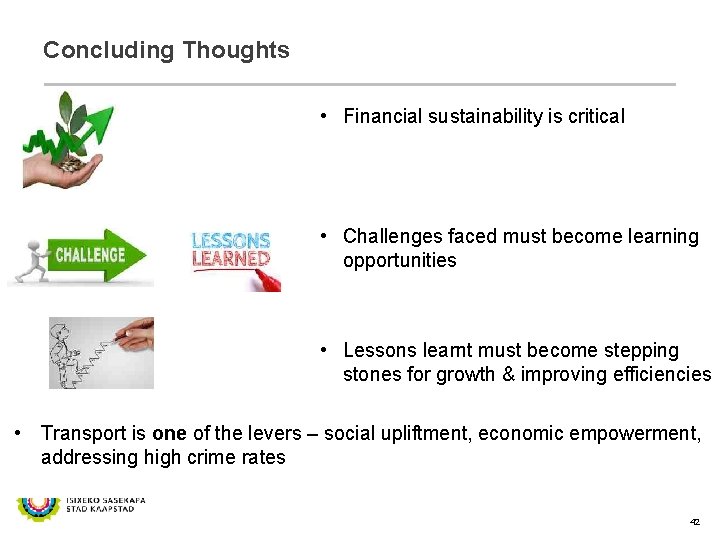
Concluding Thoughts • Financial sustainability is critical • Challenges faced must become learning opportunities • Lessons learnt must become stepping stones for growth & improving efficiencies • Transport is one of the levers – social upliftment, economic empowerment, addressing high crime rates 42
- Slides: 41