
Capacity Development Program in Environment Management CDEM Module

- Slides: 48
Capacity Development Program in Environment Management (CDEM) Module 1: Environment Policy and Regulations Environmental Impact Assessment Notification 26 th September to 30 th September 2016 K. J. Somaiya College, Mumbai
? What is an ‘Impact' CDEM: Module 1: Environment Policy and Regulations, September 2016
Is the Impact due to emissions from a moving car equivalent to cutting of trees for making a road through Sanjay Gandhi National Park ? Significance of Impacts CDEM: Module 1: Environment Policy and Regulations, September 2016
Impact Classification § Nature – reversible, irreversible § Duration – long term, short term § Extent – local, regional § Order – direct, indirect CDEM: Module 1: Environment Policy and Regulations, September 2016
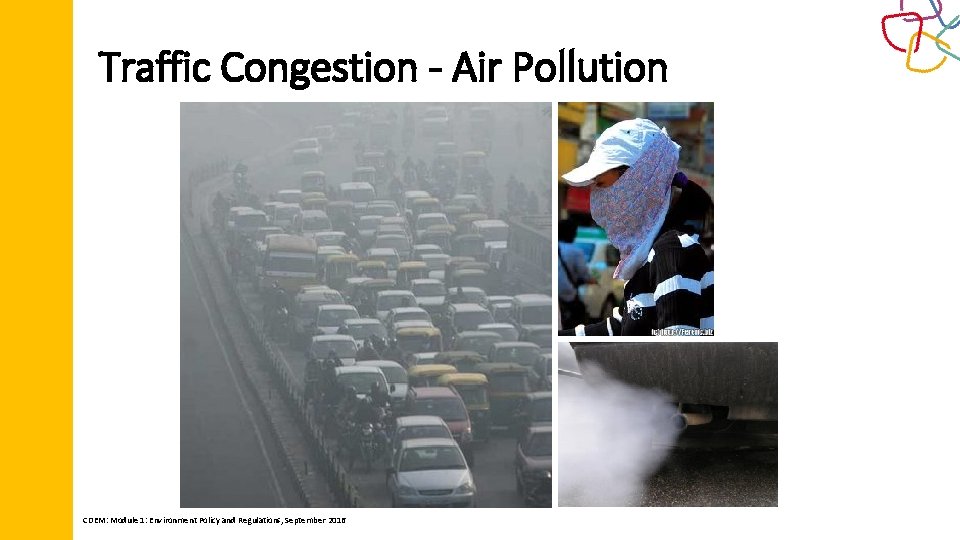
Traffic Congestion - Air Pollution CDEM: Module 1: Environment Policy and Regulations, September 2016
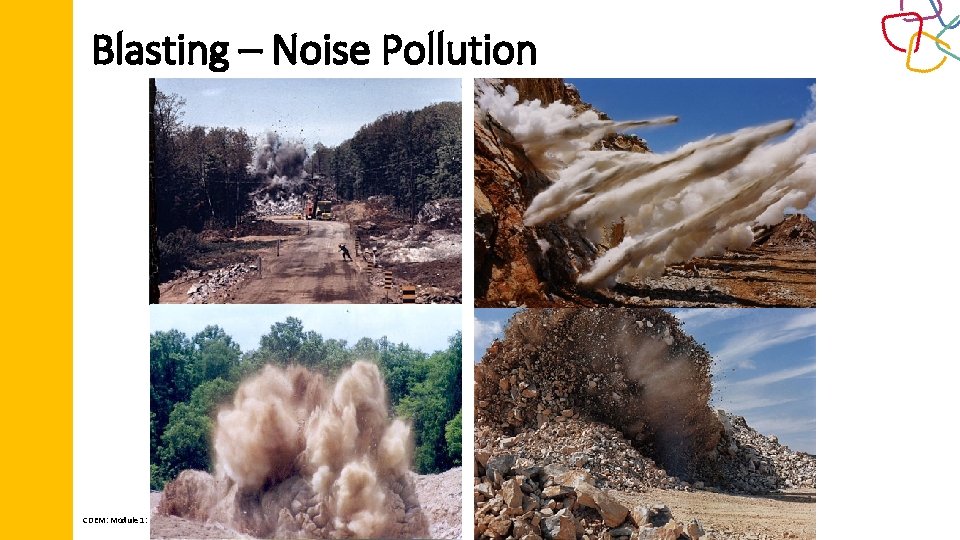
Blasting – Noise Pollution CDEM: Module 1: Environment Policy and Regulations, September 2016
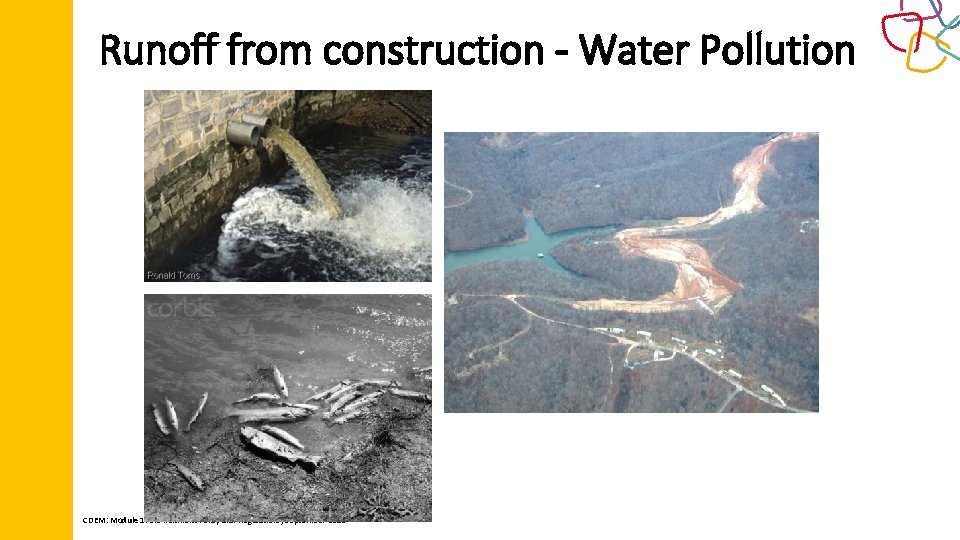
Runoff from construction - Water Pollution CDEM: Module 1: Environment Policy and Regulations, September 2016
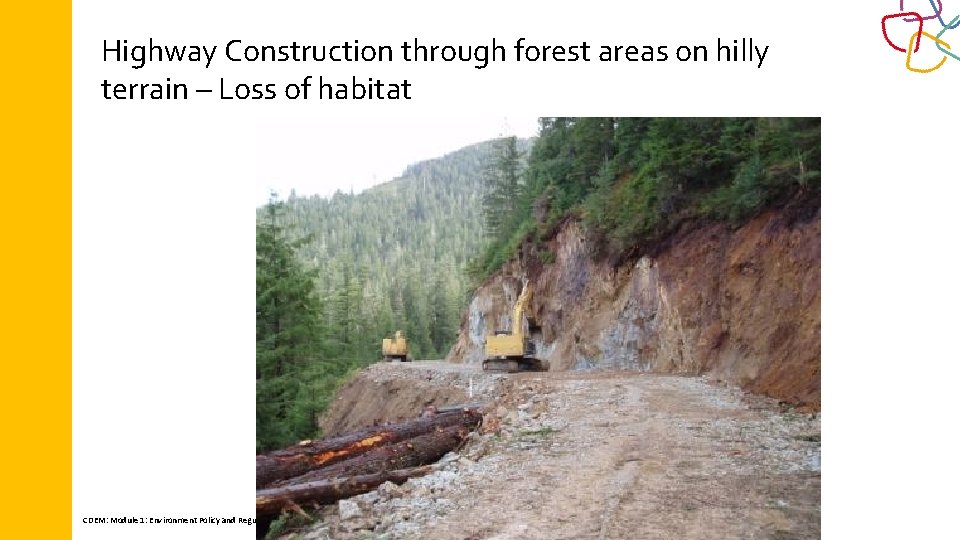
Highway Construction through forest areas on hilly terrain – Loss of habitat CDEM: Module 1: Environment Policy and Regulations, September 2016
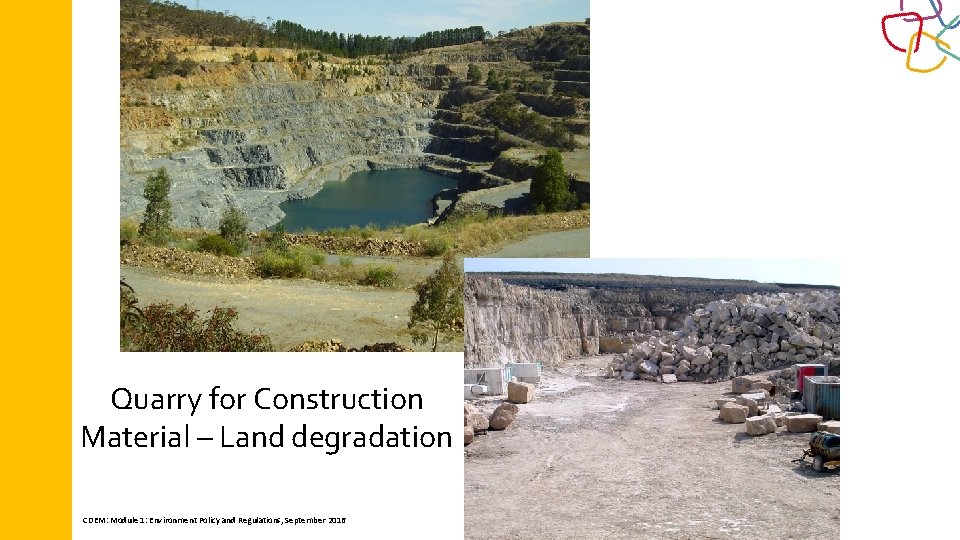
Quarry for Construction Material – Land degradation CDEM: Module 1: Environment Policy and Regulations, September 2016
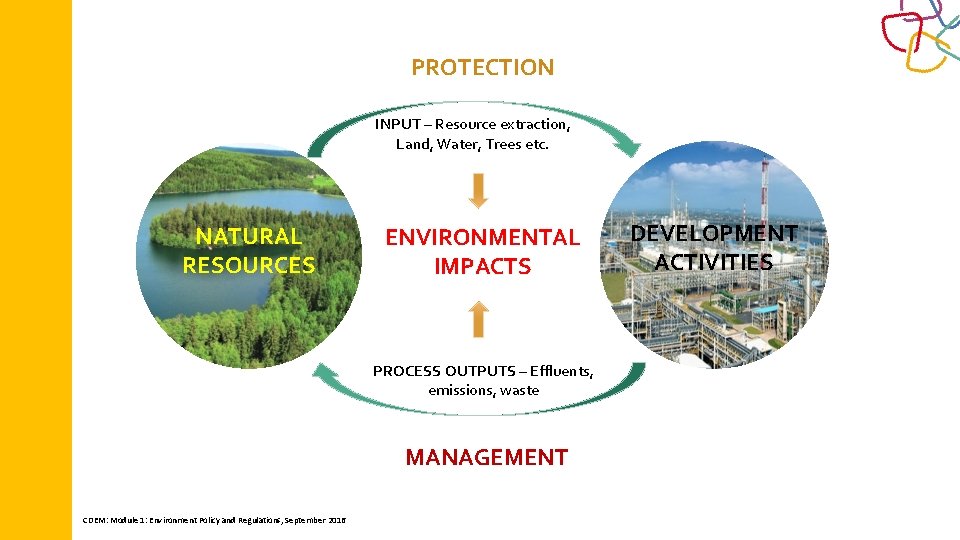
PROTECTION INPUT – Resource extraction, Land, Water, Trees etc. NATURAL RESOURCES ENVIRONMENTAL IMPACTS PROCESS OUTPUTS – Effluents, emissions, waste MANAGEMENT CDEM: Module 1: Environment Policy and Regulations, September 2016 DEVELOPMENT ACTIVITIES
What is EIA? § A proactive tool • that anticipates environmental and social implications of the developmental project, programmes, plans and policies … § A process • that influences the concept, design, implementation, operation of the project development cycle to add a value and lend sustainability … § An integrated, participatory, consultative and transparent mechanism to development CDEM: Module 1: Environment Policy and Regulations, September 2016
What is Environmental Clearance? Environmental Clearance is a permit issued by the regulatory authority for allowing development of certain types of projects/ activities CDEM: Module 1: Environment Policy and Regulations, September 2016
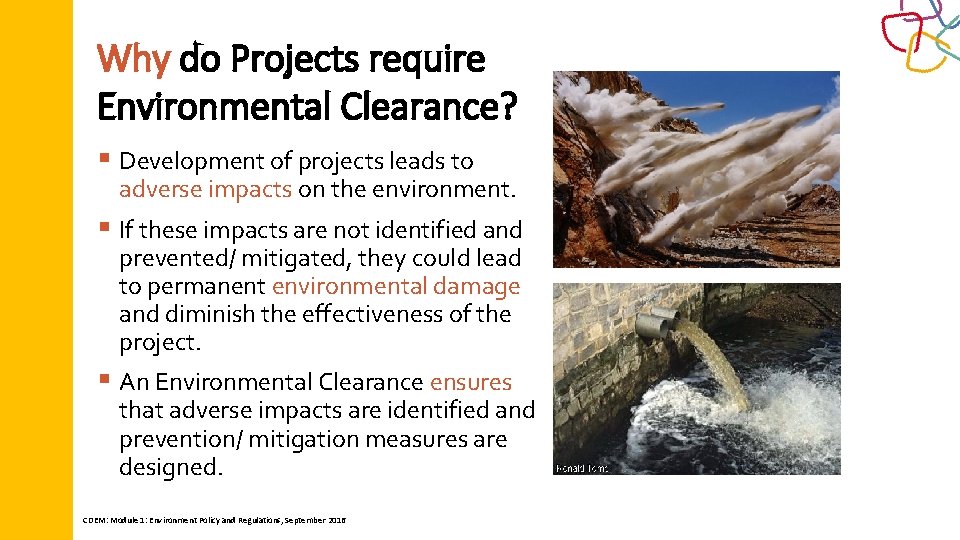
Why do Projects require Environmental Clearance? § Development of projects leads to adverse impacts on the environment. § If these impacts are not identified and prevented/ mitigated, they could lead to permanent environmental damage and diminish the effectiveness of the project. § An Environmental Clearance ensures that adverse impacts are identified and prevention/ mitigation measures are designed. CDEM: Module 1: Environment Policy and Regulations, September 2016
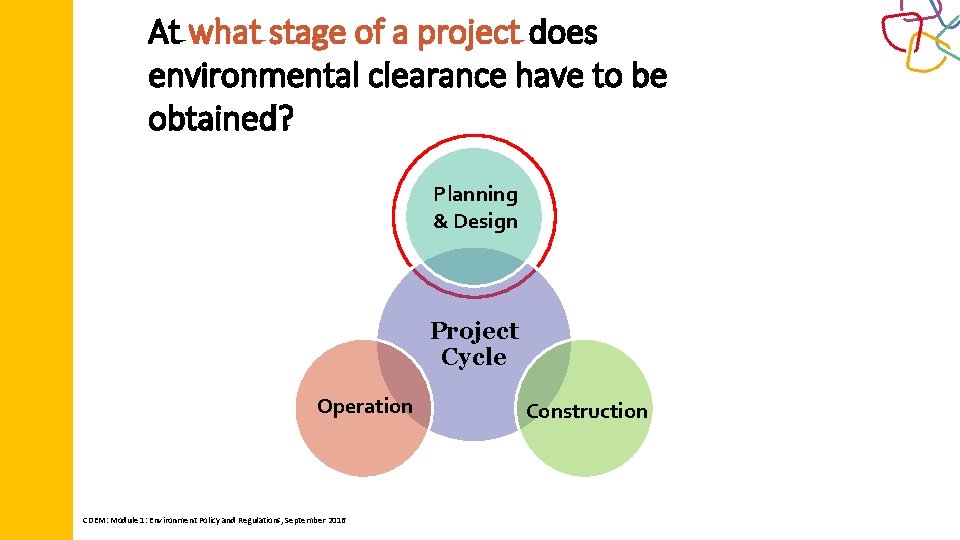
At what stage of a project does environmental clearance have to be obtained? Planning & Design Project Cycle Operation CDEM: Module 1: Environment Policy and Regulations, September 2016 Construction
Who is required to obtain the Environmental Clearance from the Regulatory Authority? The Environmental Clearance has to be obtained by the Project Developer/ Proponent CDEM: Module 1: Environment Policy and Regulations, September 2016
How is Environmental Clearance obtained for a project? § An Environmental Impact Assessment of the project and its allied facilities is carried out. § The outcome of the study is submitted to the Regulatory Authority for a Clearance. CDEM: Module 1: Environment Policy and Regulations, September 2016
Environmental Clearance in India § The Environmental Clearance Process in India is governed by the Environmental Impact Assessment Notification. § The first Notification was introduced in 1994. § The current active Notification is of 2006. CDEM: Module 1: Environment Policy and Regulations, September 2016
Which Projects Require Environmental Clearance? § All new projects or activities listed in the Schedule of the EIA Notification, 2006 § Expansion and modernization of existing projects or activities listed in the Schedule of the notification • with addition of capacity crossing the threshold limits given in the Schedule, after expansion or modernization § Any change in product - mix in an existing manufacturing unit included in Schedule beyond the specified range CDEM: Module 1: Environment Policy and Regulations, September 2016
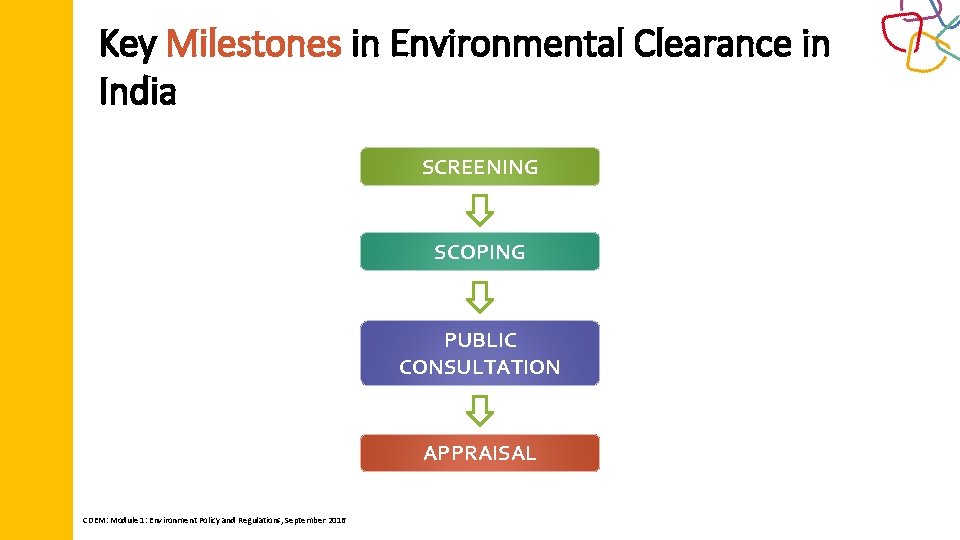
Key Milestones in Environmental Clearance in India SCREENING SCOPING PUBLIC CONSULTATION APPRAISAL CDEM: Module 1: Environment Policy and Regulations, September 2016
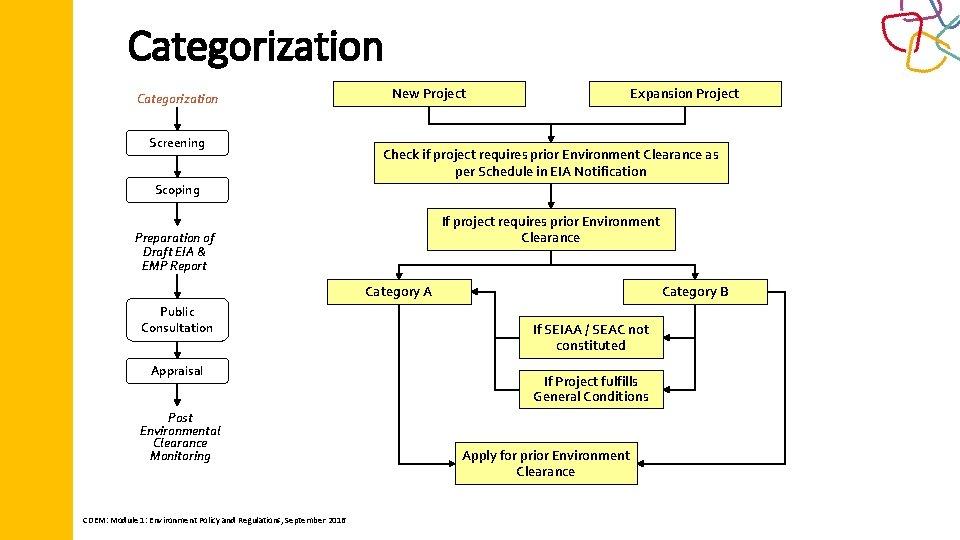
Categorization Screening New Project Expansion Project Check if project requires prior Environment Clearance as per Schedule in EIA Notification Scoping If project requires prior Environment Clearance Preparation of Draft EIA & EMP Report Category B Category A Public Consultation Appraisal Post Environmental Clearance Monitoring CDEM: Module 1: Environment Policy and Regulations, September 2016 If SEIAA / SEAC not constituted If Project fulfills General Conditions Apply for prior Environment Clearance
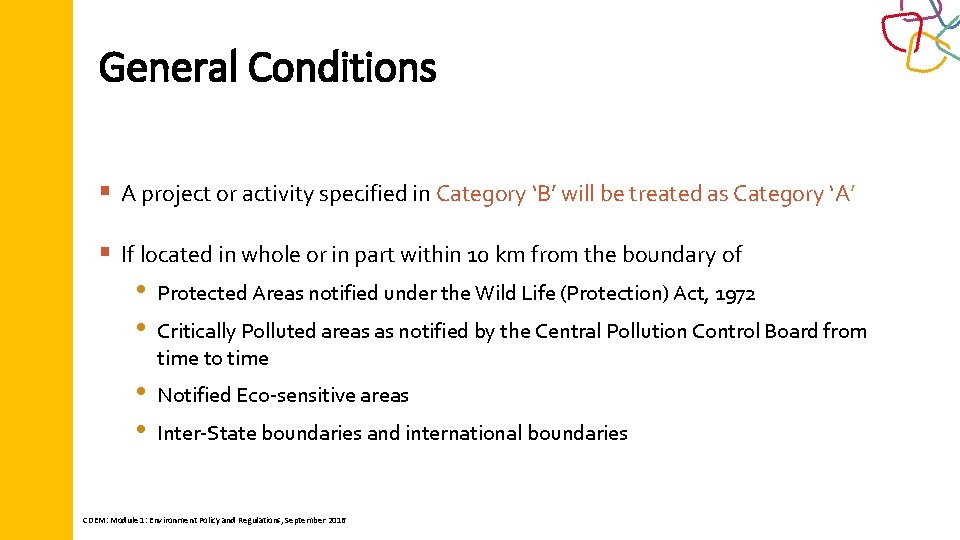
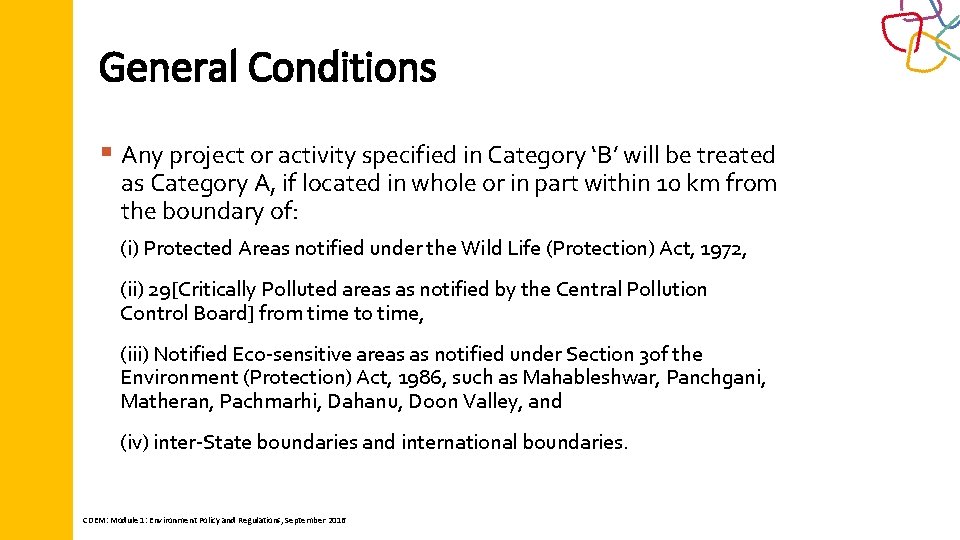
General Conditions § A project or activity specified in Category ‘B’ will be treated as Category ‘A’ § If located in whole or in part within 10 km from the boundary of • • Protected Areas notified under the Wild Life (Protection) Act, 1972 • • Notified Eco-sensitive areas Critically Polluted areas as notified by the Central Pollution Control Board from time to time Inter-State boundaries and international boundaries CDEM: Module 1: Environment Policy and Regulations, September 2016
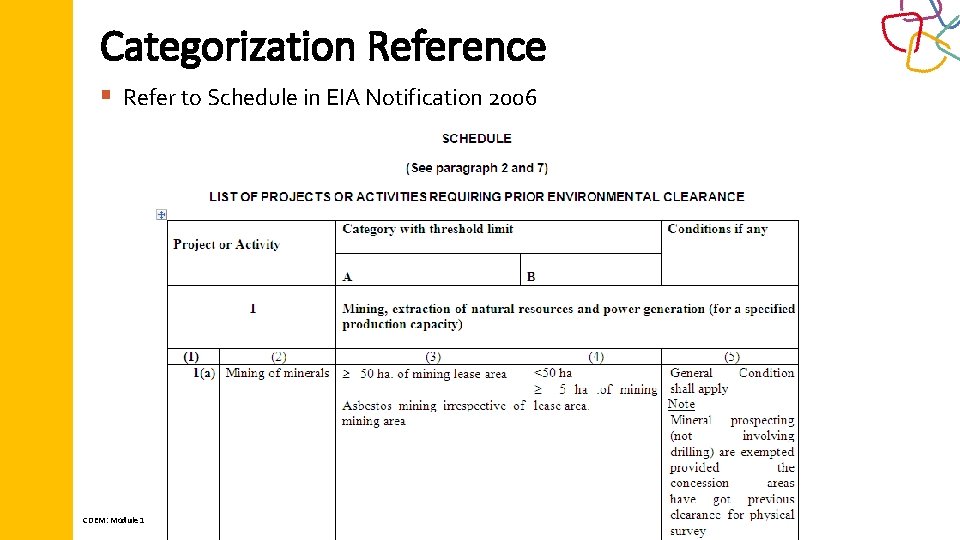
Categorization Reference § Refer to Schedule in EIA Notification 2006 CDEM: Module 1: Environment Policy and Regulations, September 2016
Institutional Mechanism § Projects / activities under Category ‘A’ in the Schedule are to be referred to the Ministry of Environment and Forests at the Central Level § Projects/ activities under Category ‘B’ in the Schedule are to be referred to the State Environmental Impact Assessment Authority (SEIAA) at the State level § Expert Appraisal Committees constituted at the Central and State levels are a panel of sector experts who review the project / activity and give recommendations for EC CDEM: Module 1: Environment Policy and Regulations, September 2016
CDEM: Module 1: Environment Policy and Regulations, September 2016
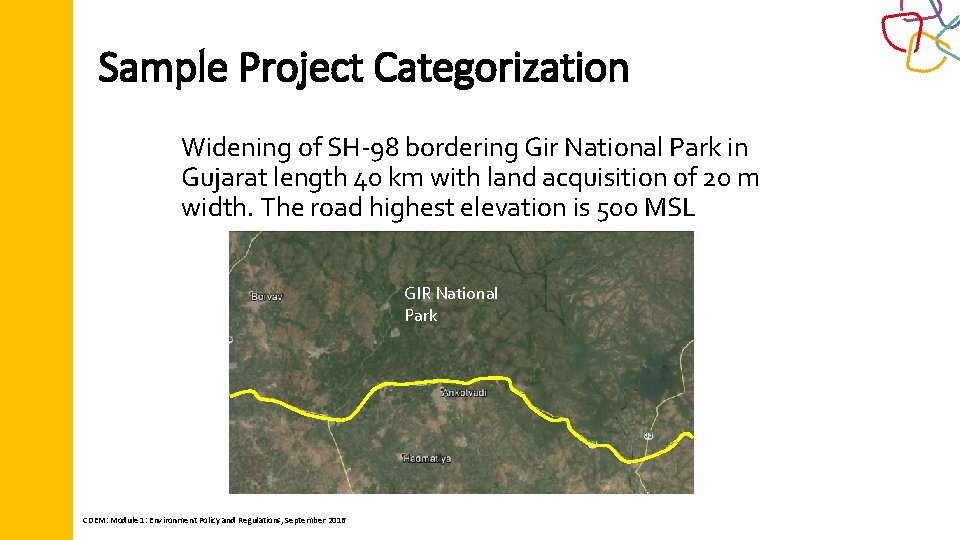
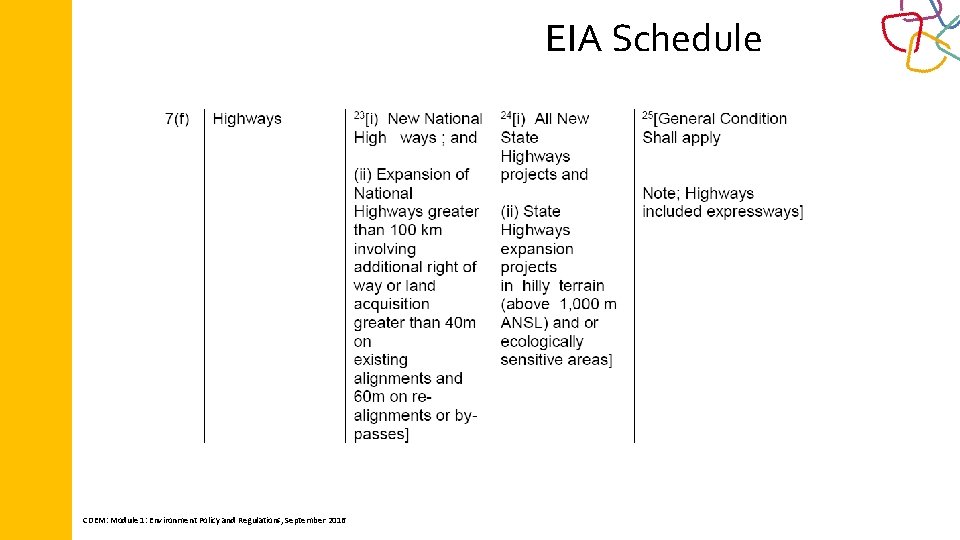
Sample Project Categorization Widening of SH-98 bordering Gir National Park in Gujarat length 40 km with land acquisition of 20 m width. The road highest elevation is 500 MSL GIR National Park CDEM: Module 1: Environment Policy and Regulations, September 2016
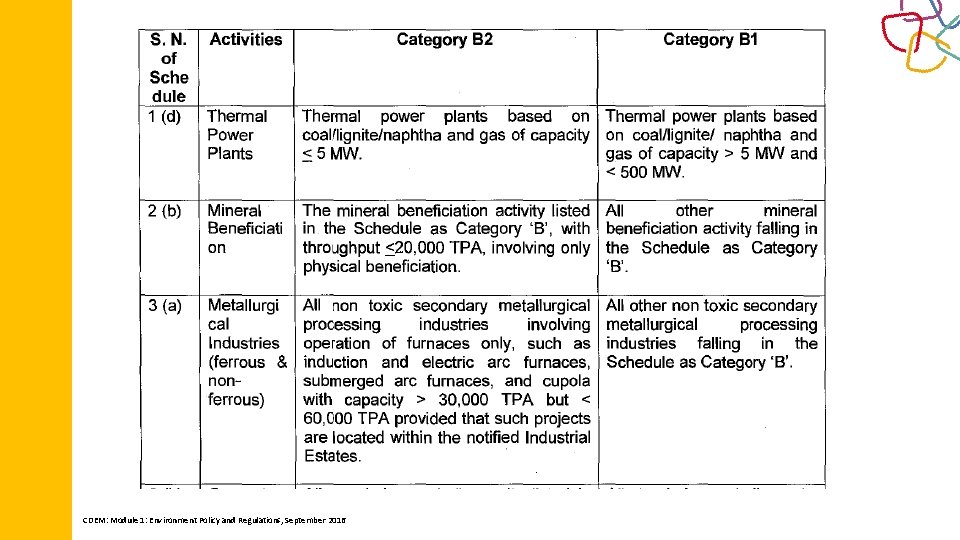
EIA Schedule CDEM: Module 1: Environment Policy and Regulations, September 2016
General Conditions § Any project or activity specified in Category ‘B’ will be treated as Category A, if located in whole or in part within 10 km from the boundary of: (i) Protected Areas notified under the Wild Life (Protection) Act, 1972, (ii) 29[Critically Polluted areas as notified by the Central Pollution Control Board] from time to time, (iii) Notified Eco-sensitive areas as notified under Section 3 of the Environment (Protection) Act, 1986, such as Mahableshwar, Panchgani, Matheran, Pachmarhi, Dahanu, Doon Valley, and (iv) inter-State boundaries and international boundaries. CDEM: Module 1: Environment Policy and Regulations, September 2016
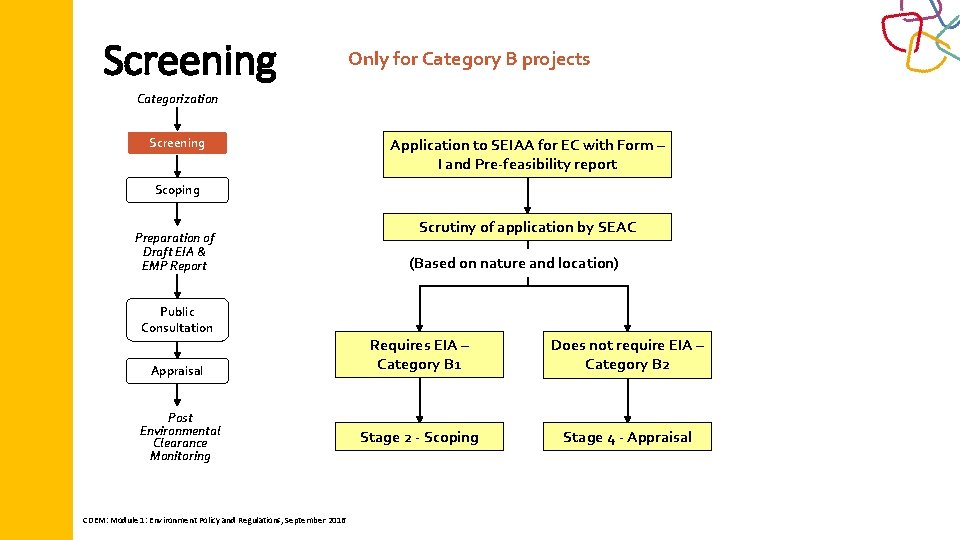
Screening Only for Category B projects Categorization Screening Application to SEIAA for EC with Form – I and Pre-feasibility report Scoping Preparation of Draft EIA & EMP Report Public Consultation Appraisal Post Environmental Clearance Monitoring CDEM: Module 1: Environment Policy and Regulations, September 2016 Scrutiny of application by SEAC (Based on nature and location) Requires EIA – Category B 1 Does not require EIA – Category B 2 Stage 2 - Scoping Stage 4 - Appraisal
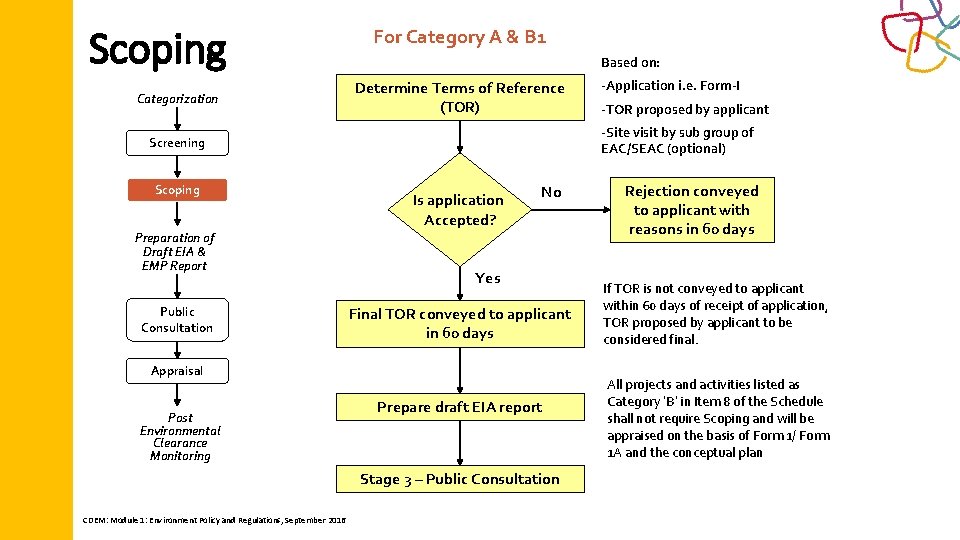
Scoping Categorization For Category A & B 1 Based on: Determine Terms of Reference (TOR) Preparation of Draft EIA & EMP Report Public Consultation Is application Accepted? No Yes Final TOR conveyed to applicant in 60 days Appraisal Post Environmental Clearance Monitoring Prepare draft EIA report Stage 3 – Public Consultation CDEM: Module 1: Environment Policy and Regulations, September 2016 -TOR proposed by applicant -Site visit by sub group of EAC/SEAC (optional) Screening Scoping -Application i. e. Form-I Rejection conveyed to applicant with reasons in 60 days If TOR is not conveyed to applicant within 60 days of receipt of application, TOR proposed by applicant to be considered final. All projects and activities listed as Category ‘B’ in Item 8 of the Schedule shall not require Scoping and will be appraised on the basis of Form 1/ Form 1 A and the conceptual plan
Conduct of Environmental Impact Assessment Studies and Preparation of Draft Report including Environmental Management Plan CDEM: Module 1: Environment Policy and Regulations, September 2016
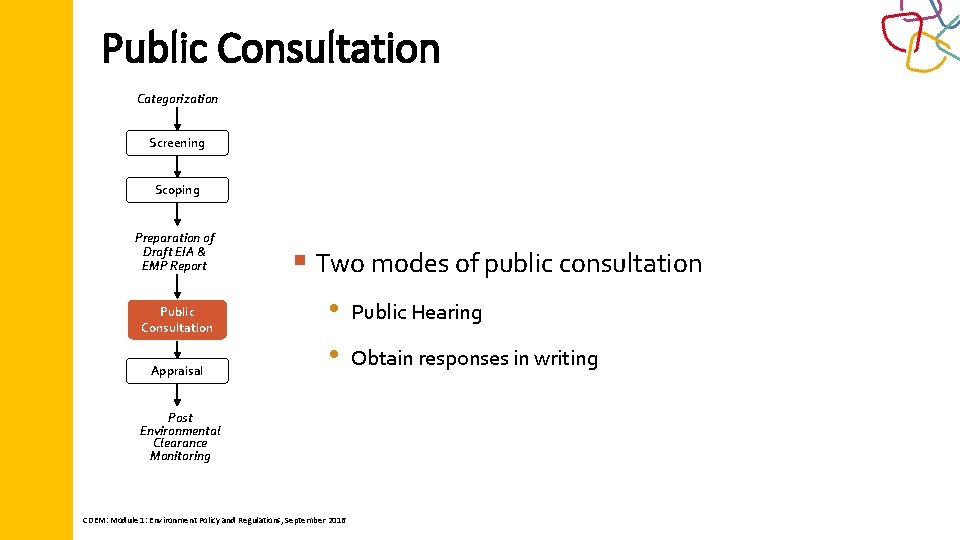
Public Consultation Categorization Screening Scoping Preparation of Draft EIA & EMP Report Public Consultation Appraisal § Two modes of public consultation • Public Hearing • Obtain responses in writing Post Environmental Clearance Monitoring CDEM: Module 1: Environment Policy and Regulations, September 2016
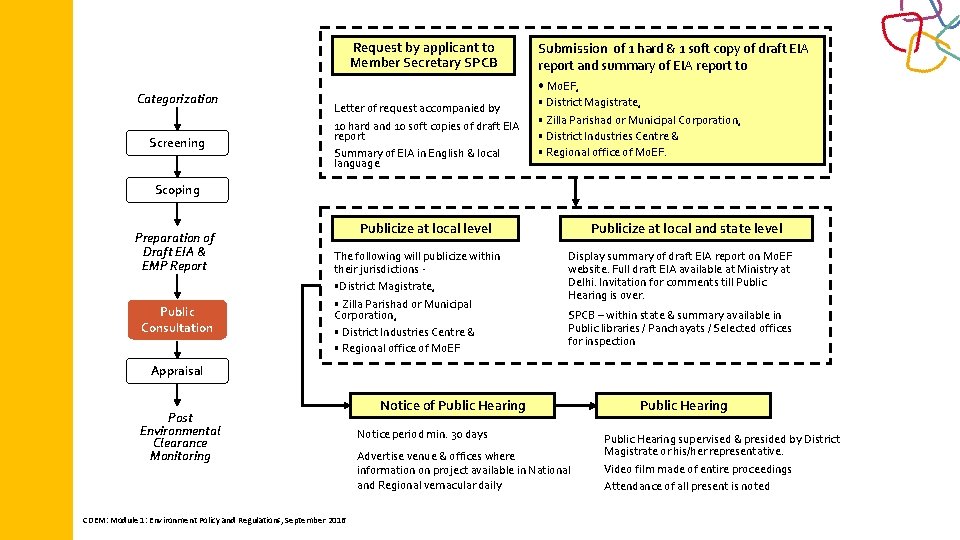
Request by applicant to Member Secretary SPCB Categorization Screening Letter of request accompanied by 10 hard and 10 soft copies of draft EIA report Summary of EIA in English & local language Submission of 1 hard & 1 soft copy of draft EIA report and summary of EIA report to • Mo. EF, • District Magistrate, • Zilla Parishad or Municipal Corporation, • District Industries Centre & • Regional office of Mo. EF. Scoping Preparation of Draft EIA & EMP Report Public Consultation Publicize at local level The following will publicize within their jurisdictions • District Magistrate, • Zilla Parishad or Municipal Corporation, • District Industries Centre & • Regional office of Mo. EF Publicize at local and state level Display summary of draft EIA report on Mo. EF website. Full draft EIA available at Ministry at Delhi. Invitation for comments till Public Hearing is over. SPCB – within state & summary available in Public libraries / Panchayats / Selected offices for inspection Appraisal Post Environmental Clearance Monitoring CDEM: Module 1: Environment Policy and Regulations, September 2016 Notice of Public Hearing Notice period min. 30 days Advertise venue & offices where information on project available in National and Regional vernacular daily Public Hearing supervised & presided by District Magistrate or his/her representative. Video film made of entire proceedings Attendance of all present is noted
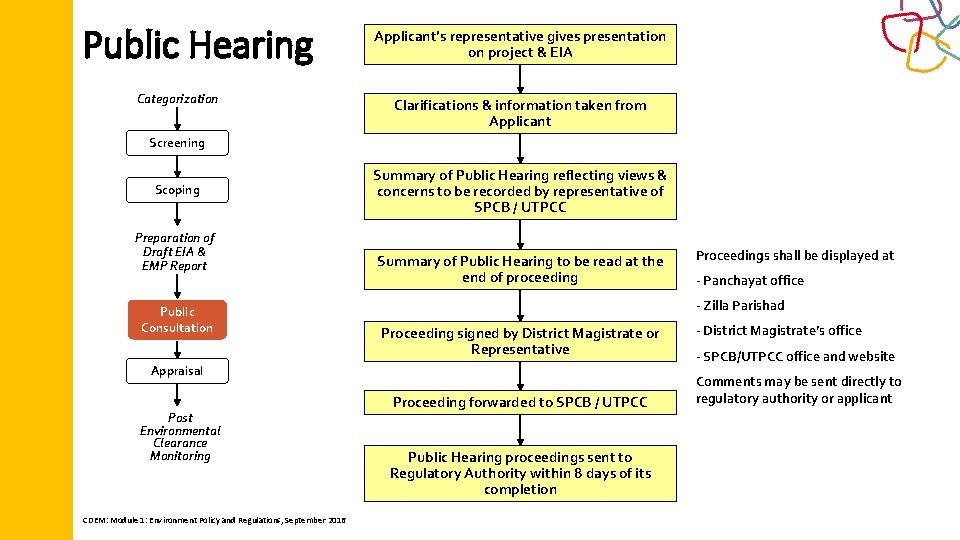
Public Hearing Categorization Applicant’s representative gives presentation on project & EIA Clarifications & information taken from Applicant Screening Scoping Preparation of Draft EIA & EMP Report Public Consultation Summary of Public Hearing reflecting views & concerns to be recorded by representative of SPCB / UTPCC Summary of Public Hearing to be read at the end of proceeding CDEM: Module 1: Environment Policy and Regulations, September 2016 - Panchayat office - Zilla Parishad Proceeding signed by District Magistrate or Representative Appraisal Post Environmental Clearance Monitoring Proceedings shall be displayed at Proceeding forwarded to SPCB / UTPCC Public Hearing proceedings sent to Regulatory Authority within 8 days of its completion - District Magistrate’s office - SPCB/UTPCC office and website Comments may be sent directly to regulatory authority or applicant
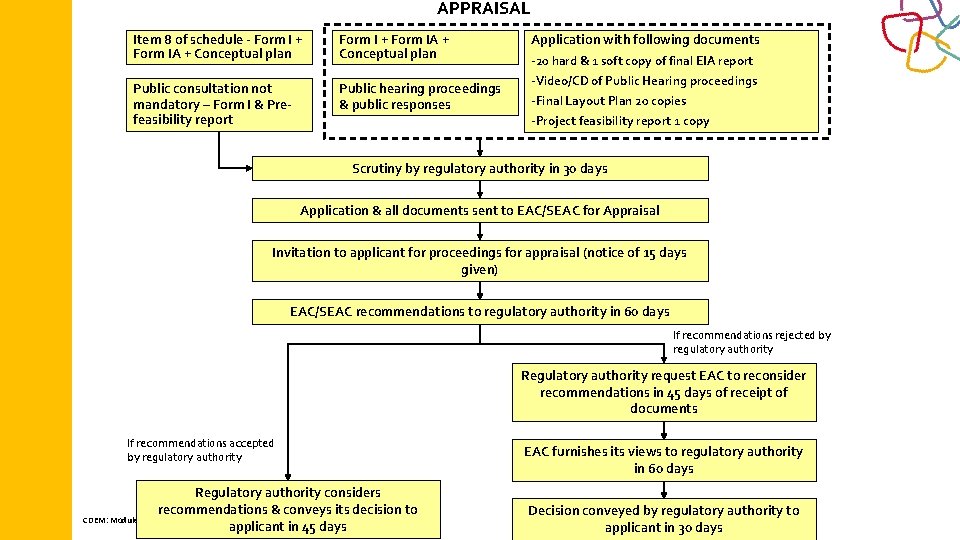
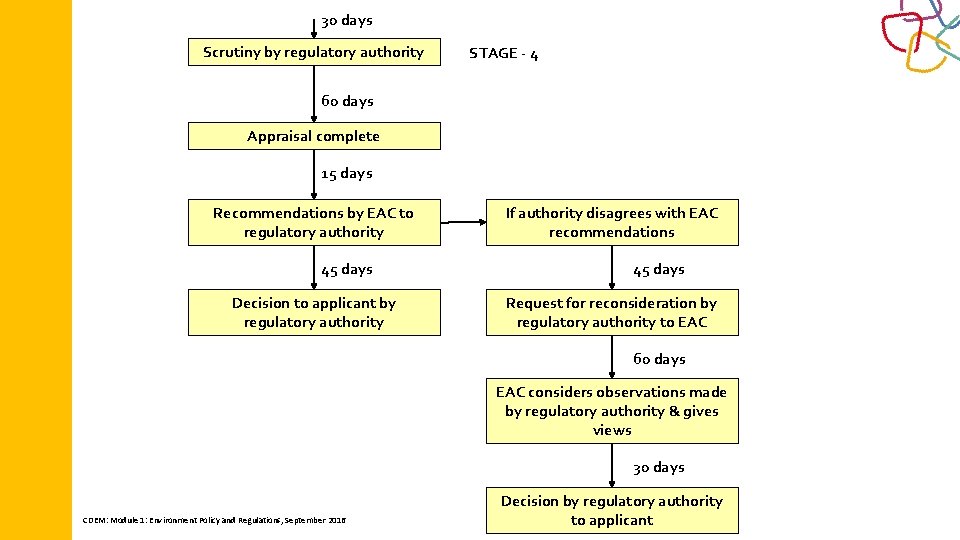
APPRAISAL Item 8 of schedule - Form I + Form IA + Conceptual plan Public consultation not mandatory – Form I & Prefeasibility report Public hearing proceedings & public responses Application with following documents -20 hard & 1 soft copy of final EIA report -Video/CD of Public Hearing proceedings -Final Layout Plan 20 copies -Project feasibility report 1 copy Scrutiny by regulatory authority in 30 days Application & all documents sent to EAC/SEAC for Appraisal Invitation to applicant for proceedings for appraisal (notice of 15 days given) EAC/SEAC recommendations to regulatory authority in 60 days If recommendations rejected by regulatory authority Regulatory authority request EAC to reconsider recommendations in 45 days of receipt of documents If recommendations accepted by regulatory authority Regulatory authority considers recommendations & conveys its decision to CDEM: Module 1: Environment Policy and Regulations, September 2016 applicant in 45 days EAC furnishes its views to regulatory authority in 60 days Decision conveyed by regulatory authority to applicant in 30 days
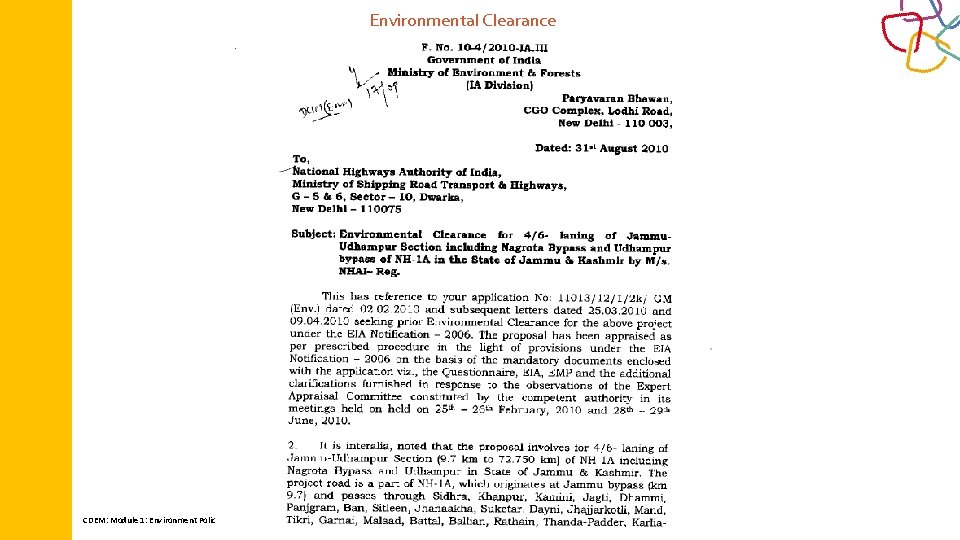
Environmental Clearance CDEM: Module 1: Environment Policy and Regulations, September 2016
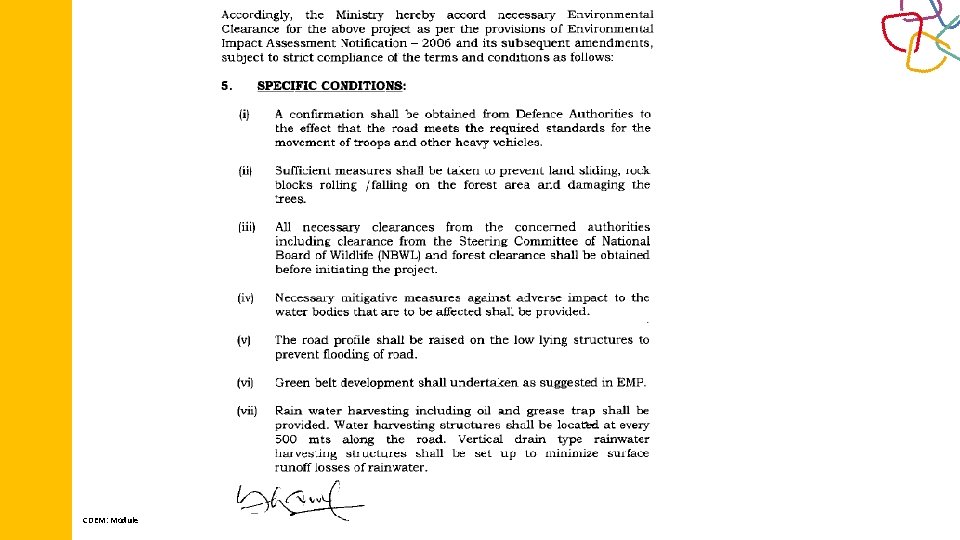
CDEM: Module 1: Environment Policy and Regulations, September 2016
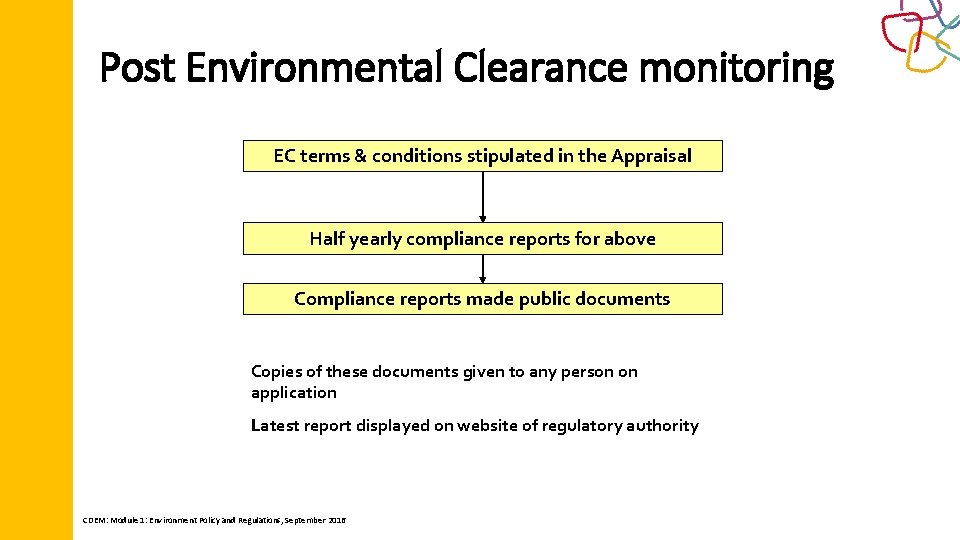
Post Environmental Clearance monitoring EC terms & conditions stipulated in the Appraisal Half yearly compliance reports for above Compliance reports made public documents Copies of these documents given to any person on application Latest report displayed on website of regulatory authority CDEM: Module 1: Environment Policy and Regulations, September 2016
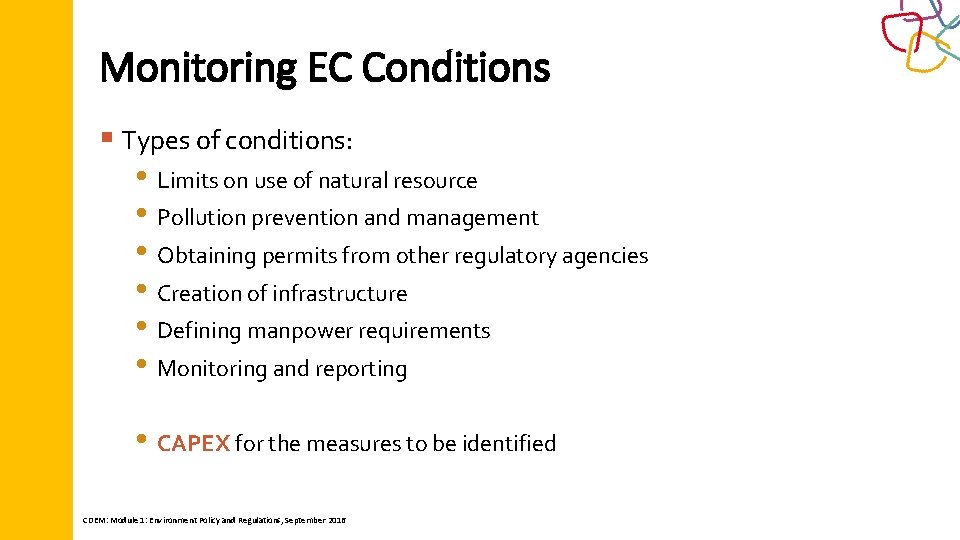
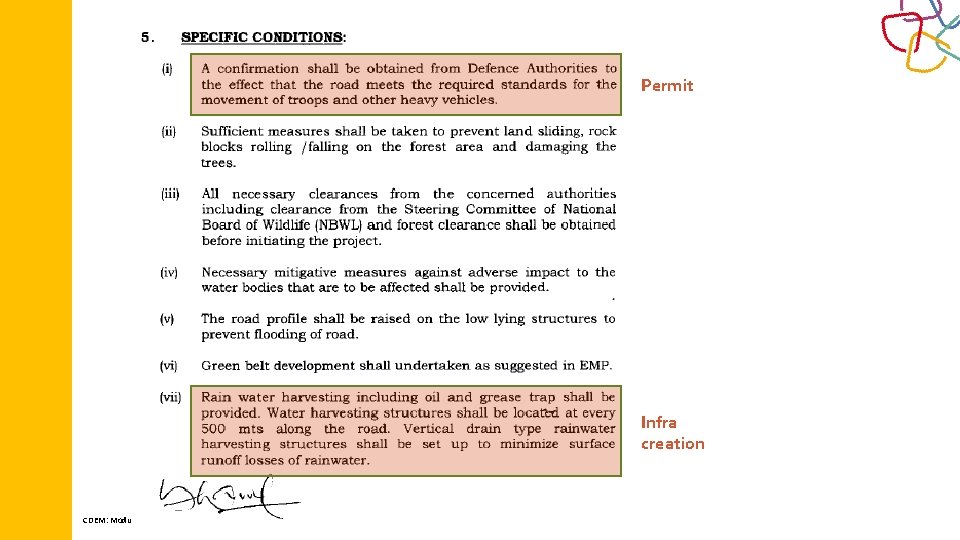
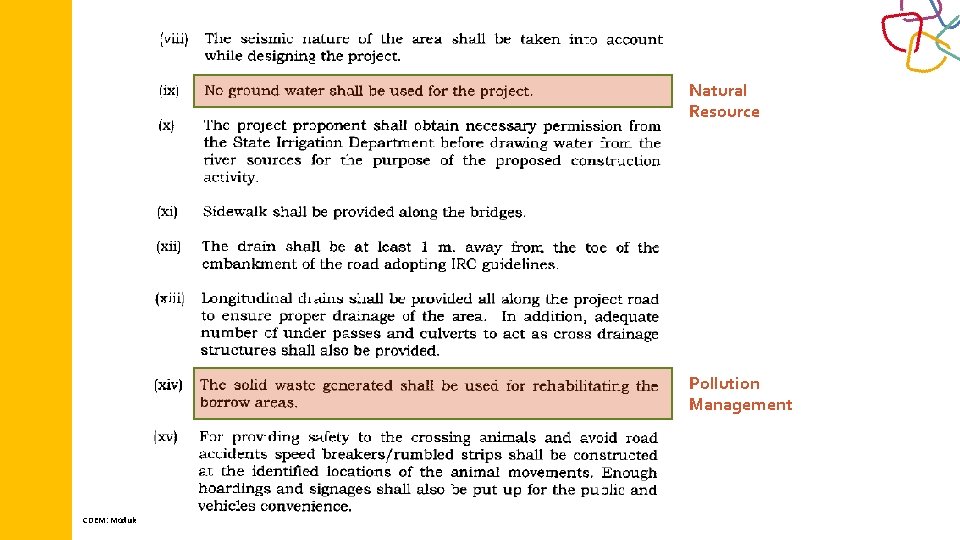
Monitoring EC Conditions § Types of conditions: • Limits on use of natural resource • Pollution prevention and management • Obtaining permits from other regulatory agencies • Creation of infrastructure • Defining manpower requirements • Monitoring and reporting • CAPEX for the measures to be identified CDEM: Module 1: Environment Policy and Regulations, September 2016
Permit Infra creation CDEM: Module 1: Environment Policy and Regulations, September 2016
Natural Resource Pollution Management CDEM: Module 1: Environment Policy and Regulations, September 2016
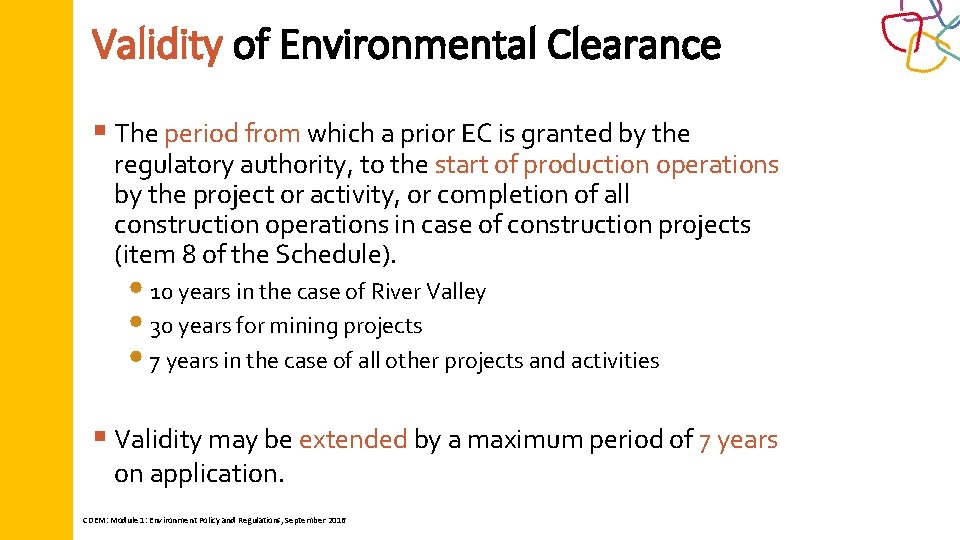
Validity of Environmental Clearance § The period from which a prior EC is granted by the regulatory authority, to the start of production operations by the project or activity, or completion of all construction operations in case of construction projects (item 8 of the Schedule). • 10 years in the case of River Valley • 30 years for mining projects • 7 years in the case of all other projects and activities § Validity may be extended by a maximum period of 7 years on application. CDEM: Module 1: Environment Policy and Regulations, September 2016
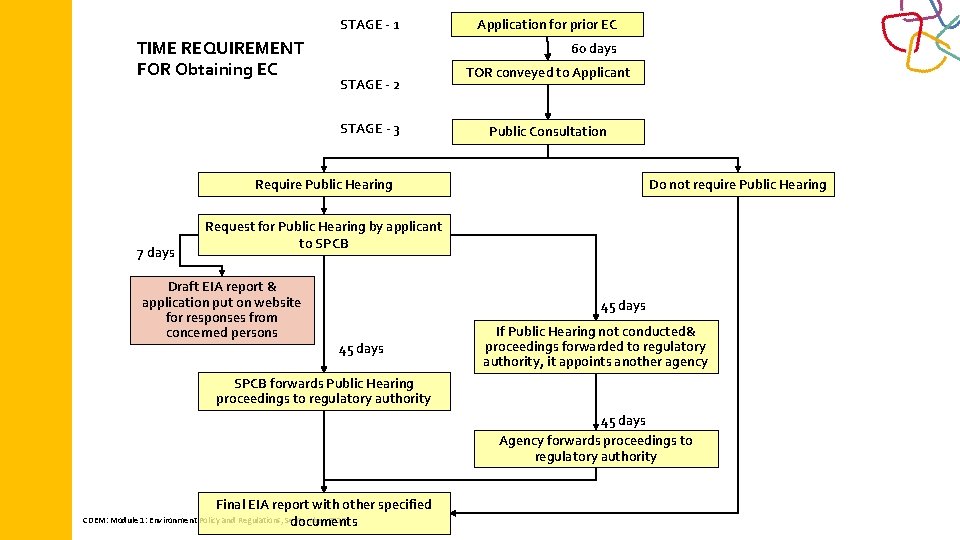
STAGE - 1 TIME REQUIREMENT FOR Obtaining EC Application for prior EC 60 days STAGE - 2 STAGE - 3 TOR conveyed to Applicant Public Consultation Require Public Hearing 7 days Do not require Public Hearing Request for Public Hearing by applicant to SPCB Draft EIA report & application put on website for responses from concerned persons 45 days If Public Hearing not conducted& proceedings forwarded to regulatory authority, it appoints another agency SPCB forwards Public Hearing proceedings to regulatory authority 45 days Agency forwards proceedings to regulatory authority Final EIA report with other specified CDEM: Module 1: Environment Policy and Regulations, September 2016 documents
30 days Scrutiny by regulatory authority STAGE - 4 60 days Appraisal complete 15 days Recommendations by EAC to regulatory authority 45 days Decision to applicant by regulatory authority If authority disagrees with EAC recommendations 45 days Request for reconsideration by regulatory authority to EAC 60 days EAC considers observations made by regulatory authority & gives views 30 days CDEM: Module 1: Environment Policy and Regulations, September 2016 Decision by regulatory authority to applicant
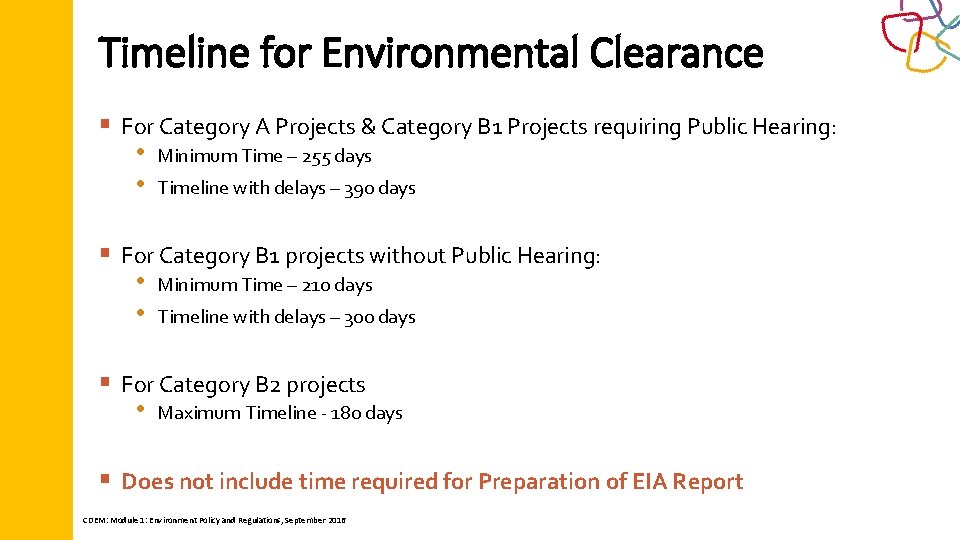
Timeline for Environmental Clearance § For Category A Projects & Category B 1 Projects requiring Public Hearing: • Minimum Time – 255 days • Timeline with delays – 390 days § For Category B 1 projects without Public Hearing: • Minimum Time – 210 days • Timeline with delays – 300 days § For Category B 2 projects • Maximum Timeline - 180 days § Does not include time required for Preparation of EIA Report CDEM: Module 1: Environment Policy and Regulations, September 2016
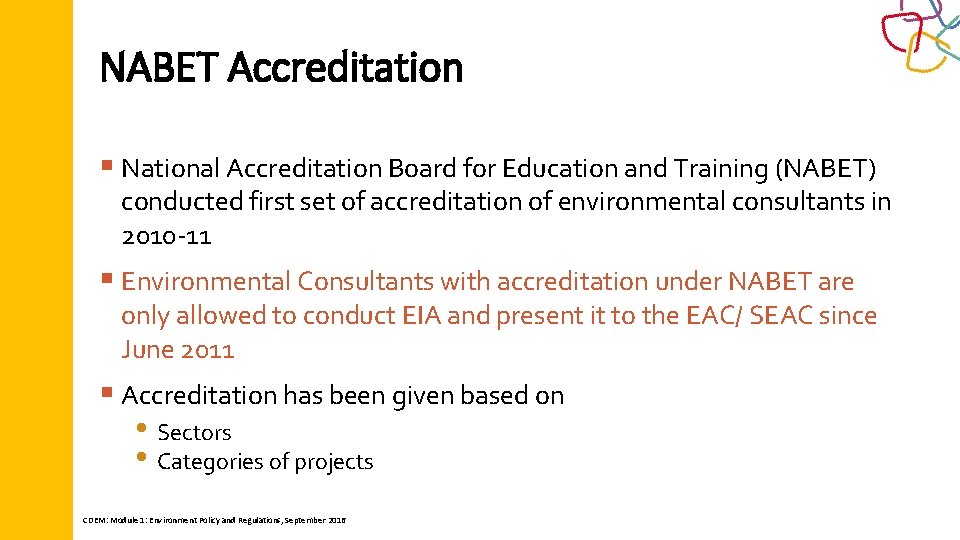
NABET Accreditation § National Accreditation Board for Education and Training (NABET) conducted first set of accreditation of environmental consultants in 2010 -11 § Environmental Consultants with accreditation under NABET are only allowed to conduct EIA and present it to the EAC/ SEAC since June 2011 § Accreditation has been given based on • Sectors • Categories of projects CDEM: Module 1: Environment Policy and Regulations, September 2016
Common Misconceptions about Environmental Clearance § A project which is granted EC, does not require Forest and/or Wildlife Clearance. FALSE § If a project does not require EC, it does not require Coastal Regulation Zone Clearance. FALSE § EC is same as Consent to Establish and Consent to Operate. FALSE § Grant of building permission from Municipal Corporation encompasses EC. FALSE CDEM: Module 1: Environment Policy and Regulations, September 2016
Module Coordinator: Dr. Prasad Modak, Ekonnect Knowledge Foundation Address: 504/505, 5 th Floor, Balarama Building, Bandra Kurla Complex, Near MMRDA Office Bandra (East) Mumbai – 400 051 Tel : 91 022 6221 5944/5946 Website: www. ekonnect. net Facebook: https: //www. facebook. com/Ekonnect. Knowledge. Foundation/? ref=hl Ekonnect Knowledge Foundation is a not for profit company offering education and awareness on Environment, CSR & Sustainability. CDEM is a program conceived and organized by K. J. Somaiya in partnership with and support of MMR-EIS. This module 1 is part of the 5 module diploma certificate offered under this program. CDEM: Module 1: Environment Policy and Regulations, September 2016
Discussion – Role Play Exercise § Scenario – Draft Notification on Environmental Supplemental Plan § Roles: • Group 1 - Ministry of Environment & Forests • Group 2 - Project Proponent/ Industry • Group 3 - Environmental Experts § Task - In your respective Roles discuss the pros and cons of the draft notification CDEM: Module 1: Environment Policy and Regulations, September 2016