
Capacity Development in GLDC Thomas Falk Charles Kleinermann

- Slides: 15
Capacity Development in GLDC Thomas Falk Charles Kleinermann Bastian Mueller GLDC Launch Meeting 14 -16 February, 2018, Addis Ababa, Ethiopia
Vision of GLDC Capacity Development Main stakeholders, partners and teams will have in place human resources, institutions and systems capable of effectively working collaboratively as integrated systems while successfully carrying out their defined roles in GLDC, leading to the achievement of IDOs in the target regions.
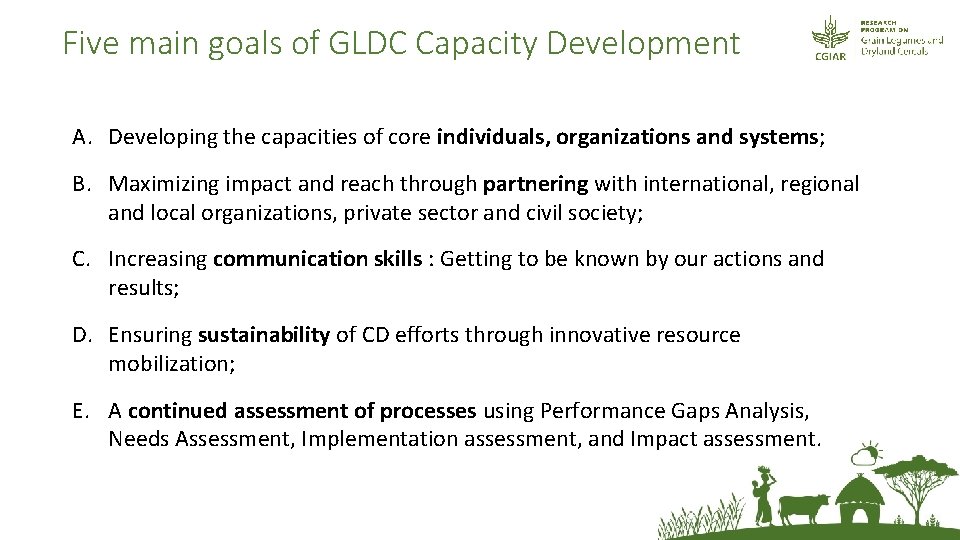
Five main goals of GLDC Capacity Development A. Developing the capacities of core individuals, organizations and systems; B. Maximizing impact and reach through partnering with international, regional and local organizations, private sector and civil society; C. Increasing communication skills : Getting to be known by our actions and results; D. Ensuring sustainability of CD efforts through innovative resource mobilization; E. A continued assessment of processes using Performance Gaps Analysis, Needs Assessment, Implementation assessment, and Impact assessment.
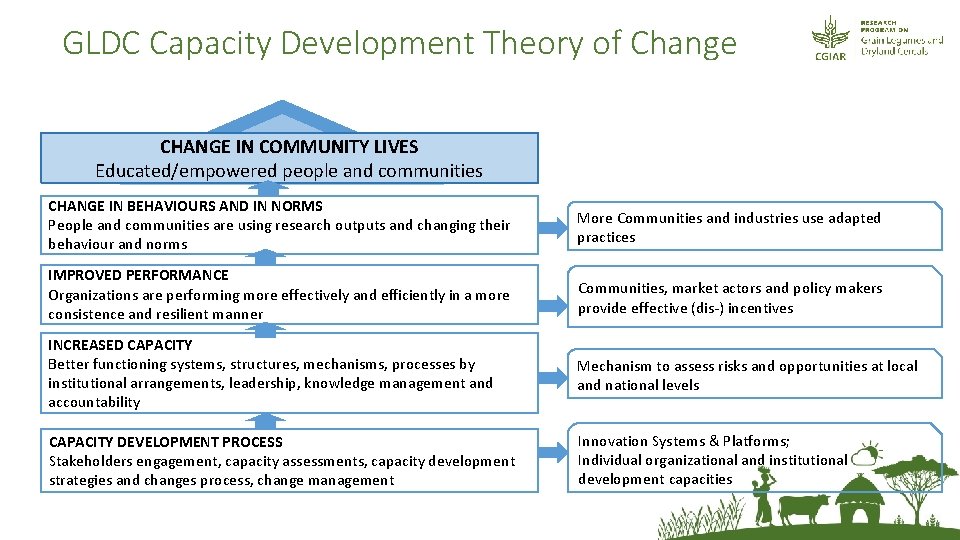
GLDC Capacity Development Theory of Change CHANGE IN COMMUNITY LIVES Educated/empowered people and communities CHANGE IN BEHAVIOURS AND IN NORMS People and communities are using research outputs and changing their behaviour and norms More Communities and industries use adapted practices IMPROVED PERFORMANCE Organizations are performing more effectively and efficiently in a more consistence and resilient manner Communities, market actors and policy makers provide effective (dis-) incentives INCREASED CAPACITY Better functioning systems, structures, mechanisms, processes by institutional arrangements, leadership, knowledge management and accountability Mechanism to assess risks and opportunities at local and national levels CAPACITY DEVELOPMENT PROCESS Stakeholders engagement, capacity assessments, capacity development strategies and changes process, change management Innovation Systems & Platforms; Individual organizational and institutional development capacities
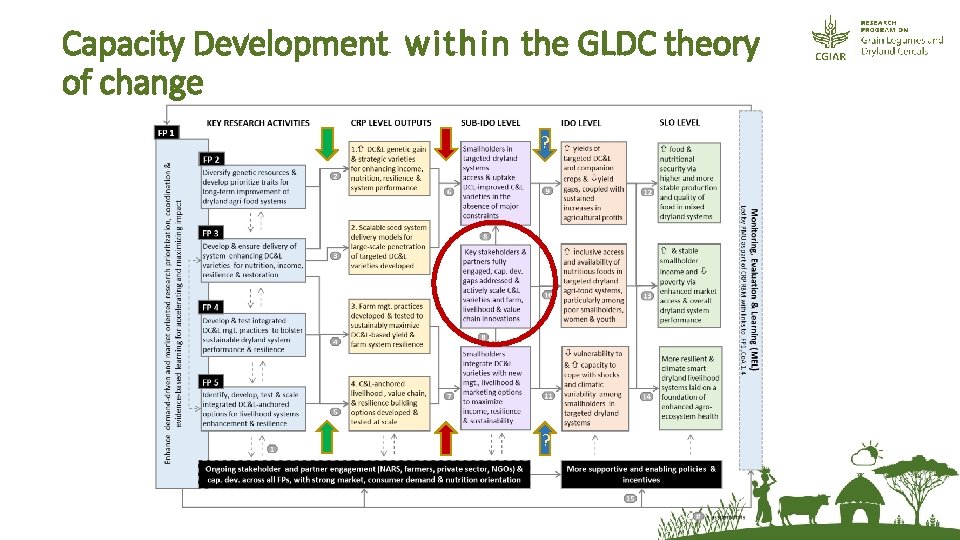
Capacity Development within the GLDC theory of change ? ?
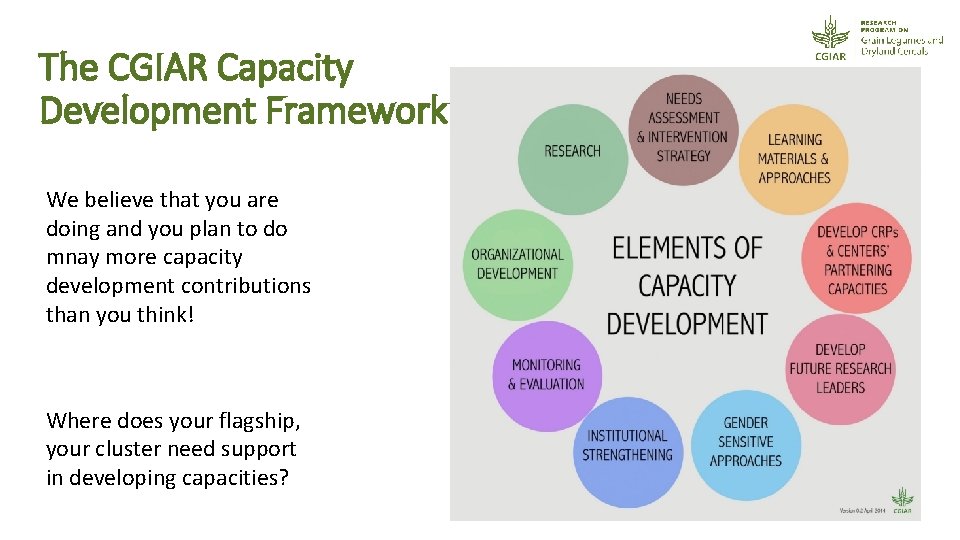
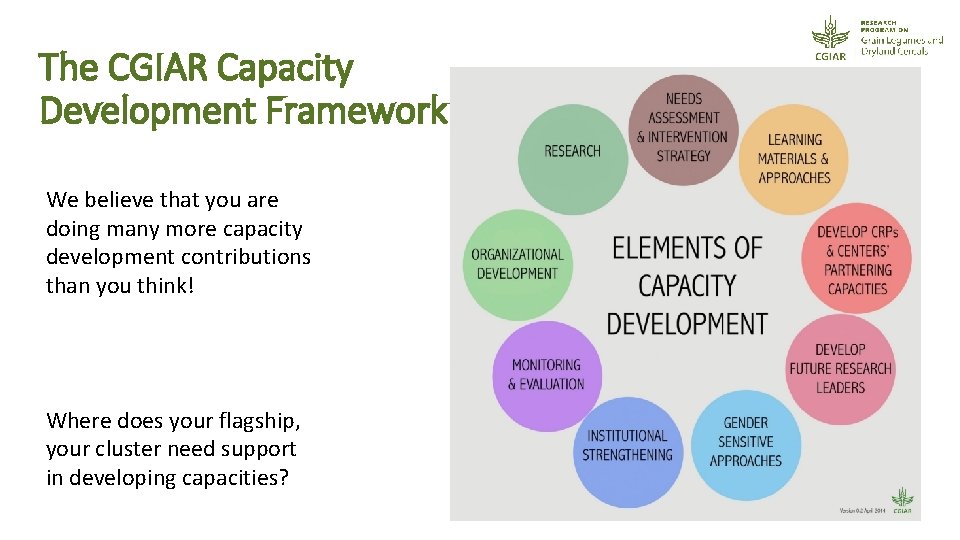
The CGIAR Capacity Development Framework We believe that you are doing and you plan to do mnay more capacity development contributions than you think! Where does your flagship, your cluster need support in developing capacities?
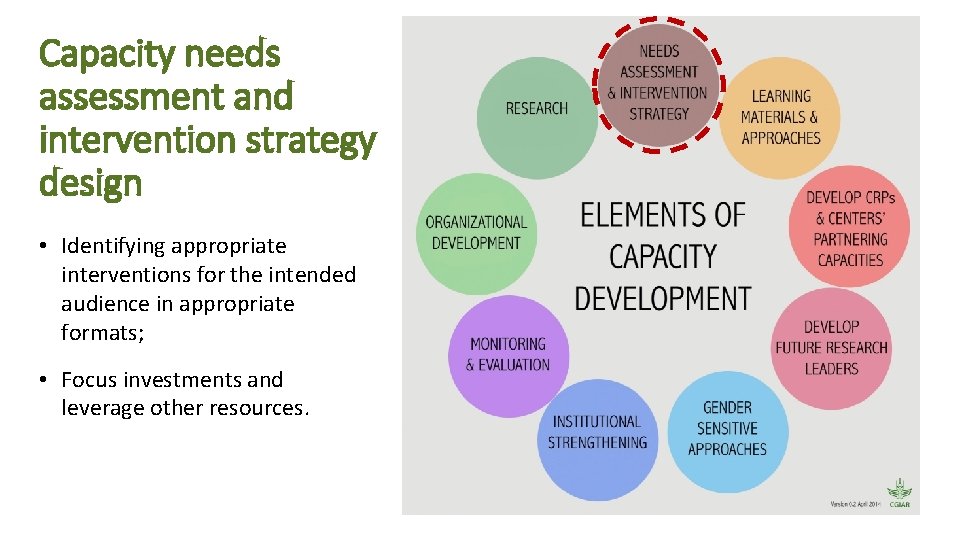
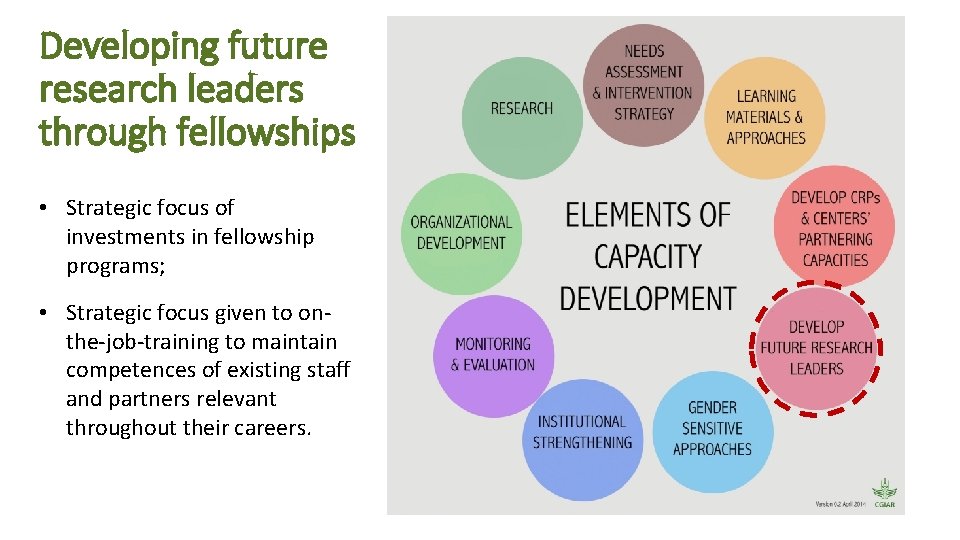
Capacity needs assessment and intervention strategy design • Identifying appropriate interventions for the intended audience in appropriate formats; • Focus investments and leverage other resources.
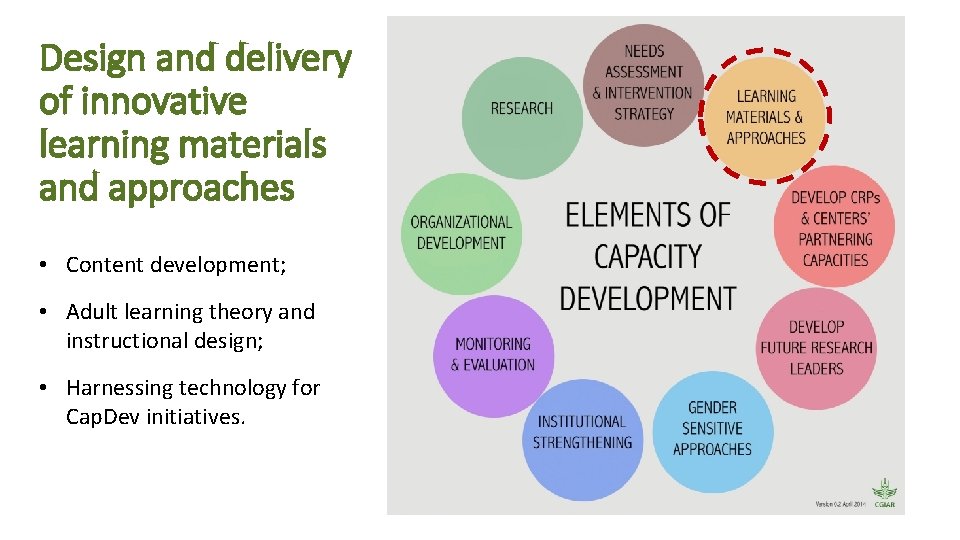
Design and delivery of innovative learning materials and approaches • Content development; • Adult learning theory and instructional design; • Harnessing technology for Cap. Dev initiatives.
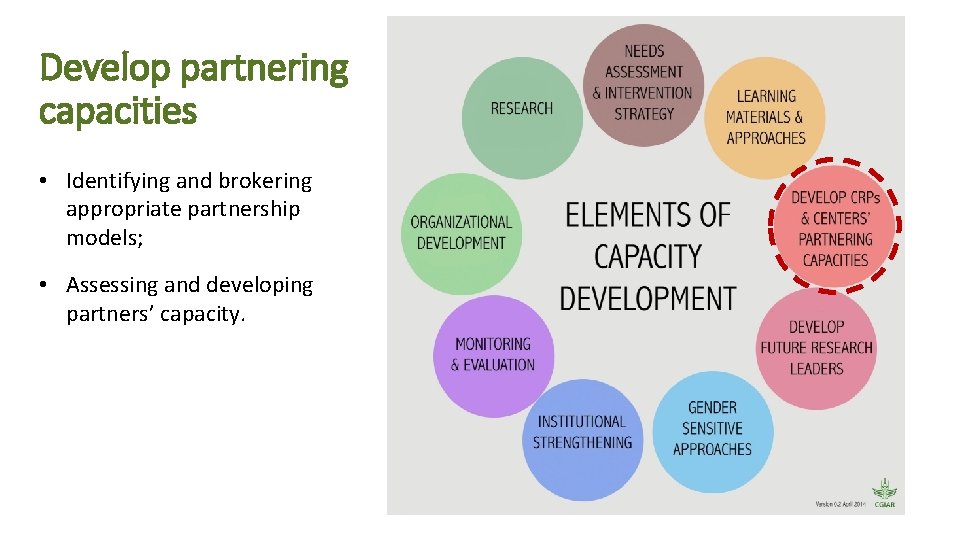
Develop partnering capacities • Identifying and brokering appropriate partnership models; • Assessing and developing partners’ capacity.
Developing future research leaders through fellowships • Strategic focus of investments in fellowship programs; • Strategic focus given to onthe-job-training to maintain competences of existing staff and partners relevant throughout their careers.
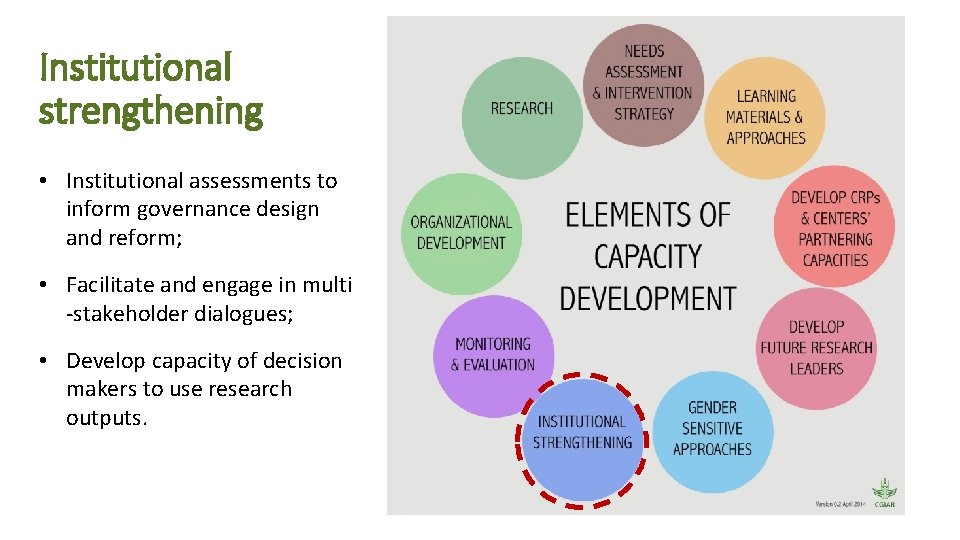
Institutional strengthening • Institutional assessments to inform governance design and reform; • Facilitate and engage in multi -stakeholder dialogues; • Develop capacity of decision makers to use research outputs.
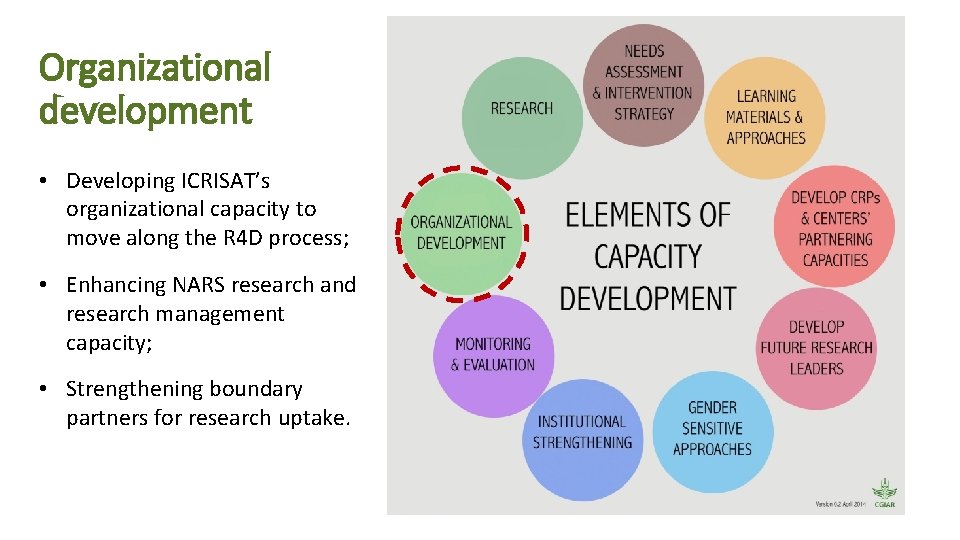
Organizational development • Developing ICRISAT’s organizational capacity to move along the R 4 D process; • Enhancing NARS research and research management capacity; • Strengthening boundary partners for research uptake.
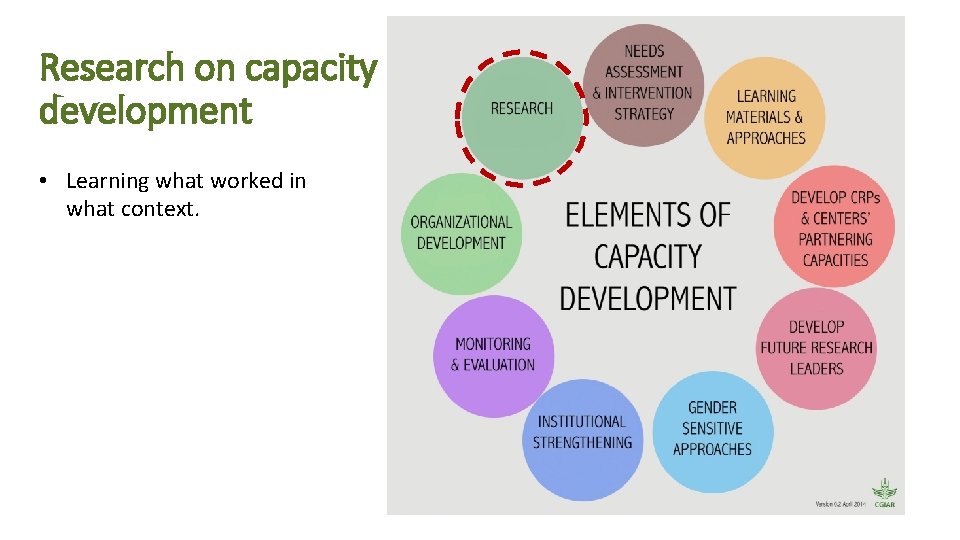
Research on capacity development • Learning what worked in what context.
The CGIAR Capacity Development Framework We believe that you are doing many more capacity development contributions than you think! Where does your flagship, your cluster need support in developing capacities?
Demand-driven Innovation for the Drylands In partnership with CGIAR Centers, public and private organizations, governments, and farmers worldwide www. gldc. cgiar. org Thank you