
Capacity Development for Public Resource Management Effectiveness Hierarchy
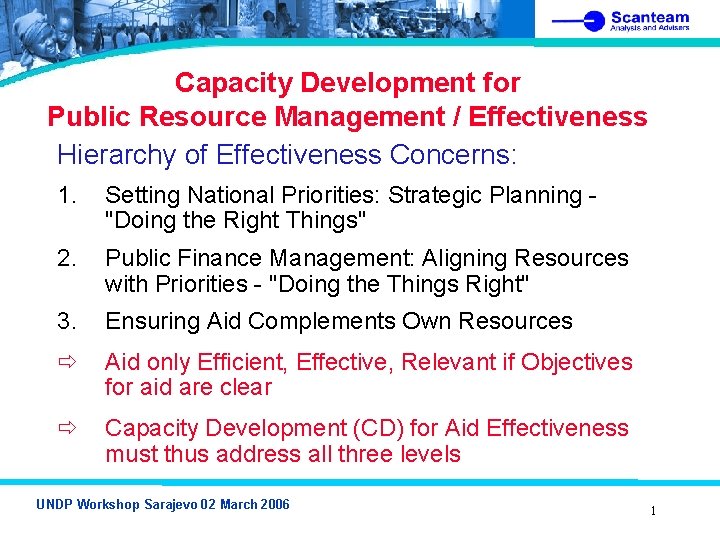
Capacity Development for Public Resource Management / Effectiveness Hierarchy of Effectiveness Concerns: 1. Setting National Priorities: Strategic Planning "Doing the Right Things" 2. Public Finance Management: Aligning Resources with Priorities - "Doing the Things Right" 3. Ensuring Aid Complements Own Resources Aid only Efficient, Effective, Relevant if Objectives for aid are clear Capacity Development (CD) for Aid Effectiveness must thus address all three levels UNDP Workshop Sarajevo 02 March 2006 1
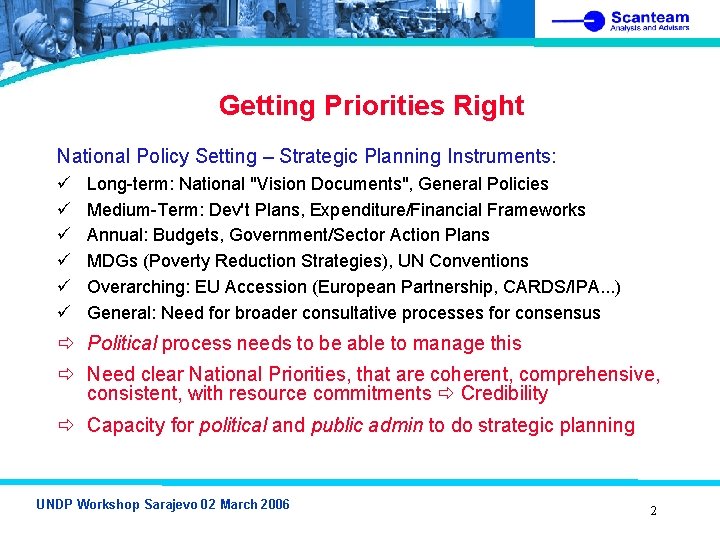
Getting Priorities Right National Policy Setting – Strategic Planning Instruments: ü ü ü Long-term: National "Vision Documents", General Policies Medium-Term: Dev't Plans, Expenditure/Financial Frameworks Annual: Budgets, Government/Sector Action Plans MDGs (Poverty Reduction Strategies), UN Conventions Overarching: EU Accession (European Partnership, CARDS/IPA. . . ) General: Need for broader consultative processes for consensus Political process needs to be able to manage this Need clear National Priorities, that are coherent, comprehensive, consistent, with resource commitments Credibility Capacity for political and public admin to do strategic planning UNDP Workshop Sarajevo 02 March 2006 2

Aligning Resources with Priorities Public Finance Management Cycle Instruments: ü ü ü Budgeting: Transparent, Comprehensive $ to Priorities Revenues, Exp's: Follow Budgets, Collected/Disbursed per plan Accounts and Audits according to International Standards (External) Audits both Financial and Performance Accountability to Parliaments, Public: (i) Budgets, (ii) Expenditures Management must get feed-back for decision taking Weakest point Accountability: (i) External Audit, (ii) Parliamentary Oversight, (iii) Reporting to Public Capacity: Build overall system, BUT ensure compliance throughout. UNDP Workshop Sarajevo 02 March 2006 3
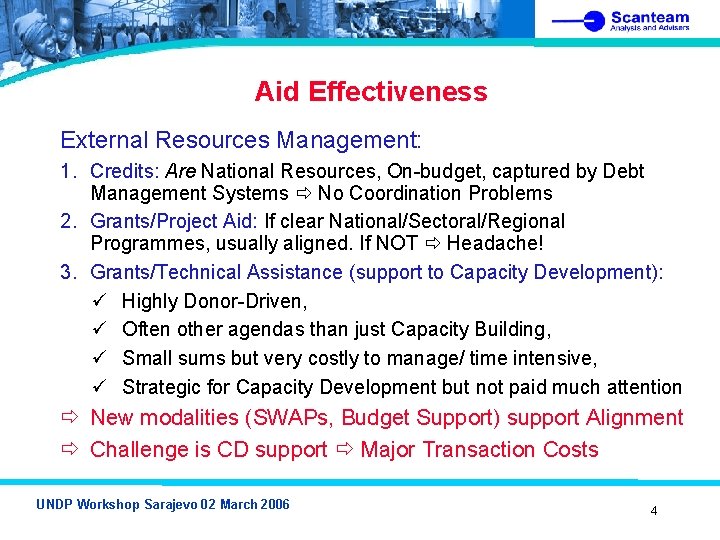
Aid Effectiveness External Resources Management: 1. Credits: Are National Resources, On-budget, captured by Debt Management Systems No Coordination Problems 2. Grants/Project Aid: If clear National/Sectoral/Regional Programmes, usually aligned. If NOT Headache! 3. Grants/Technical Assistance (support to Capacity Development): ü Highly Donor-Driven, ü Often other agendas than just Capacity Building, ü Small sums but very costly to manage/ time intensive, ü Strategic for Capacity Development but not paid much attention New modalities (SWAPs, Budget Support) support Alignment Challenge is CD support Major Transaction Costs UNDP Workshop Sarajevo 02 March 2006 4

Capacity Development I Systems and Staff: ü Overall System for Public Resources Management: Over time how to achieve "4 C's": Coherent, Comprehensive, Consistent, Quality ü Staff: Provide data, analysis for decision making (unit costs, benchmarking, trend lines, . . ) ü "3 R's": Clear Responsibilities, Roles, Resources CD Programme must be long-term, with clear Outputs, Targets, Indicators, Monitoring System Resources Quality at Entry critical, since CD programmes are management, transaction cost intensive UNDP Workshop Sarajevo 02 March 2006 5
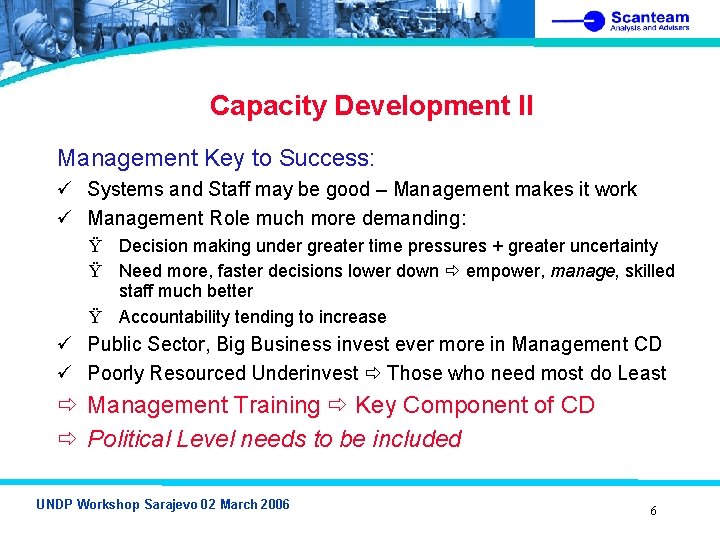
Capacity Development II Management Key to Success: ü Systems and Staff may be good – Management makes it work ü Management Role much more demanding: Ÿ Decision making under greater time pressures + greater uncertainty Ÿ Need more, faster decisions lower down empower, manage, skilled staff much better Ÿ Accountability tending to increase ü Public Sector, Big Business invest ever more in Management CD ü Poorly Resourced Underinvest Those who need most do Least Management Training Key Component of CD Political Level needs to be included UNDP Workshop Sarajevo 02 March 2006 6
- Slides: 6