
Capacity Building Programme New Techniques Strategies in Prevention

Capacity Building Programme New Techniques & Strategies in Prevention and Management of Industrial Disasters For Factory Inspectorate ORGANIZED BY Karnataka State Safety Institute Department Of Factories, Boilers, Industrial Safety & Health, Bengaluru
Programme • • • Prevention of Industrial Disasters - Techniques Siting of Hazardous industries Emergency Search & Rescue in Industrial Disasters Safer Technology & Equipment Green Chemistry Standard Codes followed in Hazardous industries LPG Storage and Handling installations POL storage and installation Emergency Plans and Mock Exercises Emergency Search and Rescue in Industrial Disasters Legal Liability for Industrial Accidents and Disasters Preparation and updating of Off – Site Emergency Plans Standardization and strengthening of inspection and compliance of hazardous industries
Standard Codes followed in Hazardous industries POL Storage & Installation K. Suresh Bacon, Senior Manager, Indian Oil Corporation Bengaluru Terminal

Types of Standards / Codes are Man Made & God Made Eg. Of God Made Laws Science and scientific actions Chemical reactions, Physics, Mathematics, Heat Radiation Effect wrt Burning rate, Wind effect, …etc • Fire Equation CH 4 + 2 O 2 = CO 2 + 2 H 2 O + HEAT In this session we shall cover Man Made Laws “framed” in the background of God Made Laws • •
Standards / Codes are of 2 Types Man Made & God Made • Eg. Of Man Made Laws • Person below age 18 should not be engaged in works related to hazardous industry … • Ladies should not be deployed in night shift. . • No exit door shall be less than 1 mtr width. . • Factories Act & Rules, Petroleum Act (OISD), which are directly related to our session on Standards & codes for POL Storage & Installations
God Made Laws - which form the basis for framing - Man Made Laws are · Flash Point of the product · Upper Explosive Limit & Lower Explosive Limit MS 1. 3 -7. 6, HSD 0. 7 -5 SKO/ATF 1. 3 -8, · Auto Ignition Temperature of MS-257, HSD-256, & ATF-255 · Heat Radiation Effect wrt wind effect, release of vapors · Unconfined Vapour cloud Explosion : · Release of flammable vapour in atmosphere, Mixing with air · Totally within flammable range or the outer layer is within flammable range with Delayed ignition · Flash Fire of UVCE depending on quantity and mixing with air · High pressure lasts only fraction of a second. · Persons may not get killed due to blast, but secondary effects cause death and destruction
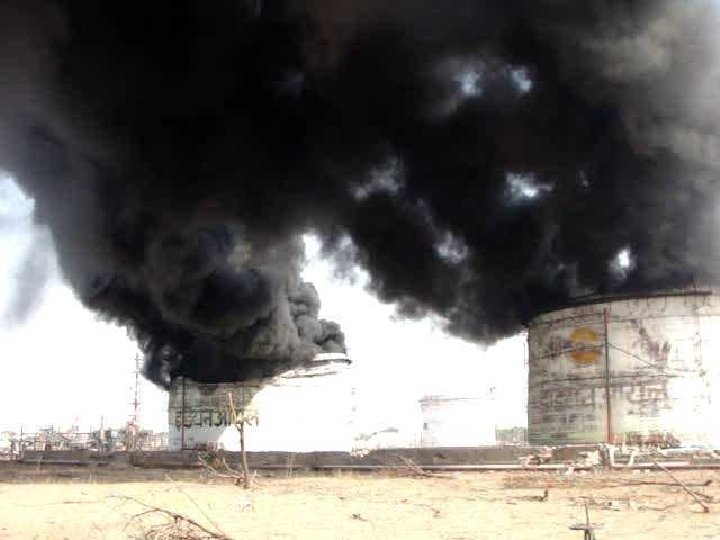
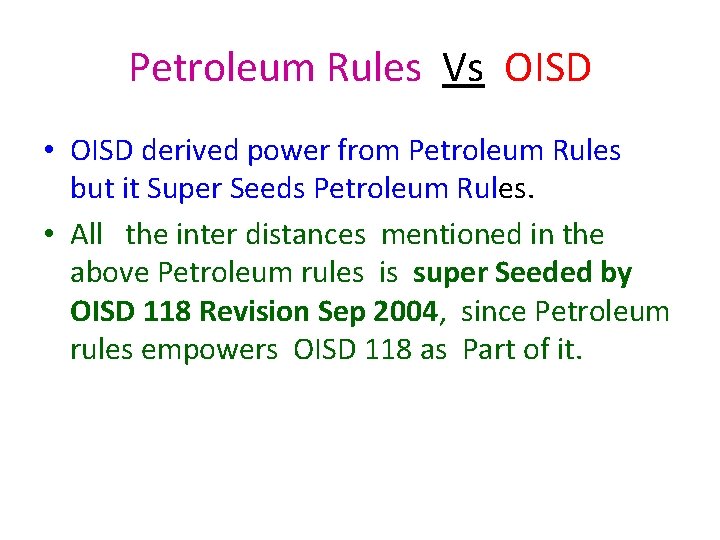
Tank-Fire Clippings 25 seconds. Fire Spreading to Neighboring Tanks Even without Unconfined Vapour Cloud Explosion, since Inter Tank Distance is not maintained. Clipping goes to prove AUTO IGNITION effect which causes BLOW OUT – Explosion of CRVT Tank with Roof Flying away by failing in its weakest joint STITCH WELD at Curb Angle
Factories Act Hazardous Processes First Schedule Sl. no. 29 Highly Flammable Liquids & Gases • • Factories Act 1948 -Chapter IV Section 36 : Precaution … vapors, use of FLP, … Section 37 : Inflammable Dust Gas, Hot Work, Factories Act 1948 -Chapter IVA Section 41 A : Site Appraisal Committee Section 41 B : Disclosure of information. . handling , usage, transportation, storage, waste, . .
Karnataka Factories Rules Chapter IV – Safety Rules • Rule 88 D: Site Appraisal Committee Form 41 • Rule 88 F: MSDS to be disseminated • Rule 88 G: Disclosure of information • Rule 88 N: Ambulance Van in hazardous indstr.
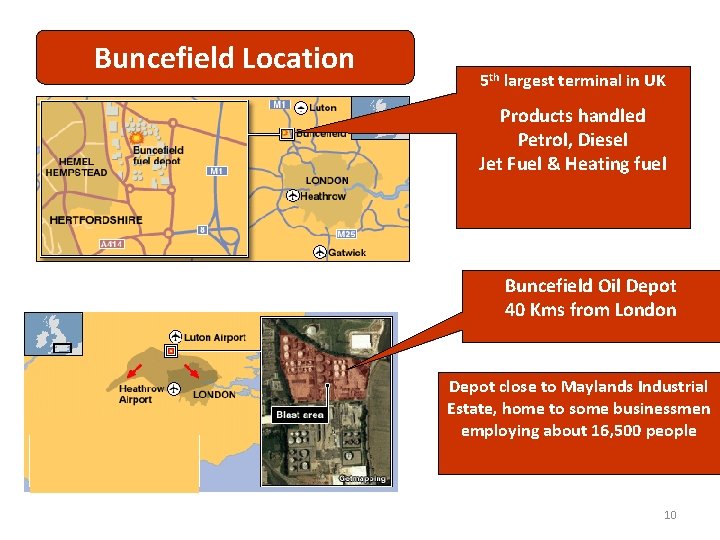
Buncefield Location 5 th largest terminal in UK Products handled Petrol, Diesel Jet Fuel & Heating fuel Buncefield Oil Depot 40 Kms from London Depot close to Maylands Industrial Estate, home to some businessmen employing about 16, 500 people 10
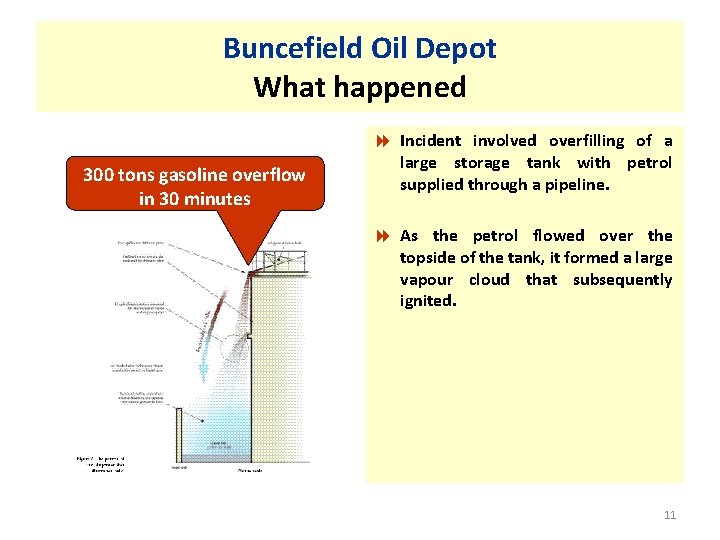
Buncefield Oil Depot What happened 300 tons gasoline overflow in 30 minutes 8 Incident involved overfilling of a large storage tank with petrol supplied through a pipeline. 8 As the petrol flowed over the topside of the tank, it formed a large vapour cloud that subsequently ignited. 11
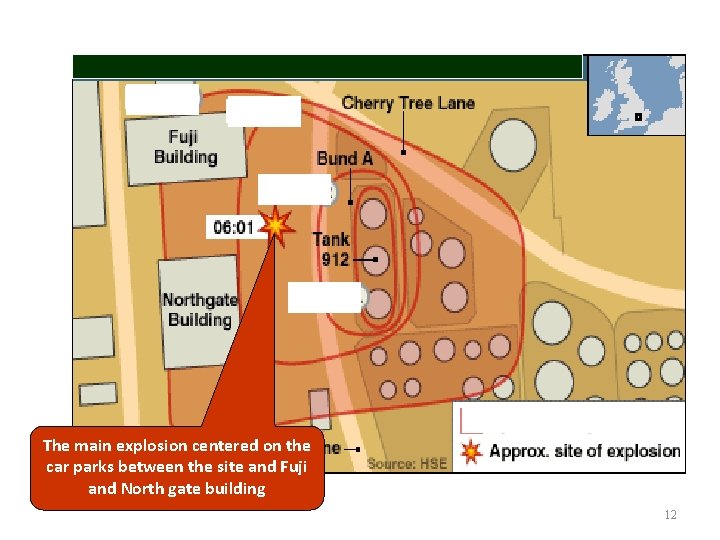
The main explosion centered on the car parks between the site and Fuji and North gate building 12
13
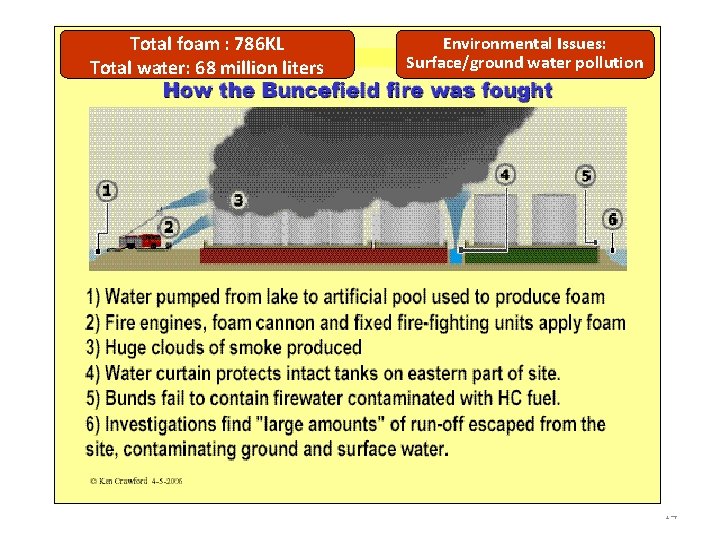
Total foam : 786 KL Total water: 68 million liters Environmental Issues: Surface/ground water pollution 14
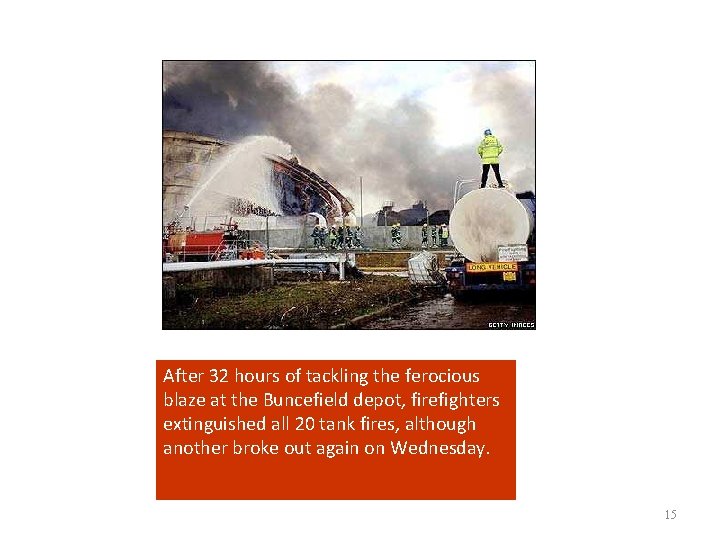
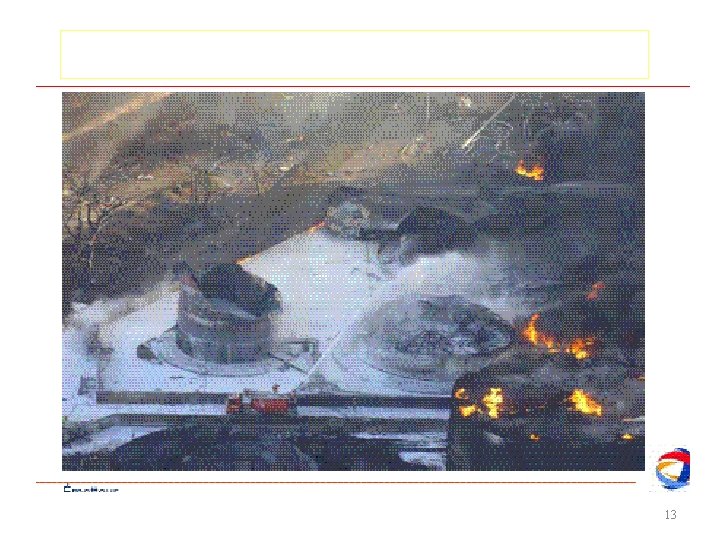
After 32 hours of tackling the ferocious blaze at the Buncefield depot, firefighters extinguished all 20 tank fires, although another broke out again on Wednesday. 15
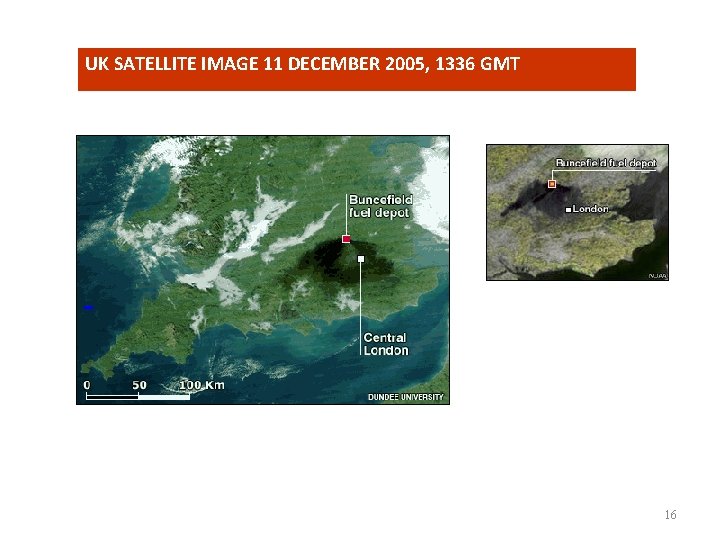
UK SATELLITE IMAGE 11 DECEMBER 2005, 1336 GMT 16
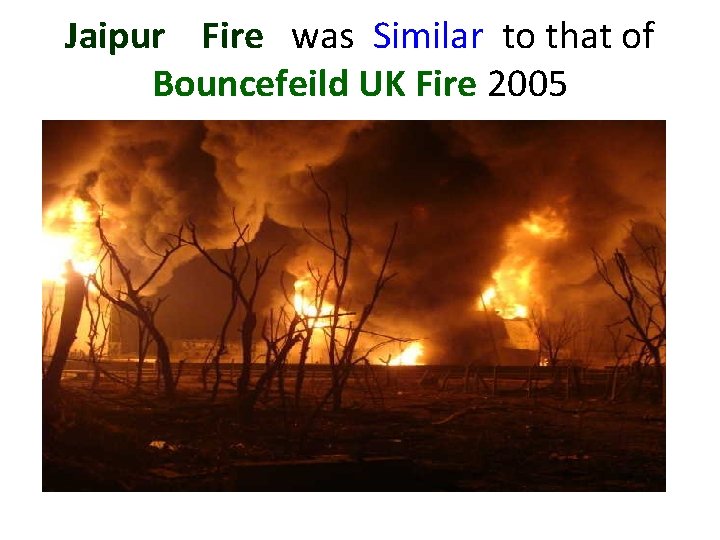
Jaipur Fire was Similar to that of Bouncefeild UK Fire 2005
Standard Codes followed in Hazardous industries POL Storage & Installation • Standards Codes deliberated in this session wrt Design( Education), Construction( Engineering) & Operation( Enforcement) of POL Storage Installations to PREVENT FIRE are : • Petroleum Act 1934 & Rules 2002 • OISD 118 • OISD 117 • Control of Major Accident Hazard (Karnataka) Rules
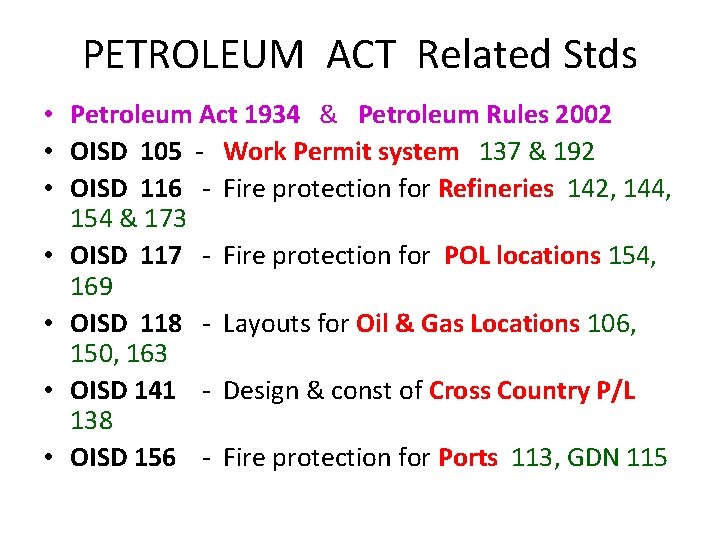
PETROLEUM ACT Related Stds • Petroleum Act 1934 & Petroleum Rules 2002 • OISD 105 - Work Permit system 137 & 192 • OISD 116 - Fire protection for Refineries 142, 144, 154 & 173 • OISD 117 - Fire protection for POL locations 154, 169 • OISD 118 - Layouts for Oil & Gas Locations 106, 150, 163 • OISD 141 - Design & const of Cross Country P/L 138 • OISD 156 - Fire protection for Ports 113, GDN 115
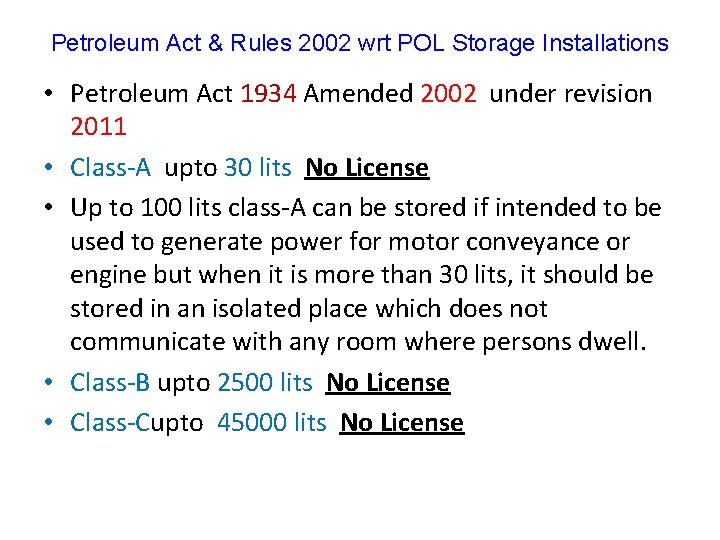
Petroleum Act & Rules 2002 wrt POL Storage Installations • Petroleum Act 1934 Amended 2002 under revision 2011 • Class-A upto 30 lits No License • Up to 100 lits class-A can be stored if intended to be used to generate power for motor conveyance or engine but when it is more than 30 lits, it should be stored in an isolated place which does not communicate with any room where persons dwell. • Class-B upto 2500 lits No License • Class-Cupto 45000 lits No License
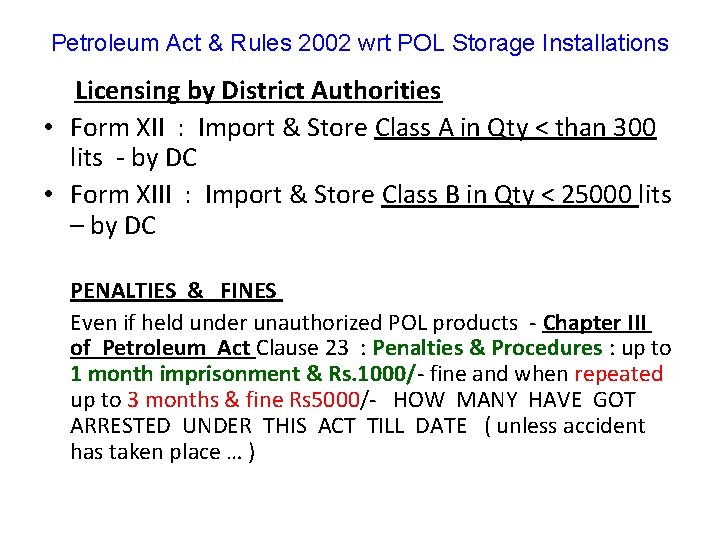
Petroleum Act & Rules 2002 wrt POL Storage Installations Licensing by District Authorities • Form XII : Import & Store Class A in Qty < than 300 lits - by DC • Form XIII : Import & Store Class B in Qty < 25000 lits – by DC PENALTIES & FINES Even if held under unauthorized POL products - Chapter III of Petroleum Act Clause 23 : Penalties & Procedures : up to 1 month imprisonment & Rs. 1000/- fine and when repeated up to 3 months & fine Rs 5000/- HOW MANY HAVE GOT ARRESTED UNDER THIS ACT TILL DATE ( unless accident has taken place … )
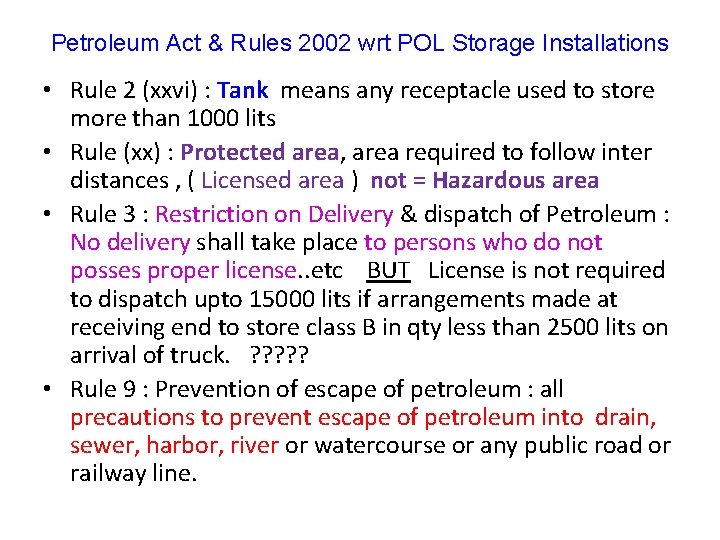
Petroleum Act & Rules 2002 wrt POL Storage Installations • Rule 2 (xxvi) : Tank means any receptacle used to store more than 1000 lits • Rule (xx) : Protected area, area required to follow inter distances , ( Licensed area ) not = Hazardous area • Rule 3 : Restriction on Delivery & dispatch of Petroleum : No delivery shall take place to persons who do not posses proper license. . etc BUT License is not required to dispatch upto 15000 lits if arrangements made at receiving end to store class B in qty less than 2500 lits on arrival of truck. ? ? ? • Rule 9 : Prevention of escape of petroleum : all precautions to prevent escape of petroleum into drain, sewer, harbor, river or watercourse or any public road or railway line.
Petroleum Act & Rules 2002 wrt POL Storage Installations • Rule 10 : Prohibition of employment of children and intoxicated persons : Person below 18 years & intoxicated should NOT be engaged in loading, transporting, unloading or any premises under petroleum rules. • Labor Laws do not prohibit children working above age 14 , but Factories Act & Petroleum Act do prohibit children above 18 years as workers in Hazardous industries but what document to believe for age proof ? Voter Id card …. . • Rule 73. …truck be attended by the driver and at least one more person both of What syllabus to train ? who shall certify ? who shall check ? . . refresher course under Rule 9 of MV Act …for transporattion of Hazardous Goods ? But even this act is not implemented till date by us ? ? ? ?
Petroleum Act & Rules 2002 wrt POL Storage Installations Chapter III – Part IV Transport on Land by Vehicles • Rule 64 : RLW & ULW : change in RC book 20, 000 kg – 8000 kg = 16000 kg /0. 85 = 20, 000 lits • Rule 73 : …truck be attended by the driver and at least one more person both of whom shall be familiar with the rules in this part. ? • Rule 77: Prohibition of loading of leaky or defective tank vehicles or unlicensed tank vehicles • Rule 78 : Precaution against static charges. Loading rate is restricted / regulated with automated locations only. • Rule 83 : Precaution on loading and unloading of petroleum at night.
Petroleum Act & Rules 2002 wrt POL Storage Installations Chapter V – Storage Of Petroleum requiring License • Rule 117 : Precaution against fire. No Smoking, No Fires, No Match Boxes, except in authorized places. Adequate no. of Portable DCP’s … Act mentions to have FFF as per OISD 117. • Rule 118: Supervision of operation by an experienced responsible person who is conversant with terms & condition of license for installation and shall have proper safety training. OISD 154 is not covered under this act, but followed by industry. • Rule 120 : Drainage. Enclosures with proper drainage no water is allowed to accumulate in enclosure and level of enclosure above surrounding level, dyke wall operational form outside the enclosure dyke wall, kept closed always, …
Petroleum Act & Rules 2002 wrt POL Storage Installations • Rule 121 : Exclusion of un authorized persons : PROTECTED AREA surrounded by a fence of 1. 8 meter height. • Rule 124 : Construction of Tanks [ OISD 118 ] … with vapor space minumm 5% , height of tank wrt diameter … • Rule 126 : Testing of Tanks : Tanks tested only with water, pipes can be exempted by competent authority to test using POL product. Certificate of Tank Testing to be issued to PESO • Rule 129 : Night Working : No installation shall be opened and no work shall be carried before sunrise & after sun set, unless PESO approved electrical fixtures used for lighting • Rule 130 : Certificate of Safety : To be issued before commencing the activity
Petroleum Act & Rules 2002 wrt POL Storage Installations • Rule 104 : Classification of Hazardous Area under chapter IV – Electrical Installation • Forth Schedule - Extent of Hazardous Area in Installation conforming to conditions 10(b) of license Form XV and storage sheds. Relevant to BIS 5572 – use of electrical equipments in hazardous area ( not = to protected area ) • Zone 0 : vapors expected to present Continuously • Zone 1 : vapors LIKELY to be present under Normal Operating Conditions • Zone 2 : Likely to be present ONLY under Abnormal Operating Conditions or FAILURES
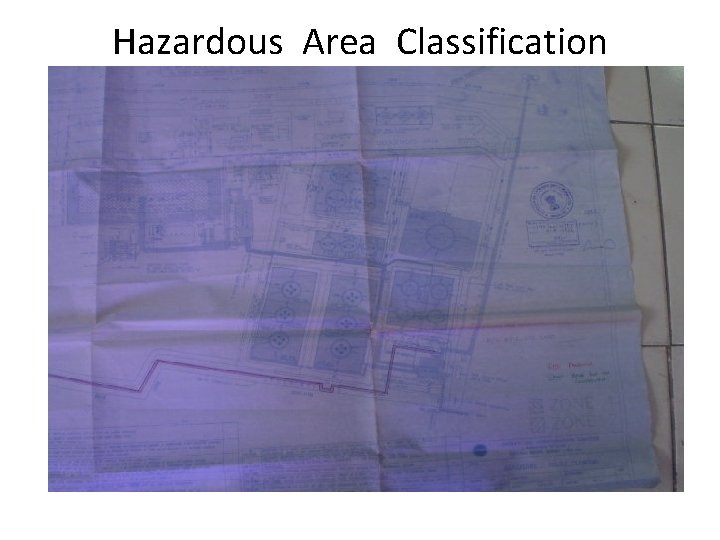
Hazardous Area Classification
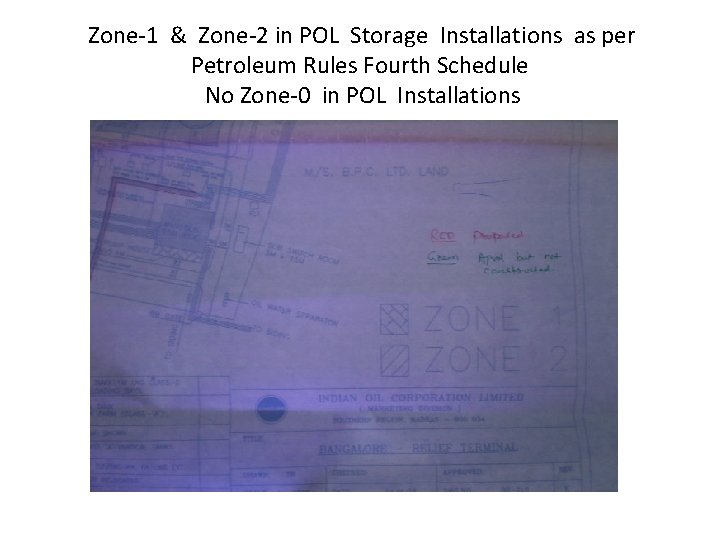
Zone-1 & Zone-2 in POL Storage Installations as per Petroleum Rules Fourth Schedule No Zone-0 in POL Installations
Petroleum Act & Rules 2002 wrt POL Storage Installations • Zone 0 : No Electric Apparatus to be used in Zone O area EXCEPT “IS” Intrinsically Safe apparatus of type approved by CCOE. Any electrical equipment which works with energy level of sparks at less than 5 mille joules. ( spark if at all is caused the heat energy will not be sufficient to ignite flammable vapors ) example : Radar Gauges fitted on to the top of the tank, VHF sets, Flow Meter Sensors, …etc • Zone 1: Intrinsically safe or Fame Proof type apvd by CCOE. Electrical apparatus purged, auto cut off, auto warning system, . . etc • Zone 2: Non sparking type apvd by CCOE or Any Other apparatus permitted by CCOE. Ie any electrical equipment in Zone 2 must also be of apvd type by CCOE. Better it can be Flame Proof.
Petroleum Act & Rules 2002 wrt POL Storage Installations Form XX - Qualification & Experience of Competent person • Degree in any branch of engineering … minimum experience 10 years in testing, fabrication, operation & maintenance of POL tanks • Physically fit & Sound for carrying out tests & examination • Minimum of 10 years in testing & fabrication or mounting of POL tanks, operation & maintenance of tank vehicles.
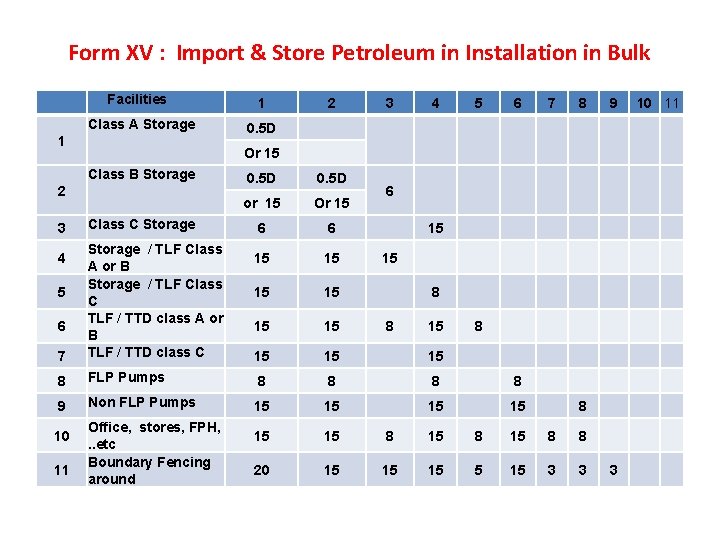
Petroleum Act & Rules 2002 wrt POL Storage Installations • Form XV : Import & Store Petroleum in Installation in Bulk [ Form mentions quantities class A, B & C licensed to store both in Bulk & Non Bulk together in a premises ] Conditions applicable are 1. Premises not used for any other purpose - lube storage ? 3. Embankment wall max 2 mtr with walkway 1 mtr width Capacity of Enclosure wall not less than LARGEST TANK in the dyke 3. (i) GL inside tank farm shall NOT be lower than GL outside tank farm 3. (ii) Drains controlled with a valve capable of being operated form outside 3. (iii)Drains connected to OWS 3. (iv) Capacity of not more than 60, 000 kl for CRVT’s and 1, 20, 000 for FRVT’s fire break wall for spill control
Petroleum Act & Rules 2002 wrt POL Storage Installations 4. All tanks shall be fitted with vent pipes leading into the open air, the open end being covered with two layers of fine copper or other non corrodible metal wire gauze of not less than 11 meshes per linear centimeter and fitted with a hood of the tank shall be fitted with an approved relief valve of other approved means of preventing dangerous internal or external pressures. The vent pipe and the relief valve of one tank shall not be inter-connected with those of any other tank. Shortcomings wrt in this rule : No. of Vents in the tank according to capacity of tank, -Pumping rate, -Effective vent area available among mesh wires, -Hazards of mesh getting clogged, . …. etc Do Oil Comps. Comply to this rule ?
Petroleum Act & Rules 2002 wrt POL Storage Installations 5. Cast Iron valves are not permitted. 7. Storage sheds for Containers ( Packed ) should be in sump of at least 0. 25 mtr deep and kept clean and dry. 8. Filling shed of Class A or B be adequately ventilated near the ground level immediately above the walls constructed to prevent leakage of petroleum. 9. Protected Area Fencing 12. No alteration without prior approval in licensed premises 14. Tank Entry NOT without PPE & compliance to OISD 105 examined by himself or competent person 15. When tank opened for cleaning, repair, . . etc Fans, torches, . . of FLP or IS type approved by CCOE only to be used.
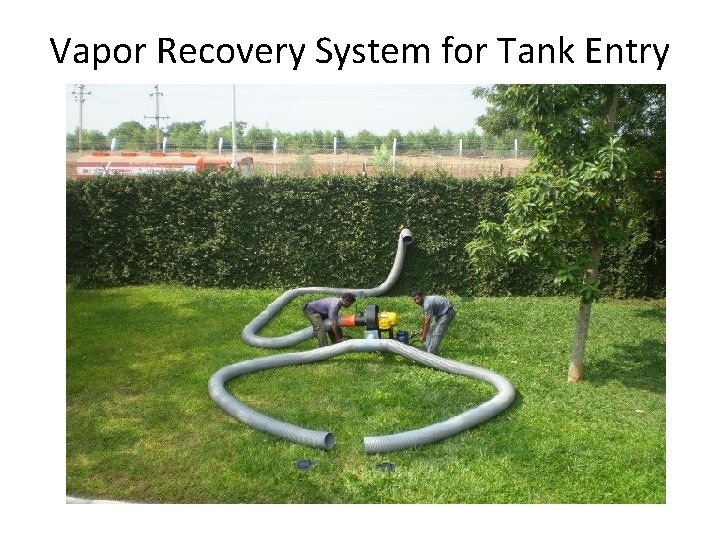
Vapor Recovery System for Tank Entry
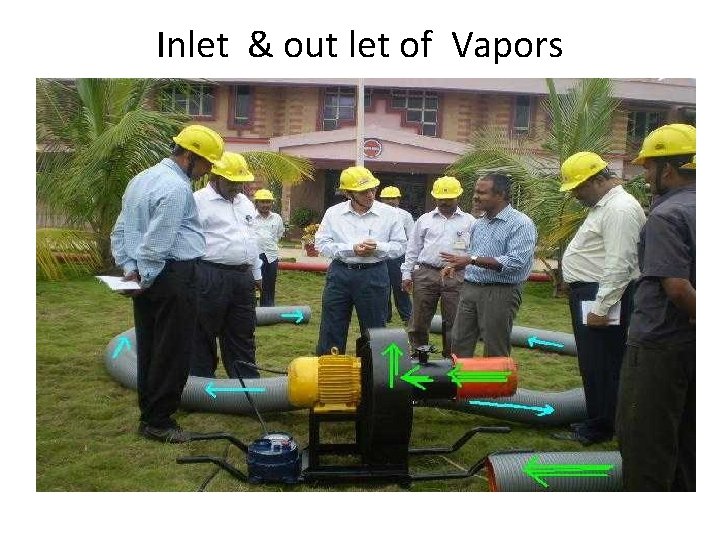
Inlet & out let of Vapors
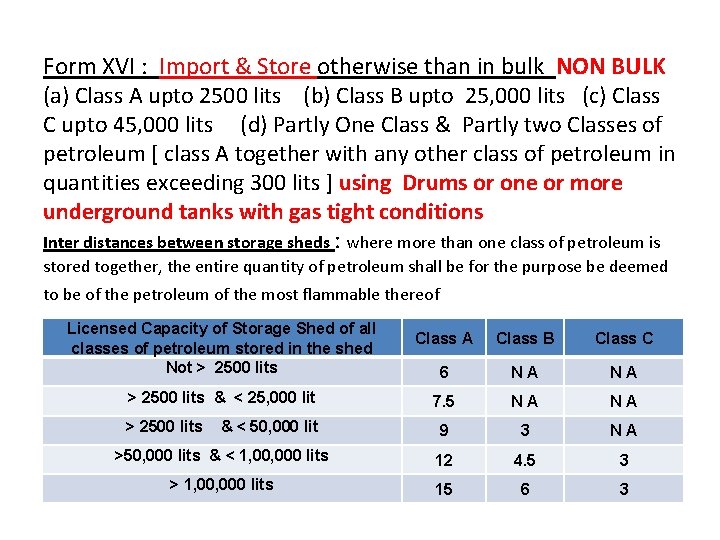
Form XVI : Import & Store otherwise than in bulk NON BULK (a) Class A upto 2500 lits (b) Class B upto 25, 000 lits (c) Class C upto 45, 000 lits (d) Partly One Class & Partly two Classes of petroleum [ class A together with any other class of petroleum in quantities exceeding 300 lits ] using Drums or one or more underground tanks with gas tight conditions Inter distances between storage sheds : where more than one class of petroleum is stored together, the entire quantity of petroleum shall be for the purpose be deemed to be of the petroleum of the most flammable thereof Licensed Capacity of Storage Shed of all classes of petroleum stored in the shed Not > 2500 lits Class A Class B Class C 6 N A > 2500 lits & < 25, 000 lit 7. 5 N A > 2500 lits & < 50, 000 lit 9 3 N A >50, 000 lits & < 1, 000 lits 12 4. 5 3 > 1, 000 lits 15 6 3
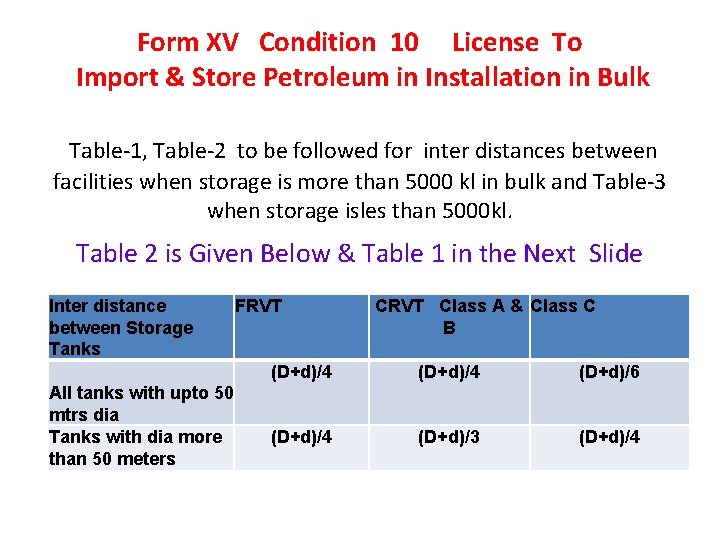
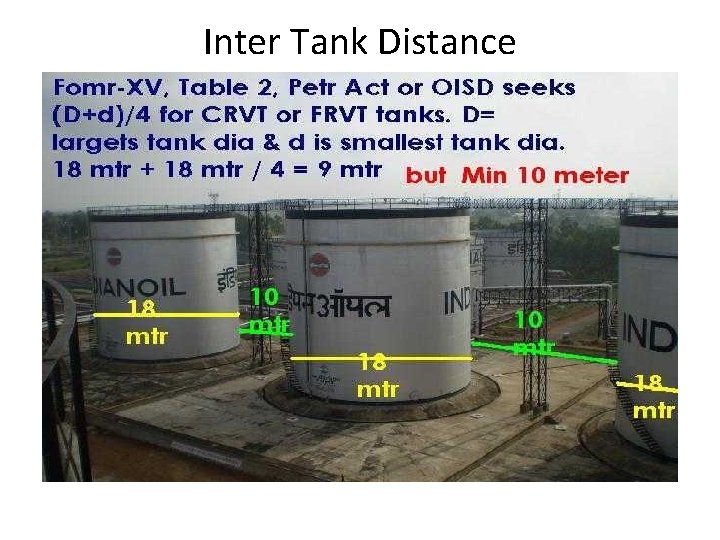
Form XV Condition 10 License To Import & Store Petroleum in Installation in Bulk Table-1, Table-2 to be followed for inter distances between facilities when storage is more than 5000 kl in bulk and Table-3 when storage isles than 5000 kl. Table 2 is Given Below & Table 1 in the Next Slide Inter distance between Storage Tanks FRVT All tanks with upto 50 mtrs dia Tanks with dia more than 50 meters CRVT Class A & Class C B (D+d)/4 (D+d)/6 (D+d)/4 (D+d)/3 (D+d)/4
Form XV : Import & Store Petroleum in Installation in Bulk Facilities Class A Storage 1 Class B Storage 2 3 Class C Storage 1 2 3 4 5 6 7 8 9 0. 5 D Or 15 0. 5 D or 15 Or 15 6 10 11 6 15 15 15 15 15 15 8 15 15 15 7 Storage / TLF Class A or B Storage / TLF Class C TLF / TTD class A or B TLF / TTD class C 8 FLP Pumps 8 8 9 Non FLP Pumps 15 15 8 15 8 8 20 15 15 15 3 3 3 4 5 6 10 11 Office, stores, FPH, . . etc Boundary Fencing around
Tank Farm Tanks in Rows
Inter Tank Distance
Tabl 3 & 4 of OISD 118 Rev 2004
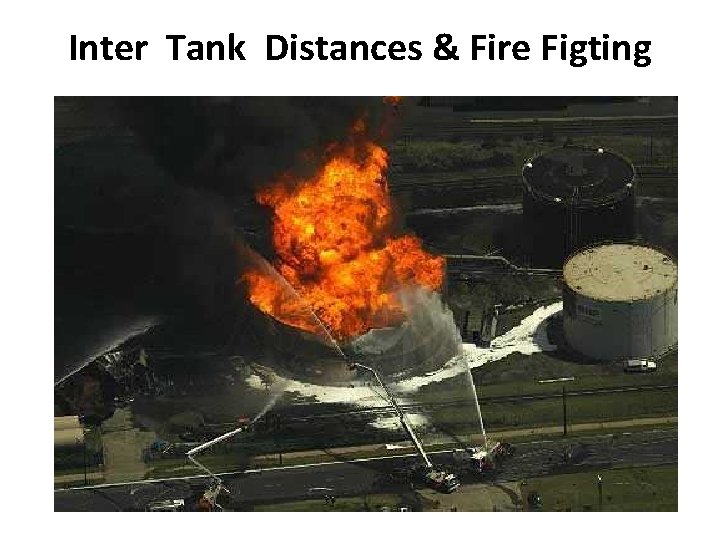
Inter Tank Distances & Fire Figting
Petroleum Rules Vs OISD • OISD derived power from Petroleum Rules but it Super Seeds Petroleum Rules. • All the inter distances mentioned in the above Petroleum rules is super Seeded by OISD 118 Revision Sep 2004, since Petroleum rules empowers OISD 118 as Part of it.

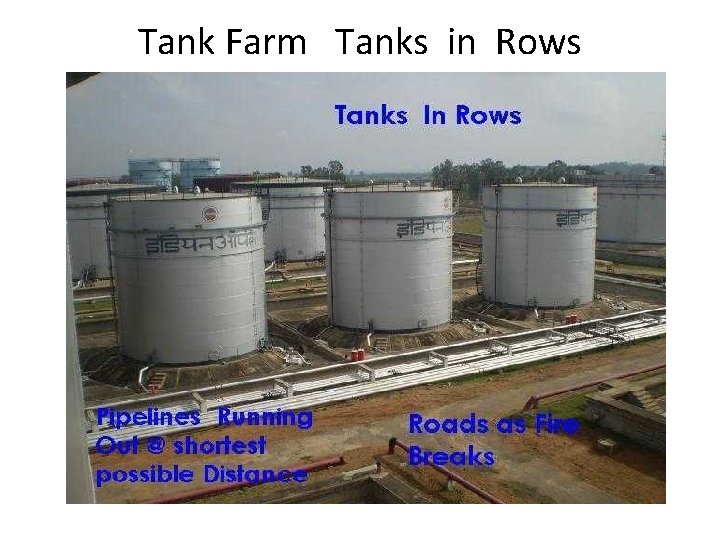
OISD 118 ( Revision-II Sep 2004 ) Layout for Oil & Gas Installations • Facilities to be laid in blocks with arrangement following the route of raw material, process and finished goods. • Layout to be divided into suitable blocks with roads all around. Roads separate the blocks acting as ‘fire breaks’. • Road to be designed for maneuvering of largest Fire Tender. • Two road approaches from highway/major road to be provided – one for employees and other for material movement. • Rail spur to be located close to periphery.
OISD 118 Information required for preparing Layout • Site topography including elevation, slope and drainage • Meteorological data • Seismic data • High flood level & high tide level • Aviation consideration risk from adjacent facilities • Statutory obligations • Environmental considerations
OISD 118 General consideration for preparation of Layout Tank farm, Filling sheds & ETP be located at high grounds. Control room in non-hazardous area. Power generation facilities near boundary walls. No over head lines to pass the installations. LT sub-stations located near the load centers'. Storage tanks to be grouped according to classification. TT loading/unloading close to the main gate with oneway traffic for entrance and exit. • Independent waste collection centers'/ETP • Smoking booths 60 meters away from Hydrocarbon source. • •
OISD 118 General consideration for preparation of Layout • Fire Fighting Facilities say at a safe place away from the hazardous area. • Fire water pumps and tanks as per OISD 116 (Refineries) 117 (POL) & 144 (LPG).
OISD 118 Layout of Storage Tanks wrt CRVT & FRVT & Dyke Capacity • In a single dyke, not more than 60, 000 kl if all tanks are CRVT. • In a single dyke, not more than 1, 20, 000 kl if all tanks are FRVT. • If both CRVT and FRVT are located together in a single dyke, the total capacity shall be restricted to 60, 000 kl. • Fixed cum floating roof tanks will be considered as CRVT. • Dyke minimum 1 mtr, max 2 mtr, walk way 0. 6 mtr and capacity largest tank inside the dyke. • Inter distance between two tanks located in two different dykes shall not be less than the diameter of largest tank or 30 meter whichever is more. • Process equipments, Pump stations & pipe manifold should not be located in dyke area.
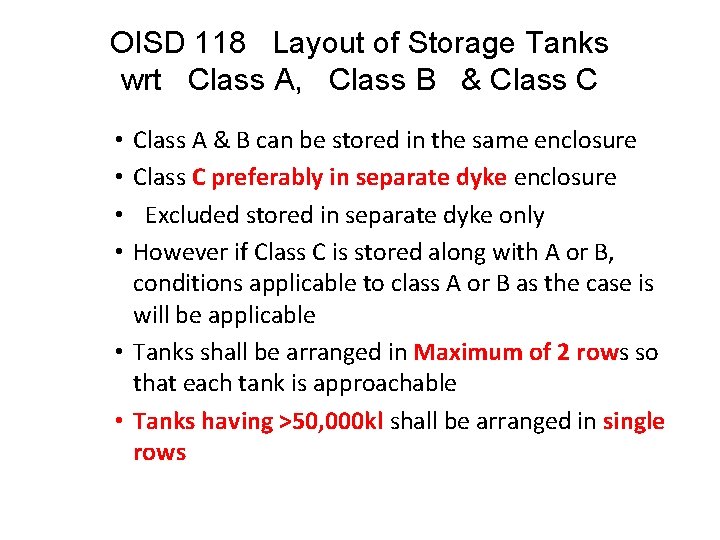
OISD 118 Layout of Storage Tanks wrt Class A, Class B & Class C Class A & B can be stored in the same enclosure Class C preferably in separate dyke enclosure Excluded stored in separate dyke only However if Class C is stored along with A or B, conditions applicable to class A or B as the case is will be applicable • Tanks shall be arranged in Maximum of 2 rows so that each tank is approachable • Tanks having >50, 000 kl shall be arranged in single rows • •
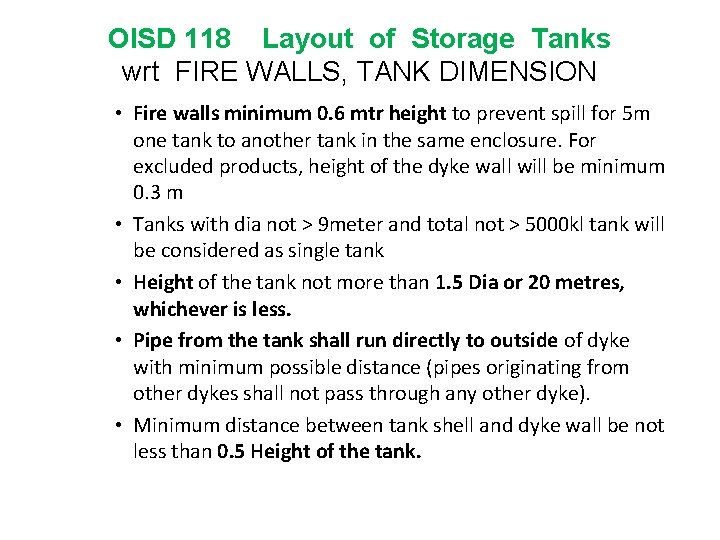
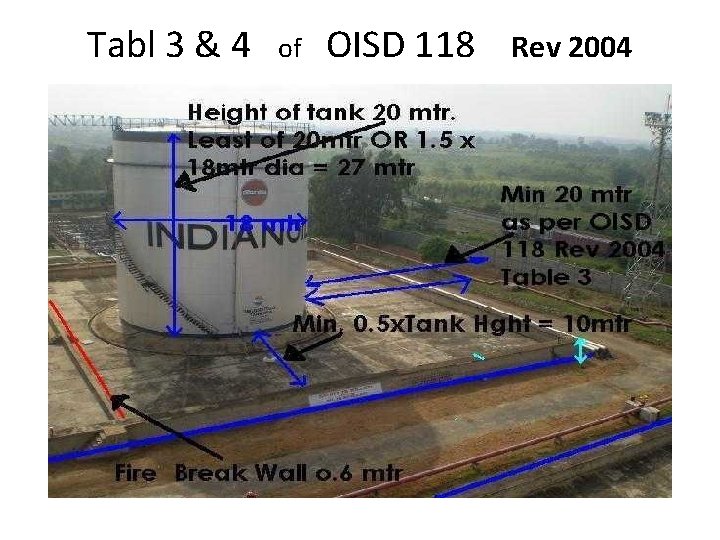
OISD 118 Layout of Storage Tanks wrt FIRE WALLS, TANK DIMENSION • Fire walls minimum 0. 6 mtr height to prevent spill for 5 m one tank to another tank in the same enclosure. For excluded products, height of the dyke wall will be minimum 0. 3 m • Tanks with dia not > 9 meter and total not > 5000 kl tank will be considered as single tank • Height of the tank not more than 1. 5 Dia or 20 metres, whichever is less. • Pipe from the tank shall run directly to outside of dyke with minimum possible distance (pipes originating from other dykes shall not pass through any other dyke). • Minimum distance between tank shell and dyke wall be not less than 0. 5 Height of the tank.
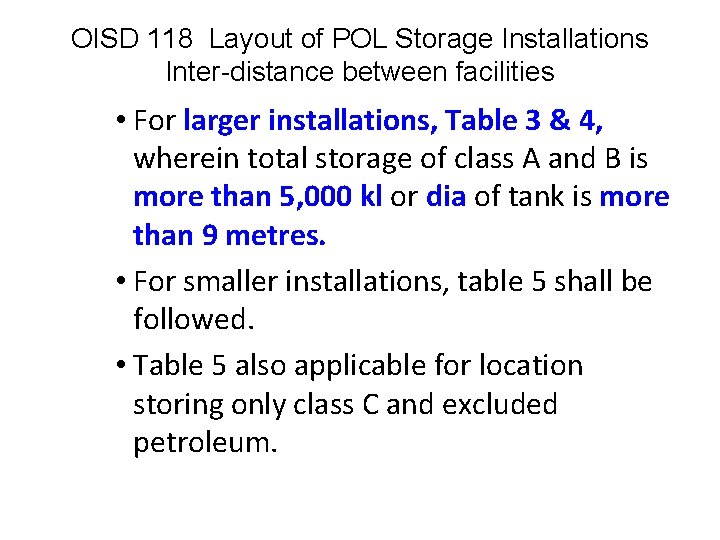
OISD 118 Layout of POL Storage Installations Inter-distance between facilities • For larger installations, Table 3 & 4, wherein total storage of class A and B is more than 5, 000 kl or dia of tank is more than 9 metres. • For smaller installations, table 5 shall be followed. • Table 5 also applicable for location storing only class C and excluded petroleum.
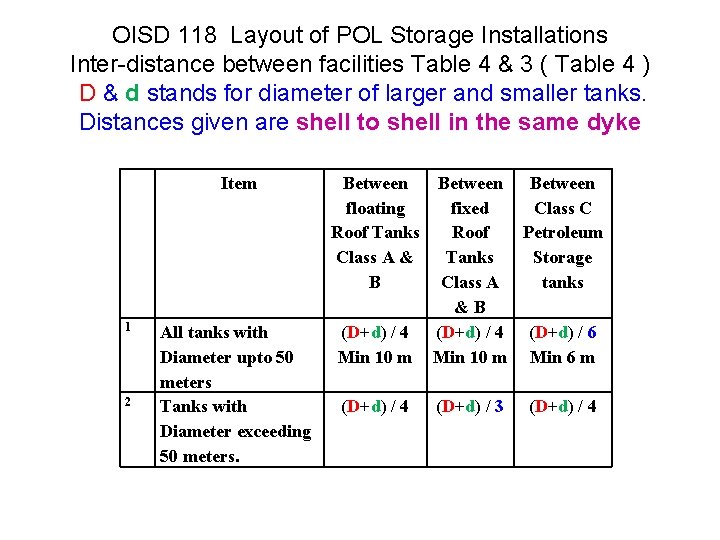
OISD 118 Layout of POL Storage Installations Inter-distance between facilities Table 4 & 3 ( Table 4 ) D & d stands for diameter of larger and smaller tanks. Distances given are shell to shell in the same dyke Item 1 2 All tanks with Diameter upto 50 meters Tanks with Diameter exceeding 50 meters. Between floating fixed Class C Roof Tanks Roof Petroleum Class A & Tanks Storage B Class A tanks &B (D+d) / 4 (D+d) / 6 Min 10 m Min 6 m (D+d) / 4 (D+d) / 3 (D+d) / 4
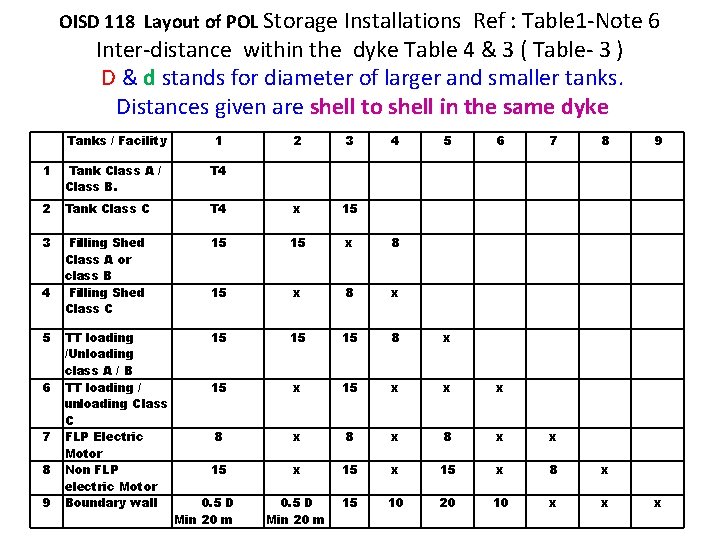
OISD 118 Layout of POL Storage Installations Ref : Table 1 -Note 6 Inter-distance within the dyke Table 4 & 3 ( Table- 3 ) D & d stands for diameter of larger and smaller tanks. Distances given are shell to shell in the same dyke Tanks / Facility 1 2 3 4 5 6 7 8 1 Tank Class A / Class B. T 4 2 Tank Class C T 4 x 15 3 Filling Shed Class A or class B Filling Shed Class C 15 15 x 8 x TT loading /Unloading class A / B TT loading / unloading Class C FLP Electric Motor Non FLP electric Motor Boundary wall 15 15 15 8 x 15 x x x 8 x 8 x x 15 x 8 x 0. 5 D Min 20 m 15 10 20 10 x x 4 5 6 7 8 9 0. 5 D Min 20 m 9 x
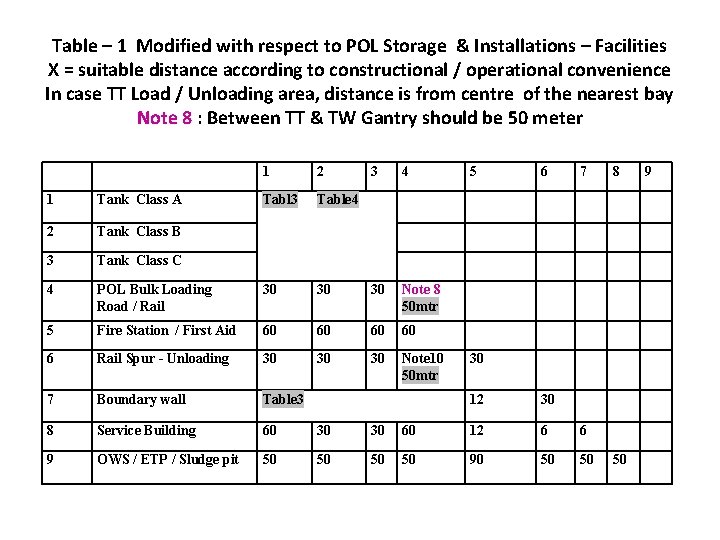
Table – 1 Modified with respect to POL Storage & Installations – Facilities X = suitable distance according to constructional / operational convenience In case TT Load / Unloading area, distance is from centre of the nearest bay Note 8 : Between TT & TW Gantry should be 50 meter 1 2 Tabl 3 Table 4 3 4 1 Tank Class A 2 Tank Class B 3 Tank Class C 4 POL Bulk Loading Road / Rail 30 30 30 Note 8 50 mtr 5 Fire Station / First Aid 60 60 6 Rail Spur - Unloading 30 30 30 Note 10 50 mtr 7 Boundary wall Table 3 8 Service Building 60 30 30 9 OWS / ETP / Sludge pit 50 50 50 5 6 7 8 30 12 30 60 12 6 6 50 90 50 50 50 9
Control of Industrial Major Accident Hazards ( Karnataka ) Rules 1994
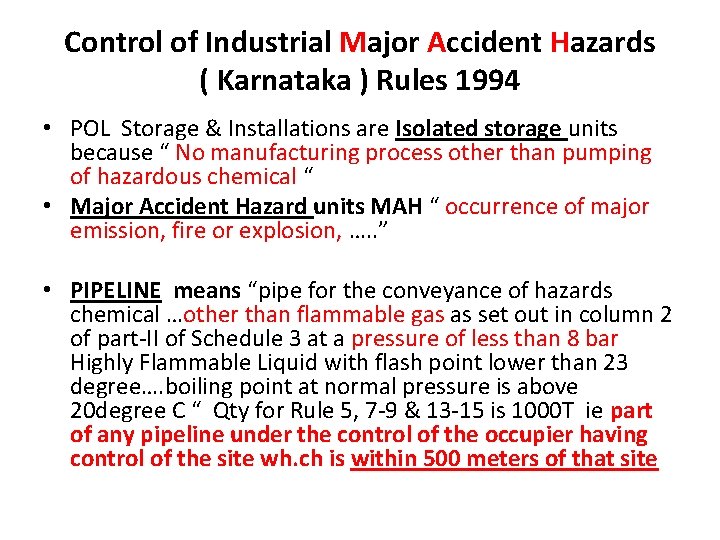
Control of Industrial Major Accident Hazards ( Karnataka ) Rules 1994 • POL Storage & Installations are Isolated storage units because “ No manufacturing process other than pumping of hazardous chemical “ • Major Accident Hazard units MAH “ occurrence of major emission, fire or explosion, …. . ” • PIPELINE means “pipe for the conveyance of hazards chemical …other than flammable gas as set out in column 2 of part-II of Schedule 3 at a pressure of less than 8 bar Highly Flammable Liquid with flash point lower than 23 degree…. boiling point at normal pressure is above 20 degree C “ Qty for Rule 5, 7 -9 & 13 -15 is 1000 T ie part of any pipeline under the control of the occupier having control of the site wh. ch is within 500 meters of that site
Control of Industrial Major Accident Hazards ( Karnataka ) Rules 1994 • Schedule-I, Part-I, B (ii) Indicative criteria • See rules 2(a)(i), 3(1) and 4(1)(a) ]: - qualifying a chemical as Hazardous Chemical under this rule applicable to POL Storage & Installations • Highly Flammable liquids : chemicals which are having flash point lower tahn 23 degree C and boiling point at normal pressure is above 20 degr. C
Control of Industrial Major Accident Hazards ( Karnataka ) Rules 1994 • Schedule-2, Column 2 Isolated Storage of Installation Other Than Those Covered by Schedule 4 • See rules 2(a)(ii), 4(1)(b), 4. (2). (i) and 6(1)(c ) and (d) : - qualifying a chemical as Hazardous Chemical under this rule for the purpose of determining the quantity of Hazardous Chemical at an isolated storage under “PIPELINE” applicable to POL Storage & Installations • Hazardous Flammable Liquids as defined in schedule 1 paragraph (b)(ii) for application of rules 4, 5 7 -9 if quantity is >= 10000 t = 13, 333 kl • Devanagonthi MS storage is 20, 000 kl thus IOC DKN is MAH
Control of Industrial Major Accident Hazards ( Karnataka ) Rules 1994 • Schedule-3 (b) List of Hazardous Chemicals for Application of Rules 5 & 7 -15 • See rules 2(a)(iii), 5 and 6(1)(a ) and (b) : - qualifying a chemical as Hazardous Chemical under this rule for the purpose of determining the quantity of Hazardous Chemical at an isolated storage under “PIPELINE” applicable to POL Storage & Installations • Hazardous Flammable Liquids as defined in schedule 1 paragraph (b)(ii) for application of rules 4, 5 7 -9 if quantity is >= 10000 t = 13, 333 kl • Devanagonthi MS storage is 20, 000 kl thus IOC DKN is MAH
Control of Industrial Major Accident Hazards ( Karnataka ) Rules 1994 • Schedule-5 See rules 2(b) and 3. 4 Authorities with Leagl Backing - Chief Inspector or Factories appointed under the Factories Act, 1948 • Enforcement of directions and procedures in respect of industrial installations and isolated storages covered under the Factories Act, 1948, dealing with hazardous chemicals and pipelines including inter-state pipelines regarding, • (i) Notification of major accidents as per Rule 5(1) and 5(2). • (ii) Notification of sites as per Rules 7 -9. • (iii) Safety reports as per Rules 10 to 12. • (iv) Preparation of on-site emergency plans as per Rule 13. • (v) Preparation of off-site emergency - plans in consultation with District Collector or District Emergency Authority as per Sr. No. 9 of this Schedule.
Control of Industrial Major Accident Hazards ( Karnataka ) Rules 1994 • Rule 4: Occupier to identify major accident hazards and steps taken to prevent such major accidents and to limit their consequences to persons & environment … provide training. . safety • Rule 5: Intimation of Major Accidents by occupier to CIF in case of an major accident …. . • Rule 7: No activity without submitting report to CIF with details sought under schedule 7 : information to be furnished for the notification of activities / sites …e new POL Storage Installations • Rule 8: Updating…. Changes • Rule 9: Transitional Provision during changes updated
Control of Industrial Major Accident Hazards ( Karnataka ) Rules 1994 • Rule 13 : Preparation of On Site Emergency Plans by occupier • Rule 14 : Preparation of Off Site Emergency plan by District Collector • Rule 15: Information to be given to people liable to be affected
OISD 117 Revision August 2007 Fire Fighting Facilities for POL Depots & Installations
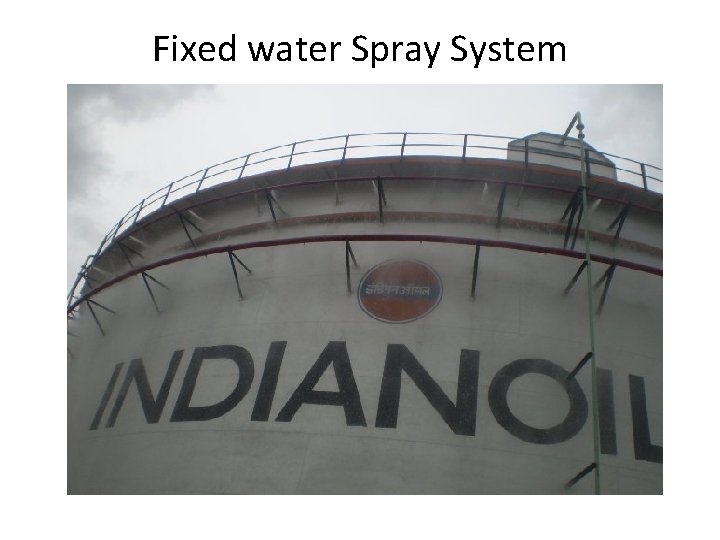
Fixed water Spray System
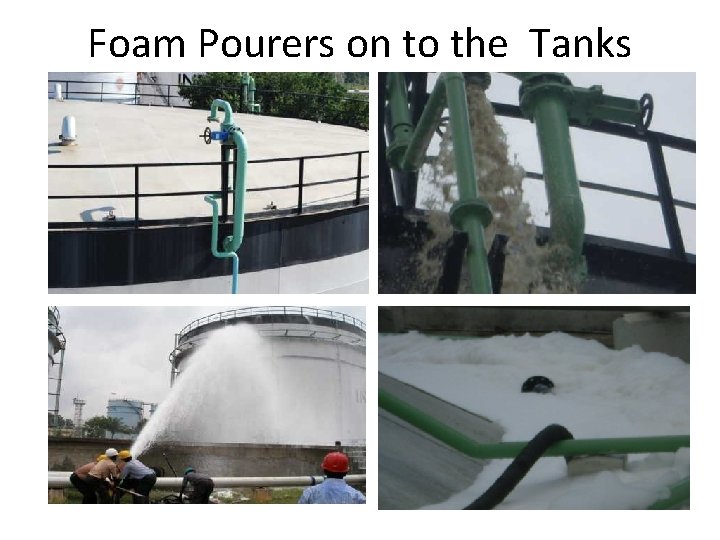
Foam Pourers on to the Tanks
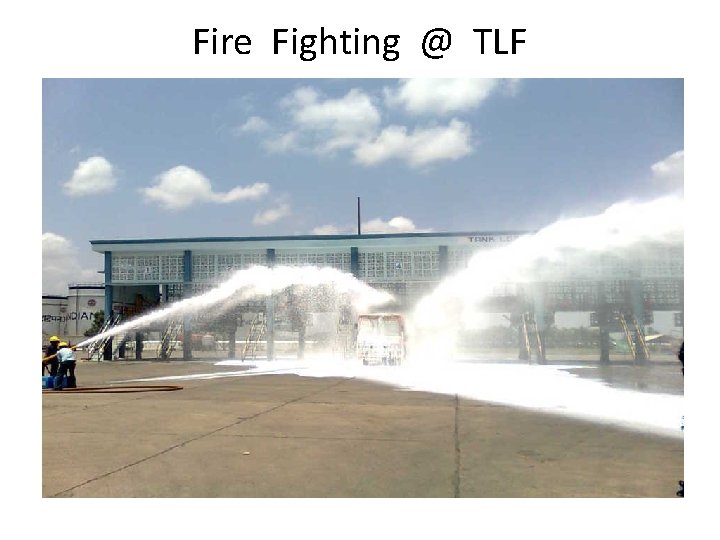
Fire Fighting @ TLF
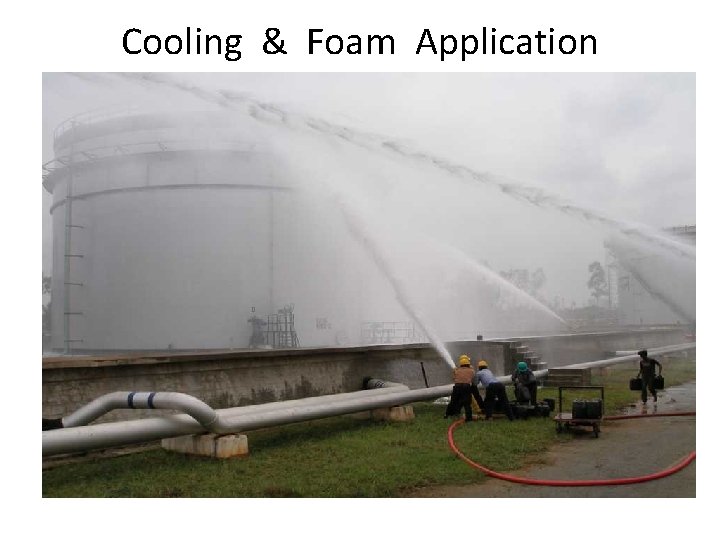
Cooling & Foam Application
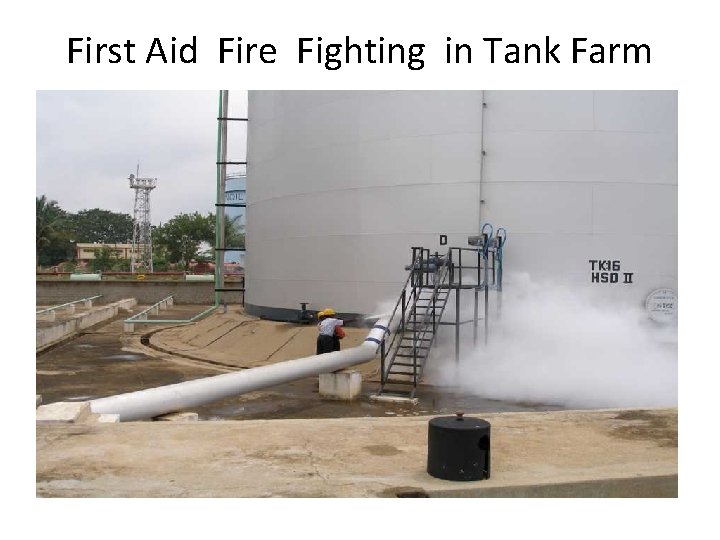
First Aid Fire Fighting in Tank Farm
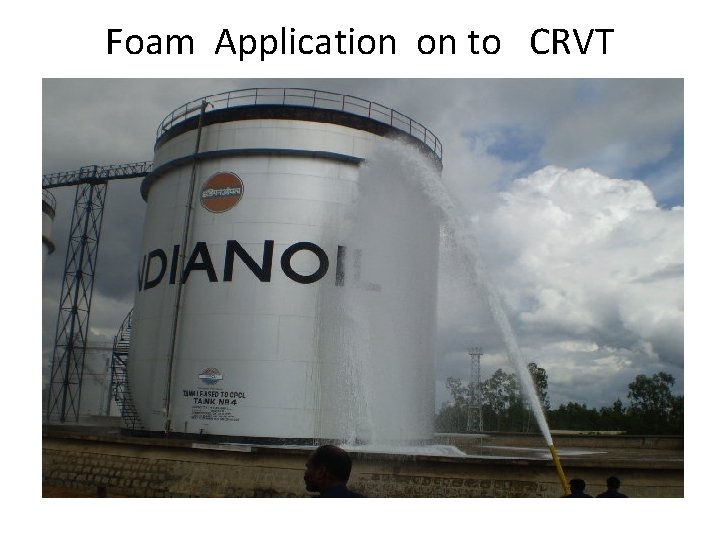
Foam Application on to CRVT
OISD – 117 (Revised Aug 2007) • Hazardous Area An area will be deemed to be hazardous where : – Petroleum having flash point below 65 o. C or any flammable gas or vapor in a concentration capable of ignition is likely to be present – Petroleum or any flammable liquid having flash point above 65 o. C is likely to be refined, blended or stored at above its flash point
OISD – 117 (Revised Aug 2007) Fire Protection System Comprises of ØFire Water System ØFoam System ØClean Agent Protection System ØFirst Aid Fire Fighting Equipment ØMobile Fire Fighting Equipment ØFire Detection, Alarm & Communication System
OISD – 117 (Revised Aug 2007) Fire Protection System Design Criteria are No city fire water supply Only one single largest risk Hydrant System for Installation capacity >1000 kl Fixed Water Spray System(Sprinkler) Class A - >5000 kl/Dia >9 m Class B- Dia >30 m Foam System Floating/Fixed roof with Dia >18 m for both Class A & B Manifolds should have hydrant and monitors TW unloading Gantry should have water and foam spray system
OISD – 117 (Revised Aug 2007) For Installations constructed prior to publication of 1 st Edition of OISD-STD-117 in July’ 1989, where inter distances between tanks in a dyke and/or within dykes are not meeting the requirements of OISD-STD-118 • The fixed water spray system shall also be provided on all tanks, irrespective of diameter • Automatic actuated rim seal fire protection system based on foam or clean agent for tanks having diameter more than 60 m and storing Class A petroleum (for lightening prone zones also) • Fixed foam system or semi-fixed foam system shall also be provided on all tanks irrespective of diameter (for lightening prone zones also)
OISD – 117 (Revised Aug 2007) • Fire water flow rate for cooling: Water flow rate = 3 lpm/sq. m of tank shell area for cooling the tank on fire and tanks in the same dyke within (R+30)m of distance from tank on fire Water flow rate = 1 lpm/sq. m of tank shell area for cooling the tanks in the same dyke outside (R+30)m of distance from tank on fire 4 single hydrants (36 kl/hr) and 1 monitor (144 kl/hr) simultaneous operation with pressure as 7 kgf/sq. cm Pumping stations and volatile product pumps – 20. 4 lpm/sq. m Tank Wagon loading gantries – 10. 2 lpm/sq. m
OISD – 117 (Revised Aug 2007) Fire Water System Design -Minimum residual pressure at remotest point 7 KSC -Fire water quantity - Continuous 3 hours fire fighting -Flooded suction at Fire Water Pump -One standby Main Pump is mandatory -Fire water networking should be in closed loops -Suction and discharge valves of fire water pumps shall be kept full open all the times -Fire water line – always pressurized – Jockey pumps (if jockey pump is used, 1 standby is required)/Static water tank Above Ground
OISD – 117 (Revised Aug 2007) Fire Hydrants & Monitors - Hazardous areas- One fire hydrant every 30 m externally the wall boundary - Non-hazardous areas – every 45 m - Hydrants – 15 m from the periphery of Tanks - Monitors – 15 m from the periphery of Tanks - Branch connection is preferable - TT/TW gantries – alternate foam cum water monitor & fire hydrants at 30 m separation; min of 15 m from TT/TWs.
OISD – 117 (Revised Aug 2007) Fire Protection System - Fire water mains, hydrant & monitor stand posts, risers of water spray system shall be painted with “Fire Red” paint as per of IS: 5 - Hose boxes, water monitors and hydrant outlets shall be painted with “Luminous Yellow” paint as per IS: 5 - Fixed water spray system should discharge effective water spray within shortest possible time
OISD – 117 (Revised Aug 2007 Foam Discharge System - For FRVT , foam shall be poured at the foam dam - For CRVT , a vapour seal chamber is required before the foam discharge outlet and other things remain the same as floating roof tank - Number of foam discharge outlet is based on pourer capacity of 1000 lpm at a pressure of 7 kg/cm 2 - For FCFRT Floating Cum Fixed Roof Tanks, Protection facilities shall be provided as required for fixed roof tank.
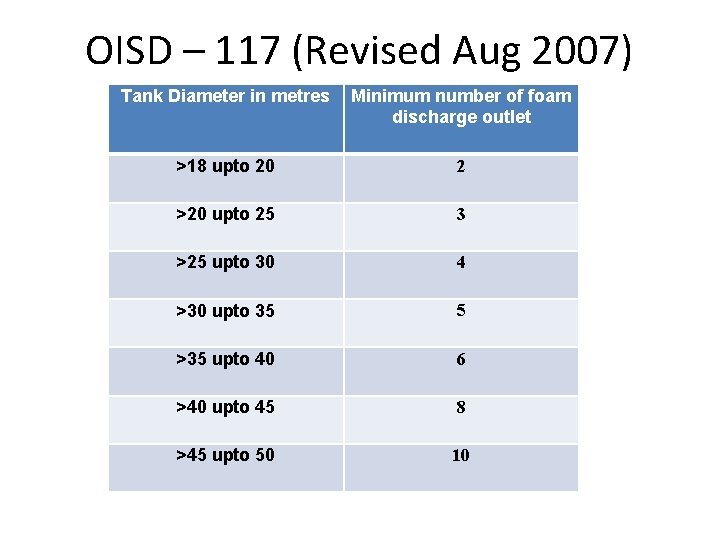
OISD – 117 (Revised Aug 2007) Tank Diameter in metres Minimum number of foam discharge outlet >18 upto 20 2 >20 upto 25 3 >25 upto 30 4 >30 upto 35 5 >35 upto 40 6 >40 upto 45 8 >45 upto 50 10
OISD – 117 (Revised Aug 2007) • Foam Compound Storage – Foam compound should be stored as explained in IS 4989: 2006/UL-162 – Type of foam compound used can be protein or fluroprotein or AFFF – Alcohol Resistant Foam shall be used for handling ethanol fires (minimum 1 KL of Alcohol Resistant Foam) – Shelf life of foam compound shall be taken from manufacturer's data – Foam compound shall be tested periodically – The deteriorated foam compound can be used for fire training purposes. – Quantity of foam compound should be equal to 100% of requirement
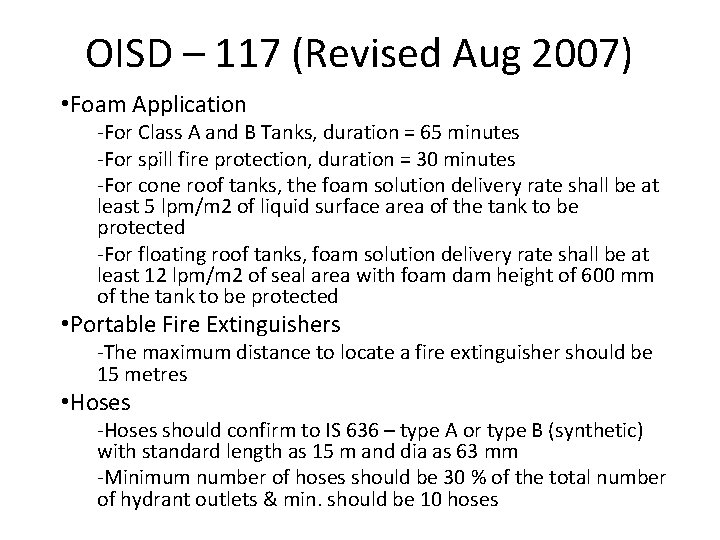
OISD – 117 (Revised Aug 2007) • Foam Application -For Class A and B Tanks, duration = 65 minutes -For spill fire protection, duration = 30 minutes -For cone roof tanks, the foam solution delivery rate shall be at least 5 lpm/m 2 of liquid surface area of the tank to be protected -For floating roof tanks, foam solution delivery rate shall be at least 12 lpm/m 2 of seal area with foam dam height of 600 mm of the tank to be protected • Portable Fire Extinguishers -The maximum distance to locate a fire extinguisher should be 15 metres • Hoses -Hoses should confirm to IS 636 – type A or type B (synthetic) with standard length as 15 m and dia as 63 mm -Minimum number of hoses should be 30 % of the total number of hydrant outlets & min. should be 10 hoses
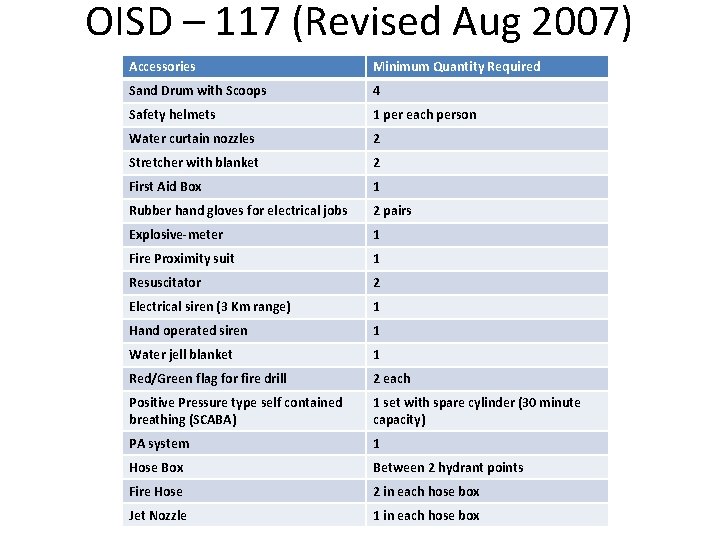
OISD – 117 (Revised Aug 2007) Accessories Minimum Quantity Required Sand Drum with Scoops 4 Safety helmets 1 per each person Water curtain nozzles 2 Stretcher with blanket 2 First Aid Box 1 Rubber hand gloves for electrical jobs 2 pairs Explosive-meter 1 Fire Proximity suit 1 Resuscitator 2 Electrical siren (3 Km range) 1 Hand operated siren 1 Water jell blanket 1 Red/Green flag for fire drill 2 each Positive Pressure type self contained breathing (SCABA) 1 set with spare cylinder (30 minute capacity) PA system 1 Hose Box Between 2 hydrant points Fire Hose 2 in each hose box Jet Nozzle 1 in each hose box
OISD – 117 (Revised Aug 2007) Fire Alarm System – Hand operated sirens shall be provided at strategic locations and clearly marked in the installation – Electric fire siren shall be installed at suitable location with operating switch located near the risk area at a safe, identifiable and easily accessible place – Electric fire siren shall be audible to the farthest distance in the installation and also in the surrounding area up to 1 km from the periphery of the installation – Electric fire sirens shall be connected to feeder to ensure continuous power supply during emergency shut down – The tone of fire siren shall be different from shift siren
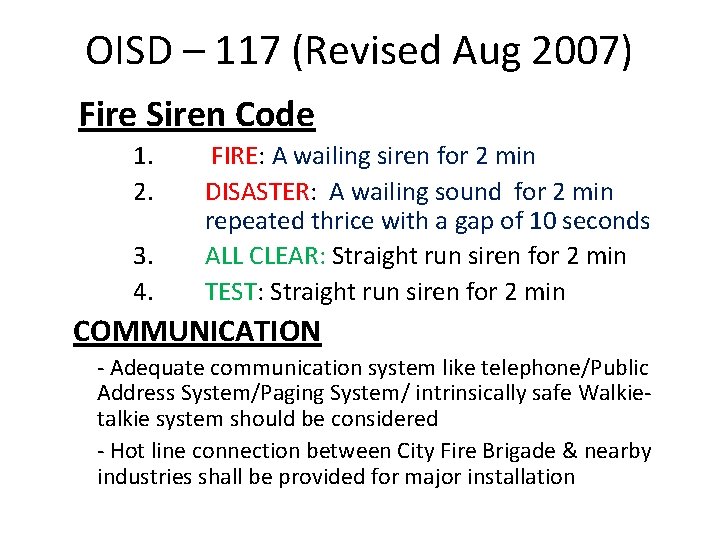
OISD – 117 (Revised Aug 2007) Fire Siren Code 1. 2. 3. 4. FIRE: A wailing siren for 2 min DISASTER: A wailing sound for 2 min repeated thrice with a gap of 10 seconds ALL CLEAR: Straight run siren for 2 min TEST: Straight run siren for 2 min COMMUNICATION - Adequate communication system like telephone/Public Address System/Paging System/ intrinsically safe Walkietalkie system should be considered - Hot line connection between City Fire Brigade & nearby industries shall be provided for major installation
idea of FOAM BANK Fighting the Hazard from Remote Place idea of OUTSATANDING TLF Shifting the Hazard Remote Place
KNOWLEDGE IS NOT POWER, APPLICATION OF KNOWLEDGE IS POWER To prevent Fire, Following OISD in POL at Design - Education & Construction - Execution is not “the” Solution. Operation - Enforcement of SOP is Solution. Behavioral Based Safety “BBS” Clipping on Ladder Logic
- Slides: 89