
Capacitance and Dielectrics Capacitance examples Energy stored in
- Slides: 20
Capacitance and Dielectrics • • • Capacitance examples Energy stored in capacitor Dielectrics Nat’s research (just fun stuff)
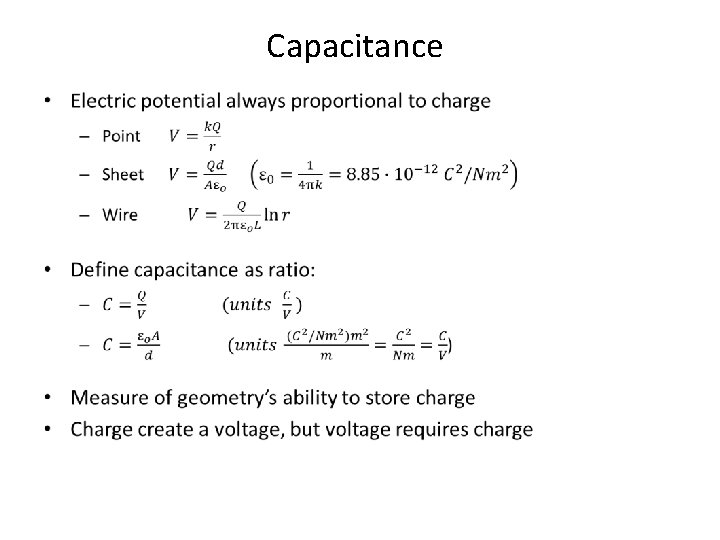
Capacitance •
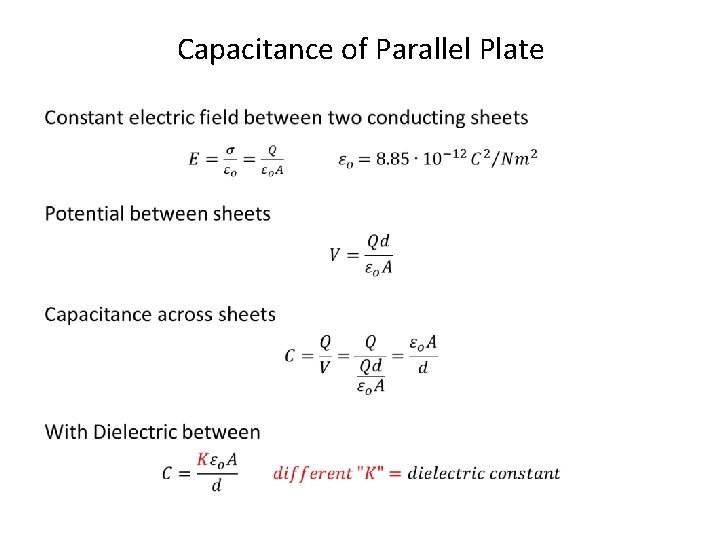
Capacitance of Parallel Plate •
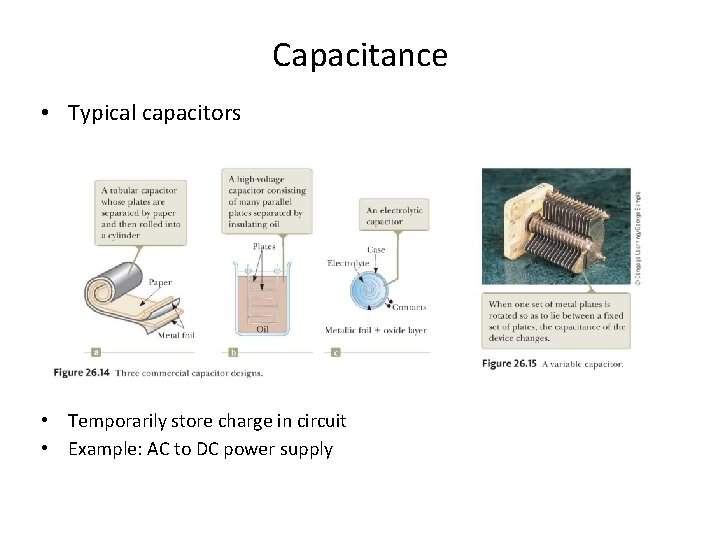
Capacitance • Typical capacitors • Temporarily store charge in circuit • Example: AC to DC power supply
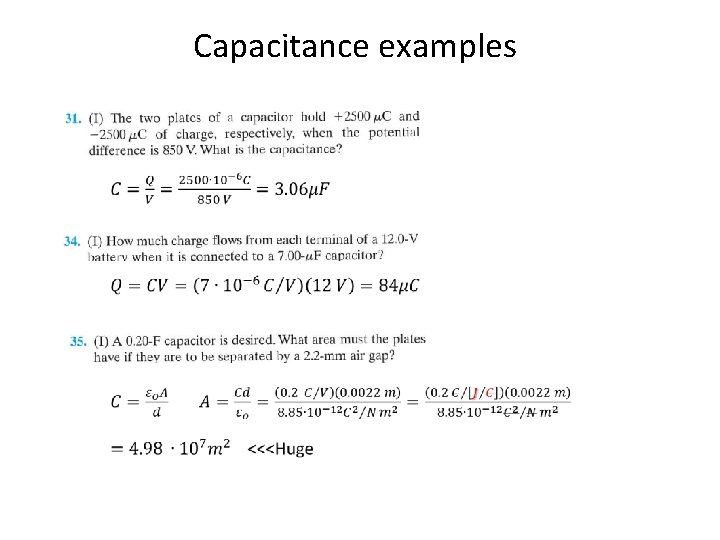
Capacitance examples •
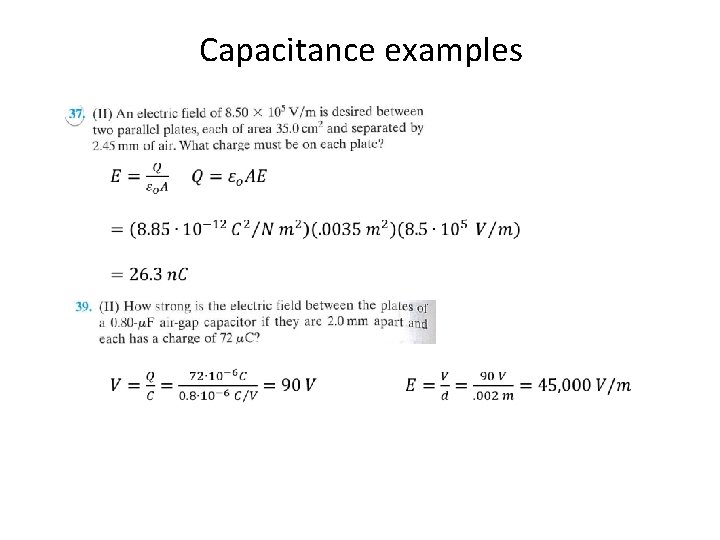
Capacitance examples •
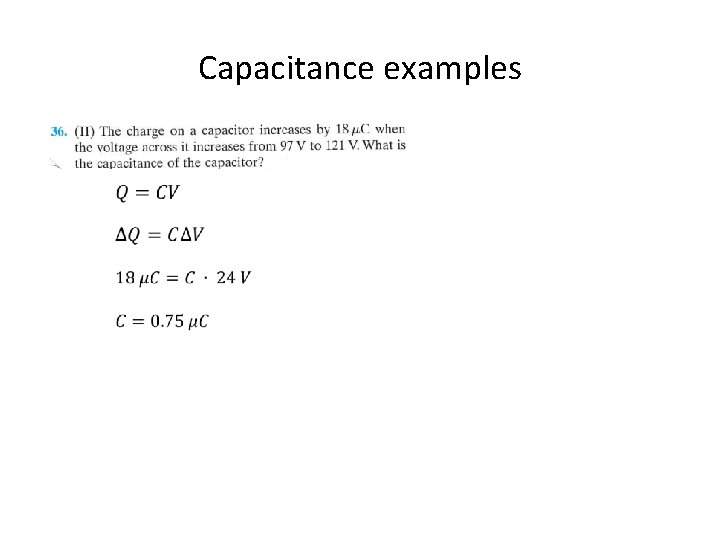
Capacitance examples •
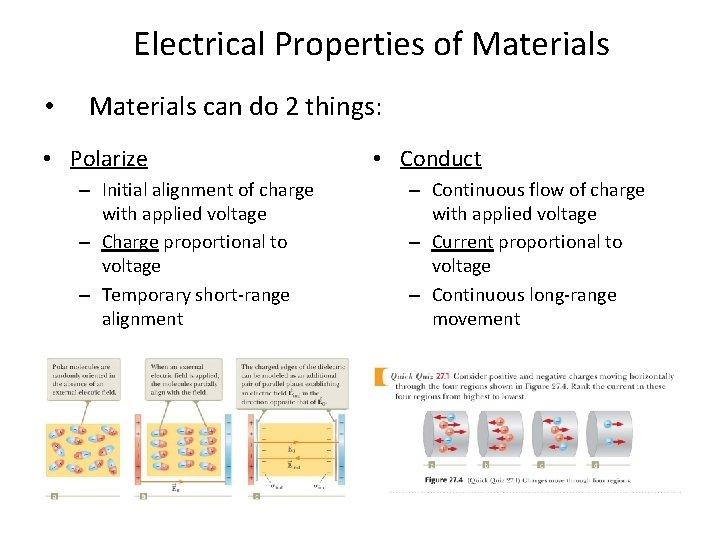
Electrical Properties of Materials • Materials can do 2 things: • Polarize – Initial alignment of charge with applied voltage – Charge proportional to voltage – Temporary short-range alignment • Conduct – Continuous flow of charge with applied voltage – Current proportional to voltage – Continuous long-range movement
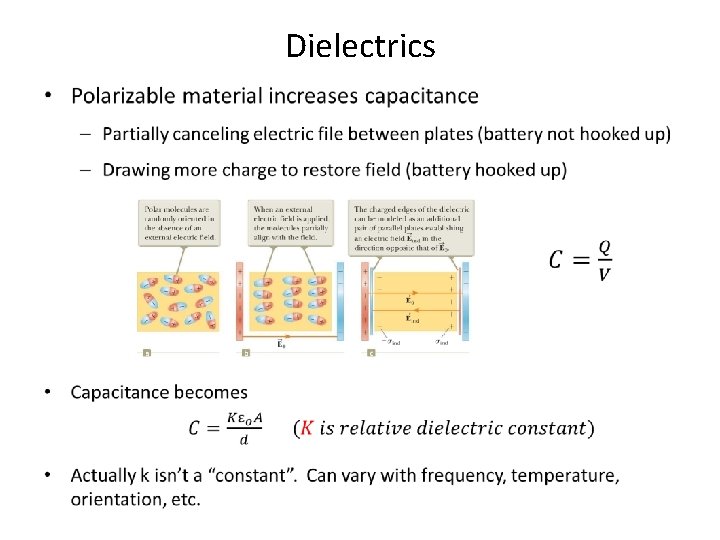
Dielectrics •
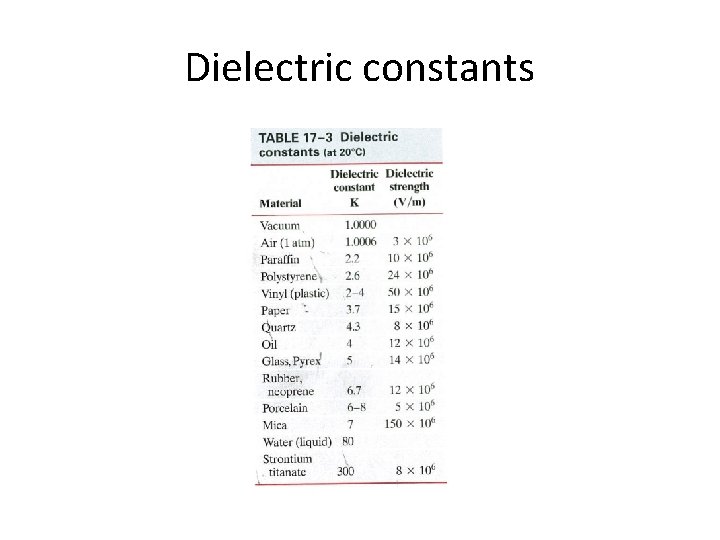
Dielectric constants
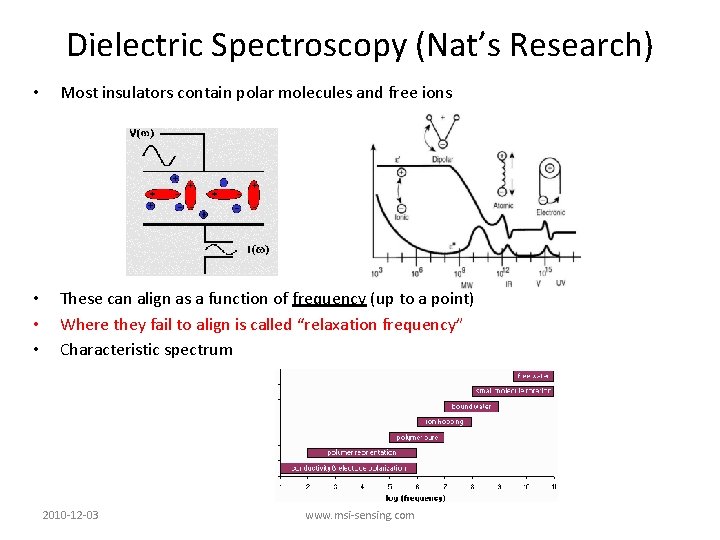
Dielectric Spectroscopy (Nat’s Research) • Most insulators contain polar molecules and free ions • • • These can align as a function of frequency (up to a point) Where they fail to align is called “relaxation frequency” Characteristic spectrum 2010 -12 -03 www. msi-sensing. com
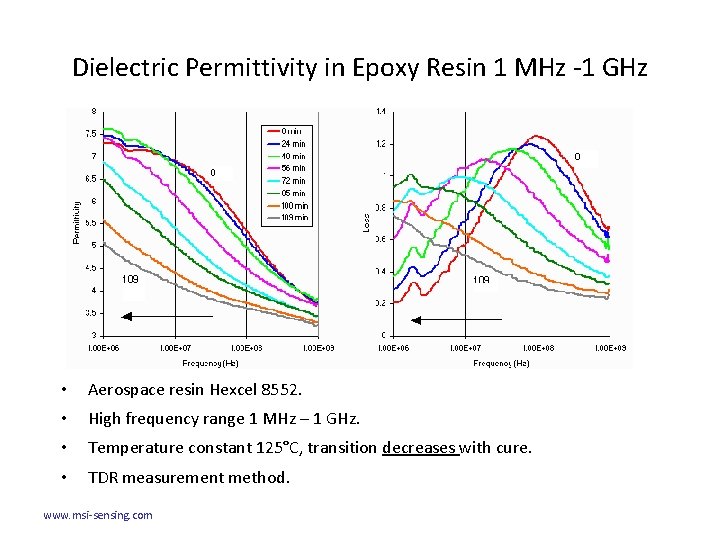
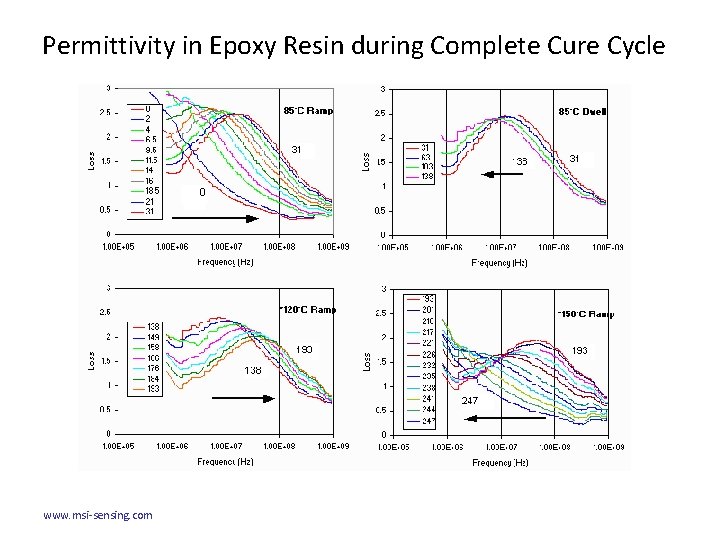
Dielectric Permittivity in Epoxy Resin 1 MHz -1 GHz • Aerospace resin Hexcel 8552. • High frequency range 1 MHz – 1 GHz. • Temperature constant 125°C, transition decreases with cure. • TDR measurement method. www. msi-sensing. com
Permittivity in Epoxy Resin during Complete Cure Cycle www. msi-sensing. com
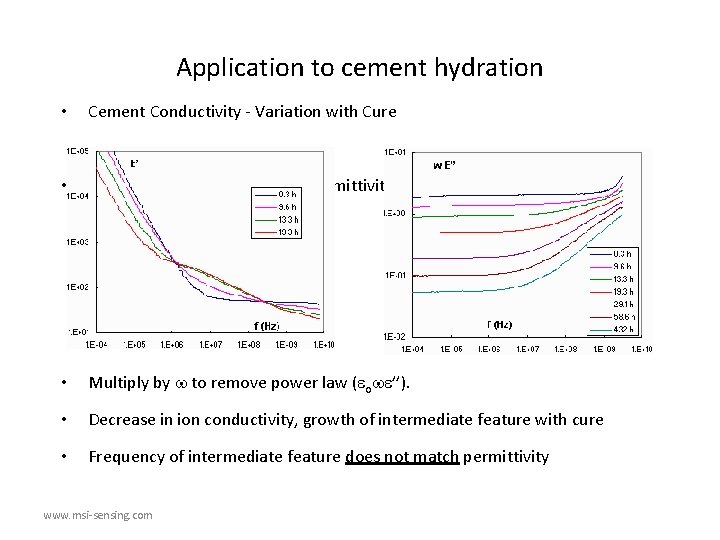
Application to cement hydration • Cement Conductivity - Variation with Cure • Imaginary counterpart of real permittivity ( ’’). • Multiply by to remove power law ( o ’’). • Decrease in ion conductivity, growth of intermediate feature with cure • Frequency of intermediate feature does not match permittivity www. msi-sensing. com
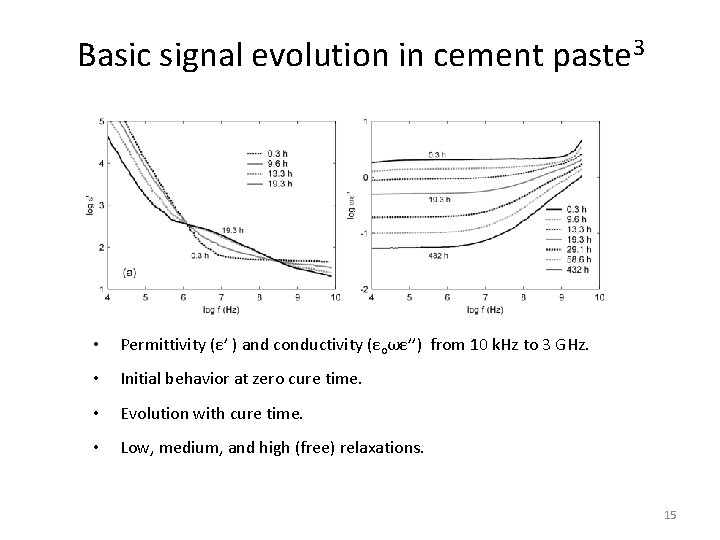
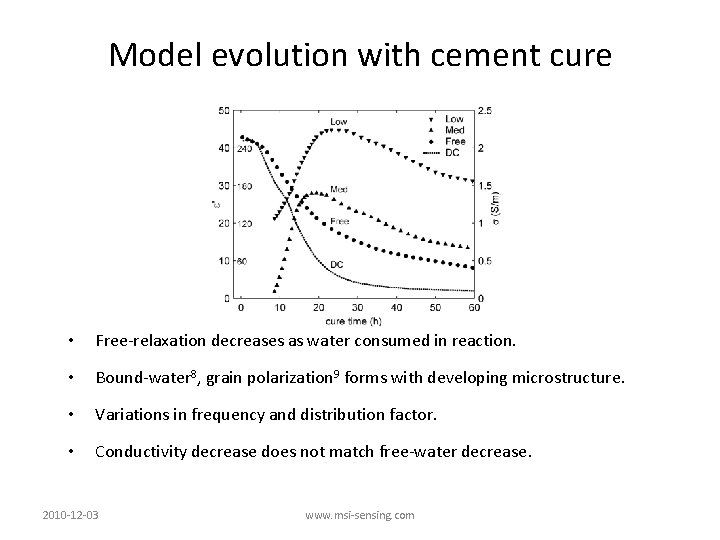
Basic signal evolution in cement paste 3 • Permittivity (ε’ ) and conductivity (εoωε’’) from 10 k. Hz to 3 GHz. • Initial behavior at zero cure time. • Evolution with cure time. • Low, medium, and high (free) relaxations. 15
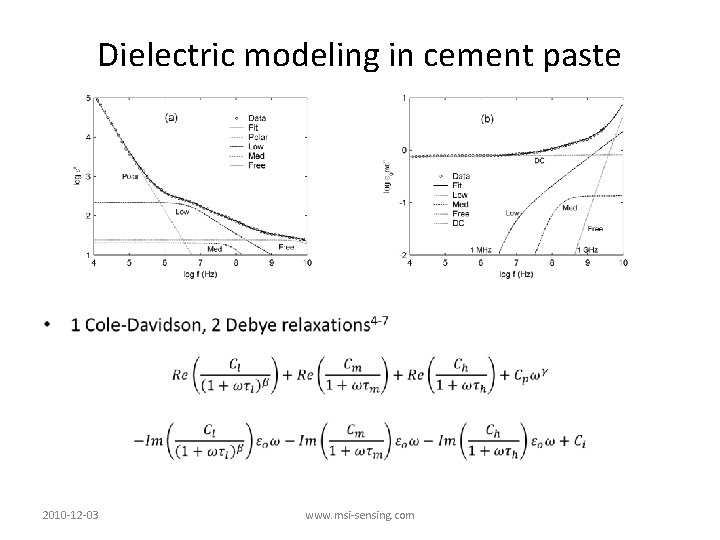
Dielectric modeling in cement paste • 2010 -12 -03 www. msi-sensing. com
Model evolution with cement cure • Free-relaxation decreases as water consumed in reaction. • Bound-water 8, grain polarization 9 forms with developing microstructure. • Variations in frequency and distribution factor. • Conductivity decrease does not match free-water decrease. 2010 -12 -03 www. msi-sensing. com
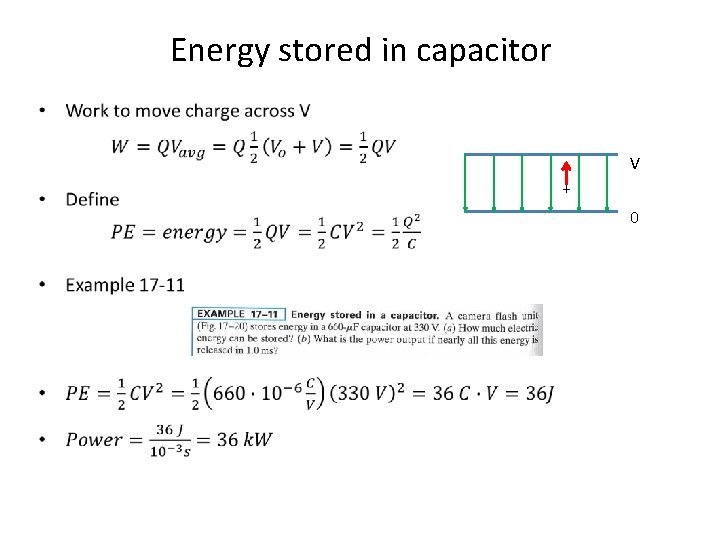
Energy stored in capacitor • V + 0
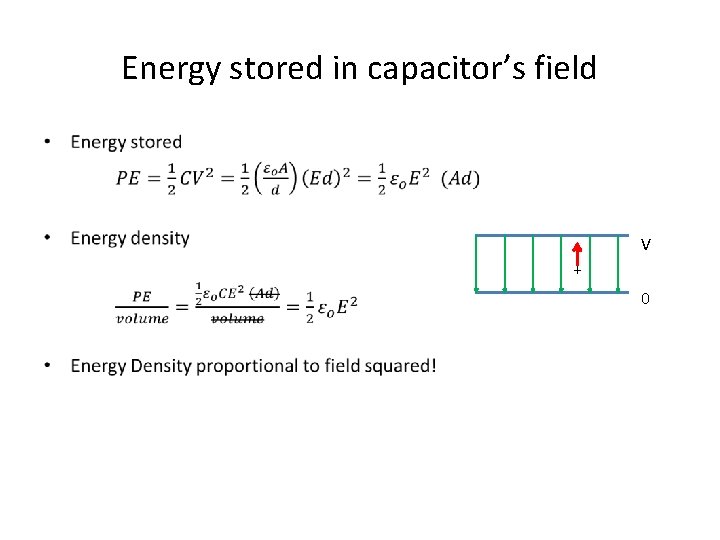
Energy stored in capacitor’s field • V + 0
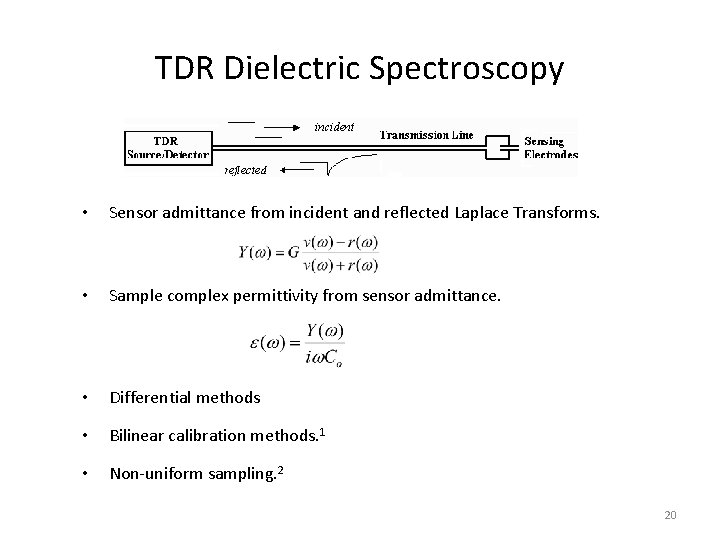
TDR Dielectric Spectroscopy • Sensor admittance from incident and reflected Laplace Transforms. • Sample complex permittivity from sensor admittance. • Differential methods • Bilinear calibration methods. 1 • Non-uniform sampling. 2 20