
Capability Classes NC STATE UNIVERSITY DEPARTMENT of SOIL

Capability Classes NC STATE UNIVERSITY DEPARTMENT of SOIL SCIENCE
Capability Classes: Suited • Class I slight limitations • Class II moderate limitations: restrict plants or require moderate conservation practices • Class III severe limitations: restrict plants and/or require special conservation practices • Class IV soils have very severe limitations: restrict plants and/or require very careful management NC STATE UNIVERSITY DEPARTMENT of SOIL SCIENCE
Capability Classes: Unsuited • Class V little or no erosion but have limitations use restricted to pasture, rangeland, forestland, or wildlife habitat • Class VI severe limitations generally unsuitable for cultivation and use restricted to pasture, rangeland, forestland, or wildlife habitat • Class VII very severe limitations unsuitable for cultivation and restrict use to rangeland, forestland, or wildlife habitat NC STATE UNIVERSITY DEPARTMENT of SOIL SCIENCE
Capability Classes: Unsuited • Class VIII limitations that preclude commercial plant production and that restrict their use to recreational purposes, wildlife habitat, watershed, or esthetic purposes NC STATE UNIVERSITY DEPARTMENT of SOIL SCIENCE
Subclasses • • e – erosion risk w – water/wetness s – stony, droughty, shallow c – cold or very dry NC STATE UNIVERSITY DEPARTMENT of SOIL SCIENCE
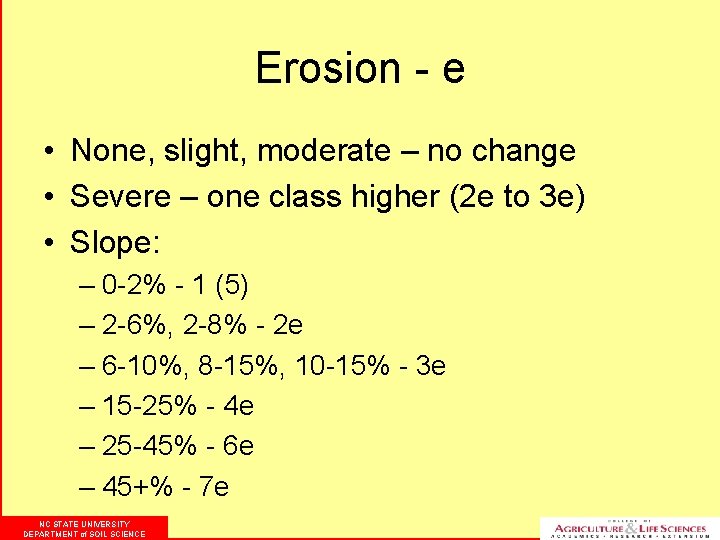
Erosion - e • None, slight, moderate – no change • Severe – one class higher (2 e to 3 e) • Slope: – 0 -2% - 1 (5) – 2 -6%, 2 -8% - 2 e – 6 -10%, 8 -15%, 10 -15% - 3 e – 15 -25% - 4 e – 25 -45% - 6 e – 45+% - 7 e NC STATE UNIVERSITY DEPARTMENT of SOIL SCIENCE
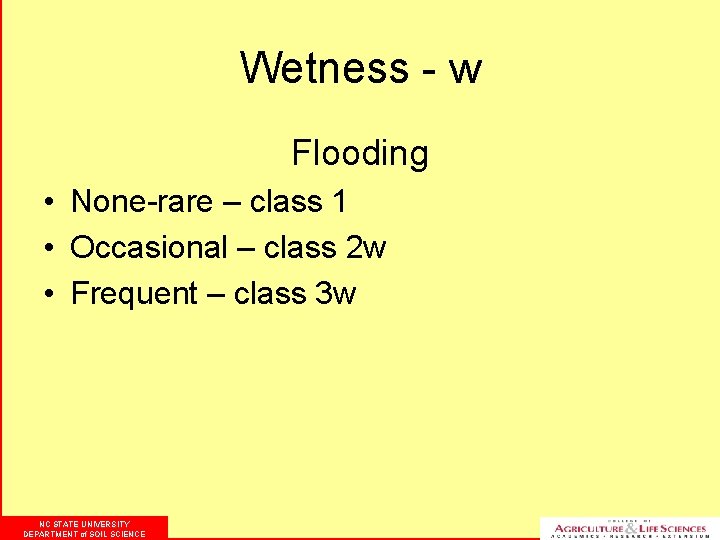
Wetness - w Flooding • None-rare – class 1 • Occasional – class 2 w • Frequent – class 3 w NC STATE UNIVERSITY DEPARTMENT of SOIL SCIENCE
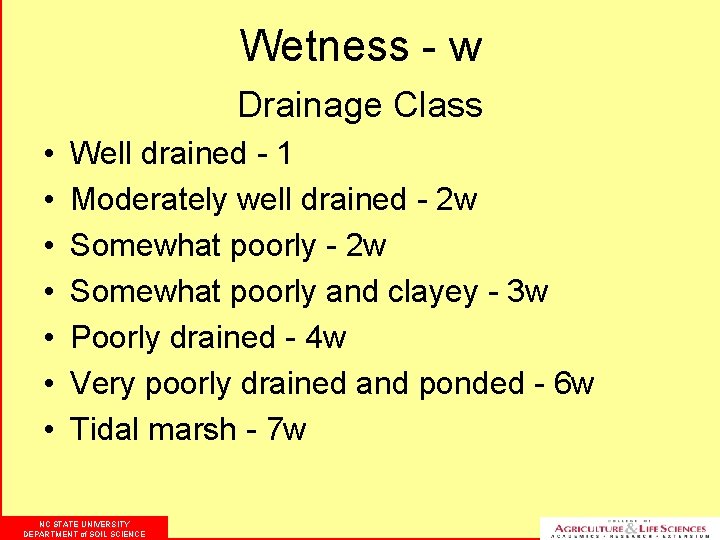
Wetness - w Drainage Class • • Well drained - 1 Moderately well drained - 2 w Somewhat poorly and clayey - 3 w Poorly drained - 4 w Very poorly drained and ponded - 6 w Tidal marsh - 7 w NC STATE UNIVERSITY DEPARTMENT of SOIL SCIENCE
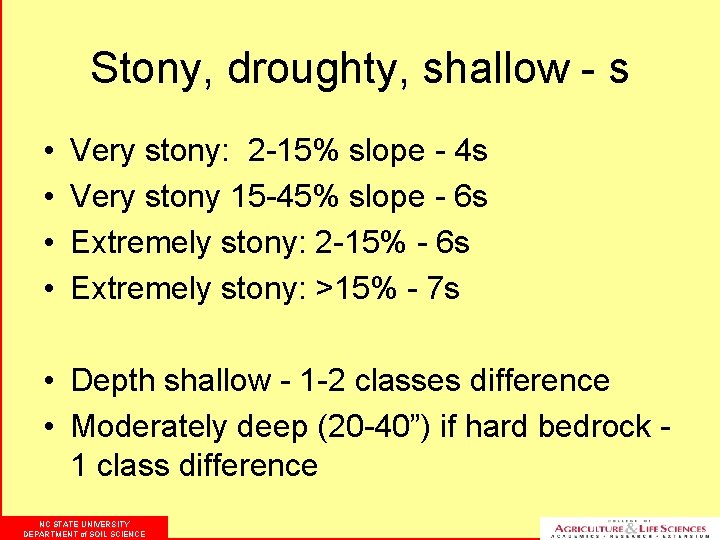
Stony, droughty, shallow - s • • Very stony: 2 -15% slope - 4 s Very stony 15 -45% slope - 6 s Extremely stony: 2 -15% - 6 s Extremely stony: >15% - 7 s • Depth shallow - 1 -2 classes difference • Moderately deep (20 -40”) if hard bedrock 1 class difference NC STATE UNIVERSITY DEPARTMENT of SOIL SCIENCE
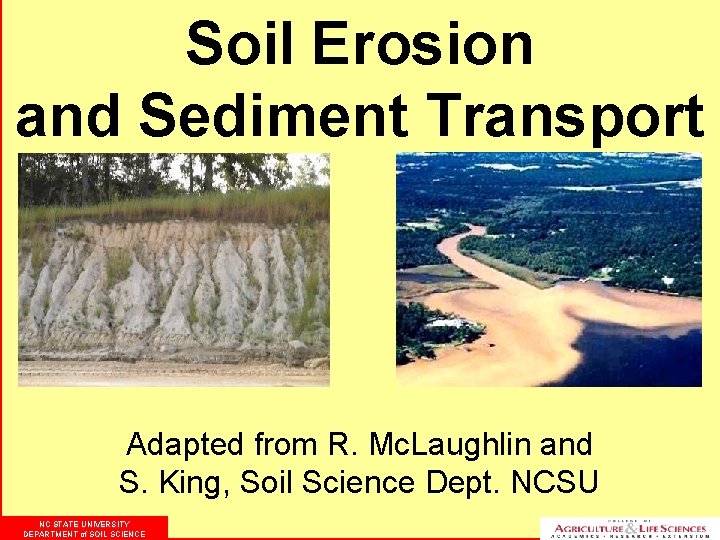
Soil Erosion and Sediment Transport Adapted from R. Mc. Laughlin and S. King, Soil Science Dept. NCSU NC STATE UNIVERSITY DEPARTMENT of SOIL SCIENCE
Soil Erosion: Two Phases • Detachment: individual particles are loosened from the soil mass. – Rainsplash > running water > wind • Transport: water or wind carries the detached particles downslope or downwind. – Flow in rills is the most important. NC STATE UNIVERSITY DEPARTMENT of SOIL SCIENCE
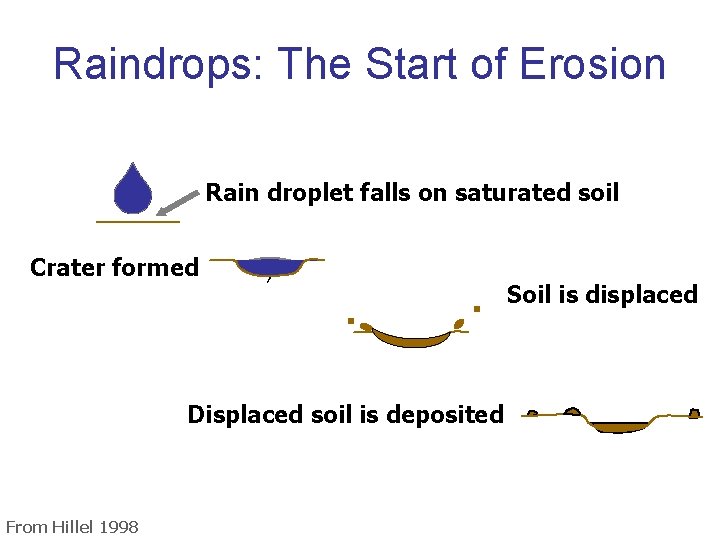
Raindrops: The Start of Erosion Rain droplet falls on saturated soil Crater formed Displaced soil is deposited NC STATE UNIVERSITY From Hillel 1998 DEPARTMENT of SOIL SCIENCE Soil is displaced
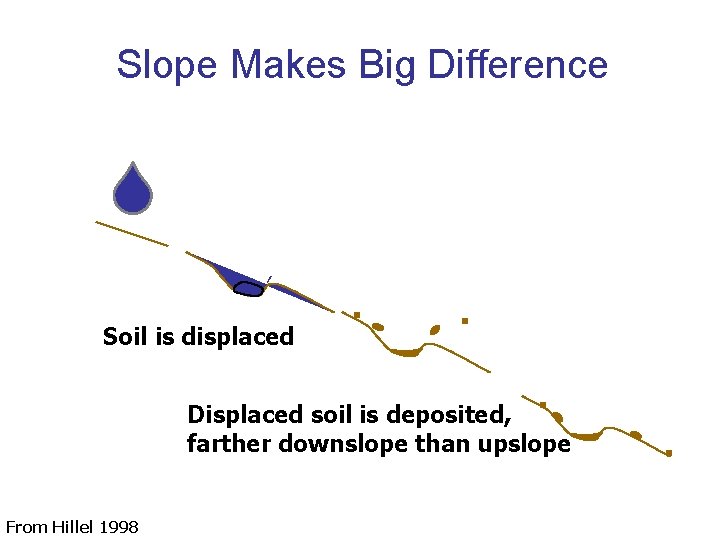
Slope Makes Big Difference Soil is displaced Displaced soil is deposited, farther downslope than upslope NC STATE UNIVERSITY From Hillel 1998 DEPARTMENT of SOIL SCIENCE
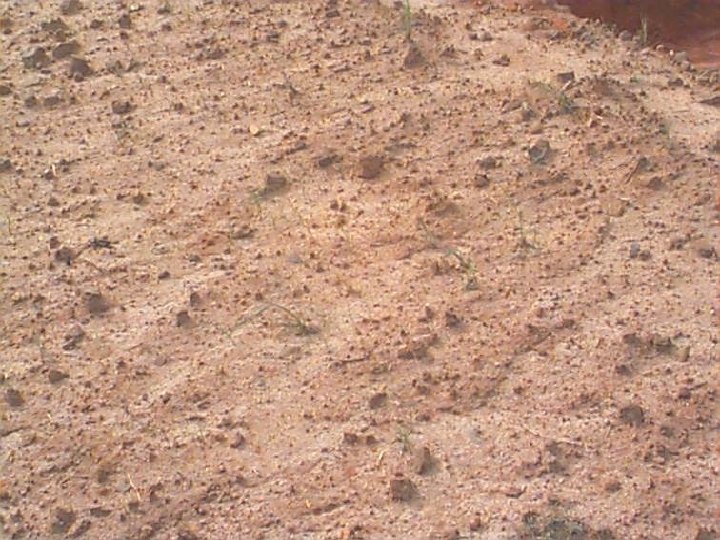
Overland Flow • Once rainfall exceeds infiltration, water begins to flow. • Clay is hard to pick up due to cohesion. • Sand is hard to pick up due to size. • Most of the sediment in sheet flow comes from rain detachment. • This is why covering the soil is so effective! NC STATE UNIVERSITY DEPARTMENT of SOIL SCIENCE
NC STATE UNIVERSITY DEPARTMENT of SOIL SCIENCE
Formation of Rills • Water begins to collect near the top of the slope. • Rills generally deepen downslope. – Flow itself results in erosion. – Headcutting moves upslope. • Sediment comes into the rill from overland flow. NC STATE UNIVERSITY DEPARTMENT of SOIL SCIENCE
Overland vs. Rills • Studies have shown that both erosion processes are important. • Relative importance depends on soil, slope, and storm intensity. • Rills can carry large materials. NC STATE UNIVERSITY DEPARTMENT of SOIL SCIENCE
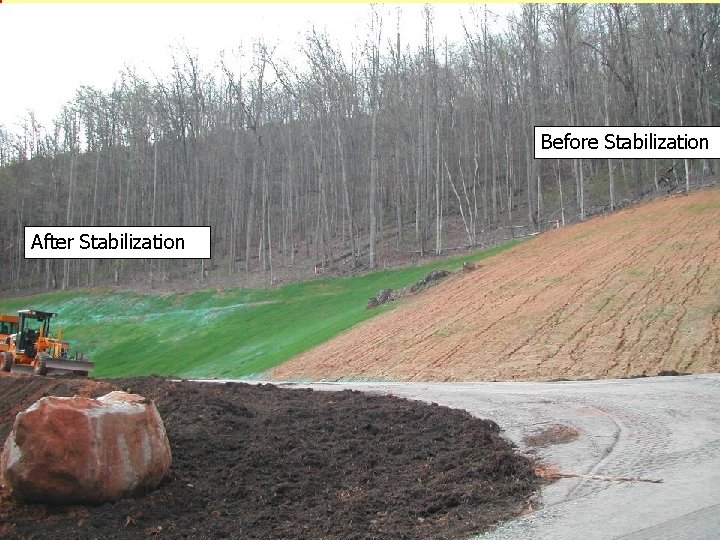
Before Stabilization After Stabilization NC STATE UNIVERSITY DEPARTMENT of SOIL SCIENCE
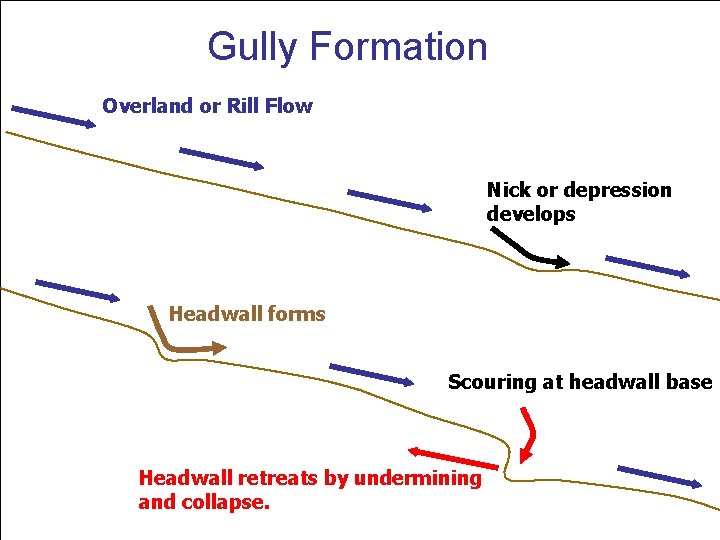
Gully Formation Overland or Rill Flow Nick or depression develops Headwall forms Scouring at headwall base Headwall retreats by undermining and collapse. NC STATE UNIVERSITY DEPARTMENT of SOIL SCIENCE
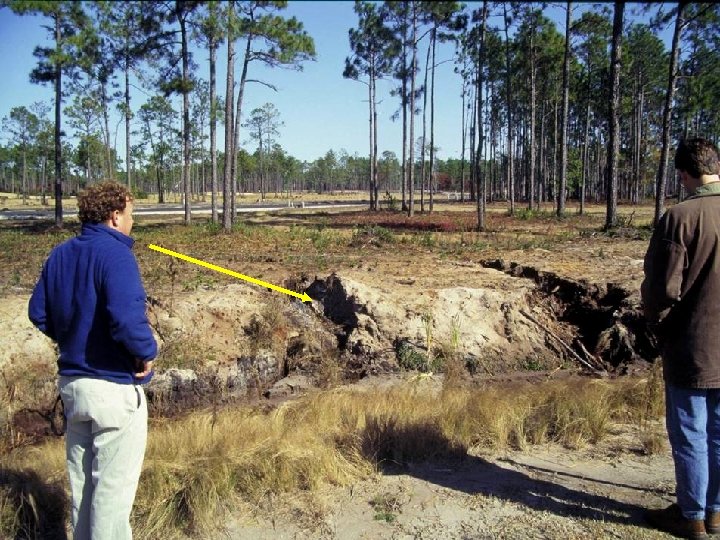
NC STATE UNIVERSITY DEPARTMENT of SOIL SCIENCE
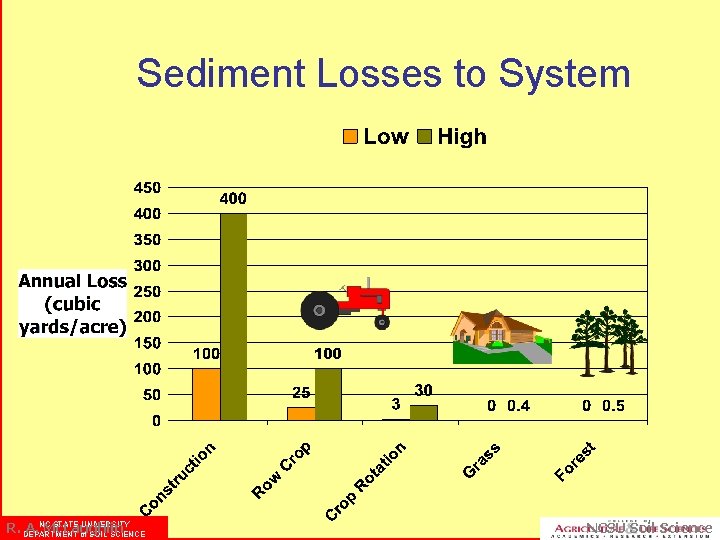
Sediment Losses to System STATE UNIVERSITY R. DEPARTMENT A. NCMc. Laughlin of SOIL SCIENCE NCSU Soil Science
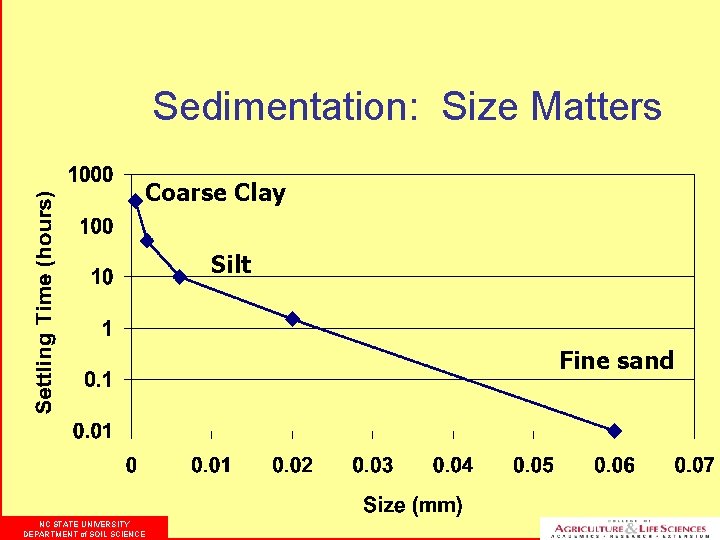
Sedimentation: Size Matters Coarse Clay Silt Fine sand NC STATE UNIVERSITY DEPARTMENT of SOIL SCIENCE
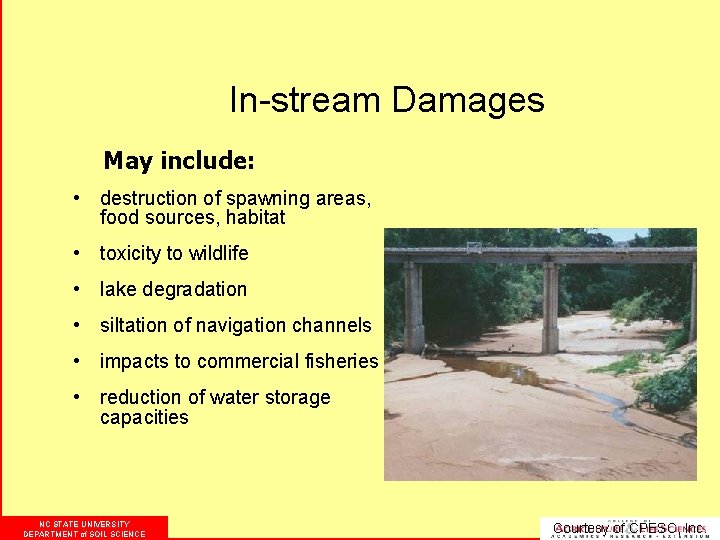
In-stream Damages May include: • destruction of spawning areas, food sources, habitat • toxicity to wildlife • lake degradation • siltation of navigation channels • impacts to commercial fisheries • reduction of water storage capacities NC STATE UNIVERSITY DEPARTMENT of SOIL SCIENCE Courtesy of CPESC, Inc.
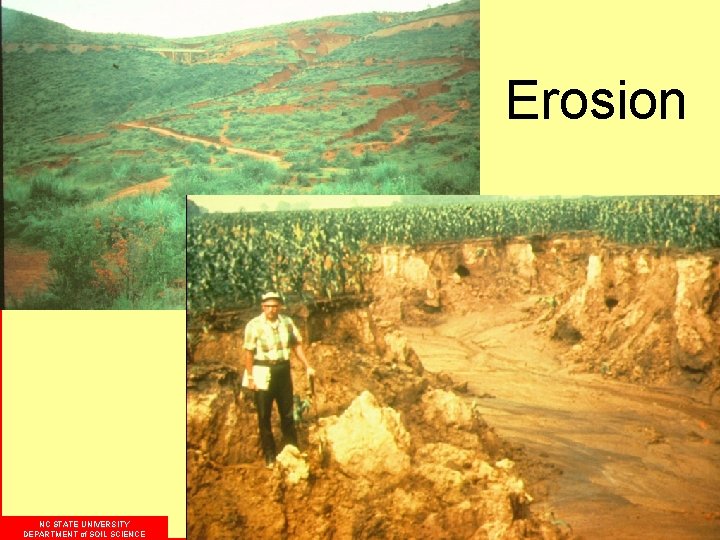
Erosion NC STATE UNIVERSITY DEPARTMENT of SOIL SCIENCE
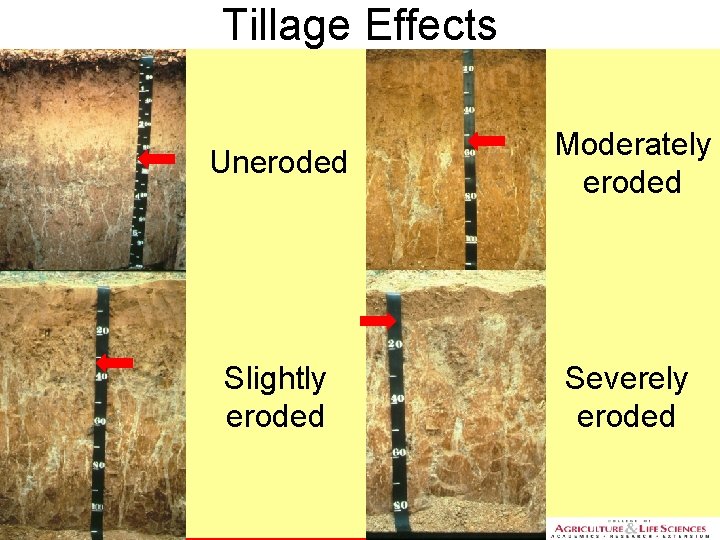
Tillage Effects NC STATE UNIVERSITY DEPARTMENT of SOIL SCIENCE Uneroded Moderately eroded Slightly eroded Severely eroded
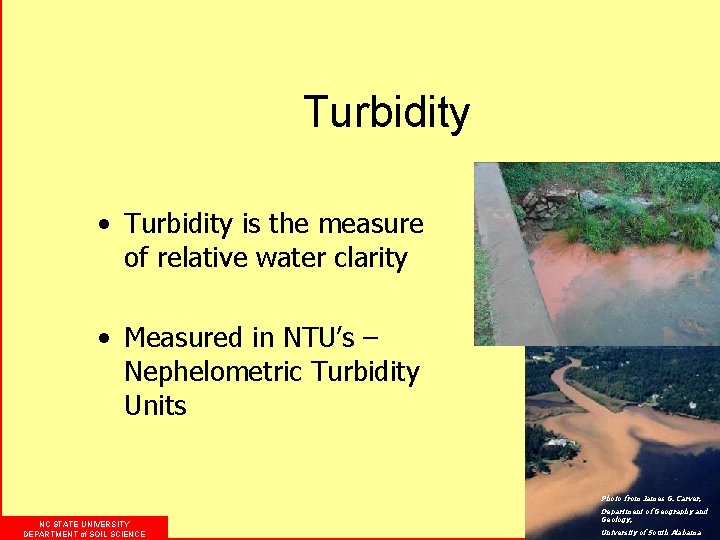
Turbidity • Turbidity is the measure of relative water clarity • Measured in NTU’s – Nephelometric Turbidity Units Photo from James G. Carver, NC STATE UNIVERSITY DEPARTMENT of SOIL SCIENCE Department of Geography and Geology, University of South Alabama

Questions? NC STATE UNIVERSITY DEPARTMENT of SOIL SCIENCE

NC STATE UNIVERSITY DEPARTMENT of SOIL SCIENCE
- Slides: 28