
Capabilities and School Geography David Lambert Capability Derives
“Capabilities” and School Geography David Lambert

Capability Derives from Amartya Sen and Martha Nussbaum and their work in human welfare and development economics: What it is to be ‘truly human’? Anything that prevents fully human functioning is a deprivation of capability
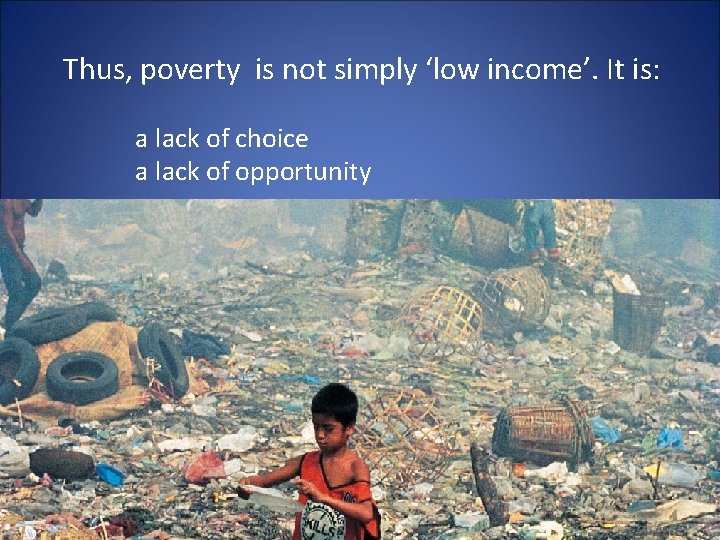
Thus, poverty is not simply ‘low income’. It is: a lack of choice a lack of opportunity
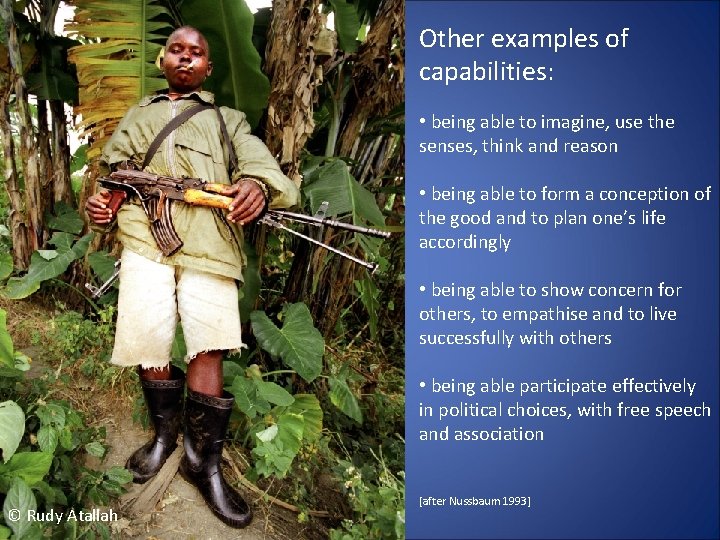
Other examples of capabilities: • being able to imagine, use the senses, think and reason • being able to form a conception of the good and to plan one’s life accordingly • being able to show concern for others, to empathise and to live successfully with others • being able participate effectively in political choices, with free speech and association © Rudy Atallah [after Nussbaum 1993]
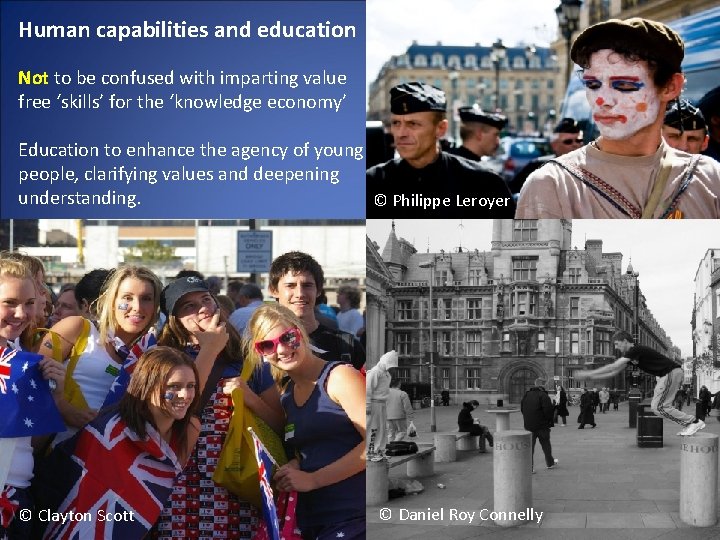
Human capabilities and education Not to be confused with imparting value free ‘skills’ for the ‘knowledge economy’ Education to enhance the agency of young people, clarifying values and deepening understanding. © Philippe Leroyer © Clayton Scott © Daniel Roy Connelly
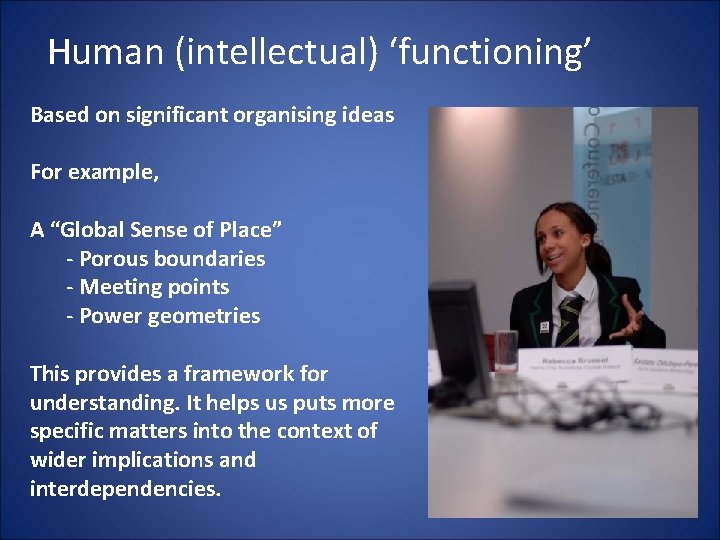
Human (intellectual) ‘functioning’ Based on significant organising ideas For example, A “Global Sense of Place” - Porous boundaries - Meeting points - Power geometries This provides a framework for understanding. It helps us puts more specific matters into the context of wider implications and interdependencies.
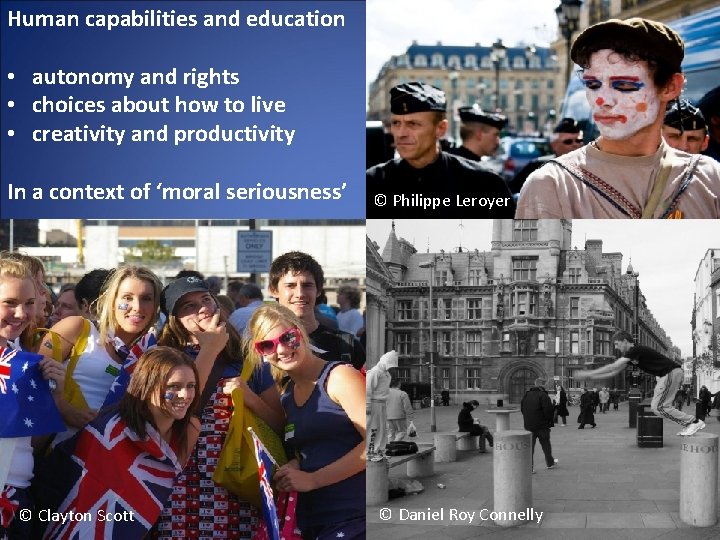
Human capabilities and education • autonomy and rights • choices about how to live • creativity and productivity In a context of ‘moral seriousness’ © Clayton Scott © Philippe Leroyer © Daniel Roy Connelly
The neo-liberal orthodoxy has “dulled our ability to think for, or beyond, ourselves” [Wadley 2008] “Vibrant City”
School geography and capabilities Exploring geographical studies in school enables young people to extend and develop their: • world knowledge and knowledge of earth as the home of humankind • relational understanding of people and places in the world • disposition to link social, economic and environmental processes
A Differen t View © Seth Johnson www. geography. org. uk/adifferentview
A Differen t View A Manifesto for geography education from the Geographical Association © Seth Johnson www. geography. org. uk/adifferentview
Two Problems with ‘capabilities’? 1. Overarching belief in the individual: a denial of social and economic structural disadvantage © Seth Johnson
Two Problems with ‘capabilities’? 2. Lack of confidence in subject knowledge in its own right © Seth Johnson 1. Overarching belief in the individual: a denial of social and economic structural disadvantage
A Different View A ‘capabilities’ approach • • individual human potential world knowledge relational understanding disposition to link human and physical A Different View • • young people’s geographies geography as a subject resource thinking geographically ‘living geography’
A Different View A ‘capabilities’ approach • • individual human potential world knowledge relational understanding disposition to link human and physical A Different View • • young people’s geographies geography as a subject resource thinking geographically ‘living geography’ The Capabilities Approach attempts to link the value of geography as a ‘powerful knowledge’ with the agency of young people as knowledge constructors A Different View has at its heart an expanded ideal of teacher autonomy, of teachers as the ‘curriculum makers’
“We are encouraging schools to be outward looking, globally minded and future focused. (Schools should) enable open-ended engagement with wider world issues … It’s the tensions that students confront when they do so that are important. ” Prof Bill Scott Launching the ‘leadership for sustainable schools programme’ Feb 2009
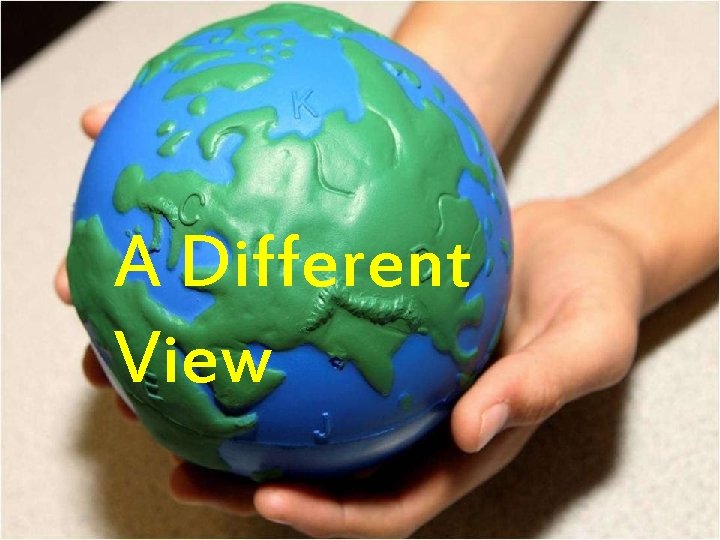
A Different View
- Slides: 17