
CAP PROCESS MAPS VIABILITY MAPS During a CAP
CAP PROCESS MAPS: VIABILITY MAPS During a CAP process, it can be useful to produce maps that show areas where viability or conservation status is better and less well off. These maps can be generated by GIS staff by analyzing land -use information, monitoring data, etc. or can be generated in a workshop by participants who draw polygons based on their perceptions (and by using key ecological attributes as a reference for targets represented within an area). The following slides present an example of such a map, and the type of information that can be shown on the map.
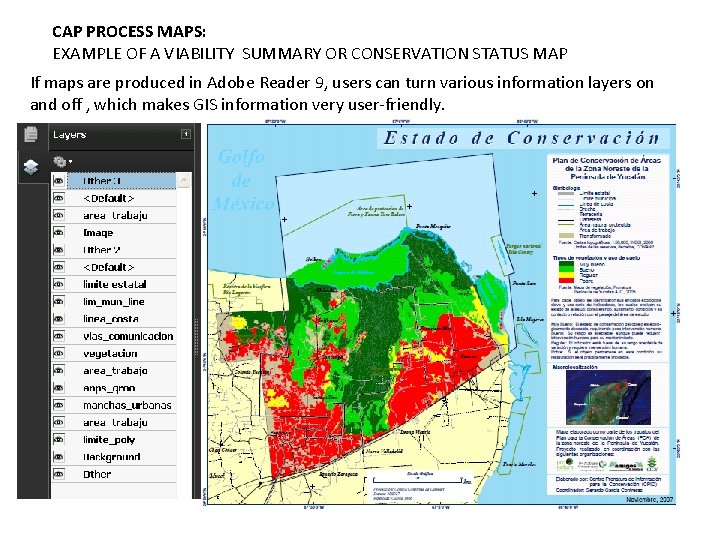
CAP PROCESS MAPS: EXAMPLE OF A VIABILITY SUMMARY OR CONSERVATION STATUS MAP If maps are produced in Adobe Reader 9, users can turn various information layers on and off , which makes GIS information very user-friendly.
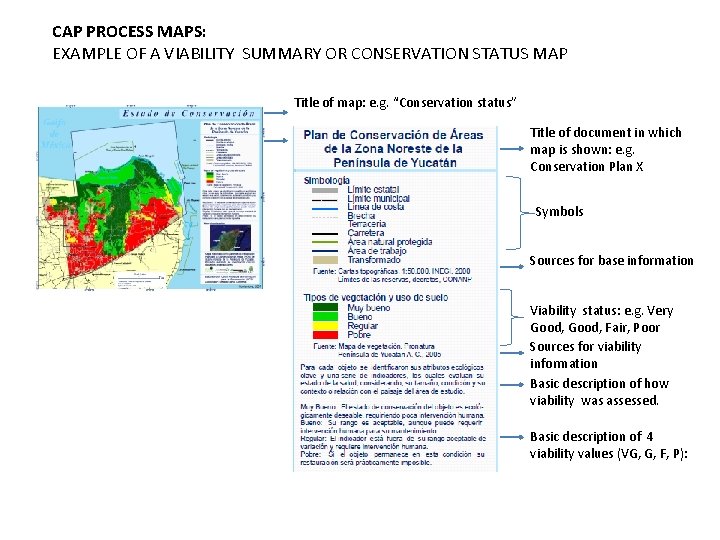
CAP PROCESS MAPS: EXAMPLE OF A VIABILITY SUMMARY OR CONSERVATION STATUS MAP Title of map: e. g. “Conservation status” Title of document in which map is shown: e. g. Conservation Plan X Symbols Sources for base information Viability status: e. g. Very Good, Fair, Poor Sources for viability information Basic description of how viability was assessed. Basic description of 4 viability values (VG, G, F, P):
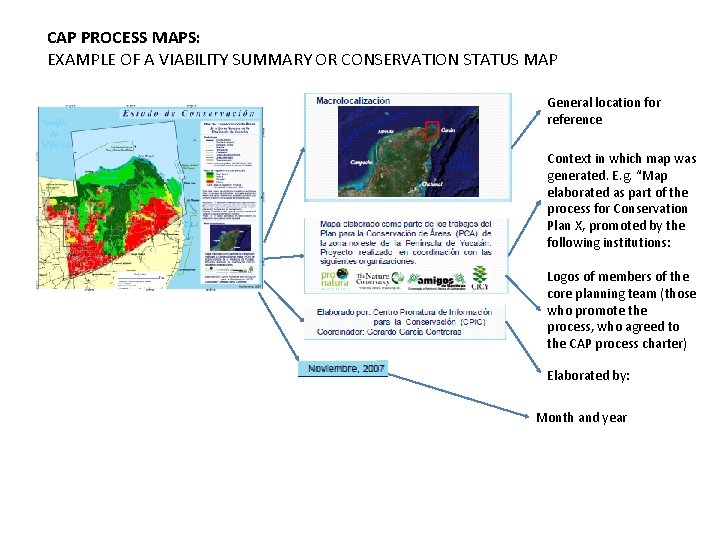
CAP PROCESS MAPS: EXAMPLE OF A VIABILITY SUMMARY OR CONSERVATION STATUS MAP General location for reference Context in which map was generated. E. g. “Map elaborated as part of the process for Conservation Plan X, promoted by the following institutions: Logos of members of the core planning team (those who promote the process, who agreed to the CAP process charter) Elaborated by: Month and year
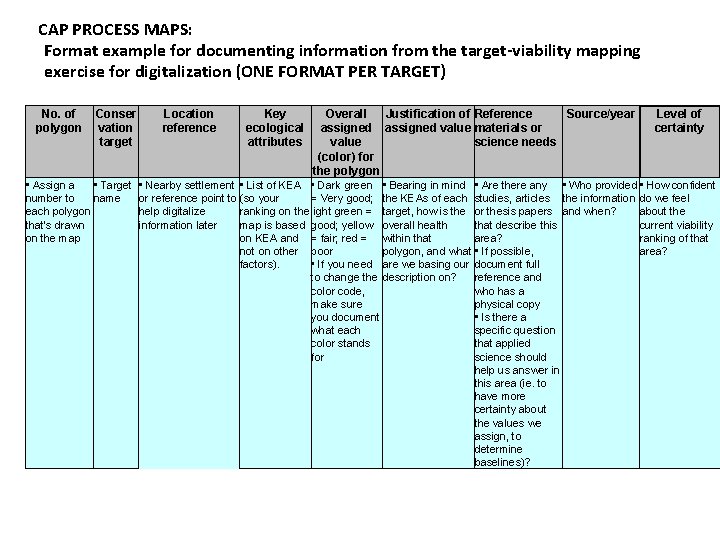
CAP PROCESS MAPS: Format example for documenting information from the target-viability mapping exercise for digitalization (ONE FORMAT PER TARGET) No. of polygon Conser vation target • Assign a • Target number to name each polygon that's drawn on the map Location reference Key ecological attributes Overall Justification of Reference Source/year assigned value materials or value science needs (color) for the polygon Level of certainty • Nearby settlement • List of KEA • Dark green • Bearing in mind • Are there any • Who provided • How confident or reference point to (so your = Very good; the KEAs of each studies, articles the information do we feel help digitalize ranking on the light green = target, how is the or thesis papers and when? about the information later map is based good; yellow overall health that describe this current viability on KEA and = fair; red = within that area? ranking of that not on other poor polygon, and what • If possible, area? factors). • If you need are we basing our document full to change the description on? reference and color code, who has a make sure physical copy you document • Is there a what each specific question color stands that applied for science should help us answer in this area (ie. to have more certainty about the values we assign, to determine baselines)?
- Slides: 5