
CAP Module 1 Basic Mechanical Airways CAP Module
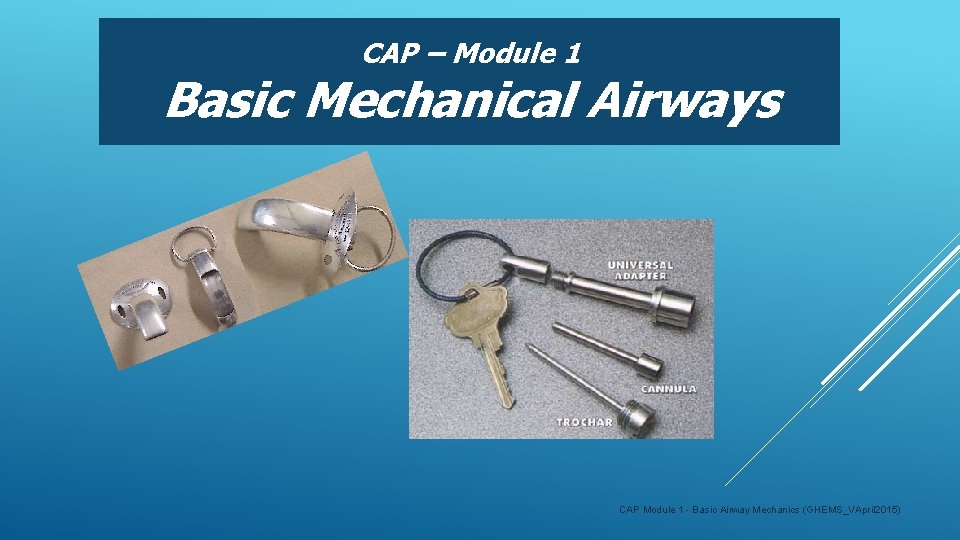
CAP – Module 1 Basic Mechanical Airways CAP Module 1 - Basic Airway Mechanics (GHEMS_VApril 2015)
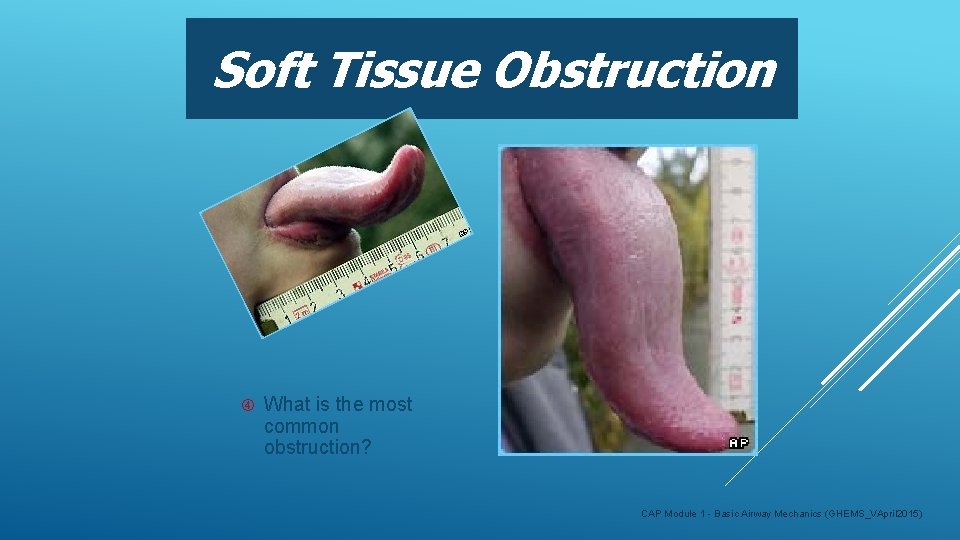
Soft Tissue Obstruction What is the most common obstruction? CAP Module 1 - Basic Airway Mechanics (GHEMS_VApril 2015)
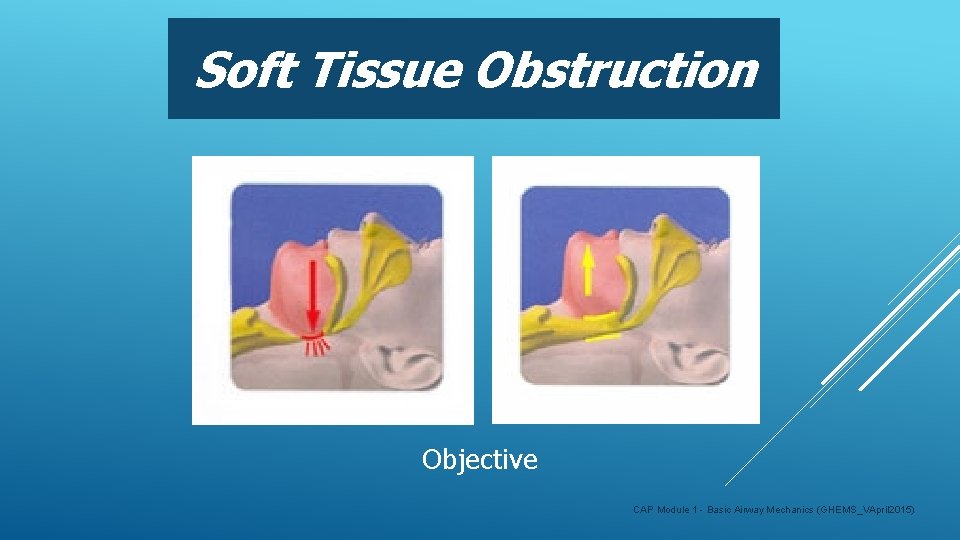
Soft Tissue Obstruction Objective CAP Module 1 - Basic Airway Mechanics (GHEMS_VApril 2015)
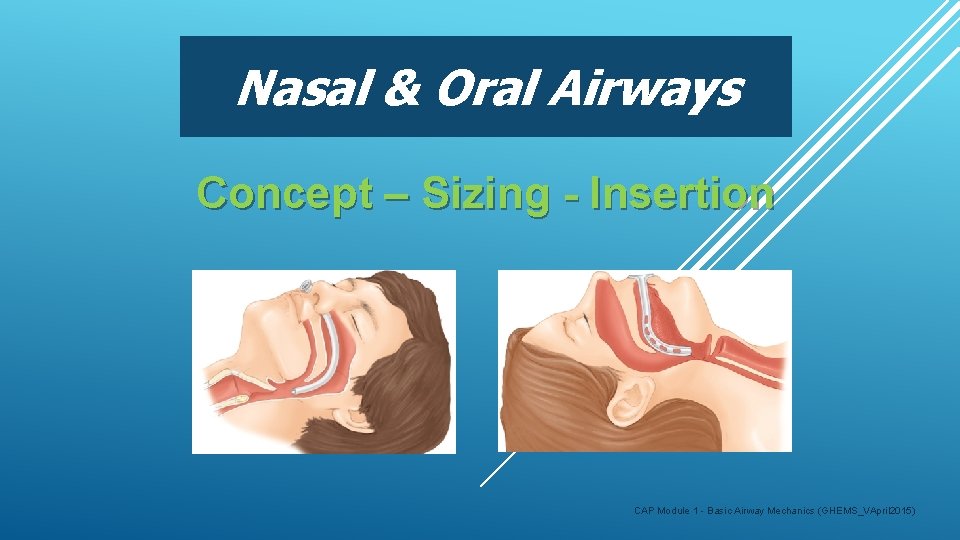
Nasal & Oral Airways Concept – Sizing - Insertion CAP Module 1 - Basic Airway Mechanics (GHEMS_VApril 2015)
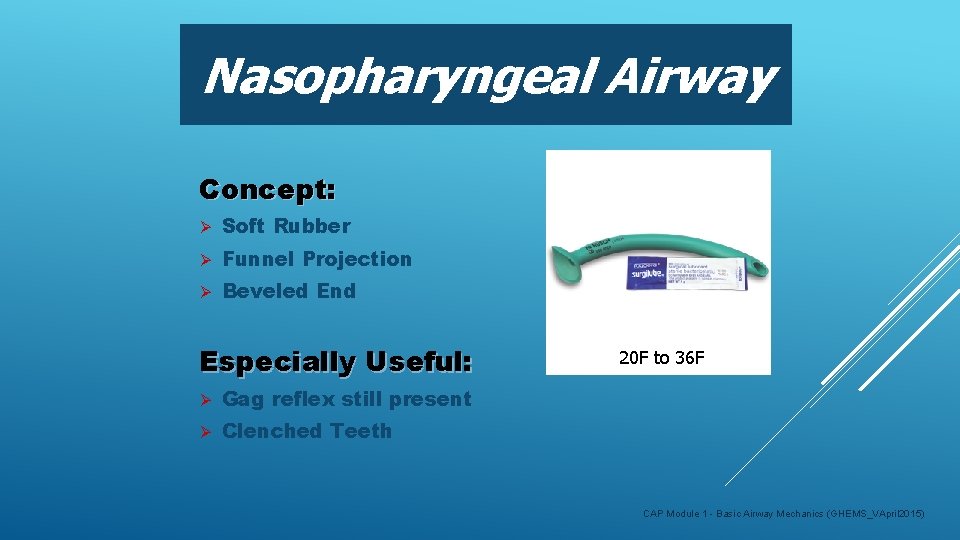
Nasopharyngeal Airway Concept: Ø Soft Rubber Ø Funnel Projection Ø Beveled End Especially Useful: Ø Gag reflex still present Ø Clenched Teeth 20 F to 36 F CAP Module 1 - Basic Airway Mechanics (GHEMS_VApril 2015)
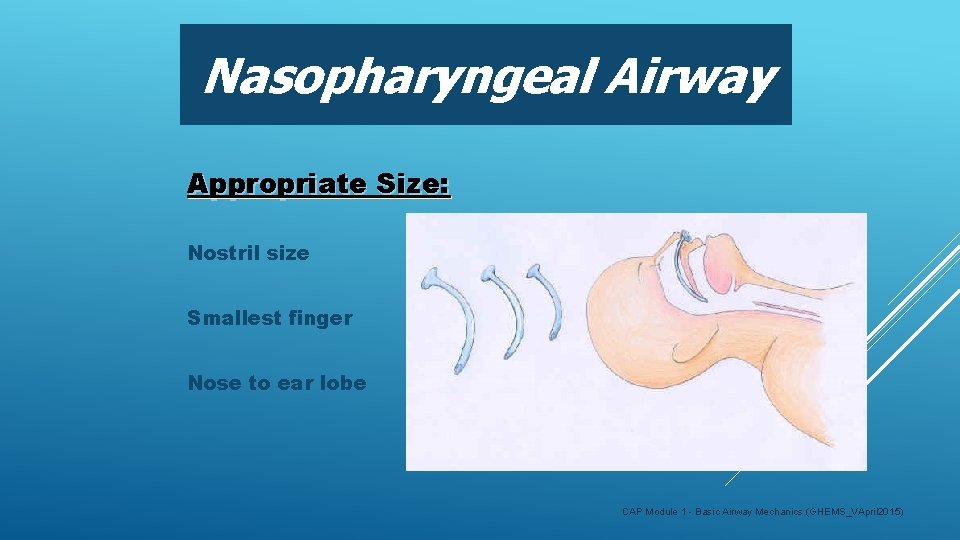
Nasopharyngeal Airway Appropriate Size: Nostril size Smallest finger Nose to ear lobe CAP Module 1 - Basic Airway Mechanics (GHEMS_VApril 2015)
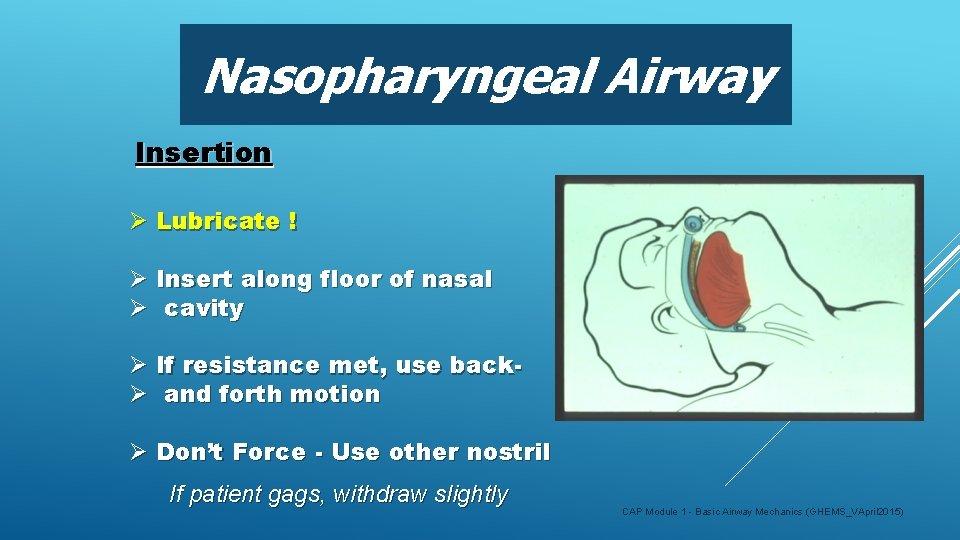
Nasopharyngeal Airway Insertion Ø Lubricate ! Ø Insert along floor of nasal Ø cavity Ø If resistance met, use backØ and forth motion Ø Don’t Force - Use other nostril If patient gags, withdraw slightly CAP Module 1 - Basic Airway Mechanics (GHEMS_VApril 2015)
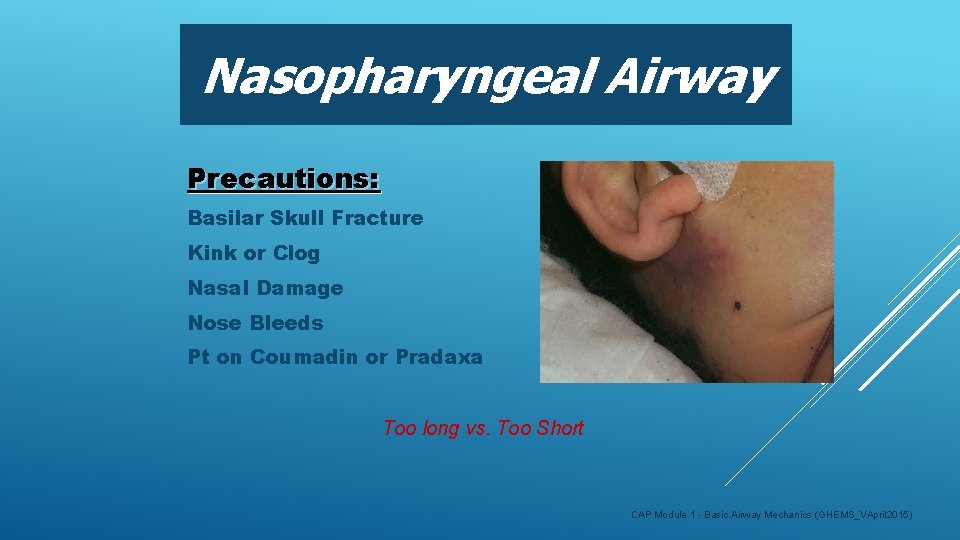
Nasopharyngeal Airway Precautions: Basilar Skull Fracture Kink or Clog Nasal Damage Nose Bleeds Pt on Coumadin or Pradaxa Too long vs. Too Short CAP Module 1 - Basic Airway Mechanics (GHEMS_VApril 2015)
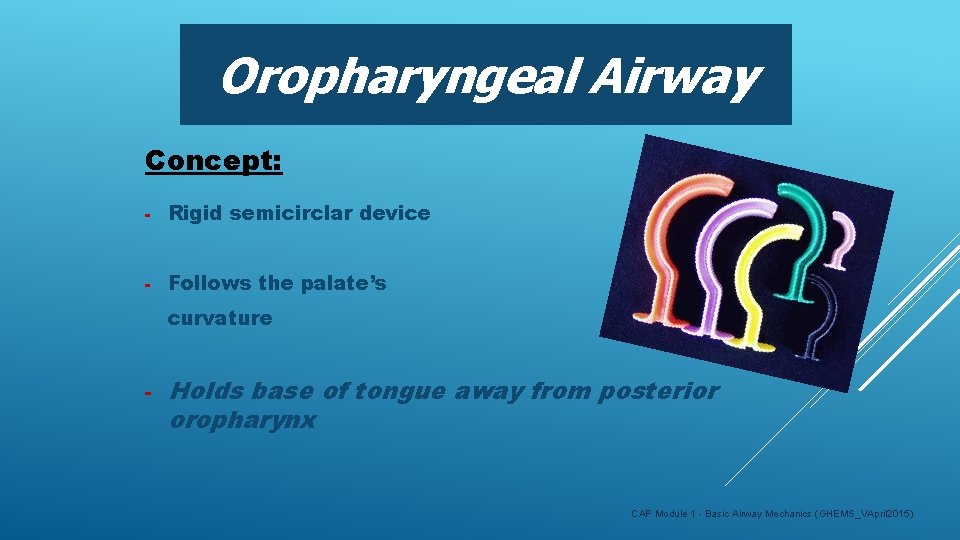
Oropharyngeal Airway Concept: - Rigid semicirclar device - Follows the palate’s curvature - Holds base of tongue away from posterior oropharynx CAP Module 1 - Basic Airway Mechanics (GHEMS_VApril 2015)
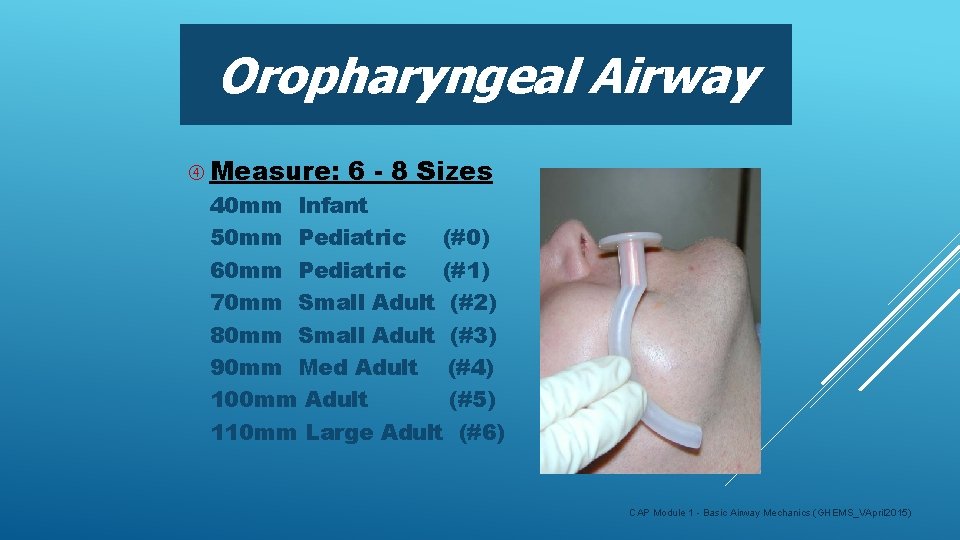
Oropharyngeal Airway Measure: 6 - 8 Sizes 40 mm Infant 50 mm Pediatric (#0) 60 mm Pediatric (#1) 70 mm Small Adult (#2) 80 mm Small Adult (#3) 90 mm Med Adult (#4) 100 mm Adult (#5) 110 mm Large Adult (#6) CAP Module 1 - Basic Airway Mechanics (GHEMS_VApril 2015)
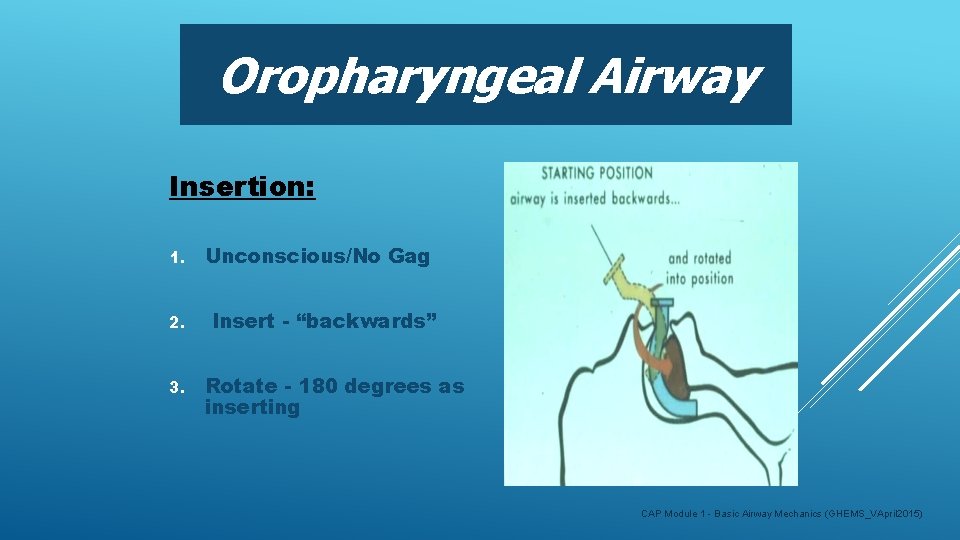
Oropharyngeal Airway Insertion: 1. Unconscious/No Gag 2. Insert - “backwards” 3. Rotate - 180 degrees as inserting CAP Module 1 - Basic Airway Mechanics (GHEMS_VApril 2015)
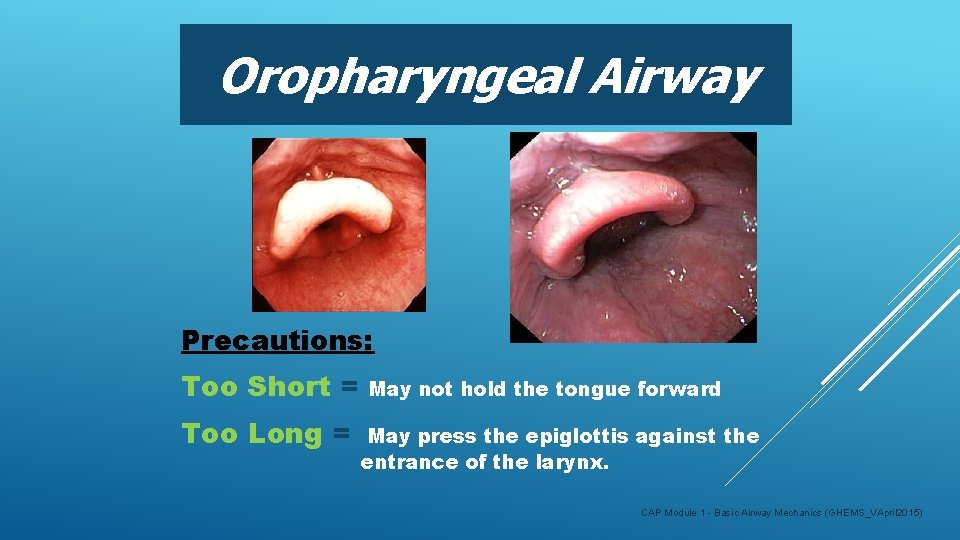
Oropharyngeal Airway Precautions: Too Short = Too Long = May not hold the tongue forward May press the epiglottis against the entrance of the larynx. CAP Module 1 - Basic Airway Mechanics (GHEMS_VApril 2015)
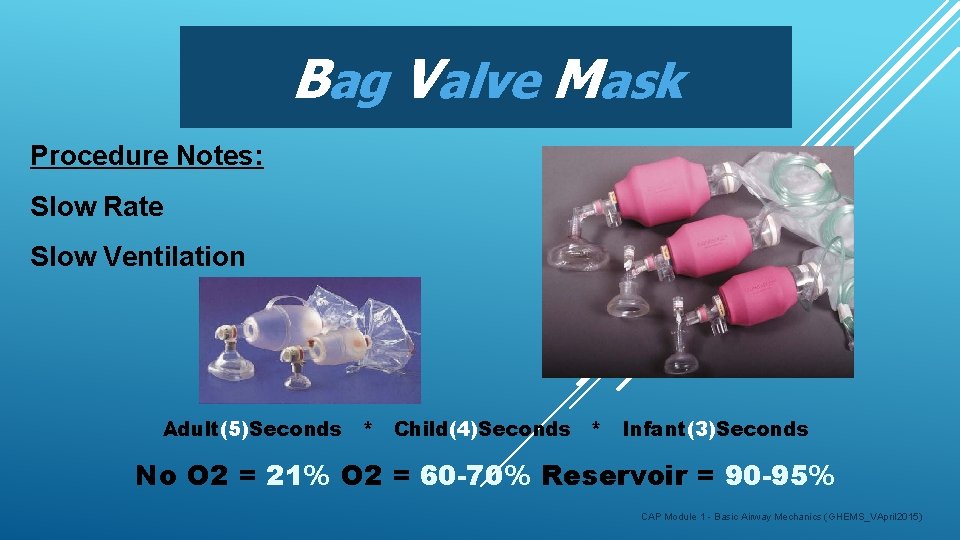
Bag Valve Mask Procedure Notes: Slow Rate Slow Ventilation Adult(5)Seconds * Child(4)Seconds * Infant(3)Seconds No O 2 = 21% O 2 = 60 -70% Reservoir = 90 -95% CAP Module 1 - Basic Airway Mechanics (GHEMS_VApril 2015)
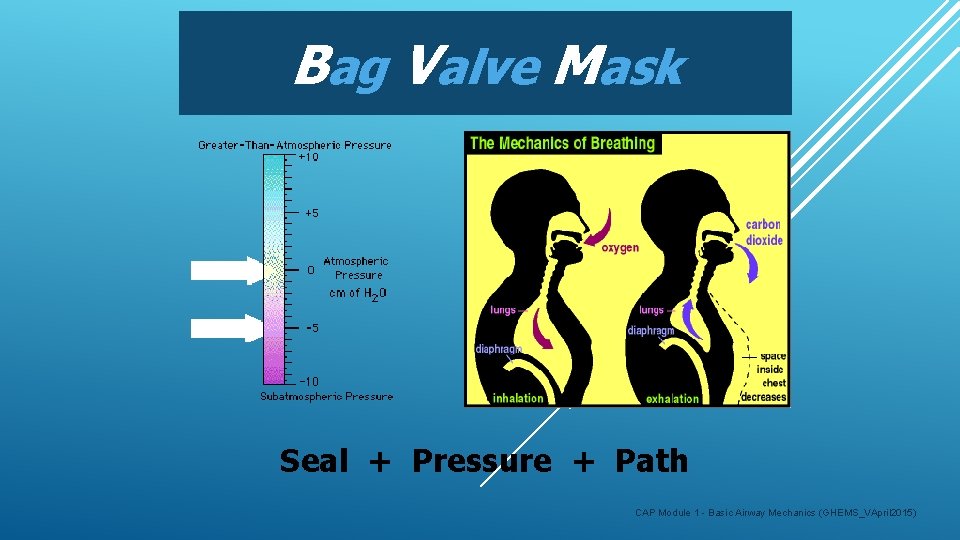
Bag Valve Mask Seal + Pressure + Path CAP Module 1 - Basic Airway Mechanics (GHEMS_VApril 2015)
GRAYS HARBOR COUNTY AIRWAY MANAGEMENT: GENERAL Indications Failure to oxygenate Failure to ventilate Failure to protect (the airway due to a decreased level of consciousness) CAP Module 1 - Basic Airway Mechanics (GHEMS_VApril 2015)
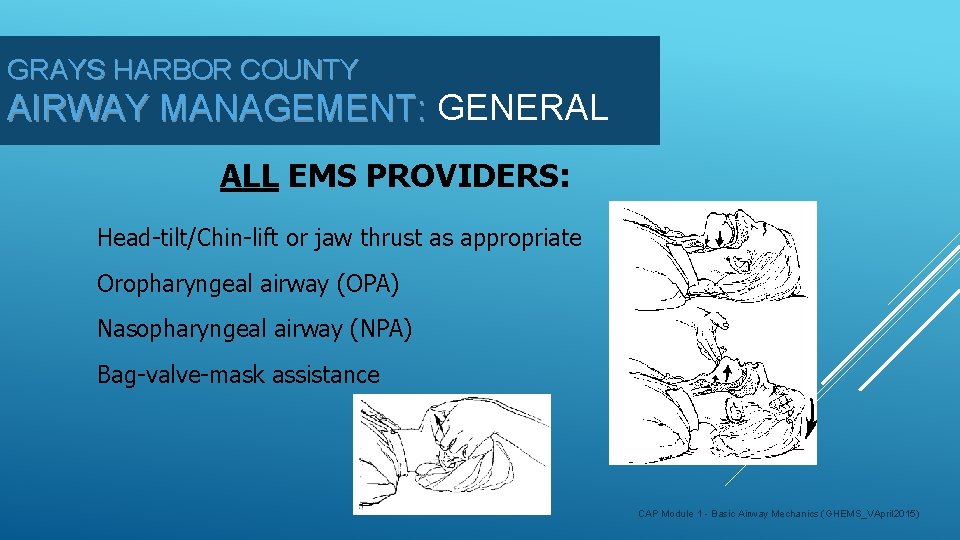
GRAYS HARBOR COUNTY AIRWAY MANAGEMENT: GENERAL ALL EMS PROVIDERS: Head-tilt/Chin-lift or jaw thrust as appropriate Oropharyngeal airway (OPA) Nasopharyngeal airway (NPA) Bag-valve-mask assistance CAP Module 1 - Basic Airway Mechanics (GHEMS_VApril 2015)
BLS Before ALS CAP Module 1 - Basic Airway Mechanics (GHEMS_VApril 2015)
- Slides: 17