
CAP 5636 Advanced Artificial Intelligence Informed Search Instructor
- Slides: 49
CAP 5636 – Advanced Artificial Intelligence Informed Search Instructor: Lotzi Bölöni [These slides were adapted from the ones created by Dan Klein and Pieter Abbeel for CS 188 Intro to AI at UC Berkeley, available at http: //ai. berkeley. edu. ]
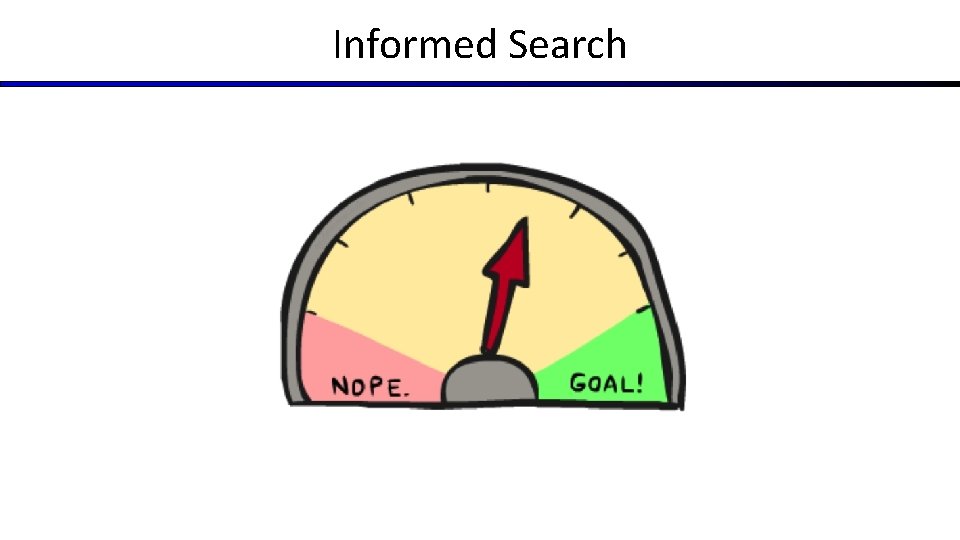
Today § Informed Search § Heuristics § Greedy Search § A* Search § Graph Search
Recap: Search
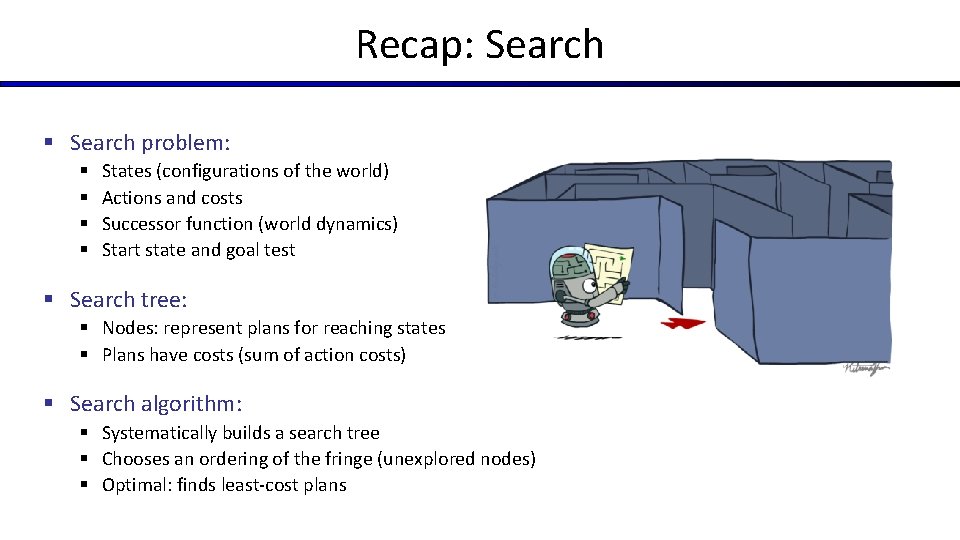
Recap: Search § Search problem: § § States (configurations of the world) Actions and costs Successor function (world dynamics) Start state and goal test § Search tree: § Nodes: represent plans for reaching states § Plans have costs (sum of action costs) § Search algorithm: § Systematically builds a search tree § Chooses an ordering of the fringe (unexplored nodes) § Optimal: finds least-cost plans
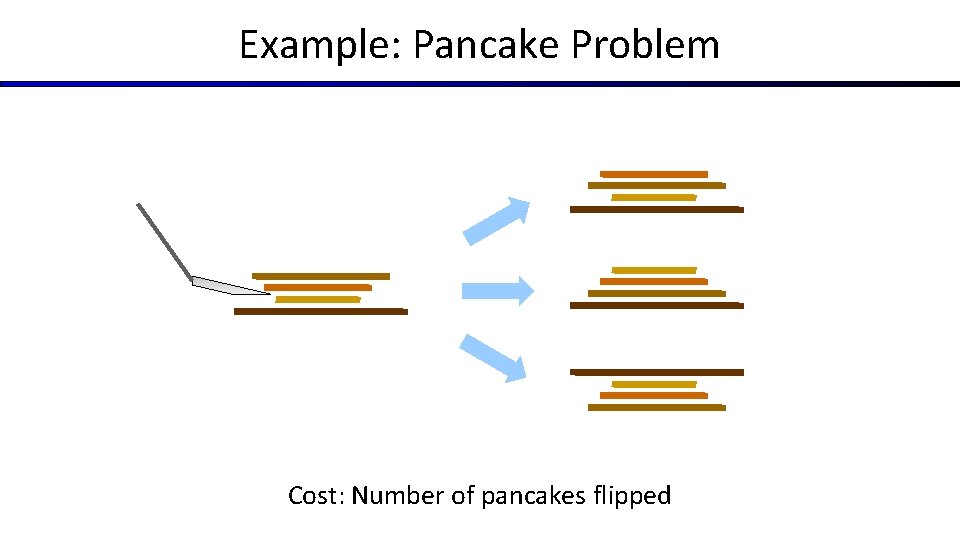
Example: Pancake Problem Cost: Number of pancakes flipped
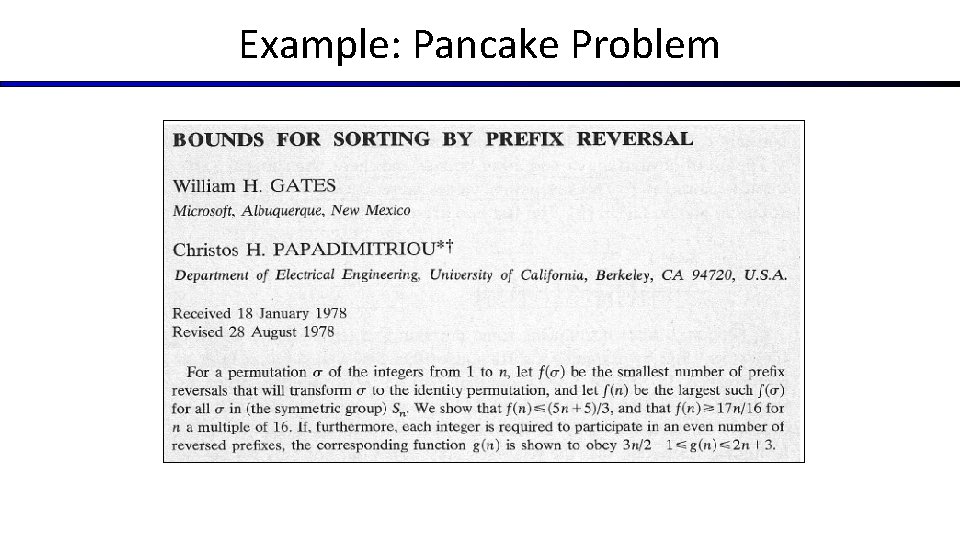
Example: Pancake Problem
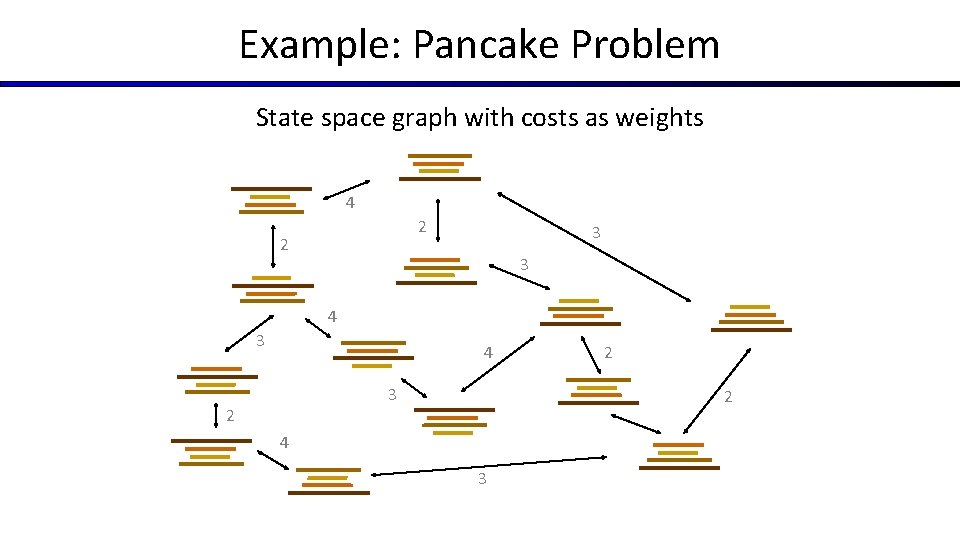
Example: Pancake Problem State space graph with costs as weights 4 2 2 3 3 4 3 2 2 2 4 3
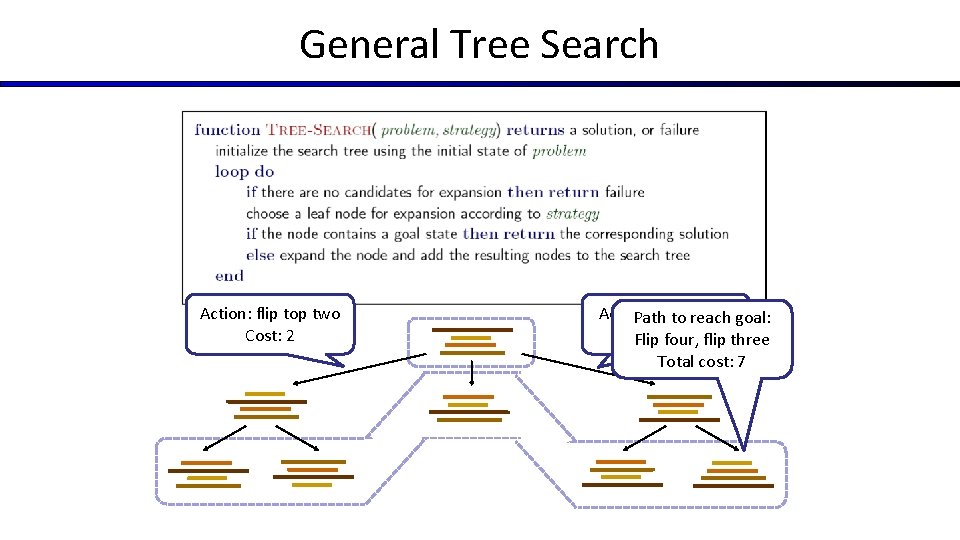
General Tree Search Action: flip top two Cost: 2 Action: fliptoallreach four goal: Path Cost: 4 flip three Flip four, Total cost: 7
Informed Search
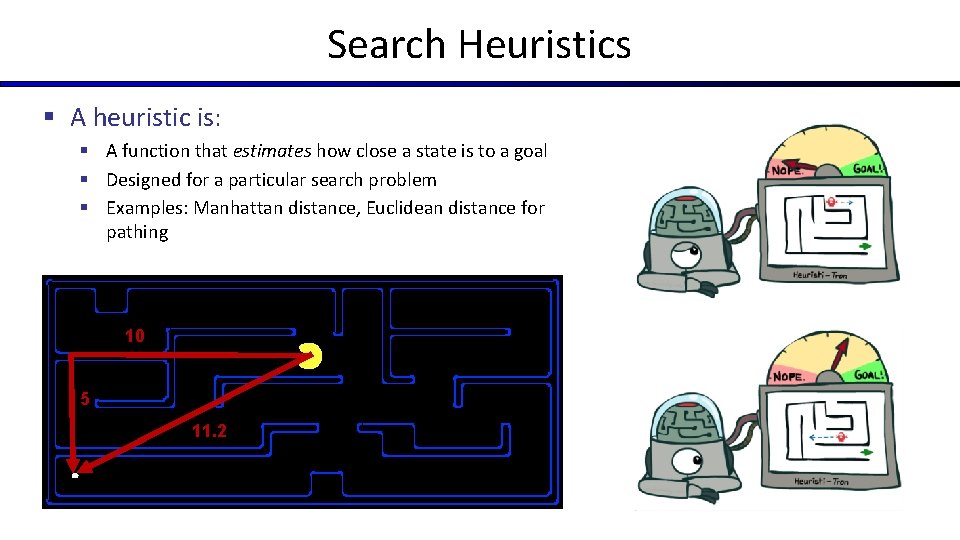
Search Heuristics § A heuristic is: § A function that estimates how close a state is to a goal § Designed for a particular search problem § Examples: Manhattan distance, Euclidean distance for pathing 10 5 11. 2
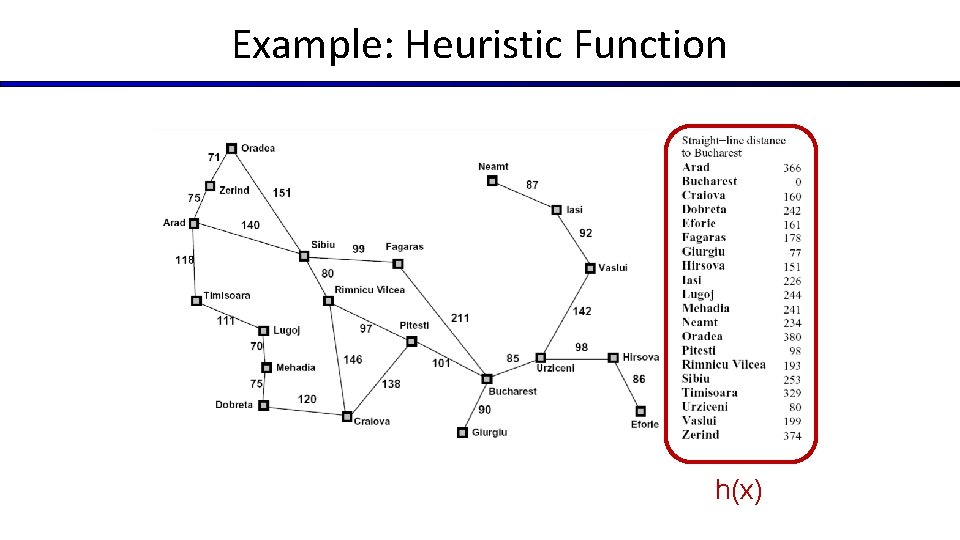
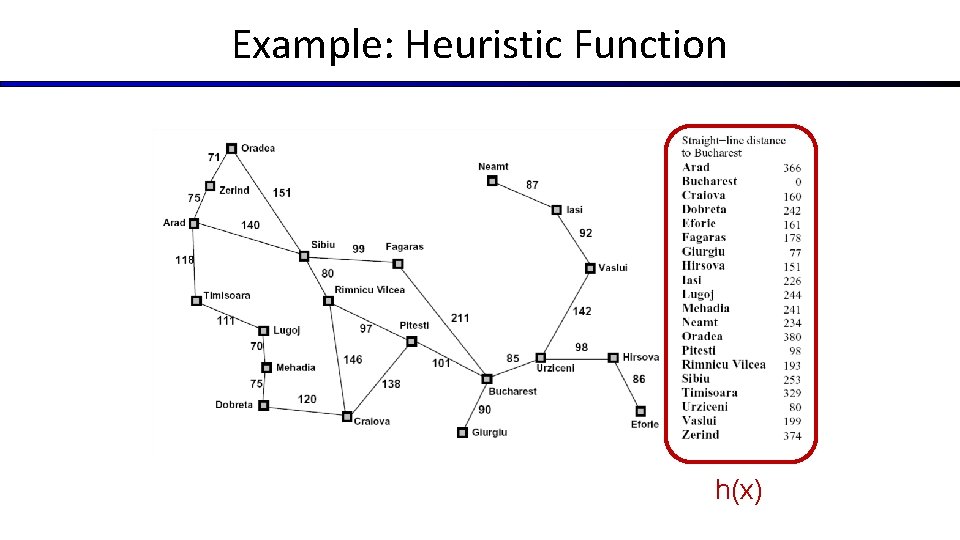
Example: Heuristic Function h(x)
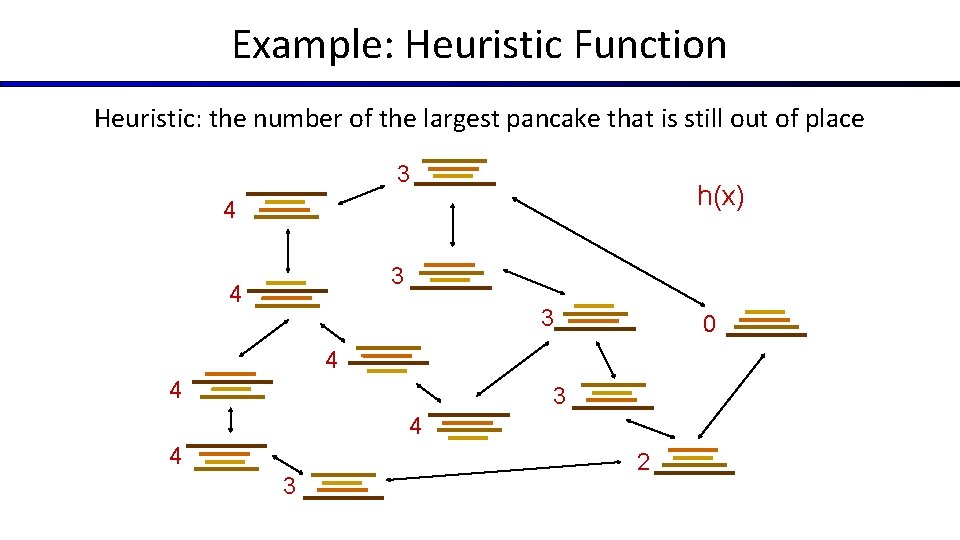
Example: Heuristic Function Heuristic: the number of the largest pancake that is still out of place 3 h(x) 4 3 0 4 4 3 2
Greedy Search
Example: Heuristic Function h(x)
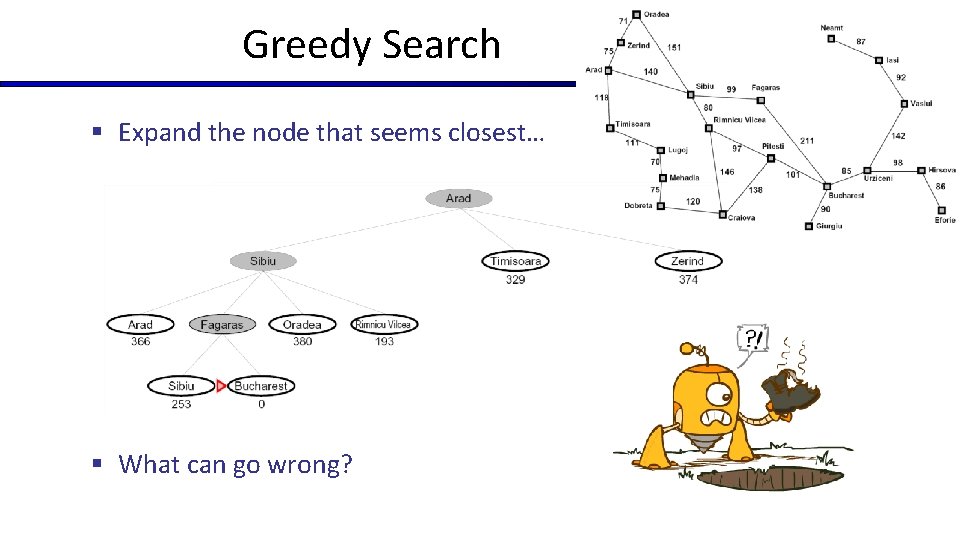
Greedy Search § Expand the node that seems closest… § What can go wrong?
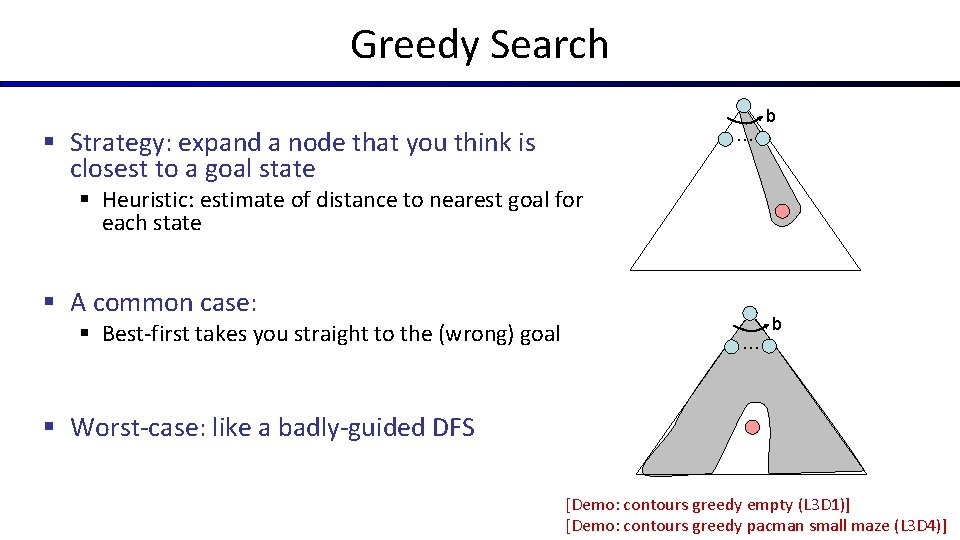
Greedy Search § Strategy: expand a node that you think is closest to a goal state … b § Heuristic: estimate of distance to nearest goal for each state § A common case: § Best-first takes you straight to the (wrong) goal … b § Worst-case: like a badly-guided DFS [Demo: contours greedy empty (L 3 D 1)] [Demo: contours greedy pacman small maze (L 3 D 4)]
Video of Demo Contours Greedy (Empty)
Video of Demo Contours Greedy (Pacman Small Maze)
A* Search
A* Search UCS Greedy A*
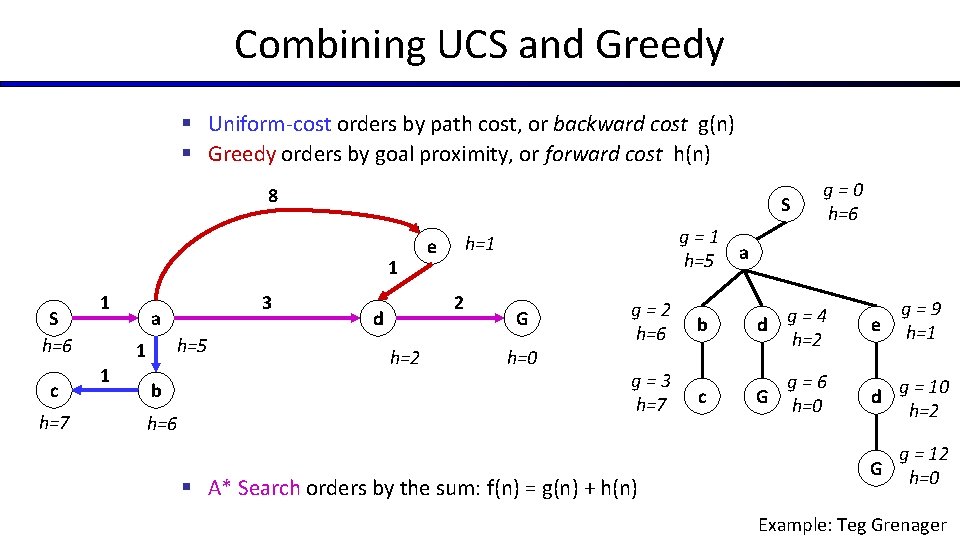
Combining UCS and Greedy § Uniform-cost orders by path cost, or backward cost g(n) § Greedy orders by goal proximity, or forward cost h(n) 8 S 1 S h=6 c h=7 1 a h=5 1 1 3 b h=6 2 d h=2 g=1 h=5 h=1 e G h=0 g=2 h=6 g=3 h=7 § A* Search orders by the sum: f(n) = g(n) + h(n) g=0 h=6 a b d g=4 h=2 e g=9 h=1 c G g=6 h=0 d g = 10 h=2 G g = 12 h=0 Example: Teg Grenager
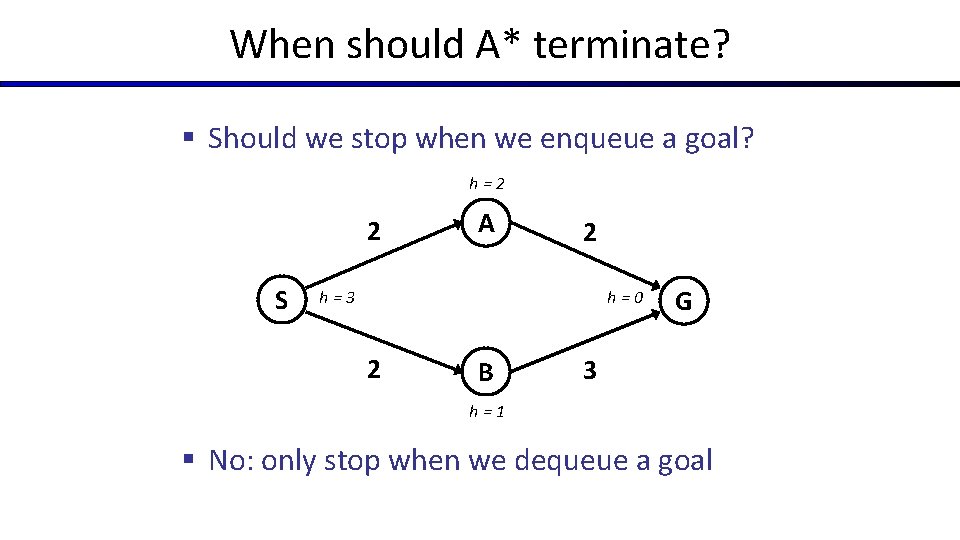
When should A* terminate? § Should we stop when we enqueue a goal? h=2 2 S A 2 h=3 h=0 2 B G 3 h=1 § No: only stop when we dequeue a goal
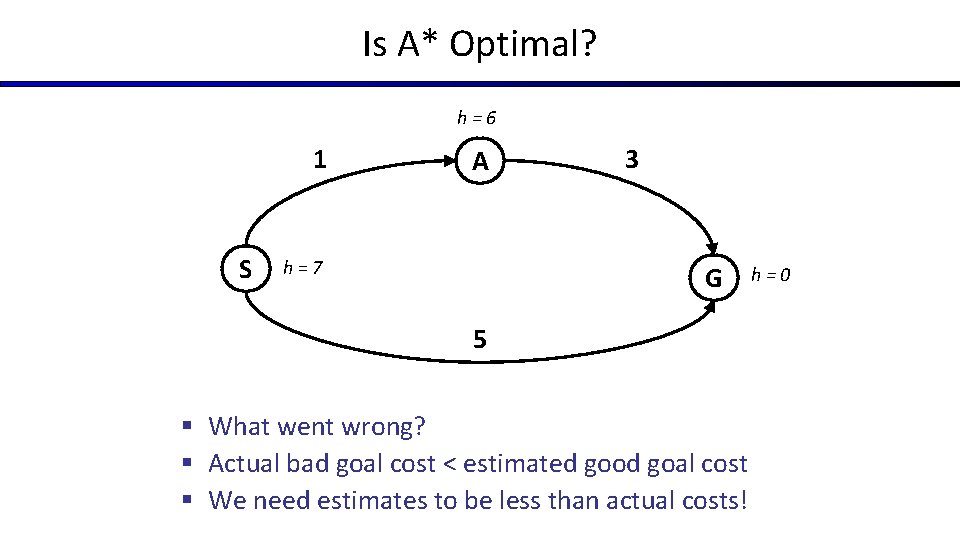
Is A* Optimal? h=6 1 S A h=7 3 G 5 § What went wrong? § Actual bad goal cost < estimated good goal cost § We need estimates to be less than actual costs! h=0
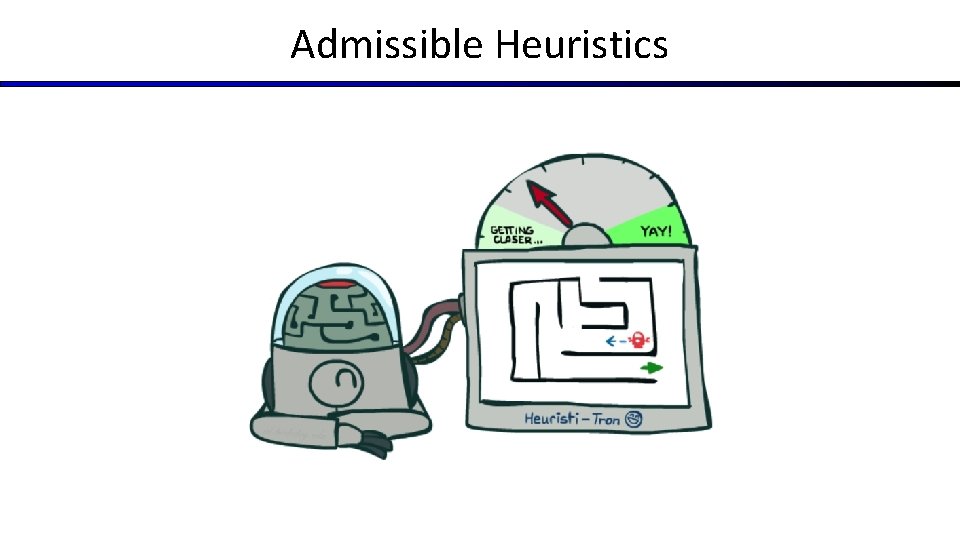
Admissible Heuristics
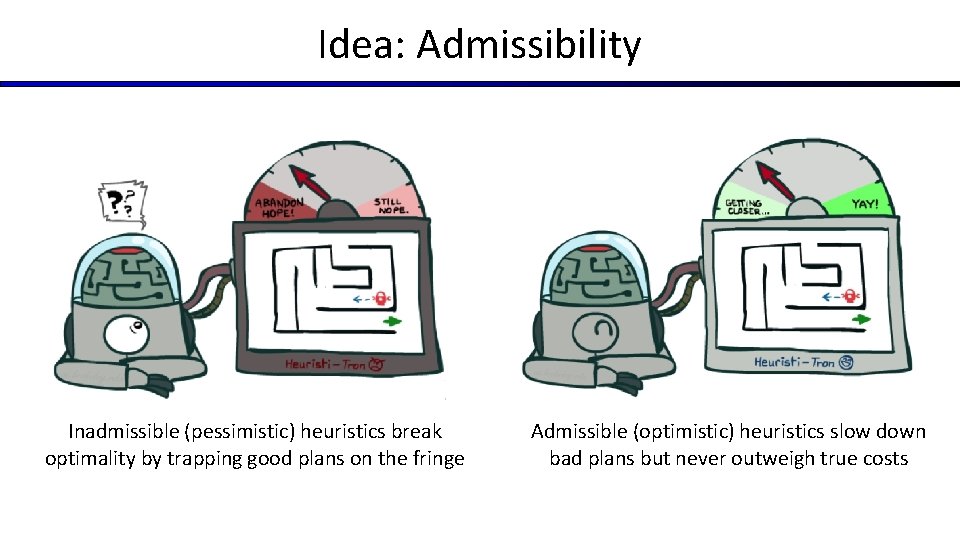
Idea: Admissibility Inadmissible (pessimistic) heuristics break optimality by trapping good plans on the fringe Admissible (optimistic) heuristics slow down bad plans but never outweigh true costs
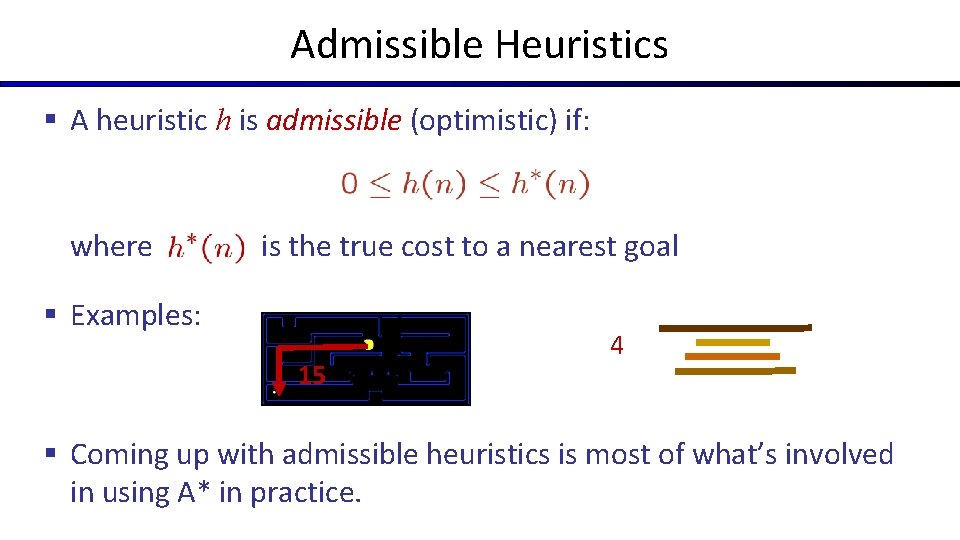
Admissible Heuristics § A heuristic h is admissible (optimistic) if: where is the true cost to a nearest goal § Examples: 15 4 § Coming up with admissible heuristics is most of what’s involved in using A* in practice.
Properties of A*
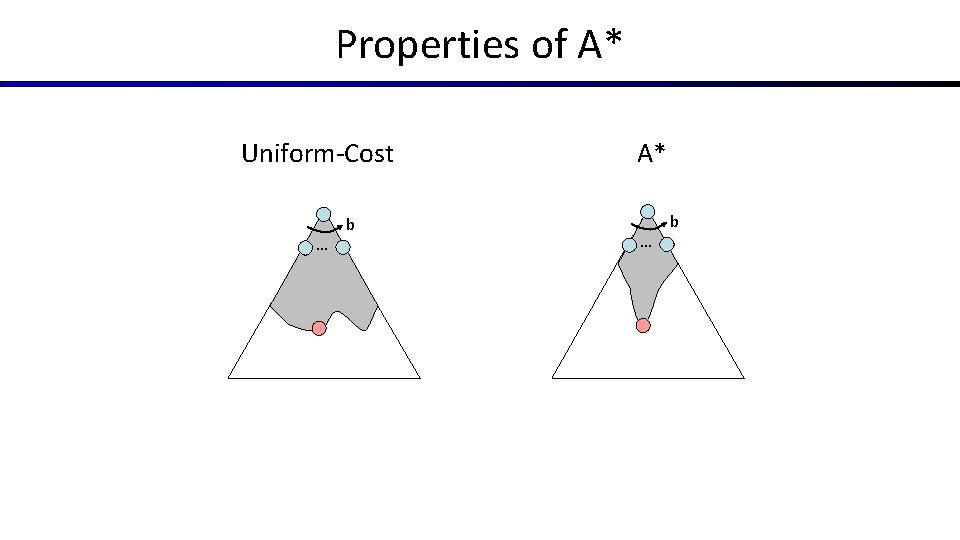
Properties of A* Uniform-Cost … b A* … b
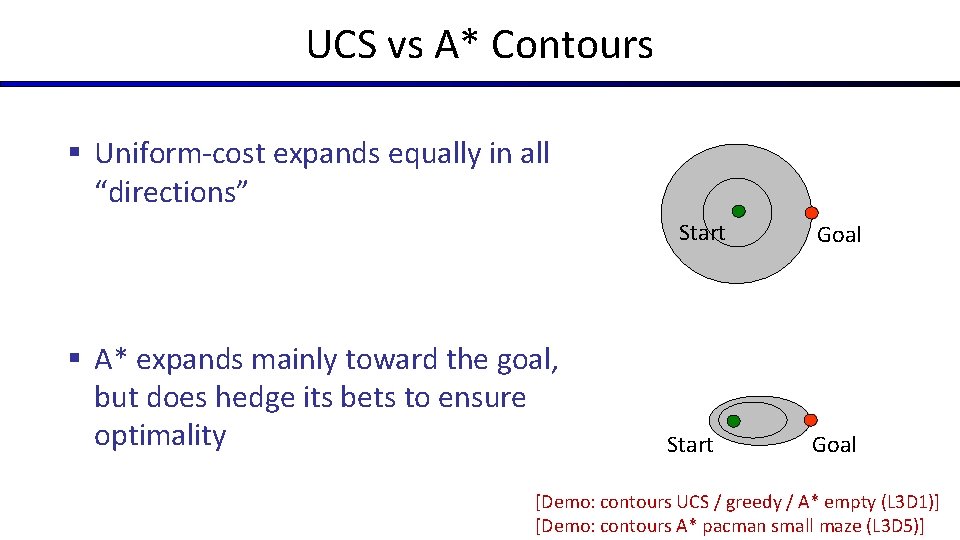
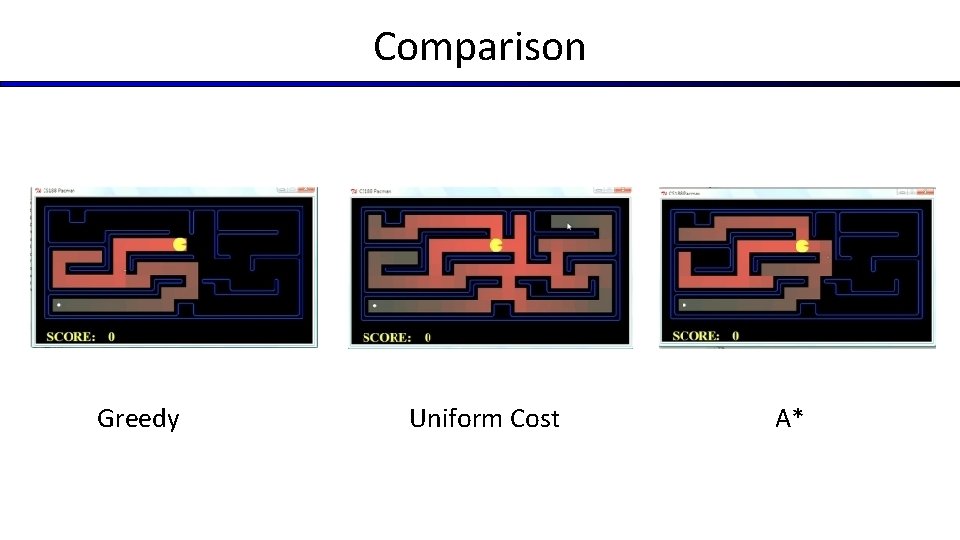
UCS vs A* Contours § Uniform-cost expands equally in all “directions” Start § A* expands mainly toward the goal, but does hedge its bets to ensure optimality Start Goal [Demo: contours UCS / greedy / A* empty (L 3 D 1)] [Demo: contours A* pacman small maze (L 3 D 5)]
Video of Demo Contours (Empty) -- UCS
Video of Demo Contours (Empty) -- Greedy
Video of Demo Contours (Empty) – A*
Video of Demo Contours (Pacman Small Maze) – A*
Comparison Greedy Uniform Cost A*
A* Applications
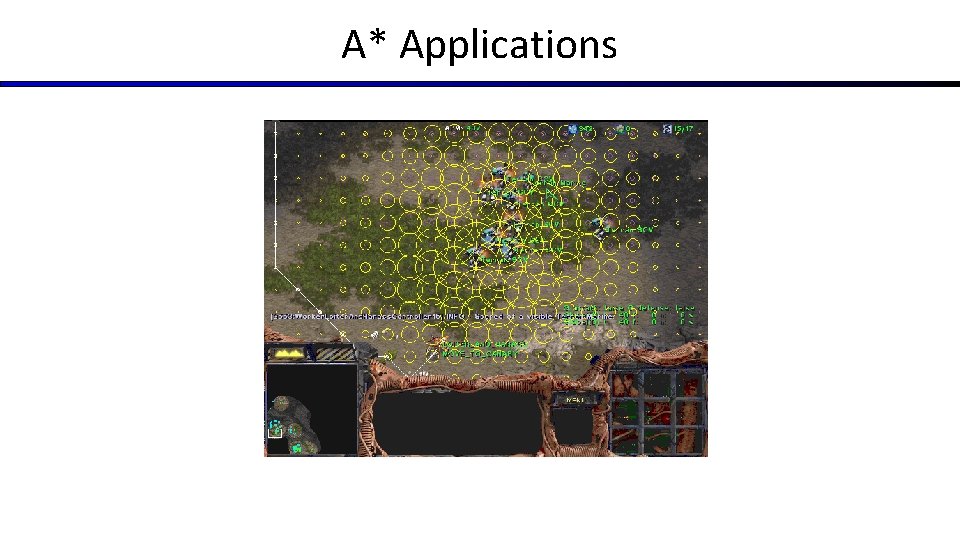
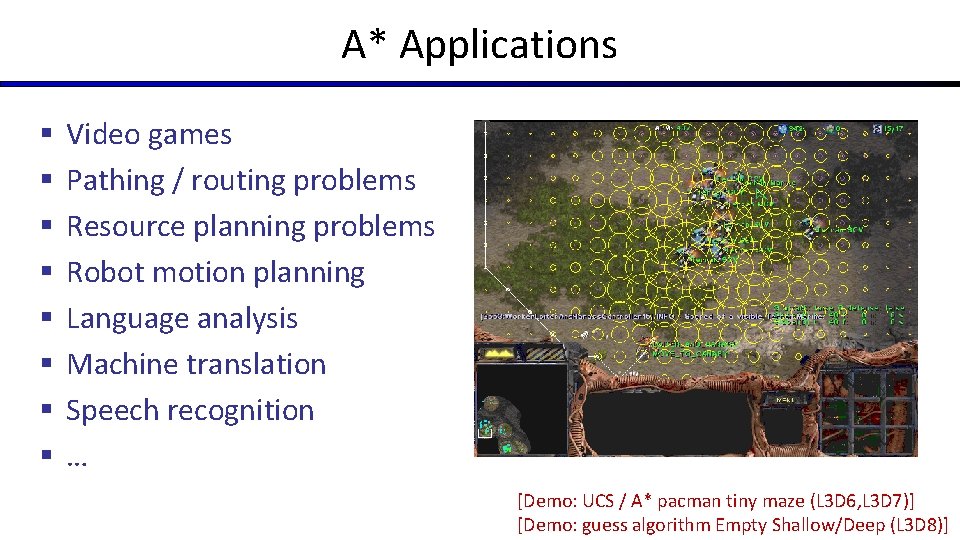
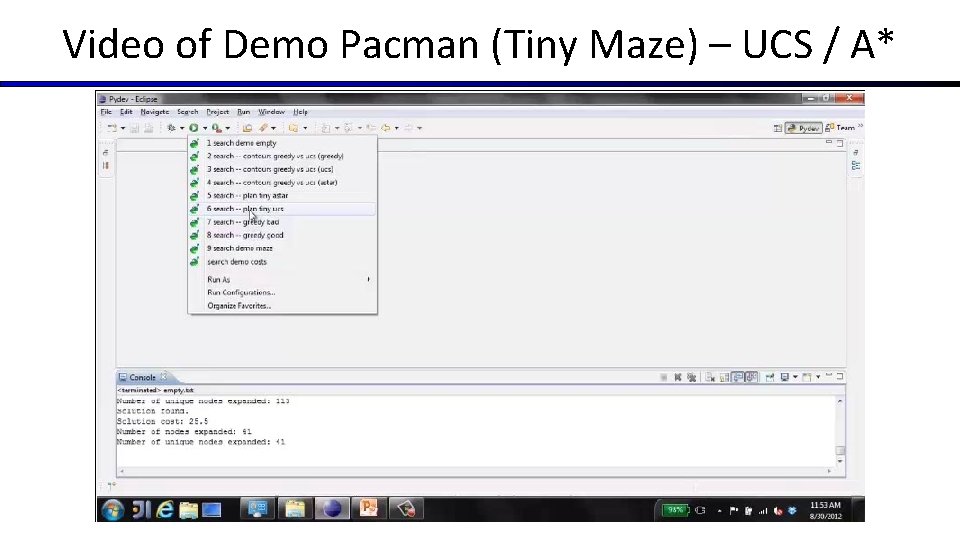
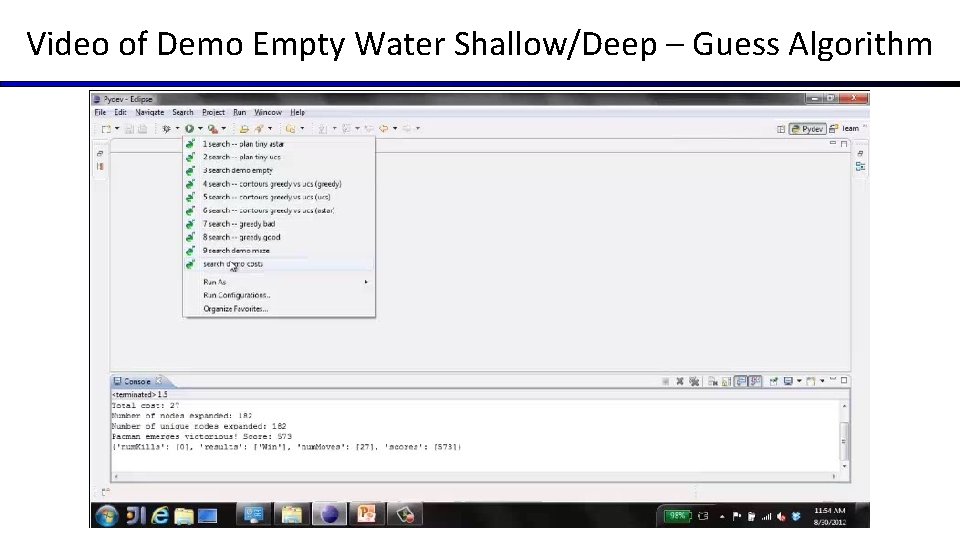
A* Applications § § § § Video games Pathing / routing problems Resource planning problems Robot motion planning Language analysis Machine translation Speech recognition … [Demo: UCS / A* pacman tiny maze (L 3 D 6, L 3 D 7)] [Demo: guess algorithm Empty Shallow/Deep (L 3 D 8)]
Video of Demo Pacman (Tiny Maze) – UCS / A*
Video of Demo Empty Water Shallow/Deep – Guess Algorithm
Creating Heuristics
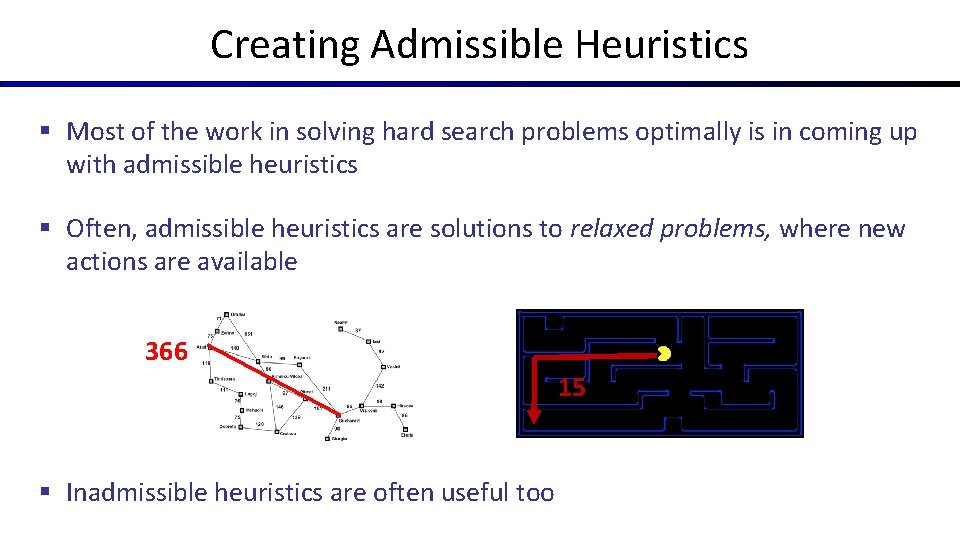
Creating Admissible Heuristics § Most of the work in solving hard search problems optimally is in coming up with admissible heuristics § Often, admissible heuristics are solutions to relaxed problems, where new actions are available 366 15 § Inadmissible heuristics are often useful too
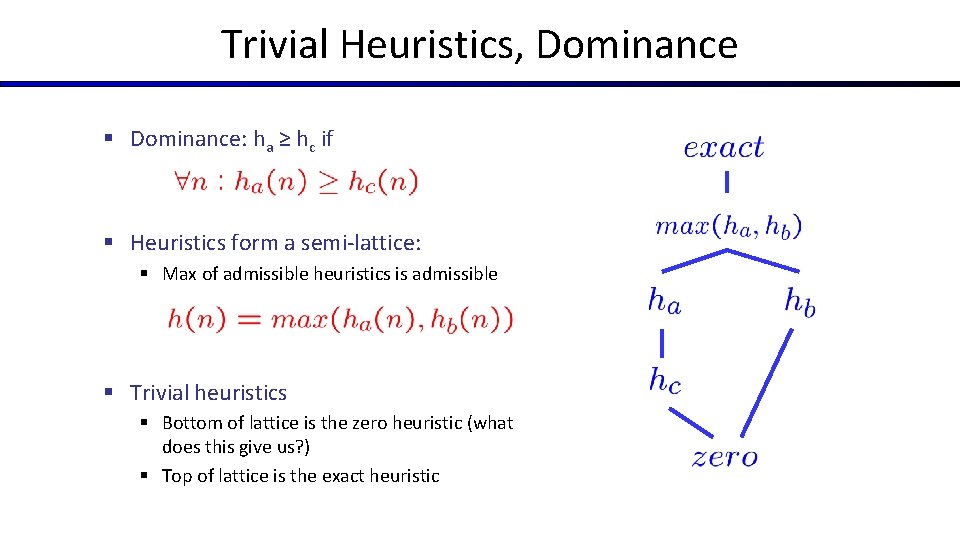
Trivial Heuristics, Dominance § Dominance: ha ≥ hc if § Heuristics form a semi-lattice: § Max of admissible heuristics is admissible § Trivial heuristics § Bottom of lattice is the zero heuristic (what does this give us? ) § Top of lattice is the exact heuristic
Graph Search
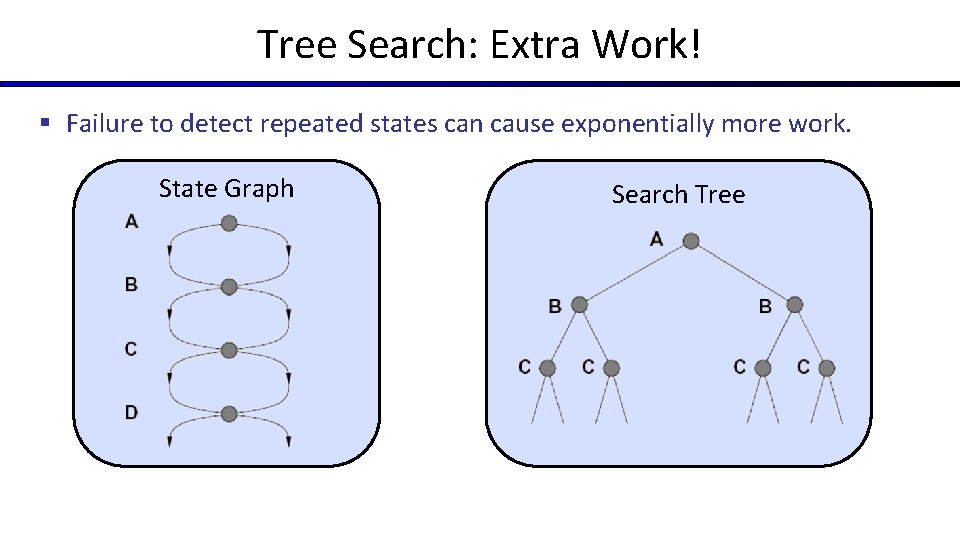
Tree Search: Extra Work! § Failure to detect repeated states can cause exponentially more work. State Graph Search Tree
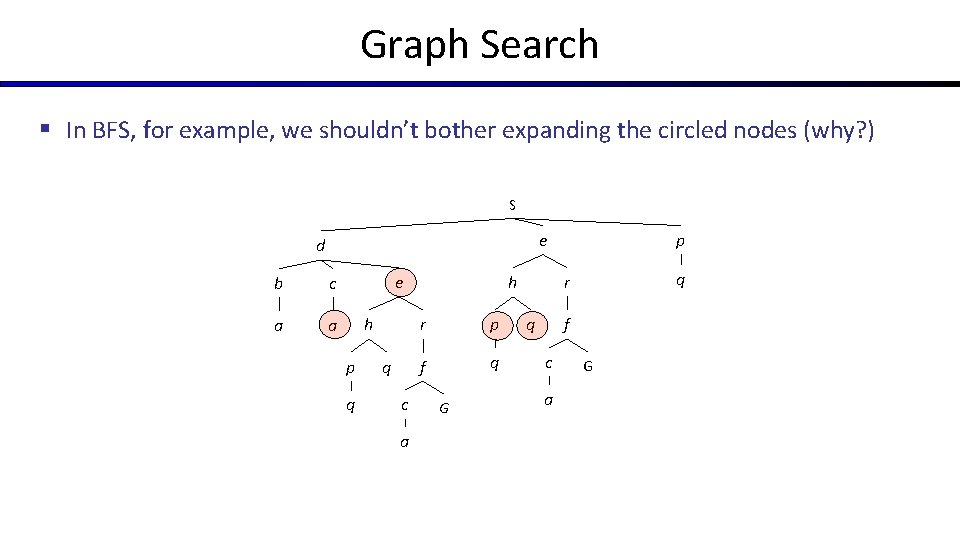
Graph Search § In BFS, for example, we shouldn’t bother expanding the circled nodes (why? ) S e d b c a a h e h p q q c a r p f q G p q r q f c a G
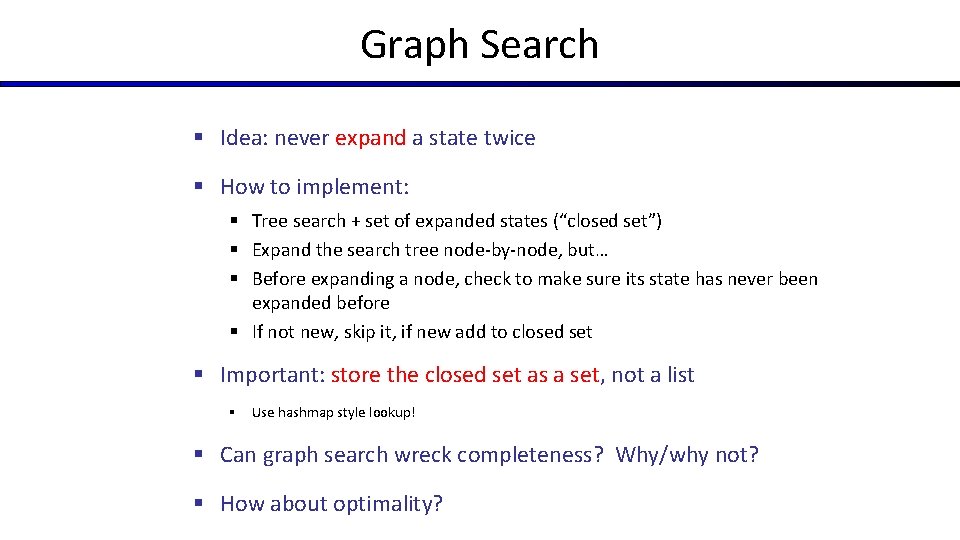
Graph Search § Idea: never expand a state twice § How to implement: § Tree search + set of expanded states (“closed set”) § Expand the search tree node-by-node, but… § Before expanding a node, check to make sure its state has never been expanded before § If not new, skip it, if new add to closed set § Important: store the closed set as a set, not a list § Use hashmap style lookup! § Can graph search wreck completeness? Why/why not? § How about optimality?
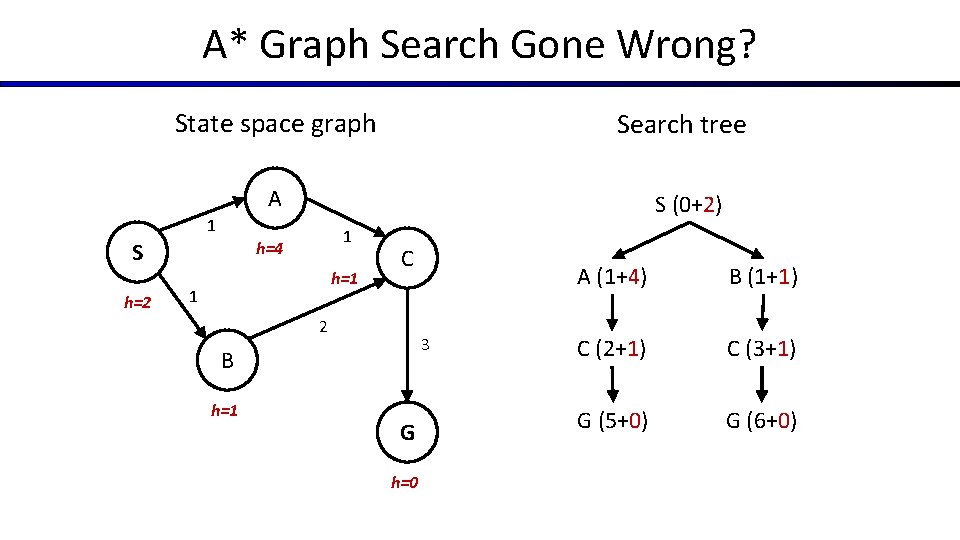
A* Graph Search Gone Wrong? State space graph Search tree A S (0+2) 1 S h=2 1 h=4 h=1 1 C 2 3 B h=1 G h=0 A (1+4) B (1+1) C (2+1) C (3+1) G (5+0) G (6+0)
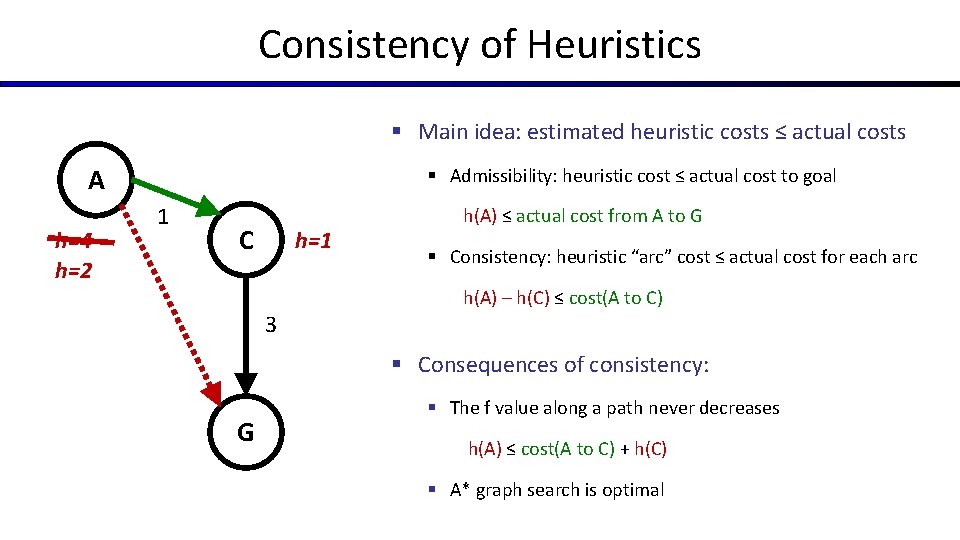
Consistency of Heuristics § Main idea: estimated heuristic costs ≤ actual costs A h=4 h=2 § Admissibility: heuristic cost ≤ actual cost to goal 1 C h=1 3 h(A) ≤ actual cost from A to G § Consistency: heuristic “arc” cost ≤ actual cost for each arc h(A) – h(C) ≤ cost(A to C) § Consequences of consistency: G § The f value along a path never decreases h(A) ≤ cost(A to C) + h(C) § A* graph search is optimal
Optimality of A* Graph Search
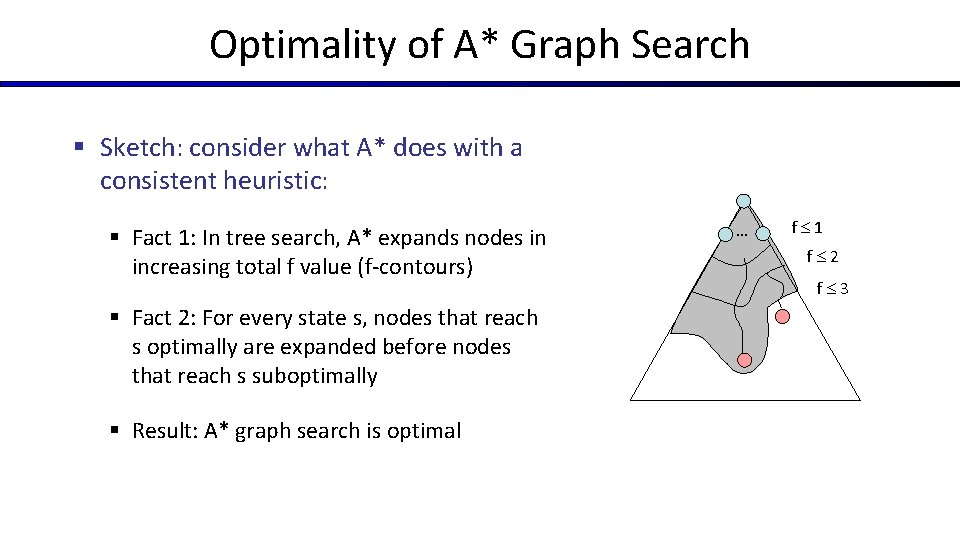
Optimality of A* Graph Search § Sketch: consider what A* does with a consistent heuristic: § Fact 1: In tree search, A* expands nodes in increasing total f value (f-contours) § Fact 2: For every state s, nodes that reach s optimally are expanded before nodes that reach s suboptimally § Result: A* graph search is optimal … f 1 f 2 f 3