
Canterbury Tales Background Above is a pilgrimage scene
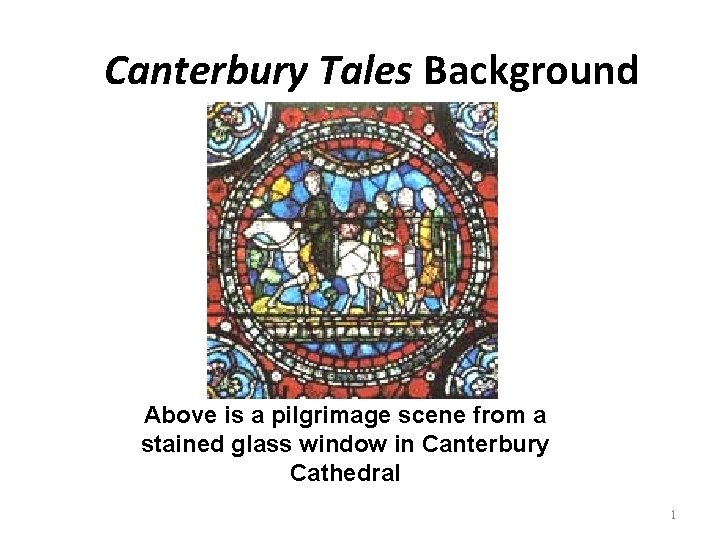
Canterbury Tales Background Above is a pilgrimage scene from a stained glass window in Canterbury Cathedral 1

Canterbury Tales Background The Pilgrimmage 2
**What is a Prologue? *** 1. An introduction or preface, especially a poem recited to introduce a play. 2. An introduction or introductory chapter, as to a novel. 3. An introductory act, event, or period. 2 -20 -08 Mrs. Billet Canterbury Tales /58 3

Canterbury Tales Background • Framing Narrative Device • Geoffrey Chaucer wanted to tell 120 different stories that was to be told by 30 people • Originally written in Middle English • Chaucer wrote about what he knew 4
Geoffrey Chaucer The Canterbury Tales Background • He was familiar with the annual pilgrimages from London Canterbury • Canterbury is 55 miles Southeast of London • Canterbury is at the southern tip of England 5

Canterbury Tales Background • It was tradition to travel in the Spring/Summer to the Cathedral of Canterbury • The pilgrimage was to honor St. Thomas Becket, the Archbishop of Canterbury • Becket was murdered in 1170 • Becket was made a saint, his remains lay entombed in the cathedral 6
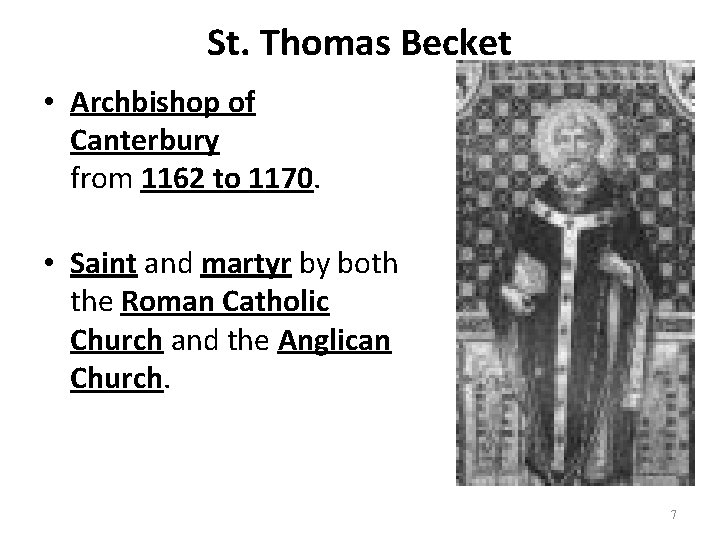
St. Thomas Becket • Archbishop of Canterbury from 1162 to 1170. • Saint and martyr by both the Roman Catholic Church and the Anglican Church. 7
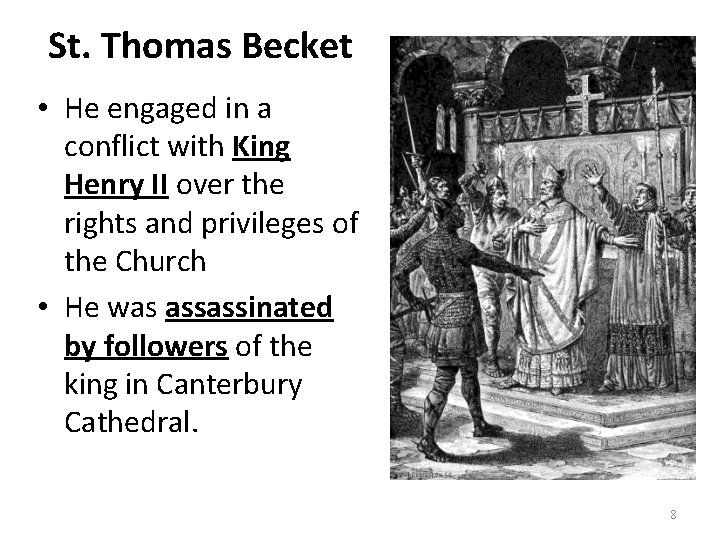
St. Thomas Becket • He engaged in a conflict with King Henry II over the rights and privileges of the Church • He was assassinated by followers of the king in Canterbury Cathedral. 8

Canterbury Tales Background • Written between 1387 and 1400. • Group of thirty people who travel as pilgrims to Canterbury (England). • **The pilgrims, who come from all layers of society, tell stories to each other to kill time while they travel to Canterbury. • **Chaucer intended that each pilgrim should tell two tales on the way to Canterbury and two tales on the way back. 58 9

Canterbury Tales Background • He never finished his enormous project and even the completed tales were not finally revised. • Scholars are uncertain about the order of the tales. • As the printing press had yet to be invented when Chaucer wrote his works, The Canterbury Tales has been passed down in several handwritten manuscripts. 10
The General Prologue • Geoffrey Chaucer starts the story at the Tabard Inn, when a group of pilgrims join together • He describes almost all of the nine and twenty pilgrims in this company, each of whom practices a different trade (often dishonestly). • On the night before they leave, the Host of the Tabard Inn, Harry Bailey, proposes that he joins them as a guide and that each of the pilgrims should tell tales (two on the outward journey, two on the way back); whoever tells the best tale will win a supper, at the other pilgrims' cost when they return. 11
The General Prologue • The pilgrims agree, and Chaucer warns his readers that he must repeat each tale exactly as he heard it, even though it might contain frank language. • The next morning the company sets out, pausing at the Watering of St. Thomas, where all draw straws, and the Knight is thus selected to tell the first tale. 12
Canterbury Tales Background • Purpose of pilgrimage= to pray for cures, solve their problems • 30 pilgrims x 4 tales each = 120 total tales • Harry Bailey (Tabard Inn)= host/innkeeper, he is the pilgrim 30 th, he is also the judge • ****Chaucer died before finishing, he finished only 24 tales in total 13
Characterization • Characterization is the technique a writer uses to create and develop the personality of a character. • Direct characterization= stated outright • Indirect= suggested through details of appearance or action or by the character’s statements 14
Social Commentary • Social commentary= is writing that offers insight into a society, its values, and its customs. • **Analyze difficult sentences by applying the questions who, what, where, when, why, and how to them. 15
The Prologue Characters • Several of the characters are described in minute detail, e. g. social position, their professions, clothing, hair color, jewelry, etc. • Characters tell stories that suit their personality • Some characters do tell dirty jokes 16
Chaucer • Experts believe Chaucer is the narrator of The Canterbury Tales • Time Setting of the Canterbury Prologue takes place not long after 1170, during the height of pilgrimages to St. Thomas Becket’s tomb 17
Characters • How does Chaucer describe each one? • What does he tell you directly? (direct characterization) • What does he show or SUGGEST by his description---leading you to make inferences or come to conclusions? Indirect characterization 18
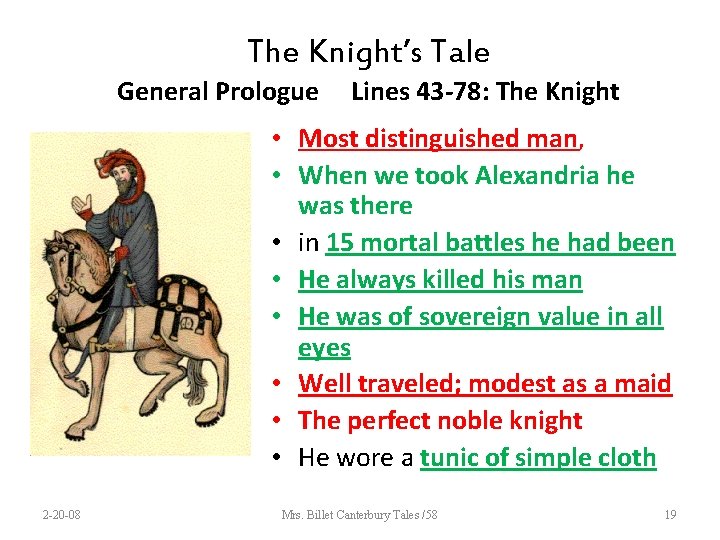
The Knight’s Tale General Prologue Lines 43 -78: The Knight • Most distinguished man, • When we took Alexandria he was there • in 15 mortal battles he had been • He always killed his man • He was of sovereign value in all eyes • Well traveled; modest as a maid • The perfect noble knight • He wore a tunic of simple cloth 2 -20 -08 Mrs. Billet Canterbury Tales /58 19

2 -20 -08 Mrs. Billet Canterbury Tales /58 20
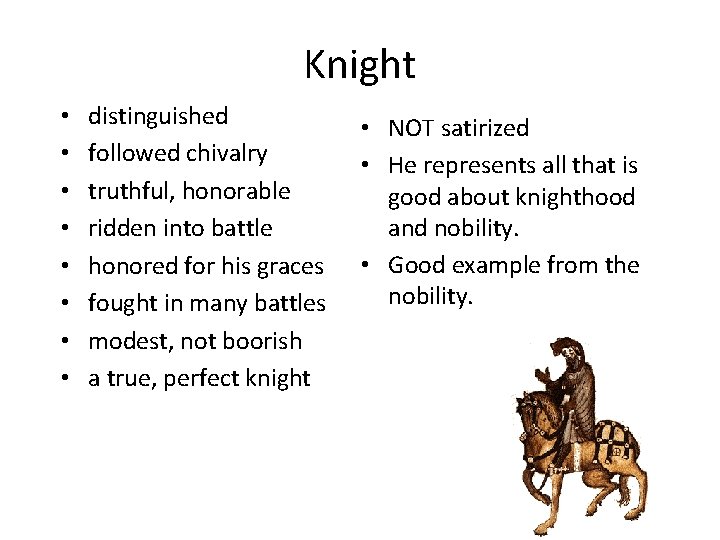
Knight • • distinguished followed chivalry truthful, honorable ridden into battle honored for his graces fought in many battles modest, not boorish a true, perfect knight • NOT satirized • He represents all that is good about knighthood and nobility. • Good example from the nobility.
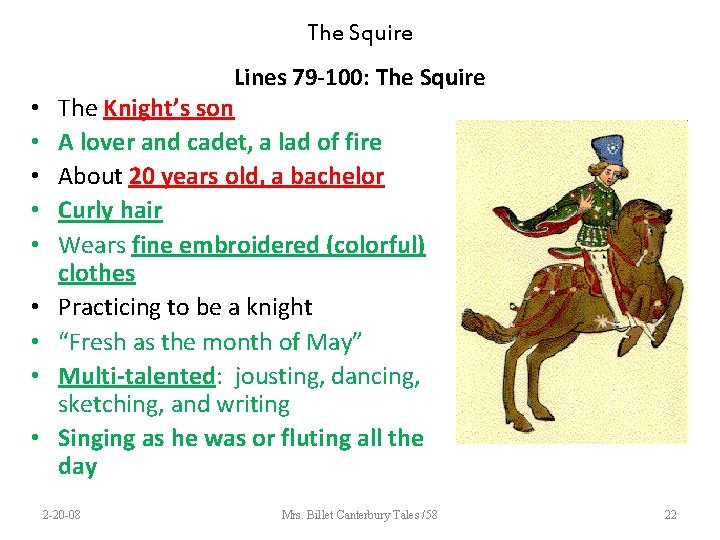
The Squire • • • Lines 79 -100: The Squire The Knight’s son A lover and cadet, a lad of fire About 20 years old, a bachelor Curly hair Wears fine embroidered (colorful) clothes Practicing to be a knight “Fresh as the month of May” Multi-talented: jousting, dancing, sketching, and writing Singing as he was or fluting all the day 2 -20 -08 Mrs. Billet Canterbury Tales /58 22

2 -20 -08 Mrs. Billet Canterbury Tales /58 23
Squire • lover • curly locks fought in nearby battles so he could get home to see the ladies • sang, danced, wrote poetry could “joust and dance” “loved so hotly that till dawn grew pale/He slept as little as a nightingale” was courteous and serviceable when father was around • IS satirized for his insincerity
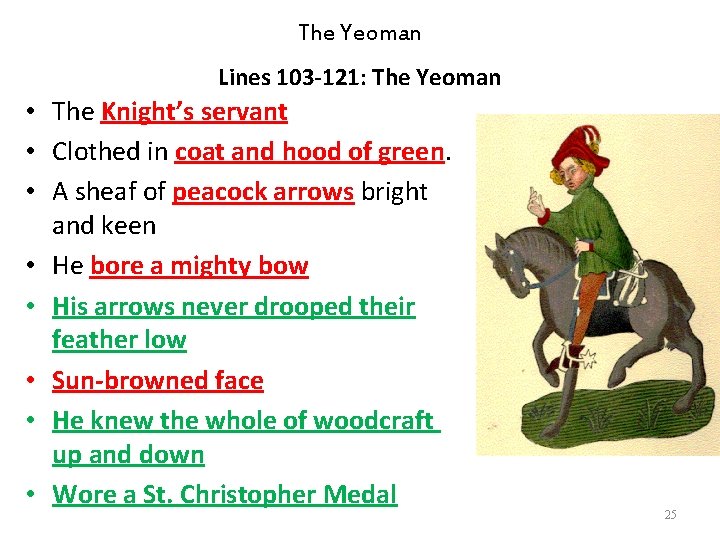
The Yeoman Lines 103 -121: The Yeoman • The Knight’s servant • Clothed in coat and hood of green. • A sheaf of peacock arrows bright and keen • He bore a mighty bow • His arrows never drooped their feather low • Sun-browned face • He knew the whole of woodcraft up and down • Wore a St. Christopher Medal 25
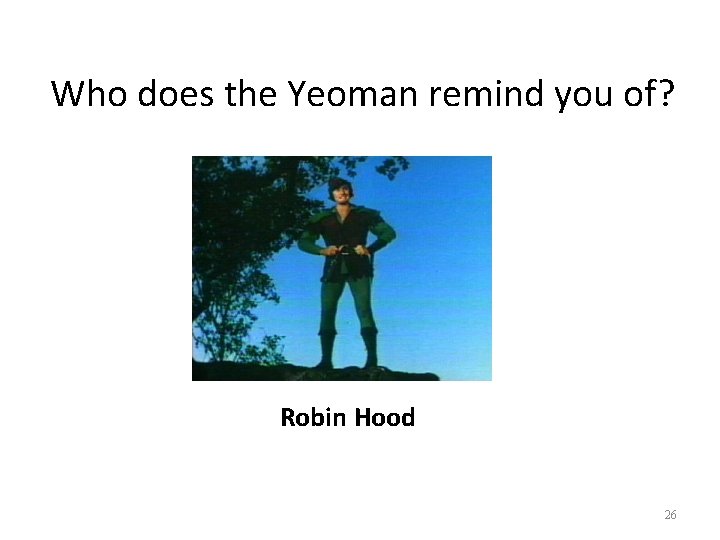
Who does the Yeoman remind you of? Robin Hood 26
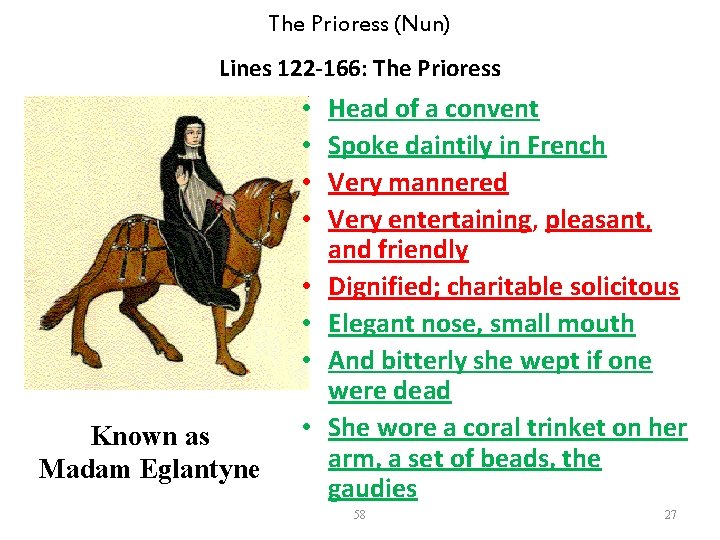
The Prioress (Nun) Lines 122 -166: The Prioress • • Known as Madam Eglantyne • Head of a convent Spoke daintily in French Very mannered Very entertaining, pleasant, and friendly Dignified; charitable solicitous Elegant nose, small mouth And bitterly she wept if one were dead She wore a coral trinket on her arm, a set of beads, the gaudies 58 27
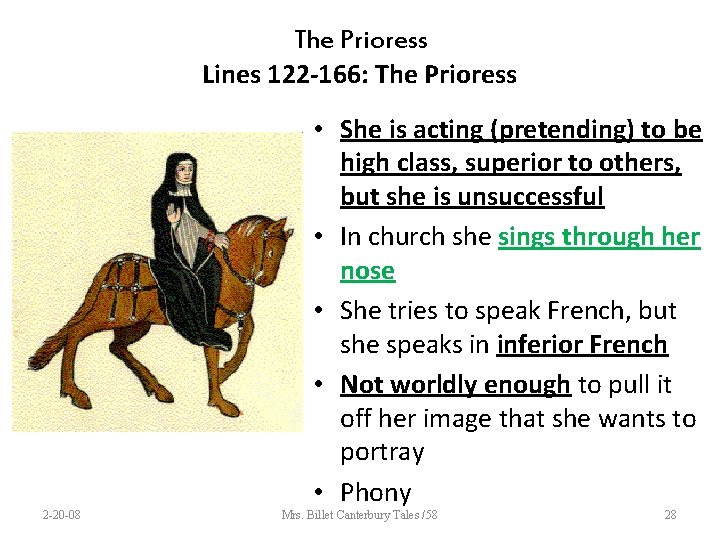
The Prioress Lines 122 -166: The Prioress • She is acting (pretending) to be high class, superior to others, but she is unsuccessful • In church she sings through her nose • She tries to speak French, but she speaks in inferior French • Not worldly enough to pull it off her image that she wants to portray • Phony 2 -20 -08 Mrs. Billet Canterbury Tales /58 28
Prioress= Phony/Fake • The Prioress reminds me of a local guy and when he opened an Italian Restaurant, he started talking in a fake Italian accent. Can you think of anyone like the prioress? Madonna/Britney Spears 29
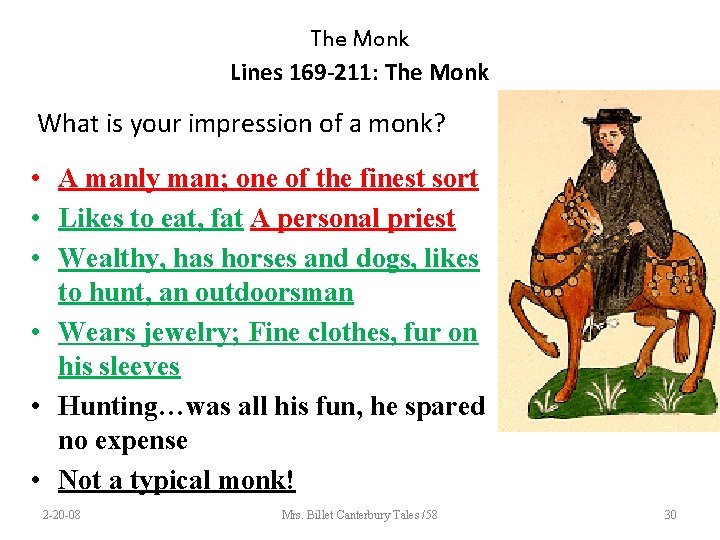
The Monk Lines 169 -211: The Monk What is your impression of a monk? • A manly man; one of the finest sort • Likes to eat, fat A personal priest • Wealthy, has horses and dogs, likes to hunt, an outdoorsman • Wears jewelry; Fine clothes, fur on his sleeves • Hunting…was all his fun, he spared no expense • Not a typical monk! 2 -20 -08 Mrs. Billet Canterbury Tales /58 30
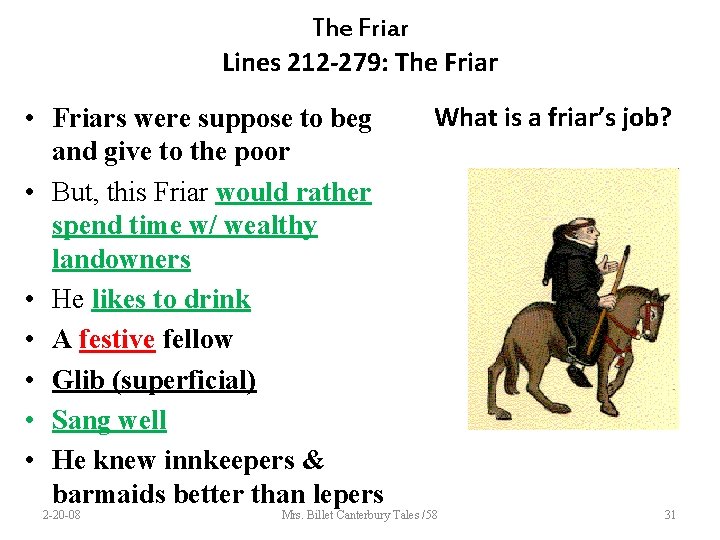
The Friar Lines 212 -279: The Friar • Friars were suppose to beg and give to the poor • But, this Friar would rather spend time w/ wealthy landowners • He likes to drink • A festive fellow • Glib (superficial) • Sang well • He knew innkeepers & barmaids better than lepers 2 -20 -08 What is a friar’s job? Mrs. Billet Canterbury Tales /58 31
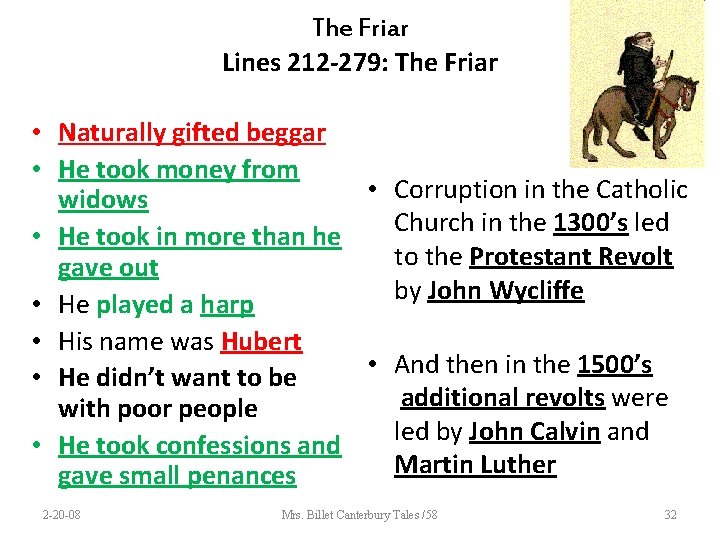
The Friar Lines 212 -279: The Friar • Naturally gifted beggar • He took money from • Corruption in the Catholic widows Church in the 1300’s led • He took in more than he to the Protestant Revolt gave out by John Wycliffe • He played a harp • His name was Hubert • And then in the 1500’s • He didn’t want to be additional revolts were with poor people led by John Calvin and • He took confessions and Martin Luther gave small penances 2 -20 -08 Mrs. Billet Canterbury Tales /58 32
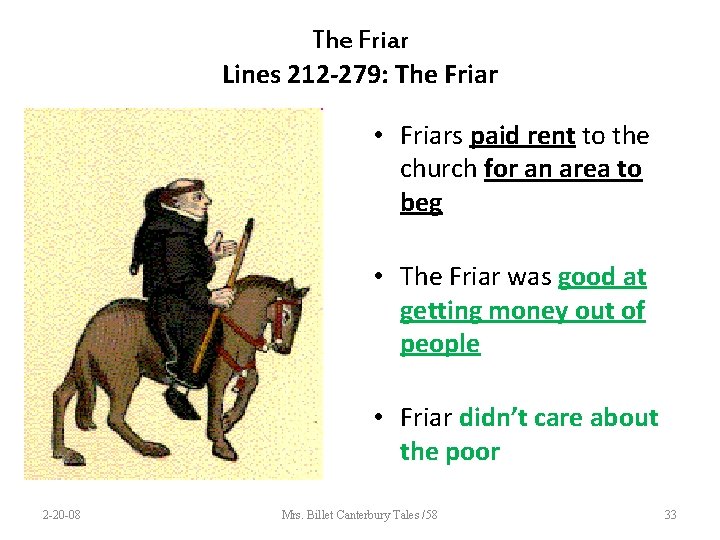
The Friar Lines 212 -279: The Friar • Friars paid rent to the church for an area to beg • The Friar was good at getting money out of people • Friar didn’t care about the poor 2 -20 -08 Mrs. Billet Canterbury Tales /58 33
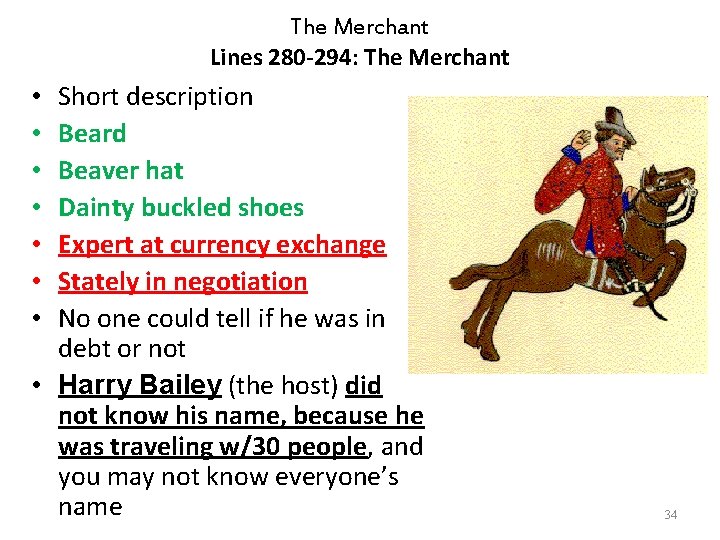
The Merchant Lines 280 -294: The Merchant Short description Beard Beaver hat Dainty buckled shoes Expert at currency exchange Stately in negotiation No one could tell if he was in debt or not • Harry Bailey (the host) did not know his name, because he was traveling w/30 people, and you may not know everyone’s name • • 34
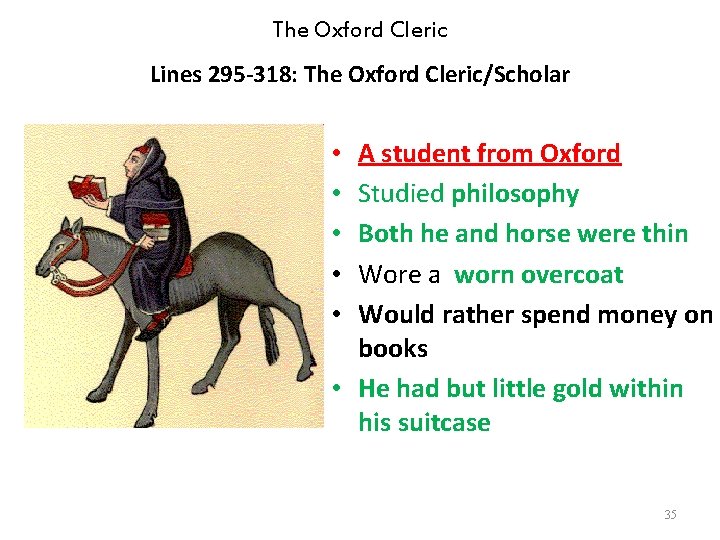
The Oxford Cleric Lines 295 -318: The Oxford Cleric/Scholar A student from Oxford Studied philosophy Both he and horse were thin Wore a worn overcoat Would rather spend money on books • He had but little gold within his suitcase • • • 35
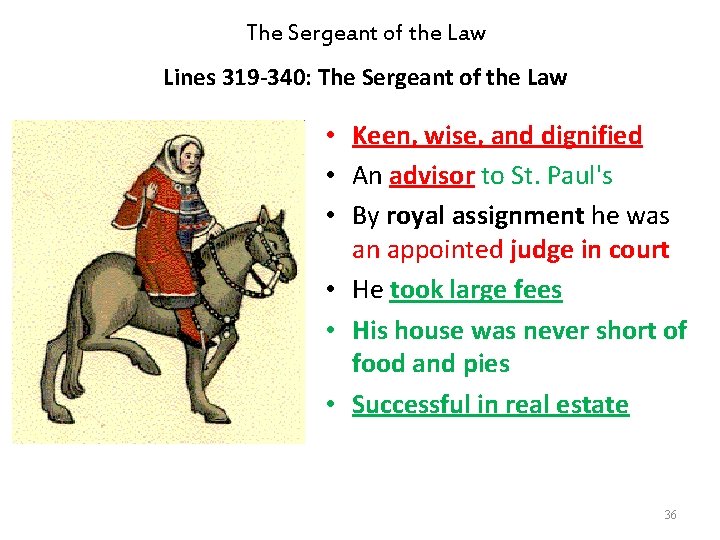
The Sergeant of the Law Lines 319 -340: The Sergeant of the Law • Keen, wise, and dignified • An advisor to St. Paul's • By royal assignment he was an appointed judge in court • He took large fees • His house was never short of food and pies • Successful in real estate 36
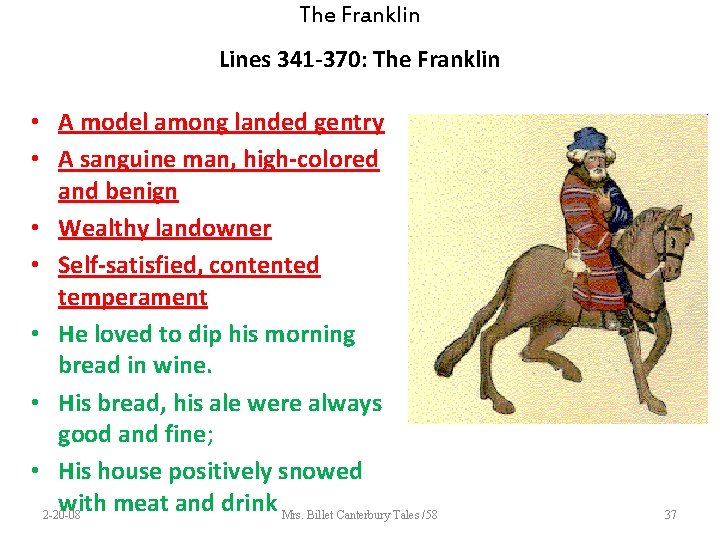
The Franklin Lines 341 -370: The Franklin • A model among landed gentry • A sanguine man, high-colored and benign • Wealthy landowner • Self-satisfied, contented temperament • He loved to dip his morning bread in wine. • His bread, his ale were always good and fine; • His house positively snowed with meat and drink Mrs. Billet Canterbury Tales /58 2 -20 -08 37
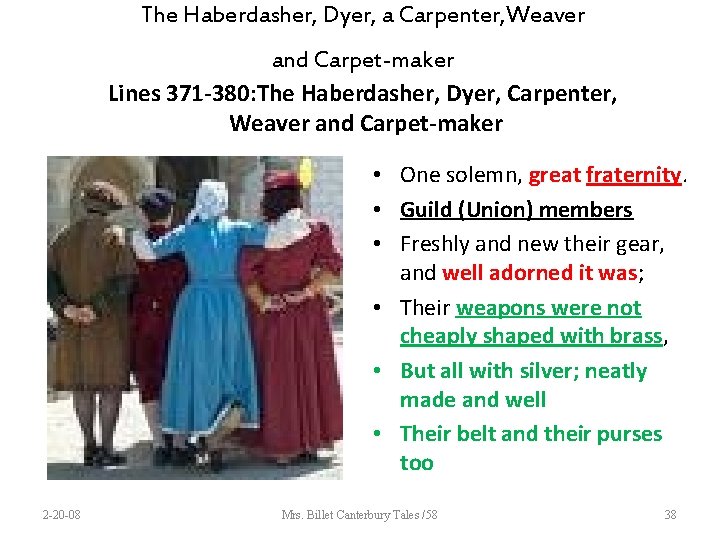
The Haberdasher, Dyer, a Carpenter, Weaver and Carpet-maker Lines 371 -380: The Haberdasher, Dyer, Carpenter, Weaver and Carpet-maker • One solemn, great fraternity. • Guild (Union) members • Freshly and new their gear, and well adorned it was; • Their weapons were not cheaply shaped with brass, • But all with silver; neatly made and well • Their belt and their purses too 2 -20 -08 Mrs. Billet Canterbury Tales /58 38
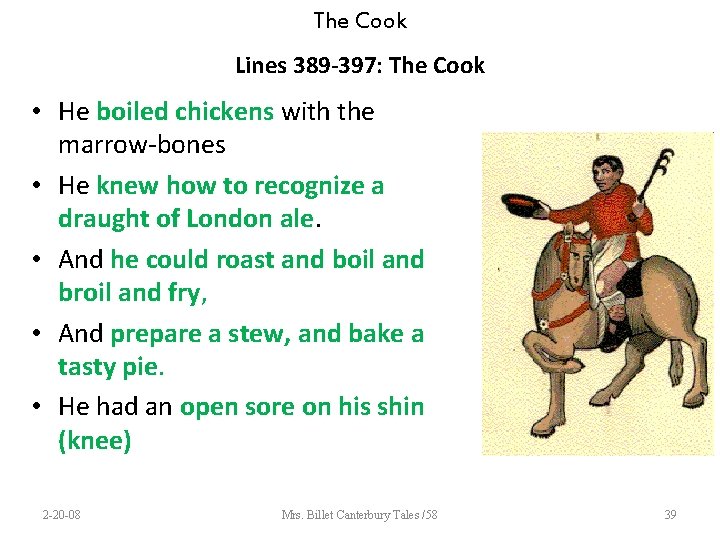
The Cook Lines 389 -397: The Cook • He boiled chickens with the marrow-bones • He knew how to recognize a draught of London ale. • And he could roast and boil and broil and fry, • And prepare a stew, and bake a tasty pie. • He had an open sore on his shin (knee) 2 -20 -08 Mrs. Billet Canterbury Tales /58 39
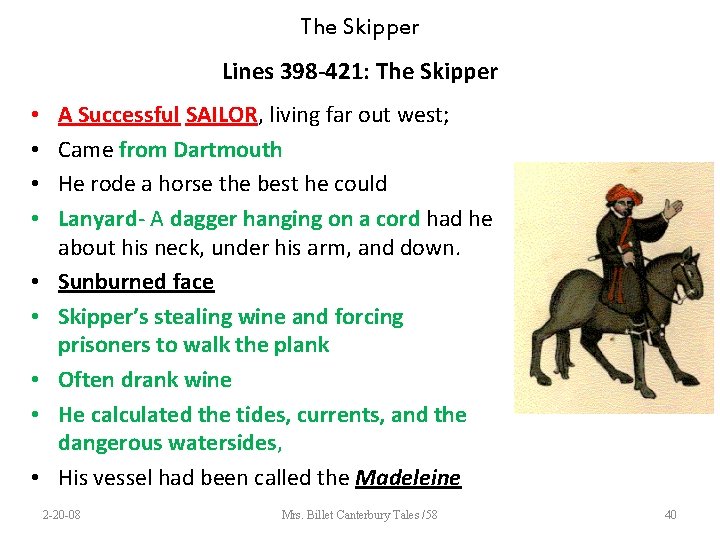
The Skipper Lines 398 -421: The Skipper • • • A Successful SAILOR, living far out west; Came from Dartmouth He rode a horse the best he could Lanyard- A dagger hanging on a cord had he about his neck, under his arm, and down. Sunburned face Skipper’s stealing wine and forcing prisoners to walk the plank Often drank wine He calculated the tides, currents, and the dangerous watersides, His vessel had been called the Madeleine 2 -20 -08 Mrs. Billet Canterbury Tales /58 40

The Doctor Lines 422 -454: The Doctor • No one alive could talk as well • He was instructed in astronomy, he could calculate planetary positions. • He cared for and saved a patient many times • He knew the cause of every sickness, • In diet he was modest • He did not study the Bible, much. • His clothes were of blue and scarlet • He had a special love of gold 2 -20 -08 Mrs. Billet Canterbury Tales /58 41
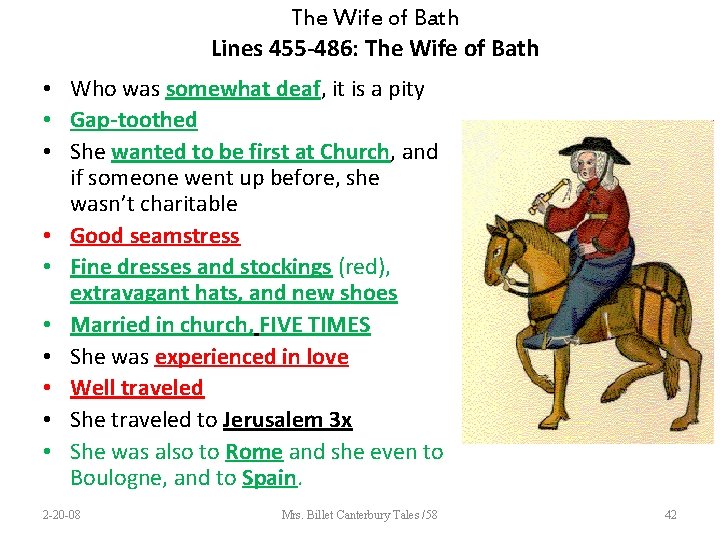
The Wife of Bath Lines 455 -486: The Wife of Bath • Who was somewhat deaf, it is a pity • Gap-toothed • She wanted to be first at Church, and if someone went up before, she wasn’t charitable • Good seamstress • Fine dresses and stockings (red), extravagant hats, and new shoes • Married in church, FIVE TIMES • She was experienced in love • Well traveled • She traveled to Jerusalem 3 x • She was also to Rome and she even to Boulogne, and to Spain. 2 -20 -08 Mrs. Billet Canterbury Tales /58 42
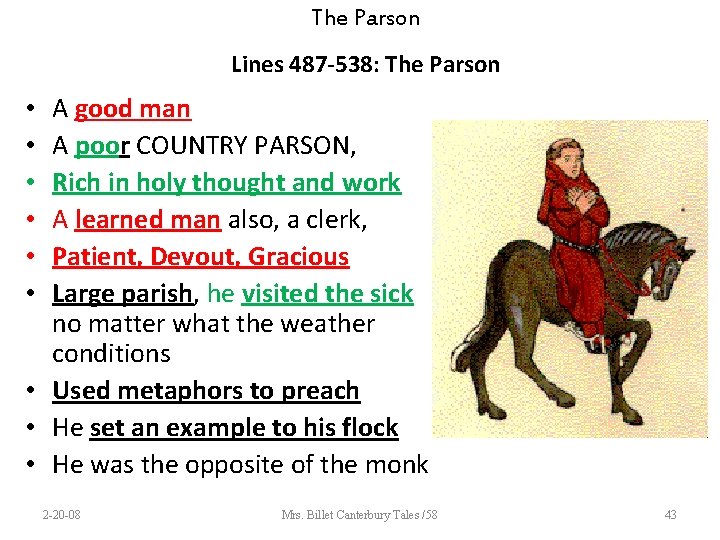
The Parson Lines 487 -538: The Parson A good man A poor COUNTRY PARSON, Rich in holy thought and work A learned man also, a clerk, Patient, Devout, Gracious Large parish, he visited the sick no matter what the weather conditions • Used metaphors to preach • He set an example to his flock • He was the opposite of the monk • • • 2 -20 -08 Mrs. Billet Canterbury Tales /58 43
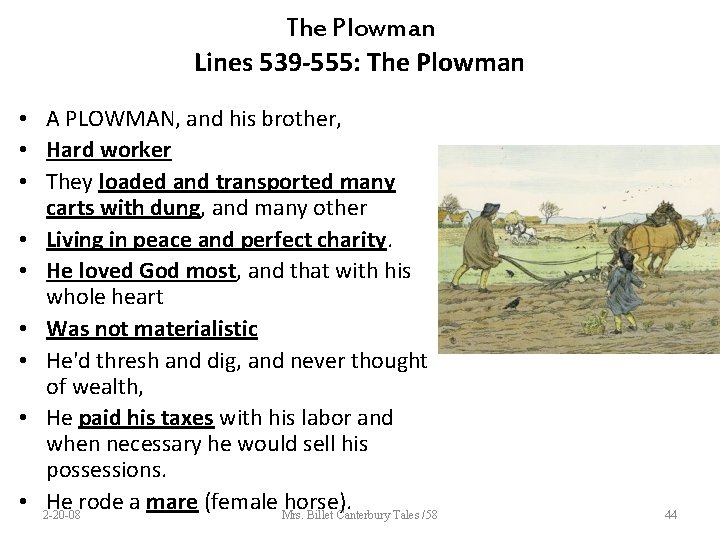
The Plowman Lines 539 -555: The Plowman • A PLOWMAN, and his brother, • Hard worker • They loaded and transported many carts with dung, and many other • Living in peace and perfect charity. • He loved God most, and that with his whole heart • Was not materialistic • He'd thresh and dig, and never thought of wealth, • He paid his taxes with his labor and when necessary he would sell his possessions. • 2 -20 -08 He rode a mare (female Mrs. horse). Billet Canterbury Tales /58 44
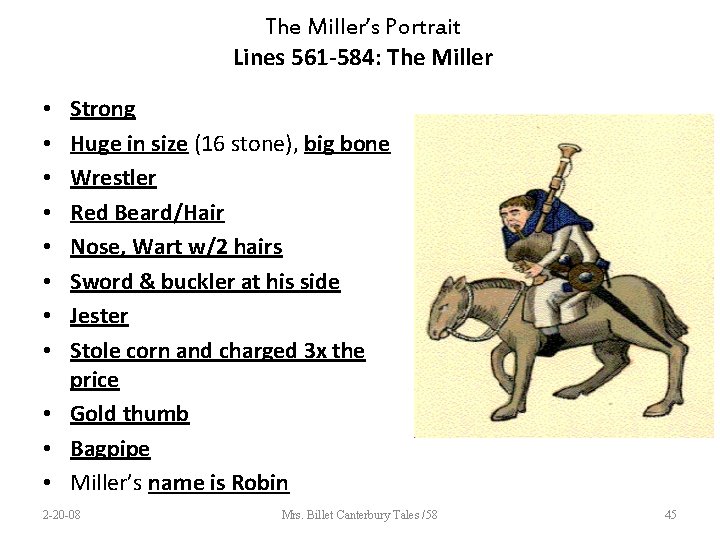
The Miller’s Portrait Lines 561 -584: The Miller Strong Huge in size (16 stone), big bone Wrestler Red Beard/Hair Nose, Wart w/2 hairs Sword & buckler at his side Jester Stole corn and charged 3 x the price • Gold thumb • Bagpipe • Miller’s name is Robin • • 2 -20 -08 Mrs. Billet Canterbury Tales /58 45
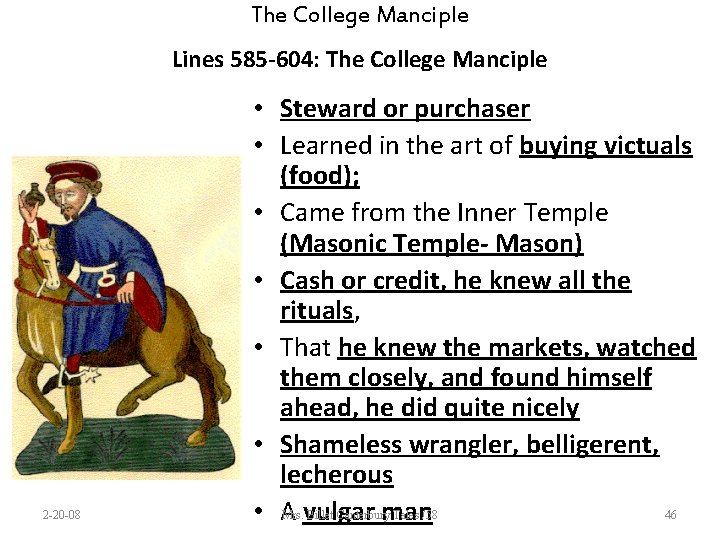
The College Manciple Lines 585 -604: The College Manciple 2 -20 -08 • Steward or purchaser • Learned in the art of buying victuals (food); • Came from the Inner Temple (Masonic Temple- Mason) • Cash or credit, he knew all the rituals, • That he knew the markets, watched them closely, and found himself ahead, he did quite nicely • Shameless wrangler, belligerent, lecherous Mrs. vulgar Billet Canterbury Tales /58 46 • A man
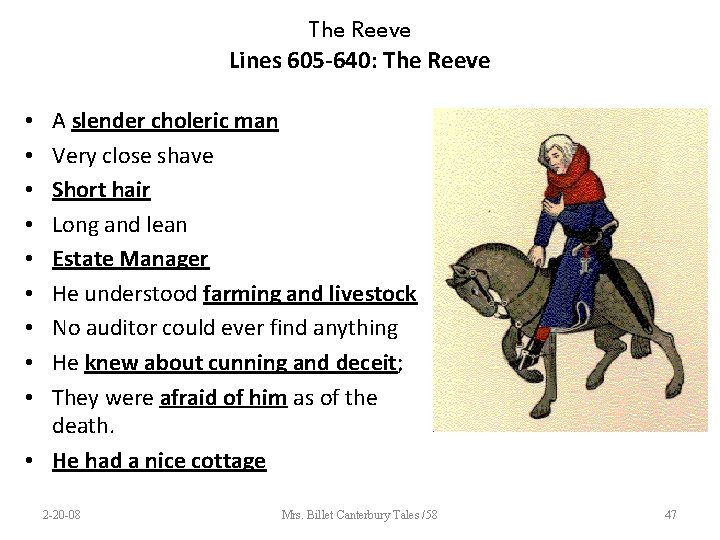
The Reeve Lines 605 -640: The Reeve A slender choleric man Very close shave Short hair Long and lean Estate Manager He understood farming and livestock No auditor could ever find anything He knew about cunning and deceit; They were afraid of him as of the death. • He had a nice cottage • • • 2 -20 -08 Mrs. Billet Canterbury Tales /58 47
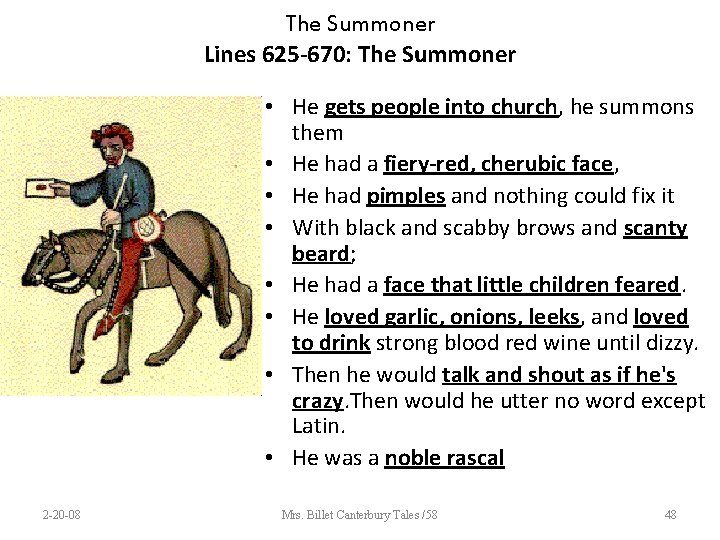
The Summoner Lines 625 -670: The Summoner • He gets people into church, he summons them • He had a fiery-red, cherubic face, • He had pimples and nothing could fix it • With black and scabby brows and scanty beard; • He had a face that little children feared. • He loved garlic, onions, leeks, and loved to drink strong blood red wine until dizzy. • Then he would talk and shout as if he's crazy. Then would he utter no word except Latin. • He was a noble rascal 2 -20 -08 Mrs. Billet Canterbury Tales /58 48
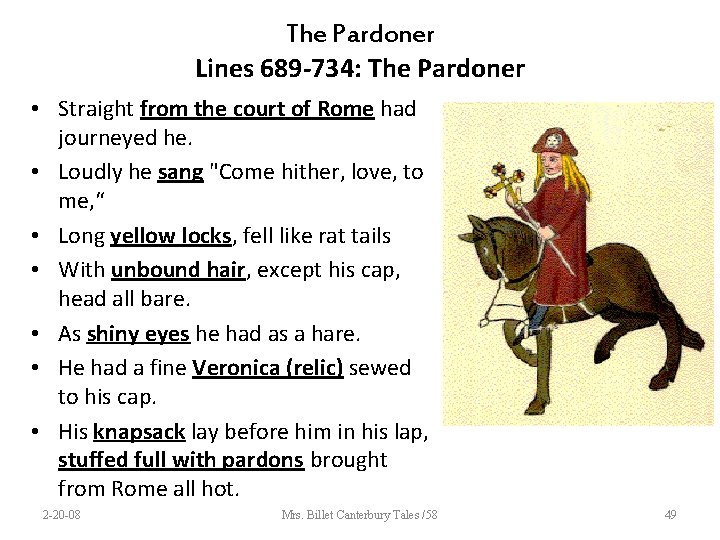
The Pardoner Lines 689 -734: The Pardoner • Straight from the court of Rome had journeyed he. • Loudly he sang "Come hither, love, to me, “ • Long yellow locks, fell like rat tails • With unbound hair, except his cap, head all bare. • As shiny eyes he had as a hare. • He had a fine Veronica (relic) sewed to his cap. • His knapsack lay before him in his lap, stuffed full with pardons brought from Rome all hot. 2 -20 -08 Mrs. Billet Canterbury Tales /58 49
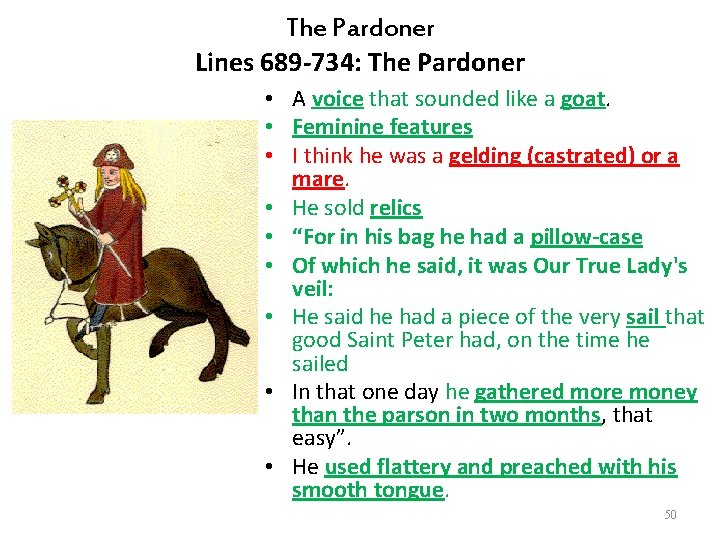
The Pardoner Lines 689 -734: The Pardoner • A voice that sounded like a goat. • Feminine features • I think he was a gelding (castrated) or a mare. • He sold relics • “For in his bag he had a pillow-case • Of which he said, it was Our True Lady's veil: • He said he had a piece of the very sail that good Saint Peter had, on the time he sailed • In that one day he gathered more money than the parson in two months, that easy”. • He used flattery and preached with his smooth tongue. 50
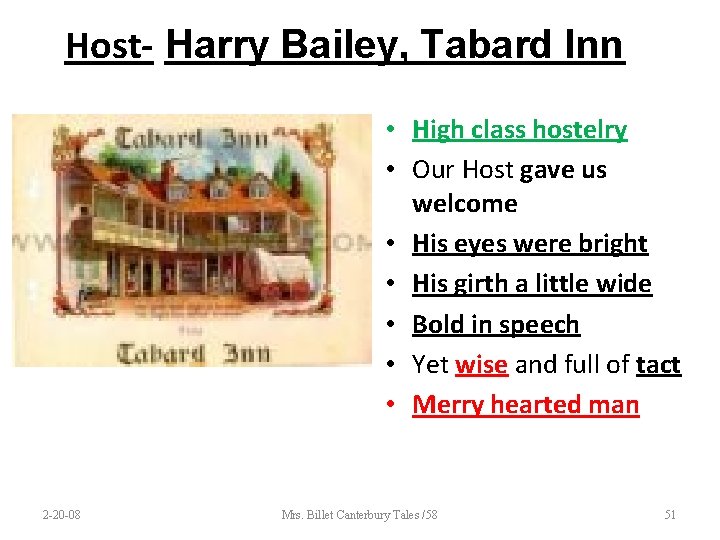
Host- Harry Bailey, Tabard Inn • High class hostelry • Our Host gave us welcome • His eyes were bright • His girth a little wide • Bold in speech • Yet wise and full of tact • Merry hearted man 2 -20 -08 Mrs. Billet Canterbury Tales /58 51
Past and Past Perfect Tenses is a verb showing an action or a condition • Past tense that began and ended in the past • Past perfect tense Indicates an action or a condition that ended before another past action began 2 -20 -08 Mrs. Billet Canterbury Tales /58 52
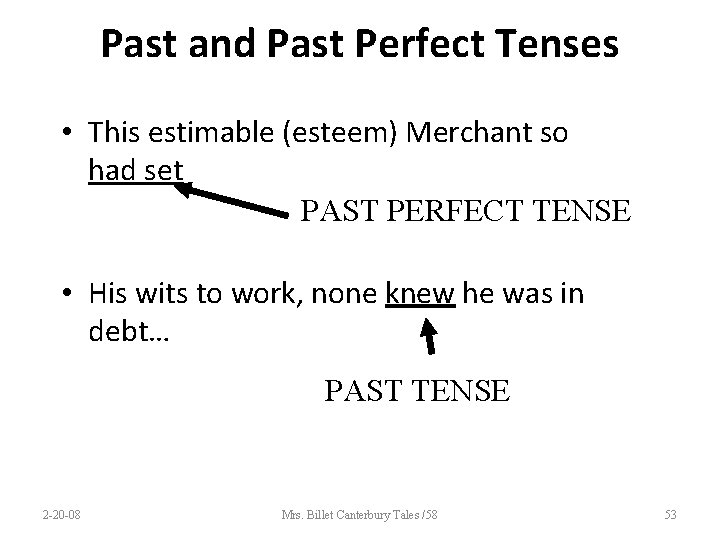
Past and Past Perfect Tenses • This estimable (esteem) Merchant so had set PAST PERFECT TENSE • His wits to work, none knew he was in debt… PAST TENSE 2 -20 -08 Mrs. Billet Canterbury Tales /58 53
- Slides: 53