
CANSOLV SO 2 and CO 2 Scrubbing Systems
CANSOLV SO 2 and CO 2 Scrubbing Systems for CO 2 Capture and Sequestration Projects Presented to: Canadian Gas Processors Association Quarterly Meeting - May 29, 2007 Rick Birnbaum - Sales Manager - Oil and Gas 1
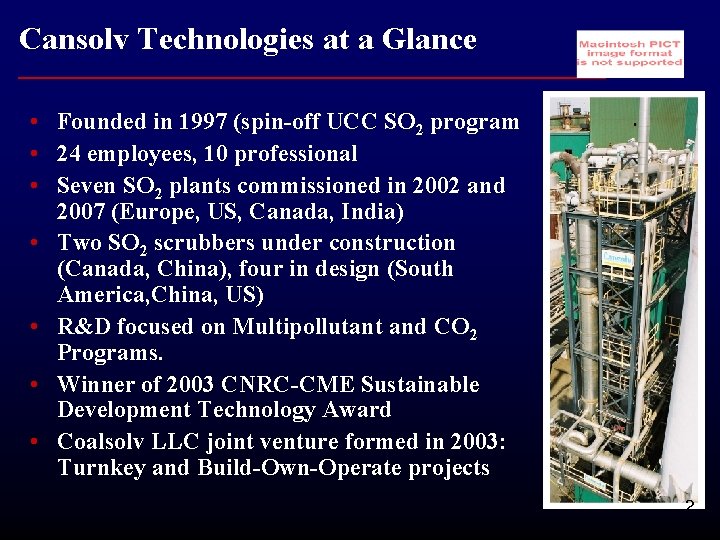
Cansolv Technologies at a Glance • Founded in 1997 (spin-off UCC SO 2 program • 24 employees, 10 professional • Seven SO 2 plants commissioned in 2002 and 2007 (Europe, US, Canada, India) • Two SO 2 scrubbers under construction (Canada, China), four in design (South America, China, US) • R&D focused on Multipollutant and CO 2 Programs. • Winner of 2003 CNRC-CME Sustainable Development Technology Award • Coalsolv LLC joint venture formed in 2003: Turnkey and Build-Own-Operate projects 2
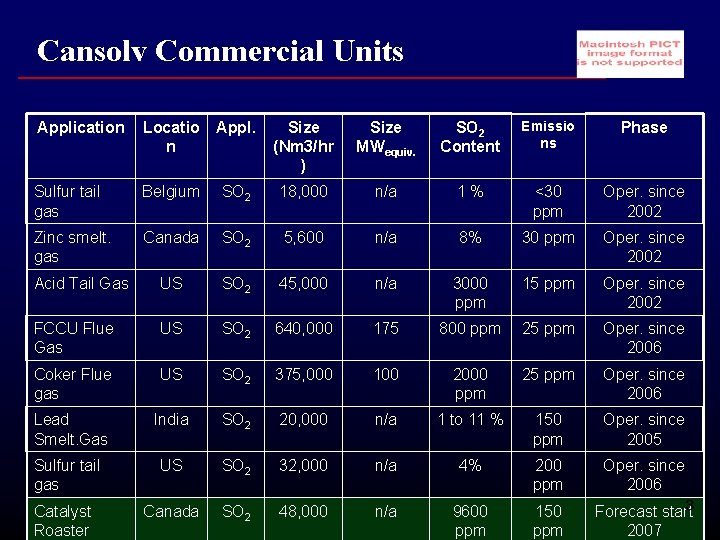
Cansolv Commercial Units Application Locatio n Appl. Size (Nm 3/hr ) Size MWequiv. SO 2 Content Emissio ns Phase Sulfur tail gas Belgium SO 2 18, 000 n/a 1% <30 ppm Oper. since 2002 Zinc smelt. gas Canada SO 2 5, 600 n/a 8% 30 ppm Oper. since 2002 Acid Tail Gas US SO 2 45, 000 n/a 3000 ppm 15 ppm Oper. since 2002 FCCU Flue Gas US SO 2 640, 000 175 800 ppm 25 ppm Oper. since 2006 Coker Flue gas US SO 2 375, 000 100 2000 ppm 25 ppm Oper. since 2006 Lead Smelt. Gas India SO 2 20, 000 n/a 1 to 11 % 150 ppm Oper. since 2005 Sulfur tail gas US SO 2 32, 000 n/a 4% 200 ppm Oper. since 2006 Catalyst Roaster Canada SO 2 48, 000 n/a 9600 ppm 150 ppm Forecast start 3 2007
Excerpt from Oil. Gas 24 Scandinavian Oil and Gas Magazine Statoil, Shell assemble carbon frontrunners courtesy Statoil A mobile carbon-scrubbing construction will be tested in May at the Shell-Statoil carbon-dioxide project at Risavika, just outside Stavanger, it was learned Tuesday. Canadian supplier Cansolv is one of three suppliers to the full-scale Halten CO 2 project at Tjeldbergodden central Norway. Mitsubishi Heavy Industries and Fluor are the other carbon sequestration companies employed in the tests. The companies are vying for a contract to stop 2. 5 million tonnes a year from flowing into the atmosphere at a future 850 Megawatt gas-plant on the Tjeldbergodden site…. … Cansolv is dwarfed by the two industrial giants, but “sits on solid knowledge on the separating of carbon from natural gas”, although the plan is to separate 85 percent of the C 02 from the power plant’s exhaust passages. • http: //www. oilgas 24. com/bm/Gas/statoil-shell-assemble-carbonfrontrunners. shtml 4
Technology Focus • Core platform process is CANSOLV SO 2 Scrubbing – Selective amine scrubbing in an oxidative environment • The Cansolv breakthrough in operating costs: » low salt formation » low amine degradation » low heat of regeneration • R&D Focus in 2000 -2007 on developing high performance solvents for NOx, Hg & CO 2 absorption • Commercialization Focus in 2005 -2007: optimizing processes: » CO 2 - SO 2 5
UN International Panel on Climate Change • Changes in Global Temperature and Climate are due to anthropogenic sources of green house gas - Working Group 1 - Feb. 2007 • Changes in Global climate have non-uniform local impact on ecosystems and area weather, climate and populations - Working Group 2 - April, 2007 IPCC Website - http: //www. ipcc. ch/ 6
Kyoto Protocol • Entered into force February, 2005 • Mandates a 5. 2% reduction in GHG emissions in comparison to 1990 levels between 2005 and 2010 inclusive of economic growth. • Factoring in economic growth, Kyoto represents a 29% reduction 7
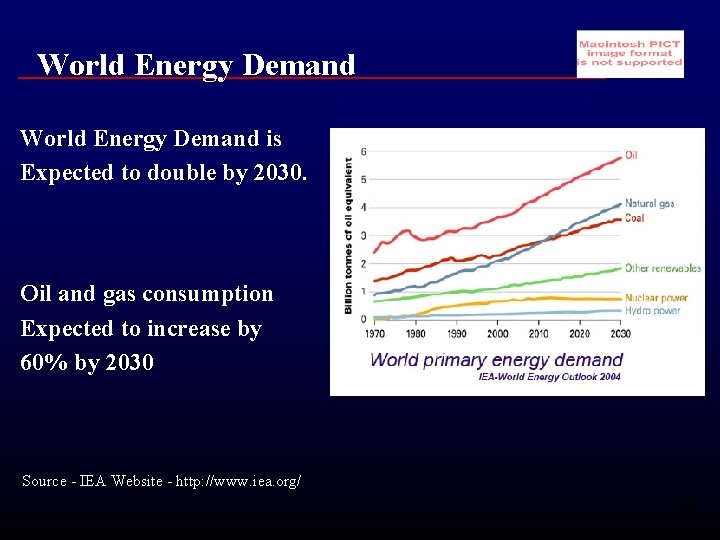
World Energy Demand is Expected to double by 2030. Oil and gas consumption Expected to increase by 60% by 2030 Source - IEA Website - http: //www. iea. org/ 8
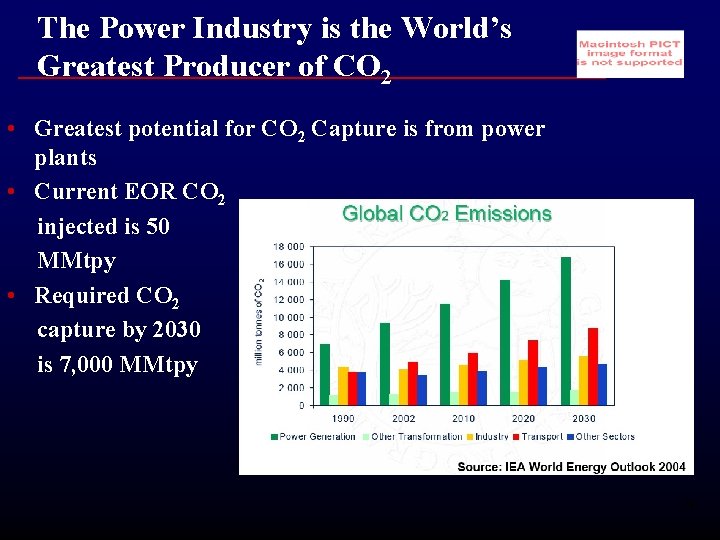
The Power Industry is the World’s Greatest Producer of CO 2 • Greatest potential for CO 2 Capture is from power plants • Current EOR CO 2 injected is 50 MMtpy • Required CO 2 capture by 2030 is 7, 000 MMtpy 9
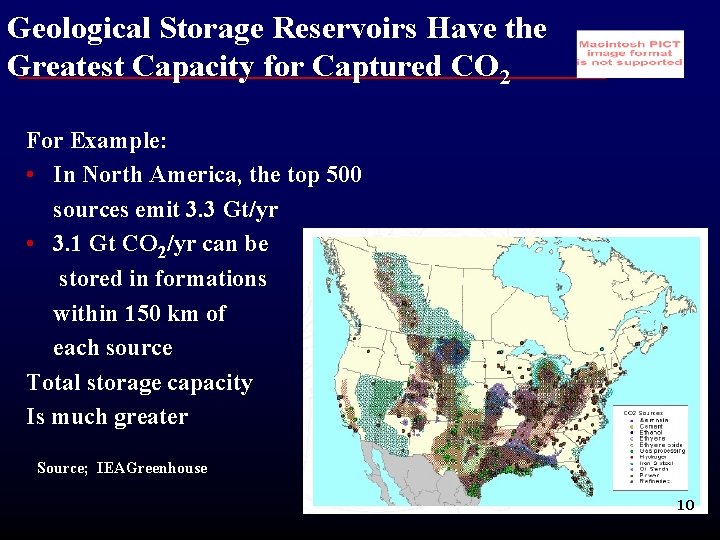
Geological Storage Reservoirs Have the Greatest Capacity for Captured CO 2 For Example: • In North America, the top 500 sources emit 3. 3 Gt/yr • 3. 1 Gt CO 2/yr can be stored in formations within 150 km of each source Total storage capacity Is much greater Source; IEAGreenhouse 10
History of PCOR* in the US Illustrates How a CCS Program can be Executed The United States DOE established the National Energy Technology Laboratory (NETL) to manage seven partnerships • Phase 1 studies identified sources and sinks 2003 - 2005 • Phase 2 studies executed research programs to study key sequestration strategies - 2005 to present *Plains CO 2 Reduction Partnership 11
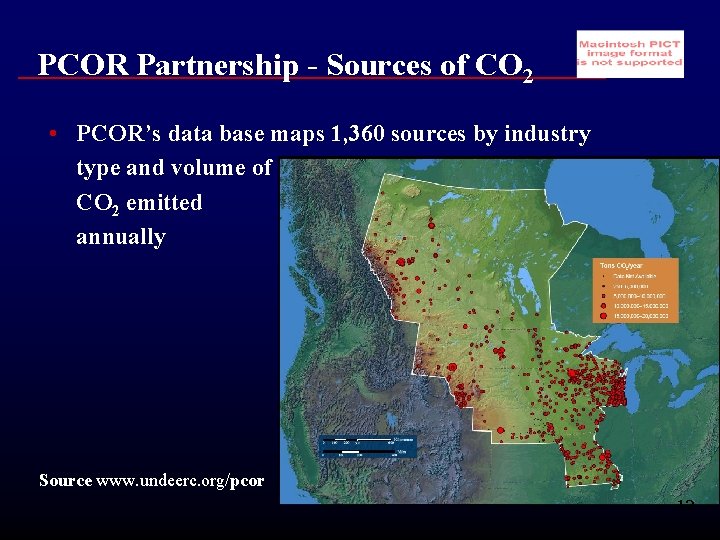
PCOR Partnership - Sources of CO 2 • PCOR’s data base maps 1, 360 sources by industry type and volume of CO 2 emitted annually Source www. undeerc. org/pcor 12
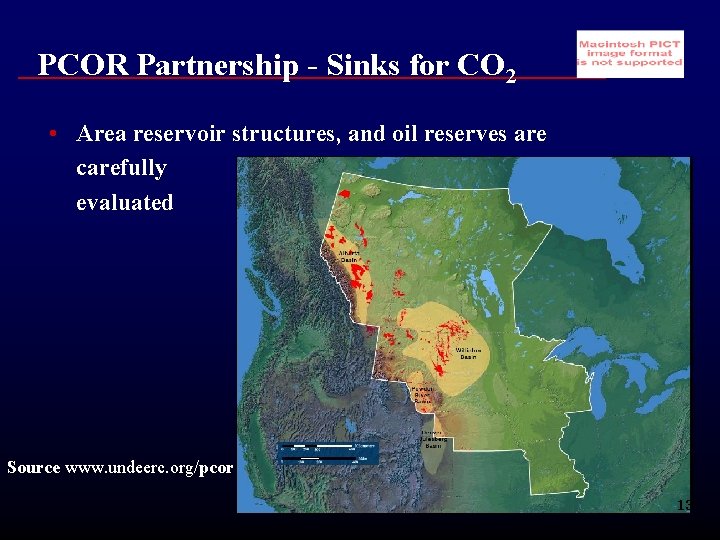
PCOR Partnership - Sinks for CO 2 • Area reservoir structures, and oil reserves are carefully evaluated Source www. undeerc. org/pcor 13
Testing Phase Projects • • • Weyburn injection project Pinnacle reef injection project Wetland carbon sequestration study Deepwell injection project Unminable coal reserve sequestration Reservoir evaluation Can take 2+ years. 14
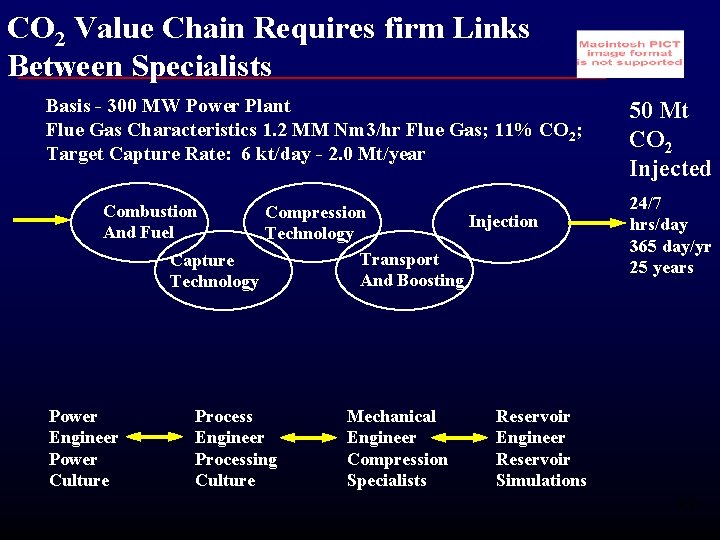
CO 2 Value Chain Requires firm Links Between Specialists Basis - 300 MW Power Plant Flue Gas Characteristics 1. 2 MM Nm 3/hr Flue Gas; 11% CO 2; Target Capture Rate: 6 kt/day - 2. 0 Mt/year Combustion And Fuel Compression Injection Technology Transport Capture And Boosting Technology Power Engineer Power Culture Process Engineer Processing Culture Mechanical Engineer Compression Specialists 50 Mt CO 2 Injected 24/7 hrs/day 365 day/yr 25 years Reservoir Engineer Reservoir Simulations 15
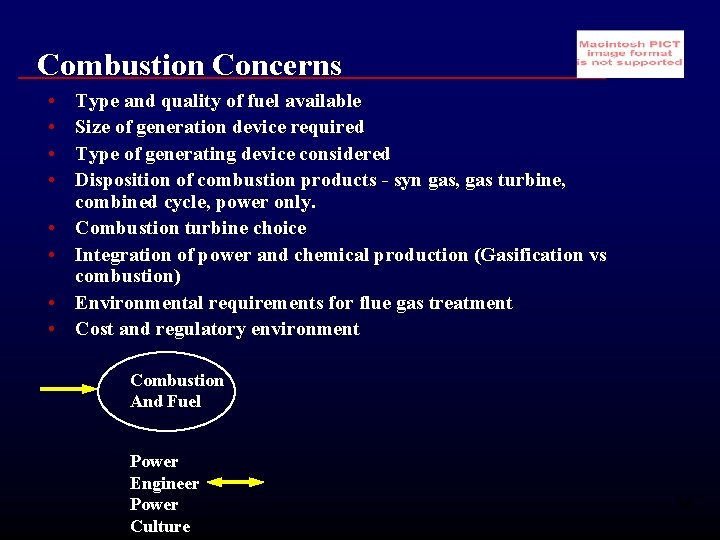
Combustion Concerns • • Type and quality of fuel available Size of generation device required Type of generating device considered Disposition of combustion products - syn gas, gas turbine, combined cycle, power only. Combustion turbine choice Integration of power and chemical production (Gasification vs combustion) Environmental requirements for flue gas treatment Cost and regulatory environment Combustion And Fuel Power Engineer Power Culture 16
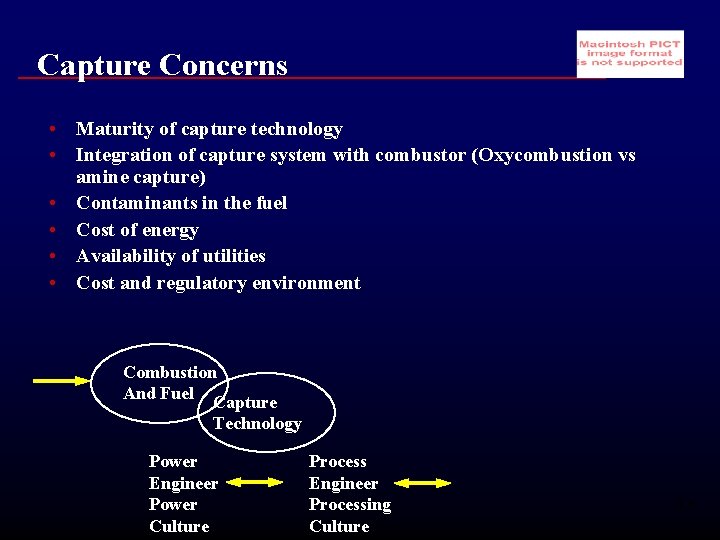
Capture Concerns • Maturity of capture technology • Integration of capture system with combustor (Oxycombustion vs amine capture) • Contaminants in the fuel • Cost of energy • Availability of utilities • Cost and regulatory environment Combustion And Fuel Capture Technology Power Engineer Power Culture Process Engineer Processing Culture 17
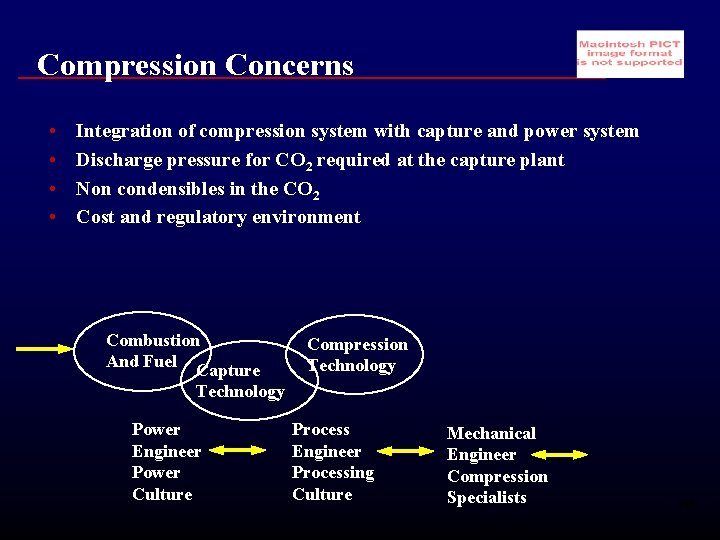
Compression Concerns • • Integration of compression system with capture and power system Discharge pressure for CO 2 required at the capture plant Non condensibles in the CO 2 Cost and regulatory environment Combustion And Fuel Capture Compression Technology Power Engineer Power Culture Process Engineer Processing Culture Mechanical Engineer Compression Specialists 18
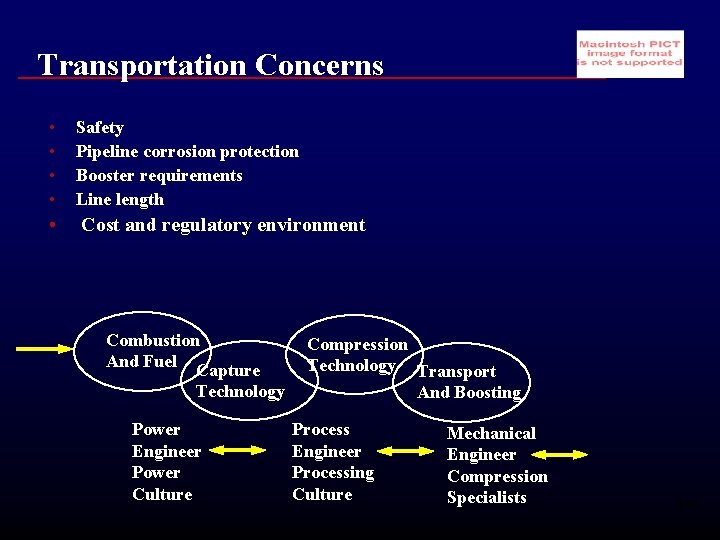
Transportation Concerns • • Safety Pipeline corrosion protection Booster requirements Line length • Cost and regulatory environment Combustion And Fuel Capture Technology Power Engineer Power Culture Compression Technology Transport And Boosting Process Engineer Processing Culture Mechanical Engineer Compression Specialists 19
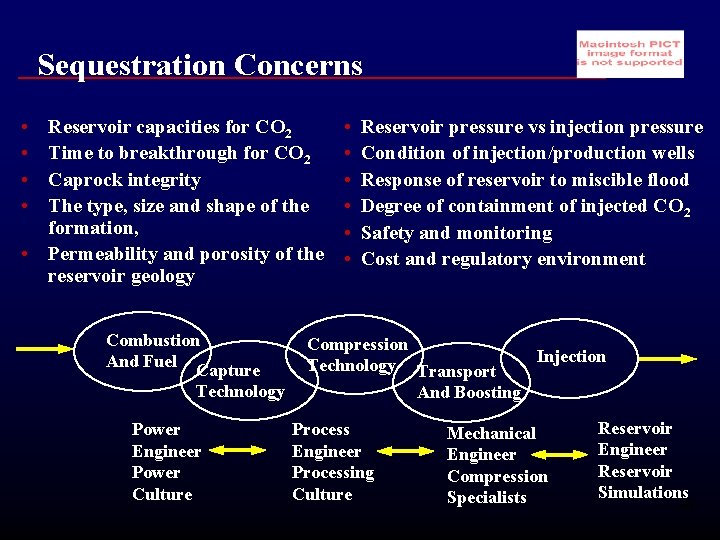
Sequestration Concerns • • Reservoir capacities for CO 2 Time to breakthrough for CO 2 Caprock integrity The type, size and shape of the formation, • Permeability and porosity of the reservoir geology Combustion And Fuel Capture Technology Power Engineer Power Culture • • • Reservoir pressure vs injection pressure Condition of injection/production wells Response of reservoir to miscible flood Degree of containment of injected CO 2 Safety and monitoring Cost and regulatory environment Compression Injection Technology Transport And Boosting Process Engineer Processing Culture Mechanical Engineer Compression Specialists Reservoir Engineer Reservoir Simulations 20
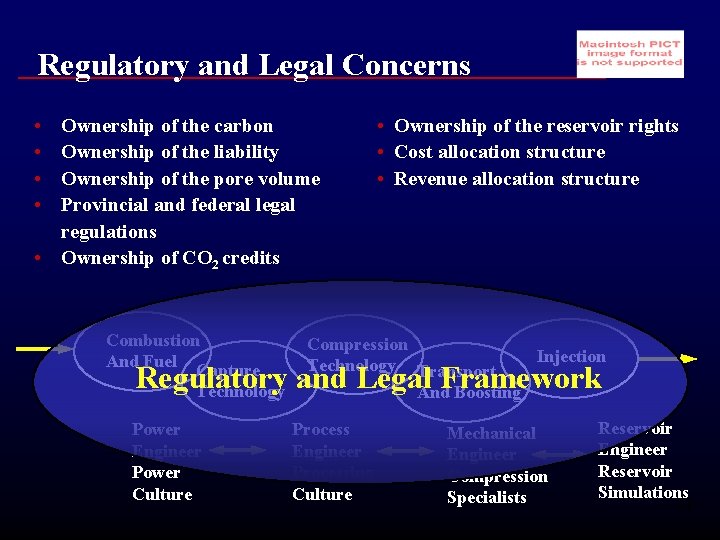
Regulatory and Legal Concerns • • Ownership of the carbon Ownership of the liability Ownership of the pore volume Provincial and federal legal regulations • Ownership of CO 2 credits Combustion And Fuel Capture • Ownership of the reservoir rights • Cost allocation structure • Revenue allocation structure Compression Injection Technology Transport And Boosting Regulatory and Legal Framework Technology Power Engineer Power Culture Process Engineer Processing Culture Mechanical Engineer Compression Specialists Reservoir Engineer Reservoir Simulations 21
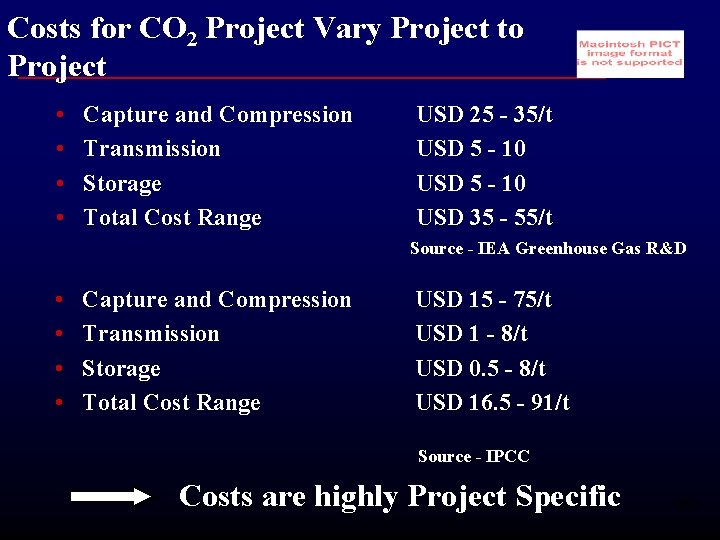
Costs for CO 2 Project Vary Project to Project • • Capture and Compression Transmission Storage Total Cost Range USD 25 - 35/t USD 5 - 10 USD 35 - 55/t Source - IEA Greenhouse Gas R&D • • Capture and Compression Transmission Storage Total Cost Range USD 15 - 75/t USD 1 - 8/t USD 0. 5 - 8/t USD 16. 5 - 91/t Source - IPCC Costs are highly Project Specific 22
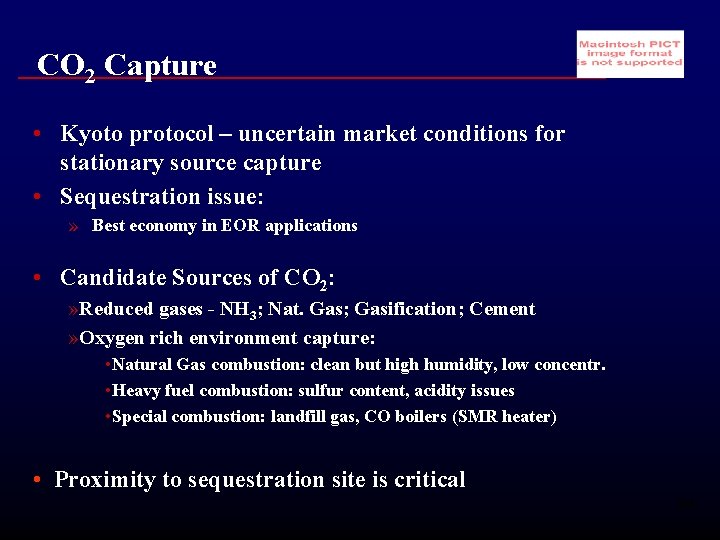
CO 2 Capture • Kyoto protocol – uncertain market conditions for stationary source capture • Sequestration issue: » Best economy in EOR applications • Candidate Sources of CO 2: » Reduced gases - NH 3; Nat. Gas; Gasification; Cement » Oxygen rich environment capture: • Natural Gas combustion: clean but high humidity, low concentr. • Heavy fuel combustion: sulfur content, acidity issues • Special combustion: landfill gas, CO boilers (SMR heater) • Proximity to sequestration site is critical 23
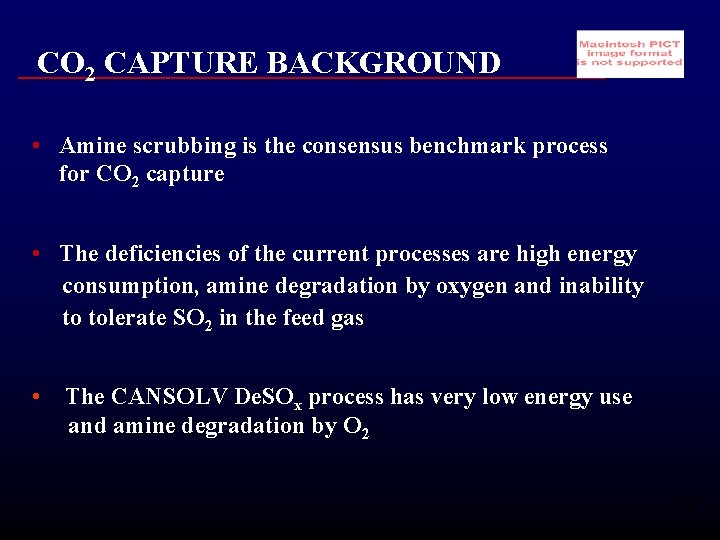
CO 2 CAPTURE BACKGROUND • Amine scrubbing is the consensus benchmark process for CO 2 capture • The deficiencies of the current processes are high energy consumption, amine degradation by oxygen and inability to tolerate SO 2 in the feed gas • The CANSOLV De. SOx process has very low energy use and amine degradation by O 2 24
CO 2 Capture CANSOLV Technology • Cansolv Absorbents are designed to exhibit » Fast kinetics -- similar to primary amines » Very low degradation -- similar to tertiary amines » High resistance against oxidation & free radical attack » Lowest possible regeneration energy -- similar to formulated amines 25
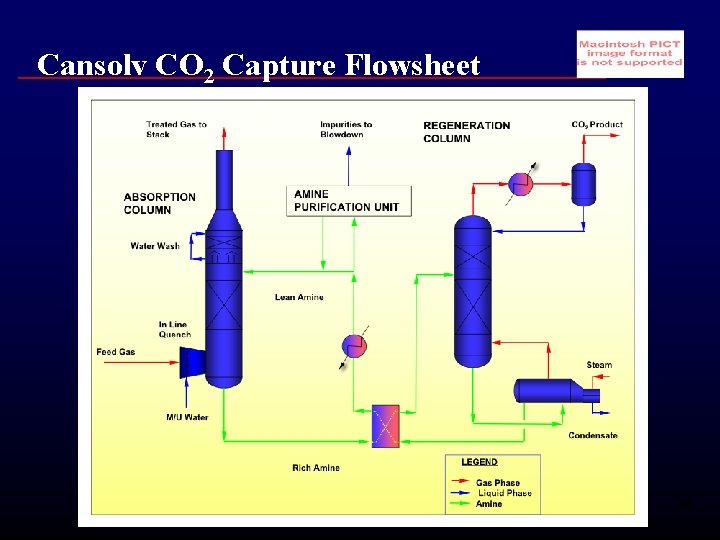
Cansolv CO 2 Capture Flowsheet 26
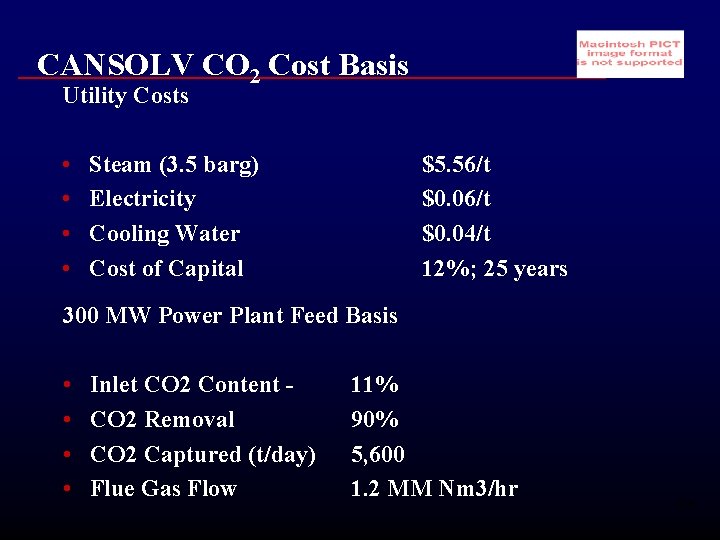
CANSOLV CO 2 Cost Basis Utility Costs • • Steam (3. 5 barg) Electricity Cooling Water Cost of Capital $5. 56/t $0. 04/t 12%; 25 years 300 MW Power Plant Feed Basis • • Inlet CO 2 Content CO 2 Removal CO 2 Captured (t/day) Flue Gas Flow 11% 90% 5, 600 1. 2 MM Nm 3/hr 27
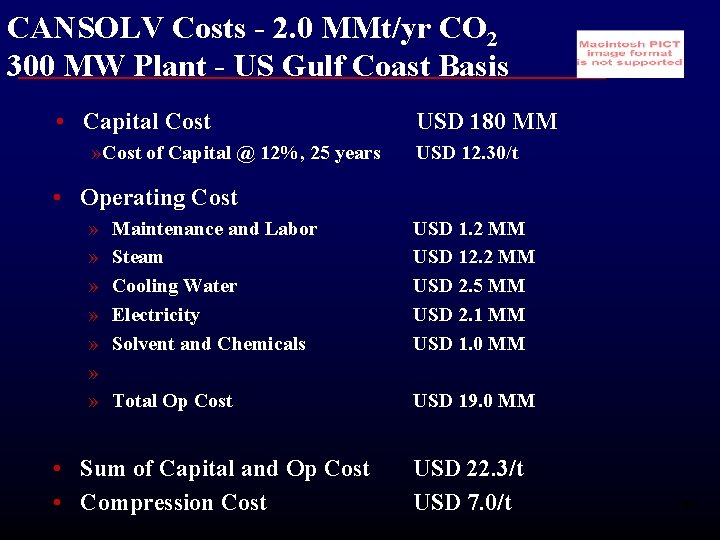
CANSOLV Costs - 2. 0 MMt/yr CO 2 300 MW Plant - US Gulf Coast Basis • Capital Cost » Cost of Capital @ 12%, 25 years USD 180 MM USD 12. 30/t • Operating Cost » » » » Maintenance and Labor Steam Cooling Water Electricity Solvent and Chemicals USD 1. 2 MM USD 12. 2 MM USD 2. 5 MM USD 2. 1 MM USD 1. 0 MM Total Op Cost USD 19. 0 MM • Sum of Capital and Op Cost • Compression Cost USD 22. 3/t USD 7. 0/t 28
CO 2 Readiness to Commercialize • Identification of solvent classes -- Start 2000 • Piloting on site --March - April & Nov. 2004; July & Aug, 2006 • Demo Plant Design 2007 • Demo Plant Build-up & Start-up 2008 • Full Commercial Project Engineering Start 2007 29
CANSOLV Integrated SO 2 and CO 2 • Technology developed for fuel value based projects • Takes advantage of cost differential between premium fuels and low value, high sulfur fuels • Integrates absorbers into one vessel • Integrates SO 2 regeneration with CO 2 regeneration 30
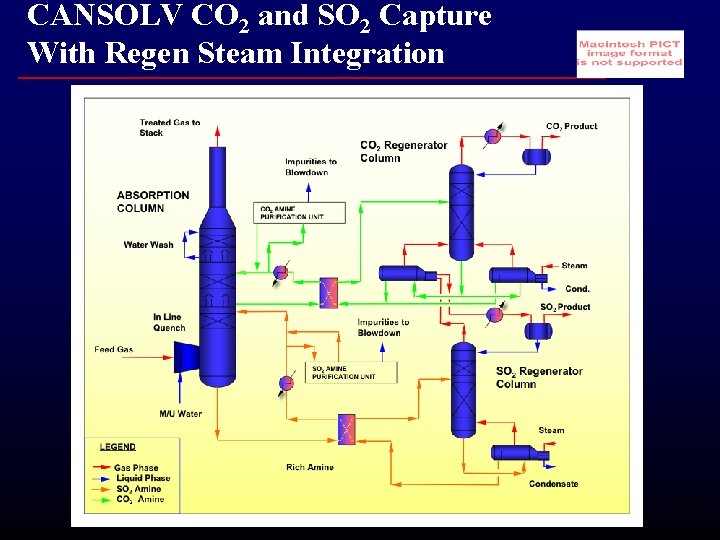
CANSOLV CO 2 and SO 2 Capture With Regen Steam Integration 31
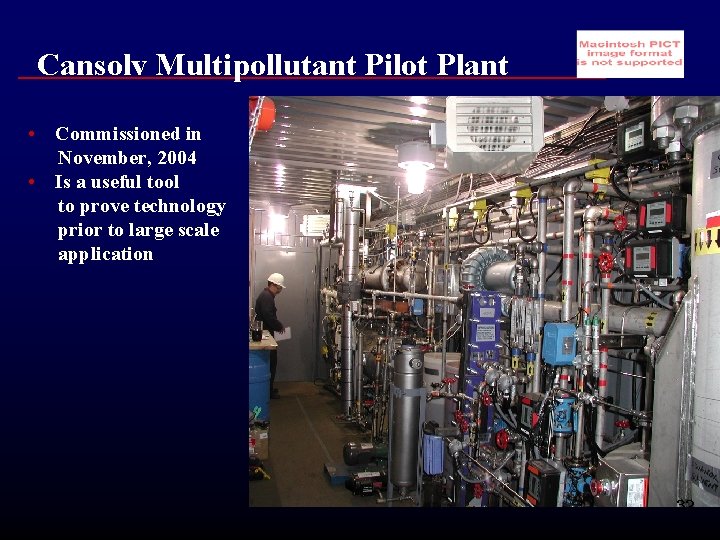
Cansolv Multipollutant Pilot Plant • Commissioned in November, 2004 • Is a useful tool to prove technology prior to large scale application 32
Conclusions • Cansolv Scrubbing Technologies are ready for application • Experienced in regenerable amine flue gas treatment for SO 2 • Developed more stable and energy efficient solvents for CO 2 • Demonstrated at rates up to 700, 000 Nm 3/hr equivalent to 165 Mwe • Piloting for specific CO 2 capture applications continues 33
- Slides: 33