
Cancer Lesson 3 2 Part 2 How do






- Slides: 12
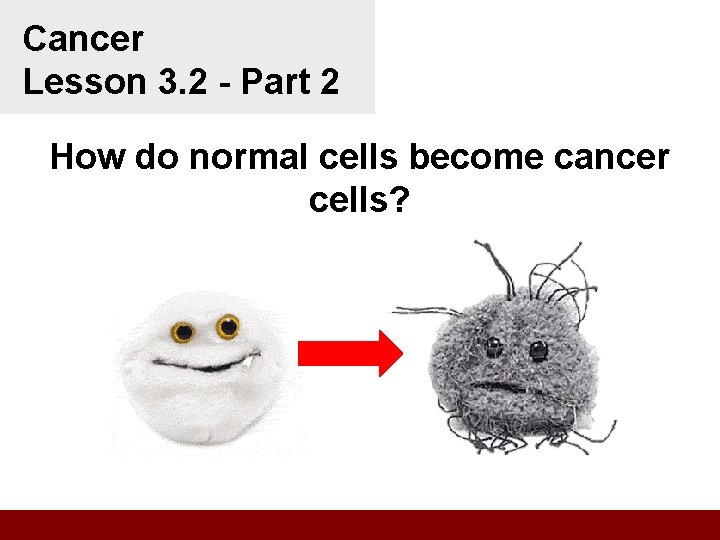
Cancer Lesson 3. 2 - Part 2 How do normal cells become cancer cells?
Do now • What kind of mutations can affect cancer genes? • How do they occur?
Mutating important cancer genes Proto-oncogenes Tumor suppressors • Inserting transposons • Rearranging large segments of chromosomes • Mutating individual nucleotides
Why SNPs are important in cancer • Some SNPs are known to cause inherited cancer (OMIM database). • Some SNPs have been associated with cancer but not yet proven (FLAGGED SNP database).
Substituion mutations Mutations that do change the amino acid are called non- synonymous Mutations that don’t change the amino acid are called synonymous
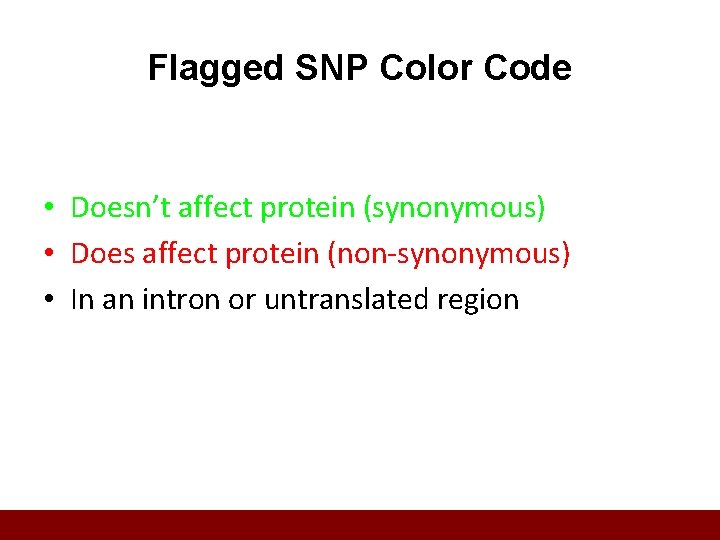
Flagged SNP Color Code • Doesn’t affect protein (synonymous) • Does affect protein (non-synonymous) • In an intron or untranslated region
Activity • Do the worksheet from this lesson that examines the roles of mutations in important oncogenes and tumor suppressors in cancers.
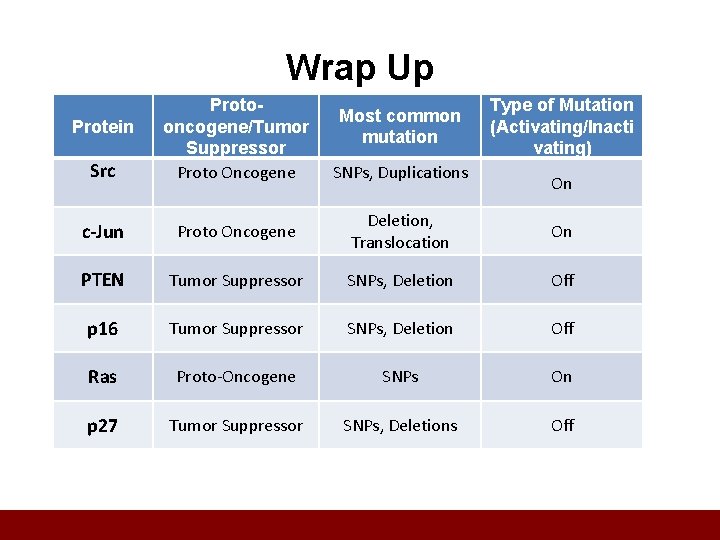
Wrap Up Src Protooncogene/Tumor Suppressor Proto Oncogene c-Jun Proto Oncogene Deletion, Translocation On PTEN Tumor Suppressor SNPs, Deletion Off p 16 Tumor Suppressor SNPs, Deletion Off Ras Proto-Oncogene SNPs On p 27 Tumor Suppressor SNPs, Deletions Off Protein Most common mutation SNPs, Duplications Type of Mutation (Activating/Inacti vating) On
Switching off tumor suppressors Tumor suppressor DNA Damage p 53 Tumor suppressor Cell cycle arrest Apoptosis Tumor suppressor
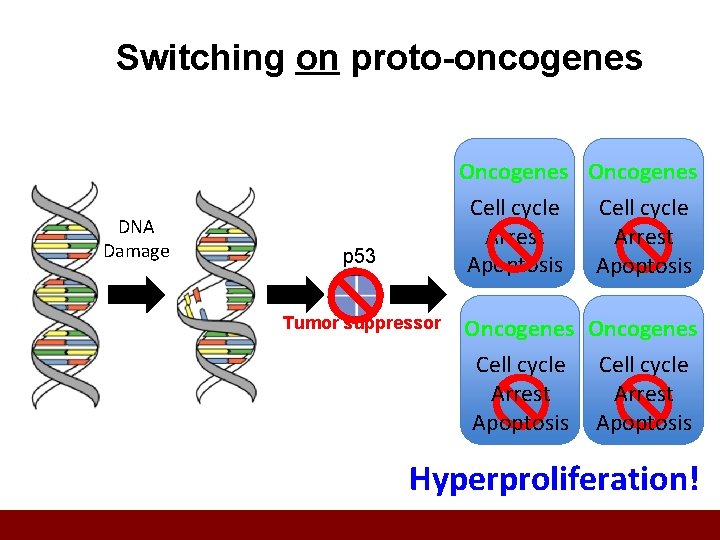
Switching on proto-oncogenes DNA Damage Oncogenes Cell cycle Arrest Apoptosis p 53 Tumor suppressor Oncogenes Cell cycle Arrest Apoptosis Hyperproliferation!
Both the brake and the gas pedal are mutated in cancer Tumor suppressor Normal proto-oncogene Normal cell Oncogene 1 st mutation Mutated tumor suppressors 2 nd mutation CANCER!
Homework • Read the workbook for lesson 3. 2 and answer the questions