
Cancer Lesson 3 2 Part 1 How do

- Slides: 27
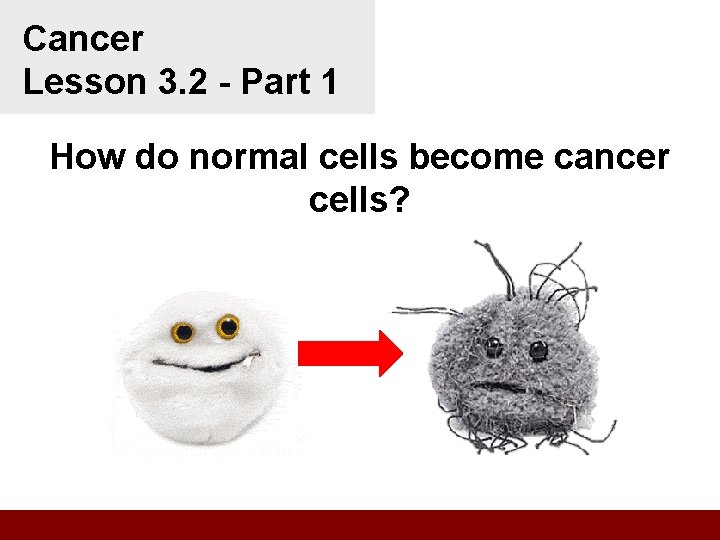
Cancer Lesson 3. 2 - Part 1 How do normal cells become cancer cells?
Do Now • What are these steps in the life cycle of a cell? • A new cell is born • It talks to its friends • It grows up and gets a job • It gets old and dies
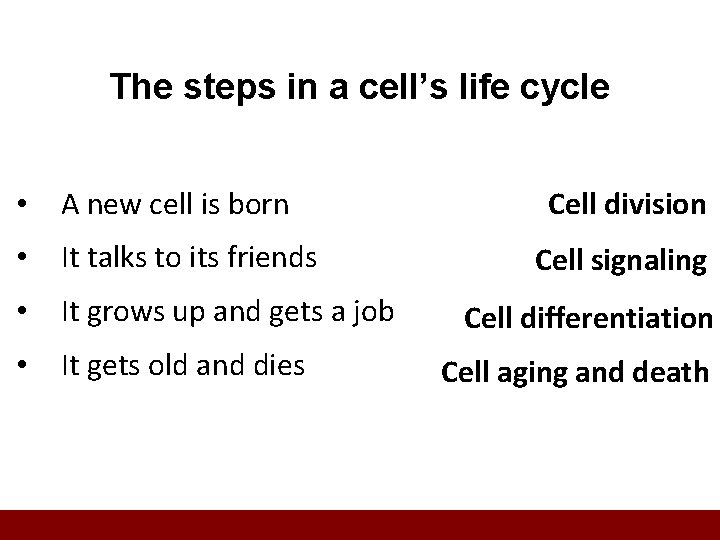
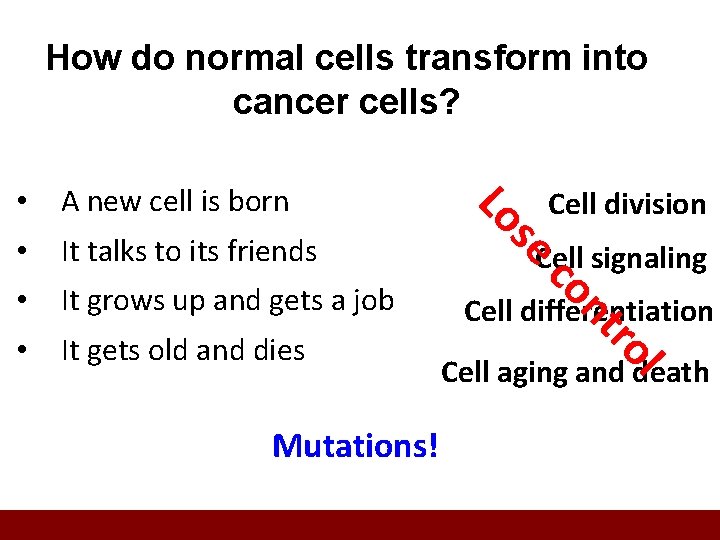
The steps in a cell’s life cycle • A new cell is born • It talks to its friends • It grows up and gets a job • It gets old and dies Cell division Cell signaling Cell differentiation Cell aging and death
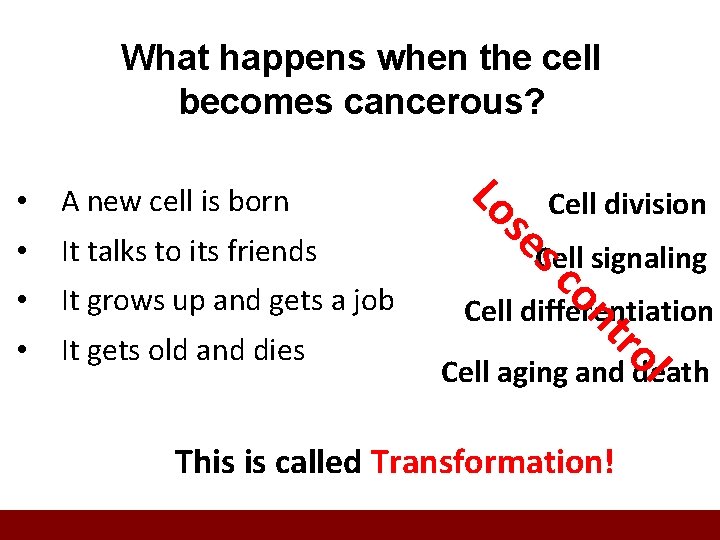
What happens when the cell becomes cancerous? • It grows up and gets a job • It gets old and dies Cell signaling Cell differentiation tro It talks to its friends on sc • Cell division se A new cell is born Lo • l Cell aging and death This is called Transformation!
How do normal cells transform into cancer cells? It grows up and gets a job • It gets old and dies Mutations! Cell differentiation l ro • Cell signaling nt It talks to its friends co • Cell division e A new cell is born s Lo • Cell aging and death
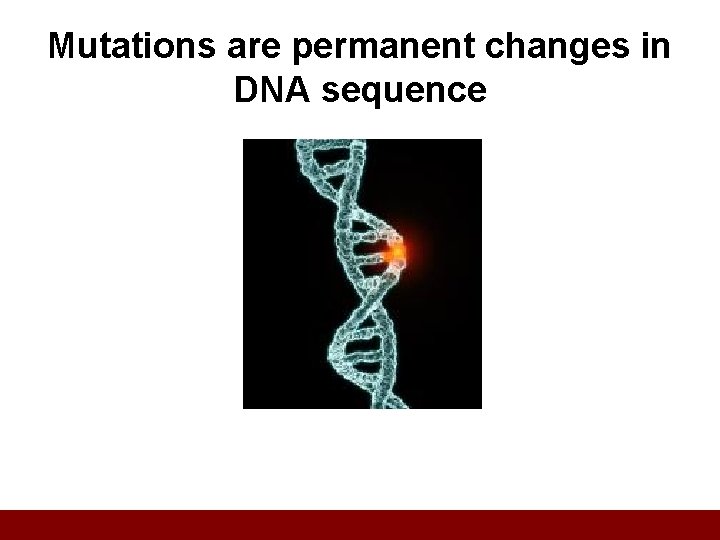
Mutations are permanent changes in DNA sequence
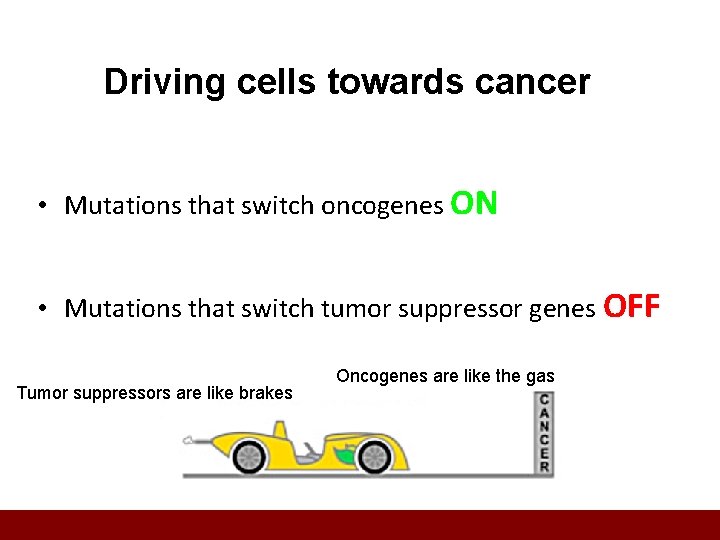
Driving cells towards cancer • Mutations that switch oncogenes ON • Mutations that switch tumor suppressor genes OFF Tumor suppressors are like brakes Oncogenes are like the gas
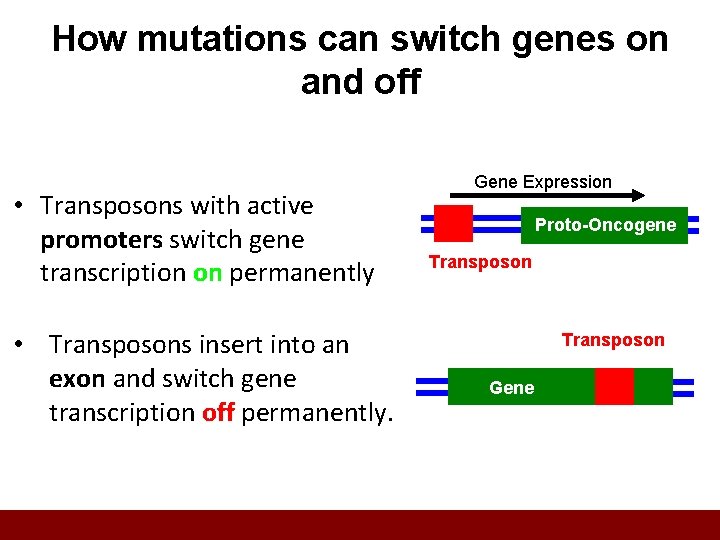
How mutations can switch genes on and off • Transposons with active promoters switch gene transcription on permanently • Transposons insert into an exon and switch gene transcription off permanently. Gene Expression Proto-Oncogene Transposon Gene
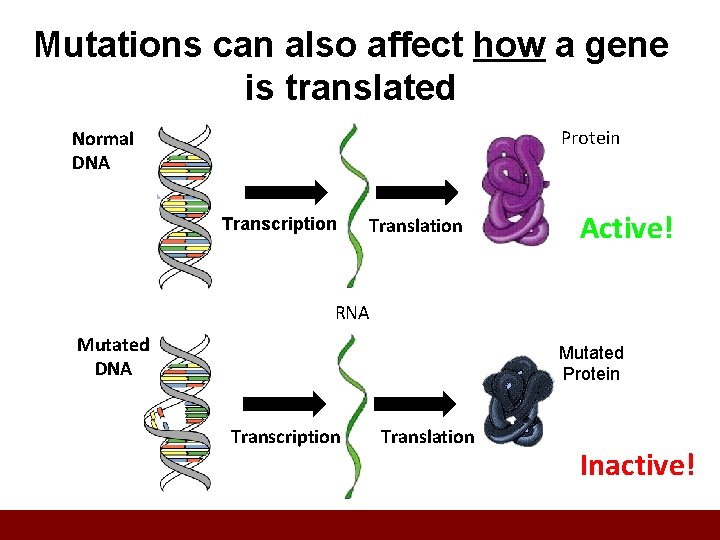
Mutations can also affect how a gene is translated Protein Normal DNA Transcription Translation Active! RNA Mutated DNA Mutated Protein Transcription Translation Inactive!
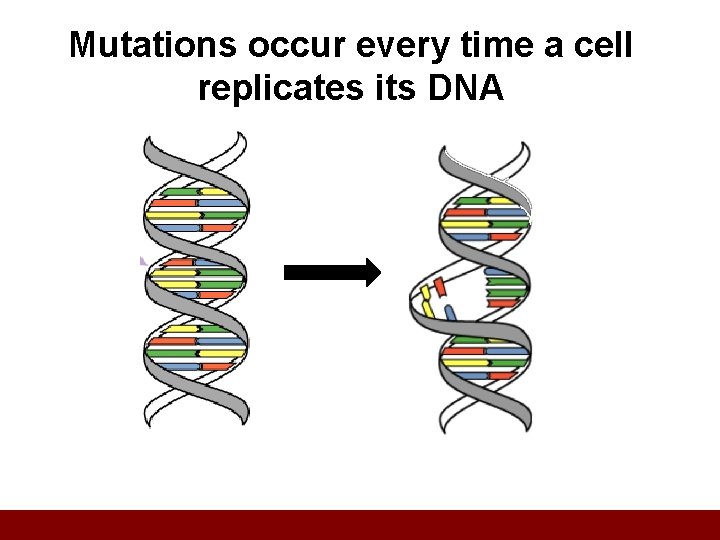
Mutations occur every time a cell replicates its DNA
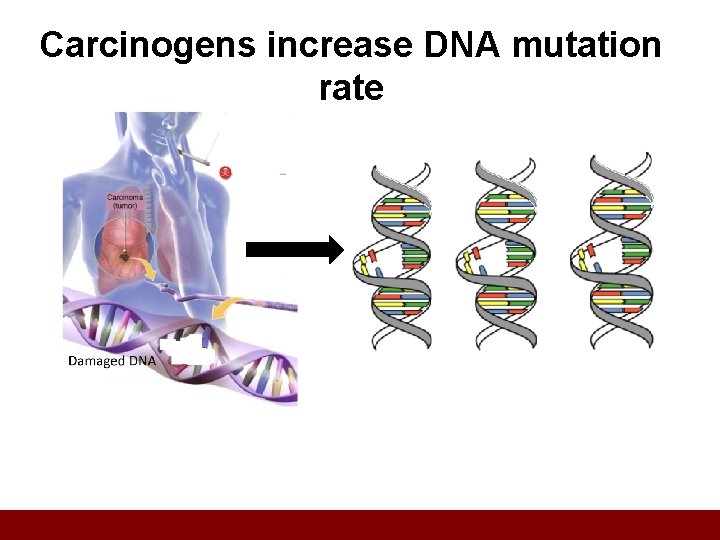
Carcinogens increase DNA mutation rate
What do mutations affect? • Large segments of chromosomes • Individual nucleotides
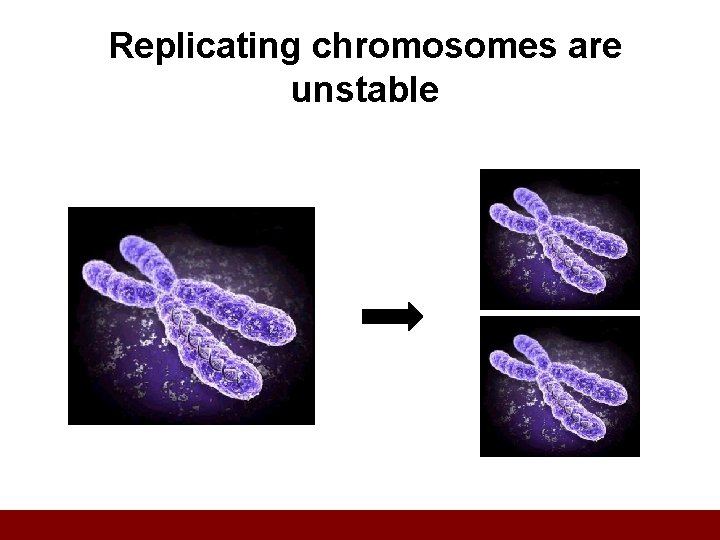
Replicating chromosomes are unstable
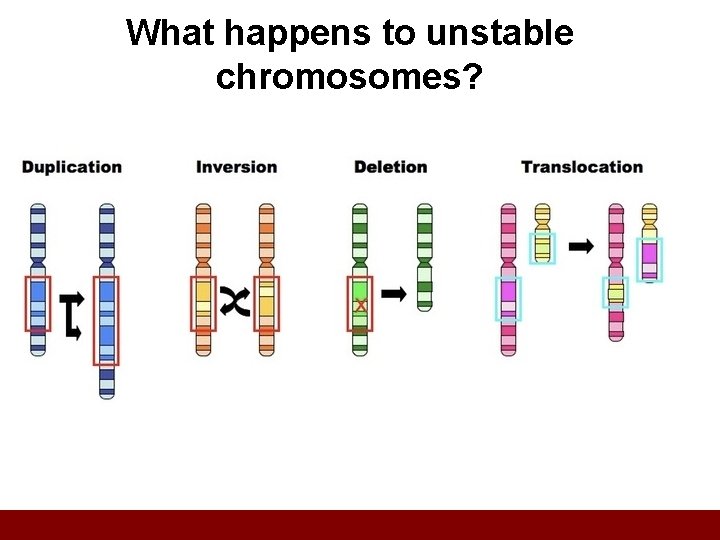
What happens to unstable chromosomes?
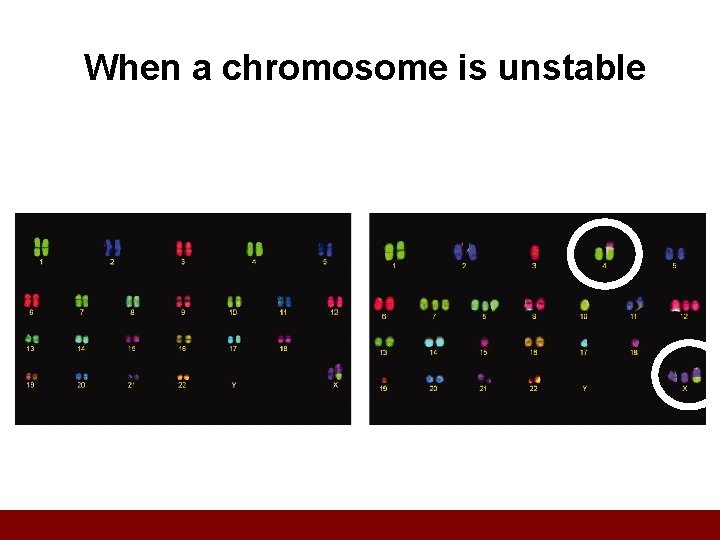
When a chromosome is unstable B B B
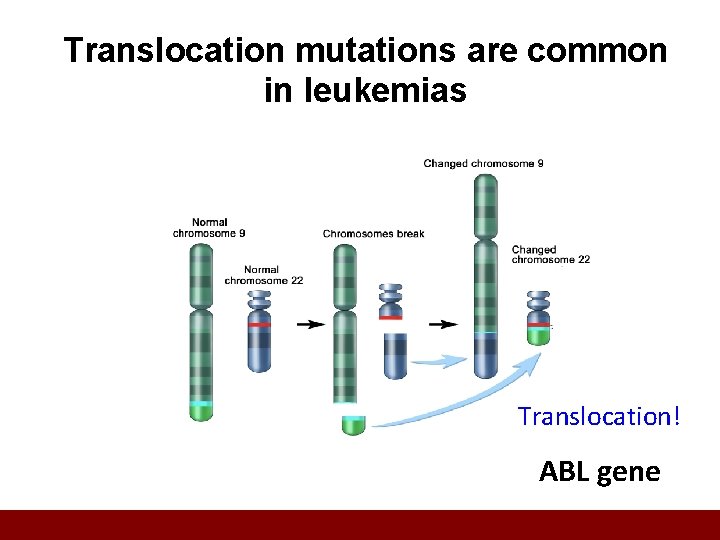
Translocation mutations are common in leukemias B B B Translocation! ABL gene
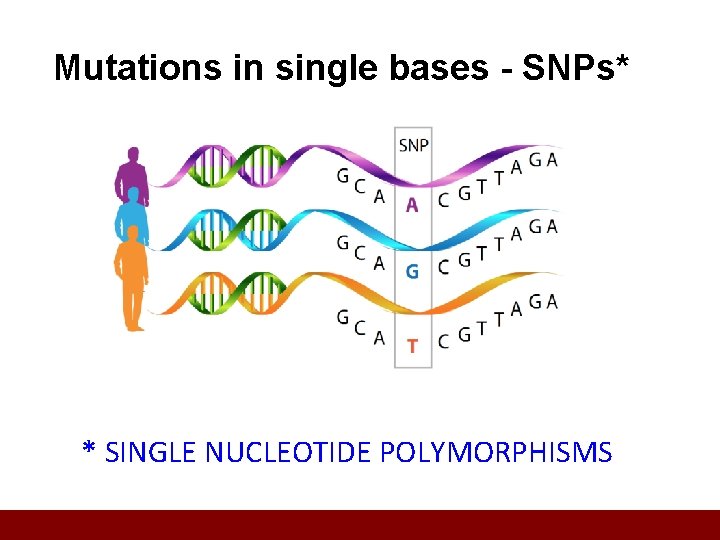
Mutations in single bases - SNPs* * SINGLE NUCLEOTIDE POLYMORPHISMS
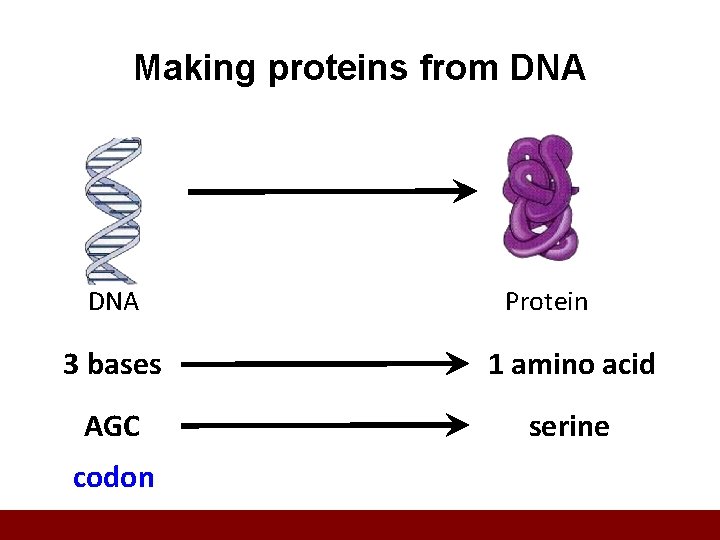
Making proteins from DNA Protein 3 bases 1 amino acid AGC serine codon
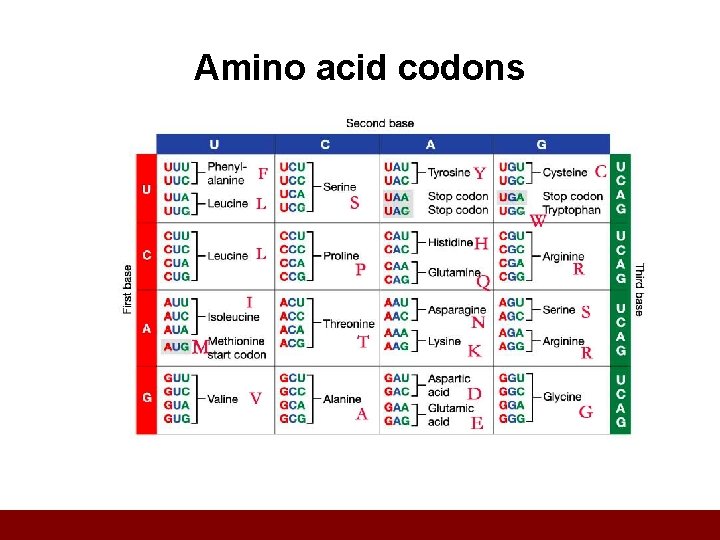
Amino acid codons
Divide this ‘DNA sequence’ into codons THEBIGBADFLYHADONEREDEYEANDONEBLUEYE THE BIG BAD FLY HAD ONE RED EYE AND ONE BLU EYE
Activity How single nucleotide (point) mutations affect protein function
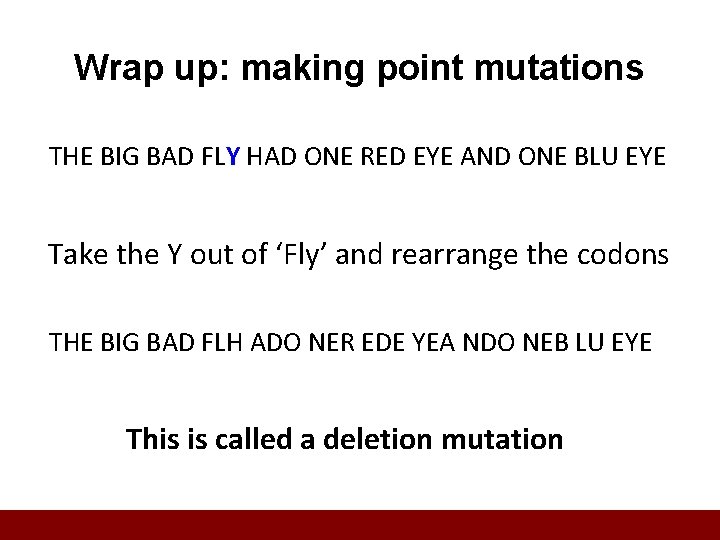
Wrap up: making point mutations THE BIG BAD FLY HAD ONE RED EYE AND ONE BLU EYE Take the Y out of ‘Fly’ and rearrange the codons THE BIG BAD FLH ADO NER EDE YEA NDO NEB LU EYE This is called a deletion mutation
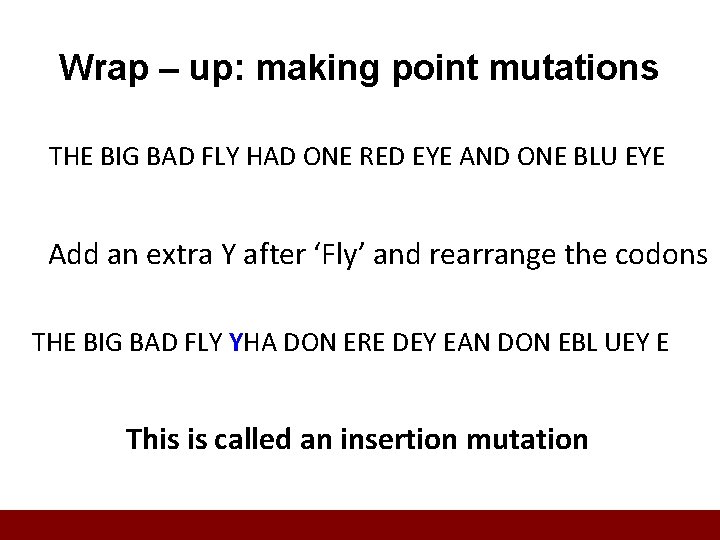
Wrap – up: making point mutations THE BIG BAD FLY HAD ONE RED EYE AND ONE BLU EYE Add an extra Y after ‘Fly’ and rearrange the codons THE BIG BAD FLY YHA DON ERE DEY EAN DON EBL UEY E This is called an insertion mutation
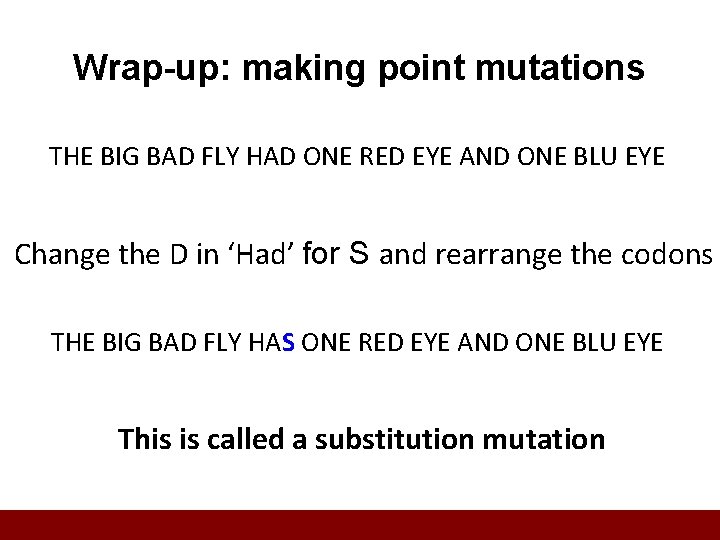
Wrap-up: making point mutations THE BIG BAD FLY HAD ONE RED EYE AND ONE BLU EYE Change the D in ‘Had’ for S and rearrange the codons THE BIG BAD FLY HAS ONE RED EYE AND ONE BLU EYE This is called a substitution mutation
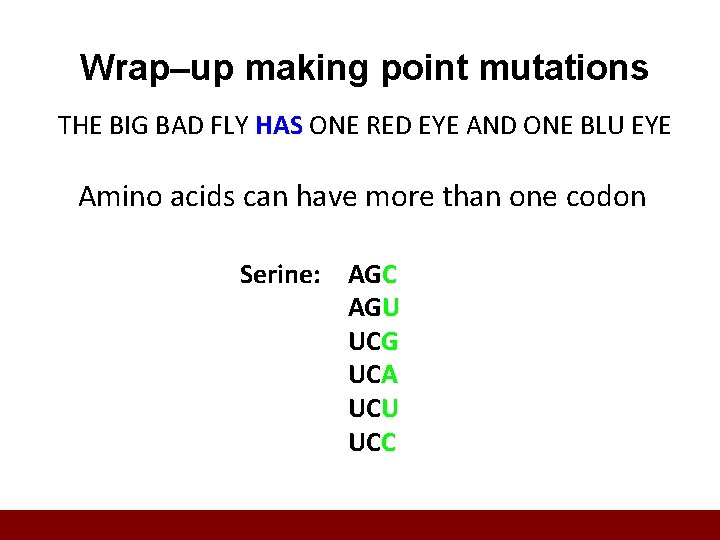
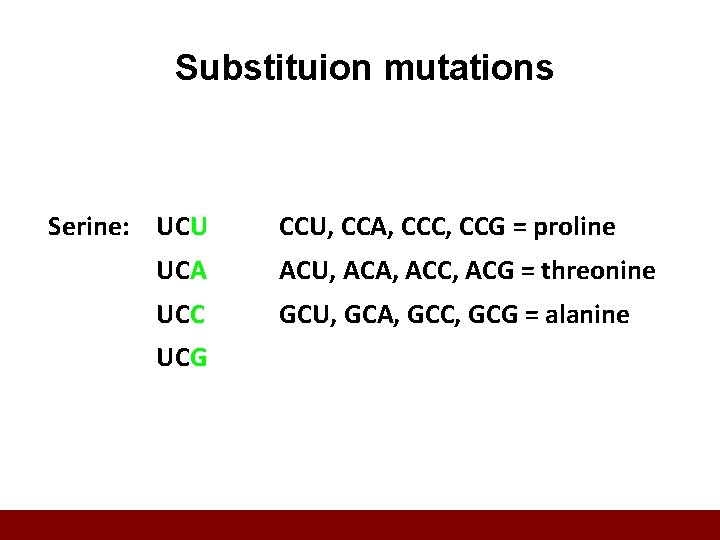
Wrap–up making point mutations THE BIG BAD FLY HAS ONE RED EYE AND ONE BLU EYE Amino acids can have more than one codon Serine: AGC AGU UCG UCA UCU UCC
Substituion mutations Serine: UCU CCU, CCA, CCC, CCG = proline UCA ACU, ACA, ACC, ACG = threonine UCC GCU, GCA, GCC, GCG = alanine UCG
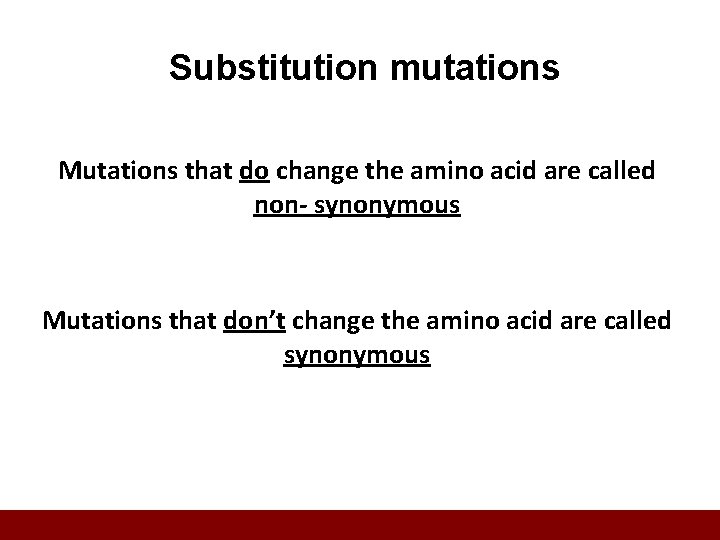
Substitution mutations Mutations that do change the amino acid are called non- synonymous Mutations that don’t change the amino acid are called synonymous