
Cancer Lesson 2 4 How are cell activities

- Slides: 23
Cancer Lesson 2. 4 How are cell activities controlled in a normal cell and disrupted in cancer?
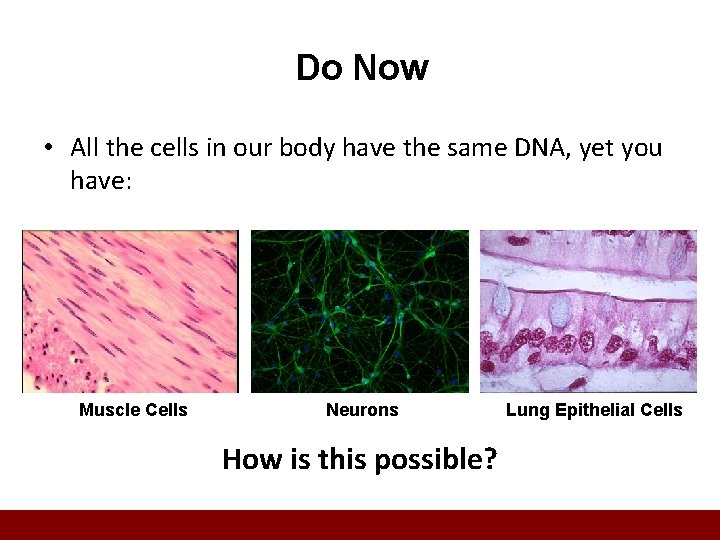
Do Now • All the cells in our body have the same DNA, yet you have: Muscle Cells Neurons How is this possible? Lung Epithelial Cells
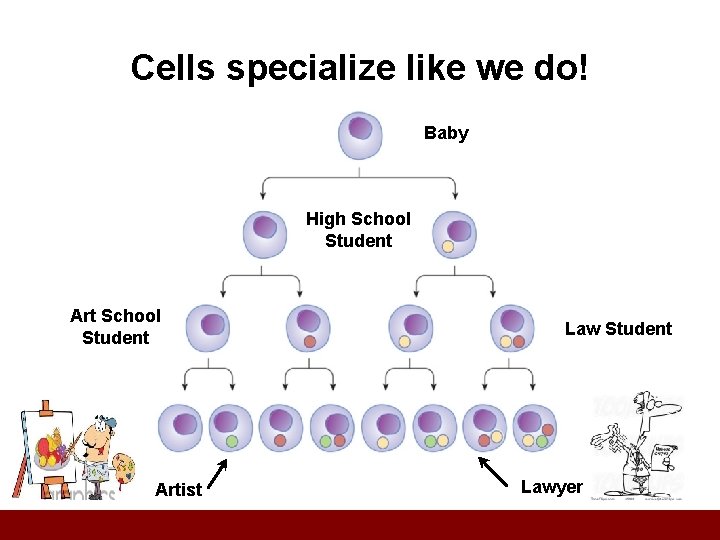
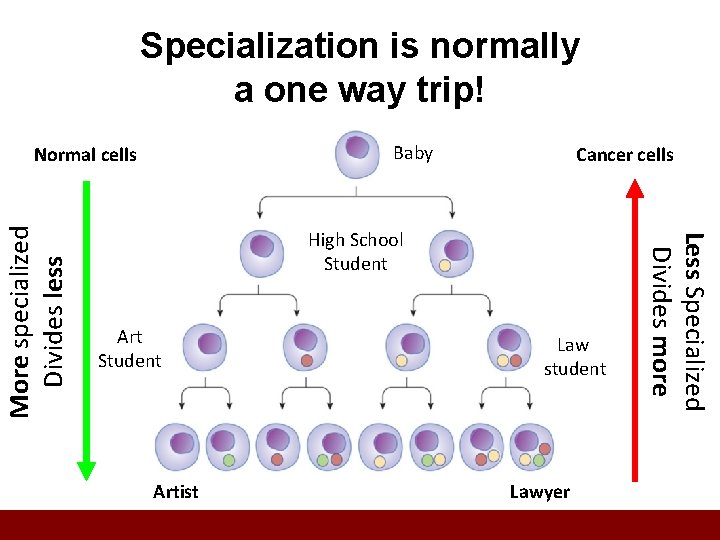
Cells specialize like we do! Baby High School Student Artist Law Student Lawyer
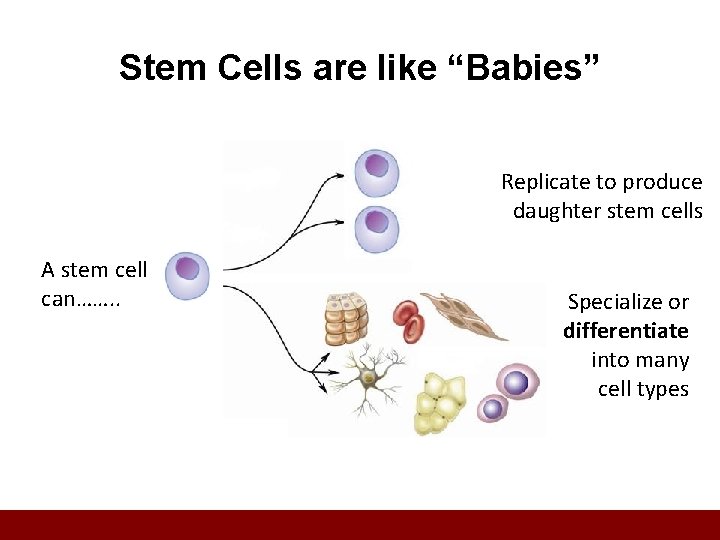
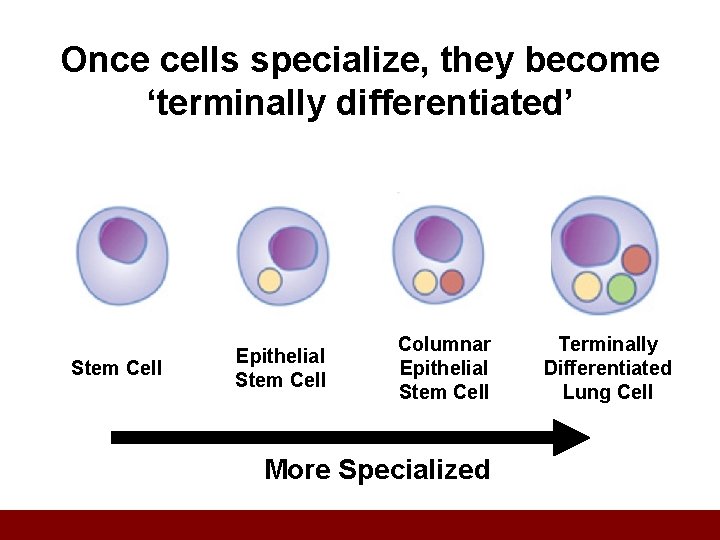
Stem Cells are like “Babies” Replicate to produce daughter stem cells A stem cell can……. . Specialize or differentiate into many cell types
Once cells specialize, they become ‘terminally differentiated’ Stem Cell Baby Epithelial High school Stem Cell student Columnar Law Epithelial student Stem Cell More Specialized Terminally Differentiated Lawyer Lung Cell
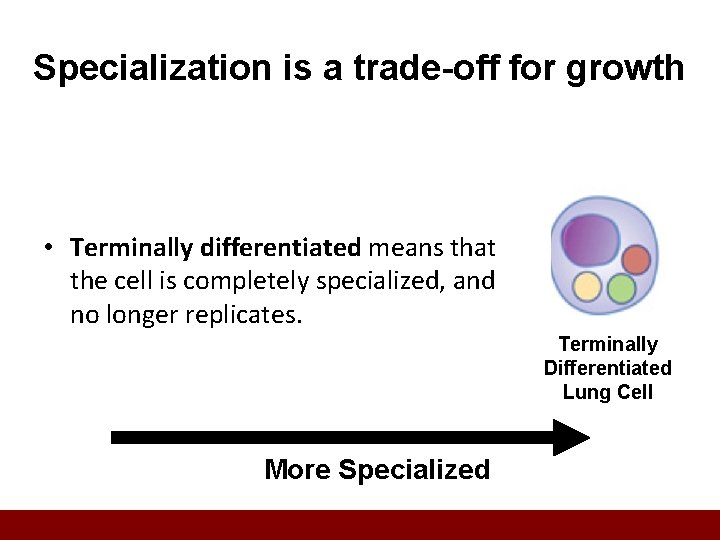
Specialization is a trade-off for growth • Terminally differentiated means that the cell is completely specialized, and no longer replicates. Terminally Differentiated Lung Cell More Specialized
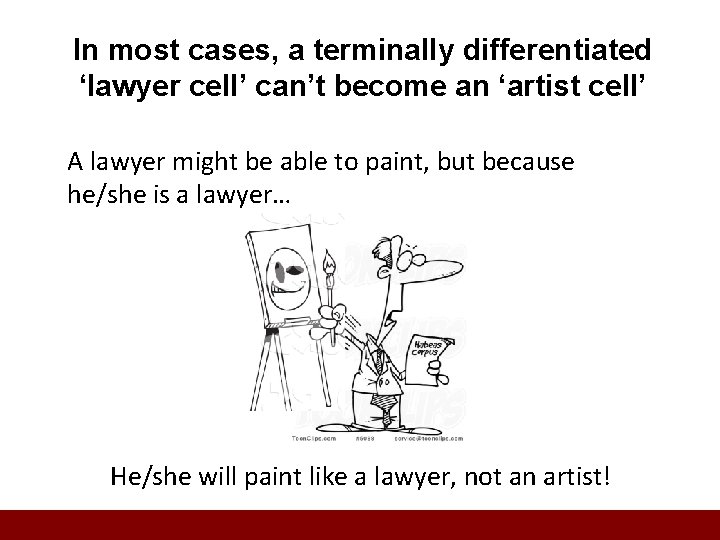
In most cases, a terminally differentiated ‘lawyer cell’ can’t become an ‘artist cell’ A lawyer might be able to paint, but because he/she is a lawyer… He/she will paint like a lawyer, not an artist!
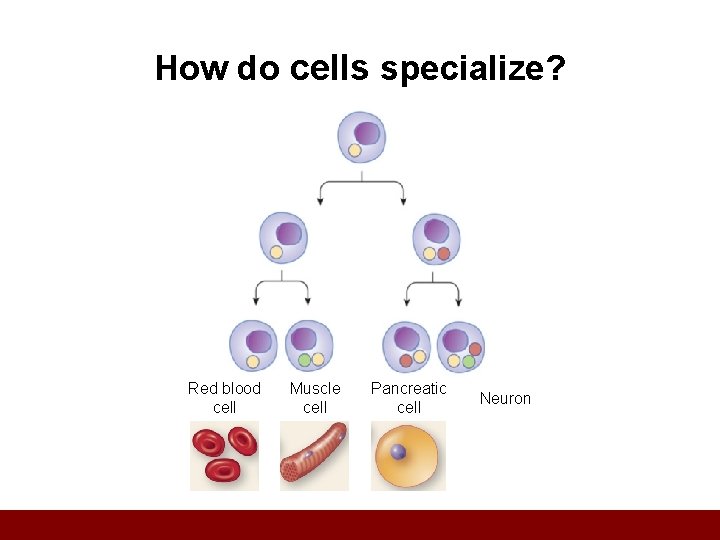
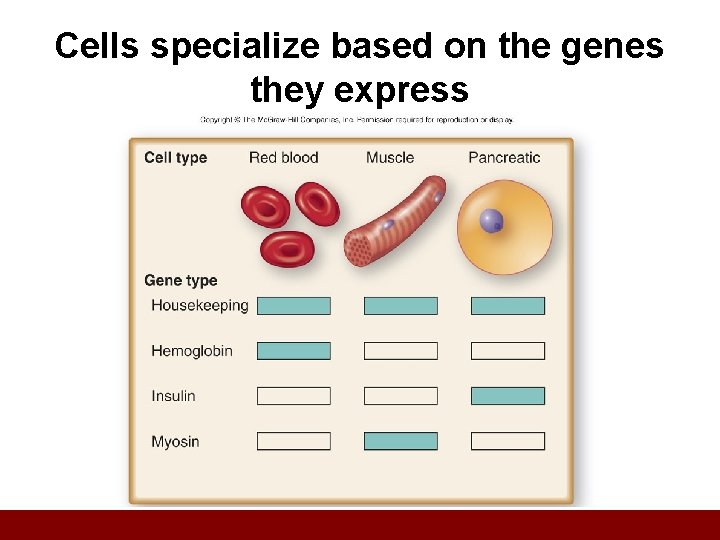
How do cells specialize? Red blood cell Muscle cell Pancreatic cell Neuron
Cells specialize based on the genes they express
How do cells determine which genes to express? • Transcription factors • ‘Opening’/ ‘closing’ of DNA
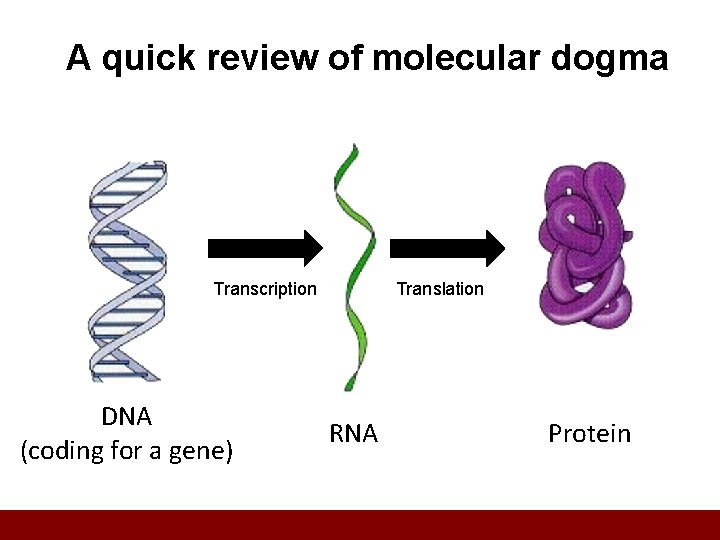
A quick review of molecular dogma Transcription DNA (coding for a gene) Translation RNA Protein
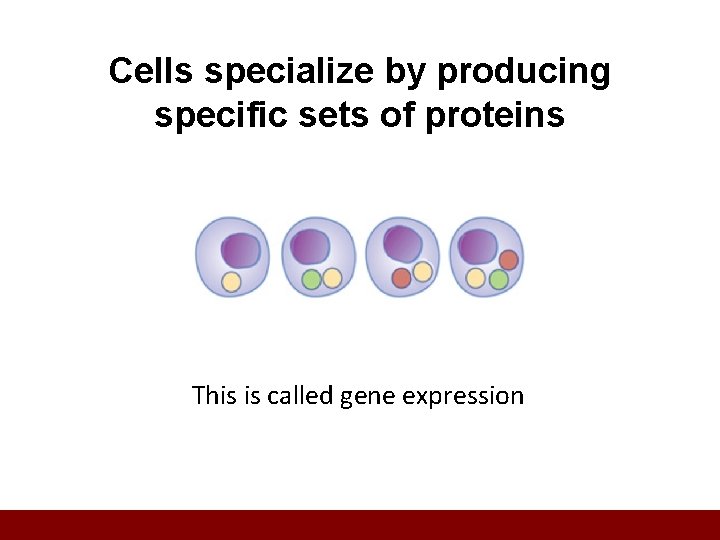
Cells specialize by producing specific sets of proteins This is called gene expression
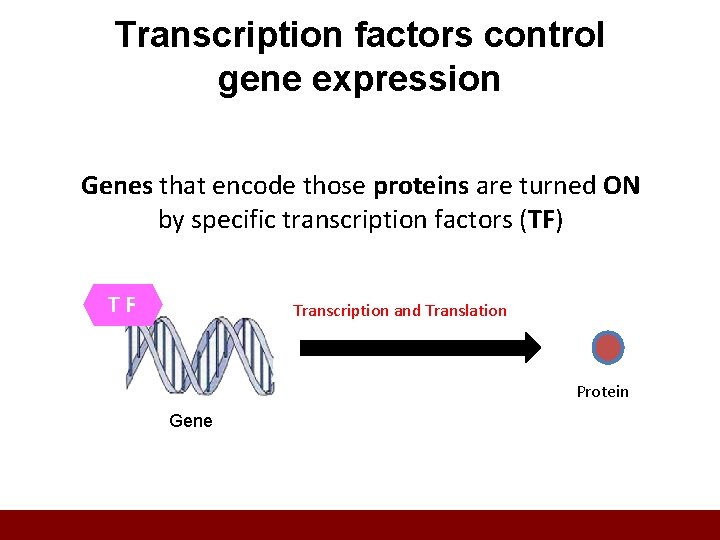
Transcription factors control gene expression Genes that encode those proteins are turned ON by specific transcription factors (TF) TF Transcription and Translation Protein Gene
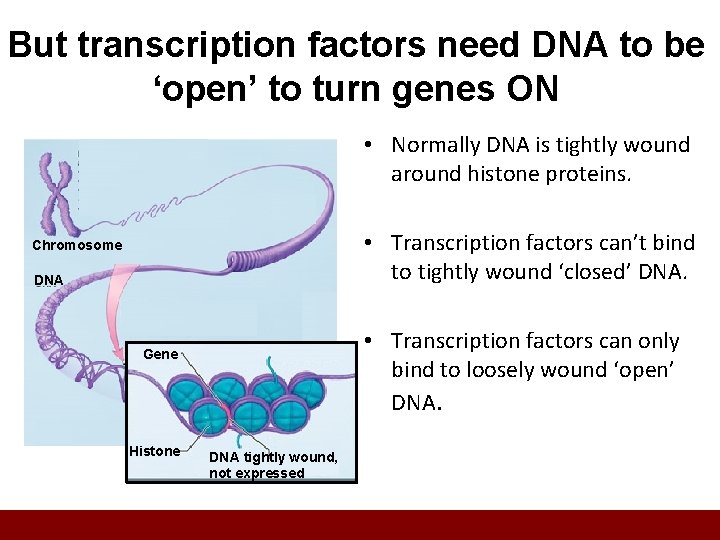
But transcription factors need DNA to be ‘open’ to turn genes ON • Normally DNA is tightly wound around histone proteins. • Transcription factors can’t bind to tightly wound ‘closed’ DNA. Chromosome DNA • Transcription factors can only bind to loosely wound ‘open’ DNA. Gene Histone DNA tightly wound, not expressed
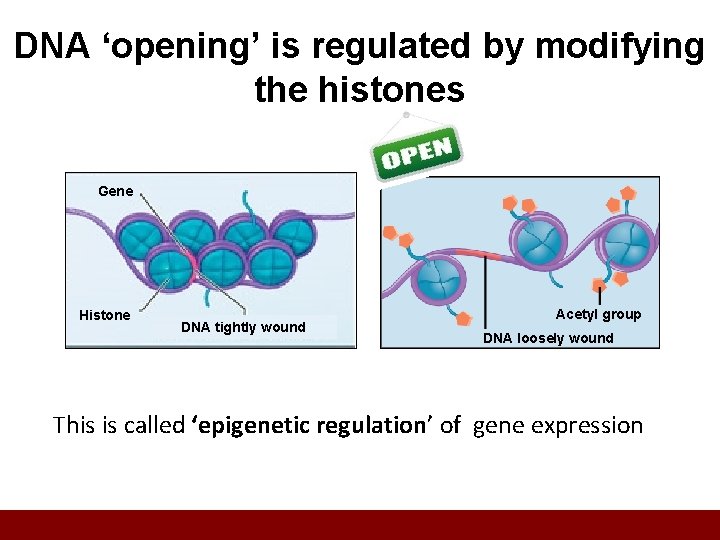
DNA ‘opening’ is regulated by modifying the histones Gene Histone DNA tightly wound Acetyl group DNA loosely wound This is called ‘epigenetic regulation’ of gene expression
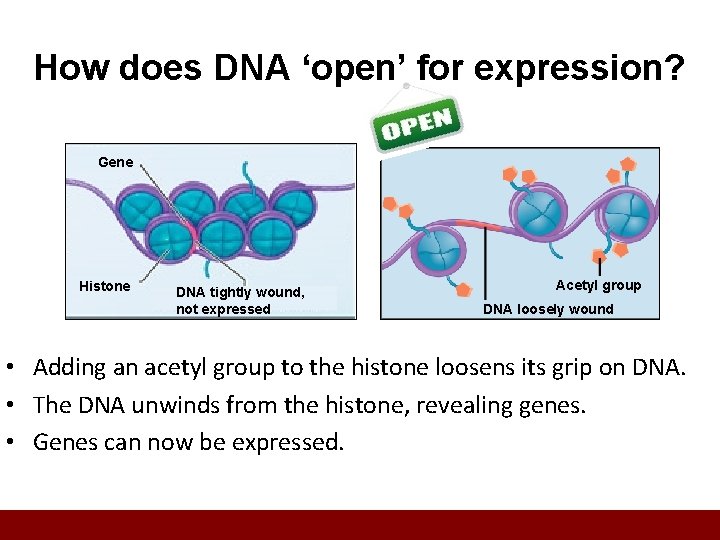
How does DNA ‘open’ for expression? Gene Histone DNA tightly wound, not expressed Acetyl group DNA loosely wound • Adding an acetyl group to the histone loosens its grip on DNA. • The DNA unwinds from the histone, revealing genes. • Genes can now be expressed.
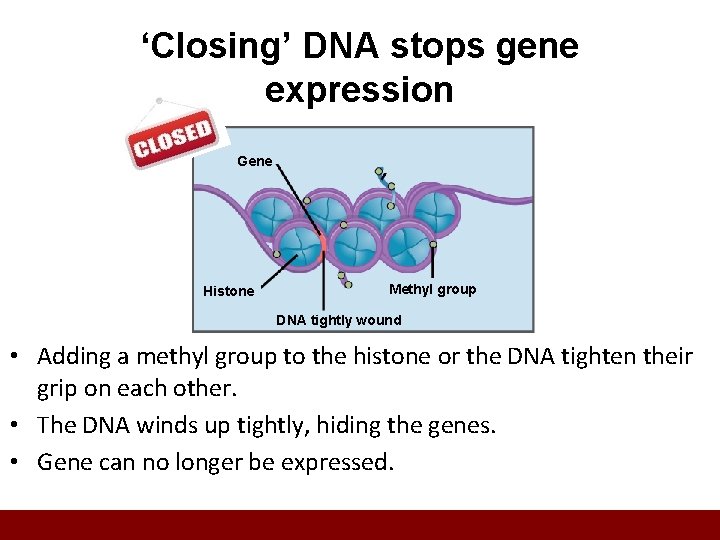
‘Closing’ DNA stops gene expression Gene Histone Methyl group DNA tightly wound • Adding a methyl group to the histone or the DNA tighten their grip on each other. • The DNA winds up tightly, hiding the genes. • Gene can no longer be expressed.
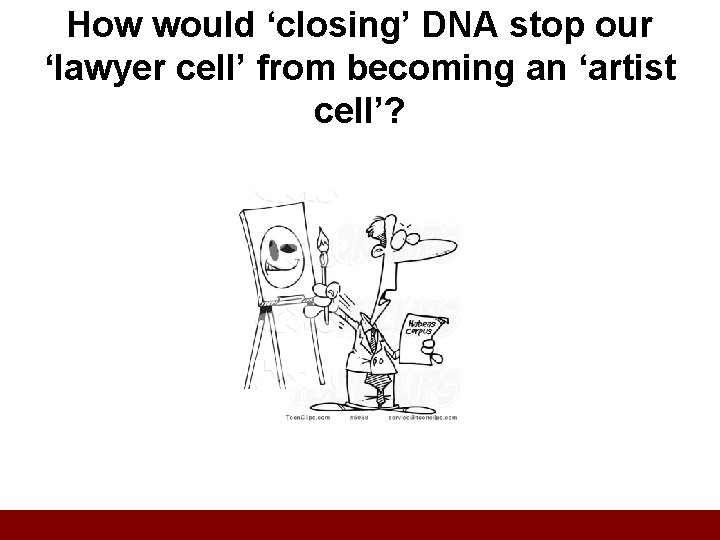
How would ‘closing’ DNA stop our ‘lawyer cell’ from becoming an ‘artist cell’?
Activity: • What genes are ‘opened’ and ‘closed’ in our cells?
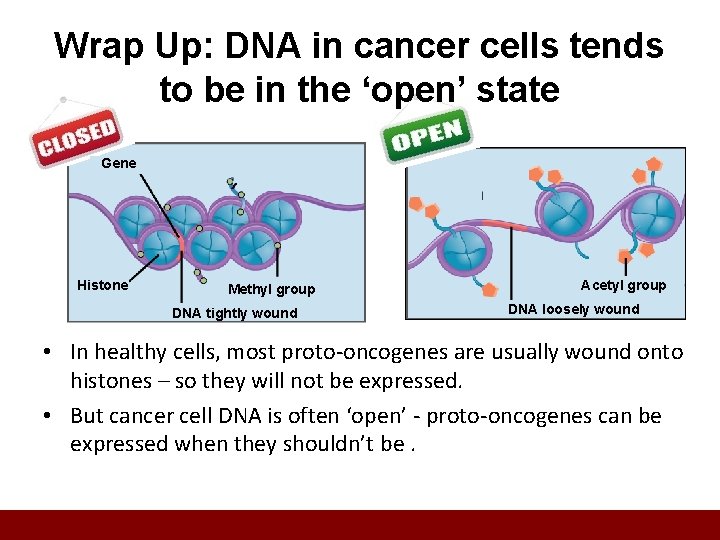
Wrap Up: DNA in cancer cells tends to be in the ‘open’ state Gene Histone Methyl group DNA tightly wound Acetyl group DNA loosely wound • In healthy cells, most proto-oncogenes are usually wound onto histones – so they will not be expressed. • But cancer cell DNA is often ‘open’ - proto-oncogenes can be expressed when they shouldn’t be.
Specialization is normally a one way trip! Baby Cancer cells High School Student Artist Law student Lawyer Less Specialized Divides more More specialized Divides less Normal cells
Cancer cells behave like stem cells • Cancer cells lose their specialized functions – Genetic changes - mutated genes are expressed when they shouldn’t be. Epigenetic changes – open DNA means genes can be expressed at the wrong time. • So cancer cells behave more like stem cells than specialized cells.
Homework • Read workbook chapter 2. 4 and answer the question.