
Cancer Genetics and the Cell Cycle Gene regulation
- Slides: 13
Cancer, Genetics and the Cell Cycle • Gene regulation systems that go wrong during cancer are the same systems used in embryonic development • Cancer can be caused by genetic mutations that regulate cell growth and division • Tumor viruses cause cancer in animals including humans
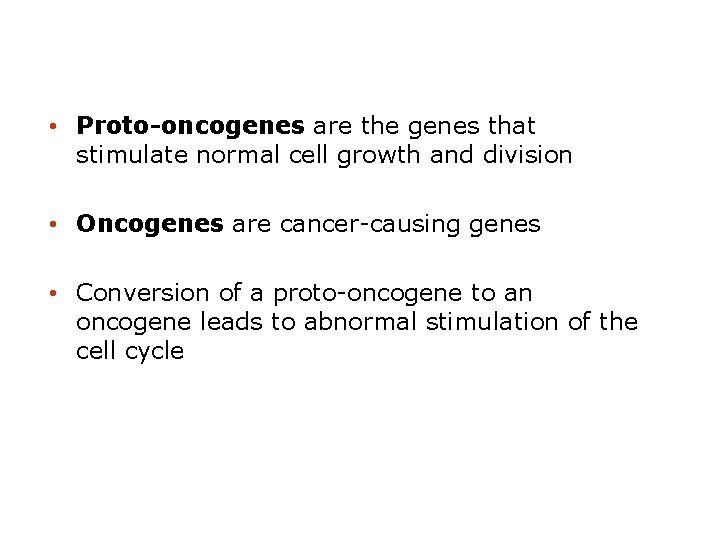
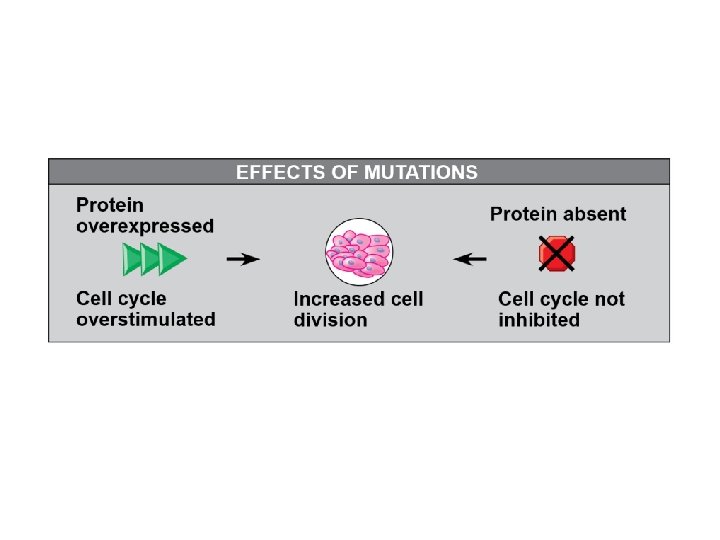
• Proto-oncogenes are the genes that stimulate normal cell growth and division • Oncogenes are cancer-causing genes • Conversion of a proto-oncogene to an oncogene leads to abnormal stimulation of the cell cycle
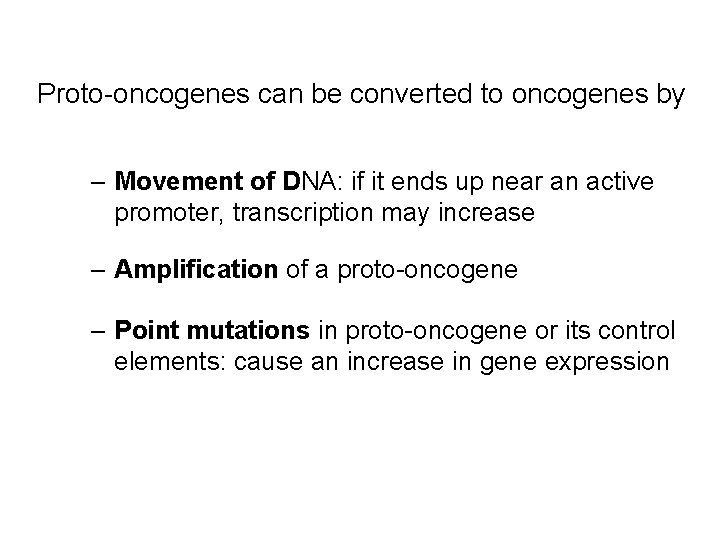
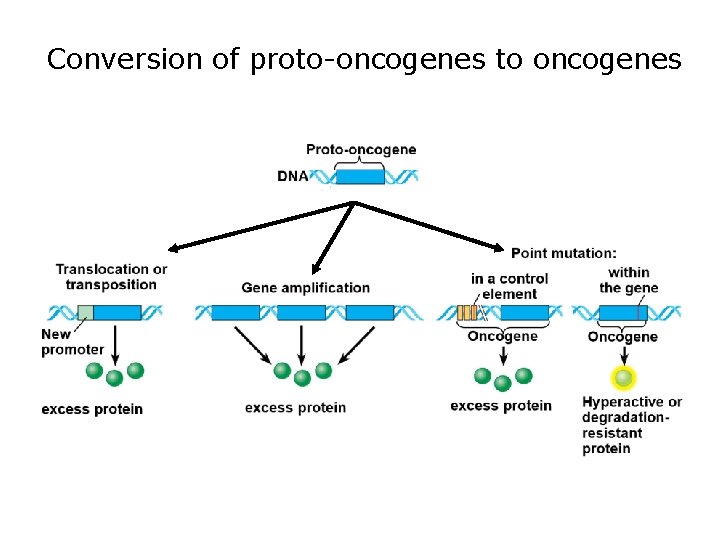
Proto-oncogenes can be converted to oncogenes by – Movement of DNA: if it ends up near an active promoter, transcription may increase – Amplification of a proto-oncogene – Point mutations in proto-oncogene or its control elements: cause an increase in gene expression
Conversion of proto-oncogenes to oncogenes
Tumor-Suppressor Genes • Tumor-suppressor gene proteins help prevent uncontrolled cell growth by – Repairing damaged DNA – Controlling cell adhesion – Inhibiting the cell cycle in the cell-signaling pathway • Mutations that decrease these proteins may contribute to cancer onset
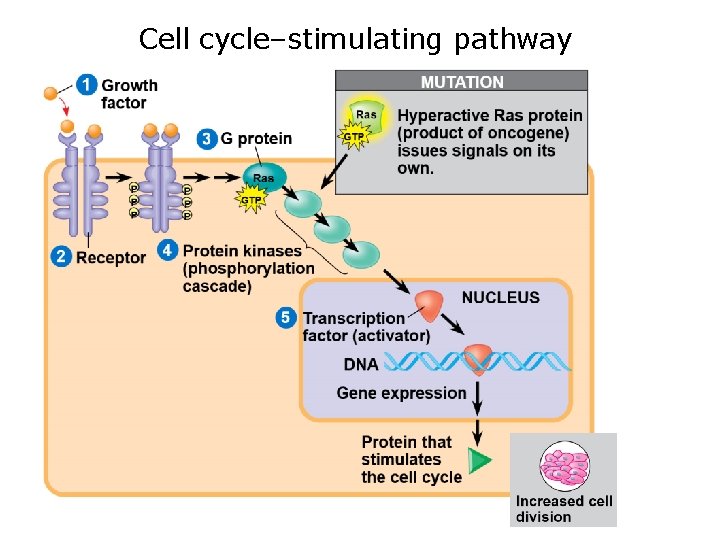
Interference with Normal Cell-Signaling Pathways • Mutations in the ras proto-oncogene and p 53 tumor-suppressor gene are common in human cancers • Mutations in the ras gene can lead to production of a hyperactive Ras protein and increased cell division
Cell cycle–stimulating pathway
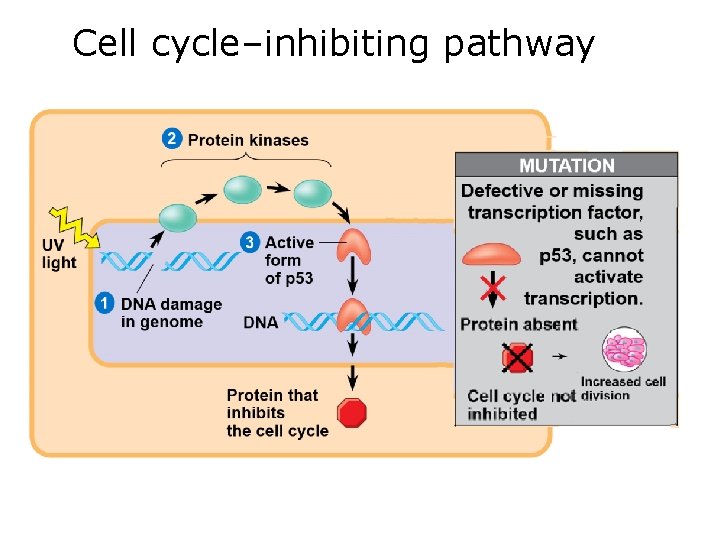
• Mutations in the p 53 gene prevent suppression of the cell cycle • p 53 prevents a cell from passing on mutations due to DNA damage © 2011 Pearson Education, Inc.
Cell cycle–inhibiting pathway
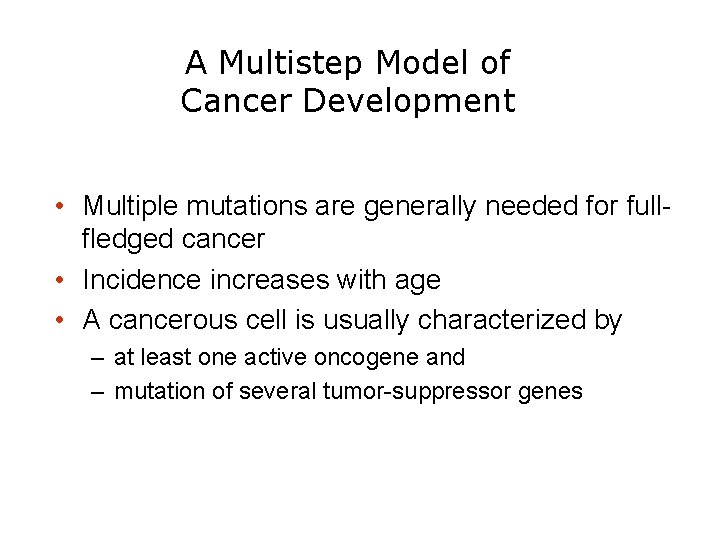
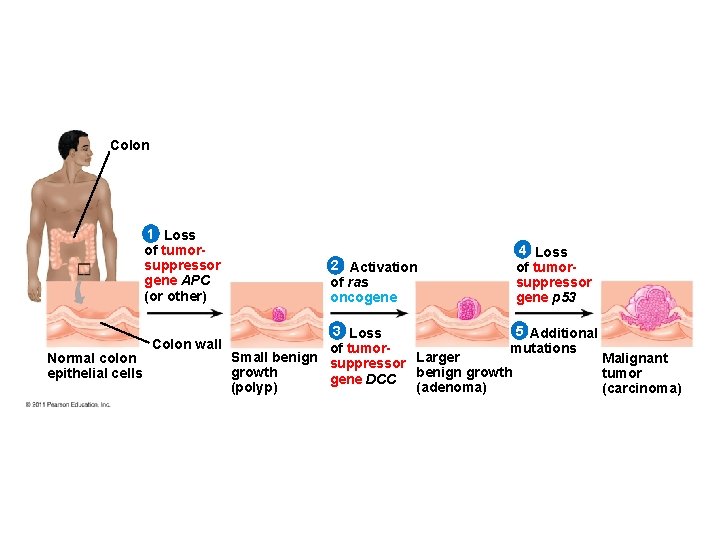
A Multistep Model of Cancer Development • Multiple mutations are generally needed for fullfledged cancer • Incidence increases with age • A cancerous cell is usually characterized by – at least one active oncogene and – mutation of several tumor-suppressor genes
Colon 1 Loss of tumorsuppressor gene APC (or other) Normal colon epithelial cells Colon wall 2 Activation of ras oncogene 4 Loss of tumorsuppressor gene p 53 3 Loss 5 Additional mutations of tumor. Small benign suppressor Larger Malignant growth tumor gene DCC benign growth (polyp) (adenoma) (carcinoma)
Inherited Predisposition and Other Factors Contributing to Cancer • Individuals inherit oncogenes or mutant alleles of tumor-suppressor genes • Inherited mutations in the tumor-suppressor gene adenomatous polyposis coli are common in individuals with colorectal cancer • Mutations in the BRCA 1 or BRCA 2 gene are found in at least half of inherited breast cancers