
CANCER BIOLOGY Mr RAJENDRA SINGH AXONBIO Network Guide
CANCER BIOLOGY Mr. RAJENDRA SINGH AXON|BIO Network
Guide Line – 1. What is Cancer ? 2. The Development of cancer 3. Cell Proliferation 4. Oncology 5. Types of tumor 6. Types of Cancer 7. Etiology of Cancer 8. Standard Cancer treatment 9. Anti cancer drugs 10. Cancer Prevention 11. References
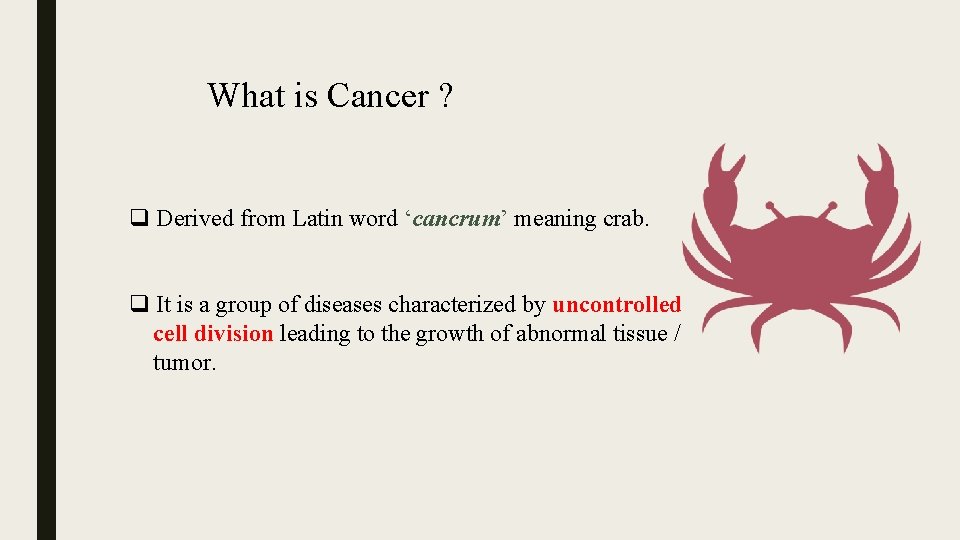
What is Cancer ? q Derived from Latin word ‘cancrum’ meaning crab. q It is a group of diseases characterized by uncontrolled cell division leading to the growth of abnormal tissue / tumor.
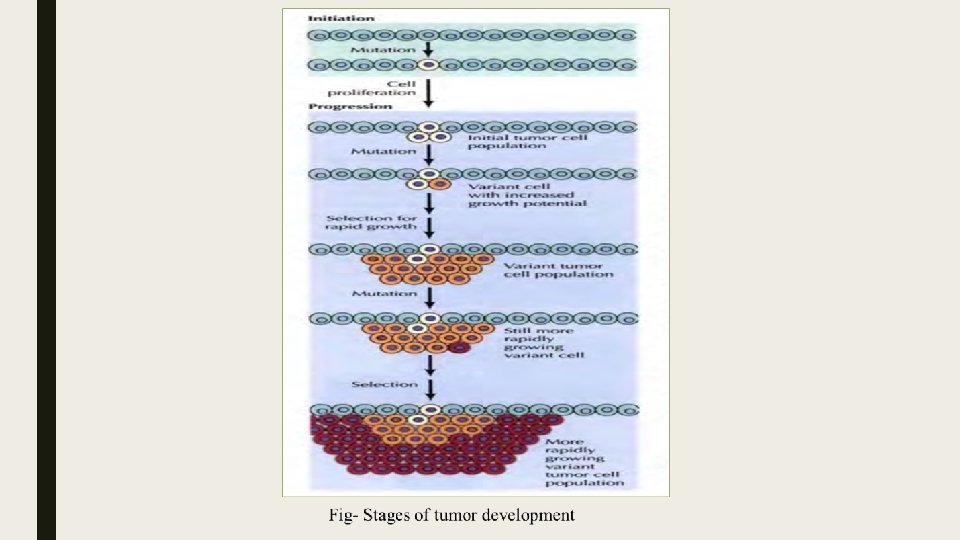
2. The Development of Cancer • The development of cancer is viewed as a multistep process involving mutation and selection for cells with progressively increasing capacity for proliferation, survival invasion, and metastasis. • The first step in the process, tumor initiation. • Is thought to be the result of a genetic alteration leading to abnormal proliferation of a single cell. • Cell proliferation then leads to the outgrowth of a population of clonally derived tumor cells. • Tumor progression continues as additional mutations occur within cells of the tumor population.
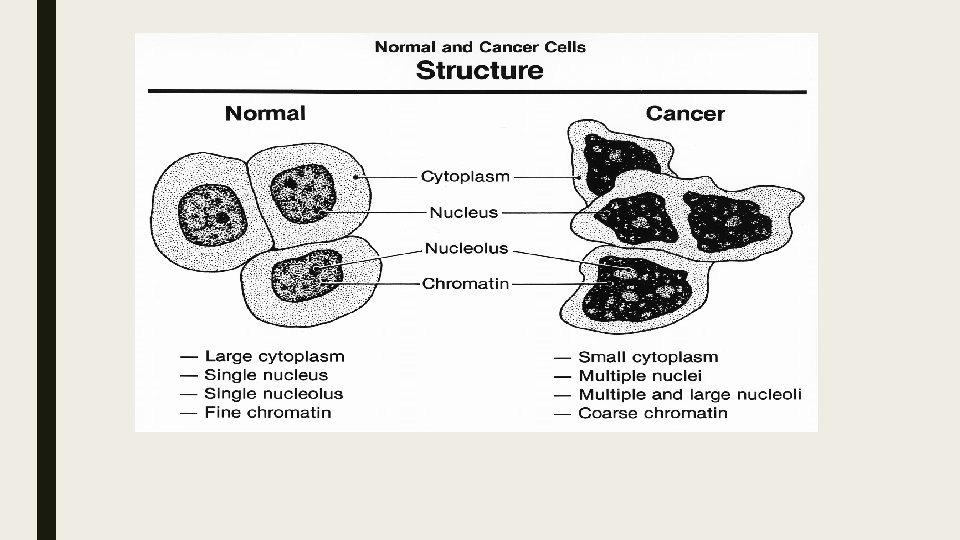
3. Proliferation Cell multiplication (Proliferation) - normal physiologic process - • • • Response to injury Immune responses To replace cells that have died To replace cells that have been shed as a part of their life cycle (e. g. : skin, mucous membrane of GI tract, etc. , ) Kept at balance Impairment of this balance leads to cancer
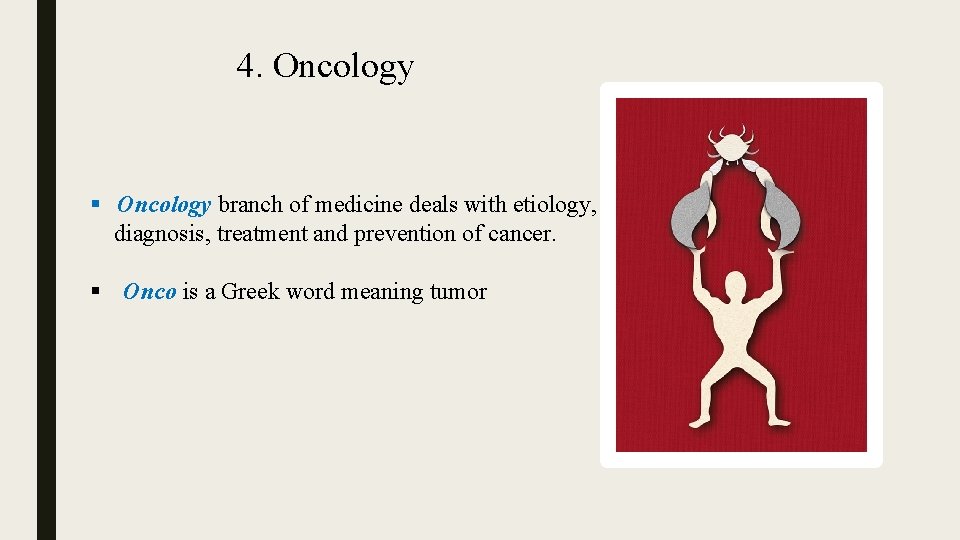
4. Oncology § Oncology branch of medicine deals with etiology, diagnosis, treatment and prevention of cancer. § Onco is a Greek word meaning tumor
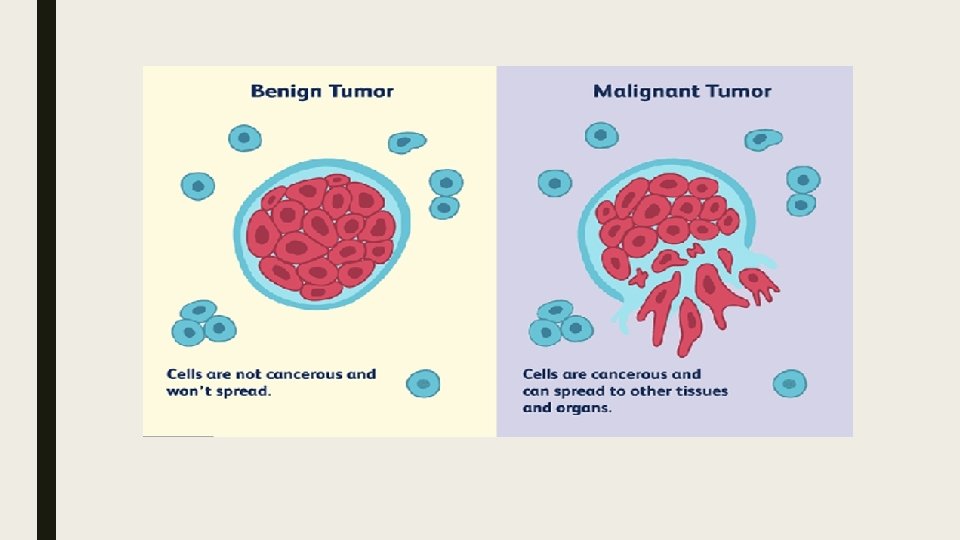
5. Types of Tumor The uncontrolled and rapid proliferation of cells can lead to either benign tumor or malignant tumor (cancer). q Benign tumors do not spread / invade other parts of the tissues / body, and they are rarely a threat to life. q Malignant tumors can invade other organs, spread to distant locations (metastasis) and become life threatening.
6. Types of Cancer • Cancers can be classified by the type of cell in which it originates and by the location of the cell. Cell Epithelial Blood cells Lymphatic Connective Melanocyte Germ cells Site / location Digestive tract WBC Lymph node Tissue bone Skin Testes/ovary Cancer Carcinoma Leukemia Lymphoma Sarcoma Melanoma Teratoma
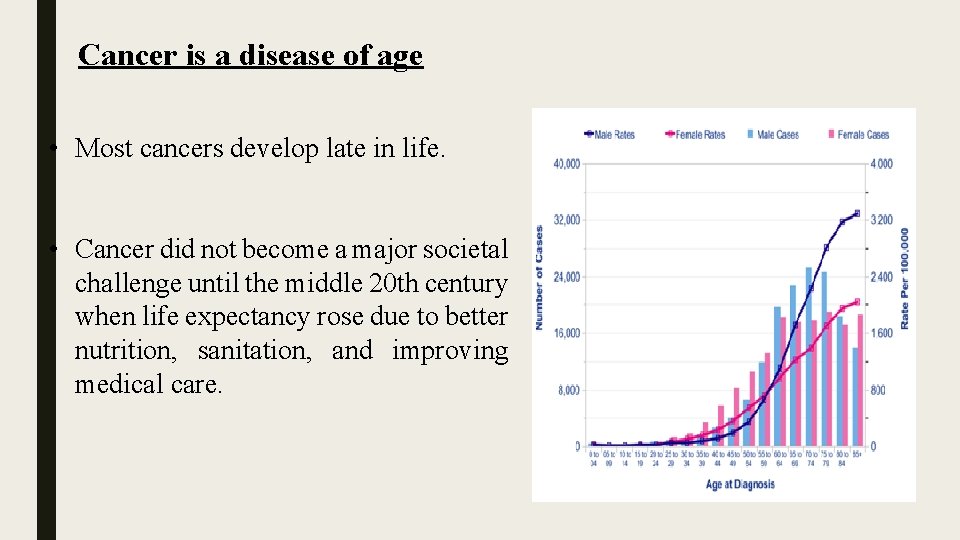
Cancer is a disease of age • Most cancers develop late in life. • Cancer did not become a major societal challenge until the middle 20 th century when life expectancy rose due to better nutrition, sanitation, and improving medical care.
7. Etiology of Cancer q Multifactorial in origin: q q q q Physical Chemical Biological (viruses ) Environmental factors (physical & chemical agents) Hormonal Genetic Mutation
Physical agents ü X-ray ü Gamma ray ü UV ray
Chemicals • Asbestos • Aflatoxins: synthesised by the fungi “aspergillus flavus’ • Aniline (dye) • Nitroso compounds • Coloring agents • Benzo (a) pyrene • Polycyclic aromatic hydrocarbons (PAH) • life style: tobacco chewing, smoking, alcohol
Mutation • Sudden change in the chemical structure of the DNA- aberration in chemical structure • The substance which causes mutation is known as ‘mutagen’ • Example: X-ray Gamma ray UV ray
Oncogenic virus • Viruses which cause cancer are known as oncogenic virus. • They can integrate their gene into the host DNA and take over the entire regulatory mechanism of the host cell. The host cell will produce viral genome instead of host genome (transformed cell). • This leads uncontrolled multiplication of the host cells – transformed cells.
Oncogenes • Genes which can cause cancer are known as oncogenes. • Oncogenes are present in normal cells also and in normal cells they are known as proto-oncogenes • We have more than 100 proto-oncogenes on various chromosomes • Example: ras gene (sarcoma virus) c-myc (avian myelocytoma virus)
• Products of these oncogenes are involved in the regulation of cell cycle • These products may be growth regulating factor / Receptor • These oncogenes are under the control of regulator genes and expressed only when required. • Virus can carry these gene and transmit it to individuals
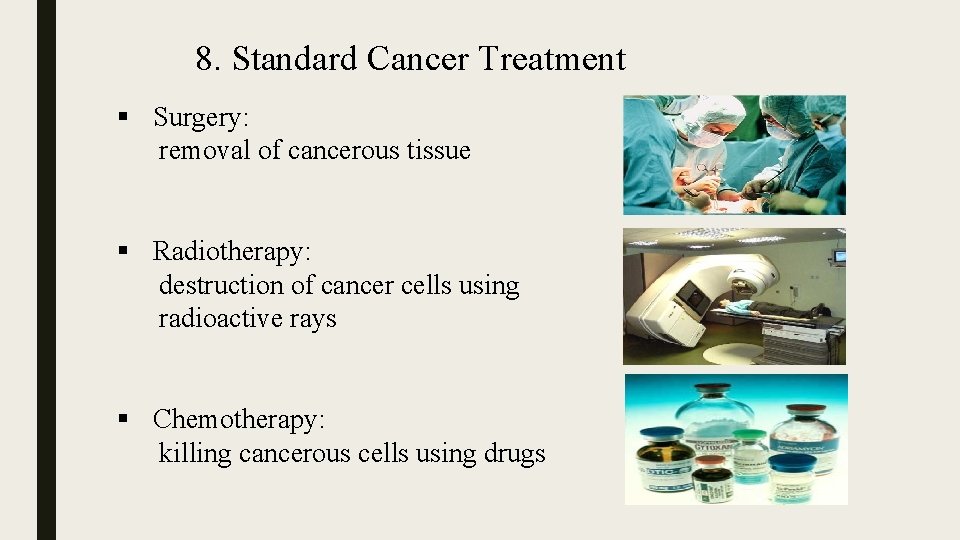
8. Standard Cancer Treatment § Surgery: removal of cancerous tissue § Radiotherapy: destruction of cancer cells using radioactive rays § Chemotherapy: killing cancerous cells using drugs
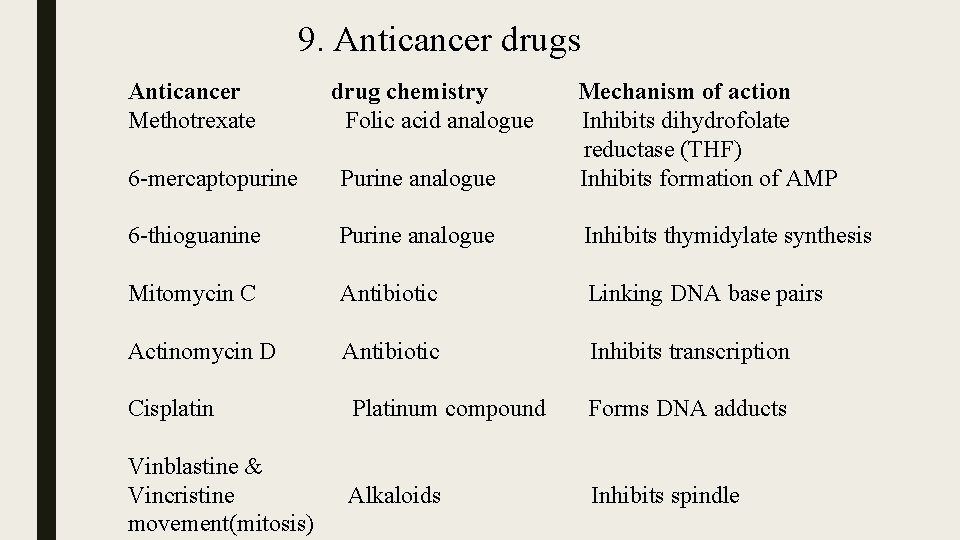
9. Anticancer drugs Anticancer Methotrexate drug chemistry Folic acid analogue 6 -mercaptopurine Purine analogue Mechanism of action Inhibits dihydrofolate reductase (THF) Inhibits formation of AMP 6 -thioguanine Purine analogue Inhibits thymidylate synthesis Mitomycin C Antibiotic Linking DNA base pairs Actinomycin D Antibiotic Inhibits transcription Cisplatin Platinum compound Forms DNA adducts Vinblastine & Vincristine movement(mitosis) Alkaloids Inhibits spindle
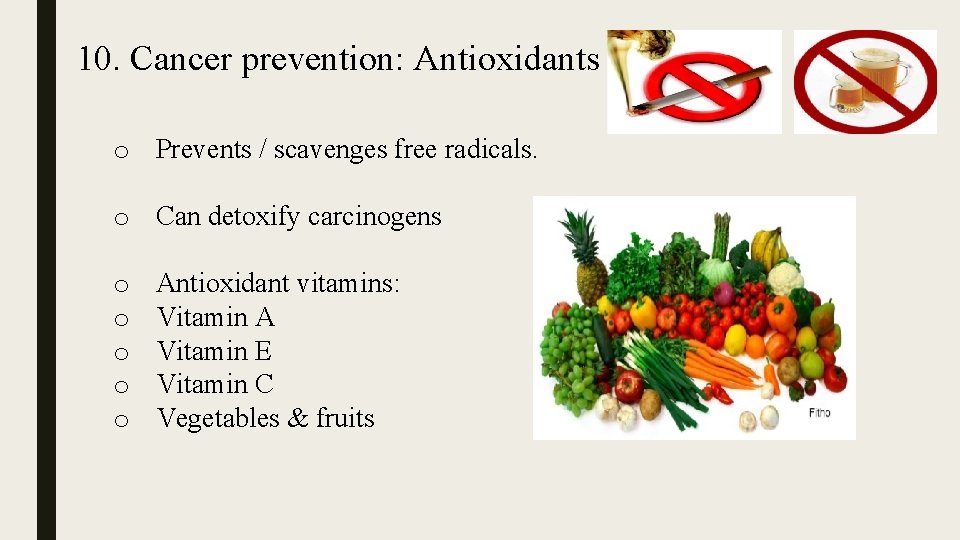
10. Cancer prevention: Antioxidants o Prevents / scavenges free radicals. o Can detoxify carcinogens o o o Antioxidant vitamins: Vitamin A Vitamin E Vitamin C Vegetables & fruits
References 1. The Cell: A Molecular Approach, Fourth Edition Copyright© 2007 by Geoffrey M. Cooper, and ROBERT E. HAUSMAN 2. Molecular Biology of the cell, 5 Edition – Alberts, Johnson, Lewis, Raff 3. Genes VIII 2004, Benjamin Lewin 4. The Biology of cancer, First edition – Robert A. Weinberg 5. Www. Google. co. in/picture 6. https: //www. ncbi. nlm. nih. gov/pmc/articles/PMC 4544764/Age and Cancer Risk.

THANK YOU
- Slides: 24