
Cancer anorexia and its impact on the survival




- Slides: 41
Cancer anorexia and its impact on the survival journey Palliative Care Rounds October 30, 2003 Michelle Kralt, RN MN michelle. kralt@cancercare. mb. ca
The World Heath Organization explains that Palliative care: “…provides relief from pain and other distressing symptoms, integrates the psychological and spiritual aspects of care and offers a support system to help patients live as actively as possible until death” n
n The goal of palliative care is achievement of the best quality of life for patients and families.
Session objectives n n n 1. Examine pathophysiologic changes associated with cancer-related anorexia 2. Discuss interventions for cancer-related anorexia 3. Appreciate the impact anorexia has on quality of life in people with cancer.
What is anorexia? n n n “orexis” – Greek for “appetite”; “A” – “without” = anorexia; meaning to be without appetite Appetite is psychological, dependent on memory and associations, as compared with hunger, which is physiologically aroused by the body’s need for food. One can feel hungry and have anorexia simultaneously
Cachexia n n n is derived from the Greek “kakos” meaning “bad” and “hexis” meaning “condition” Is a debilitating state of involuntary loss of adipose tissue and skeletal muscle mass. Is usually diagnosed when pts have weight loss more than 5% of preillness weight in previous 2 to 6 months.
Different types of Anorexia n 1. Anorexia nervosa: refusal to eat, most commonly occurs in pubescent girls in developed countries.
n 2. a form of starvation related to malnutrition caused by impaired intake due to pain, GI obstruction, n/v, altered GI motility, medication s/e, depression/stress, swallowing difficulties, thyroid irregularities, constipation, poor sleep, severe fatigue
Cancer-related anorexia n n 3. primary anorexia is the absence of appetite despite obvious nutritional needs It is directly caused by the cancer It is most commonly seen in individuals with lung, pancreatic, and gastric cancers Anorexia is not dependent on a large tumor burden n May also occur with infections, renal failure, AIDS, CHF, IBD, COPD
Significance of anorexia n Anorexia has been reported in 6% of early diagnosis to 85% of advanced cancer patients (Watanabe & Bruera, 1996, Starsseer & Bruera, 2002). n n Anorexia effects both the patient and carer; for the carer, it can seem like the pt is “giving up. ” Anorexia may often be the first presenting sign of cancer 50% of the time (Damsky Dell, 2002)
Continued… n n n Anorexia is associated with asthenia, fatigue and weakness Change in body image Cognitive impairment
Clinical significance of weight loss n n n Weight loss of >5% of pre illness state significantly increase symptom distress and functional status in patients. (Sarna et al, 1994). People with significant weight loss have a severely impaired tolerance to both radiation treatment and chemotherapy (Stepp & Pakiz, 2001) A BMI of <18. 5 severely reduces physical work capacity, significantly impairing a person’s quality of life
Clinical significance of weight loss n n Malnutrition leads to 1) gastrointestinal impairment, 2) respiratory problems, 3) cardiac problems and 4) decreased immune function. Anorexia and malnutrition lead to deterioration in psychologic function which manifests as apathy, lassitude, lack of self help motivation, depression and anxiety Meguid & Laviano, 2001
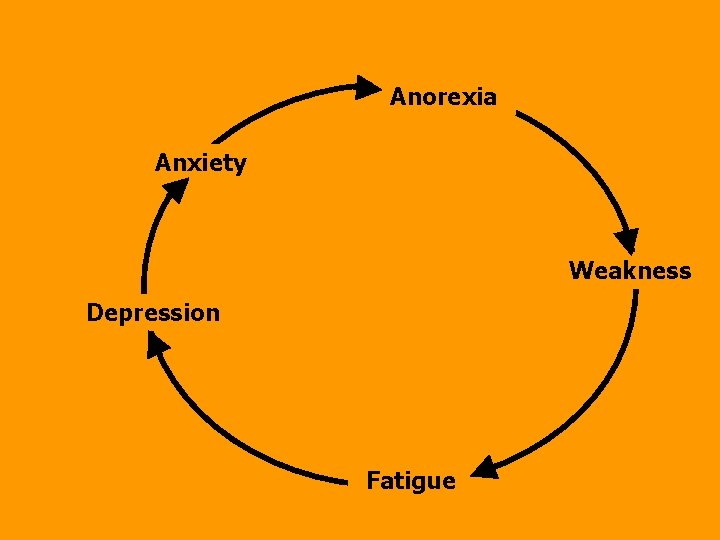
Anorexia Anxiety Weakness Depression Fatigue
n Pt’s with significant weight loss experience 40 -60% increase in frequency of complications in response to surgical/medical treatments n They have higher hospital admissions n They have a twofold to threefold higher death rate than their well nourished counterparts. (Meguid & Laviano, 2001) n n Median survival was significantly shorter in pts with weight loss Chemotherapy responses are lower in pts with weight loss (Dewys, et al , 1980).
Anorexia-cachexia syndrome n n n Anorexia and cachexia are associated and often experienced together; however it is possible that one can experience anorexia or cachexia independently of the other. Protracted anorexia will eventually lead to cachexia (Morris, 1999) ACS is one of the most common causes of death in cancer
Physiology of appetite n Appetite is the desire to eat and is influenced by cultural, sensory, and physiological consequences on choices and intakes of foods
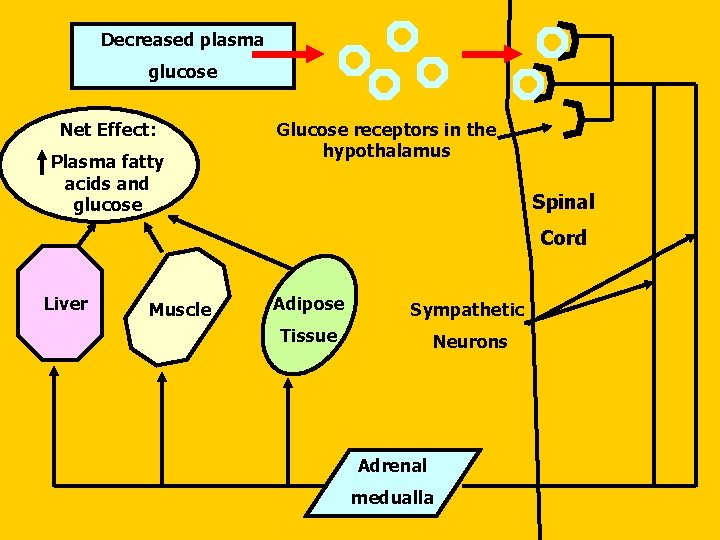
Decreased plasma glucose Net Effect: Plasma fatty acids and glucose Glucose receptors in the hypothalamus Spinal Cord Liver Muscle Adipose Sympathetic Tissue Neurons Adrenal medualla
Pathophysiology of primary anorexia (& cachexia)
Yesterday’s theory Cancer steals nutrients from body ð metabolism increases to meet demand ð toxins secreted that depress appetite ð
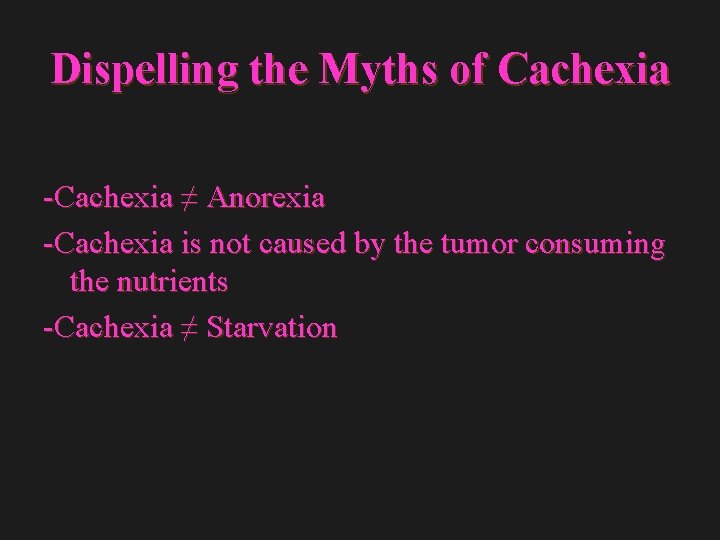
Dispelling the Myths of Cachexia -Cachexia ≠ Anorexia -Cachexia is not caused by the tumor consuming the nutrients -Cachexia ≠ Starvation
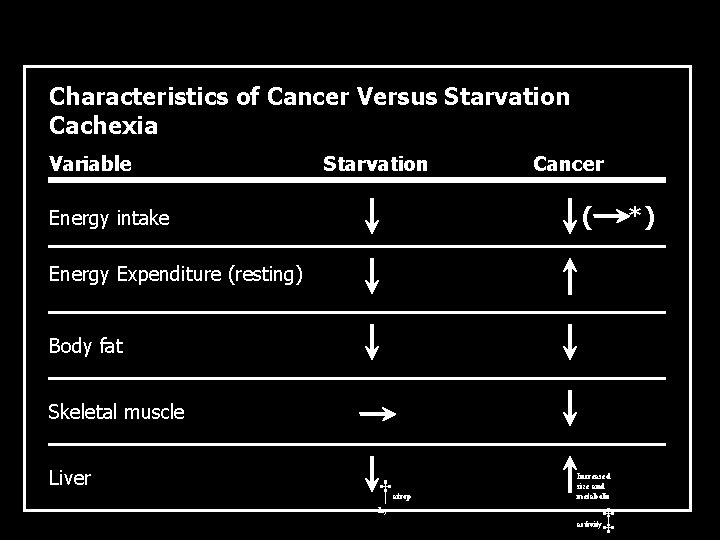
Characteristics of Cancer Versus Starvation Cachexia Variable Starvation Cancer ( Energy intake *) Energy Expenditure (resting) Body fat Skeletal muscle Liver † atrop hy Increased size and metabolic ‡ activity
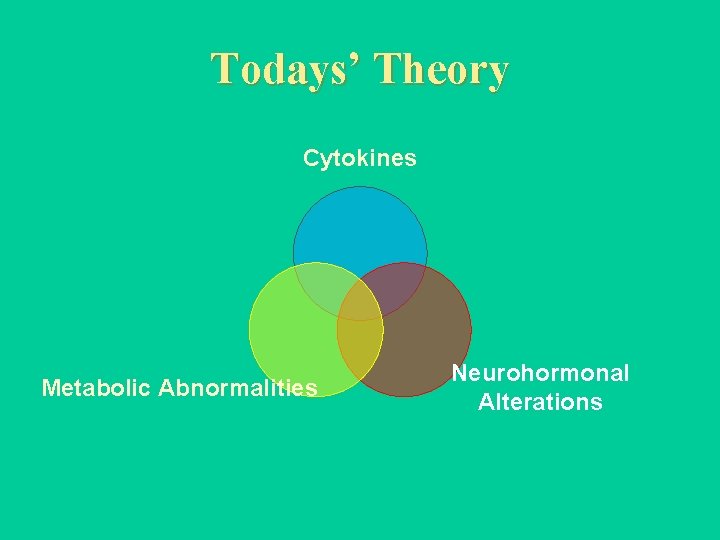
Todays’ Theory Cytokines Metabolic Abnormalities Neurohormonal Alterations
1. Inefficient metabolic alterations n n Energy expenditure in relation to lean body mass is increased. Glucose turnover is present via hepatic gluconeogenesis and lipolysis Whole body protein turnover increased, amino acid turnover is altered Increase in production of c-reactive protein
n Elevated amino acids levels in the plasma may decrease appetite
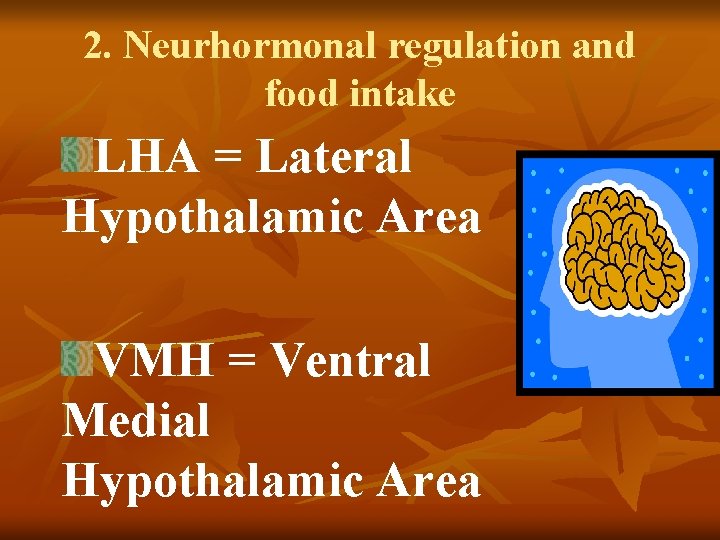
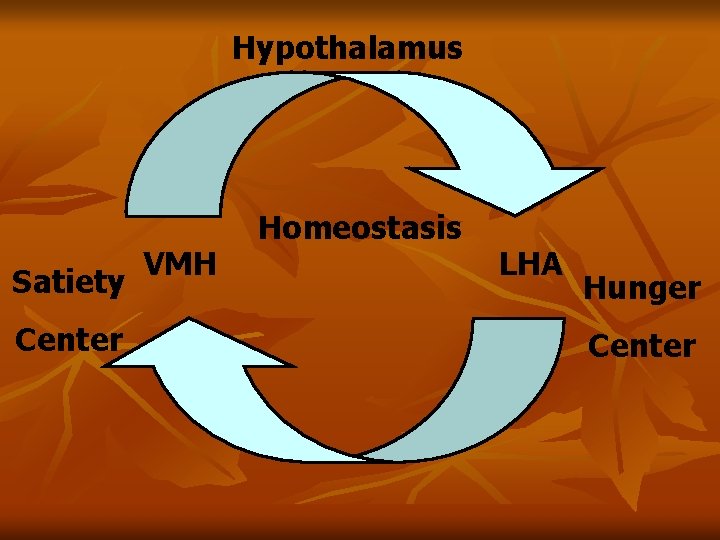
2. Neurhormonal regulation and food intake LHA = Lateral Hypothalamic Area VMH = Ventral Medial Hypothalamic Area
Hypothalamus Satiety Center VMH Homeostasis LHA Hunger Center
n Anorexia is associated with low dopamine and high serotonin levels in the VMH
Cytokines n Nonantibody proteins released by one cell population on contact with a specific antigen, which acts as cellular mediators in the generation of an immune response
Cytokines n n n TNF-α (tumour necrosis factor alpha) IL-1 (Interleukin 1) IL-6 (Interleukin 6) CCK (Cholecystokinin) CRF (Corticotropin releasing factor)
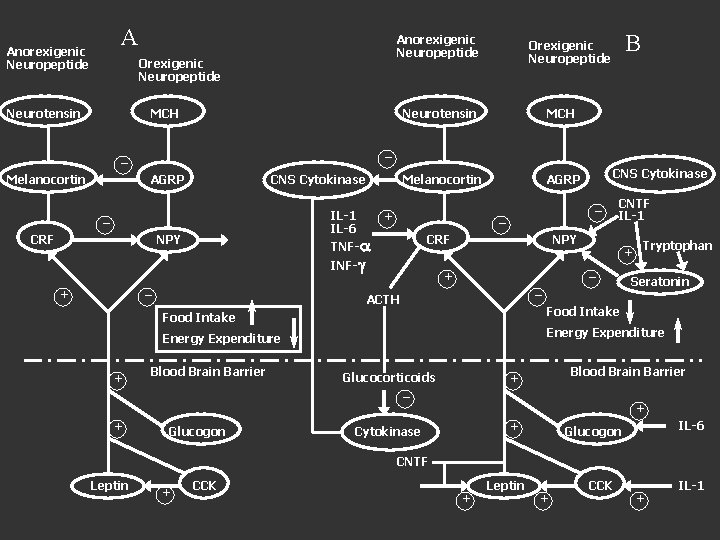
A Anorexigenic Neuropeptide Orexigenic Neuropeptide Neurotensin MCH Melanocortin AGRP _ _ Melanocortin AGRP CNS Cytokinase IL-1 IL-6 _ CRF NPY + CRF TNF- _ + CNS Cytokinase _ _ INF- + B Orexigenic Neuropeptide CNTF IL-1 NPY + _ ACTH Tryptophan Seratonin Food Intake Energy Expenditure Blood Brain Barrier Glucocorticoids Blood Brain Barrier + _ + + Glucogon + Cytokinase IL-6 Glucogon CNTF Leptin + CCK + IL-1
Taste Changes n n n Taste and smell aversions are also common with cancer related anorexia Possible link between high levels of serotonin and taste aversions (Edelman et al, 1999) A large tumor burden can increase the degree and duration of taste alterations (Sherry, 2001)
Etiology of taste changes n n n 1. Presence of malignant cells or cancer tx may reduce # of taste buds 2. Dividing cancer cells secrete amino acid-like substance, causing a bitter taste sensation 3. Cancer-induced deficiencies in zinc, copper, nickel and vitamin A, which are heavy metals involved in normal taste function
Comprehensive assessment of anorexia n n n n 1. detailed hx of involuntary weight loss 2. Hx of nutritional intake 3. perceived change in body image? 4. presence of anorexia? (Visual analog scale) 5. Anxiety/depression? 6. Taste or smell changes? 7. Dysphagia or painful mouth problems?
Assessment continued n n n n 8. thyroid function test 9. early satiety? 10. nausea and vomiting? 11. constipation? 12. Sleep patterns 13. Fatigue? 14. Functional status? 15. pain?
Experiential
Why not TPN/EN? n n n TPN/EN causes further anorexia Complications (ie: mechanical, metabolic and infection) Expensive Does not improve survival Does not cause weight gain How does one make the decision to discontinue TPN – very hard for pt & family
Orexigenic agents n n n Megace Corticosteroids Dronabinol Cyproheptadine Thalidomide Melatonin n n NSAIDS/COX-2 Fish oils (Eicosapentaenoic acid) Metoclopramide Ginger root Essiac
Nursing interventions n n Acknowledge the losses the patient and family are experiencing and help them explore these losses, including time to explore the possibilities of the future Encourage family members to focus their energies on other activities that convey nurturing
Nursing interventions continued… n n Educate that failure to eat is not “giving up, ” and that the pt will not “starve to death”. Explaining the nature of ACS as irreversible and caused by metabolic abnormalities, and that eating more food will not help the pt gain weight
Conclusion n By offering nutritional support and pharmacological advice, symptom control and psychological support to individuals with cancer at risk for anorexia, nurses can reduce the distress experienced even if symptoms of anorexia or cachexia do not appear.