
Cancer Among Native Americans in Arizona and New


- Slides: 23
Cancer Among Native Americans in Arizona and New Mexico Data Provided by Arizona Cancer Registry at the Arizona Department of Health Services and the New Mexico Cancer Council
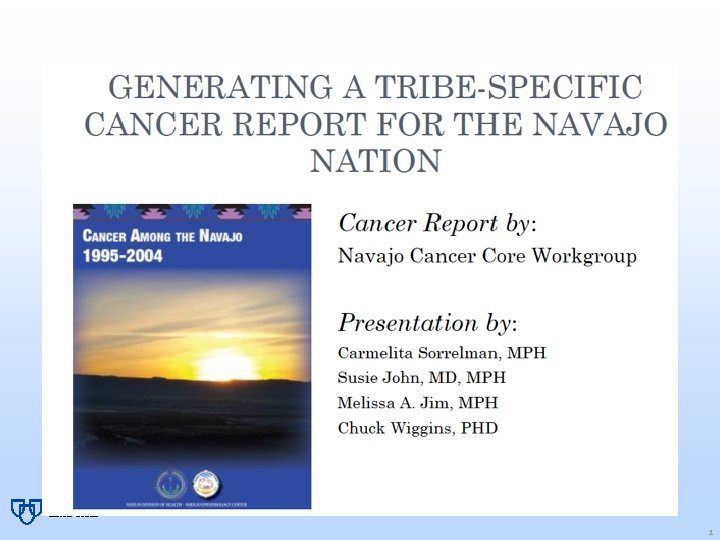
2
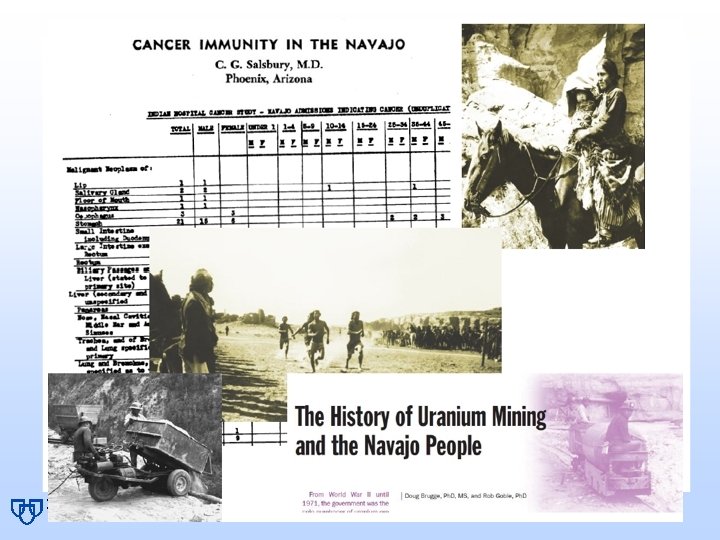
4
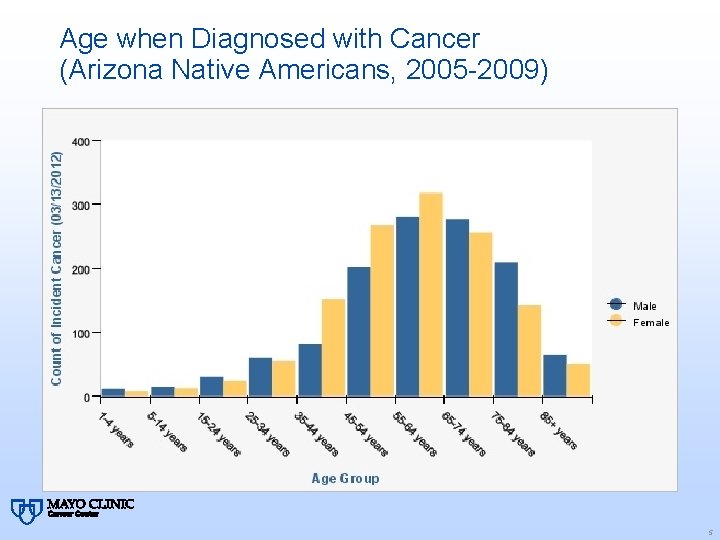
Age when Diagnosed with Cancer (Arizona Native Americans, 2005 -2009) 5
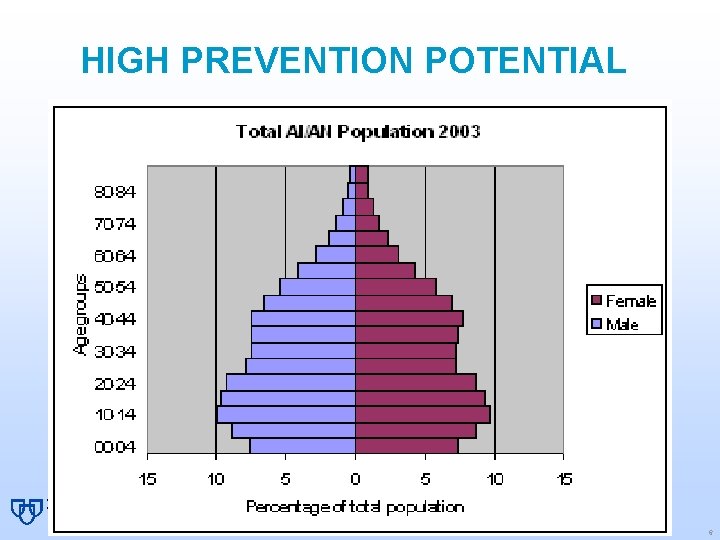
HIGH PREVENTION POTENTIAL 6
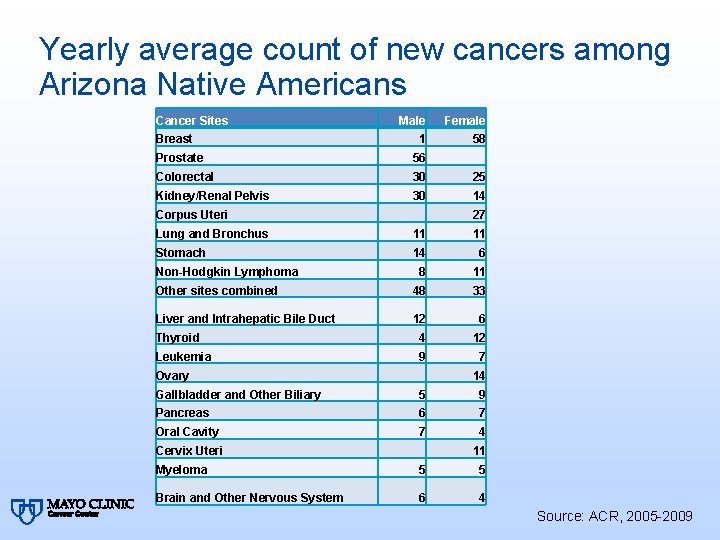
Yearly average count of new cancers among Arizona Native Americans Cancer Sites Breast Male Female 1 58 Prostate 56 Colorectal 30 25 Kidney/Renal Pelvis 30 14 Corpus Uteri 27 Lung and Bronchus 11 11 Stomach 14 6 8 11 Other sites combined 48 33 Liver and Intrahepatic Bile Duct 12 6 Thyroid 4 12 Leukemia 9 7 Non-Hodgkin Lymphoma Ovary 14 Gallbladder and Other Biliary 5 9 Pancreas 6 7 Oral Cavity 7 4 Cervix Uteri 11 Myeloma 5 5 Brain and Other Nervous System 6 4 Source: ACR, 2005 -2009
11
12
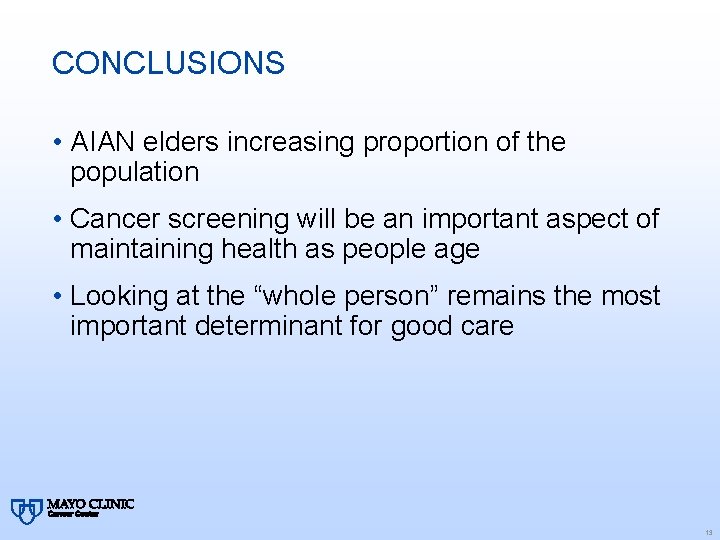
CONCLUSIONS • AIAN elders increasing proportion of the population • Cancer screening will be an important aspect of maintaining health as people age • Looking at the “whole person” remains the most important determinant for good care 13
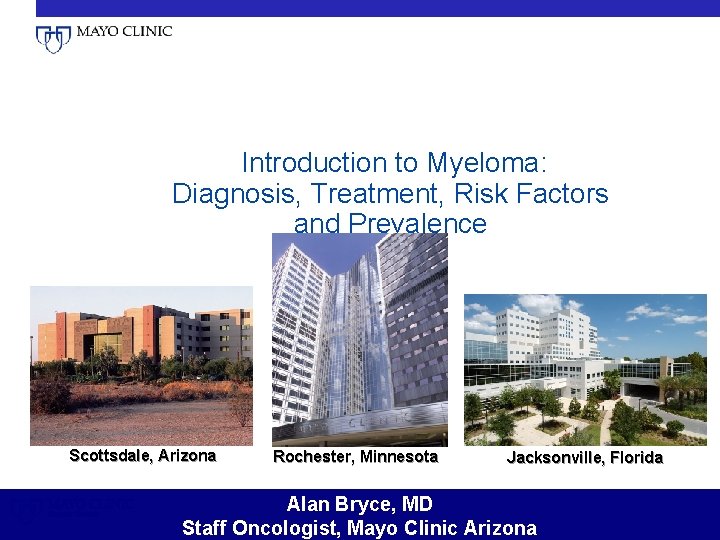
Introduction to Myeloma: Diagnosis, Treatment, Risk Factors and Prevalence Scottsdale, Arizona Rochester, Minnesota Jacksonville, Florida Alan Bryce, MD Staff Oncologist, Mayo Clinic Arizona
Multiple Myeloma - Introduction • Myeloma is a cancer of the Plasma Cells • They grow out of control in the bone marrow (at least 10% and as high as nearly 100%) • This results in many problems including: • Low hemoglobin (anemia) and platelets • Elevated abnormal immunoglobulins (proteins) • Bone pain and fractures • Infections (partly due to low normal immunoglobulins) • Kidney problems • Other complications…
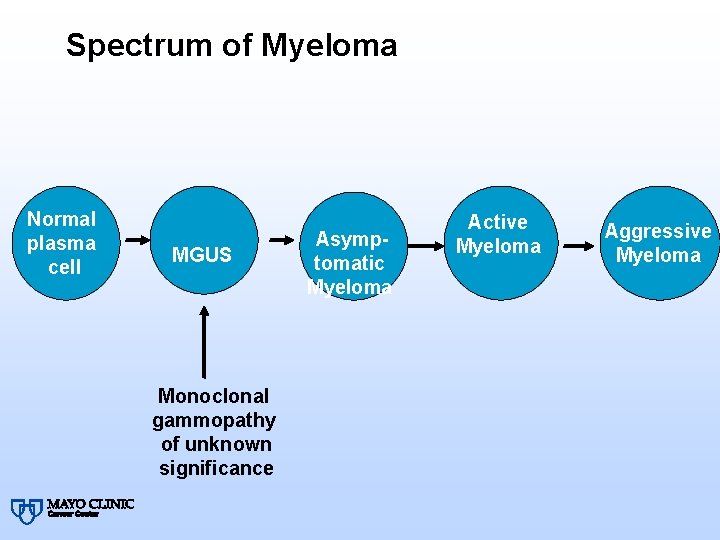
Spectrum of Myeloma Normal plasma cell MGUS Monoclonal gammopathy of unknown significance Asymptomatic Myeloma Active Myeloma Aggressive Myeloma
How do plasma cells become “evil”?
Multiple Myeloma – Causes? • The cause of myeloma is still unknown • Some have suggested: • Radiation- Nuclear Bomb Survivors • Chemicals (benzenes), herbicides and insecticides- The “Myeloma Belt” • Genetics or even viruses • Familial Myeloma – still rare • However, nothing is conclusive, and it is likely a combination of many factors…
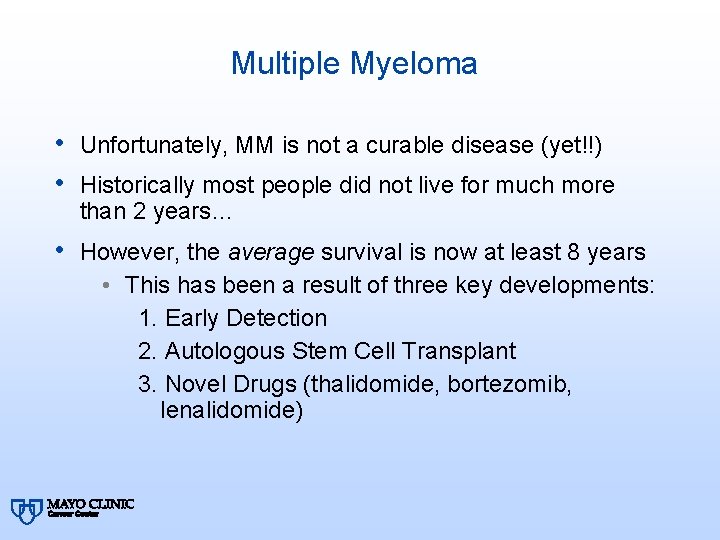
Multiple Myeloma • Unfortunately, MM is not a curable disease (yet!!) • Historically most people did not live for much more than 2 years… • However, the average survival is now at least 8 years • This has been a result of three key developments: 1. Early Detection 2. Autologous Stem Cell Transplant 3. Novel Drugs (thalidomide, bortezomib, lenalidomide)
Myeloma rate in Arizona among race groups, 1995 -2009 20
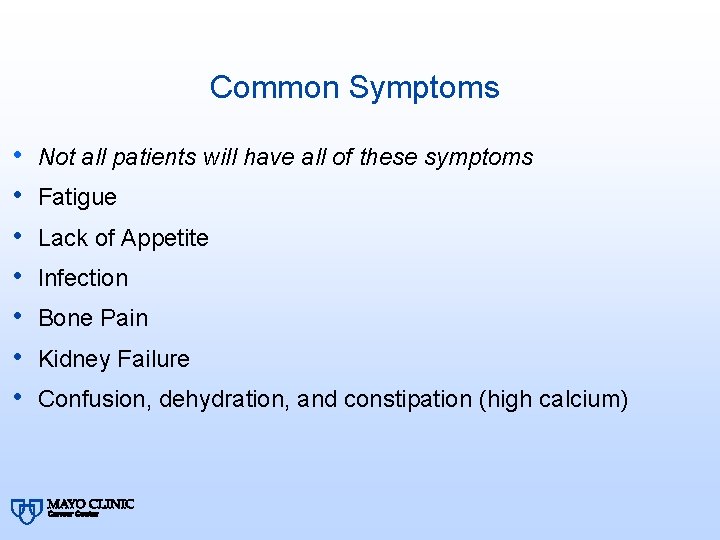
Common Symptoms • • Not all patients will have all of these symptoms Fatigue Lack of Appetite Infection Bone Pain Kidney Failure Confusion, dehydration, and constipation (high calcium)
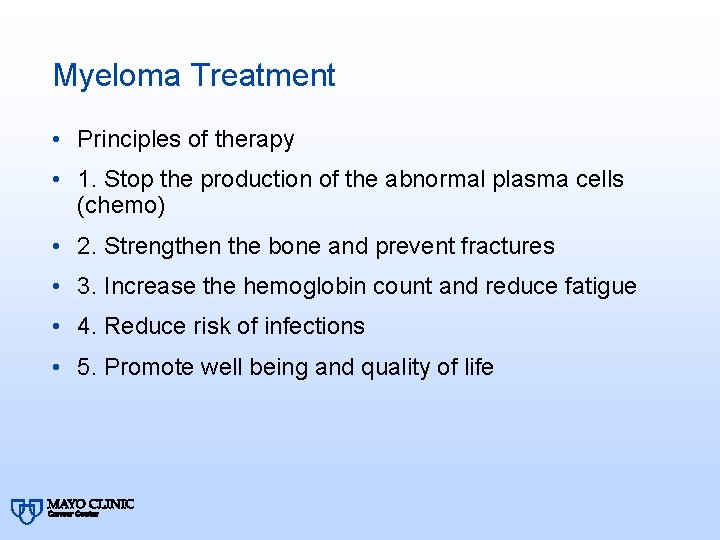
Myeloma Treatment • Principles of therapy • 1. Stop the production of the abnormal plasma cells (chemo) • 2. Strengthen the bone and prevent fractures • 3. Increase the hemoglobin count and reduce fatigue • 4. Reduce risk of infections • 5. Promote well being and quality of life
Conclusions • New Treatments for myeloma have improved survival • Myeloma is usually preceded by many years of MGUS • Screening and early detection can allow therapy to begin before organ damage develops • Bone Marrow transplant and Clinical Trials should be considered when appropriate 23