
CANCER About 16 of people die from cancer
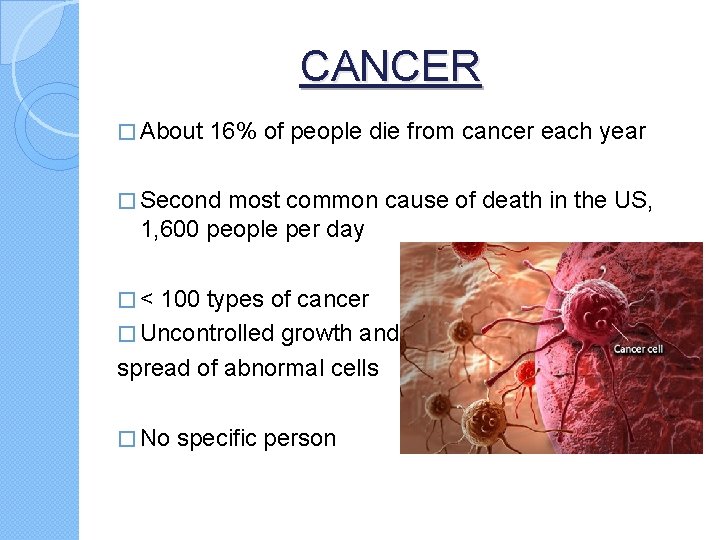
CANCER � About 16% of people die from cancer each year � Second most common cause of death in the US, 1, 600 people per day � < 100 types of cancer � Uncontrolled growth and spread of abnormal cells � No specific person
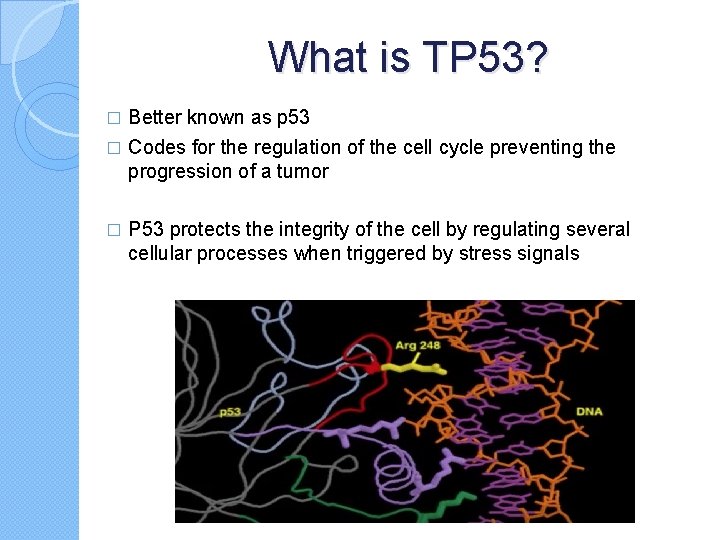
What is TP 53? Better known as p 53 � Codes for the regulation of the cell cycle preventing the progression of a tumor � � P 53 protects the integrity of the cell by regulating several cellular processes when triggered by stress signals
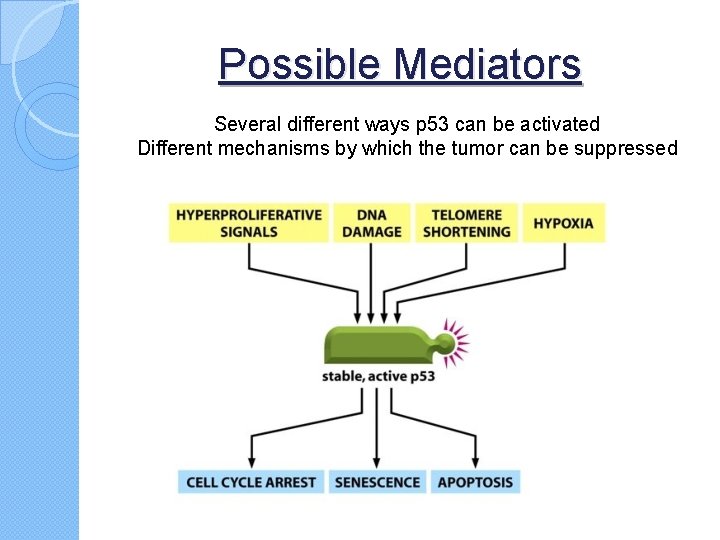
Possible Mediators Several different ways p 53 can be activated Different mechanisms by which the tumor can be suppressed
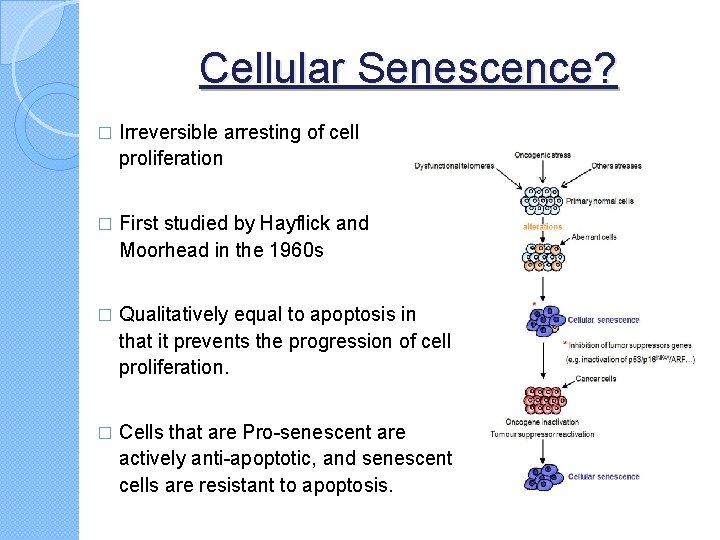
Cellular Senescence? � Irreversible arresting of cell proliferation � First studied by Hayflick and Moorhead in the 1960 s � Qualitatively equal to apoptosis in that it prevents the progression of cell proliferation. � Cells that are Pro-senescent are actively anti-apoptotic, and senescent cells are resistant to apoptosis.
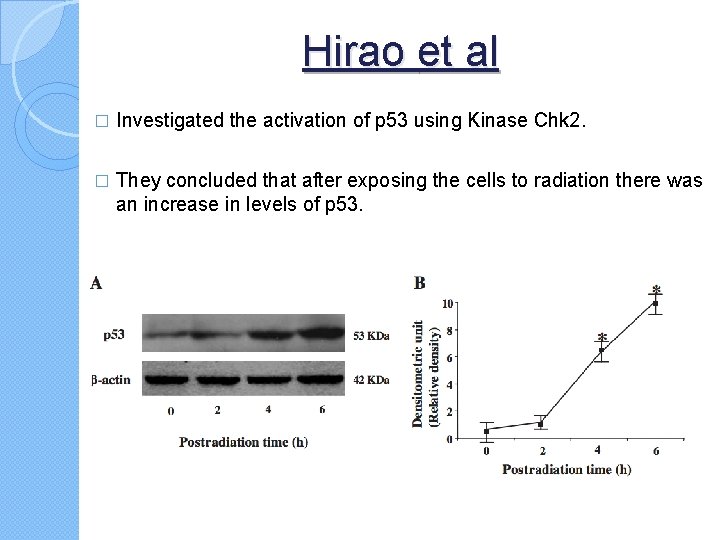
Hirao et al � Investigated the activation of p 53 using Kinase Chk 2. � They concluded that after exposing the cells to radiation there was an increase in levels of p 53.
Taking a step further… Instead of just activating p 53 we want to see what mechanism it is more likely to be mediated.
Central Question What response is p 53 mediating, more frequently, in order to suppress a tumor or DNA damage, APOPTOSIS OR CELLULAR SENESCENCE?
Overview of the Experiment Goal: �What tumor suppressor mechanism is happening in most occurrences of a tumor How? �Using ionizing radiation & biomarkers
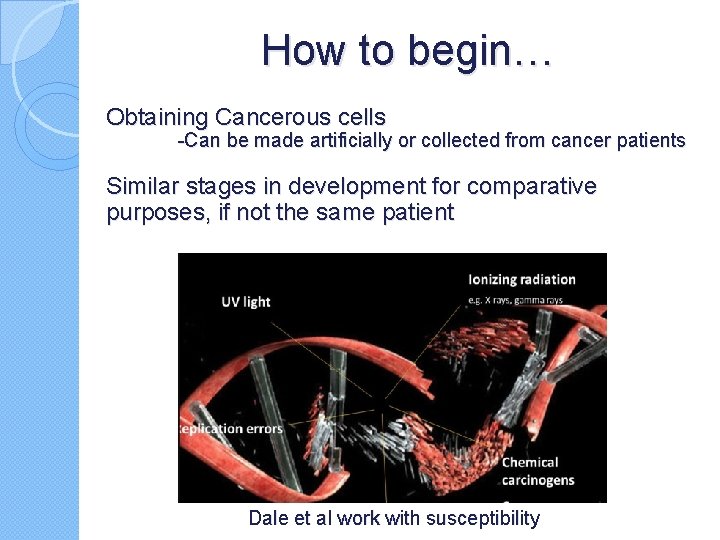
How to begin… Obtaining Cancerous cells -Can be made artificially or collected from cancer patients Similar stages in development for comparative purposes, if not the same patient Dale et al work with susceptibility
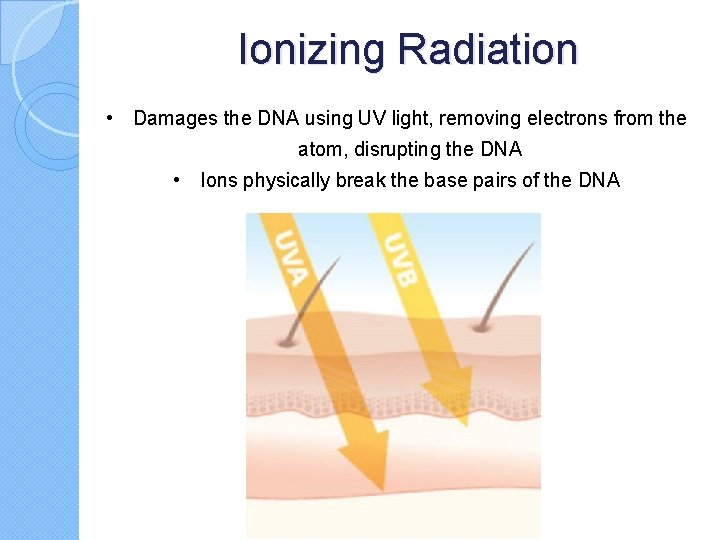
Ionizing Radiation • Damages the DNA using UV light, removing electrons from the atom, disrupting the DNA • Ions physically break the base pairs of the DNA
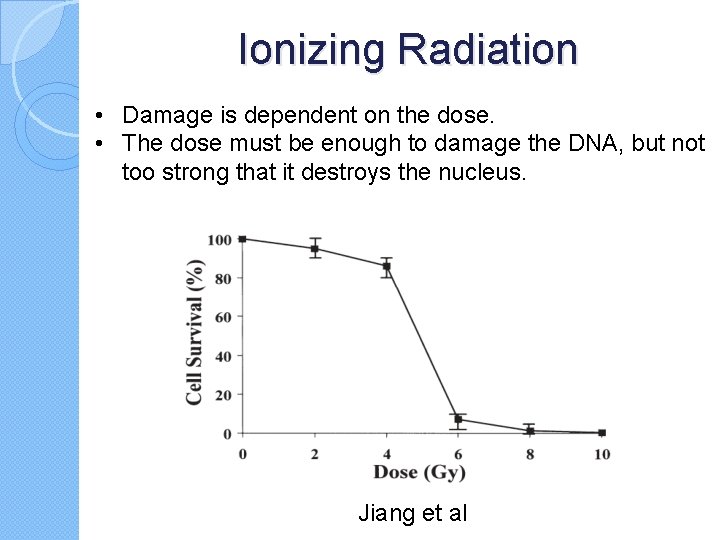
Ionizing Radiation • Damage is dependent on the dose. • The dose must be enough to damage the DNA, but not too strong that it destroys the nucleus. Jiang et al
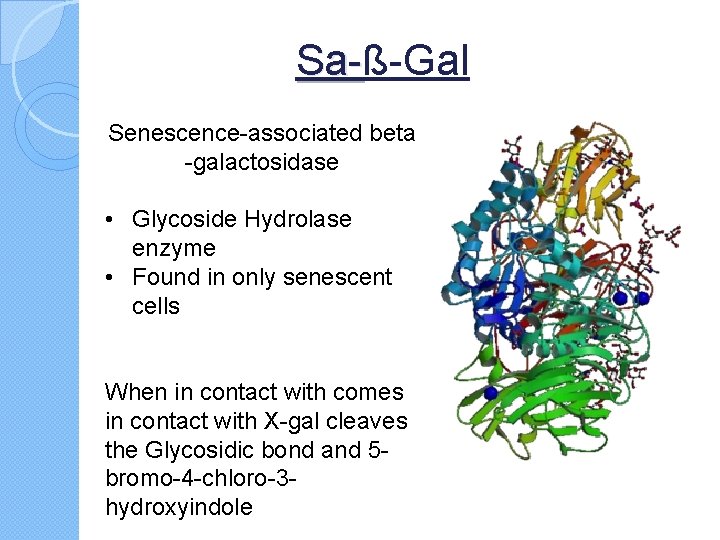
Sa-ß-Gal Sa. Senescence-associated beta -galactosidase • Glycoside Hydrolase enzyme • Found in only senescent cells When in contact with comes in contact with X-gal cleaves the Glycosidic bond and 5 bromo-4 -chloro-3 hydroxyindole
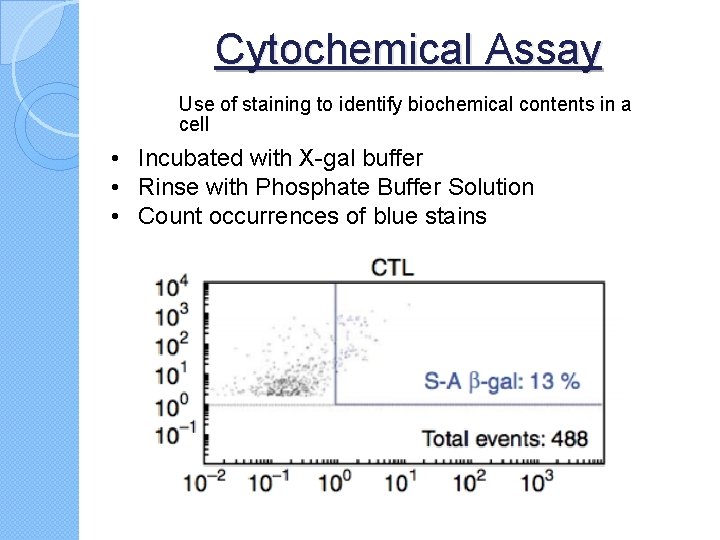
Cytochemical Assay Use of staining to identify biochemical contents in a cell • Incubated with X-gal buffer • Rinse with Phosphate Buffer Solution • Count occurrences of blue stains
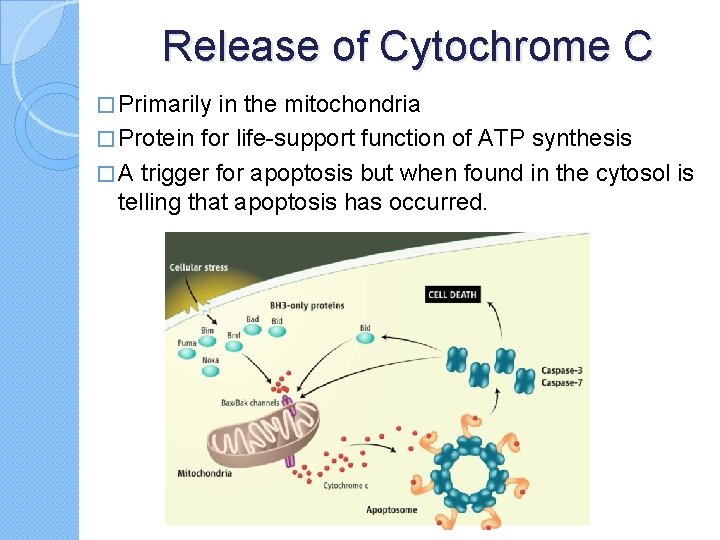
Release of Cytochrome C � Primarily in the mitochondria � Protein for life-support function of ATP synthesis � A trigger for apoptosis but when found in the cytosol is telling that apoptosis has occurred.
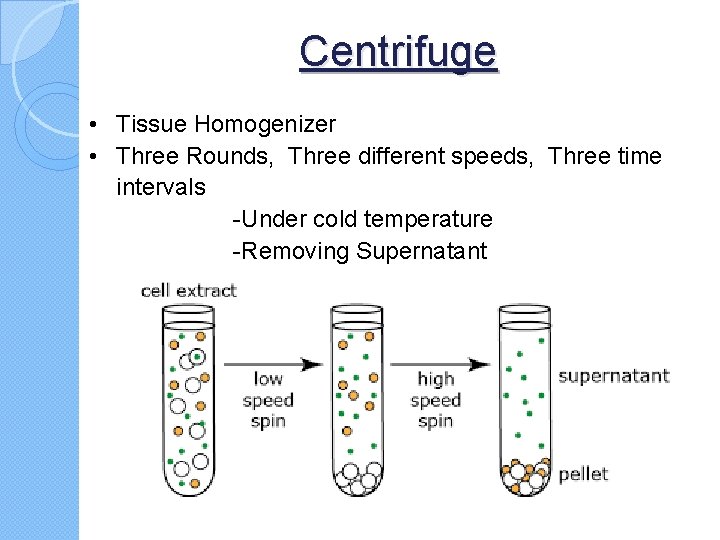
Centrifuge • Tissue Homogenizer • Three Rounds, Three different speeds, Three time intervals -Under cold temperature -Removing Supernatant
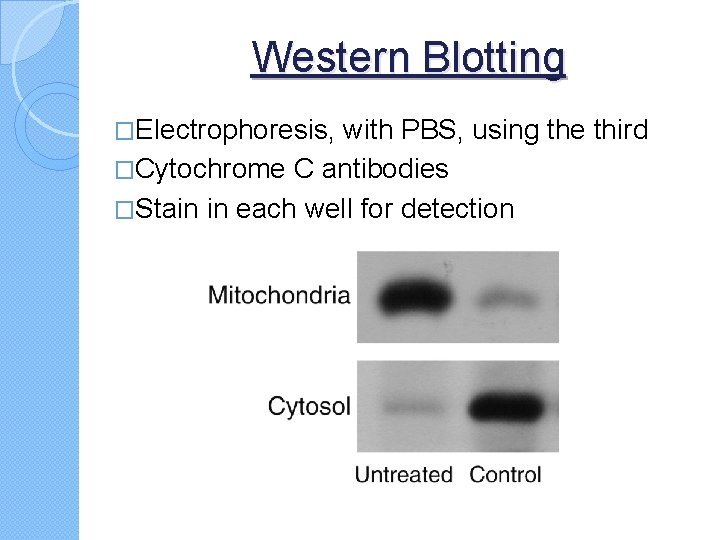
Western Blotting �Electrophoresis, with PBS, using the third �Cytochrome C antibodies �Stain in each well for detection
Limitations �Ionizing Radiation may lead to apoptosis ◦ p 53 may not activate ◦ p 53 may not induce either Cellular Senescence or Apoptosis. �The tumor may not be effectively suppressed
Conclusion �Looking to see that Cellular Senescence is more prevalent. �Senescence is a more protective mechanism �These cells are still stably viable �May have the ability to remodel cells favorably �Could lead to effective breakthroughs in cancer research �If we are able to manipulate cellular senescence more fitting result for cancer therapies
References: 1. “Activating p 53 in Cancer Cells with Protein Therapy Shows Preclinical Promise. ” PLo. S Biology 2. 2 (2004): e 58. PMC. Web. 26 Nov. 2017. https: //www. ncbi. nlm. nih. gov/pmc/articles/PMC 340958/ 2. A W Abu-Qare, M B Abou-Donia. “Biomarkers of Apoptosis: Release of Cytochrome c, Activation of Caspase-3, Induction of 8 -Hydroxy-2'Deoxyguanosine, Increased 3 -Nitrotyrosine, and Alteration of p 53 Gene. ” Sigma-Aldrich: Analytical, Biology, Chemistry & Materials Science Products and Services. , Journal of Toxicology and Environmental Health. Part B, Critical Reviews, 16 Aug. 2001, www. sigmaaldrich. com/catalog/papers/11503418. 3. Brooks, Christopher L, and Wei Gu. “New Insights into p 53 Activation. ” Nature, 20 Apr. 2010, https: //www. nature. com/articles/cr 201053 4. Childs, Bennett G et al. “Senescence and Apoptosis: Dueling or Complementary Cell Fates? ” EMBO Reports 15. 11 (2014): 1139– 1153. PMC. Web. 26 Nov. 2017. https: //www. ncbi. nlm. nih. gov/pmc/articles/PMC 4253488/ 5. Demaria, Marco, et al. “Cellular Senescence Promotes Adverse Effects of Chemotherapy and Cancer Relapse. ” Cancer Discovery, American Association for Cancer Research, 1 Feb. 2017, cancerdiscovery. aacrjournals. org/content/7/2/165. 6. Dimri, Goberdhan. “What Has Senescence Got to Do with Cancer? ” Cancer Cell, Cell Press, 13 June 2005, www. sciencedirect. com/science/article/pii/S 1535610805001662. 7. Halama, A. , et al. “Identification of Biomarkers for Apoptosis in Cancer Cell Lines Using Metabolomics: Tools for Individualized Medicine. ” Journal of Internal Medicine, 16 Oct. 2013, onlinelibrary. wiley. com/doi/10. 1111/joim. 12117/full. 8. Hattis, Dale et al. “Age-Related Differences in Susceptibility to Carcinogenesis: A Quantitative Analysis of Empirical Animal Bioassay Data. ” Environmental Health Perspectives 112. 11 (2004): 1152– 1158. PMC. Web. 26 Nov. 2017. https: //www. ncbi. nlm. nih. gov/pmc/articles/PMC 1247474/ 9. Hirao A, Kong Y-Y, Matsuoka S, Wakeham A, Ruland J, Yoshida H, Liu D, Elledge SJ, Mak TW: DNA damage-induced activation of p 53 by the checkpoint kinase Chk 2. Science 2000, 287: 1824 -1827. 10. Jiang, Y L, et al. “Ionizing Radiation Induces a p 53 -Dependent Apoptotic Mechanism in ARPE-19 Cells. ” Japanese Journal of Ophthalmology. , U. S. National Library of Medicine, www. ncbi. nlm. nih. gov/pubmed/15064971. 11. Kahlem, Pascal, et al. “Cellular Senescence in Cancer Treatment: Friend or Foe? ” The Journal of Clinical Investigation, American Society for Clinical Investigation, 15 Jan. 2004, www. jci. org/articles/view/20784. 12. Martin, S J, and D R Green. “Apoptosis as a Goal of Cancer Therapy. ” Current Opinion in Oncology. , U. S. National Library of Medicine, Nov. 1994, www. ncbi. nlm. nih. gov/pubmed/7827175. 13. National Center for Biotechnology Information (US). Genes and Disease [Internet]. Bethesda (MD): National Center for Biotechnology Information (US); 1998 -. The p 53 tumor suppressor protein. Available from: https: //www. ncbi. nlm. nih. gov/books/NBK 22268/ 14. Nimse, S B, et al. “Biomarker Detection Technologies and Future Directions. ” The Analyst. , U. S. National Library of Medicine, 7 Feb. 2016, www. ncbi. nlm. nih. gov/pubmed/26583164. 15. Ozaki, Toshinori, and Akira Nakagawara. “Role of p 53 in Cell Death and Human Cancers. ” Cancers 3. 1 (2011): 994– 1013. PMC. Web. 26 Nov. 2017. https: //www. ncbi. nlm. nih. gov/pmc/articles/PMC 3756401/ 16. Piechota, Malgorzata et al. “Is Senescence-Associated Β-Galactosidase a Marker of Neuronal Senescence? ” Oncotarget 7. 49 (2016): 81099– 81109. PMC. Web. 25 Nov. 2017. Qian, Yingjuan, and Xinbin Chen. “Senescence Regulation by the p 53 Protein Family. ” Springer. Link, Humana Press, Totowa, NJ, 1 Jan. 1970, link. springer. com/protocol/10. 1007/978 -1 -62703 -239 -1_3. 18. Ward, T H, et al. “Biomarkers of Apoptosis. ” British Journal of Cancer, Nature Publishing Group, 16 Sept. 2008, www. ncbi. nlm. nih. gov/pmc/articles/PMC 2538762/.
- Slides: 19