
Cancer A Deeper Look Part 4 Ms Day

- Slides: 15
Cancer- A Deeper Look (Part 4) Ms. Day Honors Genetics
Genes and Cancer • Proto-oncogenes (usually OFF) – Genes that create proteins that normally activates cell division • growth factor genes • become oncogenes (cancer-causing) when mutated • Think- “promotes” cell division so only ON during division • Tumor-suppressor genes (usually ON) – normally inhibits (turns “off”) cell division – if switched “OFF” can cause cancer – example: p 53 gene
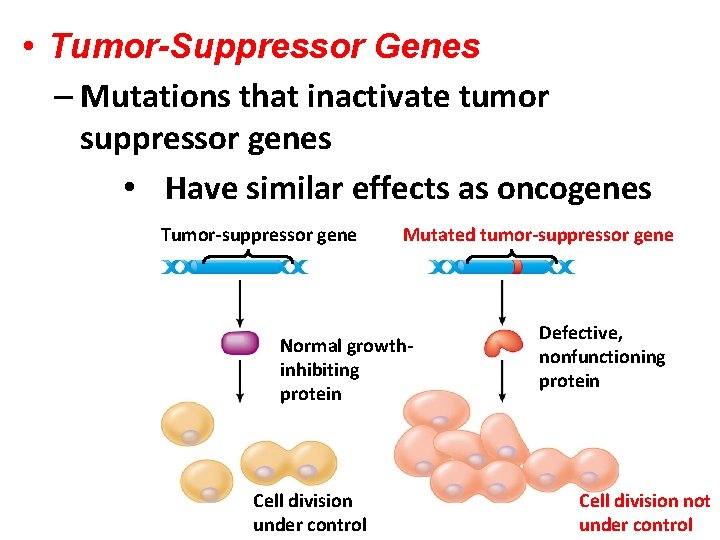
• Tumor-Suppressor Genes – Mutations that inactivate tumor suppressor genes • Have similar effects as oncogenes Tumor-suppressor gene Mutated tumor-suppressor gene Normal growthinhibiting protein Cell division under control Defective, nonfunctioning protein Cell division not under control
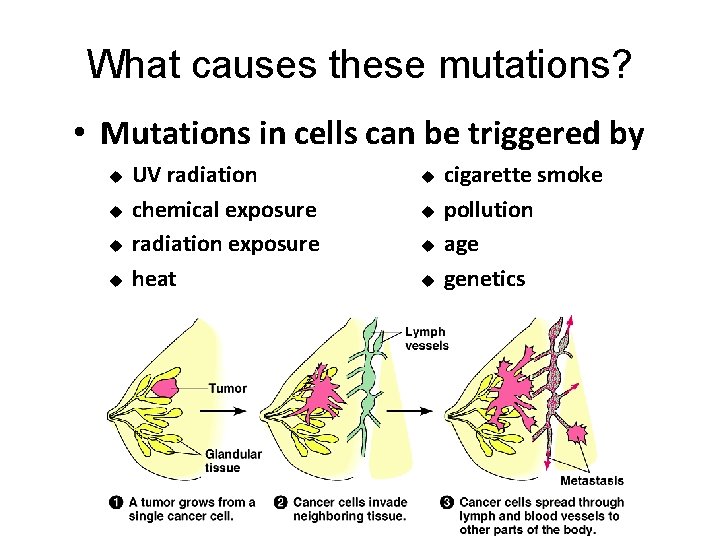
What causes cancer? • Cancer starts with a mutation of a normal gene. • Mutated genes that cause cancer are called oncogenes. • It is thought that several mutations need to occur to give rise to cancer • Cells that are old or not functioning properly normally self destruct (APOPTOSIS) and are replaced by new cells. – Old cells have SHORT telomeres!!! • Cancerous cells do not self destruct and continue to divide rapidly producing millions of new cancerous cells.
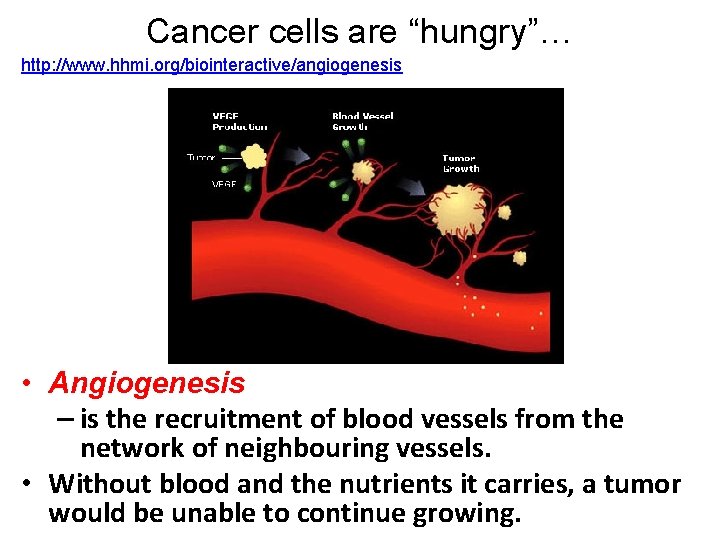
Cancer cells are “hungry”… http: //www. hhmi. org/biointeractive/angiogenesis • Angiogenesis – is the recruitment of blood vessels from the network of neighbouring vessels. • Without blood and the nutrients it carries, a tumor would be unable to continue growing.
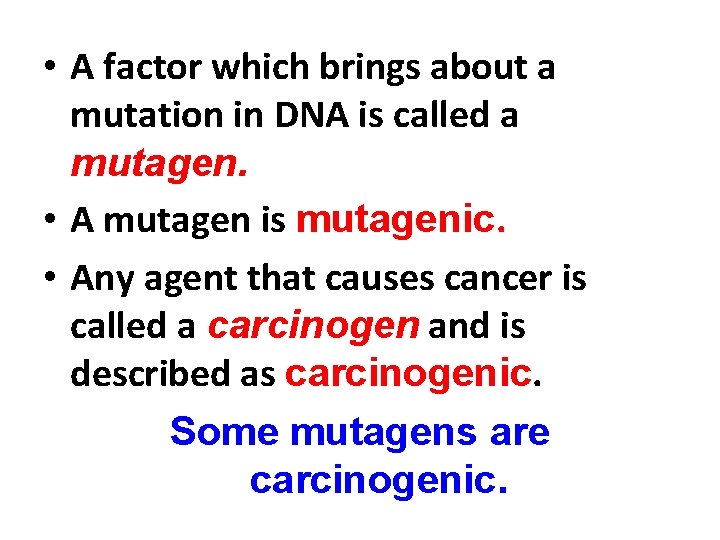
• A factor which brings about a mutation in DNA is called a mutagen. • A mutagen is mutagenic. • Any agent that causes cancer is called a carcinogen and is described as carcinogenic. Some mutagens are carcinogenic.
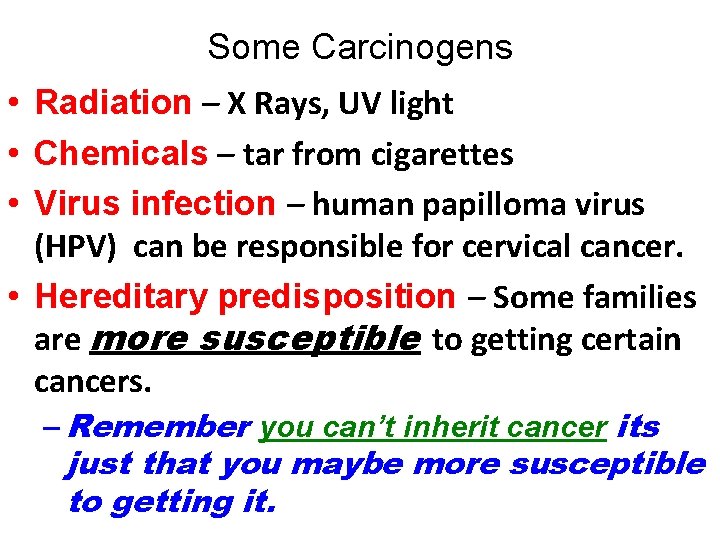
Some Carcinogens • Radiation – X Rays, UV light • Chemicals – tar from cigarettes • Virus infection – human papilloma virus (HPV) can be responsible for cervical cancer. • Hereditary predisposition – Some families are more susceptible to getting certain cancers. – Remember you can’t inherit cancer its just that you maybe more susceptible to getting it.
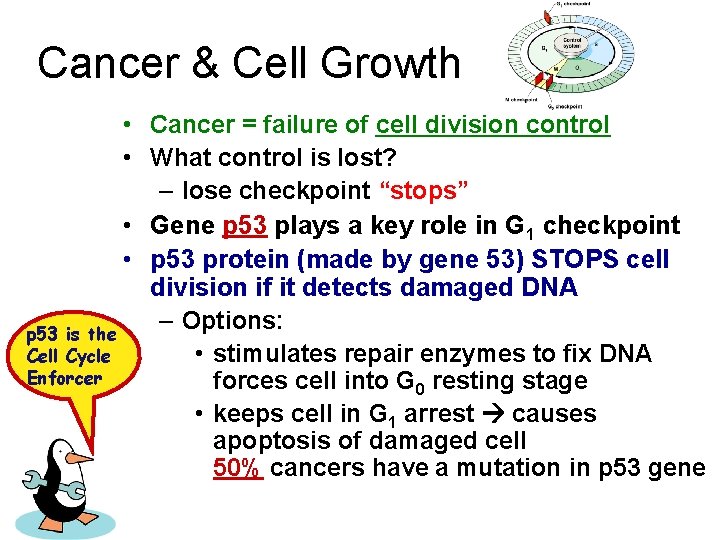
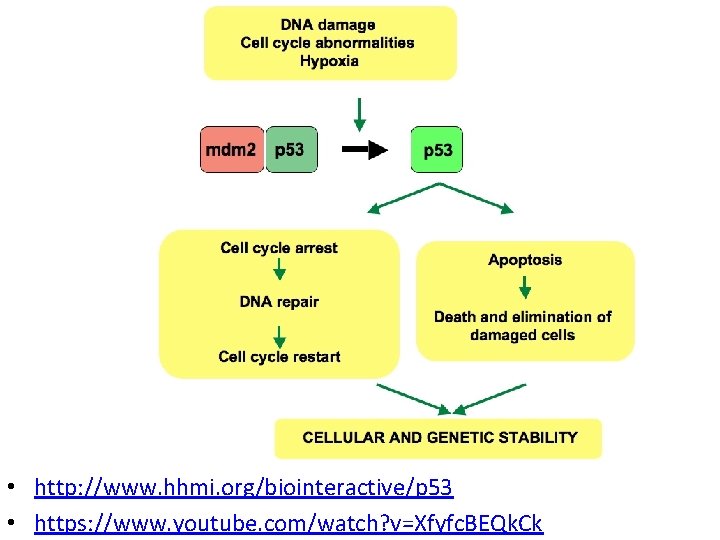
Cancer & Cell Growth • Cancer = failure of cell division control • What control is lost? – lose checkpoint “stops” • Gene p 53 plays a key role in G 1 checkpoint • p 53 protein (made by gene 53) STOPS cell division if it detects damaged DNA – Options: p 53 is the Cell Cycle • stimulates repair enzymes to fix DNA Enforcer forces cell into G 0 resting stage • keeps cell in G 1 arrest causes apoptosis of damaged cell 50% cancers have a mutation in p 53 gene
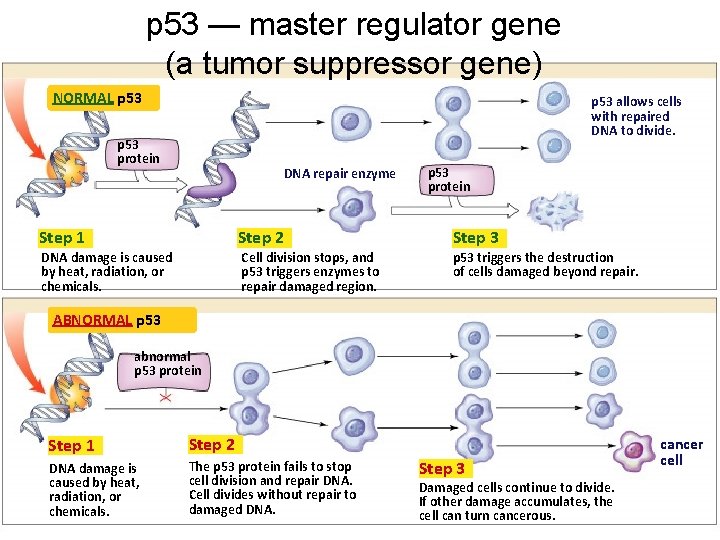
p 53 — master regulator gene (a tumor suppressor gene) NORMAL p 53 allows cells with repaired DNA to divide. p 53 protein DNA repair enzyme p 53 protein Step 1 Step 2 Step 3 DNA damage is caused by heat, radiation, or chemicals. Cell division stops, and p 53 triggers enzymes to repair damaged region. p 53 triggers the destruction of cells damaged beyond repair. ABNORMAL p 53 abnormal p 53 protein Step 1 Step 2 DNA damage is caused by heat, radiation, or chemicals. The p 53 protein fails to stop cell division and repair DNA. Cell divides without repair to damaged DNA. Step 3 Damaged cells continue to divide. If other damage accumulates, the cell can turn cancerous. cancer cell
• http: //www. hhmi. org/biointeractive/p 53 • https: //www. youtube. com/watch? v=Xfyfc. BEQk. Ck
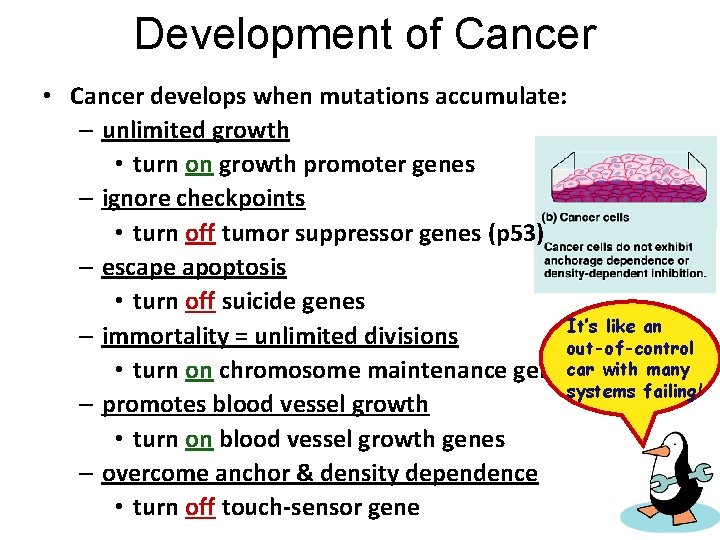
Development of Cancer • Cancer develops when mutations accumulate: – unlimited growth • turn on growth promoter genes – ignore checkpoints • turn off tumor suppressor genes (p 53) – escape apoptosis • turn off suicide genes It’s like an – immortality = unlimited divisions out-of-control • turn on chromosome maintenance genescar with many systems failing! – promotes blood vessel growth • turn on blood vessel growth genes – overcome anchor & density dependence • turn off touch-sensor gene
What causes these mutations? • Mutations in cells can be triggered by u u UV radiation chemical exposure radiation exposure heat u u cigarette smoke pollution age genetics
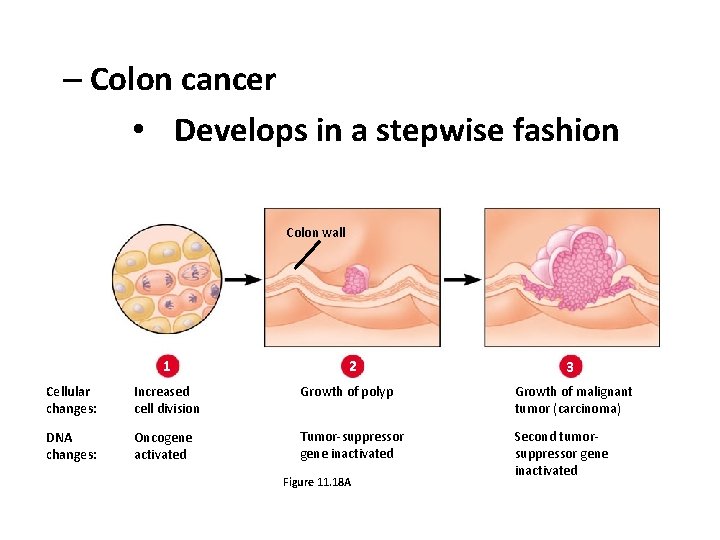
– Colon cancer • Develops in a stepwise fashion Colon wall 1 2 3 Cellular changes: Increased cell division Growth of polyp Growth of malignant tumor (carcinoma) DNA changes: Oncogene activated Tumor-suppressor gene inactivated Second tumorsuppressor gene inactivated Figure 11. 18 A
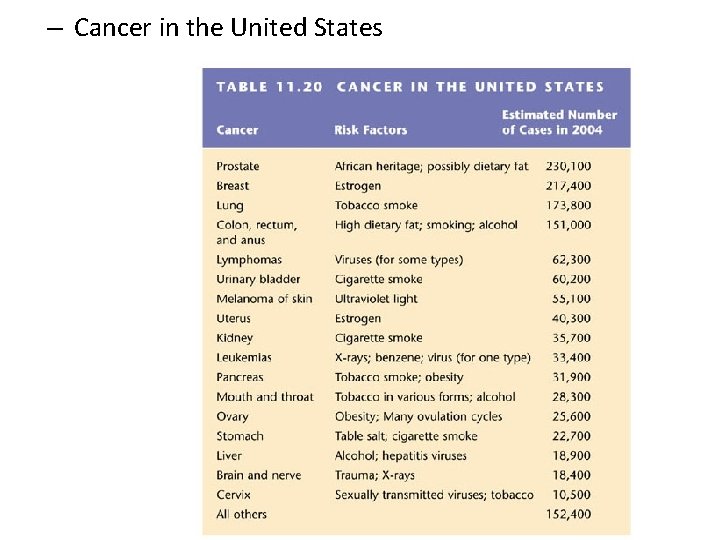
– Cancer in the United States
What’s the CONNECTION to me? • Avoiding carcinogens can reduce the risk of cancer – Reducing exposure to carcinogens (which induce cancer-causing mutations) • Making other lifestyle choices can help reduce cancer risk