
Canadian Landform Regions F F F F Appalachian
- Slides: 10
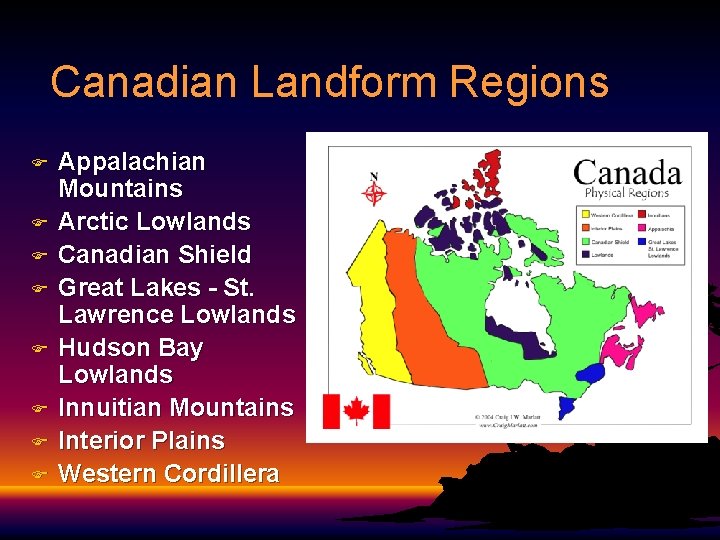
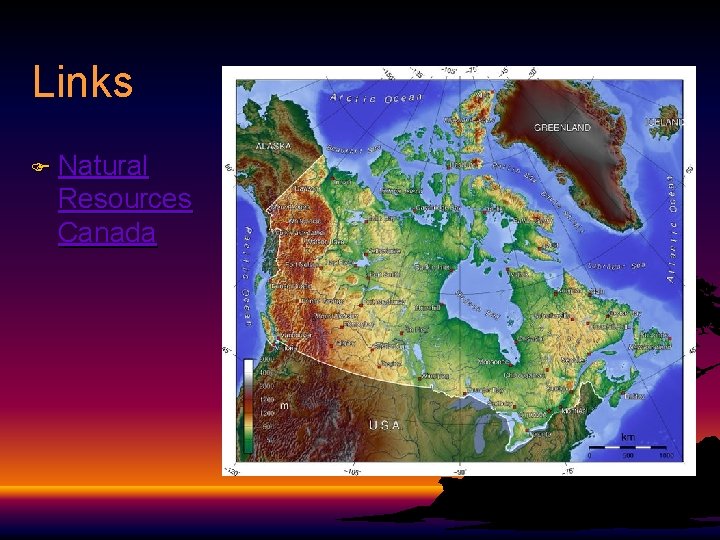
Canadian Landform Regions F F F F Appalachian Mountains Arctic Lowlands Canadian Shield Great Lakes - St. Lawrence Lowlands Hudson Bay Lowlands Innuitian Mountains Interior Plains Western Cordillera
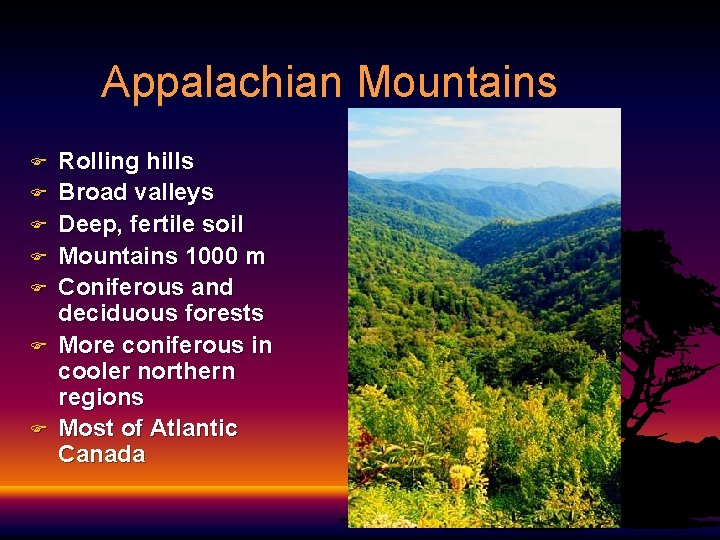
Appalachian Mountains F F F F Rolling hills Broad valleys Deep, fertile soil Mountains 1000 m Coniferous and deciduous forests More coniferous in cooler northern regions Most of Atlantic Canada
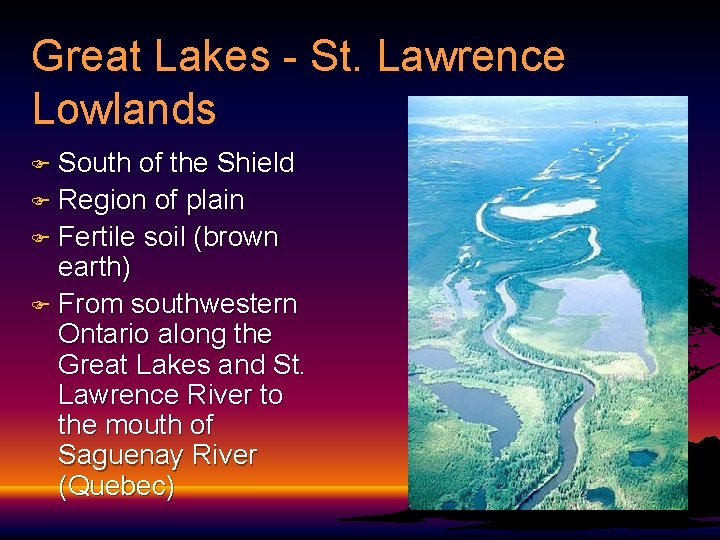
Great Lakes - St. Lawrence Lowlands F South of the Shield F Region of plain F Fertile soil (brown earth) F From southwestern Ontario along the Great Lakes and St. Lawrence River to the mouth of Saguenay River (Quebec)
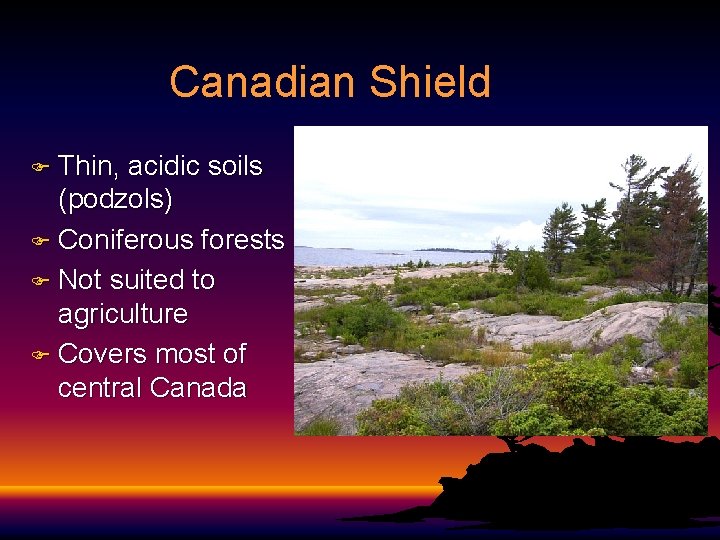
Canadian Shield F Thin, acidic soils (podzols) F Coniferous forests F Not suited to agriculture F Covers most of central Canada
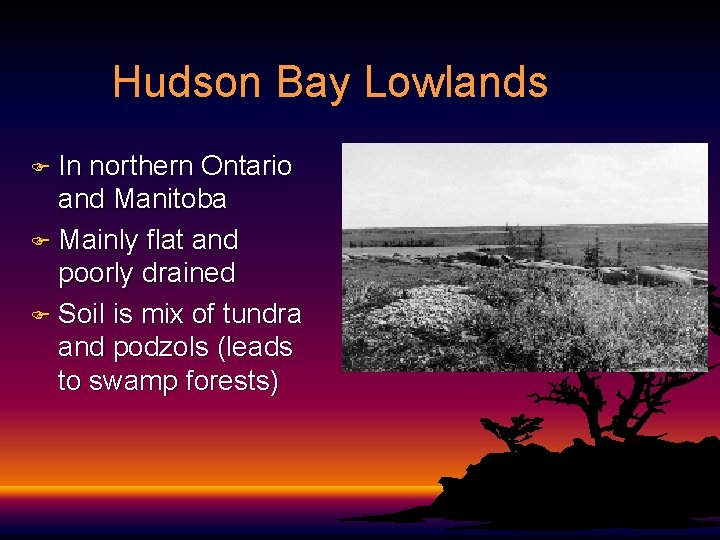
Hudson Bay Lowlands F In northern Ontario and Manitoba F Mainly flat and poorly drained F Soil is mix of tundra and podzols (leads to swamp forests)
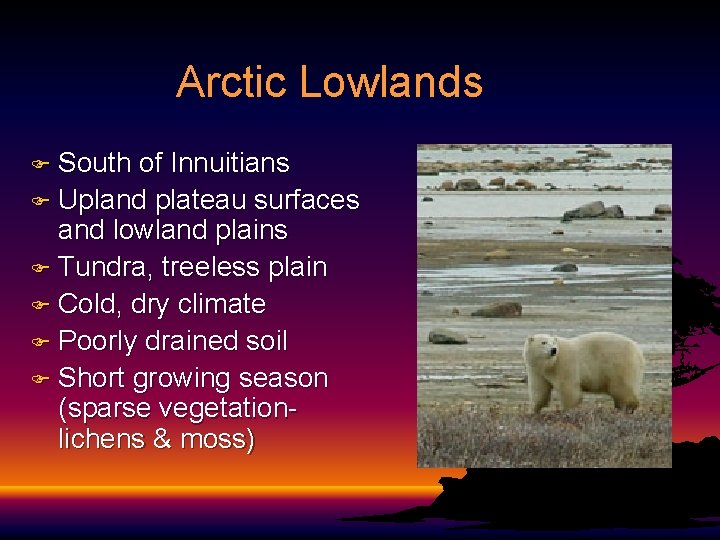
Arctic Lowlands F South of Innuitians F Upland plateau surfaces and lowland plains F Tundra, treeless plain F Cold, dry climate F Poorly drained soil F Short growing season (sparse vegetationlichens & moss)
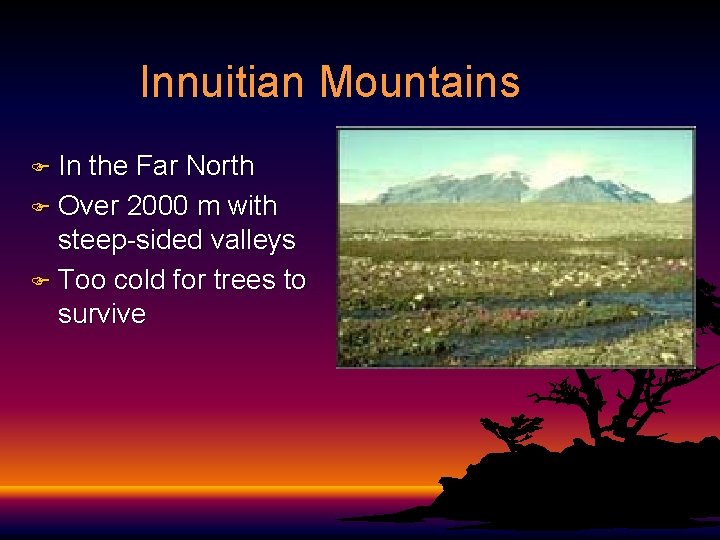
Innuitian Mountains F In the Far North F Over 2000 m with steep-sided valleys F Too cold for trees to survive
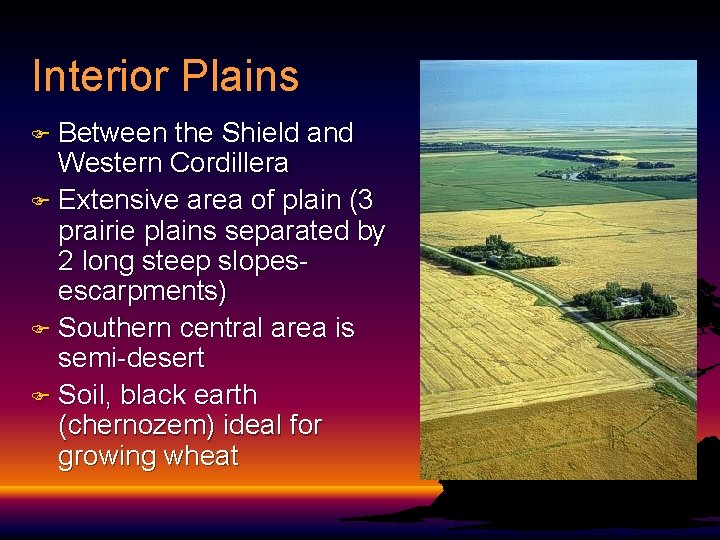
Interior Plains F Between the Shield and Western Cordillera F Extensive area of plain (3 prairie plains separated by 2 long steep slopesescarpments) F Southern central area is semi-desert F Soil, black earth (chernozem) ideal for growing wheat
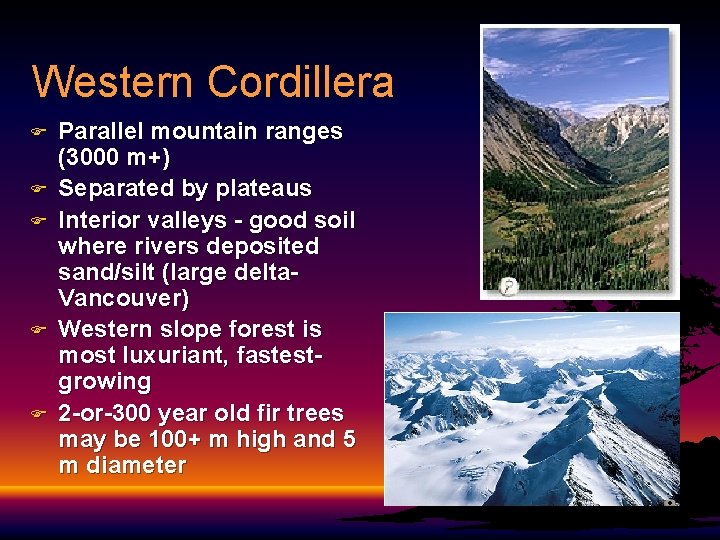
Western Cordillera F F F Parallel mountain ranges (3000 m+) Separated by plateaus Interior valleys - good soil where rivers deposited sand/silt (large delta. Vancouver) Western slope forest is most luxuriant, fastestgrowing 2 -or-300 year old fir trees may be 100+ m high and 5 m diameter
Links F Natural Resources Canada