
Canadian Bioinformatics Workshops www bioinformatics ca In collaboration

Canadian Bioinformatics Workshops www. bioinformatics. ca
In collaboration with Cold Spring Harbor Laboratory & New York Genome Center
Module #: Title of Module 3
Module 3 Data Visualization Marc Fiume High-throughput Biology: From Sequence to Networks April 27 -May 3, 2015
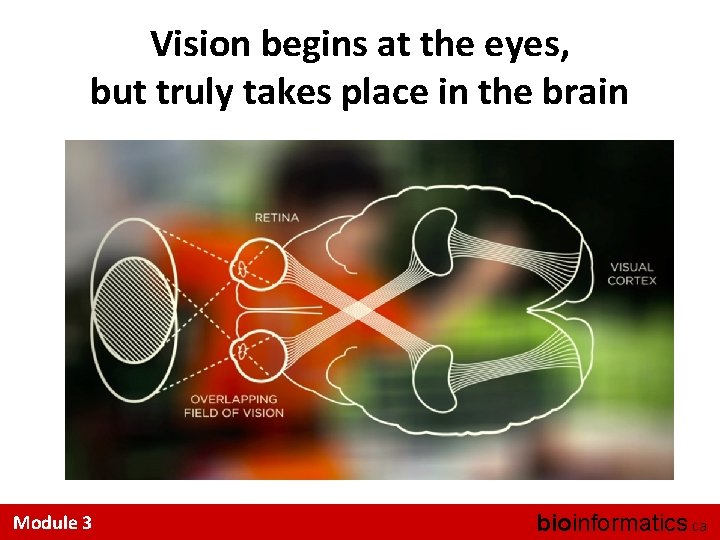
Vision begins at the eyes, but truly takes place in the brain Module 3 bioinformatics. ca
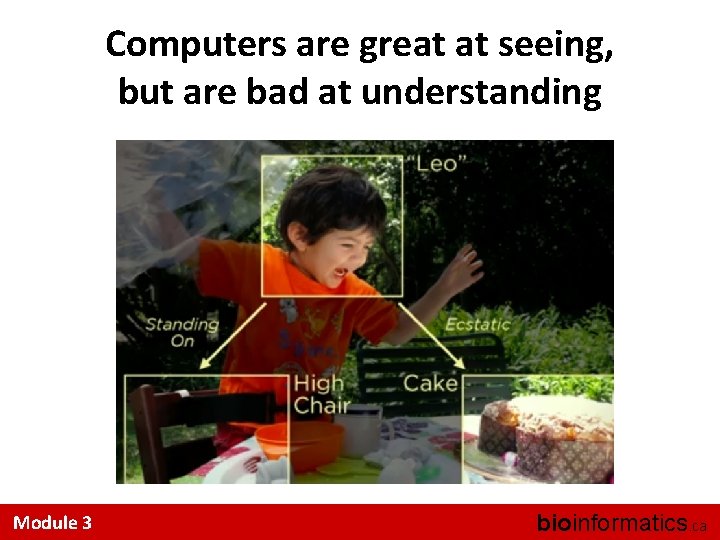
Computers are great at seeing, but are bad at understanding Module 3 bioinformatics. ca
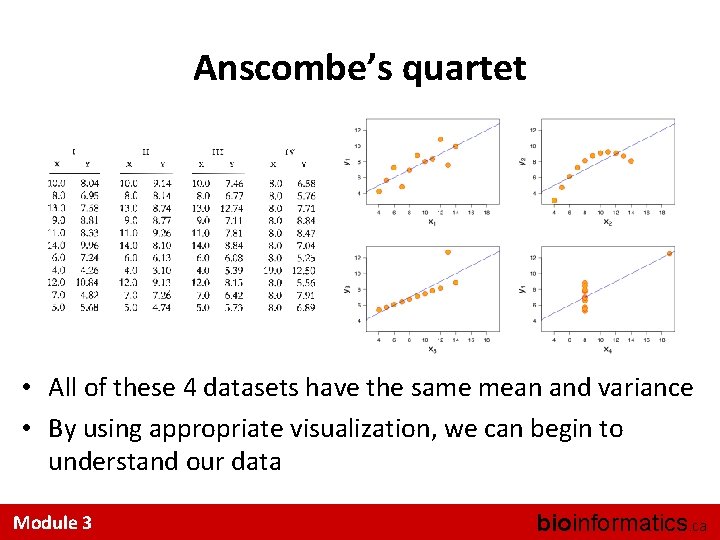
Anscombe’s quartet • All of these 4 datasets have the same mean and variance • By using appropriate visualization, we can begin to understand our data Module 3 bioinformatics. ca
Why visualization is important • the human visual system is a low-cost* and highperformance – sense maker, to identify patterns – debugger, to identify issues and outliers * compared to cost of writing, debugging, and running computational scripts Module 3 bioinformatics. ca
Outline • • • visualization tools genome browsers visualizing read alignments visualizing single nucleotide variants visualizing structural variants Module 3 bioinformatics. ca
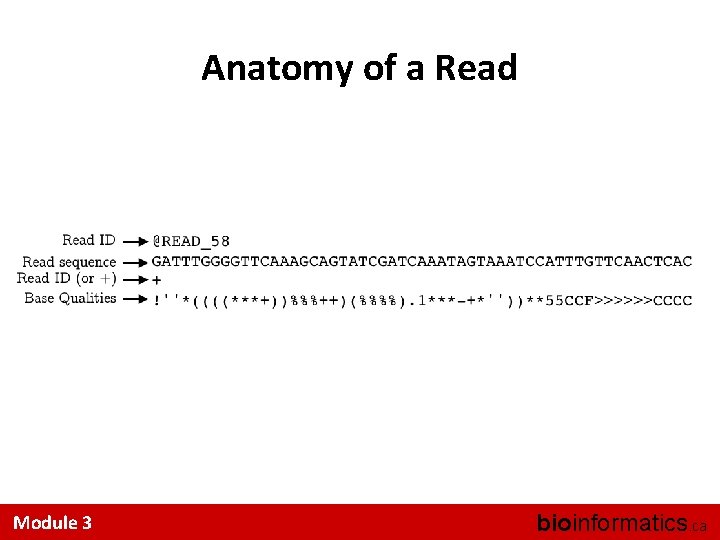
Anatomy of a Read Module 3 bioinformatics. ca
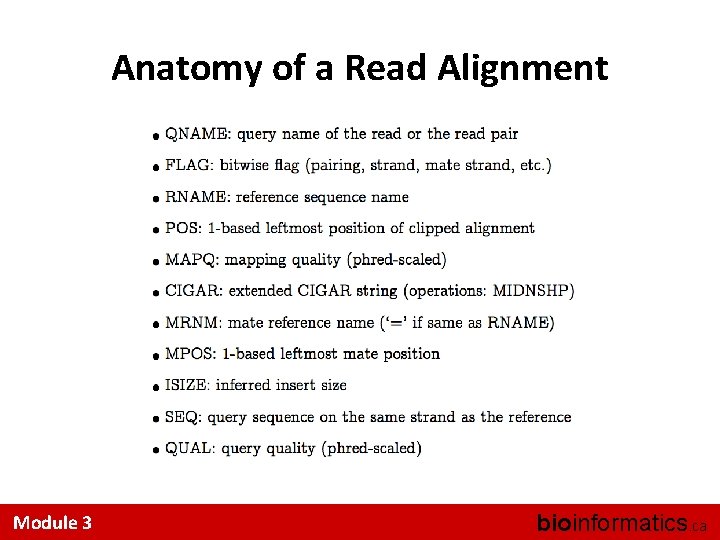
Anatomy of a Read Alignment Module 3 bioinformatics. ca
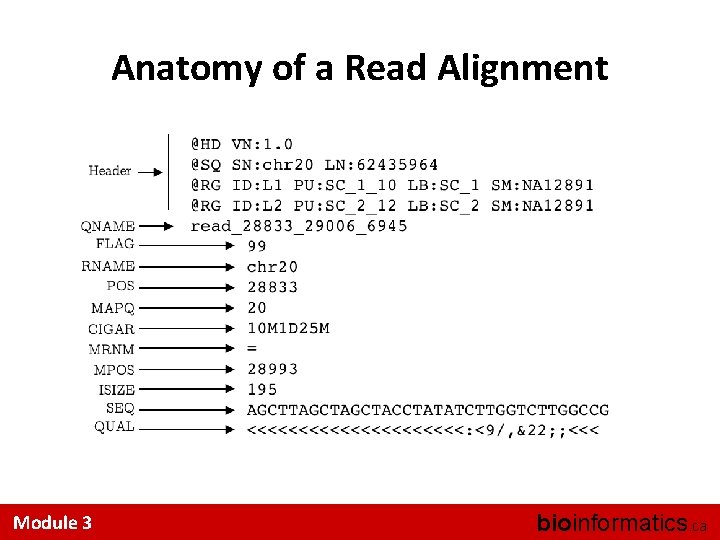
Anatomy of a Read Alignment Module 3 bioinformatics. ca
Genome Browsers • One of the most general visualization tools for looking at genomic data – Annotations of various types (sequence, genes, continuous values, read alignments) – At various resolutions (basepair, small region, chromosome) – For various tasks (quality assurance, discovery) • Which one you use depends on task at hand, kind and size of data, and data privacy Module 3 bioinformatics. ca
HT-seq Genome Browsers Integrative Genome Viewer Savant Genome Browser • task at hand : visualizing HT-seq reads, especially good for inspecting previously identified variants • kind and size of data : large BAM files, stored locally or remotely • data privacy : run on the desktop, can keep all data private Module 3 bioinformatics. ca
You might also want to try UCSC Genome Browser Trackster (part of Galaxy) • New web-technologies are being applied to make HT-seq data browsing more interactive • UCSC Genome Browser has been retrofitted to display BAM files • Trackster is a genome browser that can perform visual analytics on small windows of the genome, deploy full analysis with Galaxy Module 3 bioinformatics. ca
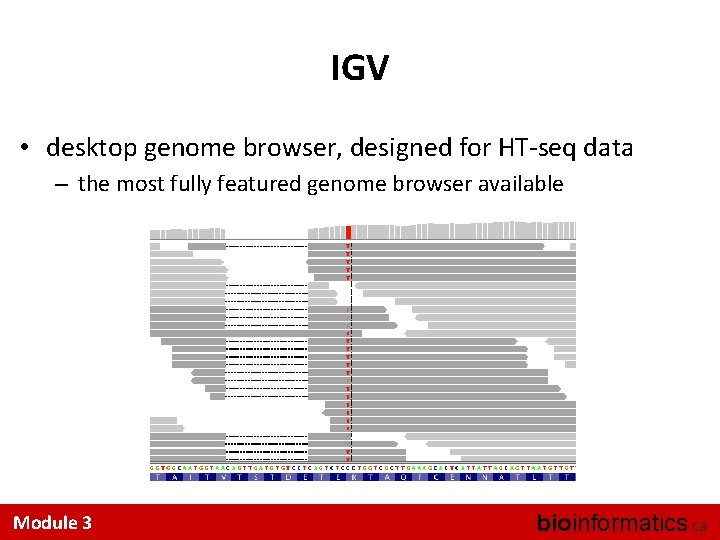
IGV • desktop genome browser, designed for HT-seq data – the most fully featured genome browser available Module 3 bioinformatics. ca
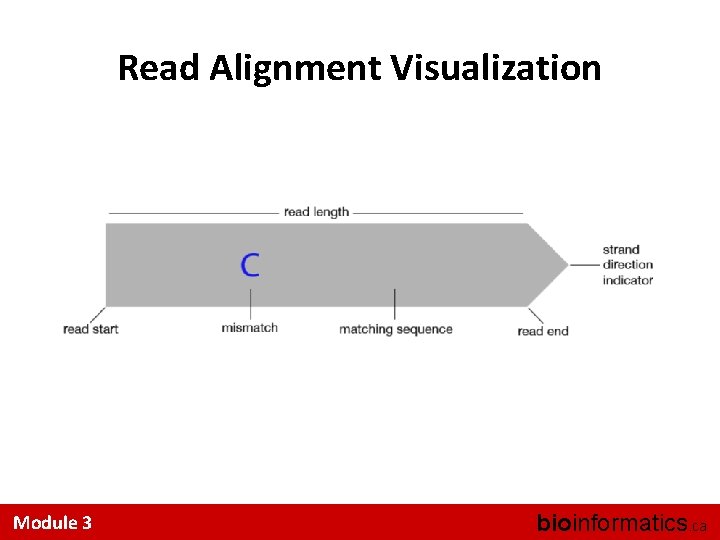
Read Alignment Visualization Module 3 bioinformatics. ca
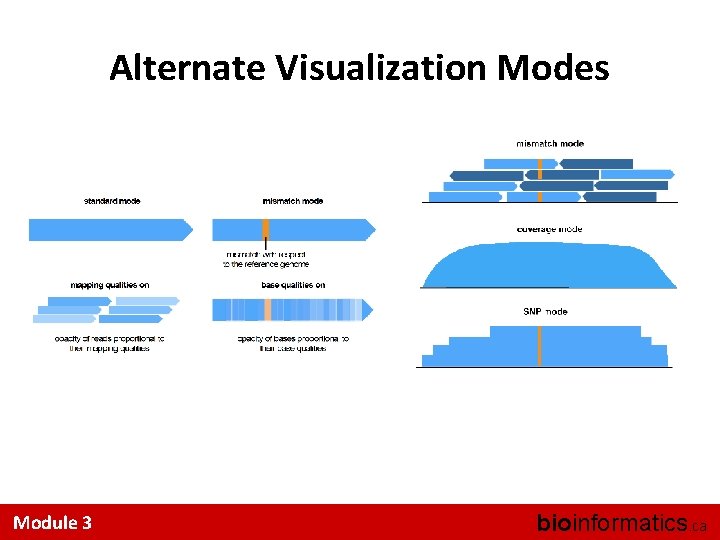
Alternate Visualization Modes Module 3 bioinformatics. ca
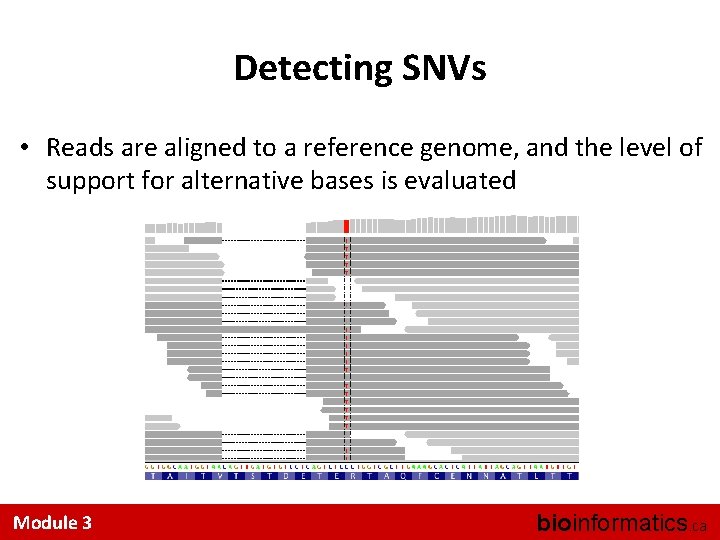
Detecting SNVs • Reads are aligned to a reference genome, and the level of support for alternative bases is evaluated Module 3 bioinformatics. ca
Lab Time Using IGV to visualize HTS datasets Module 3 bioinformatics. ca
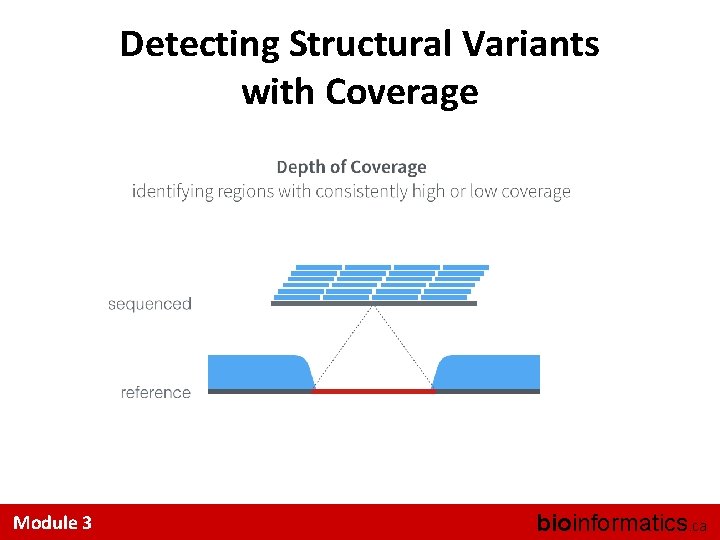
Detecting Structural Variants with Coverage Module 3 bioinformatics. ca
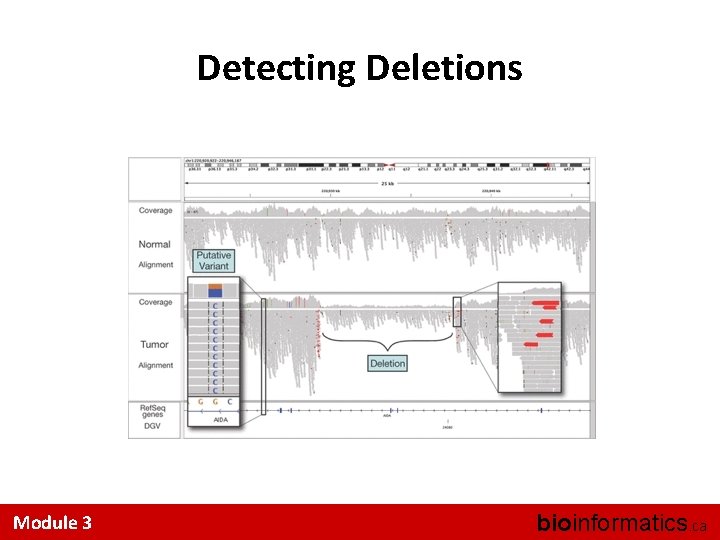
Detecting Deletions Module 3 bioinformatics. ca
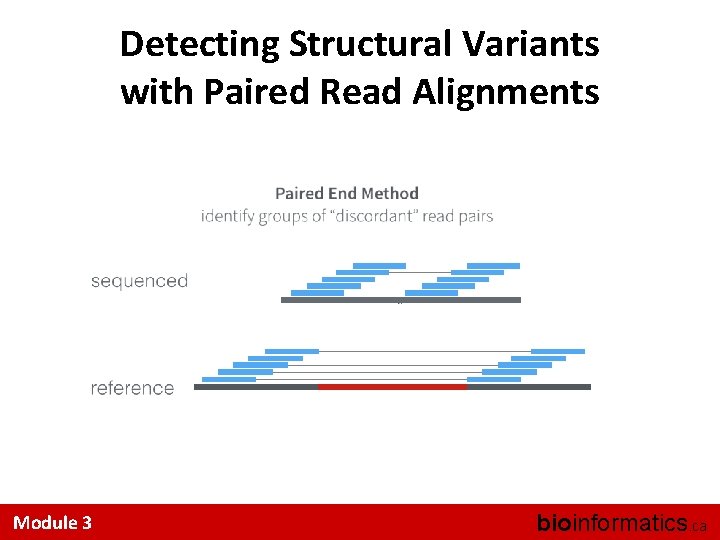
Detecting Structural Variants with Paired Read Alignments Module 3 bioinformatics. ca
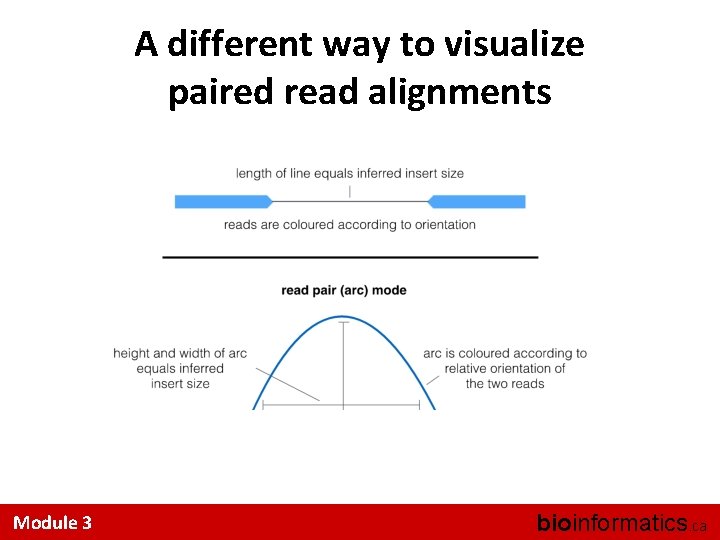
A different way to visualize paired read alignments Module 3 bioinformatics. ca
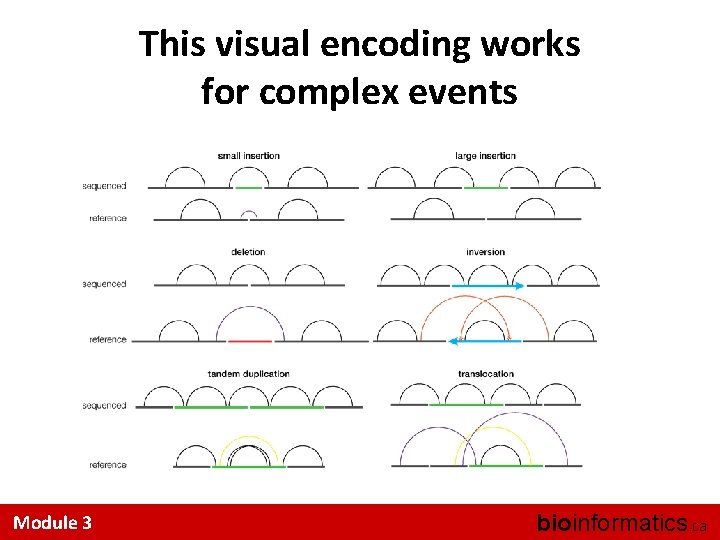
This visual encoding works for complex events Module 3 bioinformatics. ca
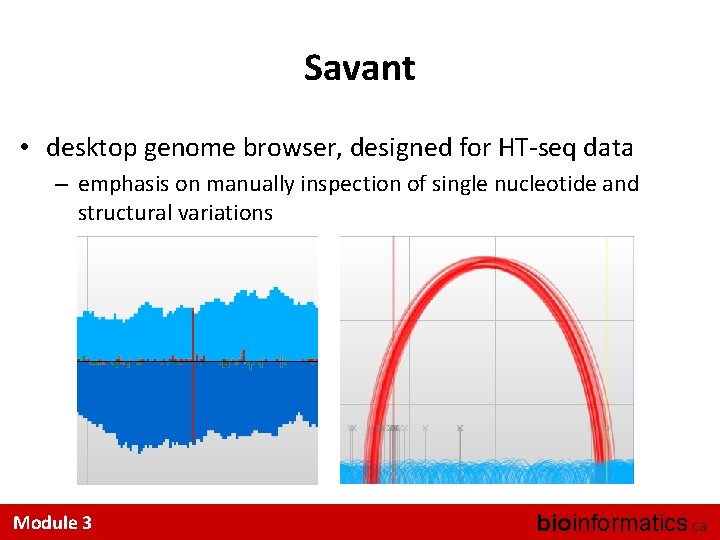
Savant • desktop genome browser, designed for HT-seq data – emphasis on manually inspection of single nucleotide and structural variations Module 3 bioinformatics. ca
Lab Time Using Savant Genome Browser to visualize HTS datasets Begin at inspecting structural variants Module 3 bioinformatics. ca
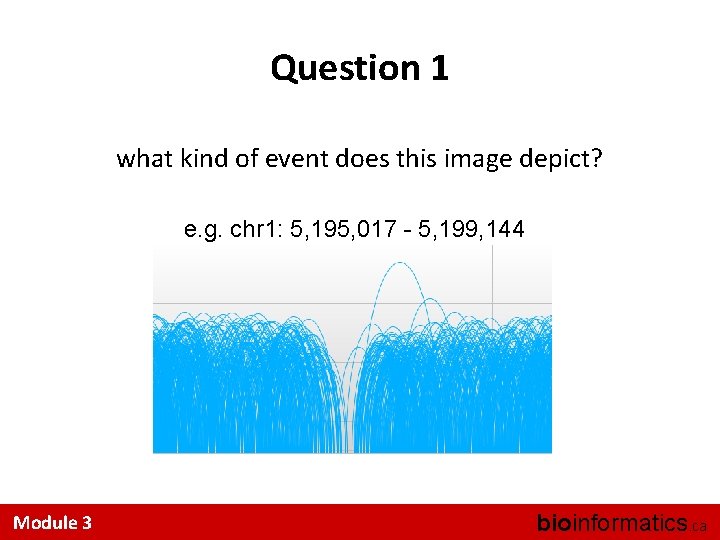
Question 1 what kind of event does this image depict? e. g. chr 1: 5, 195, 017 - 5, 199, 144 Module 3 bioinformatics. ca
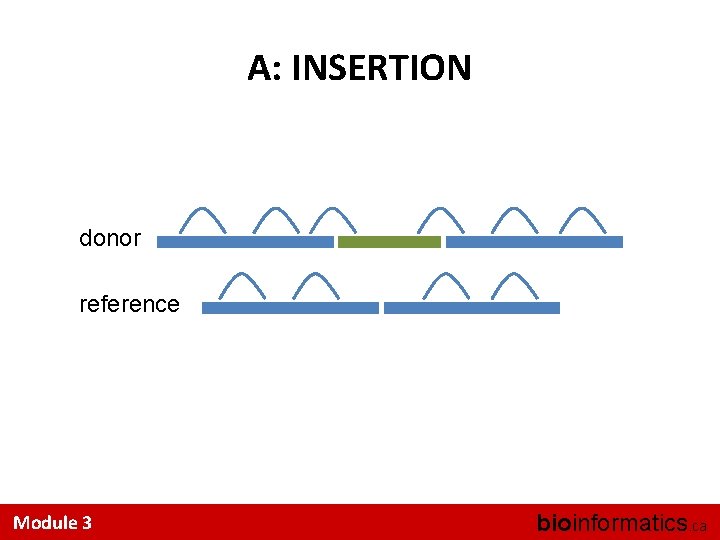
A: INSERTION donor reference Module 3 bioinformatics. ca
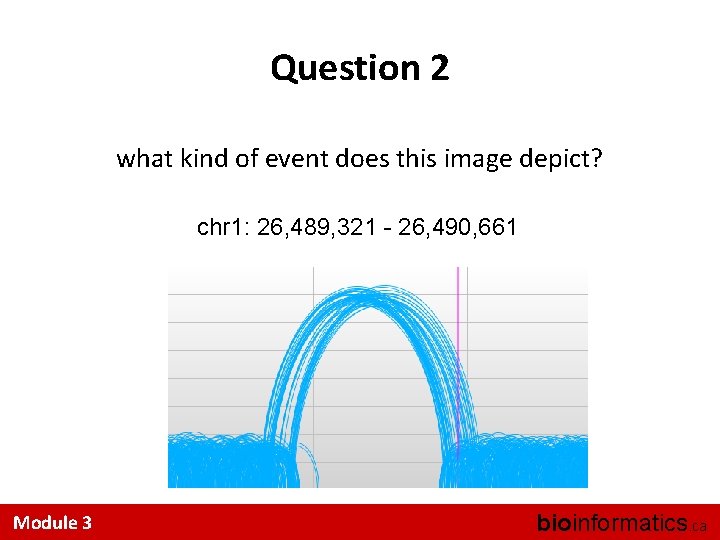
Question 2 what kind of event does this image depict? chr 1: 26, 489, 321 - 26, 490, 661 Module 3 bioinformatics. ca
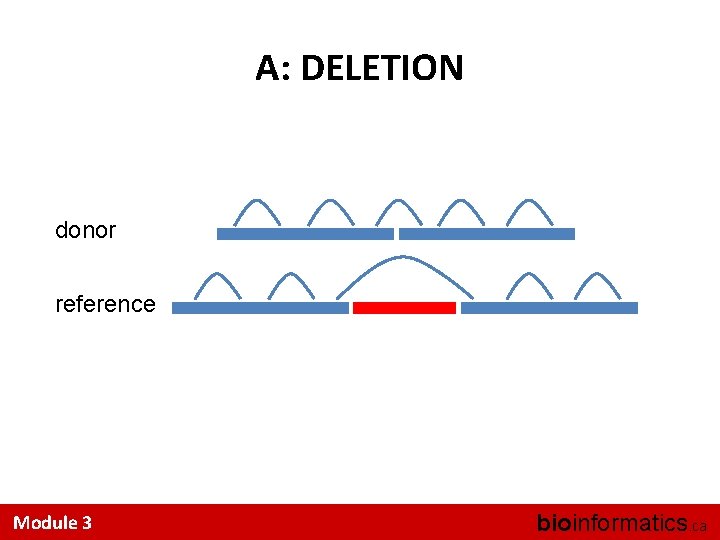
A: DELETION donor reference Module 3 bioinformatics. ca
Question 3 what would a heterozygous deletion look like? chr 1: 31, 574, 172 - 31, 578, 242 Module 3 bioinformatics. ca
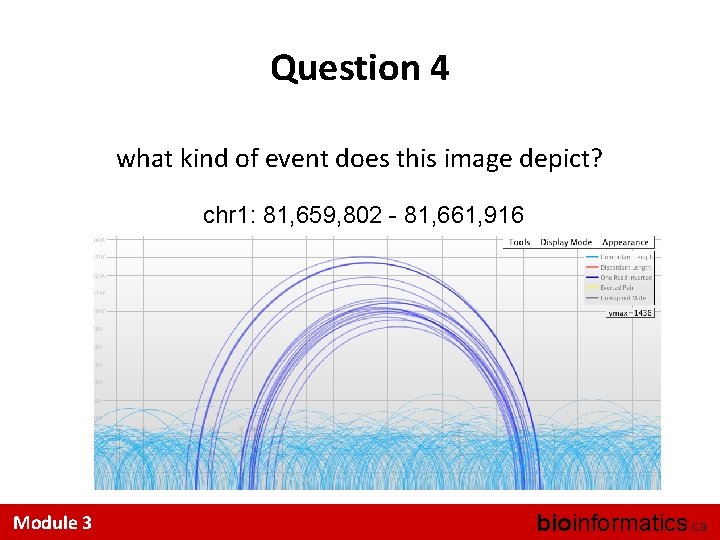
Question 4 what kind of event does this image depict? chr 1: 81, 659, 802 - 81, 661, 916 Module 3 bioinformatics. ca
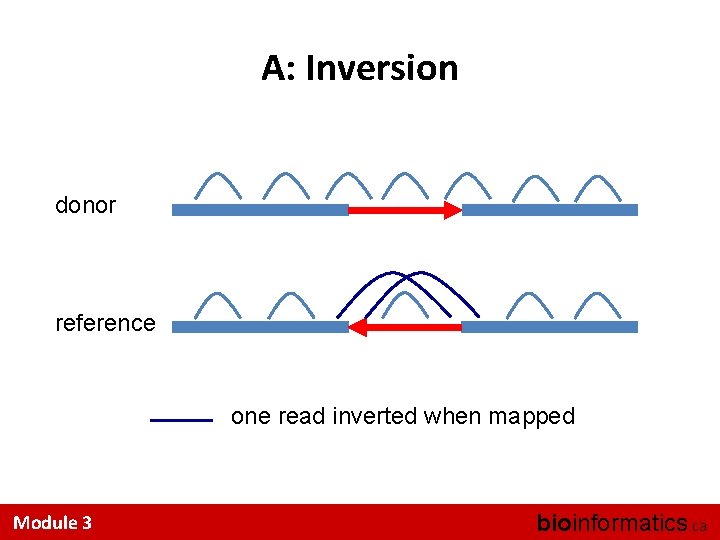
A: Inversion donor reference one read inverted when mapped Module 3 bioinformatics. ca
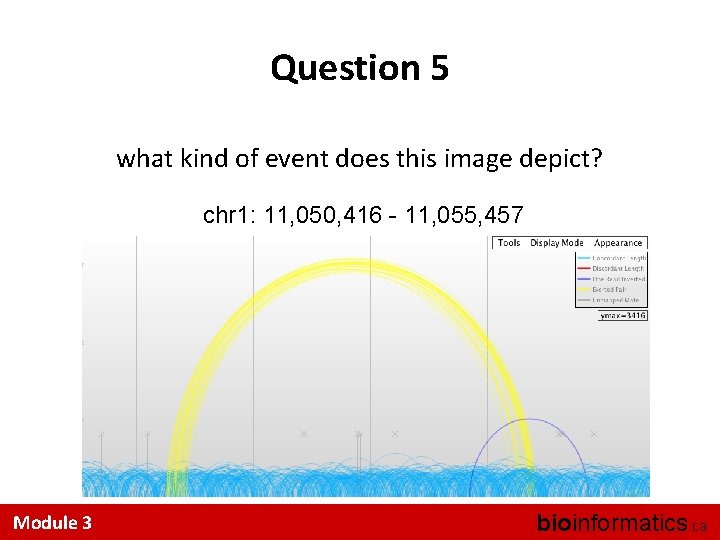
Question 5 what kind of event does this image depict? chr 1: 11, 050, 416 - 11, 055, 457 Module 3 bioinformatics. ca
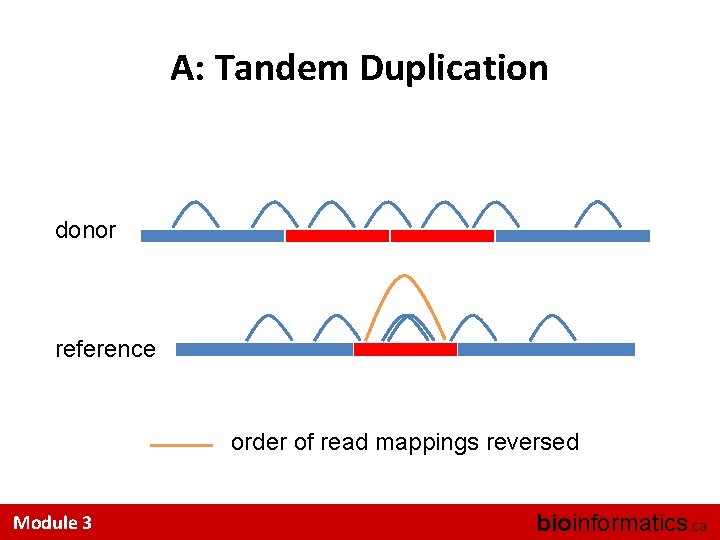
A: Tandem Duplication donor reference order of read mappings reversed Module 3 bioinformatics. ca
We are on a Coffee Break & Networking Session Module 3 bioinformatics. ca
- Slides: 37