
Canadas Global Connections Where does the responsibility lie
Canada’s Global Connections Where does the responsibility lie? . . . with the GOVERNMENT? CORPORATIONS? CONSUMERS? • Trade • Sweatshops • Clothing Industry
Canada and its trade economy Canada is……. . • one of the world's wealthiest nations with a high per capita income, • important global producer of natural resources (which is rare for a developed country) • Depends upon buying goods from around the world in order to support its manufacturing, services and retail industries.
Canada and International Trade Exports Imports Goods or services are provided to consumers in other countries by Canadian producers. The buying of goods or services from other countries and bringing them into Canada.
Canada and International Trade Exports • • • Exporter of energy (oil, gas and hydroelectricity) One of the most important suppliers of wheat and other grains to the world World's largest producer of zinc and uranium and a world leader in many other mineral resources such as gold, nickel, aluminum, and lead
Canada and International Trade Imports • • Import machinery and other equipment (ex. computers) Miscellaneous consumer goods (ex. shoes) Agricultural and fishing products (ex. oranges) Automobile products
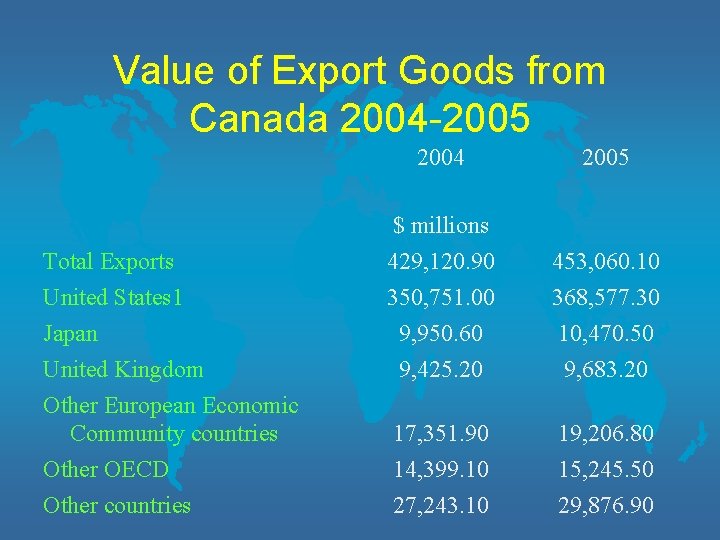
Value of Export Goods from Canada 2004 -2005 2004 2005 $ millions Total Exports United States 1 Japan United Kingdom Other European Economic Community countries 429, 120. 90 350, 751. 00 9, 950. 60 9, 425. 20 453, 060. 10 368, 577. 30 10, 470. 50 9, 683. 20 17, 351. 90 19, 206. 80 Other OECD 14, 399. 10 15, 245. 50 Other countries 27, 243. 10 29, 876. 90
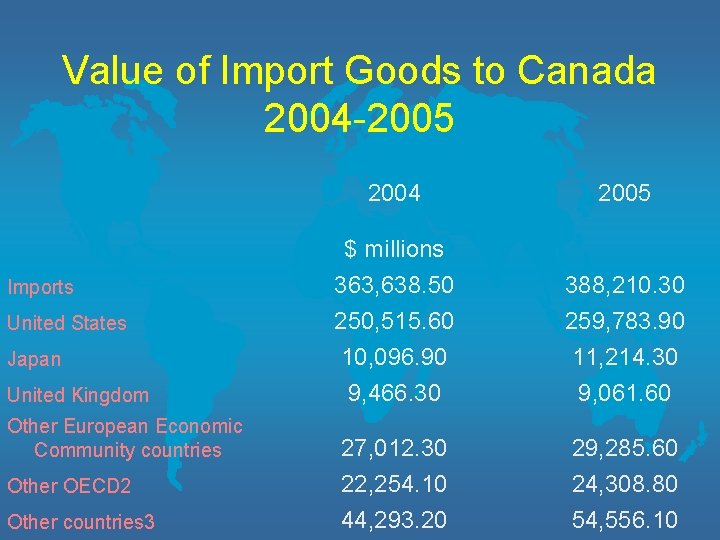
Value of Import Goods to Canada 2004 -2005 Imports United States Japan United Kingdom Other European Economic Community countries Other OECD 2 Other countries 3 2004 2005 $ millions 363, 638. 50 250, 515. 60 10, 096. 90 9, 466. 30 388, 210. 30 259, 783. 90 11, 214. 30 9, 061. 60 27, 012. 30 29, 285. 60 22, 254. 10 44, 293. 20 24, 308. 80 54, 556. 10
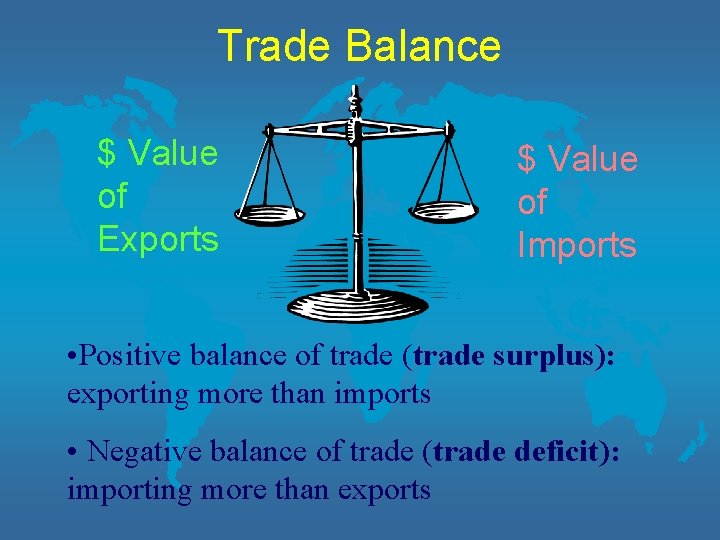
Trade Balance $ Value of Exports $ Value of Imports • Positive balance of trade (trade surplus): exporting more than imports • Negative balance of trade (trade deficit): importing more than exports
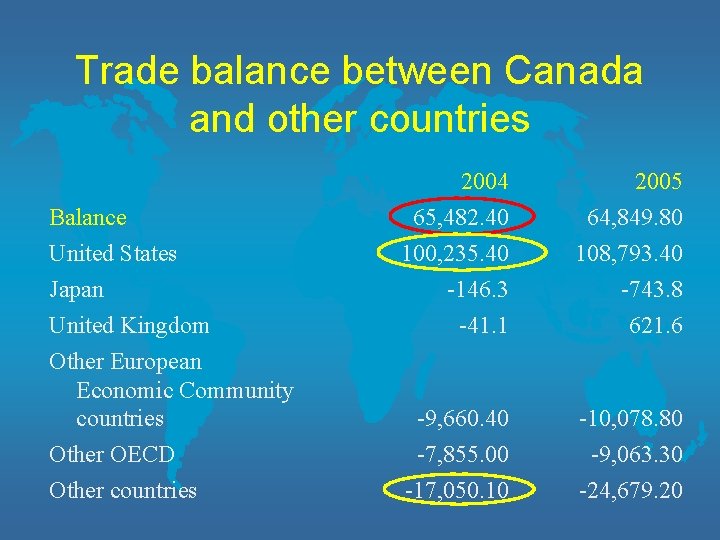
Trade balance between Canada and other countries 2004 65, 482. 40 2005 64, 849. 80 United States Japan United Kingdom Other European Economic Community countries 100, 235. 40 -146. 3 -41. 1 108, 793. 40 -743. 8 621. 6 -9, 660. 40 -10, 078. 80 Other OECD Other countries -7, 855. 00 -17, 050. 10 -9, 063. 30 -24, 679. 20 Balance
Factors than can affect the trade balance between Canada and other countries • • • Prices of goods manufactured in Canada Value of the Canadian Dollar (Exchange rates) Trade agreements or barriers Other tax, tariff and trade measures Canada’s economy or countries abroad.
Tariffs • • Taxes imposed by a government on imports. To make imported goods more expensive so that consumers will be more likely to buy products made locally. Example: Tariffs on automobiles sometimes discourage people from buying foreign made cars (ex. Volvo) and people buy Canadian made cars instead (Toyota Corolla)
Trade agreements These agreements between countries are used to: - remove or reduce tariffs - establish trade rules - have a system to negotiate trading problems
Answer the following questions, summarizing what you’ve learned today, in the space provided 1)Do we (Canada) have a positive trading balance with the world? 2)Is it a concern to be so heavily dependent on natural resources?
- Slides: 14