
Canadas Geographic Regions Chart Based on Student Presentations
Canada’s Geographic Regions Chart Based on Student Presentations Mr. Fitton Block 1/2
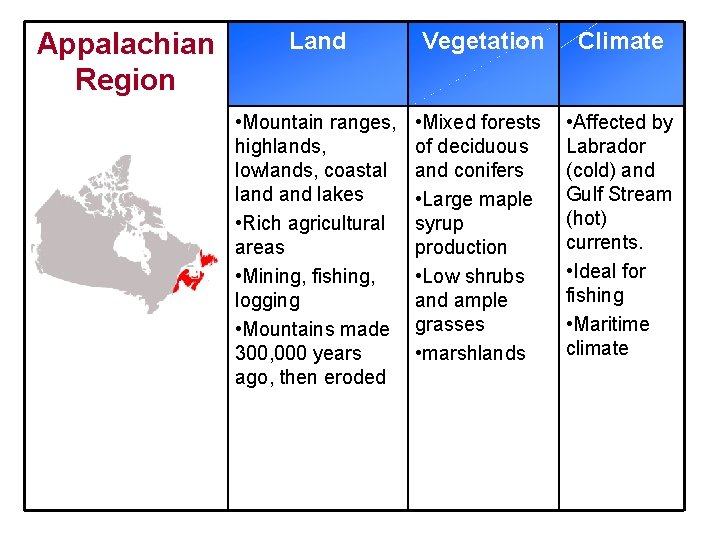
Appalachian Region Land Vegetation Climate • Mountain ranges, highlands, lowlands, coastal land lakes • Rich agricultural areas • Mining, fishing, logging • Mountains made 300, 000 years ago, then eroded • Mixed forests of deciduous and conifers • Large maple syrup production • Low shrubs and ample grasses • marshlands • Affected by Labrador (cold) and Gulf Stream (hot) currents. • Ideal for fishing • Maritime climate
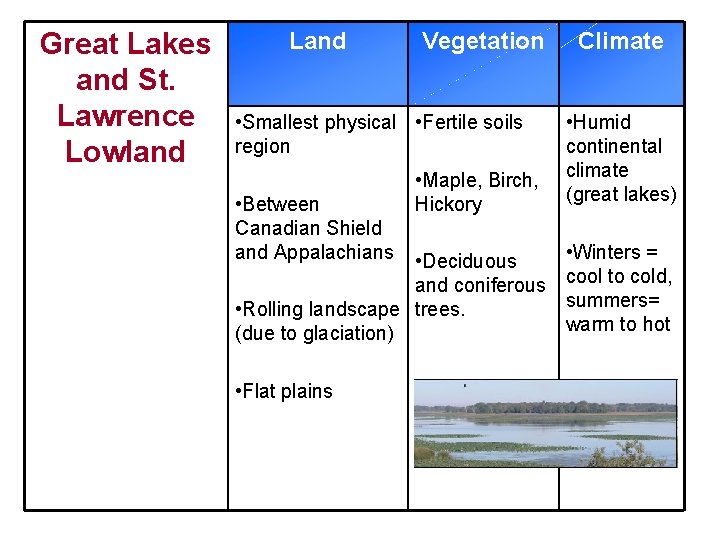
Great Lakes and St. Lawrence Lowland Land Vegetation • Smallest physical • Fertile soils region • Between Canadian Shield and Appalachians • Maple, Birch, Hickory Climate • Humid continental climate (great lakes) • Winters = • Deciduous and coniferous cool to cold, summers= • Rolling landscape trees. warm to hot (due to glaciation) • Flat plains
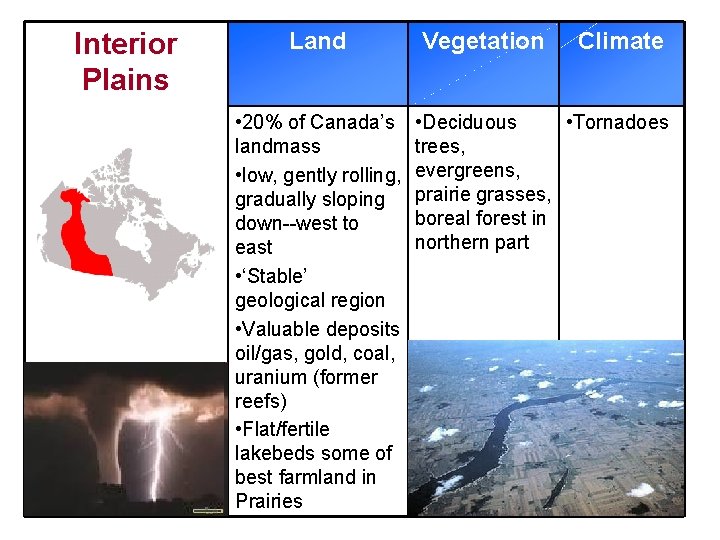
Interior Plains Land • 20% of Canada’s landmass • low, gently rolling, gradually sloping down--west to east • ‘Stable’ geological region • Valuable deposits oil/gas, gold, coal, uranium (former reefs) • Flat/fertile lakebeds some of best farmland in Prairies Vegetation Climate • Deciduous • Tornadoes trees, evergreens, prairie grasses, boreal forest in northern part

Canadian Shield Land Vegetation Climate • covers about half of Canada • made up of extremely ancient rock • region lies from 180 to 370 meters above sea level • consists largely of low hills and thousands of lakes • valuable deposits of platinum, silver, zinc, and other metals • high northern areas are tundra, like Arctic zone • Boreal (evergreen) forests dominate • deciduous forests in south • North = winters = long and cold, summers = short and cool
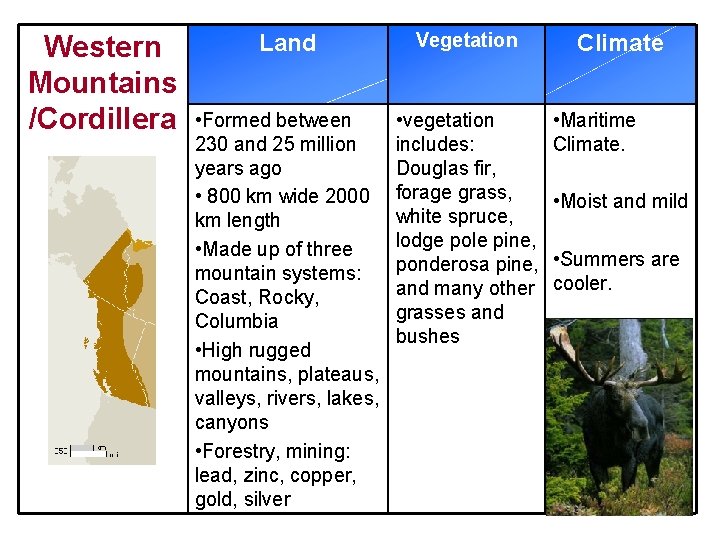
Western Mountains /Cordillera Land Vegetation • Formed between 230 and 25 million years ago • 800 km wide 2000 km length • Made up of three mountain systems: Coast, Rocky, Columbia • High rugged mountains, plateaus, valleys, rivers, lakes, canyons • Forestry, mining: lead, zinc, copper, gold, silver • vegetation includes: Douglas fir, forage grass, white spruce, lodge pole pine, ponderosa pine, and many other grasses and bushes Climate • Maritime Climate. • Moist and mild • Summers are cooler.
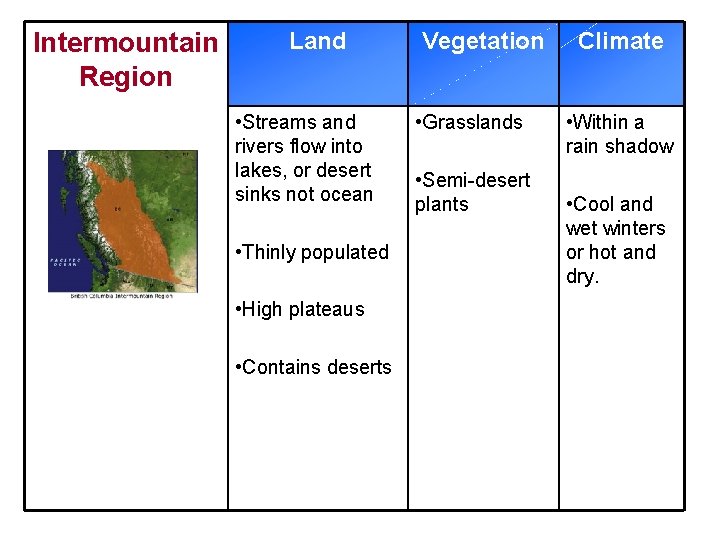
Intermountain Region Land • Streams and rivers flow into lakes, or desert sinks not ocean • Thinly populated • High plateaus • Contains deserts Vegetation • Grasslands • Semi-desert plants Climate • Within a rain shadow • Cool and wet winters or hot and dry.
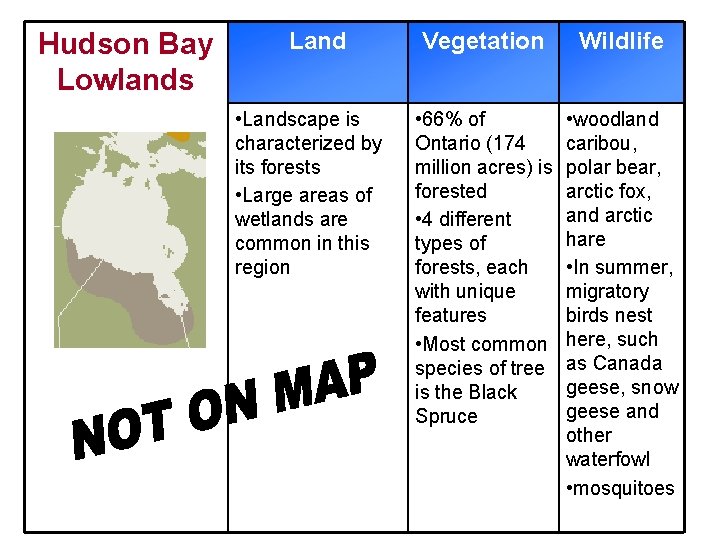
Hudson Bay Lowlands Land • Landscape is characterized by its forests • Large areas of wetlands are common in this region Vegetation Wildlife • 66% of Ontario (174 million acres) is forested • 4 different types of forests, each with unique features • Most common species of tree is the Black Spruce • woodland caribou, polar bear, arctic fox, and arctic hare • In summer, migratory birds nest here, such as Canada geese, snow geese and other waterfowl • mosquitoes
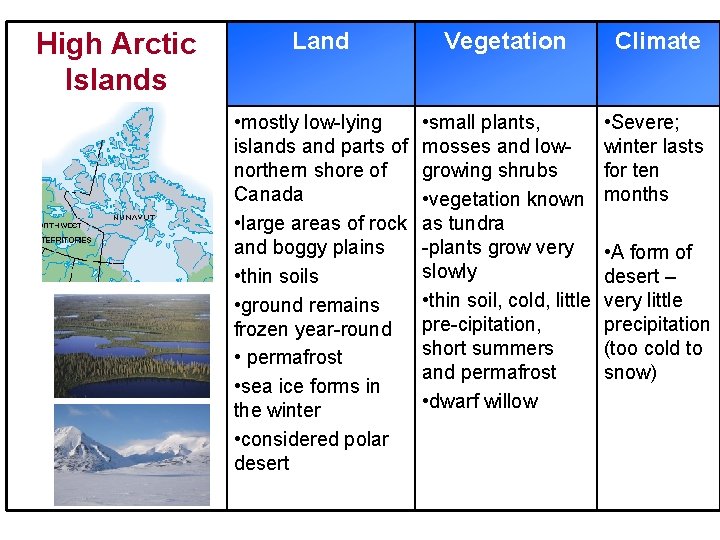
High Arctic Islands Land Vegetation Climate • mostly low-lying islands and parts of northern shore of Canada • large areas of rock and boggy plains • thin soils • ground remains frozen year-round • permafrost • sea ice forms in the winter • considered polar desert • small plants, mosses and lowgrowing shrubs • vegetation known as tundra -plants grow very slowly • thin soil, cold, little pre-cipitation, short summers and permafrost • dwarf willow • Severe; winter lasts for ten months • A form of desert – very little precipitation (too cold to snow)
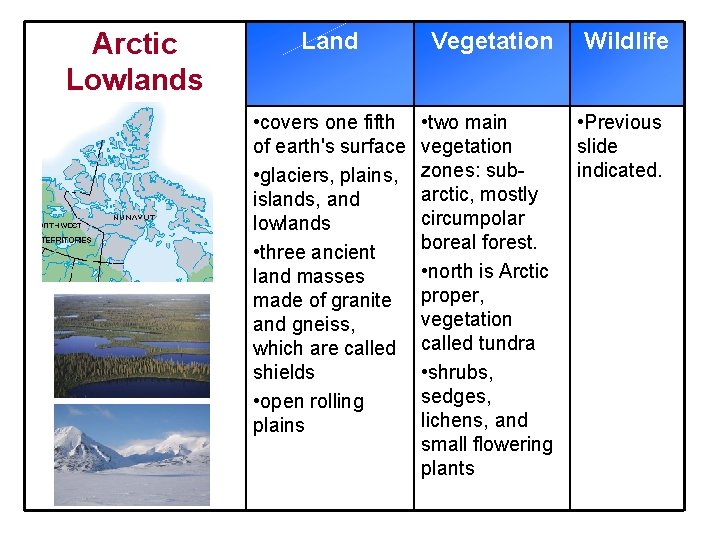
Arctic Lowlands Land Vegetation • covers one fifth of earth's surface • glaciers, plains, islands, and lowlands • three ancient land masses made of granite and gneiss, which are called shields • open rolling plains • two main vegetation zones: subarctic, mostly circumpolar boreal forest. • north is Arctic proper, vegetation called tundra • shrubs, sedges, lichens, and small flowering plants Wildlife • Previous slide indicated.
- Slides: 10