
CANADA IN THE 1920 s DID IT ROAR





- Slides: 22
CANADA IN THE 1920 s DID IT ROAR FOR EVERYONE ?
THE ROARING TWENTIES The 1920 s was known as the "Roaring Twenties“ because of the decade's booming economy, technological advancements, and lively culture. The decade marked the growth of the modern, mass production, mass-consumption economy, which delivered fantastic profits to investors while also raising the living standard of the urban middle- and working-class.
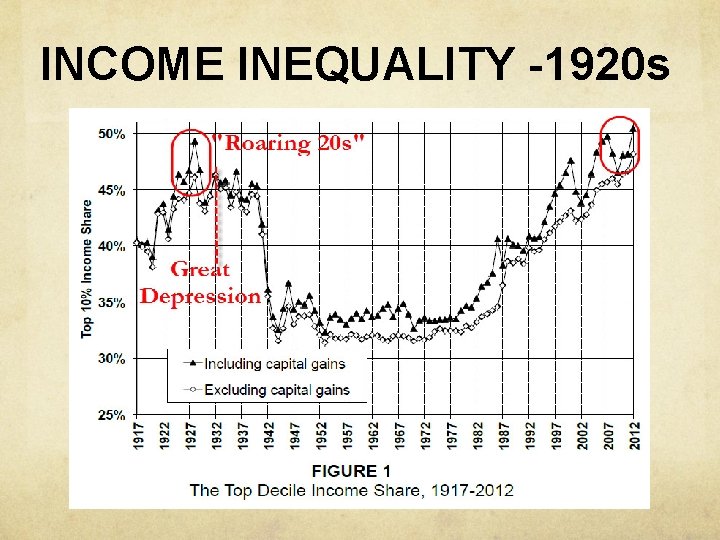
A Great Time to be Rich The explosion in new mass-production industries fueled by the spread of technologies like electricity and the assembly line provided ample opportunities for profitable investment, and the stock market increased more than six times from 1921 -29 Since less than one percent of Canadians owned any stock, those fabulous returns in the stock market directly benefited only the wealthy. As a result, the rich got richer, much richer
INCOME INEQUALITY 1920 s & 2010 s Congratulations, rich people!: Income inequality at its highest since the 1920 s!
INCOME INEQUALITY -1920 s
INCOME INEQUALITY -2011
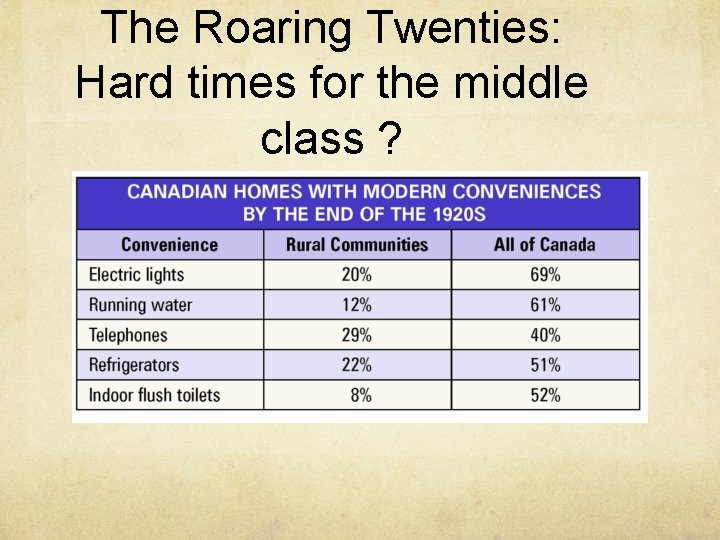
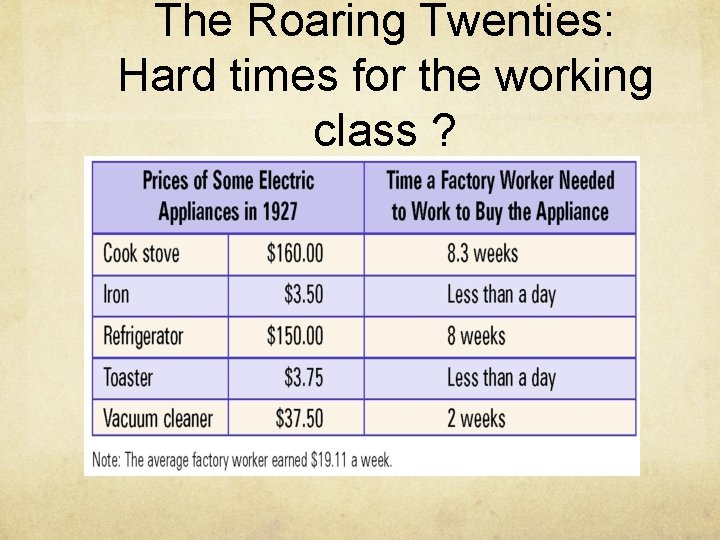
A Good Time to be Middle Class Life for the urban working and middle class improved as well, just not nearly as much. Wages for urban workers increased by 20% during the 1920 s. By 1929 the average factory worker made $20/week. New products like automobiles, washing machines and radios became much more affordable as products were mass-produced as much lower costs. By 1929, the middle class could reasonably expect to be able to own a car, a washing machine, a refrigerator, a radio, and a host of other modern conveniences that drastically reduced housework and improved their quality of life.
The Roaring Twenties: Hard times for the middle class ?
The Roaring Twenties: Hard times for the working class ?
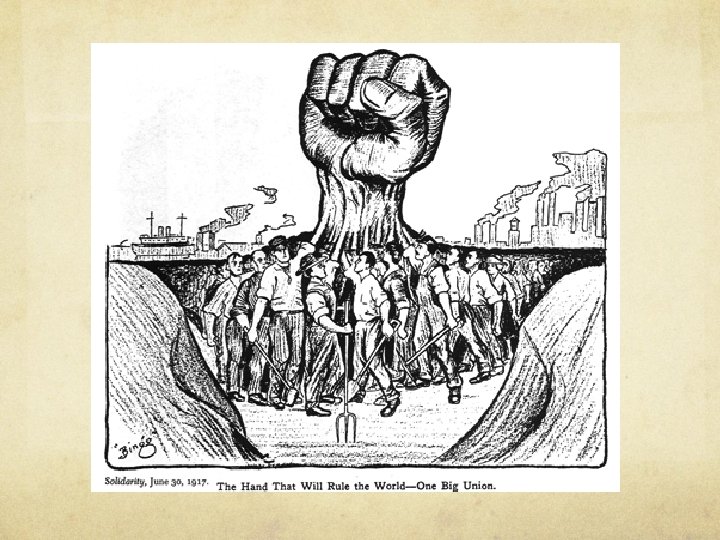
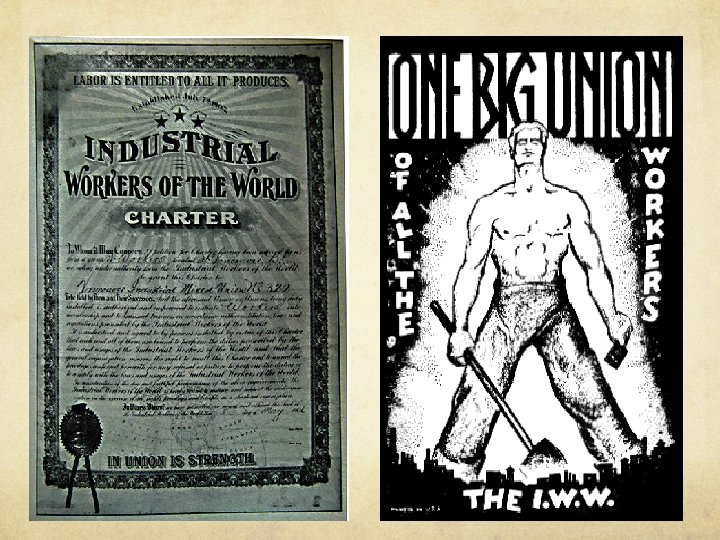
The Roaring Twenties: Hard times for the working class ? Workers wages remained low after wartime pay cuts, despite strong industry profits Tensions between employers and workers increased as workers felt they deserved better wages and working conditions The Western Labour Conference formed One Big Union to represent all Canadian workers in one organization. The idea was they could negotiate their wages and working conditions more effectively as a group. This is known as collective bargaining
COMMUNIST CONSPIRACY ? Business owners felt threatened by organized labour Some were worried that the communist ideas of the Russian revolution might be spreading to Canada “Workers of the world unite!”
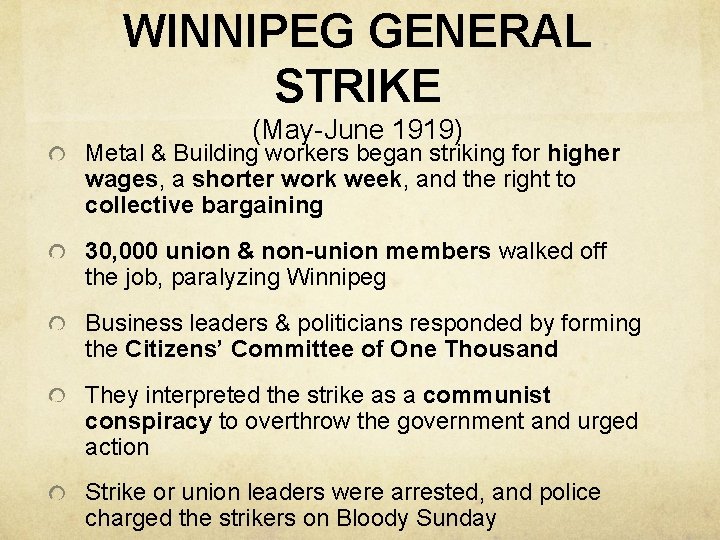
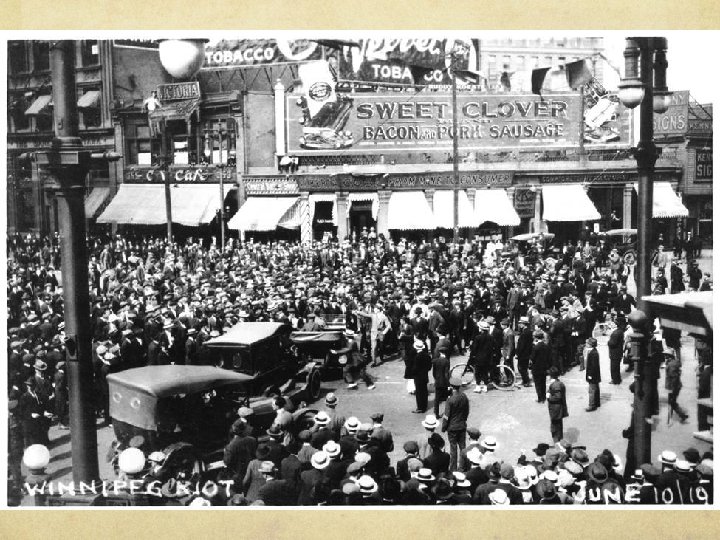
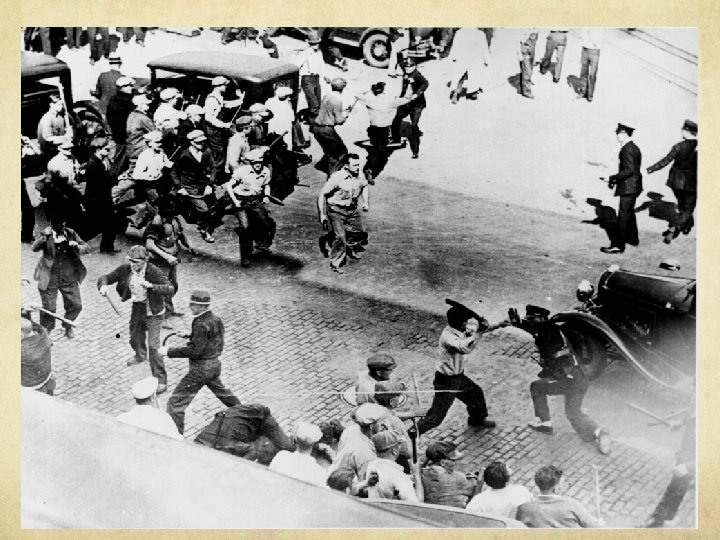
WINNIPEG GENERAL STRIKE (May-June 1919) Metal & Building workers began striking for higher wages, a shorter work week, and the right to collective bargaining 30, 000 union & non-union members walked off the job, paralyzing Winnipeg Business leaders & politicians responded by forming the Citizens’ Committee of One Thousand They interpreted the strike as a communist conspiracy to overthrow the government and urged action Strike or union leaders were arrested, and police charged the strikers on Bloody Sunday
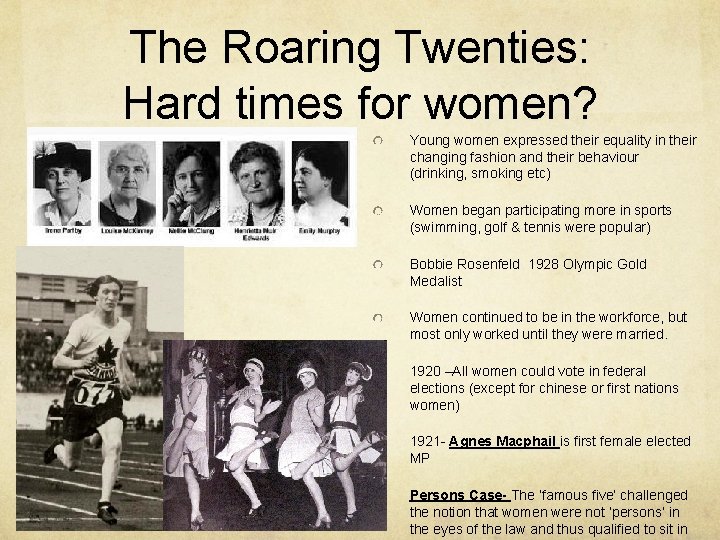
The Roaring Twenties: Hard times for women? Young women expressed their equality in their changing fashion and their behaviour (drinking, smoking etc) Women began participating more in sports (swimming, golf & tennis were popular) Bobbie Rosenfeld 1928 Olympic Gold Medalist Women continued to be in the workforce, but most only worked until they were married. 1920 –All women could vote in federal elections (except for chinese or first nations women) 1921 - Agnes Macphail is first female elected MP Persons Case- The ‘famous five’ challenged the notion that women were not ‘persons’ in the eyes of the law and thus qualified to sit in
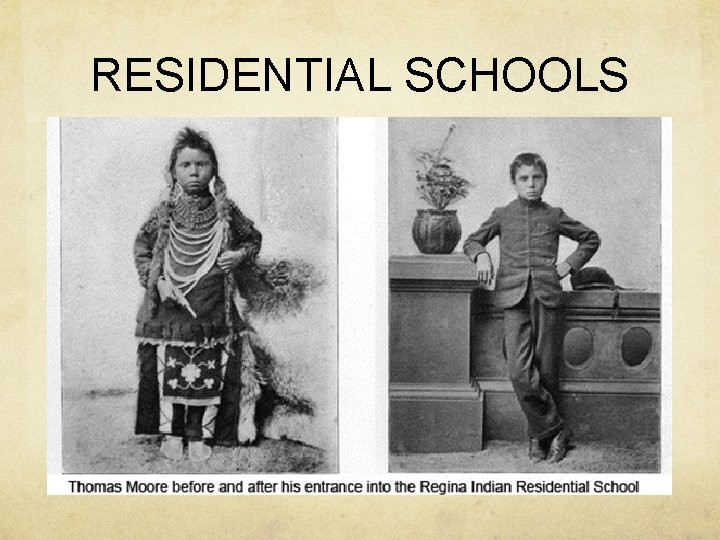
The Roaring Twenties: Hard times for First Nations? o The Canadian Government controlled the FN Peoples in Canada by the Indian Act. o Most FN lived on Indian Reservations that were often isolated from other communities o FN Peoples wer not allowed to vote and most needed gov’t permission to leave their reserve o In 1920, The Canadian government forced all Aboriginal children (7 -15) to live, work and study at residential schools far away from their homes. o The government wanted to assimilate Aboriginals - make them forget their own culture and be more like British Canadians o Discipline at school was often harsh. Children were forced to speak English - and punished for speaking their own language. They were told that their history and culture were not valuable. o These schools were very unhealthy and many children died of disease. Many other children were badly abused and mistreated by the teachers. o The last residential school in Canada was closed in 1996. In 2008, the government of Canada apologized to Aboriginal people for the treatment they received in
RESIDENTIAL SCHOOLS
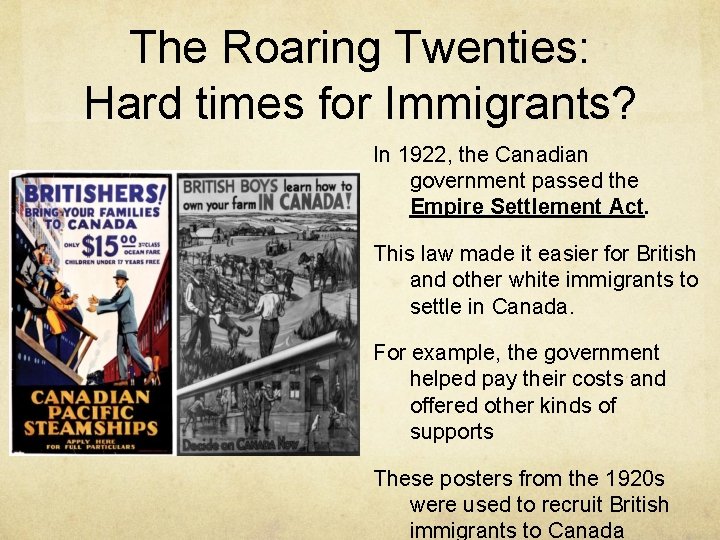
The Roaring Twenties: Hard times for Immigrants? In 1922, the Canadian government passed the Empire Settlement Act. This law made it easier for British and other white immigrants to settle in Canada. For example, the government helped pay their costs and offered other kinds of supports These posters from the 1920 s were used to recruit British immigrants to Canada
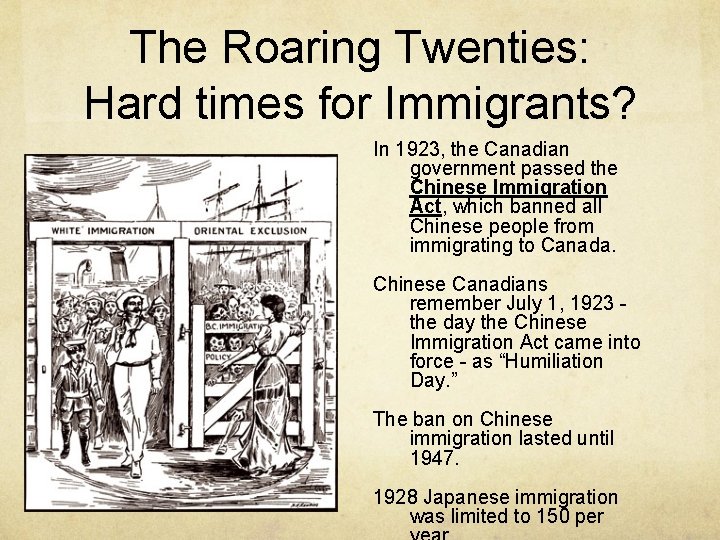
The Roaring Twenties: Hard times for Immigrants? In 1923, the Canadian government passed the Chinese Immigration Act, which banned all Chinese people from immigrating to Canada. Chinese Canadians remember July 1, 1923 the day the Chinese Immigration Act came into force - as “Humiliation Day. ” The ban on Chinese immigration lasted until 1947. 1928 Japanese immigration was limited to 150 per
HISTORICAL JUDGEMENT YOUR TASK: Gather evidence to support of refute the following statement: To what extend did the 1920 s “roar” for everyone in Canada ?