
Canada and the Second World War Canadian History

- Slides: 34
Canada and the Second World War Canadian History 1201 Unit 5
Topics ➔ Causes of WWII ➔ Canada’s Contribution ➔ Home Front ➔ War Measures Act ➔ Canadian Economy ➔ Wartime Production ➔ Role of Women ➔ Treatment of Japanese
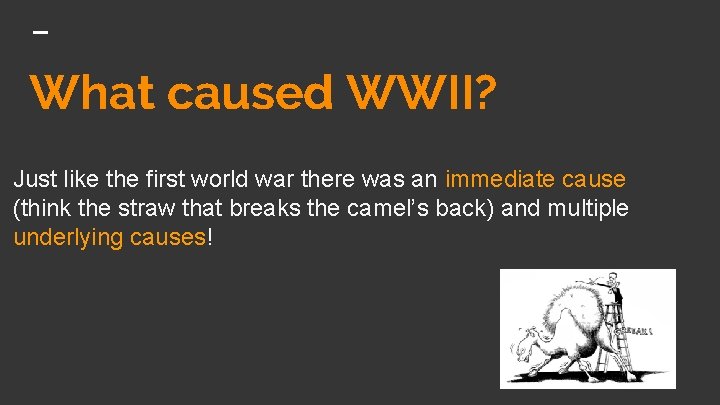
What caused WWII? Just like the first world war there was an immediate cause (think the straw that breaks the camel’s back) and multiple underlying causes!
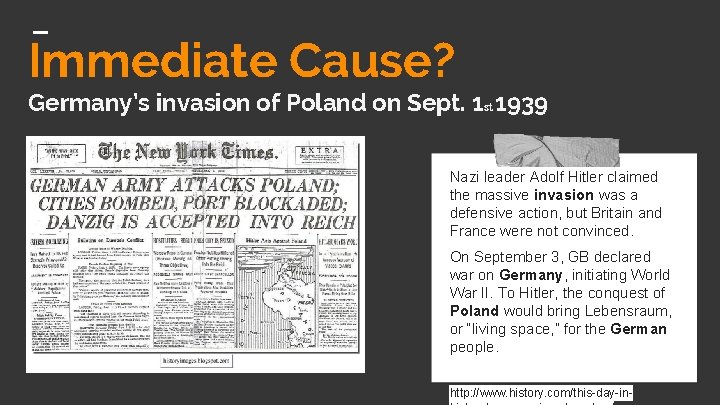
Immediate Cause? Germany’s invasion of Poland on Sept. 1 st 1939 Nazi leader Adolf Hitler claimed the massive invasion was a defensive action, but Britain and France were not convinced. On September 3, GB declared war on Germany, initiating World War II. To Hitler, the conquest of Poland would bring Lebensraum, or “living space, ” for the German people. http: //www. history. com/this-day-in-
Underlying Causes? 1) Terms of the Treaty of Versailles 1) Tensions Regarding Country Boundaries These are the five UNDERLYING causes that we will examine in class. However keep in mind that there always multiple factors that play on any given situation *YARN ACTIVITY* 1) Rise of Hitler in Germany and Mussolini in Italy 1) Weak League of Nations 1) Isolationism
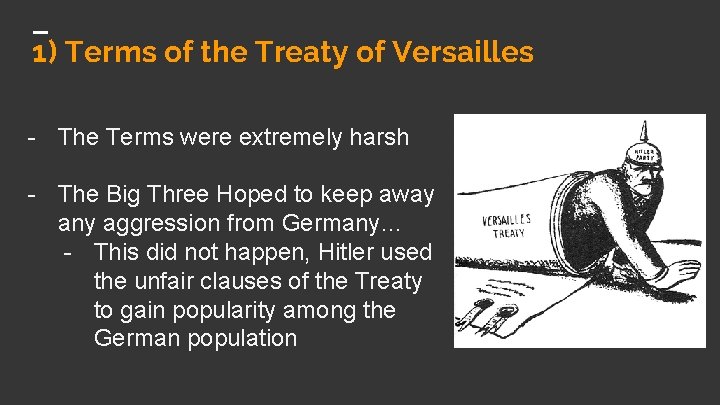
1) Terms of the Treaty of Versailles - The Terms were extremely harsh - The Big Three Hoped to keep away any aggression from Germany… - This did not happen, Hitler used the unfair clauses of the Treaty to gain popularity among the German population
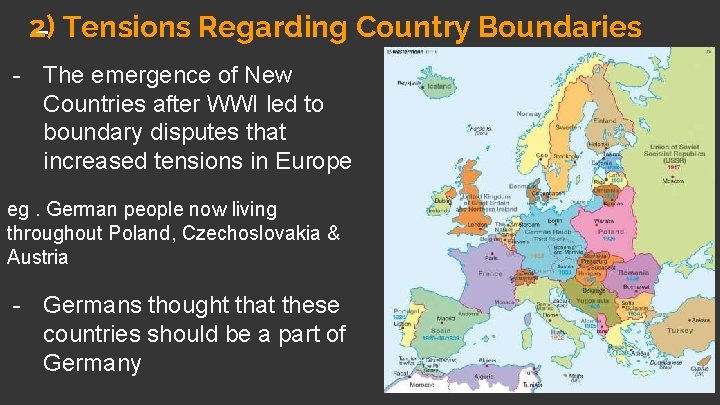
2) Tensions Regarding Country Boundaries - The emergence of New Countries after WWI led to boundary disputes that increased tensions in Europe eg. German people now living throughout Poland, Czechoslovakia & Austria - Germans thought that these countries should be a part of Germany
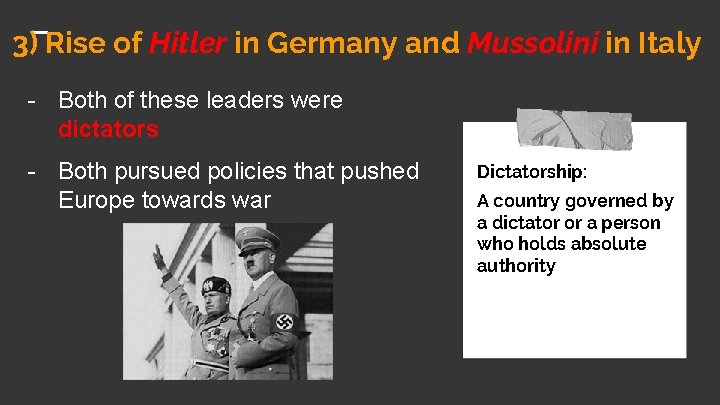
3) Rise of Hitler in Germany and Mussolini in Italy - Both of these leaders were dictators - Both pursued policies that pushed Europe towards war Dictatorship: A country governed by a dictator or a person who holds absolute authority
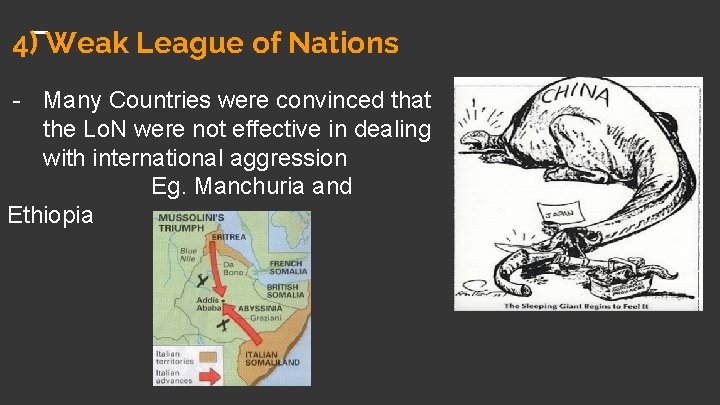
4) Weak League of Nations - Many Countries were convinced that the Lo. N were not effective in dealing with international aggression Eg. Manchuria and Ethiopia
Reminder: League of Nations - Founded in 1919 by WWI Victors - The purpose was to: a) Bring permanent World Peace b) Improve World health, living & working conditions c) Prevent humanitarian Crisis - Peace was to be maintained through collective security. - That is If a country was threatened with war, others would come to its aid - Trade sanctions could be used to punish countries who did not comply with the Leagues wishes.
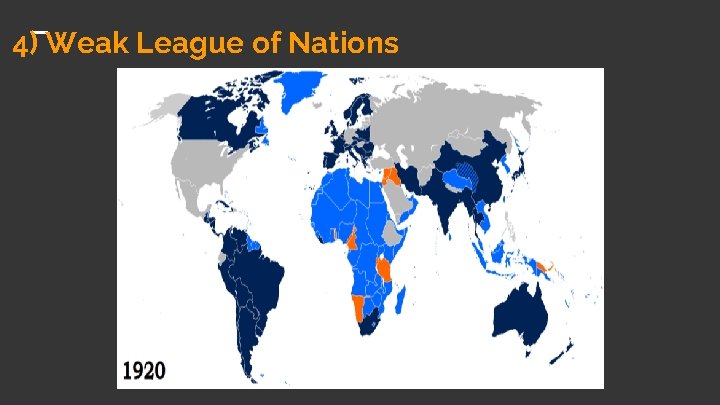
4) Weak League of Nations
4) Weak League of Nations ctd. Problems With the League of Nations: 1) League had no power of its own. It depended on the strength of its members 2) President Wilson was not able to persuade the U. S. to join the League. 3) Powerful nations such as Britain and France gave little support to the League. Canada’s support was also weak.
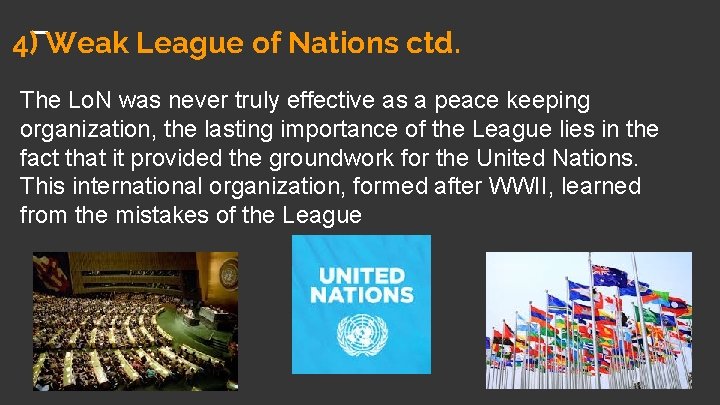
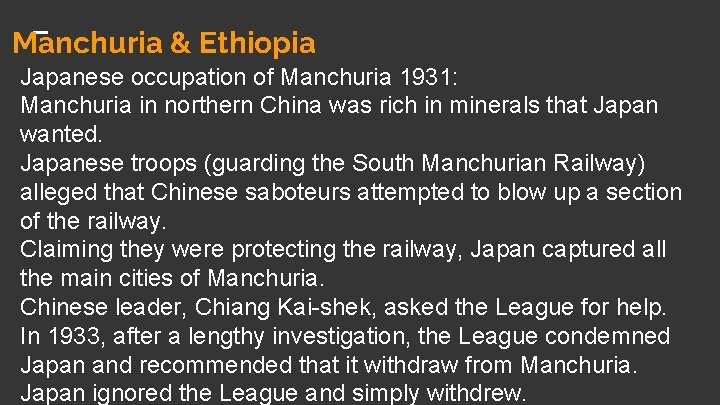
4) Weak League of Nations ctd. The Lo. N was never truly effective as a peace keeping organization, the lasting importance of the League lies in the fact that it provided the groundwork for the United Nations. This international organization, formed after WWII, learned from the mistakes of the League
Manchuria & Ethiopia Part of Mussolini’s dream of rebuilding the Roman Empire involved capturing land in Africa. He settled on Ethiopia. In 1935 Italian forces with modern tanks invaded Ethiopia which was armed with old weapons and spears. Much of the world was outraged and the Ethiopian Emperor, Haile Selassie, begged the League for help. The League threatened economic sanctions against Italy. When Mussolini threatened war if economic sanctions on oil were imposed, the League backed down. Later Mussolini admitted, “ If the League had extended economic sanctions to oil, I would have had to withdraw from Ethiopia within a week. ”
Manchuria & Ethiopia Japanese occupation of Manchuria 1931: Manchuria in northern China was rich in minerals that Japan wanted. Japanese troops (guarding the South Manchurian Railway) alleged that Chinese saboteurs attempted to blow up a section of the railway. Claiming they were protecting the railway, Japan captured all the main cities of Manchuria. Chinese leader, Chiang Kai-shek, asked the League for help. In 1933, after a lengthy investigation, the League condemned Japan and recommended that it withdraw from Manchuria. Japan ignored the League and simply withdrew.
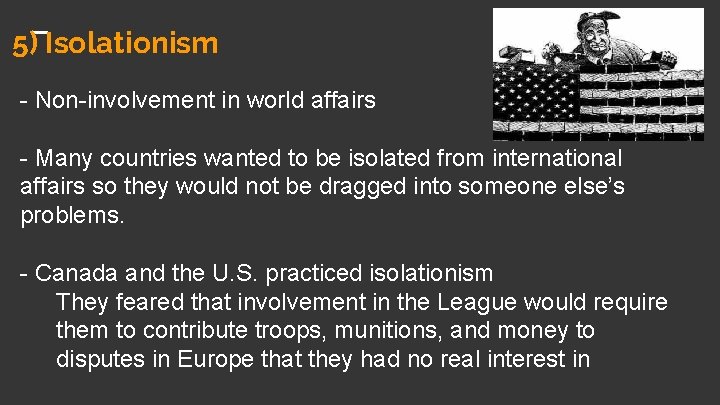
5) Isolationism - Non-involvement in world affairs - Many countries wanted to be isolated from international affairs so they would not be dragged into someone else’s problems. - Canada and the U. S. practiced isolationism They feared that involvement in the League would require them to contribute troops, munitions, and money to disputes in Europe that they had no real interest in
Questions to Consider: 1) In your opinion, which was the most important cause that lead to the outbreak of the Second World War? 1) How would a German citizen perceive the events that led to World War Two? Was Hitler an effective leader? 1) Is it the responsibility of countries to try to control other countries? Was Germany completely at fault for the First World War? You can work in groups of two or alone! Discuss the answers to each question, and each member should write the answer to at least one question! Hand these in as journal questions!
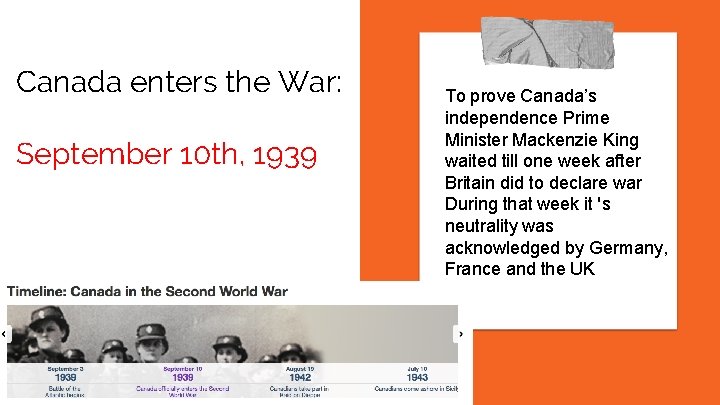
Canada enters the War: September 10 th, 1939 To prove Canada’s independence Prime Minister Mackenzie King waited till one week after Britain did to declare war During that week it 's neutrality was acknowledged by Germany, France and the UK
Canada’s Contribution The Battle of the Atlantic: - The war in the Atlantic was fought over control of the shipping lanes. Germany tried to cut off all supplies to Britain from Canada and the United States. Germany used submarines (U-Boats) to sink Allied shipping. They hunted in teams called “wolfpacks”. By the spring of 1941, the Germans were sinking ships faster than they could be built. The Allies responded by grouping their ships into convoys and escorting them with warships. .
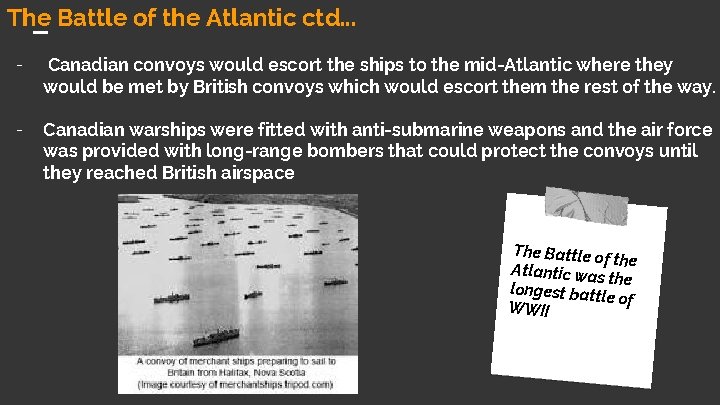
The Battle of the Atlantic ctd. . . - Canadian convoys would escort the ships to the mid-Atlantic where they would be met by British convoys which would escort them the rest of the way. - Canadian warships were fitted with anti-submarine weapons and the air force was provided with long-range bombers that could protect the convoys until they reached British airspace The Battle o f the Atlantic was the longest batt le of WWII
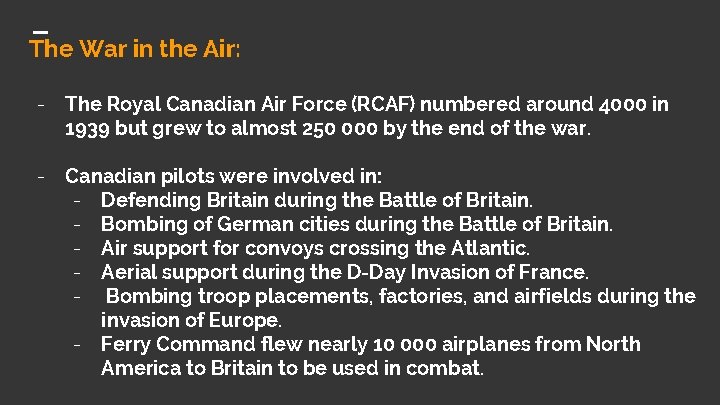
The War in the Air: - The Royal Canadian Air Force (RCAF) numbered around 4000 in 1939 but grew to almost 250 000 by the end of the war. - Canadian pilots were involved in: - Defending Britain during the Battle of Britain. - Bombing of German cities during the Battle of Britain. - Air support for convoys crossing the Atlantic. - Aerial support during the D-Day Invasion of France. - Bombing troop placements, factories, and airfields during the invasion of Europe. - Ferry Command flew nearly 10 000 airplanes from North America to Britain to be used in combat.
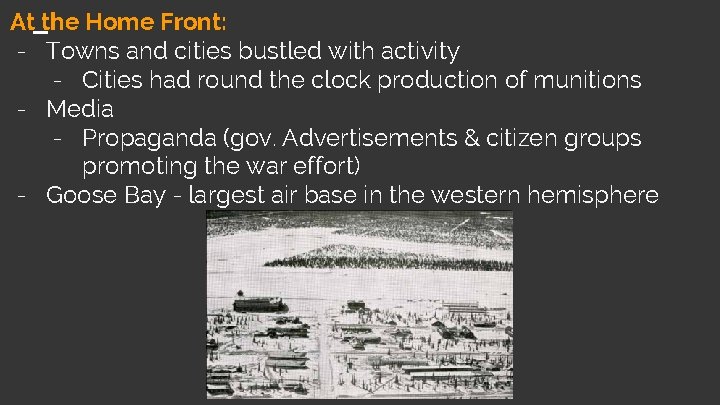
At the Home Front: - Towns and cities bustled with activity - Cities had round the clock production of munitions - Media - Propaganda (gov. Advertisements & citizen groups promoting the war effort) - Goose Bay - largest air base in the western hemisphere
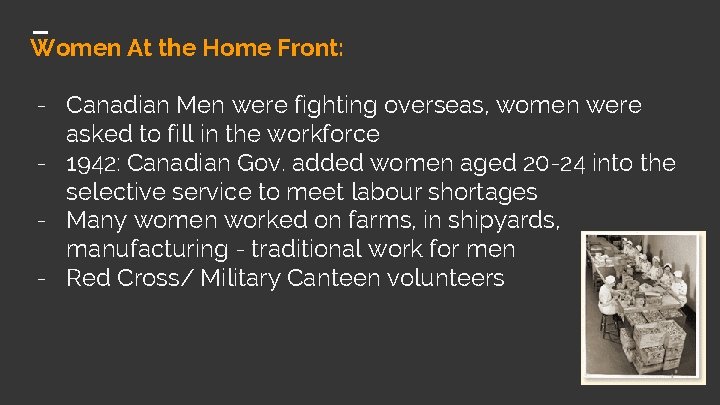
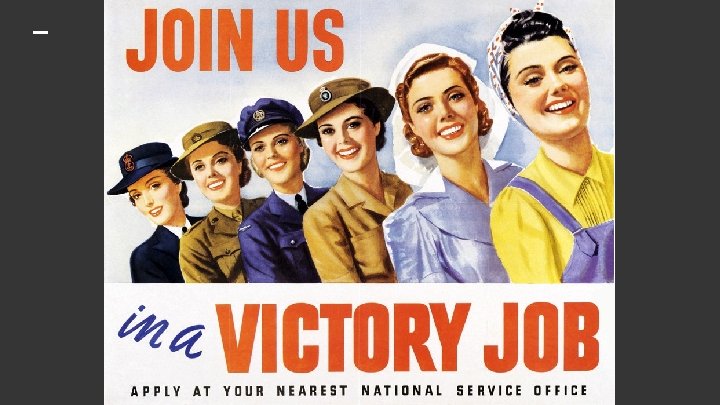
Women At the Home Front: - Canadian Men were fighting overseas, women were asked to fill in the workforce - 1942: Canadian Gov. added women aged 20 -24 into the selective service to meet labour shortages - Many women worked on farms, in shipyards, manufacturing - traditional work for men - Red Cross/ Military Canteen volunteers
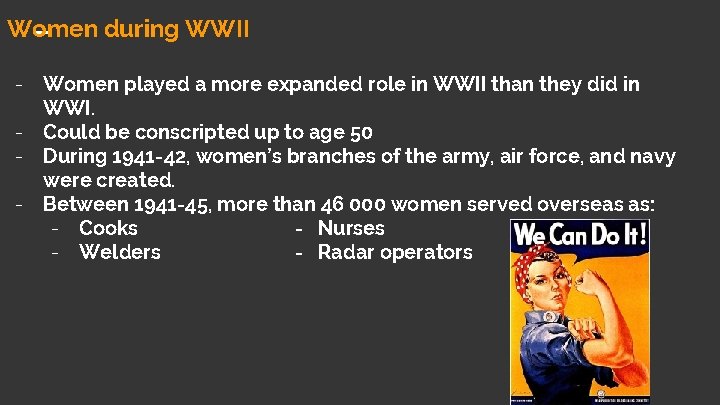
Women during WWII - Women played a more expanded role in WWII than they did in WWI. - Could be conscripted up to age 50 - During 1941 -42, women’s branches of the army, air force, and navy were created. - Between 1941 -45, more than 46 000 women served overseas as: - Cooks - Nurses - Mechanics - Welders - Radar operators
Women during WWII - Assigned to coastal defence at home - Flew planes across the Atlantic for Ferry Command - Some provinces provided day care so women could be freed up to work. - Women worked side by side with men on farms to produce food for the war effort. - Others migrated to cities to work in factories producing goods for the war effort. - Women also operated service clubs and canteens for military personnel. - They wrapped parcels for POWs and knit socks and sweaters for troops overseas. - They also raised money for Victory Bonds and continued to run their homes and farms.
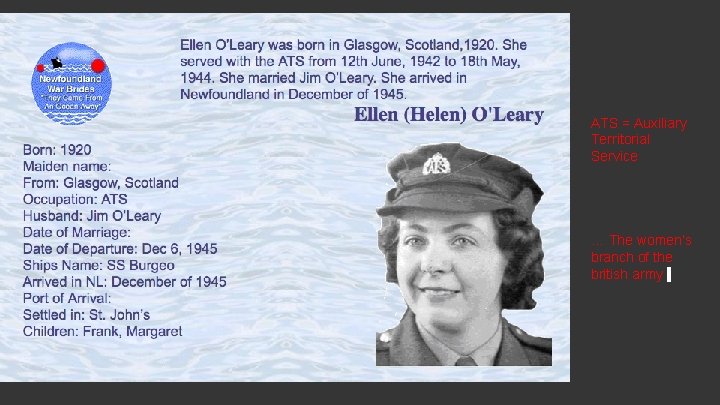
ATS = Auxiliary Territorial Service … The women’s branch of the british army
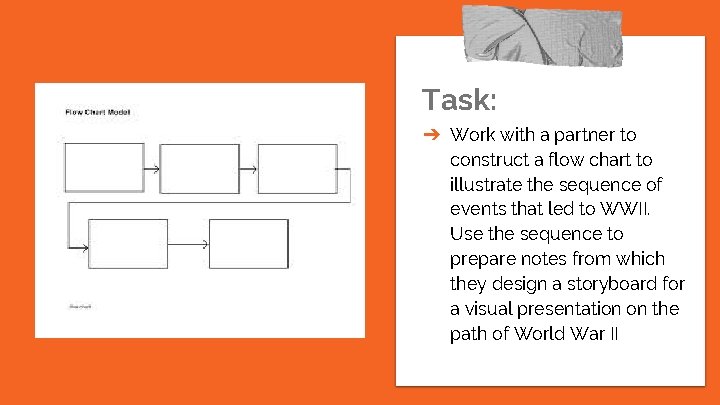
Task: ➔ Work with a partner to construct a flow chart to illustrate the sequence of events that led to WWII. Use the sequence to prepare notes from which they design a storyboard for a visual presentation on the path of World War II
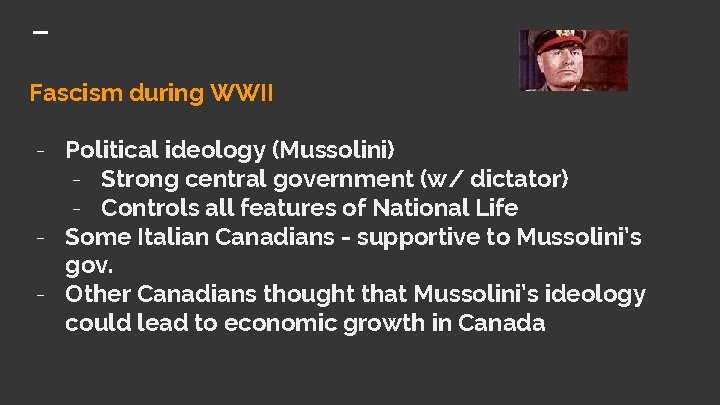
Fascism during WWII - Political ideology (Mussolini) - Strong central government (w/ dictator) - Controls all features of National Life - Some Italian Canadians - supportive to Mussolini’s gov. - Other Canadians thought that Mussolini’s ideology could lead to economic growth in Canada
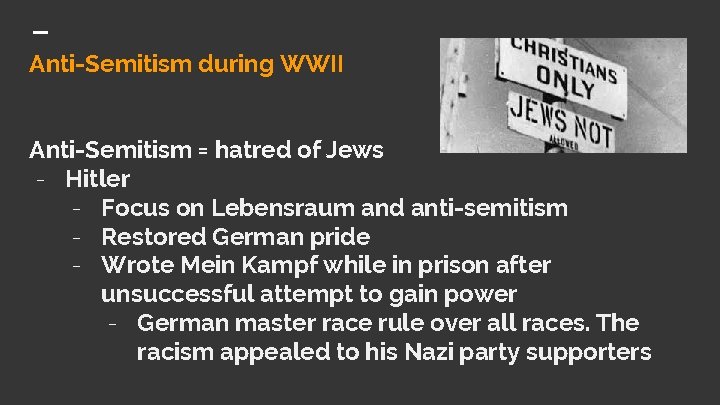
Anti-Semitism during WWII Anti-Semitism = hatred of Jews - Hitler - Focus on Lebensraum and anti-semitism - Restored German pride - Wrote Mein Kampf while in prison after unsuccessful attempt to gain power - German master race rule over all races. The racism appealed to his Nazi party supporters
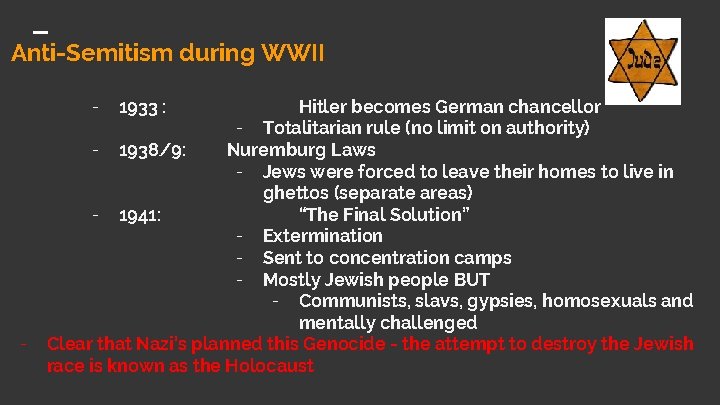
Anti-Semitism during WWII - - 1933 : Hitler becomes German chancellor - Totalitarian rule (no limit on authority) - 1938/9: Nuremburg Laws - Jews were forced to leave their homes to live in ghettos (separate areas) - 1941: “The Final Solution” - Extermination - Sent to concentration camps - Mostly Jewish people BUT - Communists, slavs, gypsies, homosexuals and mentally challenged Clear that Nazi’s planned this Genocide - the attempt to destroy the Jewish race is known as the Holocaust
Anti-Semitism during WWII In Canada: - The Catholic Church in Quebec saw the Nazi’s as a safegaurd against the “Godless” communists - Jewish people in Canada were denied professional jobs - Canadian Jews subject to violent attacks - especially in bigger cities - Canada was reluctant to accept Jewish refugees in the 1930 s
April 8 th, 2016 : 1. Imagine you were in Francine Christophe's position how would you feel after her experience? Explain. 1. Read through your notes and p. 198 -199. Once completed answer question 7 on page 201