
Canada 1 2 Vast Lands Canada second largest
- Slides: 32
Canada 1
2
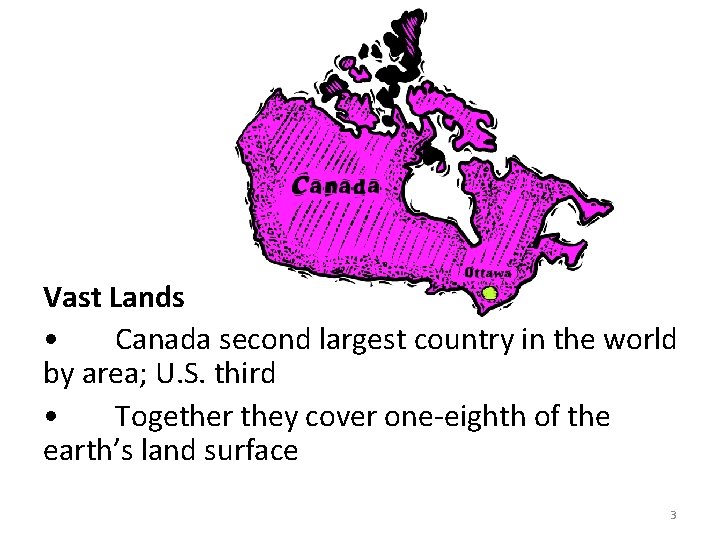
Vast Lands • Canada second largest country in the world by area; U. S. third • Together they cover one-eighth of the earth’s land surface 3
• Three major groups in Canada —the native peoples, the French, and the English—have melded into a diverse and economically strong nation. • French and British settlement greatly influenced Canada’s political development. • Canada’s size and climate affected economic growth and population distribution. 4
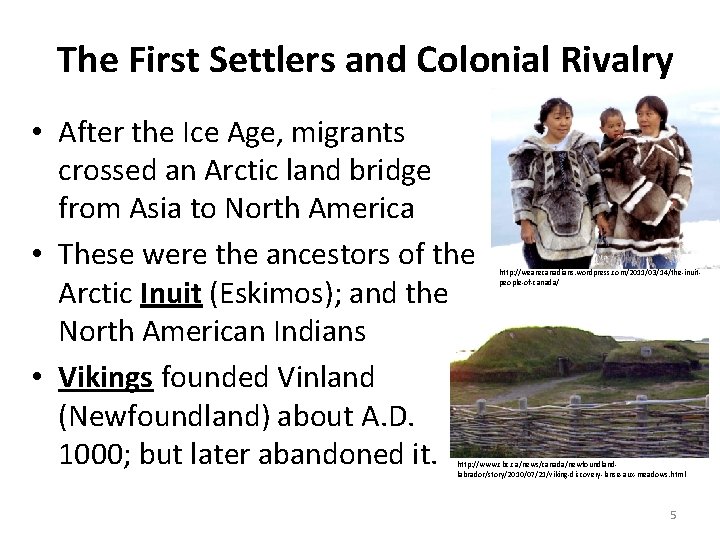
The First Settlers and Colonial Rivalry • After the Ice Age, migrants crossed an Arctic land bridge from Asia to North America • These were the ancestors of the Arctic Inuit (Eskimos); and the North American Indians • Vikings founded Vinland (Newfoundland) about A. D. 1000; but later abandoned it. http: //wearecanadians. wordpress. com/2011/03/14/the-inuitpeople-of-canada/ http: //www. cbc. ca/news/canada/newfoundlabrador/story/2010/07/21/viking-discovery-lanse-aux-meadows. html 5
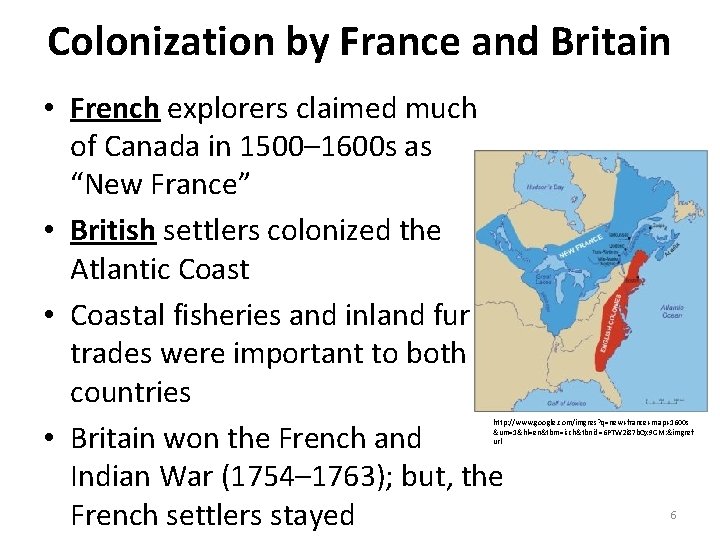
Colonization by France and Britain • French explorers claimed much of Canada in 1500– 1600 s as “New France” • British settlers colonized the Atlantic Coast • Coastal fisheries and inland fur trades were important to both countries • Britain won the French and Indian War (1754– 1763); but, the French settlers stayed http: //www. google. com/imgres? q=new+france+map+1600 s &um=1&hl=en&tbm=isch&tbnid=6 PTW 2 i 87 b. Qx 9 GM: &imgref url 6
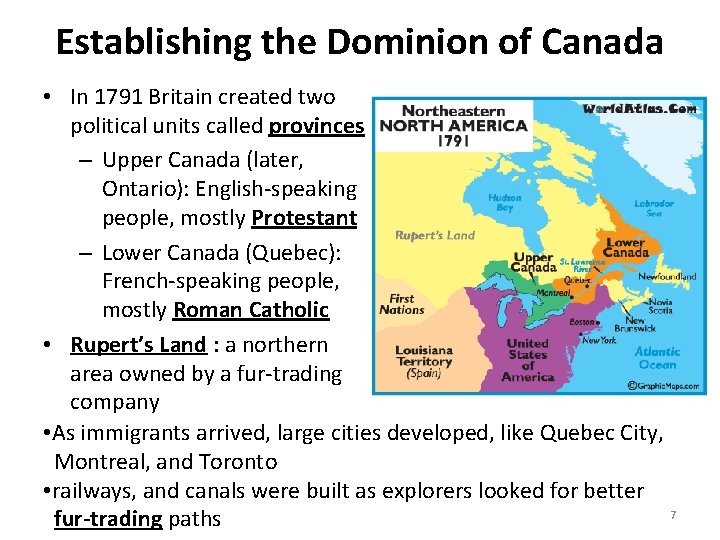
Establishing the Dominion of Canada • In 1791 Britain created two political units called provinces – Upper Canada (later, Ontario): English-speaking people, mostly Protestant – Lower Canada (Quebec): French-speaking people, mostly Roman Catholic • Rupert’s Land : a northern area owned by a fur-trading company • As immigrants arrived, large cities developed, like Quebec City, Montreal, and Toronto • railways, and canals were built as explorers looked for better 7 fur-trading paths
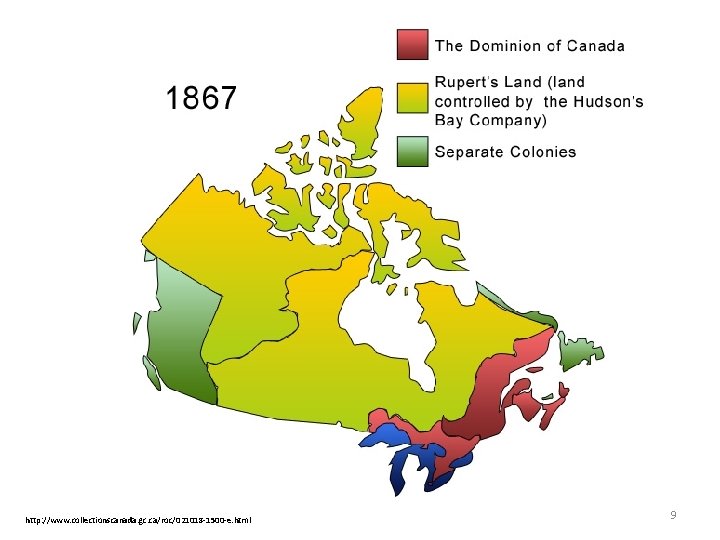
• Political and ethnic disputes led to Britain’s 1867 North America Act – created Dominion of Canada as a loose confederation (political union) – Ontario, Quebec, Nova Scotia, and New Brunswick made up the new confederation – It was a self-governed part of British Empire • Later Expansion included: • Rupert’s Land, Manitoba, British Columbia, Prince Edward Island • Later: Yukon Territory, Alberta, Saskatchewan • Newfoundland in 1949 8
http: //www. collectionscanada. gc. ca/roc/021018 -1500 -e. html 9
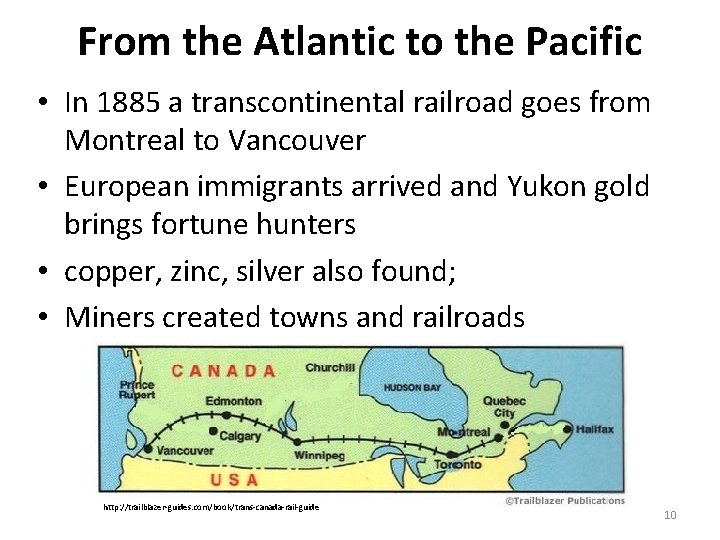
From the Atlantic to the Pacific • In 1885 a transcontinental railroad goes from Montreal to Vancouver • European immigrants arrived and Yukon gold brings fortune hunters • copper, zinc, silver also found; • Miners created towns and railroads http: //trailblazer-guides. com/book/trans-canada-rail-guide 10
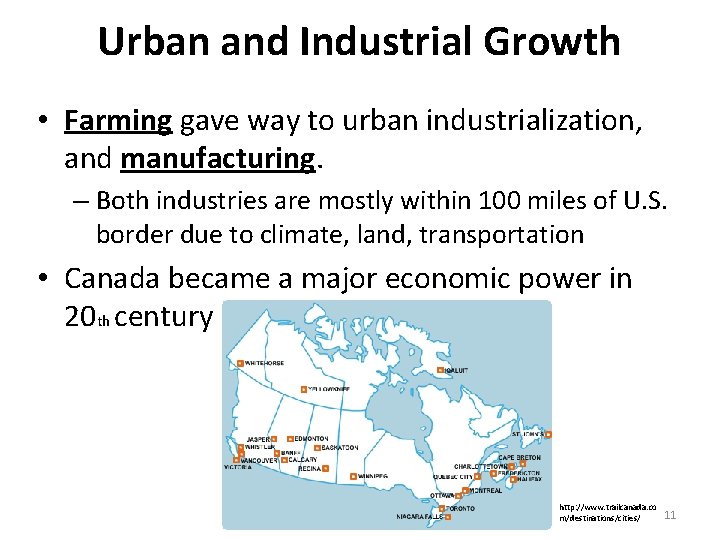
Urban and Industrial Growth • Farming gave way to urban industrialization, and manufacturing. – Both industries are mostly within 100 miles of U. S. border due to climate, land, transportation • Canada became a major economic power in 20 th century http: //www. trailcanada. co m/destinations/cities/ 11
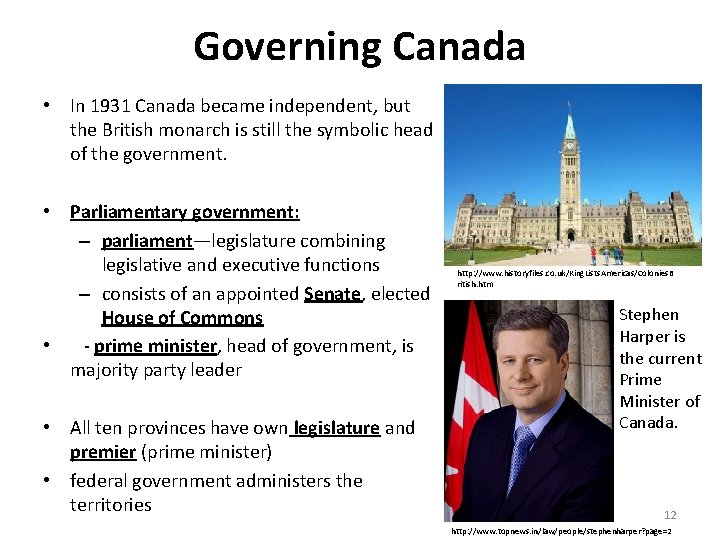
Governing Canada • In 1931 Canada became independent, but the British monarch is still the symbolic head of the government. • Parliamentary government: – parliament—legislature combining legislative and executive functions – consists of an appointed Senate, elected House of Commons • - prime minister, head of government, is majority party leader • All ten provinces have own legislature and premier (prime minister) • federal government administers the territories http: //www. historyfiles. co. uk/King. Lists. Americas/Colonies. B ritish. htm Stephen Harper is the current Prime Minister of Canada. 12 http: //www. topnews. in/law/people/stephenharper? page=2
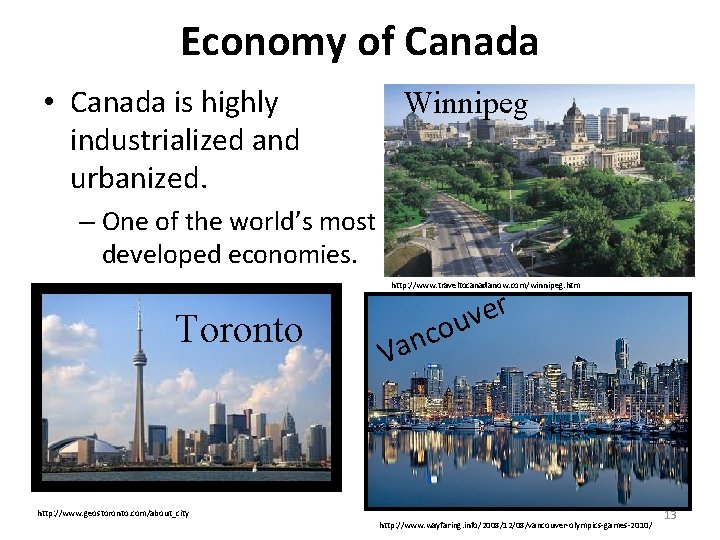
Economy of Canada • Canada is highly industrialized and urbanized. Winnipeg – One of the world’s most developed economies. http: //www. traveltocanadanow. com/winnipeg. htm Toronto r e v ou c n a V http: //www. geostoronto. com/about_city http: //www. wayfaring. info/2008/12/08/vancouver-olympics-games-2010/ 13
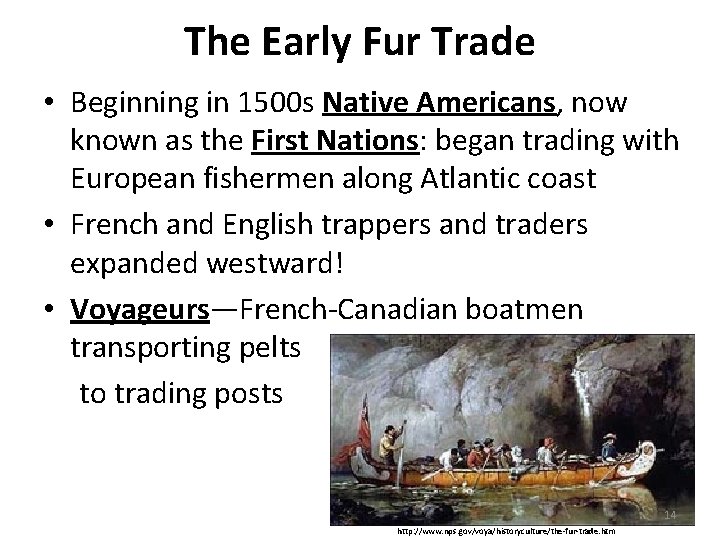
The Early Fur Trade • Beginning in 1500 s Native Americans, now known as the First Nations: began trading with European fishermen along Atlantic coast • French and English trappers and traders expanded westward! • Voyageurs—French-Canadian boatmen transporting pelts to trading posts 14 http: //www. nps. gov/voya/historyculture/the-fur-trade. htm
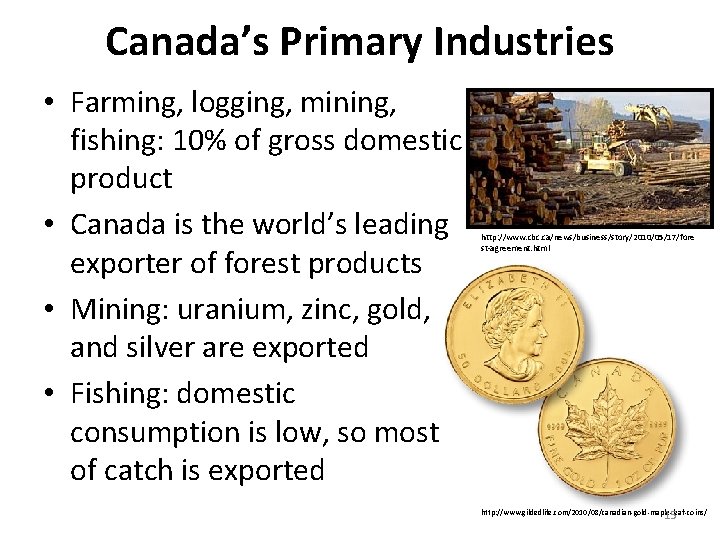
Canada’s Primary Industries • Farming, logging, mining, fishing: 10% of gross domestic product • Canada is the world’s leading exporter of forest products • Mining: uranium, zinc, gold, and silver are exported • Fishing: domestic consumption is low, so most of catch is exported http: //www. cbc. ca/news/business/story/2010/05/17/fore st-agreement. html http: //www. gildedlife. com/2010/08/canadian-gold-maple-leaf-coins/ 15
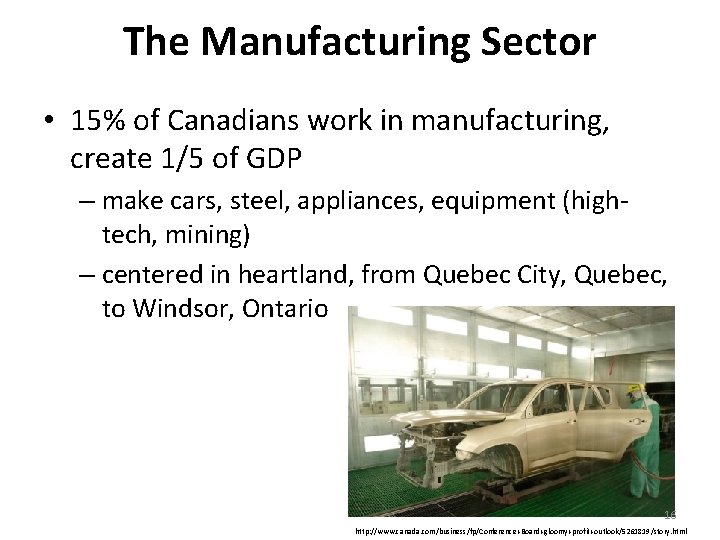
The Manufacturing Sector • 15% of Canadians work in manufacturing, create 1/5 of GDP – make cars, steel, appliances, equipment (hightech, mining) – centered in heartland, from Quebec City, Quebec, to Windsor, Ontario 16 http: //www. canada. com/business/fp/Conference+Board+gloomy+profit+outlook/5261819/story. html
Service Industries Drive the Economy • Most Canadians work in service industries, which create 60% of GDP • finance, utilities, trade, transportation, communication, insurance • The land’s natural beauty makes tourism the fastest growing service • Heavy trade with U. S. : same language, open border (world’s longest border) • 1994 North American Free Trade Agreement (NAFTA) with U. S. , Mexico • 85% of Canadian exports go to U. S. • 75% of Canada’s imports come from U. S. http: //www. canadaupdates. com/content/can adian-tourism-commission-gears-attracttourists http: //www. directoryofschools. com/Canadian. Tourism-College/Travel-Agent-Training. htm 17
A Land of Many Cultures Bon jour ! • Languages and Religions • Mixing of French and native peoples created Métis culture • Bilingual: English is most common, except in French-speaking Quebec • English Protestants and French Catholics dominate, but often clash • Currently, there are increasing numbers of Muslims, Jews, and other groups. ! o l l e H 18
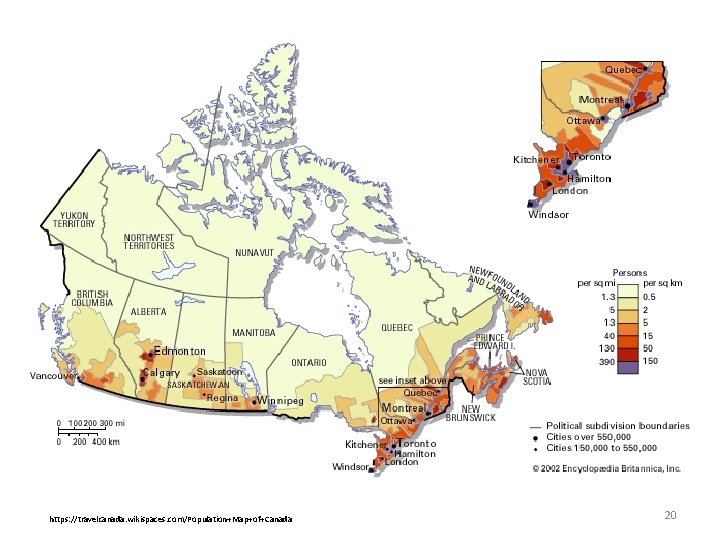
Canada’s Population • Densest in port cities (Montreal, Toronto, Vancouver) and farmlands • Environment keeps 80% of people on 10% of land (near U. S. border) • Urbanization: in 1900 33% of people lived in cities, today it’s 80% • Various ethnic groups cluster in certain areas • 75% of French Canadians live in Quebec • many native peoples live on reserves—public land set aside for them • most Inuits live in the remote Arctic north • many Canadians of Asian ancestry live on West Coast 19
https: //travelcanada. wikispaces. com/Population+Map+of+Canada 20
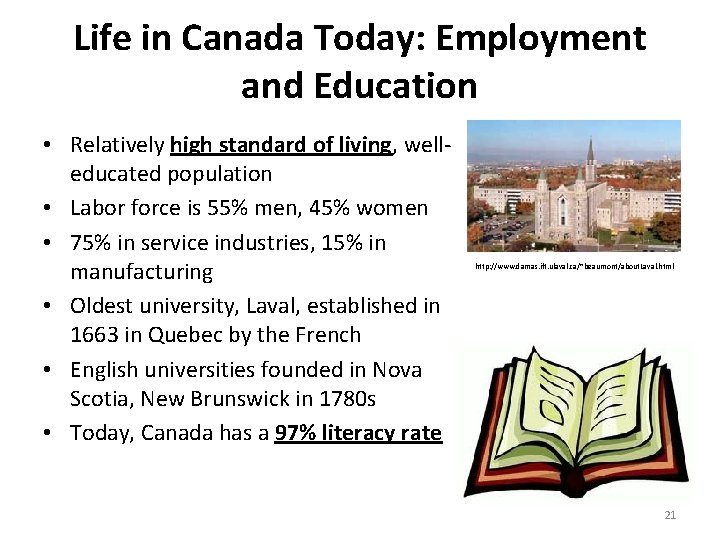
Life in Canada Today: Employment and Education • Relatively high standard of living, welleducated population • Labor force is 55% men, 45% women • 75% in service industries, 15% in manufacturing • Oldest university, Laval, established in 1663 in Quebec by the French • English universities founded in Nova Scotia, New Brunswick in 1780 s • Today, Canada has a 97% literacy rate http: //www. damas. ift. ulaval. ca/~beaumont/about. Laval. html 21
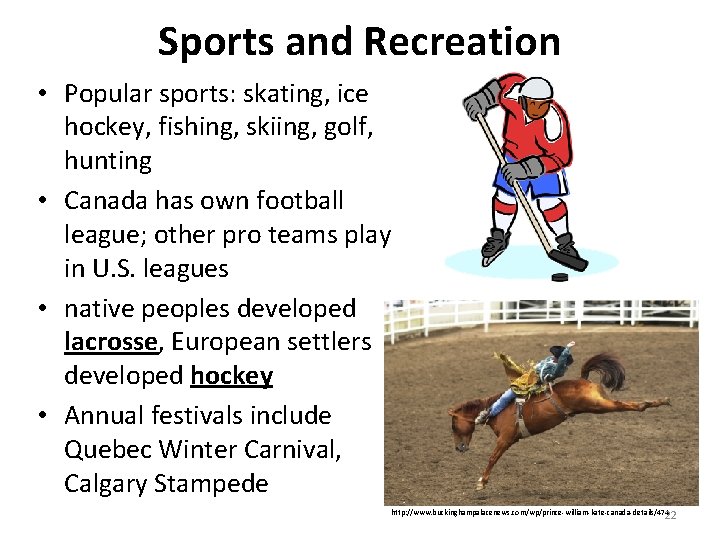
Sports and Recreation • Popular sports: skating, ice hockey, fishing, skiing, golf, hunting • Canada has own football league; other pro teams play in U. S. leagues • native peoples developed lacrosse, European settlers developed hockey • Annual festivals include Quebec Winter Carnival, Calgary Stampede http: //www. buckinghampalacenews. com/wp/prince-william-kate-canada-details/474 22
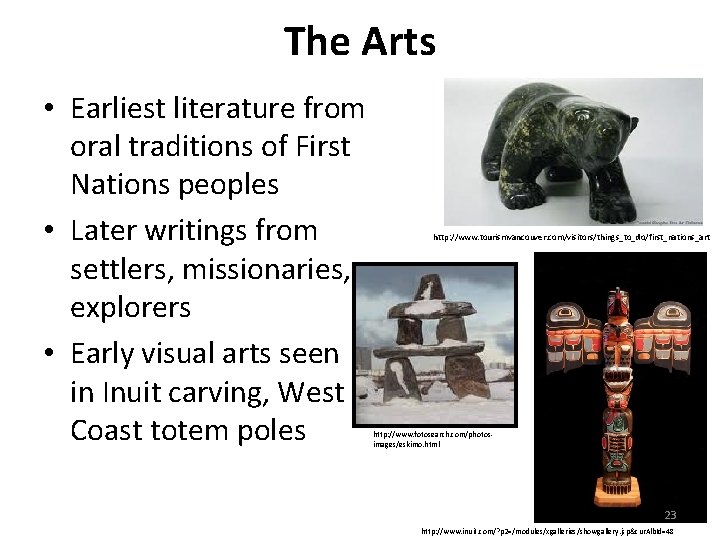
The Arts • Earliest literature from oral traditions of First Nations peoples • Later writings from settlers, missionaries, explorers • Early visual arts seen in Inuit carving, West Coast totem poles http: //www. tourismvancouver. com/visitors/things_to_do/first_nations_art http: //www. fotosearch. com/photosimages/eskimo. html 23 http: //www. inuit. com/? p 2=/modules/xgalleries/showgallery. jsp&cur. Alb. Id=48
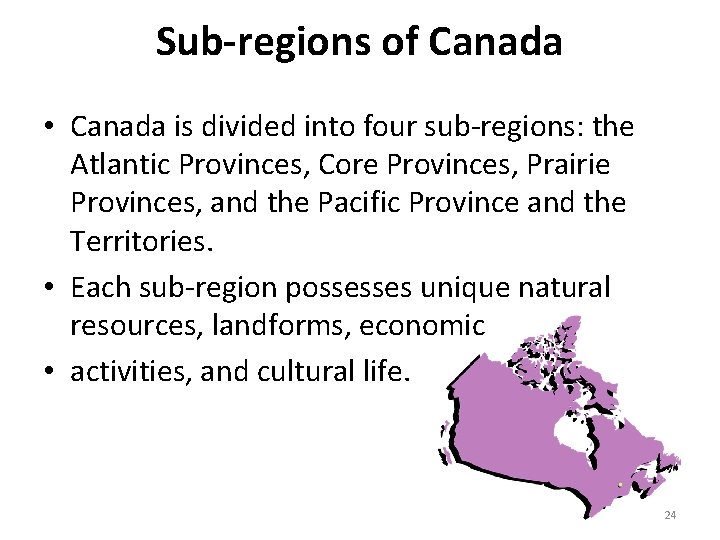
Sub-regions of Canada • Canada is divided into four sub-regions: the Atlantic Provinces, Core Provinces, Prairie Provinces, and the Pacific Province and the Territories. • Each sub-region possesses unique natural resources, landforms, economic • activities, and cultural life. 24
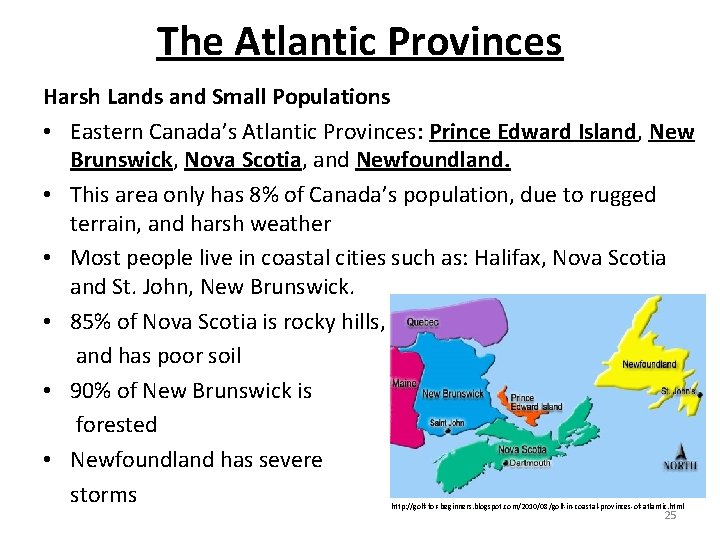
The Atlantic Provinces Harsh Lands and Small Populations • Eastern Canada’s Atlantic Provinces: Prince Edward Island, New Brunswick, Nova Scotia, and Newfoundland. • This area only has 8% of Canada’s population, due to rugged terrain, and harsh weather • Most people live in coastal cities such as: Halifax, Nova Scotia and St. John, New Brunswick. • 85% of Nova Scotia is rocky hills, and has poor soil • 90% of New Brunswick is forested • Newfoundland has severe storms http: //golf-for-beginners. blogspot. com/2010/08/golf-in-coastal-provinces-of-atlantic. html 25
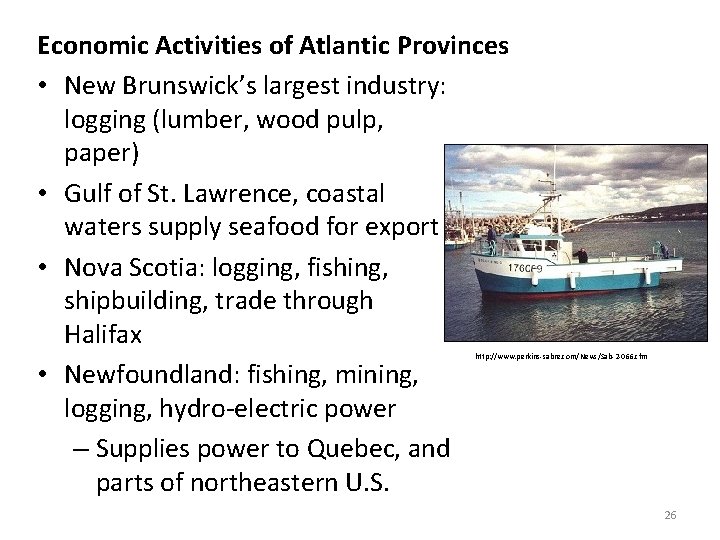
Economic Activities of Atlantic Provinces • New Brunswick’s largest industry: logging (lumber, wood pulp, paper) • Gulf of St. Lawrence, coastal waters supply seafood for export • Nova Scotia: logging, fishing, shipbuilding, trade through Halifax • Newfoundland: fishing, mining, logging, hydro-electric power – Supplies power to Quebec, and parts of northeastern U. S. http: //www. perkins-sabre. com/News/Sab-2 -066. cfm 26
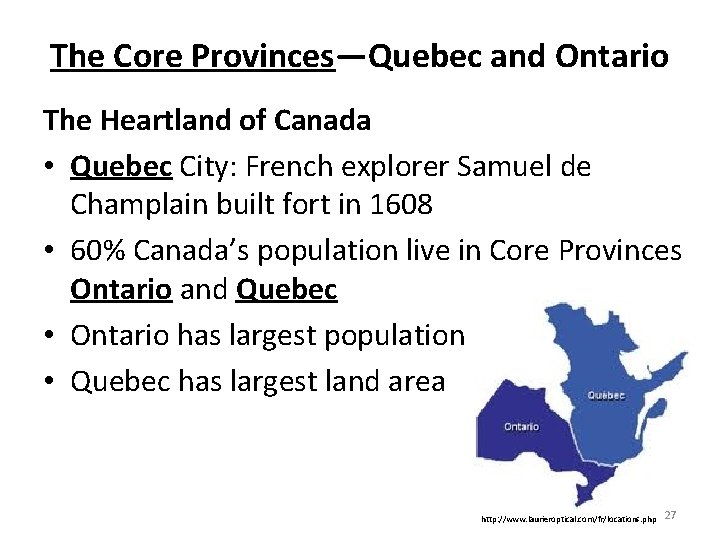
The Core Provinces—Quebec and Ontario The Heartland of Canada • Quebec City: French explorer Samuel de Champlain built fort in 1608 • 60% Canada’s population live in Core Provinces Ontario and Quebec • Ontario has largest population • Quebec has largest land area http: //www. laurieroptical. com/fr/locations. php 27
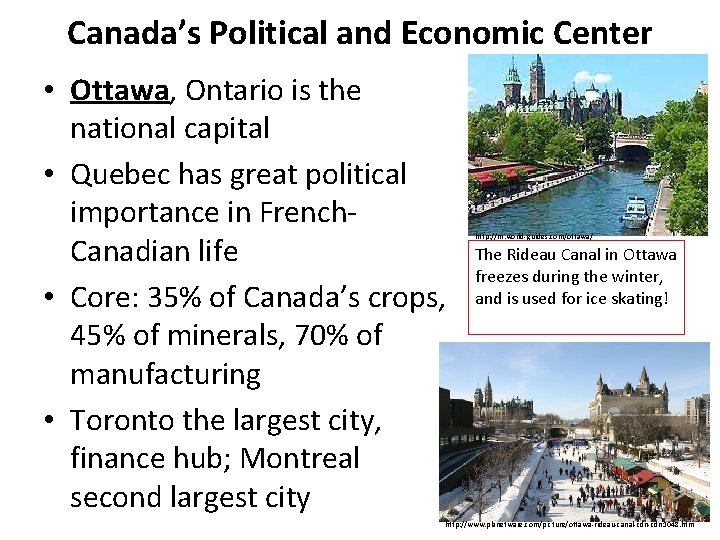
Canada’s Political and Economic Center • Ottawa, Ontario is the national capital • Quebec has great political importance in French. Canadian life • Core: 35% of Canada’s crops, 45% of minerals, 70% of manufacturing • Toronto the largest city, finance hub; Montreal second largest city http: //m. world-guides. com/ottawa/ The Rideau Canal in Ottawa freezes during the winter, and is used for ice skating! 28 http: //www. planetware. com/picture/ottawa-rideau-canal-cdn 1048. htm
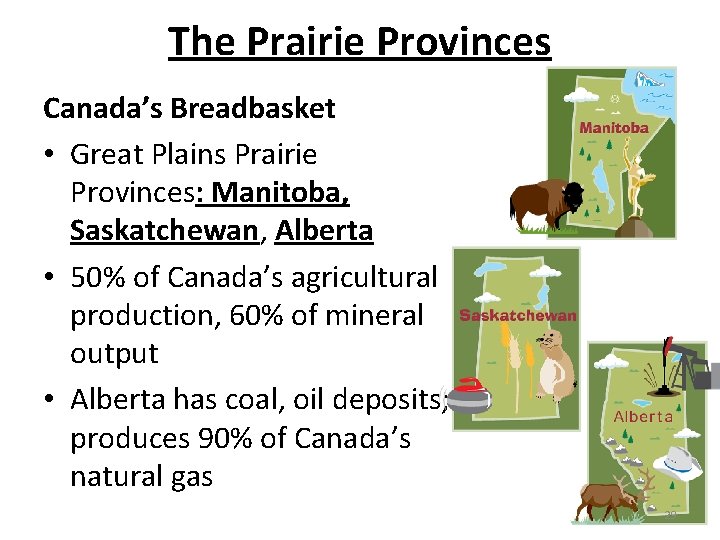
The Prairie Provinces Canada’s Breadbasket • Great Plains Prairie Provinces: Manitoba, Saskatchewan, Alberta • 50% of Canada’s agricultural production, 60% of mineral output • Alberta has coal, oil deposits; produces 90% of Canada’s natural gas 29
A Cultural Mix • Manitoba: Scots-Irish, Germans, Scandinavians, Ukrainians, Poles • Saskatchewan’s population includes Asian immigrants, Métis • Alberta’s diversity includes Indian, Japanese, Lebanese, Vietnamese 30
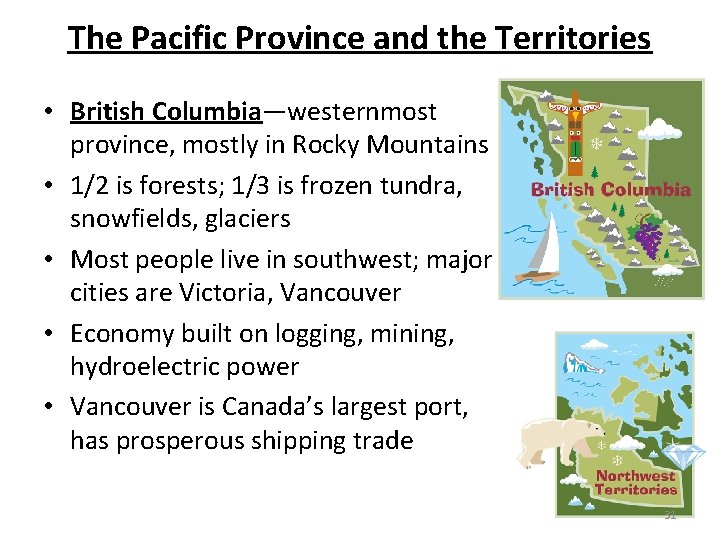
The Pacific Province and the Territories • British Columbia—westernmost province, mostly in Rocky Mountains • 1/2 is forests; 1/3 is frozen tundra, snowfields, glaciers • Most people live in southwest; major cities are Victoria, Vancouver • Economy built on logging, mining, hydroelectric power • Vancouver is Canada’s largest port, has prosperous shipping trade 31
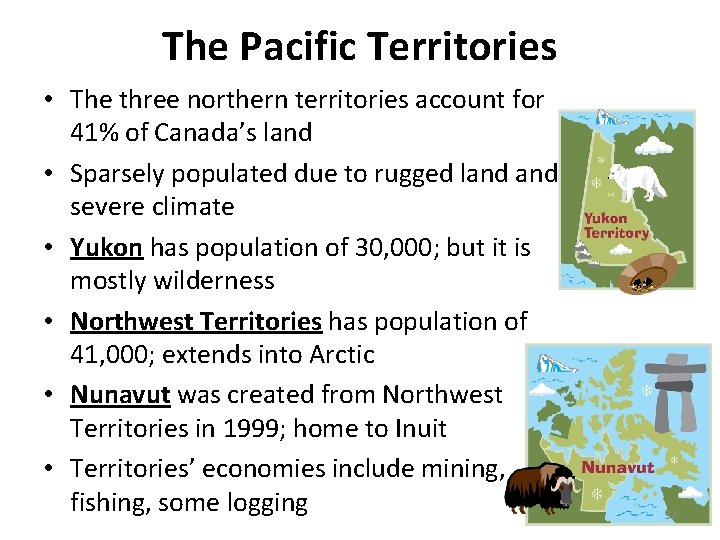
The Pacific Territories • The three northern territories account for 41% of Canada’s land • Sparsely populated due to rugged land severe climate • Yukon has population of 30, 000; but it is mostly wilderness • Northwest Territories has population of 41, 000; extends into Arctic • Nunavut was created from Northwest Territories in 1999; home to Inuit • Territories’ economies include mining, fishing, some logging 32