
Can we use multigenetests to guide the adjuvant


- Slides: 45
Can we use multigene-tests to guide the adjuvant treatment of early breast cancer? J Natl Compr Canc Netw 2013; 11: 174 -182 J R 5 陳三奇 VS 趙大中
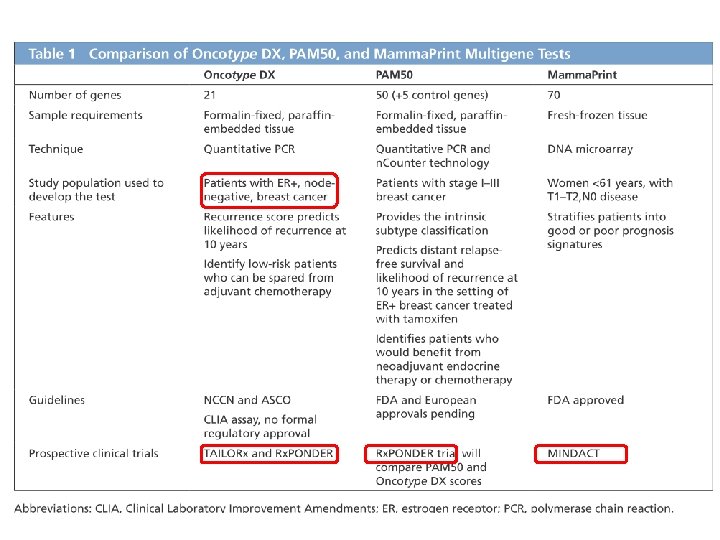
• Breast cancer – A heterogeneous disease – Outcome predict by clinical and pathologic features. – Genomic tests since 2002 • Oncotype DX, PAM 50, and Mamma. Print. • Others: Rotterdam 76 -gene signature, 3 -gene SCMGENE panel – The role of these multigene tests ?
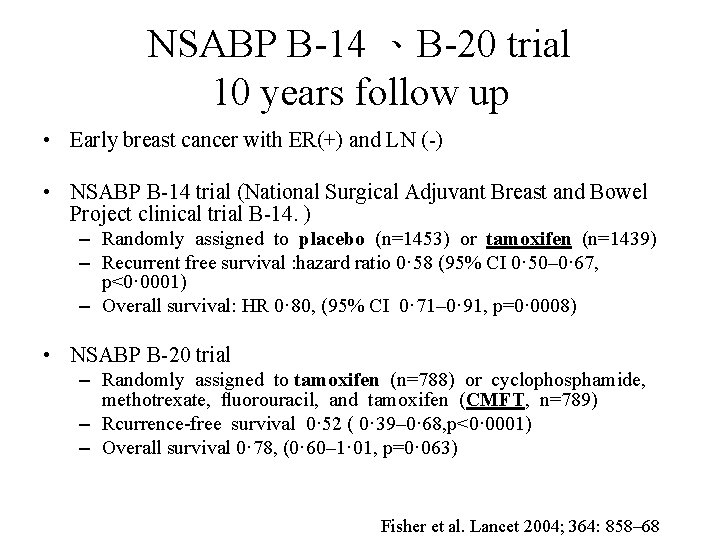
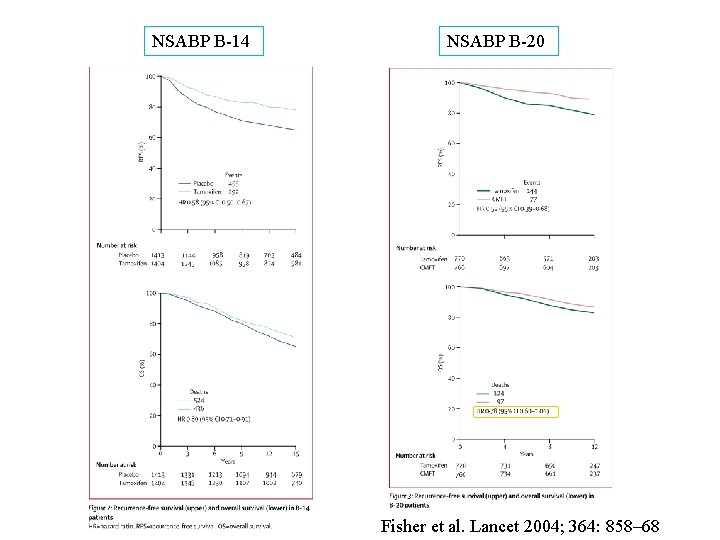
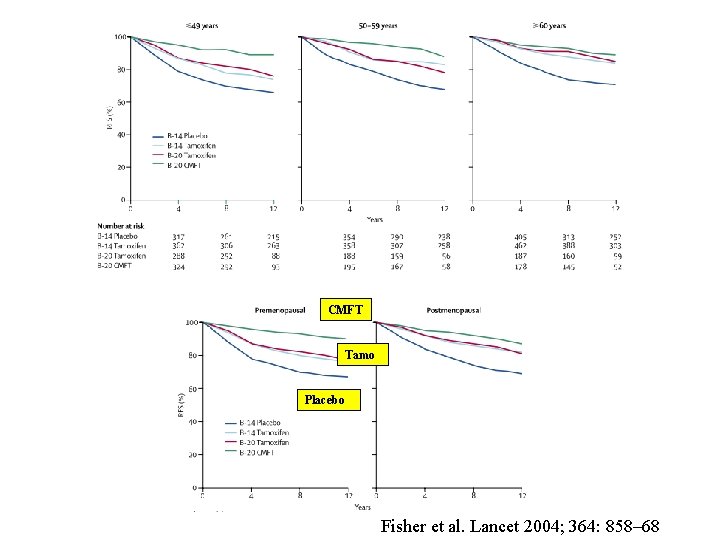
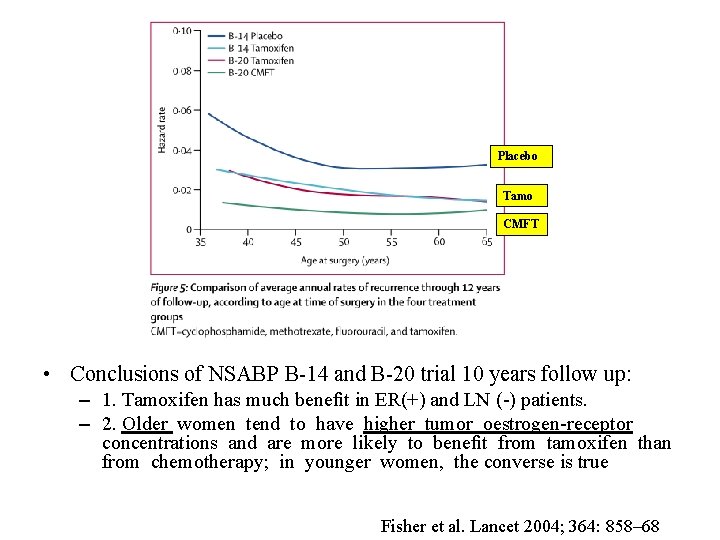
NSABP B-14 、B-20 trial 10 years follow up • Early breast cancer with ER(+) and LN (-) • NSABP B-14 trial (National Surgical Adjuvant Breast and Bowel Project clinical trial B-14. ) – Randomly assigned to placebo (n=1453) or tamoxifen (n=1439) – Recurrent free survival : hazard ratio 0· 58 (95% CI 0· 50– 0· 67, p<0· 0001) – Overall survival: HR 0· 80, (95% CI 0· 71– 0· 91, p=0· 0008) • NSABP B-20 trial – Randomly assigned to tamoxifen (n=788) or cyclophosphamide, methotrexate, fluorouracil, and tamoxifen (CMFT, n=789) – Rcurrence-free survival 0· 52 ( 0· 39– 0· 68, p<0· 0001) – Overall survival 0· 78, (0· 60– 1· 01, p=0· 063) Fisher et al. Lancet 2004; 364: 858– 68
NSABP B-14 NSABP B-20 Fisher et al. Lancet 2004; 364: 858– 68
CMFT Tamo Placebo Fisher et al. Lancet 2004; 364: 858– 68
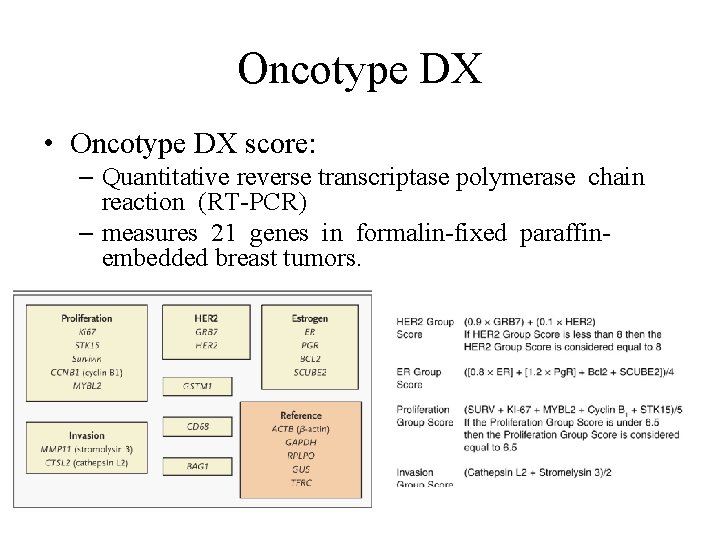
Placebo Tamo CMFT • Conclusions of NSABP B-14 and B-20 trial 10 years follow up: – 1. Tamoxifen has much benefit in ER(+) and LN (-) patients. – 2. Older women tend to have higher tumor oestrogen-receptor concentrations and are more likely to benefit from tamoxifen than from chemotherapy; in younger women, the converse is true Fisher et al. Lancet 2004; 364: 858– 68
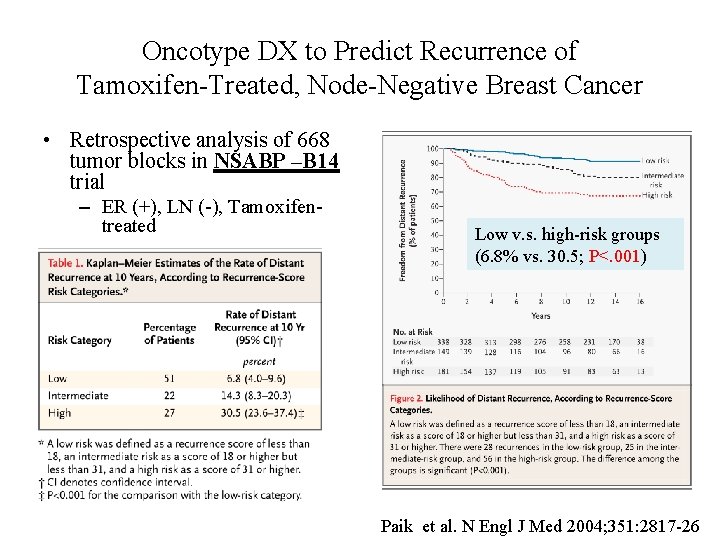
Oncotype DX • Oncotype DX score: – Quantitative reverse transcriptase polymerase chain reaction (RT-PCR) – measures 21 genes in formalin-fixed paraffinembedded breast tumors.
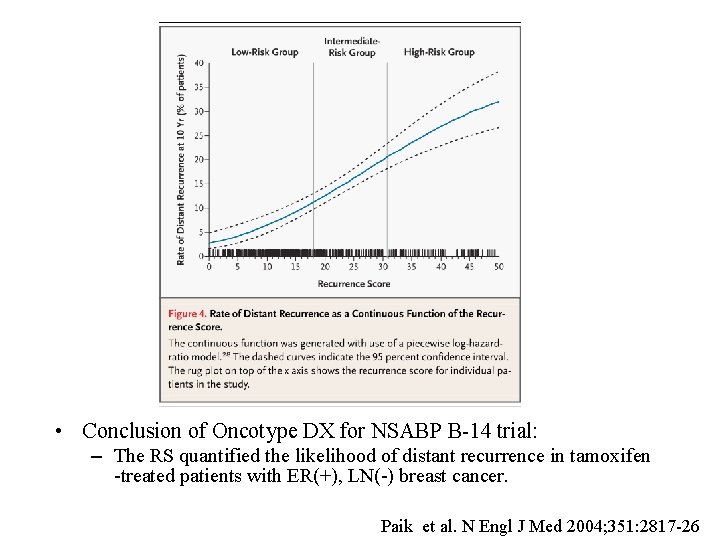
Oncotype DX to Predict Recurrence of Tamoxifen-Treated, Node-Negative Breast Cancer • Retrospective analysis of 668 tumor blocks in NSABP –B 14 trial – ER (+), LN (-), Tamoxifentreated Low v. s. high-risk groups (6. 8% vs. 30. 5; P<. 001) Paik et al. N Engl J Med 2004; 351: 2817 -26
• Conclusion of Oncotype DX for NSABP B-14 trial: – The RS quantified the likelihood of distant recurrence in tamoxifen -treated patients with ER(+), LN(-) breast cancer. Paik et al. N Engl J Med 2004; 351: 2817 -26
Oncotype DX to Predict Death of Node -Negative Breast Cancer • A case-control study – N= 4969 – Node-negative, EBC from 1985 to 1994, not treated with adjuvant chemotherapy. – 220 patients died from breast cancer. • Treated with tamoxifen, the death rate was – Low risk: 2. 8 % – Intermediate risk: 10. 7% – High risk : 15% (P=. 003). • Not treated with Tamoxifen for ER(+) patients, the death rate was – Low risk: 6. 2%. – Intermediate risk: 17. 8% – High risk : 19. 9% • Conclusion: – The RS strongly associated with risk of breast cancer death among ERpositive, tamoxifen-treated and untreated patients. Habel et al. Breast Cancer Research 2006, 8: 25
• The 21 -gene recurrence score (RS) assay – quantifies the likelihood of distant recurrence in women with • ER (+), LN (-), treated with adjuvant Tamoxifen. – Strongly related to cancer death in • ER (+), LN (-), treated with or without Tamoxifen. • Suggest that – combining Recurrence Score, tumor grade, and tumor size provides better risk classification than any one of these factors alone. • However, the relationship between the RS and chemotherapy benefit is not known.
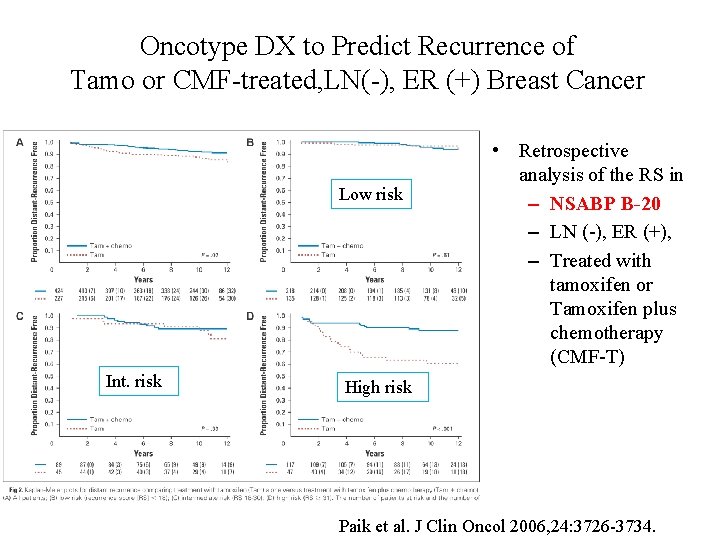
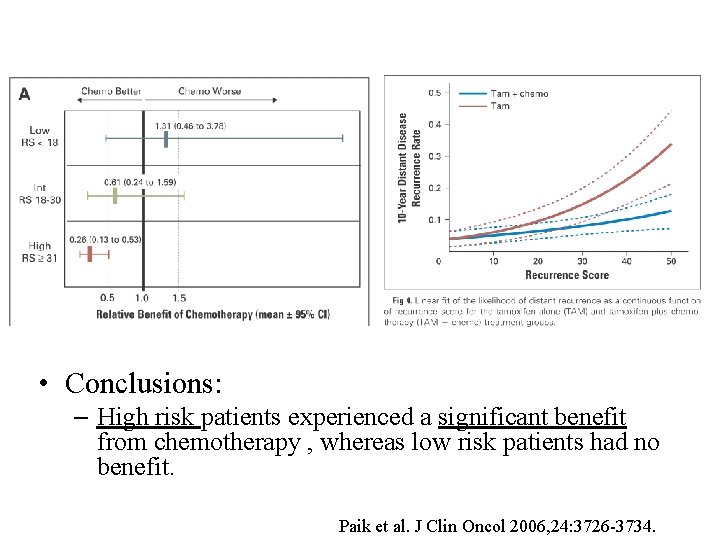
Oncotype DX to Predict Recurrence of Tamo or CMF-treated, LN(-), ER (+) Breast Cancer Low risk Int. risk • Retrospective analysis of the RS in – NSABP B-20 – LN (-), ER (+), – Treated with tamoxifen or Tamoxifen plus chemotherapy (CMF-T) High risk Paik et al. J Clin Oncol 2006, 24: 3726 -3734.
• Conclusions: – High risk patients experienced a significant benefit from chemotherapy , whereas low risk patients had no benefit. Paik et al. J Clin Oncol 2006, 24: 3726 -3734.
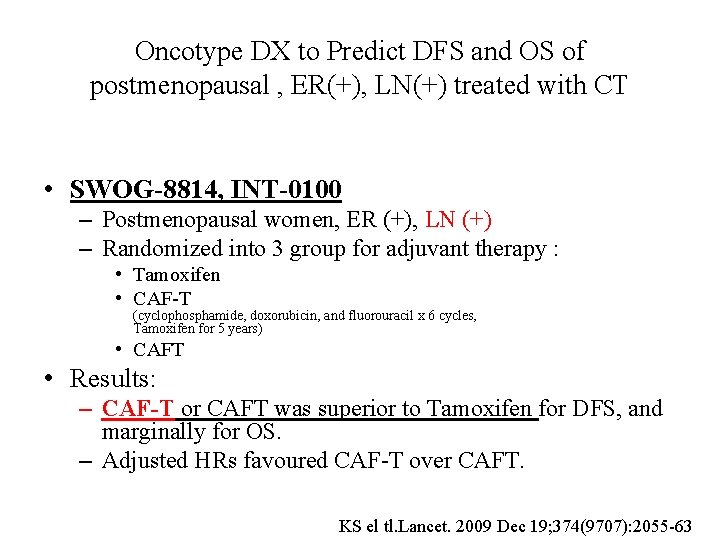
Oncotype DX to Predict DFS and OS of postmenopausal , ER(+), LN(+) treated with CT • SWOG-8814, INT-0100 – Postmenopausal women, ER (+), LN (+) – Randomized into 3 group for adjuvant therapy : • Tamoxifen • CAF-T (cyclophosphamide, doxorubicin, and fluorouracil x 6 cycles, Tamoxifen for 5 years) • CAFT • Results: – CAF-T or CAFT was superior to Tamoxifen for DFS, and marginally for OS. – Adjusted HRs favoured CAF-T over CAFT. KS el tl. Lancet. 2009 Dec 19; 374(9707): 2055 -63
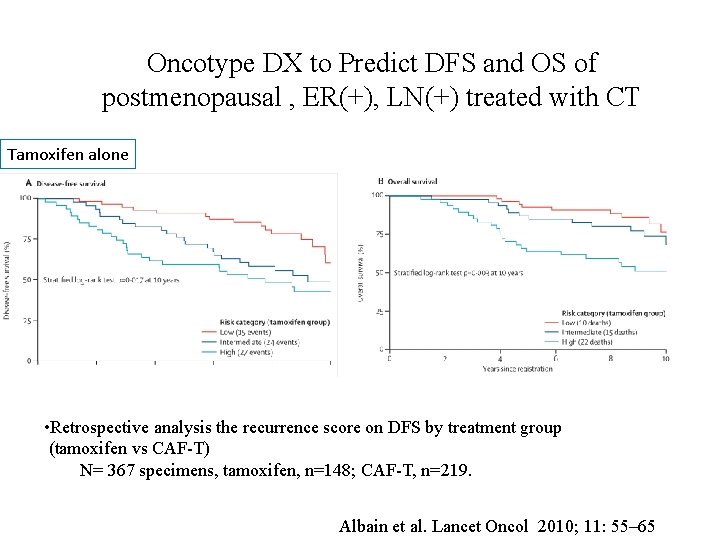
Oncotype DX to Predict DFS and OS of postmenopausal , ER(+), LN(+) treated with CT Tamoxifen alone • Retrospective analysis the recurrence score on DFS by treatment group (tamoxifen vs CAF-T) N= 367 specimens, tamoxifen, n=148; CAF-T, n=219. Albain et al. Lancet Oncol 2010; 11: 55– 65
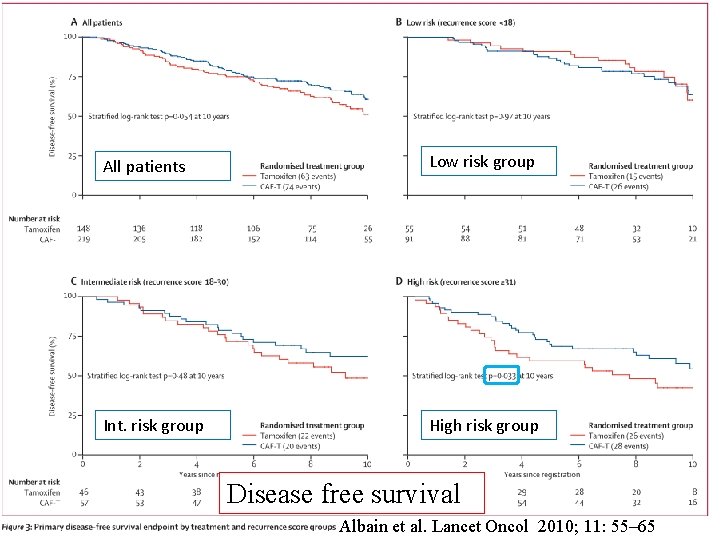
All patients Low risk group Int. risk group High risk group Disease free survival Albain et al. Lancet Oncol 2010; 11: 55– 65
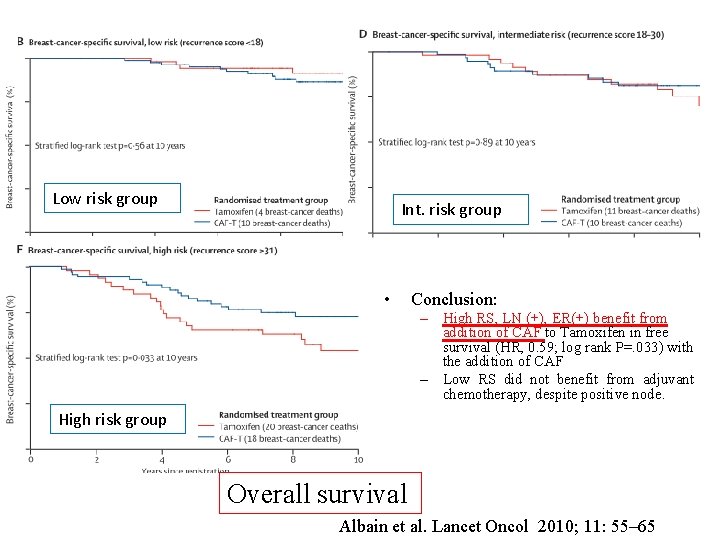
Low risk group Int. risk group • Conclusion: – High RS, LN (+), ER(+) benefit from addition of CAF to Tamoxifen in free survival (HR, 0. 59; log rank P=. 033) with the addition of CAF – Low RS did not benefit from adjuvant chemotherapy, despite positive node. High risk group Overall survival Albain et al. Lancet Oncol 2010; 11: 55– 65
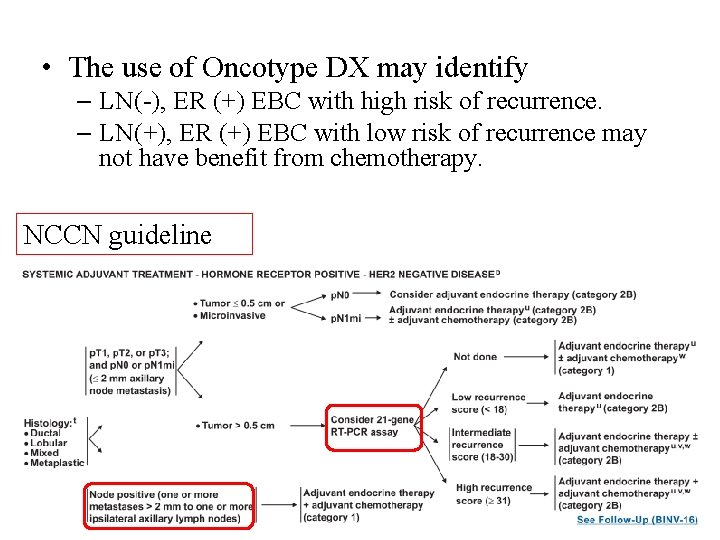
• The use of Oncotype DX may identify – LN(-), ER (+) EBC with high risk of recurrence. – LN(+), ER (+) EBC with low risk of recurrence may not have benefit from chemotherapy. NCCN guideline
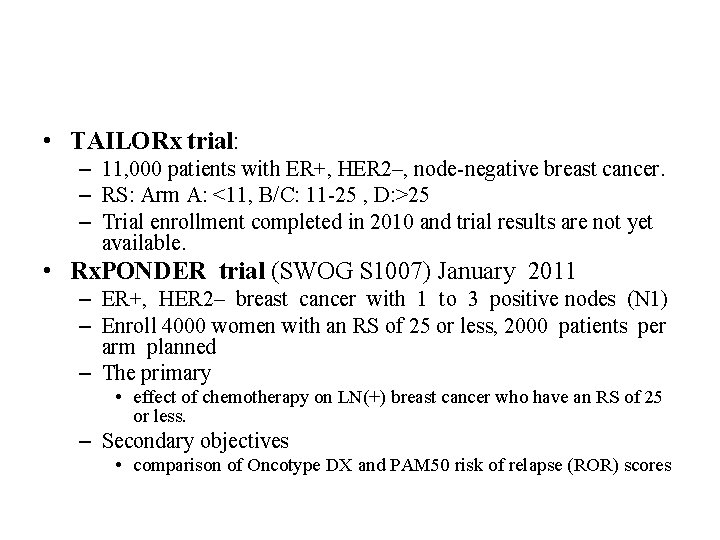
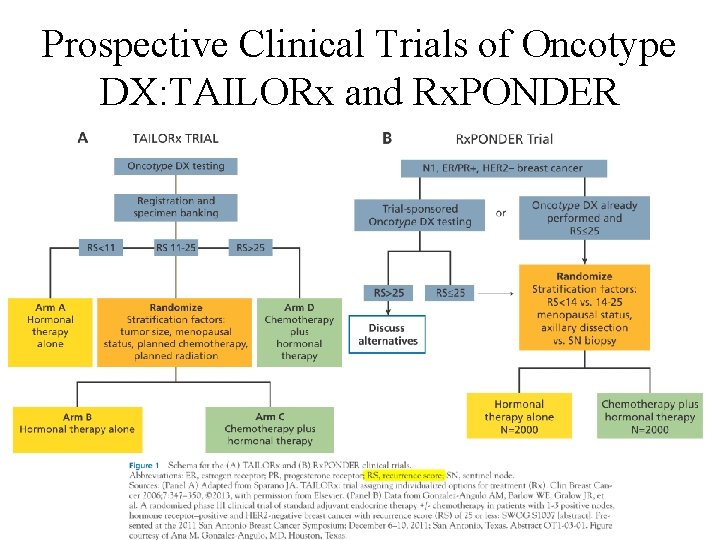
• TAILORx trial: – 11, 000 patients with ER+, HER 2–, node-negative breast cancer. – RS: Arm A: <11, B/C: 11 -25 , D: >25 – Trial enrollment completed in 2010 and trial results are not yet available. • Rx. PONDER trial (SWOG S 1007) January 2011 – ER+, HER 2– breast cancer with 1 to 3 positive nodes (N 1) – Enroll 4000 women with an RS of 25 or less, 2000 patients per arm planned – The primary • effect of chemotherapy on LN(+) breast cancer who have an RS of 25 or less. – Secondary objectives • comparison of Oncotype DX and PAM 50 risk of relapse (ROR) scores
Prospective Clinical Trials of Oncotype DX: TAILORx and Rx. PONDER
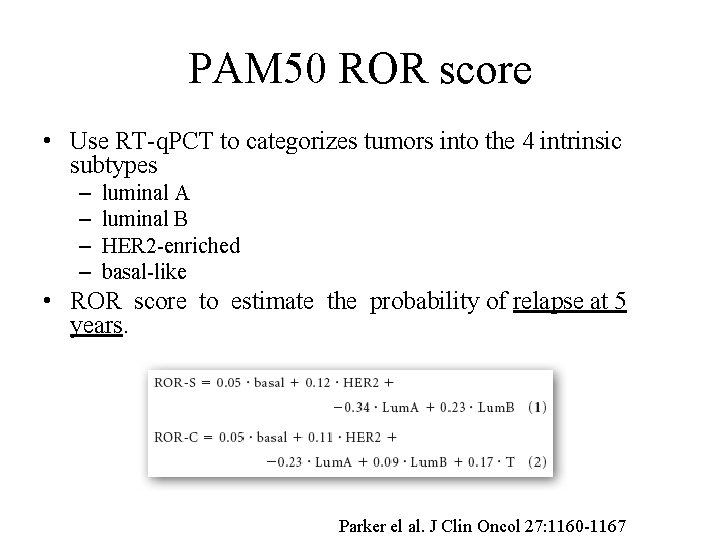
PAM 50 ROR score
PAM 50 ROR score • Use RT-q. PCT to categorizes tumors into the 4 intrinsic subtypes – – luminal A luminal B HER 2 -enriched basal-like • ROR score to estimate the probability of relapse at 5 years. Parker el al. J Clin Oncol 27: 1160 -1167
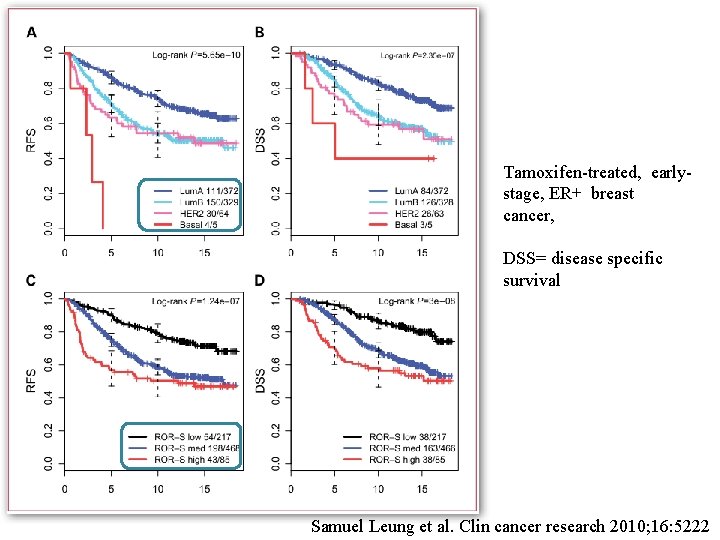
Tamoxifen-treated, earlystage, ER+ breast cancer, DSS= disease specific survival Samuel Leung et al. Clin cancer research 2010; 16: 5222
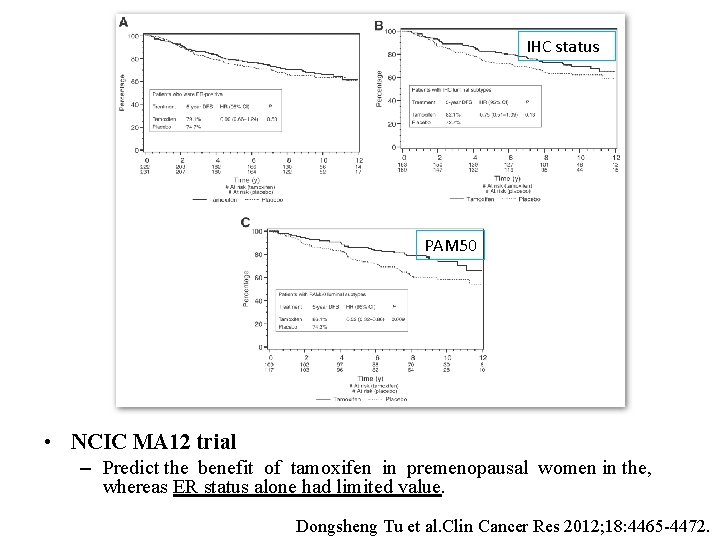
IHC status PAM 50 • NCIC MA 12 trial – Predict the benefit of tamoxifen in premenopausal women in the, whereas ER status alone had limited value. Dongsheng Tu et al. Clin Cancer Res 2012; 18: 4465 -4472.
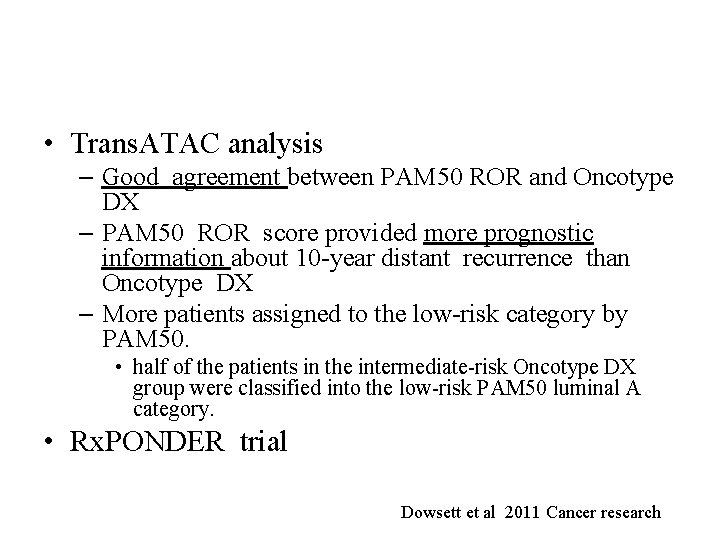
• Trans. ATAC analysis – Good agreement between PAM 50 ROR and Oncotype DX – PAM 50 ROR score provided more prognostic information about 10 -year distant recurrence than Oncotype DX – More patients assigned to the low-risk category by PAM 50. • half of the patients in the intermediate-risk Oncotype DX group were classified into the low-risk PAM 50 luminal A category. • Rx. PONDER trial Dowsett et al 2011 Cancer research
Mamma. Print and the MINDACT Prospective Clinical Trial
Mamma. Print • Using DNA microarrays, a 70 -gene prognostic signature, Mamma. Print, for nodenegative breast cancer was developed in 2002. (2002 Nature) – low- or high-risk for distant metastases at 5 years. – Mamma. Print outperformed standard clinical and histologic predictors of patient prognosis. – approved by the FDA in 2007 for node-negative patients.
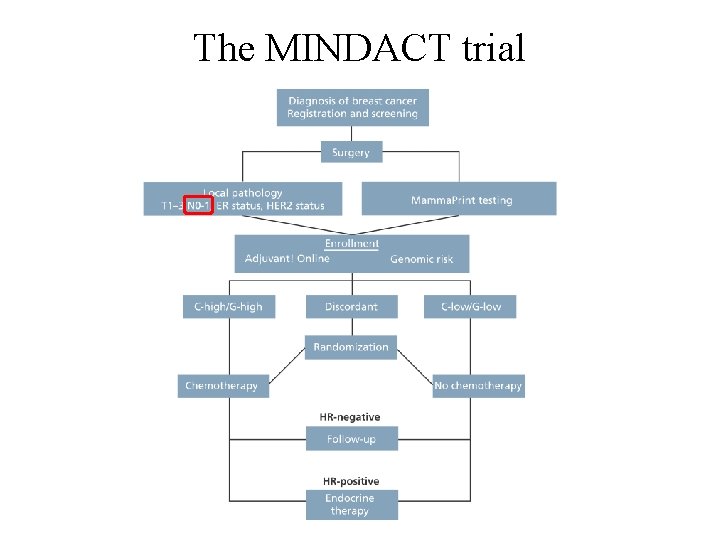
• The MINDACT trial (Microarray In Node-negative and 1– 3 Node-Positive Disease May Avoid Chemo Therapy) – Prospective randomized phase III clinical trial – MINDACT had a predefined pilot phase in which the data and treatment decisions of the first 800 patients were analyzed, and those results were published in 2011. (2011 Eur J Can)
The MINDACT trial
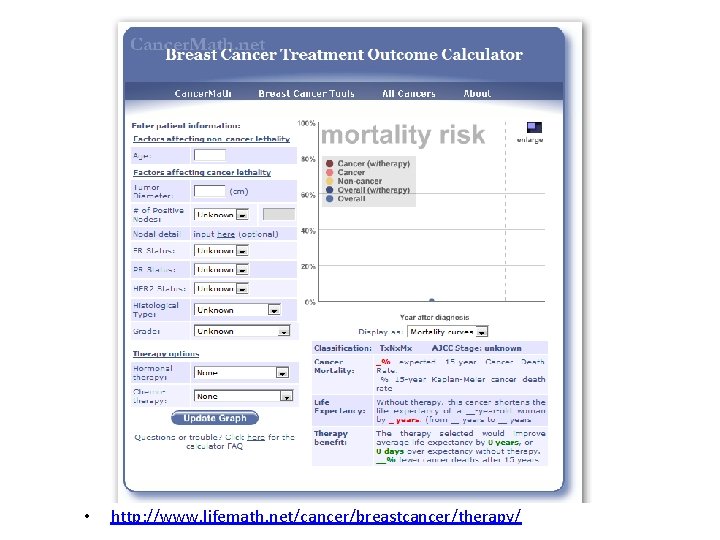
• http: //www. lifemath. net/cancer/breastcancer/therapy/
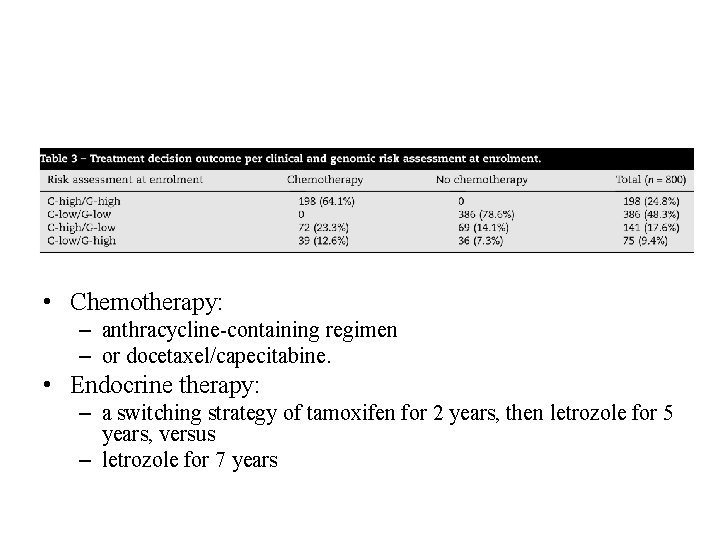
• Chemotherapy: – anthracycline-containing regimen – or docetaxel/capecitabine. • Endocrine therapy: – a switching strategy of tamoxifen for 2 years, then letrozole for 5 years, versus – letrozole for 7 years
• Question 1: Should we use gene-predictors to define the need of adjuvant treatment?
• Mamma. Print – prognosis in untreated node-negative patients. – 29% discordance in low and high risk groups between Adjuvant! and Mamma. Print • 32% low risk with Adjuvant! – => high risk with Mamma. Print • 68% high risk with Adjuvant! – => low risk with Mamma. Print – The MINDACT will address this issue
• Question 2: Should we use gene predictors to guide treatment choice, particularly to understand if an ERpositive tumor needs chemotherapy in addition to hormone therapy?
• NCCN suggest – Chemotherapy in case of node positivity – Oncotype DX : negative nodes with T>1 cm • St. Gallen suggest – favor chemotherapy if a tumor is >5 cm or if 4+ metastatic nodes. • If a tumor is between 2 and 5 cm, or if only 1 -3 nodes positive? – Oncotype DX • High recurrent score: predict chemotherapy benefit • Low recurrent score: no evidence of benefit. • Gray zone in intermediate RS – RS: 11 - 25, 45% of all subjects – Ongoing TAILORx trial
• Question 3: Can we use genomic predictors to choose the type of chemotherapy?
• A multigene signature predictive of the activity of paclitaxel and 5 -fluorouracil, doxorubicin, and cyclophosphamide (FAC), in neoadjuvant setting – Complete pathological response : more powerful predictor of treatment outcome. – multigene signature • positive predictive value is modest (52%) • negative predictive value is high (92%) • We can probably select what not to use, but not what to use Ayers M el al. J Clin Oncol 2004; 22(12): 2284
• Question 4: Are genomic predictors ready for routine clinical practice?
• Combining one or more gene-expression classifiers into a single model together with traditional clinico-pathological parameters hat still retain important prognostic information.
Future Developments: Cancer Genome Sequencing • A revolution in DNA sequencing technology began in 2005. • 2009– 2010 , Washington University School of medicine. • Sequenced the patient’s normal DNA, the primary tumor DNA, and the DNA of the metastasis – identified somatic DNA changes. – significant evolution in the cancer can occur during metastatic spread
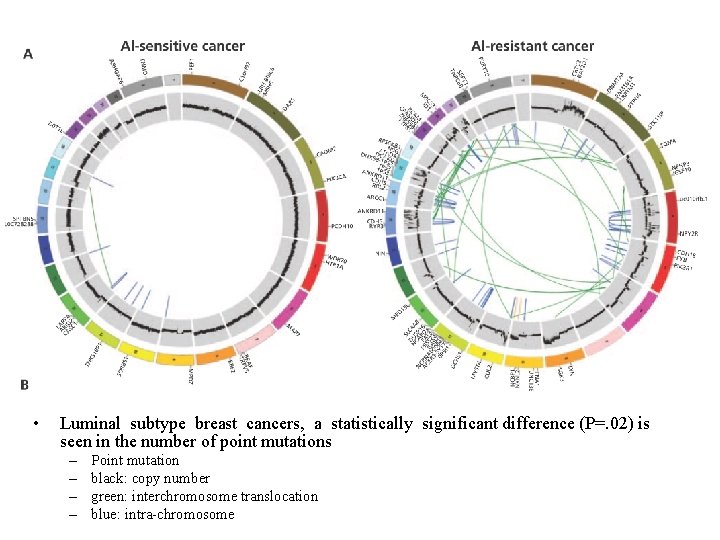
• Luminal subtype breast cancers, a statistically significant difference (P=. 02) is seen in the number of point mutations – – Point mutation black: copy number green: interchromosome translocation blue: intra-chromosome
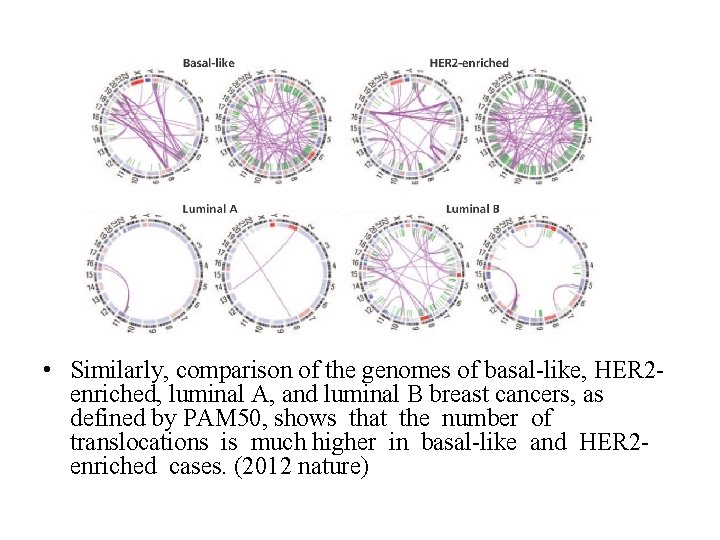
• Similarly, comparison of the genomes of basal-like, HER 2 enriched, luminal A, and luminal B breast cancers, as defined by PAM 50, shows that the number of translocations is much higher in basal-like and HER 2 enriched cases. (2012 nature)
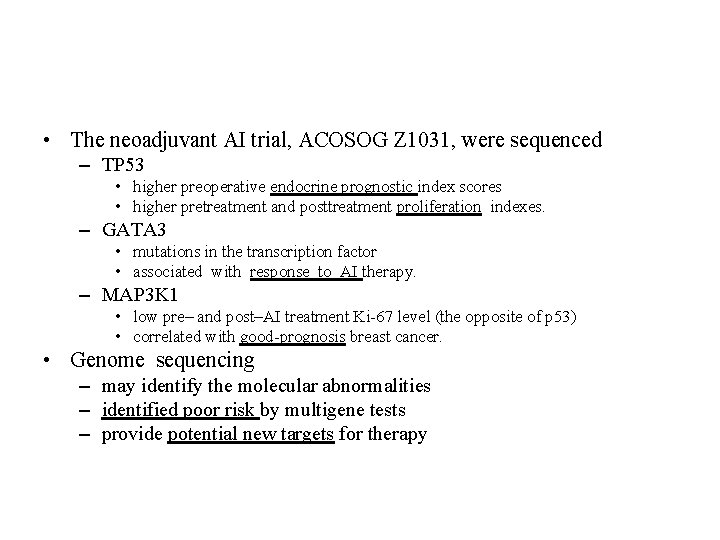
• The neoadjuvant AI trial, ACOSOG Z 1031, were sequenced – TP 53 • higher preoperative endocrine prognostic index scores • higher pretreatment and posttreatment proliferation indexes. – GATA 3 • mutations in the transcription factor • associated with response to AI therapy. – MAP 3 K 1 • low pre– and post–AI treatment Ki-67 level (the opposite of p 53) • correlated with good-prognosis breast cancer. • Genome sequencing – may identify the molecular abnormalities – identified poor risk by multigene tests – provide potential new targets for therapy
Thanks for your attention~