
Can the PERMA profiler tool support children to
- Slides: 14
Can the PERMA profiler tool support children to improve their own well-being? Alice Clarke 3 rd year Doctorate in Educational Psychology student Cardiff University
Involvement Ø Small-scale research project for university Ø Joined the working group Ø Worked jointly with Llangynwyd Primary to run intervention and collect data
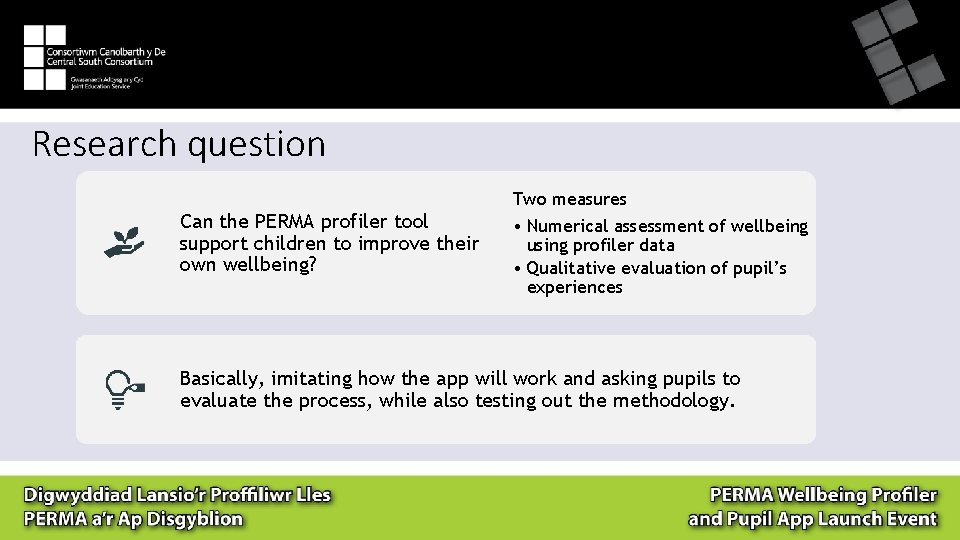
Research question Two measures Can the PERMA profiler tool support children to improve their own wellbeing? • Numerical assessment of wellbeing using profiler data • Qualitative evaluation of pupil’s experiences Basically, imitating how the app will work and asking pupils to evaluate the process, while also testing out the methodology.
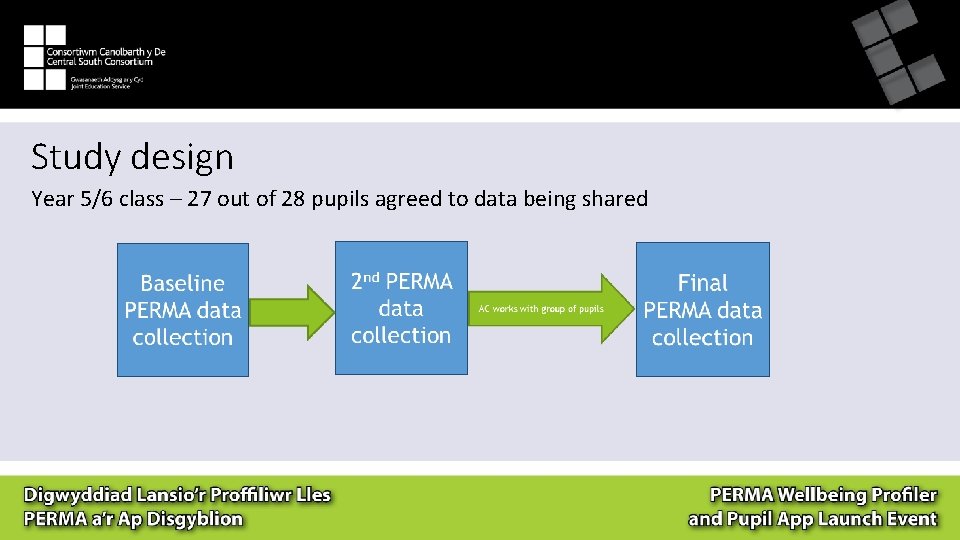
Study design Year 5/6 class – 27 out of 28 pupils agreed to data being shared
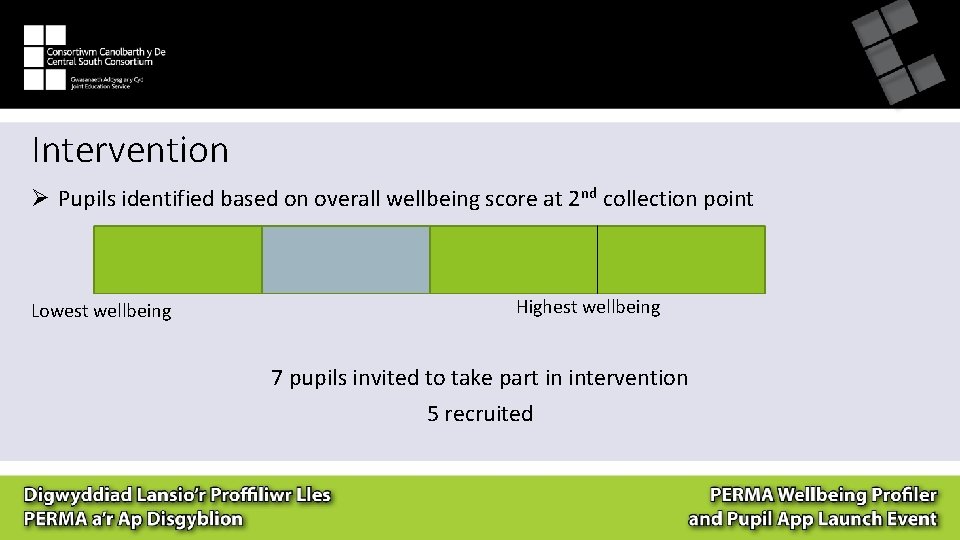
Intervention Ø Pupils identified based on overall wellbeing score at 2 nd collection point Lowest wellbeing Highest wellbeing 7 pupils invited to take part in intervention 5 recruited
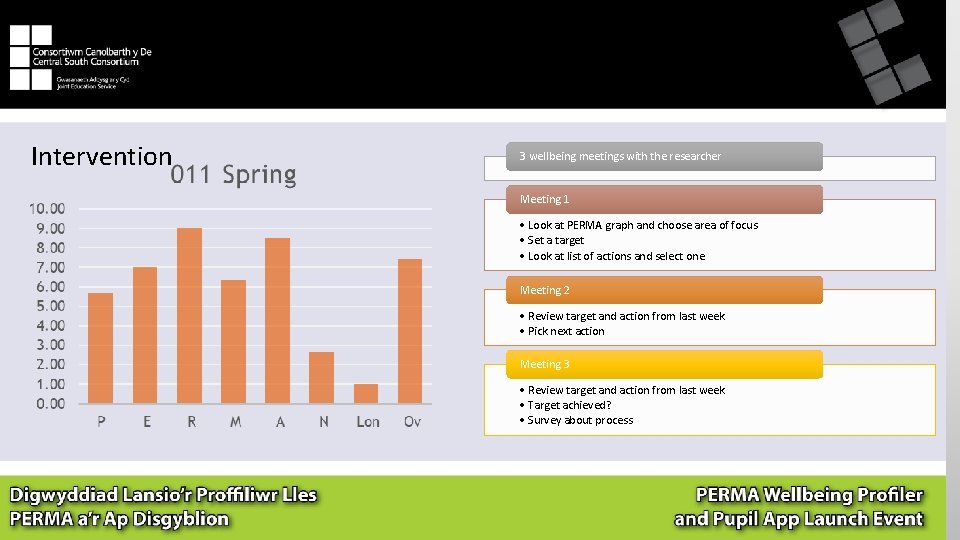
Intervention 3 wellbeing meetings with the researcher Meeting 1 • Look at PERMA graph and choose area of focus • Set a target • Look at list of actions and select one Meeting 2 • Review target and action from last week • Pick next action Meeting 3 • Review target and action from last week • Target achieved? • Survey about process
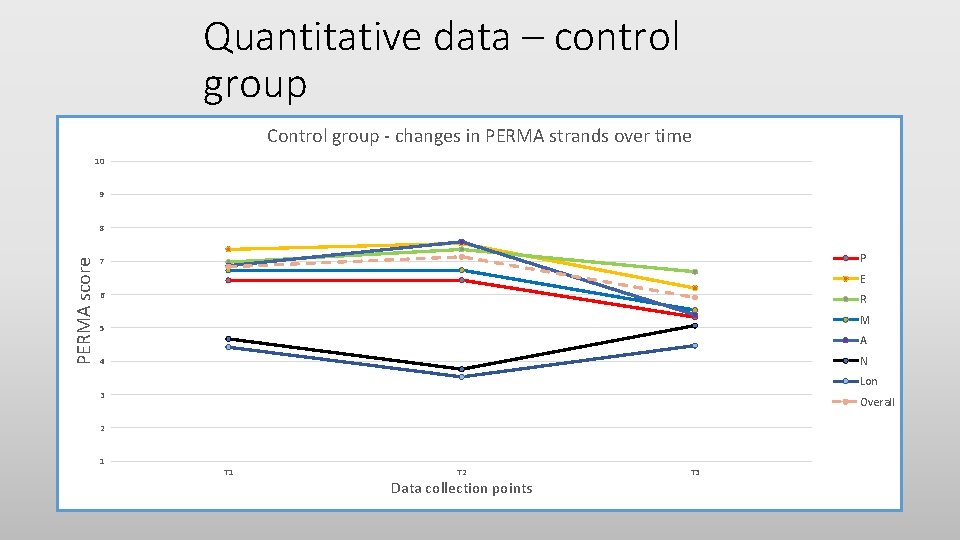
Quantitative data – control group Control group - changes in PERMA strands over time 10 9 PERMA score 8 P 7 E 6 R M 5 A N 4 Lon 3 Overall 2 1 T 2 Data collection points T 3
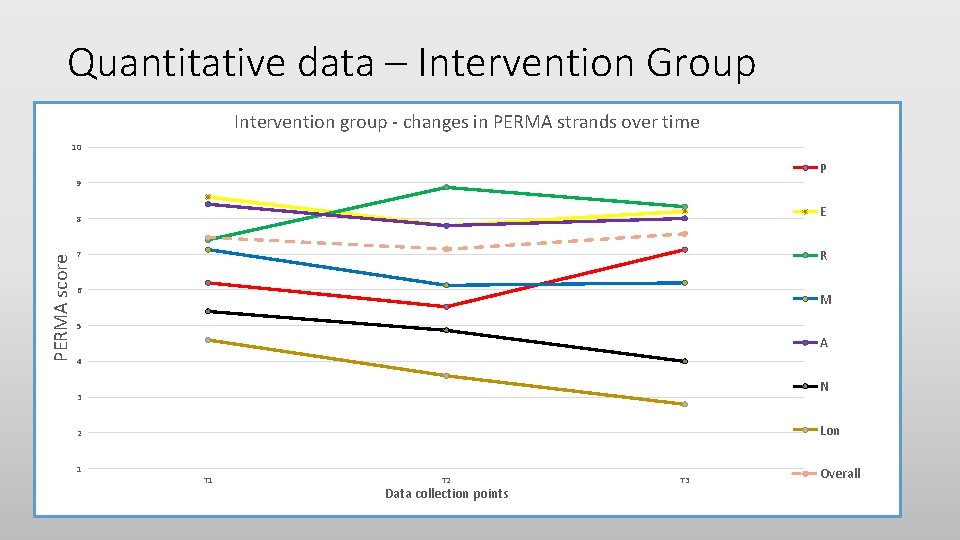
Quantitative data – Intervention Group Intervention group - changes in PERMA strands over time 10 P PERMA score 9 8 E 7 R 6 M 5 A 4 N 3 Lon 2 1 T 2 Data collection points T 3 Overall
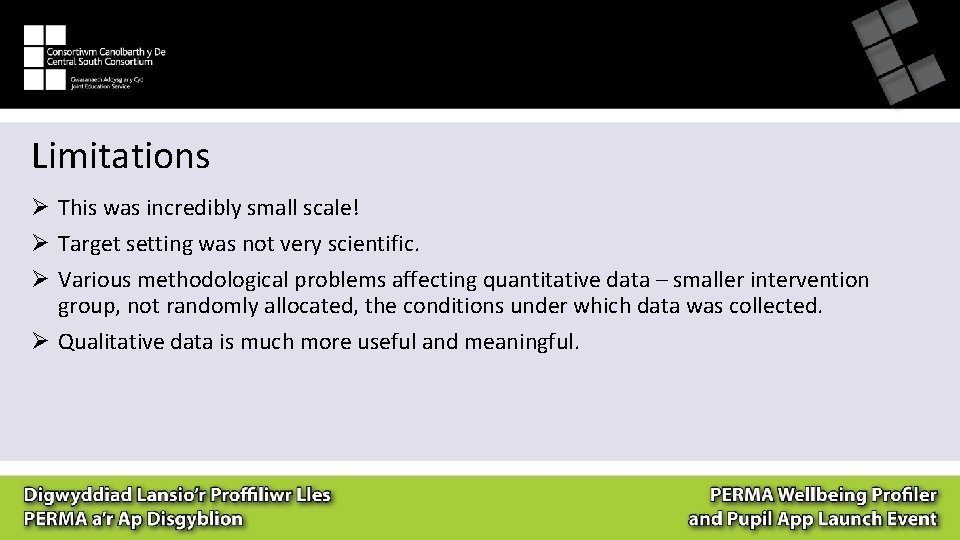
Limitations Ø This was incredibly small scale! Ø Target setting was not very scientific. Ø Various methodological problems affecting quantitative data – smaller intervention group, not randomly allocated, the conditions under which data was collected. Ø Qualitative data is much more useful and meaningful.
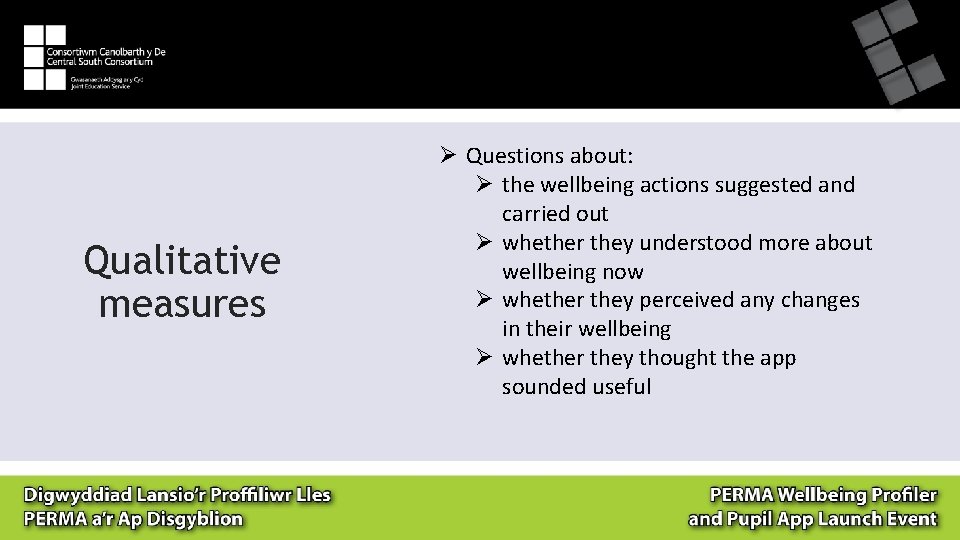
Qualitative measures Ø Questions about: Ø the wellbeing actions suggested and carried out Ø whether they understood more about wellbeing now Ø whether they perceived any changes in their wellbeing Ø whether they thought the app sounded useful
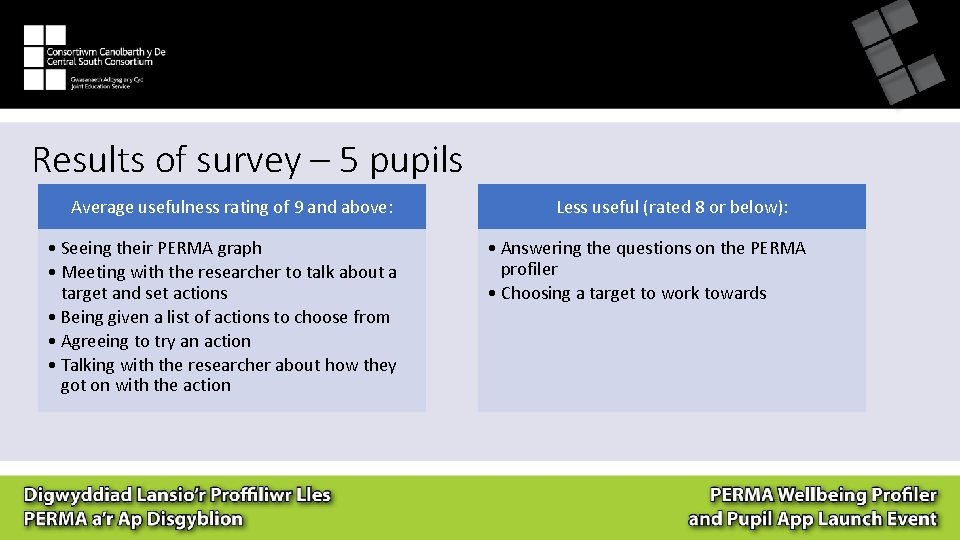
Results of survey – 5 pupils Average usefulness rating of 9 and above: • Seeing their PERMA graph • Meeting with the researcher to talk about a target and set actions • Being given a list of actions to choose from • Agreeing to try an action • Talking with the researcher about how they got on with the action Less useful (rated 8 or below): • Answering the questions on the PERMA profiler • Choosing a target to work towards
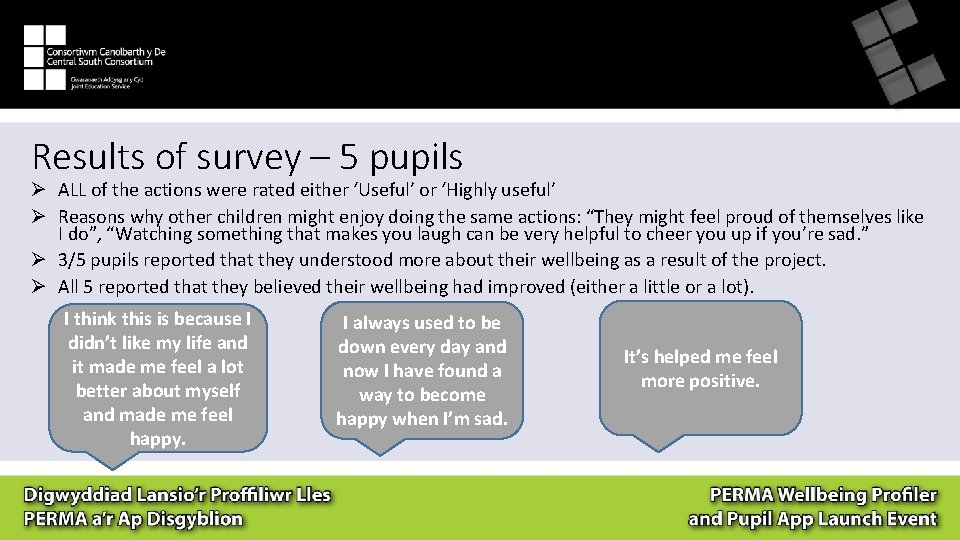
Results of survey – 5 pupils Ø ALL of the actions were rated either ‘Useful’ or ‘Highly useful’ Ø Reasons why other children might enjoy doing the same actions: “They might feel proud of themselves like I do”, “Watching something that makes you laugh can be very helpful to cheer you up if you’re sad. ” Ø 3/5 pupils reported that they understood more about their wellbeing as a result of the project. Ø All 5 reported that they believed their wellbeing had improved (either a little or a lot). I think this is because I didn’t like my life and it made me feel a lot better about myself and made me feel happy. I always used to be down every day and now I have found a way to become happy when I’m sad. It’s helped me feel more positive.
Survey questions about the app Ø After hearing a description of the PERMA app: Ø All 5 pupils said they would definitely want to use it. Ø And that it would be either ‘useful’ or ‘very useful’ for children to improve their wellbeing. Ø Reasons included: Ø Would be fun and interesting Ø Would keep it private Ø Will help children understand wellbeing Ø Will help children not to be grumpy
Conclusions and implications Ø Possible buffer effect when pupils pay more attention to their wellbeing. Increase in resilience perhaps? Ø Wider context of pupils lives will always be mitigating factor in any well-being intervention Ø Pupils respond well to being given concrete well-being actions to go and carry out. Ø School staff and EPs need to think carefully about how they present well-being data to pupils, and emphasise that it is constantly fluctuating, not something they need to get a ‘high score’ on all the time.