
Can standalone computerbased interventions reduce alcohol consumption Zarnie
Can stand-alone computer-based interventions reduce alcohol consumption? Zarnie Khadjesari (Ph. D student) Elizabeth Murray (Director e-Health Unit) e-Health Unit, University College London Christine Godfrey (Head of Department) Catherine Hewitt (Research Fellow) Dept. Health Sciences, University of York Suzanne Hartley (Senior Trial Coordinator) CTRU, University of Leeds
Background • Alcohol misuse is a major public health concern • Gap between need and access • Internet interventions – Convenient, confidential, and comparatively low cost – Scalability and personalised approach • Recent reviews – Elliot 2008 (computer-based interventions for college drinkers) – Bewick 2008 (Internet interventions) – Riper 2009 (personalised feedback interventions – any modality)

Why conduct this review? • All designs of computer-based intervention • All computer-based (on- and off-line) • All adult populations • Meta-analysis
Aim • To determine the effectiveness of computer-based interventions aimed at reducing alcohol consumption • Computer-based interventions compared with either: i. Minimally active comparator (e. g. assessment-only, information-only website) ii. Active comparator (e. g. face-to-face motivational interview)
Inclusion criteria • Study design: RCT • Population: Adults (excl. dependent drinkers) • Intervention: – Computer-based interventions aimed at reducing alcohol intake – Definition: behavioural interventions, adapted for computer – Stand-alone: no expert facilitation • Outcome: Alcohol consumption – Grams per week – Frequency of binges / week
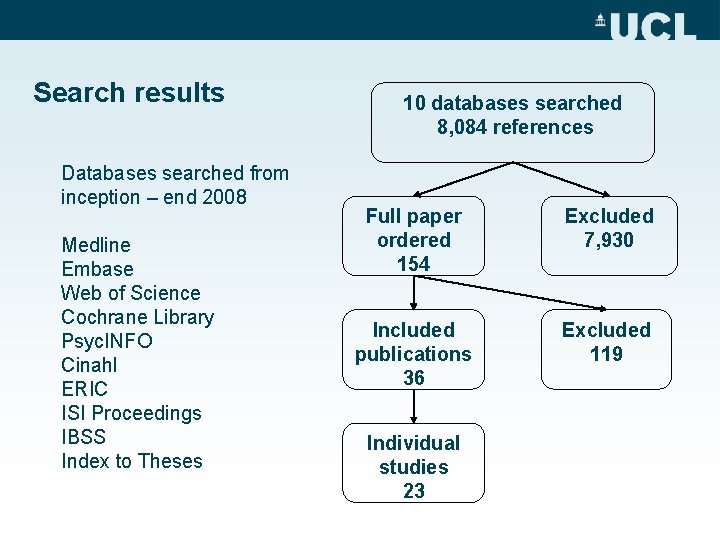
Search results Databases searched from inception – end 2008 Medline Embase Web of Science Cochrane Library Psyc. INFO Cinahl ERIC ISI Proceedings IBSS Index to Theses 10 databases searched 8, 084 references Full paper ordered 154 Excluded 7, 930 Included publications 36 Excluded 119 Individual studies 23
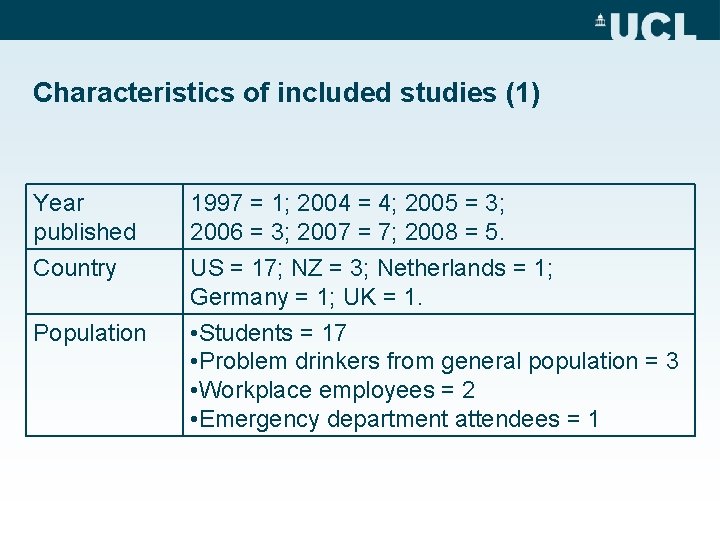
Characteristics of included studies (1) Year published 1997 = 1; 2004 = 4; 2005 = 3; 2006 = 3; 2007 = 7; 2008 = 5. Country US = 17; NZ = 3; Netherlands = 1; Germany = 1; UK = 1. • Students = 17 • Problem drinkers from general population = 3 • Workplace employees = 2 • Emergency department attendees = 1 Population
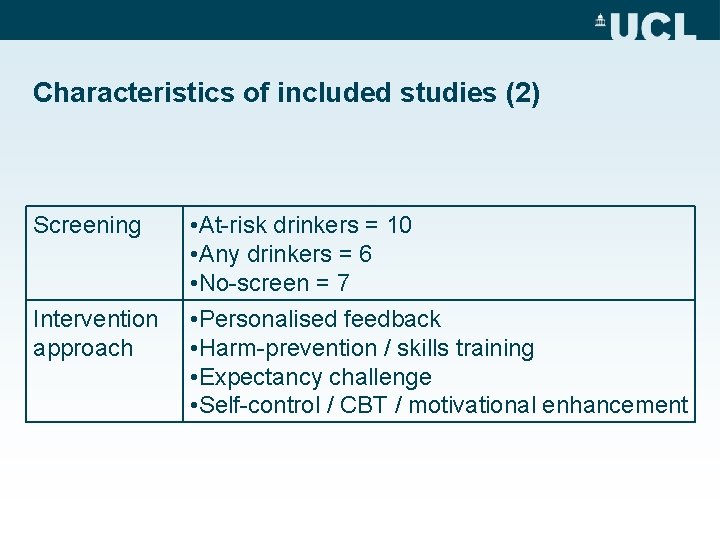
Characteristics of included studies (2) Screening Intervention approach • At-risk drinkers = 10 • Any drinkers = 6 • No-screen = 7 • Personalised feedback • Harm-prevention / skills training • Expectancy challenge • Self-control / CBT / motivational enhancement
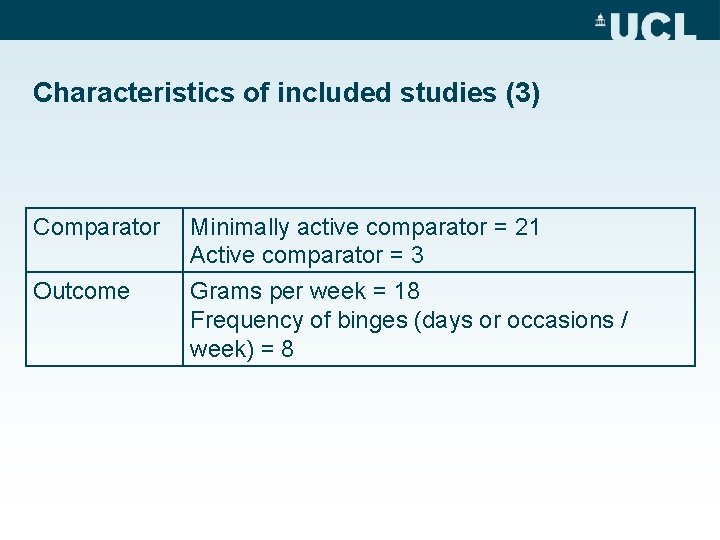
Characteristics of included studies (3) Comparator Outcome Minimally active comparator = 21 Active comparator = 3 Grams per week = 18 Frequency of binges (days or occasions / week) = 8
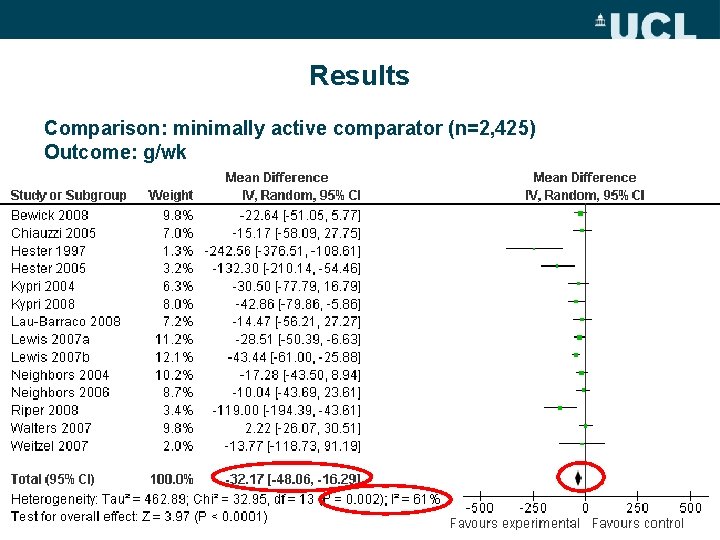
Results Comparison: minimally active comparator (n=2, 425) Outcome: g/wk
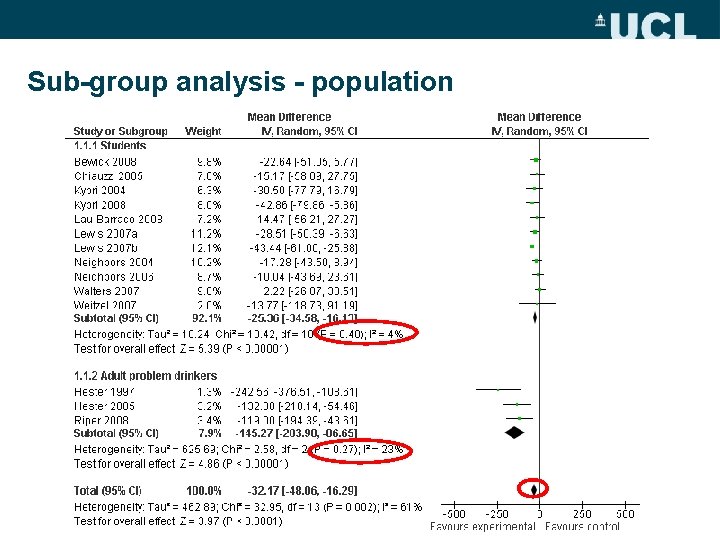
Sub-group analysis - population
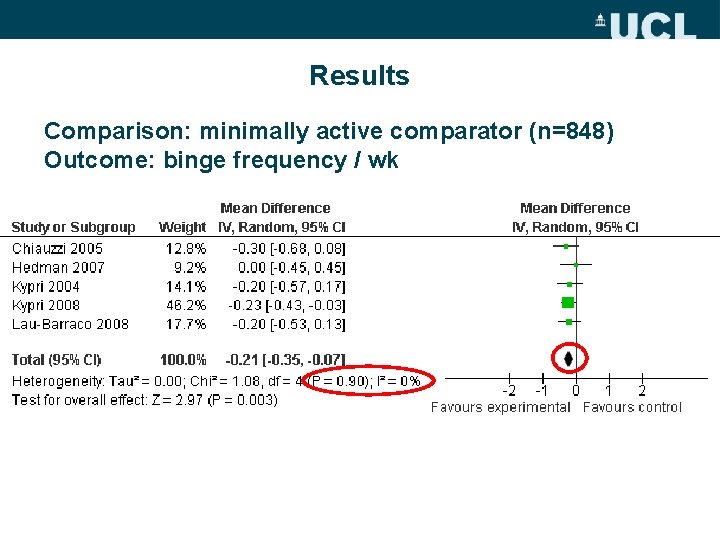
Results Comparison: minimally active comparator (n=848) Outcome: binge frequency / wk
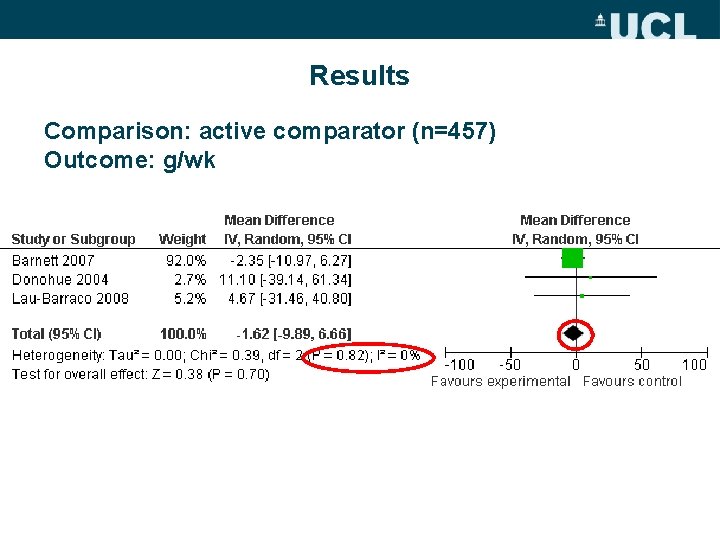
Results Comparison: active comparator (n=457) Outcome: g/wk
Further analyses • Skewed data • Baseline risk • Loss to follow-up
Summary of findings • Computer-based interventions appear: – more effective than minimally active comparator – as effective as alternative treatment approaches • Findings support continued development and evaluation of computer-based interventions for reducing alcohol intake
Limitations of this review • Restricted to stand-alone interventions • Different types of computer-based interventions • Two measures of alcohol consumption • Mediators of drinking outcomes, s/a motivation, normative perceptions. • Dose response
Gaps in the literature • Few comparisons with conventional approaches • Few studies in non-student adult populations • Few studies outside the US • Few studies measuring long-term effectiveness
Thank you for listening Questions, comments, suggestions?
- Slides: 18