
Can I swab your rectum please Improving compliance
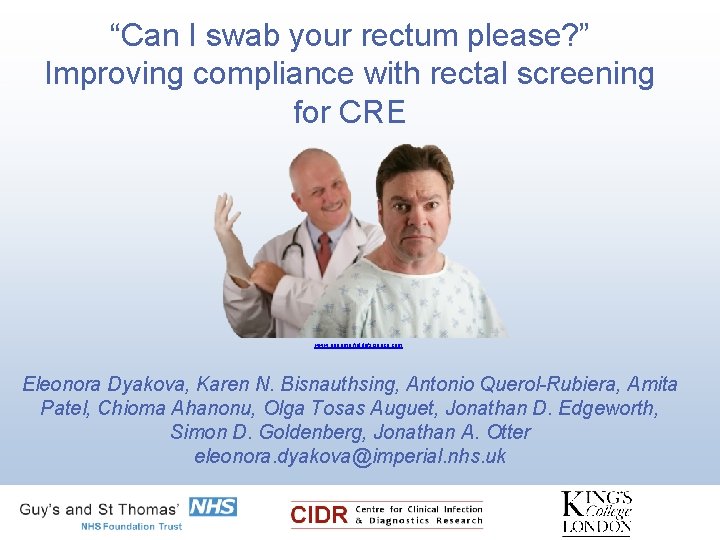
“Can I swab your rectum please? ” Improving compliance with rectal screening for CRE www. genome. fieldofscience. com Eleonora Dyakova, Karen N. Bisnauthsing, Antonio Querol-Rubiera, Amita Patel, Chioma Ahanonu, Olga Tosas Auguet, Jonathan D. Edgeworth, Simon D. Goldenberg, Jonathan A. Otter eleonora. dyakova@imperial. nhs. uk
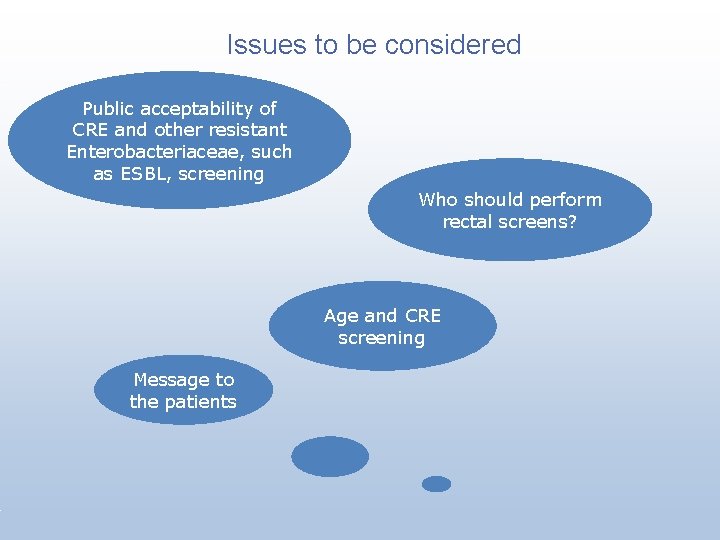
Issues to be considered Public acceptability of CRE and other resistant Enterobacteriaceae, such as ESBL, screening Who should perform rectal screens? Age and CRE screening Message to the patients
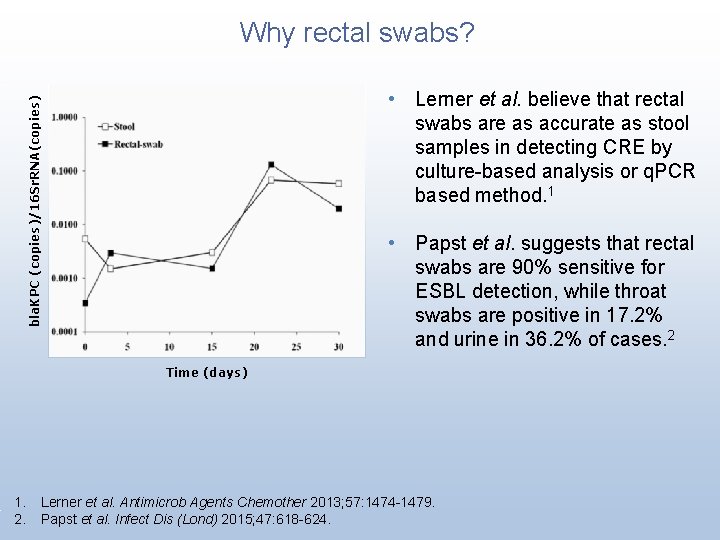
Why rectal swabs? bla. KPC (copies)/16 Sr. RNA(copies) • Lerner et al. believe that rectal swabs are as accurate as stool samples in detecting CRE by culture-based analysis or q. PCR based method. 1 • Papst et al. suggests that rectal swabs are 90% sensitive for ESBL detection, while throat swabs are positive in 17. 2% and urine in 36. 2% of cases. 2 Time (days) 1. 2. Lerner et al. Antimicrob Agents Chemother 2013; 57: 1474 -1479. Papst et al. Infect Dis (Lond) 2015; 47: 618 -624.

MDR-GNR admission screening study, GSTT § Targeted all patients to be screened within the first 72 hours of their admission. § Target sample size ~4, 500 patients. § Patients provided verbal consent. § Rectal and perineal swab collected & risk factor questionnaire. § The study was approved by the NHS Research Ethics Committee.
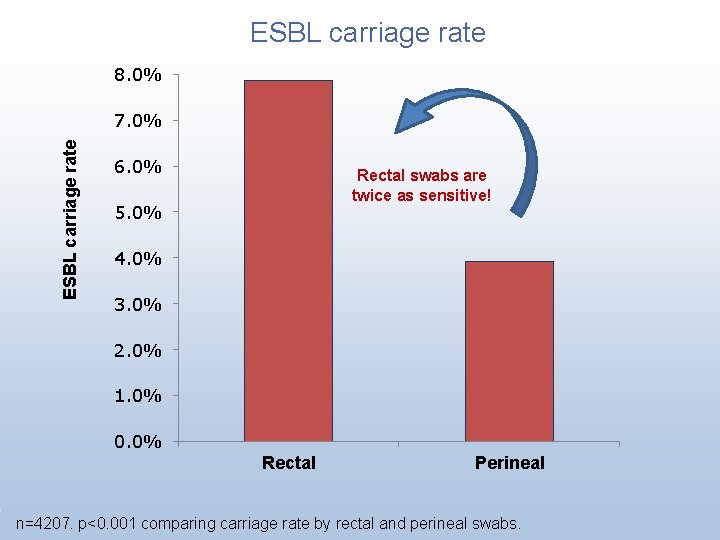
ESBL carriage rate 8. 0% ESBL carriage rate 7. 0% 6. 0% Rectal swabs are twice as sensitive! 5. 0% 4. 0% 3. 0% 2. 0% 1. 0% 0. 0% Rectal Perineal n=4207. p<0. 001 comparing carriage rate by rectal and perineal swabs.
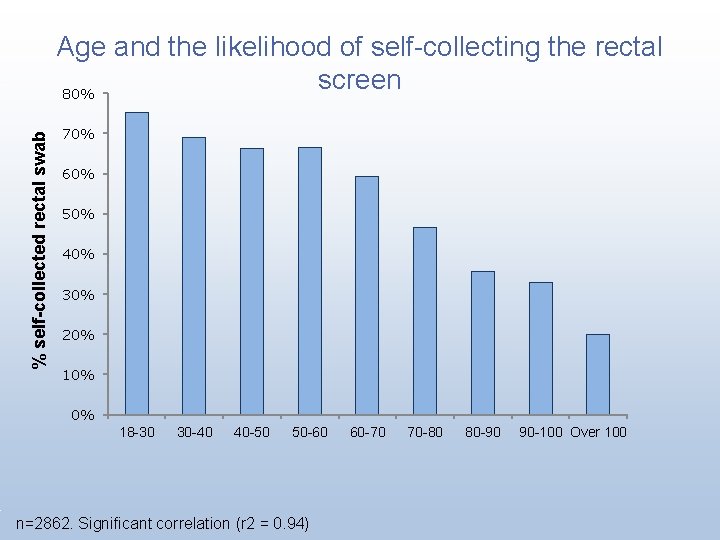
% self-collected rectal swab Age and the likelihood of self-collecting the rectal screen 80% 70% 60% 50% 40% 30% 20% 10% 0% 18 -30 30 -40 40 -50 50 -60 n=2862. Significant correlation (r 2 = 0. 94) 60 -70 70 -80 80 -90 90 -100 Over 100

Self-collected vs. staff-collected swabs ESBL carriage rate 10. 0% 9. 0% Self-collected 8. 0% Staff-collected 7. 0% 6. 0% 5. 0% 4. 0% 3. 0% 2. 0% 1. 0% 0. 0% Rectal Perineal n=4207. Significant difference in rate of carriage (rectal p<0. 03, perineal p<0. 01).
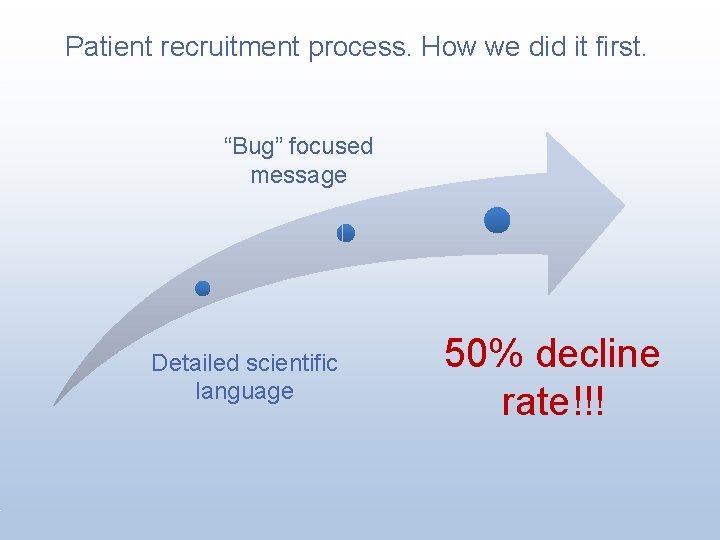
Patient recruitment process. How we did it first. “Bug” focused message Detailed scientific language 50% decline rate!!!
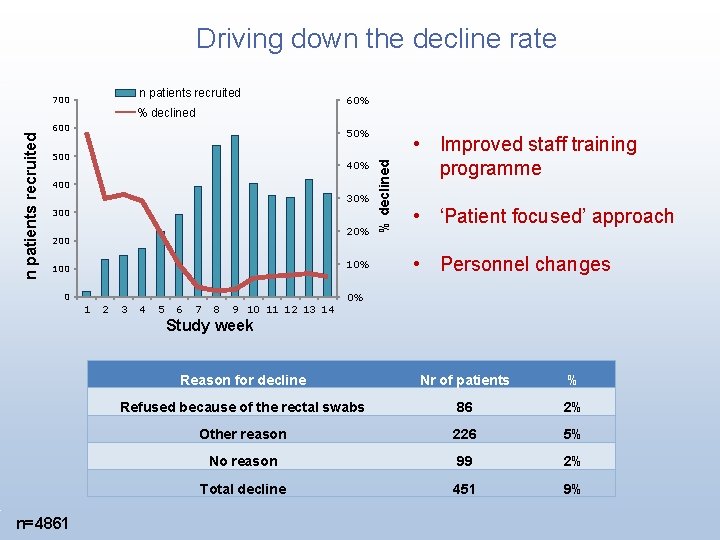
Driving down the decline rate n patients recruited 700 60% 500 40% 400 30% 300 20% 200 10% 100 % declined n patients recruited % declined 600 • Improved staff training programme • ‘Patient focused’ approach • Personnel changes 0% 0 1 2 3 4 5 6 7 8 9 10 11 12 13 14 Study week n=4861 Reason for decline Nr of patients % Refused because of the rectal swabs 86 2% Other reason 226 5% No reason 99 2% Total decline 451 9%

New message to the patients “Why is it important to be screened? ” “What would happen if you had CRE? ” “You and those close to you!” “If you get an infection, we can put you on the right antibiotics straight away. ”
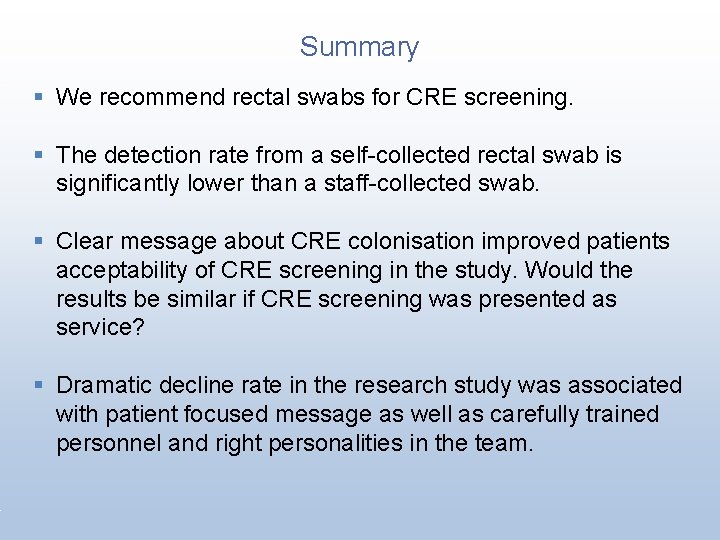
Summary § We recommend rectal swabs for CRE screening. § The detection rate from a self-collected rectal swab is significantly lower than a staff-collected swab. § Clear message about CRE colonisation improved patients acceptability of CRE screening in the study. Would the results be similar if CRE screening was presented as service? § Dramatic decline rate in the research study was associated with patient focused message as well as carefully trained personnel and right personalities in the team.
Imperial researchers at IPS Oral presentations Abstract ID: 3865 - Otter J, Dyakova E, Bisnauthsing K, Querol-Rubiera A, Girdham S, Patel A, Ahanonu C, Tosas Auguet O, Edgeworth J, Goldenberg S. Who’s carrying CRE? Universal admission screening in London Abstract ID: 3866 - Dyakova E, Bisnauthsing K, Querol-Rubiera A, Girdham S, Patel A, Ahanonu C, Tosas Auguet O, Edgeworth J, Goldenberg S, Otter J. “Can I swab your rectum, please? ”: Improving compliance with rectal screening for CRE Abstract ID: 3860 - Mookerjee S, Sullivan J, Davies F, Donaldson H, Brannigan E, Holmes A, Otter J. Risk factors for patients with carbapenemase-producing Enterobacteriaceae (CPE) in a Northwest London hospital Trust, 2014 – 2015 Posters Abstract ID: 3785 - Ahmad R, Castro-Sanchez E, Iwami M, Husson F, Holmes A. Knowledge, perceptions and decision making: What matters to patients? Abstract ID: 3798 - Record C, Gilchrist M, Patel D, Jiao L. Infection prevention in splenectomy patients: An audit of practice in a regional hepatobiliary centre Abstract ID: 3799 - Turnbull A, Moore L, Azadian B. To PPE or not to PPE Abstract ID: 3858 - Batten L, Holmes A, Otter J, Castro-Sanchez E. Estimating the isolation burden if overseas residents are pre-emptively isolated during CRE admission screening Abstract ID: 3859 - Mookerjee S, Sullivan J, Davies F, Donaldson H, Brannigan E, Holmes A, Otter J. Real-time surveillance of carbapenem-resistant Enterobacteriaceae (CRE) using live microbiology culture data in a North-West London Hospital Trust, 2014– 2015 Abstract ID: 3861 - Alexander M, Mookerjee S, Nelson D, Holmes A, Otter J. An audit of single room capacity for isolation at a London hospital Trust Abstract ID: 3862 - Galletly T, Bateman A, Brannigan E, Holmes A, Otter J. Thematic analysis of post 48 -hour bloodstream infections: What did we learn? Abstract ID: 3863 - Acharya A , Samarasinghe D , Singleton J, Brannigan E, Galletly T, Donaldson H, Holmes A, Otter J. Pilot evaluation of environmental hygiene using fluorescent markers and microbiological cultures Abstract ID: 3864 - Gilchrist M , Galletly T, Brannigan E, Holmes A, Otter J. How much Clostridium difficile is preventable? Abstract ID: 3867 – Dyakova E, Goldberg S, Bisnauthsing K, Querol-Rubiera A, Patel A, Ahanonu C, Tosas Auguet O, Edgeworth J, Otter J. Poor sensitivity of perineal compared with rectal swabs for detecting ESBL Enterobacteriaceae
“Can I swab your rectum please? ” Improving compliance with rectal screening for CRE www. genome. fieldofscience. com Eleonora Dyakova, Karen N. Bisnauthsing, Antonio Querol-Rubiera, Amita Patel, Chioma Ahanonu, Olga Tosas Auguet, Jonathan D. Edgeworth, Simon D. Goldenberg, Jonathan A. Otter eleonora. dyakova@imperial. nhs. uk
- Slides: 13