
Can devolution deliver inclusive growth Rich Crisp CRESR
- Slides: 16
Can devolution deliver inclusive growth? Rich Crisp (CRESR) SIPS Policy Forum 30 th November 2016
An idea whose time has come? • IMF Inclusive Capitalism conference (2014) • OECD Inclusive Growth in Cities campaign (2016) • All Party Parliamentary Group on Inclusive Growth (2014 -16) • RSA launch Inclusive Growth Commission (2016 -17) • GM, Leeds and Sheffield city regions + others all pursuing IG agendas • . . 'an economy that works for everyone'. . . to make sure that everyone can share in the country’s wealth (PM May)
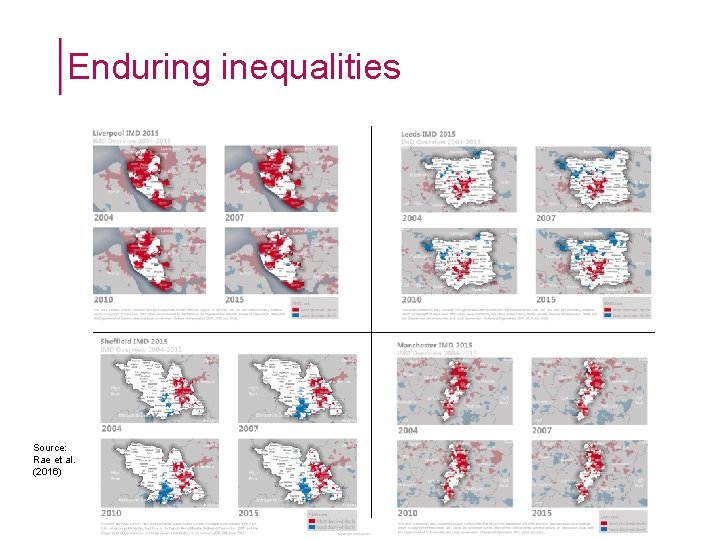
Enduring inequalities Source: Rae et al. (2016)
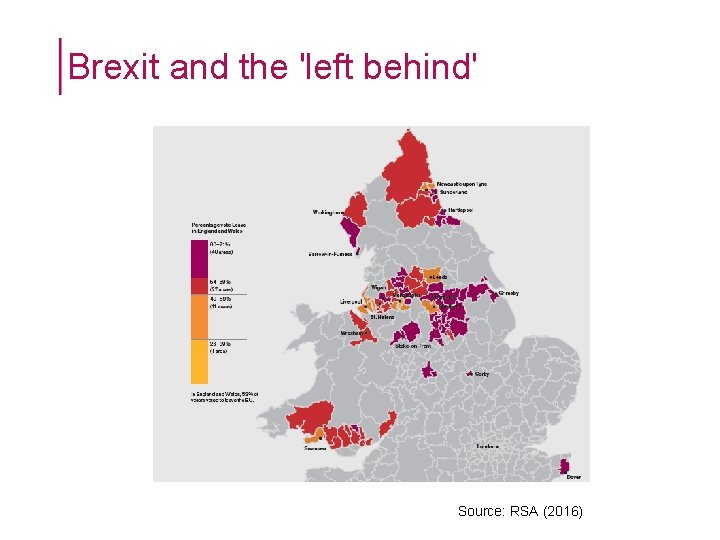
Brexit and the 'left behind' Source: RSA (2016)
The Inclusive Growth Monitor Full report and technical note: https: //www. jrf. org. uk/report /inclusive-growth-monitor
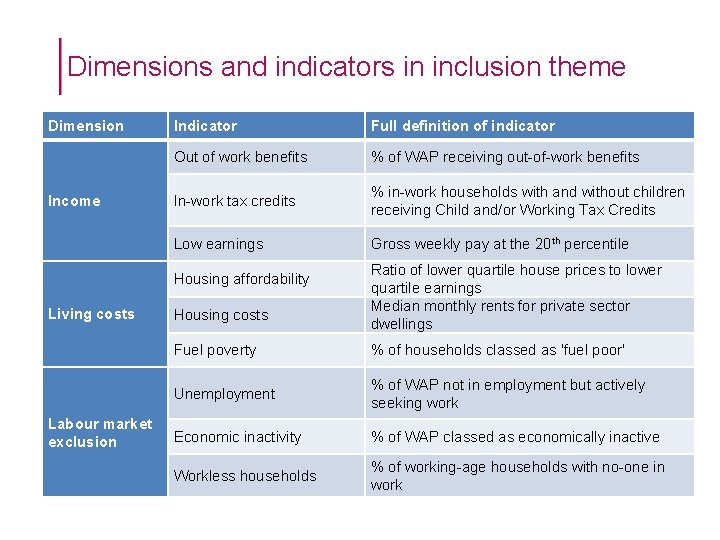
Dimensions and indicators in inclusion theme Dimension Income Indicator Full definition of indicator Out of work benefits % of WAP receiving out-of-work benefits In-work tax credits % in-work households with and without children receiving Child and/or Working Tax Credits Low earnings Gross weekly pay at the 20 th percentile Housing affordability Living costs Labour market exclusion Housing costs Ratio of lower quartile house prices to lower quartile earnings Median monthly rents for private sector dwellings Fuel poverty % of households classed as 'fuel poor' Unemployment % of WAP not in employment but actively seeking work Economic inactivity % of WAP classed as economically inactive Workless households % of working-age households with no-one in work
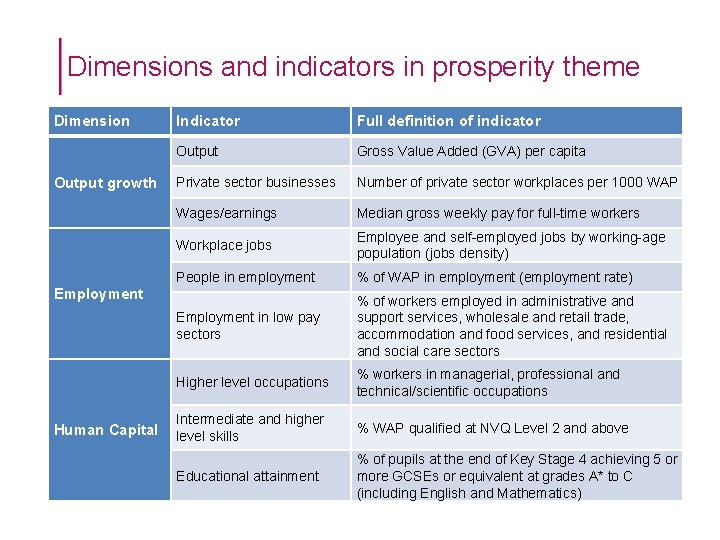
Dimensions and indicators in prosperity theme Dimension Output growth Indicator Full definition of indicator Output Gross Value Added (GVA) per capita Private sector businesses Number of private sector workplaces per 1000 WAP Wages/earnings Median gross weekly pay for full-time workers Workplace jobs Employee and self-employed jobs by working-age population (jobs density) People in employment % of WAP in employment (employment rate) Employment in low pay sectors % of workers employed in administrative and support services, wholesale and retail trade, accommodation and food services, and residential and social care sectors Higher level occupations % workers in managerial, professional and technical/scientific occupations Intermediate and higher level skills % WAP qualified at NVQ Level 2 and above Educational attainment % of pupils at the end of Key Stage 4 achieving 5 or more GCSEs or equivalent at grades A* to C (including English and Mathematics) Employment Human Capital
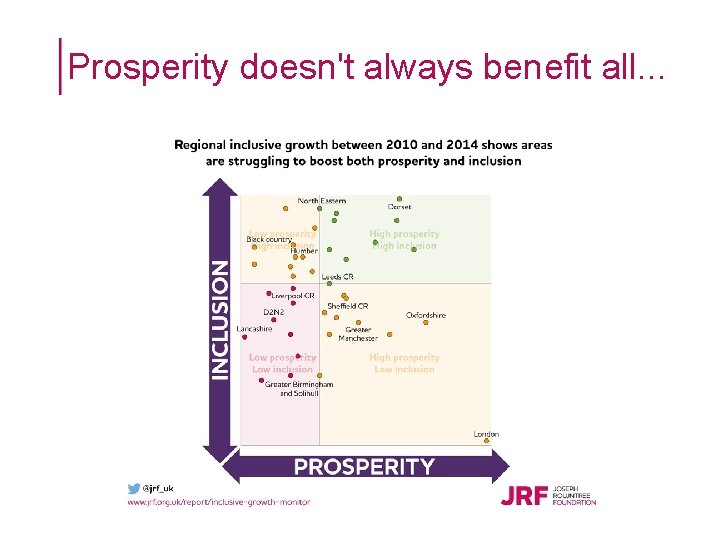
Prosperity doesn't always benefit all. . .
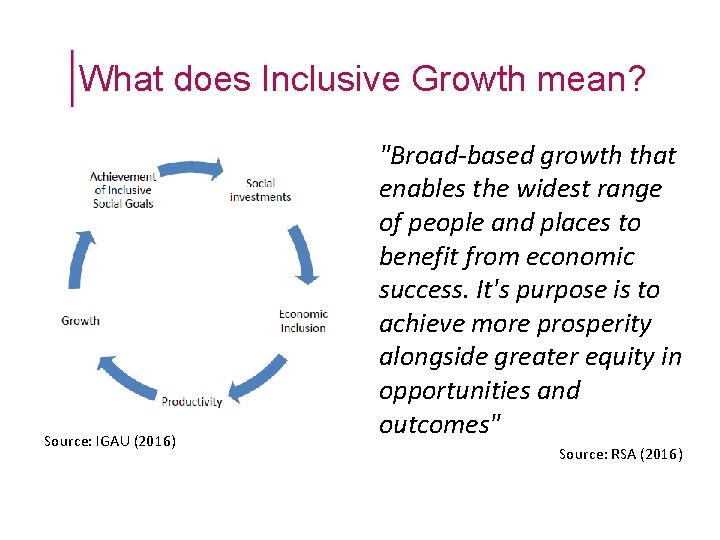
What does Inclusive Growth mean? Source: IGAU (2016) "Broad-based growth that enables the widest range of people and places to benefit from economic success. It's purpose is to achieve more prosperity alongside greater equity in opportunities and outcomes" Source: RSA (2016)
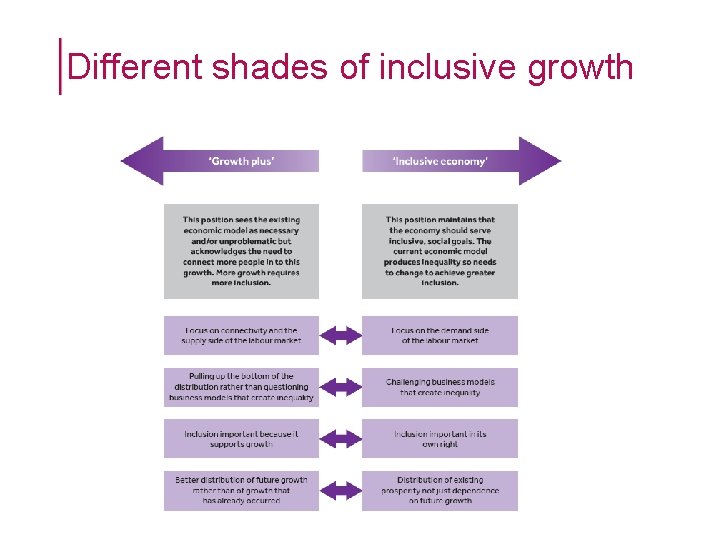
Different shades of inclusive growth
Inclusive devolution? • City regions seen as key (but not only) spatial scale to deliver inclusive growth: – Need for 'social' devolution and 'more funding to support inclusive growth at local level' (RSA IG Commission) – 'By 2020, the Manchester city-region will have pioneered a new model for sustainable economic growth based around a more connected, talented and greener city-region where all our residents are able to contribute to and benefit from sustained prosperity and enjoy a good quality of life” (GM Stronger Together Strategy, 2013)
What might that look like? • IGAU (2016) consultation proposes: – A more inclusive economy (Living wage, procurement policies, flexible working, social economy, quality jobs, philanthropy) – Including more people in opportunity (basic skills, in-work IAG, workforce development, targeted apprenticeships, supporting HTR) plus actions around transport, health/social care and early years and education.
Reasons to be cheerful. . . ? • Recognises weaknesses of existing economic models • Renewed focus on social and spatial inequality • Devolution provides opportunities to design and deliver local solutions
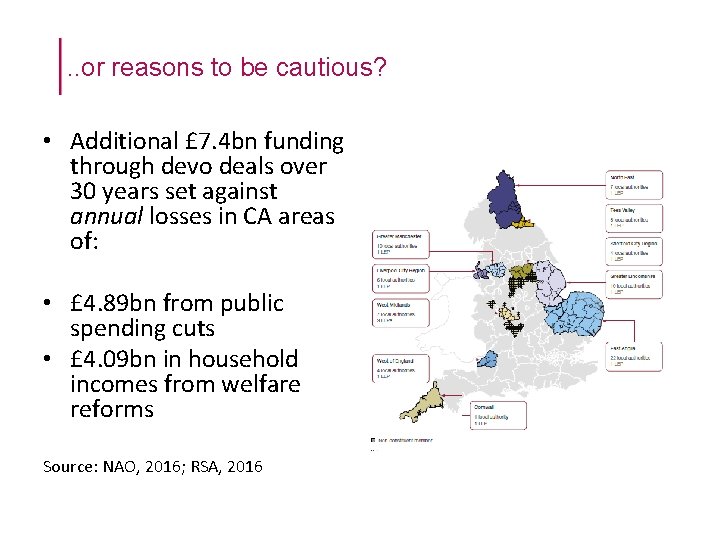
. . or reasons to be cautious? • Additional £ 7. 4 bn funding through devo deals over 30 years set against annual losses in CA areas of: • £ 4. 89 bn from public spending cuts • £ 4. 09 bn in household incomes from welfare reforms Source: NAO, 2016; RSA, 2016
Final reflections • Devolution provides opportunities to reflect on inequalities and how these might be addressed • But difficult to achieve inclusive growth without spatial rebalancing • New concept, old solutions? Growth plus model timid and lacks innovation • Too much expectation placed on devolution as vehicle for delivering inclusive growth
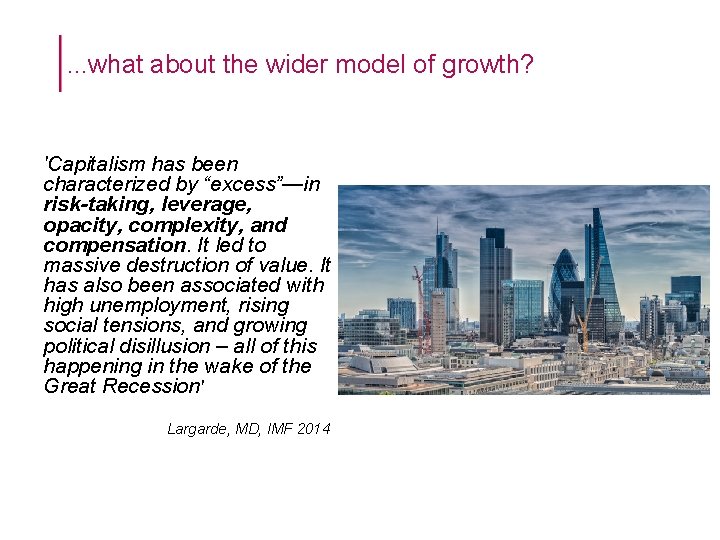
. . . what about the wider model of growth? 'Capitalism has been characterized by “excess”—in risk-taking, leverage, opacity, complexity, and compensation. It led to massive destruction of value. It has also been associated with high unemployment, rising social tensions, and growing political disillusion – all of this happening in the wake of the Great Recession' Largarde, MD, IMF 2014